291: Missing Movies

Archival Spaces 291

The “Missing Movies” Manifesto

Uploaded 18 March 2022

Missing Movies Poster

Recently, film director Nancy Savoca and screenwriting partner, Richard Guay realized that their 1993 film, Household Saints, could not be screened at Columbia University, because of copyright problems. Nancy eventually worked with her lawyer, Susan Bodine, and Ira Deutchman, the film’s original distributor, to make the film accessible again. But in the process, she realized that many independently produced films from the 1970s through the 1990s were similarly unavailable, often due to legal issues. She organized a panel discussion at a Director’s Guild of America event in November 2021, resulting in the creation of a new advocacy organization, “Missing Movies,” which has now published a manifesto  (https://missingmovies.org/the-missing-movies-manifesto/), and has begun fundraising.

Nancy Savoca

Missing Movies” was founded by Nancy Savoca, Richard Guayu, Ira Deutchman, Susan Bodine,  filmmakers Mary Harron and Shola Lynch, and Dennis Doros and Amy Heller. The last-named, parents of Milestone Films, who have for decades been a major force in film distribution and film preservation. Besides being a filmmaker, Shola Lynch is also the curator of the New York Public Library’s Schomberg Center for Research in Black Culture.  According to their new website, an advisory board has also been formed that includes Mira Nair, Maggie Renzi, Allison Anders, Maggie Greenwald, Dolly Hall, Allyson Nadia Field, Ruby Lerner, and Tanya De Angelis.

Mississippi Masala (1991, Mira Nair)

In the film archival world, there are always two issues confronting film preservationists: 1. Who has the original negatives or other pre-print material to produce new digital masters and 2. Who owns the copyright for public exhibition. In some cases, the film material itself has been lost, or only degraded versions are available, in other cases, the rights have been lost. This is especially true for independent features from the last forty years because such films were often sold to distributors for a limited period of time, e.g. ten years, with the rights then reverting to the original owner. But finding the owner can be tricky because rights are often bought, sold, or inherited by parties who are not necessarily in the business. Without rights from an owner, a film preservationist cannot legally make copies or preserve a given film title.

Annihilation of Fish (1999, Charles Burnett)

The “Missing Movies” Manifesto begins provocatively: “Movie audiences are being told that streaming has made the entire history of cinema available for a simple subscription fee – or at least a couple of dozen subscription fees. This is not true.” In fact, “Thousands of movies are either completely lost or are deemed too small to warrant the expense and are thus completely unavailable. This is especially true of work created by women and people of color.” The issue is that third-party rights-holders of independent feature films fear the cost of preservation and access. Today that means making digital masters and storing them in a safe environment, which because of the cost of computer storage and maintenance is a very expensive proposition. BTW, the cost of storage has not dropped significantly, despite the industry’s assurances that it would.

I also believe it is a truism that the number of commercially accessible films keeps shrinking. Of all the films made in history, only a percentage was even transferred to analog video technology, either from 35mm or 16mm. Given the relatively low cost of analog VHS tape, smaller companies could afford to bring older historical films into the market. Already the shift to DVDs drastically limited access, while the streaming market has further reduced access to film history’s riches.  

True Love (1989)
True Love (1989, Nancy Savoca)

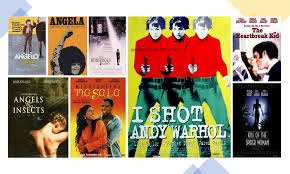
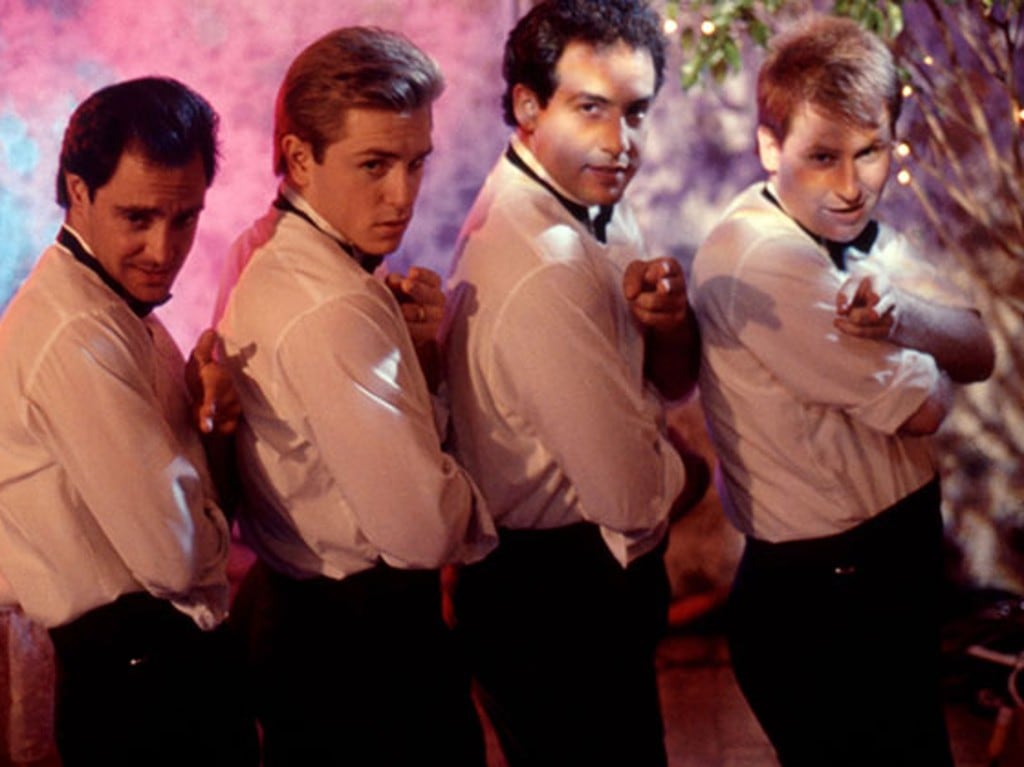
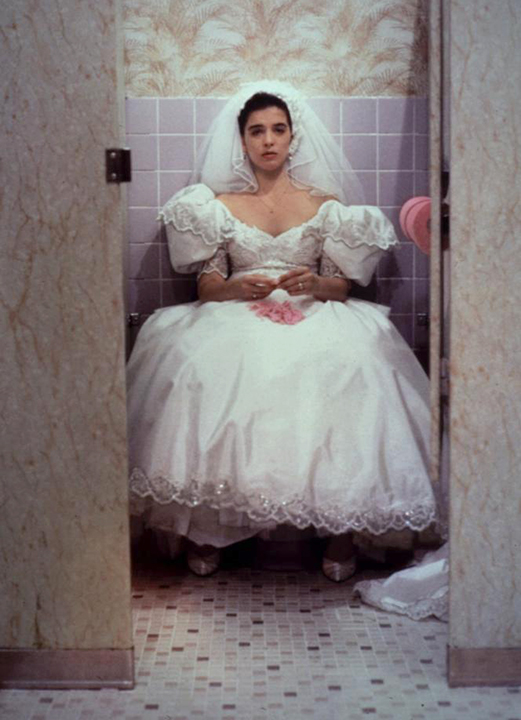
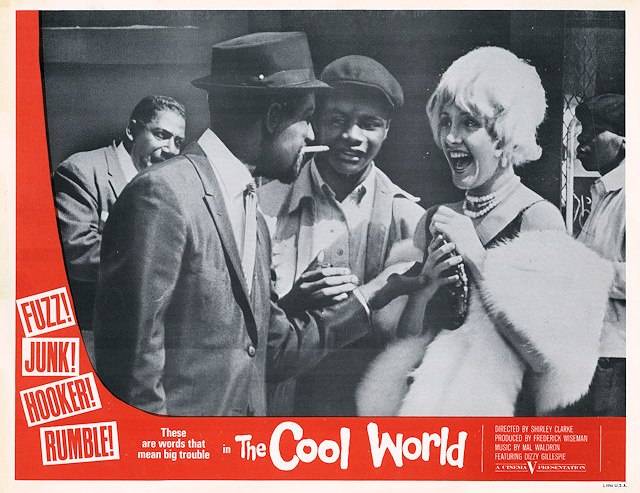
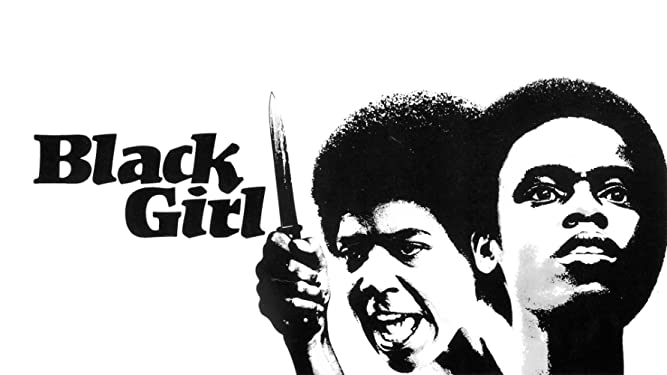
In any case, Nancy Savoca has cause for concern. Her debut film and a Sundance Grand Jury Prize winner, True Love (1989), made Annabella Sciorra a star, but is now on the organization’s list of “missing films.” Mira Nair’s Mississippi Masala (1991), a Venice Film Festival winner and another indie hit by a woman of color, and Mary Herron’s I Shot Andy Warhol (1996) also make the list, which includes numerous classics:  Ali, the Fighter (1975, Bill Greaves), Annihilation of Fish (1999, Charles Burnett), Black Girl (1972, Ossie Davis), The Cool World (1964, Shirley Clarke), The Heartbreak Kid (1972, Elaine May), The Kiss of the Spider Woman (1986, Hector Babenco), Memory of Justice (1976, Marcel Ophuls), Nothing but Common Sense (1972, St. Clair Bourne), The Trial of the Catonsville Nine (1972, Gordon Davidson), Union City (1980, Marcus Reichert). Dennis Doros tells me that the actual list is already much longer than the thirty-plus titles on the “Missing” website, probably already in the hundreds of titles.

Heartbreak Kid (1972, Elaine May)

To begin the process of resolving this challenging situation, the “Missing Movies” Manifesto states that they “will work to demystify and help decipher the economic, legal, and practical hurdles that filmmakers face when they want to make their older works available.” Those challenges include: researching contractual rights, deciphering underlying rights, locating master materials, and making new digital masters. However, this is a very ambitious, long-term plan that will be predicated on financing. In the short term, “Missing Movies’” goals are much more modest and doable because they involve volunteer help:  1. Publicize the need to filmmakers, other stakeholders, and the public; 2. Identify “missing films” and create a database. 3. Create a guide for filmmakers to help them research films. 4. Create FAQs for common issues. 5. Create case studies of success stories involving renewed access. 6. Create a website for all the organization’s activities.

This program reminds me of very similar efforts we undertook with our Sundance film preservation partners when I was Director of UCLA Film & Television Archive. To get filmmakers screening their work at Sundance to think about making sure they have a plan for the long-term survival of their work was daunting. We held events at Sundance, put together brochures with an easy step-by-step guide, but filmmakers were usually more concerned with their next film. It is probably no accident that many of the participating filmmakers in the present endeavor are of an age when they actually do start thinking about their legacy and are therefore involved in what is a very admirable effort.   

290: Julien Duvivier’s Films of Religiosity

Archival Spaces: 290

Julien Duvivier’s Films of Religiosity

Uploaded 4 March 2022

Over the course of the years from 1927 to 1929, Julien Duvivier directed and wrote three films with overt religious subject matter, all of them very much personal projects, products of his Jesuit education:  L’Agonie de Jerusalem/Revelation (1927), Le divine croisière/The Divine Voyage (1929), and La vie miraculeuse de Thérèse Martin/The Miraculous Life of Teresa of Lisieux (1929). All are included on Flicker Alley’s Blu-Ray Box Set, Cinema  Discovery, which I wrote about in 290. Ben McCann in his Senses of Cinema piece on Duvivier also mentions in his trio of religious films, Credo ou la tragédie de Lourdes (1924), which seemingly concerned an atheist medical doctor who witnessed miracles at Lourdes but is seemingly lost, and the Blu-Ray pamphlet does not include the title in its selected filmography.

Interestingly, just like his American counterpart in the religious pictures business, Cecil B. DeMille, Duvivier sprinkled very secular marital melodramas and comedies in between. While Duvivier’s gentle comedy of Belgian manners, Le marriage de Beulemans (1927), is all about class difference, his later two women’s melodramas, Le tourbillion de Paris (1928) and Mamam Colibri (1929), feature upper-middle class wives who eventually return home, humbled and humiliated,  after straying from their marital bed. DeMille’s marital comedies, e.g. Why Change Your Wife? (1920), and social melodramas, like The Golden Bed (1925), are, likewise, morality plays of strained or broken marriages that ultimately reaffirm the protestant ethic and marital fidelity. DeMille’s dramatizations of the Bible, whether The Ten Commandments (1923) or The King of Kings (1927), take the Bible at face value, God’s logos translated into Evangelical visions of Old and New Testament narratives, presented with spectacular special effects. 

Mamam Colibri (1929)
Why Change Your Wife? (1920)
King Of Kings (1927)

Duvivier proceeds differently.  Each of his deeply Catholic films offers a different meditation on religiosity, faith, and the acceptance of miracles. While L’Agonie de Jerusalem visualizes a personal conversion to the Catholic faith at the very site of Calgary, Le Divine Croisière illustrates the simple faith of a parish priest and his poverty-stricken congregation, personified in the refurbished image of Stella Maris. La vie miraculeuse de Thérèse Martin faithfully portrays the life of a very young women, Thérèse of Lisieux, who joined the Carmelite order in Normandy and was canonized in 1925 by Pope Pius XI. 

From the Manger to the Cross (2013)
Quo Vadis (1923)

While various „Passion Plays“ had been popular at the end of the 19th century and Pathé and Gaumont ‘s Life of Christ (1905-1906) remained in distribution for years, overtly religious films were few and far between, both in Europe and Hollywood. The first wave of religious films appeared shortly before World War I with Sidney Olcott’s Kalem Company production, From the Manger to the Cross (1913), which eschewed the painted sets of earlier passion plays and included many scenes shot on location in Palestine, followed by the Italian import, Quo Vadis(1913), produced in eight reels and running an incredible two hours and fifteen minutes.  Based on the monumental novel by Henryk Sienkiewicz, first published in 1908, Quo Vadis’s success encouraged the production of feature-length films worldwide. A second wave of religious films began appearing in the United States in 1924, after the incredible success of Cecil B. DeMille’s The Ten Commandments, which itself was cashing in on a wave that had begun in Europe a year or two earlier with the Italian-produced epic, The Bible (1922), and the Austrian-produced Sodom and Gomorrah (1922). Internationally, a host of other Christian films were produced, including Natan der Weise (1922), I.N.R.I. (1923), Quo Vadis (1924), Moon over Israel (1924), Ben-Hur (1925), and Noah’s Arc (1928), the failure of the last-named film indicating that the wave was spent.

L’Agonie de Jerusalem (1927)

L’Agonie de Jerusalem relates the conversion to Christianity of a French anarchist and atheist, who is blinded in a Parisian riot and returns home to his deeply religious parents, who literally live on Mt. Scopus in Jerusalem. Although there is a strange subplot concerning an anarchist plot to blow up the damns on the Jordan River, – Duvivier again mixing genres – the film’s main action concerns the prodigal son’s halting acceptance of God, his sight restored on Good Friday after he dreams of seeing Christ’s passion at Golgotha. Much of the film was shot on location in Jerusalem, allowing Duvivier to present numerous biblical sites and stories, including Christ giving a blind man his sight at Jericho and Judas kissing Christ in the garden. All of which gives credence to the anarchist’s conversion in those “holy” places. Seeing the light, the hero joins a modern-day procession recreating the Passion ad locum. Today, we can feast our eyes on tourist views of late 1920s Jerusalem.

Le divine croisiere (1929)

While Christ’s Passion is at the center of L’Agonie de Jerusalem, Le divine croisière centers on a firm belief in the Virgin Mary, also known as Stella Maris or „Our Lady Star of the Sea.“ A wealthy ship owner forces his crew to sea in an unseaworthy vessel and seemingly lost. The ship owner’s daughter, however, is devoted to Stella Maris – she is restoring a painting of her in the parish church – and convinces the townspeople to send out another ship, the Stella Maris, and thanks to the crew’s fervent prayer to the Virgin, they find the lost ship and return home. Unlike the previous film, there are no Biblical recreations – Stella Maris’s painted image does come to life at one point – but the film is suffused with religious faith while observing religious and other family rituals of a small fishing village with an almost neorealist eye and certainly an anthropologist’s.

La vie miraculeuse de Thérèse Martin (1929)

Finally, La vie miraculeuse de Thérèse Martin is ostensibly a bio pic of the then newly sanctified St. Thérèse of Lisieux.  The film begins with her parents, who both attempted unsuccessfully to join the Carmelite Order, but raised five girls, four of whom eventually join the Order of the Brothers of the Blessed Virgin Mary of Mount Carmel, as the Carmelites are officially known; their first monastery, the Stella Maris Monastery, was founded on Mount Carmel. The parents, Zélie and Louis Martin were canonized in 2008, the first set of spouses ever to be declared saints. But it is the passion of Thérèse, who suffers pain, isolation, boredom, guilt, cold, and deprivation. She enters the Order at the age of fifteen, receiving special permission from Pope Leo VIII, her anguish at losing her sister Pauline to the Order, then her own entrance into the Order. Duvivier visualizes the Church’s religious rituals around Thérèse’s Postulancy and Novitiate with ethnographic accuracy, while the film‘s most dramatic scenes involve Thérèse’s self-doubts, her wringing with the devil, and her death at the age of 27 of tuberculosis in 1897.     

Similar to Duvivier’s use of dissolves and superimpositions in his silent melodramas to visualize subjective states of mind, Duvivier makes use of similar techniques here to stage religious epiphanies, e.g. Louis Martin with a cross, his suffering equal to that of his daughters. Even within realistic film narratives, then, Duvivier profitably employed expressionistic devices to give material form to faith.  More than twenty years later, Duvivier would recreate the village priest from Le divine croisière in the guise of Fernandel as Don Camillo.

Don Camillo (1952, Julien Duvivier)

289: Julien Duvivier Silents

Archival Spaces 289: Julien Duvivier Blu-Ray Box Set

Uploaded 18 February 2022

Julien Duvivier

For many years, Julien Duvivier was considered one of the greatest directors of the pre-World War II French cinema, celebrated not only by critics, but by the likes of Jean Renoir, Ingmar Bergman, Orson Welles, and Michael Powell. But the French New Wave hated their predecessors, damning the generation of Duvivier, René Clair, and others ungenerously as an uncinematic “cinema of quality.” Jean-Luc Godard and Francois Truffaut were particularly vitriolic in their attacks on Duvivier, who nevertheless continued to make films, like the two Don Camillo films (1952, 1954), which are still childhood favorites of mine. The bad rep probably came from the fact that Duvivier was extremely prolific, eclectic, uneven, and supposedly lacked an auteurist sense of style. In point of fact, as Ben McCann has argued in an appreciation of Duvivier sound films  in Senses of Cinema (Nr. 82, March 2017): “Duvivier did much to establish the formal and aesthetic norms of French poetic realism. La Bandera  and Pépé le Moko both blended elements of populism and melodrama and wrapped them in a highly expressionistic mise en scène.” Even the Cinémathèque Français has come around, dedicating in 2010 a virtually complete retrospective to Duvivier. Ironically, Duvivier’s prolific output during the silent era has been a blank page, due to inaccessibility.  Flicker Alley’s new blu-ray nine-film box set demonstrates that Duvivier’s expressionist cinema was already fully-formed in the 1920s, the stylistic obsessions and thematic concerns of his 1930s work already in full bloom.

Born in October 1896 in Lille, in northern France, Duvivier was educated by the Jesuits, before becoming a stage actor in 1915 at the Théâtre de l’Odéon in Paris. By 1917 he had moved to film as an assistant director to André Antoine and Louis Feuillade. Although he directed his first film in 1919, he really hit his stride with Poil de Carotte (1926), which he remade as a sound film in 1933. Duvivier’s other stand-out films in the 1930s beyond those mentioned above included David Golder (1930), Le Golem (1935), Un carnet du bal (1937), the latter remade in Los Angeles as Lydia (1941), and La fin du jour (1939). In the late 1930s, Duvivier traveled to Hollywood, where he directed The Great Waltz (1938) at MGM, then after a brief retour to France, spent the war years in America, directing Tales of Manhattan (1942) and The Imposter (1944). After returning to Paris, he was responsible for the film maudit, Panique (1946), today acknowledged as a masterpiece, although it bombed in its original release. With Deadlier Than the Male (1956), Duvivier again achieved a degree of critical success, before dying in a car accident in 1967.

Poil de carotte (1926, Julien Duvivier)

Restored by Serge Bromberg’s Lobster Films, in conjunction with the CNC, Cinémathèque Français, Amsterdam’s EYE Institute, among others, the nine silent films presented reveal a unique visual talent who reveled in the possibilities of cinematic technique, especially to capture subjective states of mind. At a time when the cinema was gravitating towards more realistic film styles, Duvivier continued to construct unabashedly expressionistic visions of his sometimes tortured protagonists. Duvivier gravitated towards family melodramas (or comedy), narratives in which the unity of the family is threatened by wayward wives or cold-hearted parents until a crisis precipitates a return to order in the family unit.

Poil de carotte (1926, Julien Duvivier)

Poil de Carrot [Carrot Top](1926) begins with a subjective montage of village gossipers to visualize what we will perceive as the broken marriage of the Lepic family, who neglect and abuse their youngest child, nicknamed Carrot Top. In a nightmare sequence, Duvivier employs one of his favorite techniques, layered multiple exposures in order to visualize the boy’s tortured vision of his scolding mother, leading him to attempt suicide from which he is saved only in the last moment by his father.  Panoramic images of the countryside around the Lepic’s village indicate Duvivier’s geomorphological interest in natural and urban landscapes through long moving camera shots.

Au bonheur des dames (1930, Julien Duvivier)

Similarly, the director’s last silent film, Au bonheur des dames  [Ladies Paradise](1930), opens with a country girl (Dita Paolo) arriving in a Paris train station, which is a tour de force of editing and super-impositions, capturing the subjective chaos that is a modern city. Later he visualizes the nervous breakdown of her uncle, whose small shop is being destroyed by the large department store of the title, rapidly intercutting repeated shots of a construction worker wielding a pickaxe, before the despondent uncle takes a gun and starts shooting customers in the offending store. Duvivier’s over-determined ending, though, papers over the film’s central struggle between small business and big capital with a happy end, reflecting the conservative values manifest throughout his work.

Le Tourbillon des Paris (1928, Julien Duvivier)

In Le Tourbilllon de Paris (1928), Duvivier encapsulates the central conflict between Lord Abenston and his wife, the former actress Lady Amiscia (Lili Dagover), in an image that shows the couple facing each other in a foyer, while layers of superimpositions on both sides of the screen illustrate their divergent views of their marriage. Indeed, Duvivier experiments with complex traveling shots, split screens, superimpositions, and flashbacks, while his narrative moves from what initially looks like a mountain film, to a marital drama in an affluent urban environment.

Le tourbillon de Paris (1928, Julien Duvivier)
Le marriage de Mademoiselle Beulemans (1927, Julien Duvivier)

Le Tourbillon de Paris also illustrates Duvivier’s geomorphological interest in landscapes, opening as it were a mountain film in moving camera shots of the snowy vistas, some shots recalling early cinema images from the front of a train. Poil de Carotte,  Mamam Colibri (1930), and Le mystère de la Tour Eifel (1927) also feature moving camera panoramas through landscapes, while Duvivier also privileges long, moving camera shots through crowds, whether in a department store, night clubs or at costume balls.  Le marriage de Beulemans (1927), opens literally with a picture book sequence of views of Belgium, its countryside, and quaint villages and towns, like Bruges and Ghent, before zeroing in on a local brewery, owned by the Beulemans family of the title.  

Francis Lederer in Mamam Colibri
Mamam Colibri (1930, Julien Duvivier)
Maria Jacobini in Mamam Colibri

Finally, what may have bothered the New Wave critics was Duvivier’s now thoroughly modern genre mixing, already in evidence in his silent films: Le Tourbillon starts as a mountain film and ends a marital melodrama, Mamam Colibri begins as a society drama with a middle-aged lady straying from her husband then morphs into a Foreign Legion story, while Le mystère de la Tour Eifel is a circus-detective-social drama.

Given his Jesuit upbringing and conservative values, it’s not surprising that Duvivier also specialized in religious films, but the three included in this box set will have to await my next blog. Suffice it to say that the films are all beautifully restored with new musical scores by Antonio Coppola, Marco Dalpane, Gabriel Thibaudeau, and Fay Lovsky.

Le mystère de la Tour Eifel (1928, Julien Duvivier)

288: William Thiele in Hollywood

Archival Spaces 288:

William Thiele’s Downward Slide in Hollywood

Uploaded 4 February 2022

Barbara and William Thiele, Bel Air, CA., June 1975

While my recent blog discussed the USC/Academy Museum’s symposium “Vienna in Hollywood,” here is an abridged version of my talk on the Austro-Jewish film director William Thiele, who will be the subject of a book I’m editing with Andréas-Benjamin Seyfert: Enchanted by Cinema: William Thiele Between Vienna, Berlin and Hollywood. Given that I interviewed William Thiele for an AFI Oral History in June 1975 –  at the very beginning of my research into German-Jewish refugees to Hollywood, – my career is coming full circle.

Drei von der Tankstelle (1930 with Ruehmann, Karlweiss, Fritsch

In the 1920s and early 30s, Wilhelm Thiele became the UFA’s director of choice for light entertainment, his Drei von der Tankstelle (1930) establishing a new genre of sound film operettas, until 1933 when he was blacklisted by the Nazis for being a Jew. By 1934, Thiele was in Hollywood at Fox, and then Paramount, where he had a worldwide hit with Dorothy Lamour’s soon-to-be-famous sarong in The Jungle Princess (1936), before slipping into B-film production at Metro-Goldwyn-Mayer, where he made a series of delightful, family-oriented comedies with low budgets and modest but respectable yields. When Thiele’s contract was not renewed in early 1940, his career pretty much fell off a cliff.  Although he had experienced periods of unemployment in Hollywood, nothing would match the ensuing eight years of unemployment, interrupted by merely three directed films for ever-lower budget producers.

Bad Little Angel (1939) with Virginia Weidler

Thiele’s frustration is palatable in his correspondence with the Austro-German agent Paul Kohner. Thiele had originally been signed by Stanley Bergerman who had opened a talent agency in 1936. In a letter to Kohner dated February 1939 while he was still at MGM, Thiele apologized for re-upping with Bergerman, instead of moving to Kohner who had recently opened his own agency, because he had a big family to support, including relatives still in Europe. In August 1943, Thiele made the move to Kohner, having already been unemployed for all but six weeks in 1942 and 1943, when he worked on two Tarzan films. In November 1943, Thiele writes to Kohner: “I’ve been waiting all month and not a single interview with a producer. I MUST FIND WORK RIGHT AWAY AND MUST EARN SOME MONEY.” Seven months later he writes to Kohner: “It’s ridiculous I can’t find work.”  A Part of the problem may have been that even though both Tarzan films for Sol Lesser were financial successes, especially Tarzan Triumphs (1943), Thiele was fired by Sol Lesser after the second film.

Tarzan Triumphs (1943) with Johnny Sheffield, Stanley Ridges, Sig Rumann, Johnnie Weissmuller
The Madonna’s Secret (1946) with Francis Lederer, Gail Patrick

Kohner tried for a year to negotiate a deal for Thiele before the director gave up on Kohner in late 1944. The agent had negotiated with a Mexican film producer, Gen. Juan Francisco Azcárate, setting up a three-picture deal that would have sent Thiele and his family to Mexico City in March 1944. The deal however fell through because the first script offered to Thiele was not a film he wanted to make. As Thiele wrote: “The story lends itself much more to a risqué farce than to the kind of musical with charm and feeling which I used to make and which proved to be so successful.” Furthermore, as Kohner noted to the producer, the story was anti-American. Azcárate did purchase a script Thiele had written with the Hungarian writer László Görög with whom he formed a writing partnership. The team sold several more scripts, including She Wouldn’t Say Yes (1945) with Rosalind Russell.

Thiele reportedly signed a long-term contract at Republic in June 1945 to make The Madonna’s Secret, starring Francis Lederer and based on a script by Thiele and Bradbury Foote. The film was an attempt by Republic to make a more serious, higher-budget product, and Thiele was congratulated for leading the effort. The film got very good reviews, nevertheless, it remained a one-off for Thiele at Republic. Thiele apparently just couldn’t catch a break.

Paul Kohner
Jack Chertok
Wilhelm Thielle

Needing desperately to support a family, Thiele was saved by producer Jack Chertok who assigned Thiele to direct industrials and public service educationals, then transitioning to commercial television. For years, Chertok had produced short films at MGM, before forming his own company, Apex Film Corporation, in April 1945 to produce shorts, industrials, and advertising films. Thiele is listed as Apex’s staff director in the 1946 Film Daily Yearbook and remained with the company for at least ten years as a salaried employee.  One early client of Apex was the National Association of Manufacturers for which Thiele directed and co-wrote the public service short, The Price of Freedom (1948). The short film follows a young newspaper reporter to Germany, where he learns that freedom of the press should not be taken for granted. The Freedoms Foundation Award winner was not only anti-Nazi but an explicit defense of free speech in the wake of the House Un-American Activities growing anti-Communist hysteria. For the U.S. Department of State Thiele directed University of California at Los Angeles (1948), for the U.S. Department of Education Junior College for Technical Trades (1950), for the Southern California Dental Association, It’s Your Health (1949), and for the National Tuberculosis Association,  A Fair Chance (1954).

The Price of Freedom (1948) with Arthur Franz, Michael Checkov
U.C.L.A. (1948)

Thiele’s most productive association was with Apex client, I.E. Du Pont de Nemours Company of Wilmington, Delaware, for which Thiele wrote and directed three industrials about Dupont’s nylon production.  Thiele was then hired to produce a feature-length, color docudrama on the history of the Dupont Company for its 85,000 employees, The Dupont Story (1950), which was ultimately also exhibited non-theatrically. Budgeted at $250,000 ($2,869,180/2021), the film presented a history of the family-owned company, featuring more than fifty Hollywood actors.   

This is Nylon (1948)
The Dupont Story (1950)

DuPont also sponsored the Apex production of the television series, Cavalcade of America (1952-1957), based on the Dupont radio show on-air since 1935 to improve their public relations image. Each episode of the half-hour show illustrated a moment in American history. Until May 1955, Thiele would go on to direct no less than thirty-five episodes, including shows about John Peter Zenger, William Penn, Benedict Arnold, Ben Franklin, John Marshall, Wyatt Earp, Horace Greely, and many lesser or unknown figures, including women Dr. Alice Walker and Elisabeth Blackwell. 

TheLone Ranger (1954) with Clayton Moore, Jay Silverheels

Jack Chertok also contracted with General Mills to produce The Lone Ranger television series in September 1949, after Apex director Sammy Lee directed the industrial, Assignment General Mills (1949). Thiele, however, did not work on The Lone Ranger until its fourth season in 1954. He completed 25 episodes until September 1955 when the last b&w season ended and Apex lost the contract. Thiele remained unemployed for much of 1956-1958, accepting a three-picture contract with Deutsche Film Hansa and completing two films in Germany, before returning to Los Angeles and retirement at age 70 in 1961.

Surprisingly, when I interviewed Thiele so many years ago, he not only expressed no bitterness or regrets for failing to reach the heights of his European career in Hollywood but actually expressed gratitude for the good life America had given him.

Adieu, Mascotte (1929, Wilhelm Thiele)