313: Irmgard Keun

Archival Spaces 313

Irmgard Keun: Child of all Nations

Uploaded  20 January 2023

Irmgard Keun, ca. 1929 Berlin

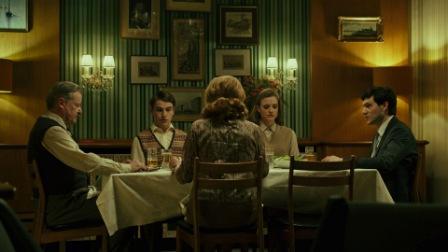
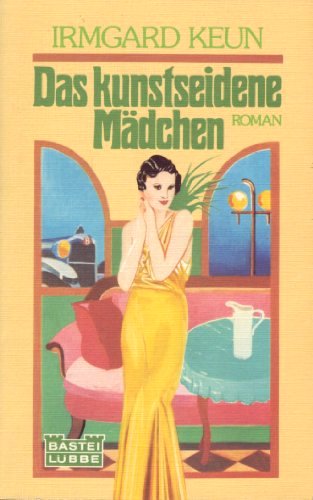
A couple of weeks ago, my colleague, Andréas-Benjamin Seyfert, announced on Facebook that a previously lost German film from the early 1930s, Eine von uns (1932), starring Brigitte Helm, had turned up on YouTube. The film was an adaption of the sensational, New Realist novel, Gilgi, eine von uns (1931), by Irmgard Keun. Her first novel had turned her into an icon of the new woman, independent, self-assured, sassy, and sexually liberated. Her second novel, Das kunstseidene Mädchen /The Silk Girl (1932), about the downward slide of a 20-year-old Berlin flapper, none too bright, was written in a stream-of-consciousness, slangy style  – comparable to that of today’s Instagram influencers. It was another literary and commercial sensation. Then came Hitler, her books were banned, and her wealth confiscated, not because she was Jewish, but because her image of German womanhood contradicted Nazi ideology.

Eine von uns (1931)

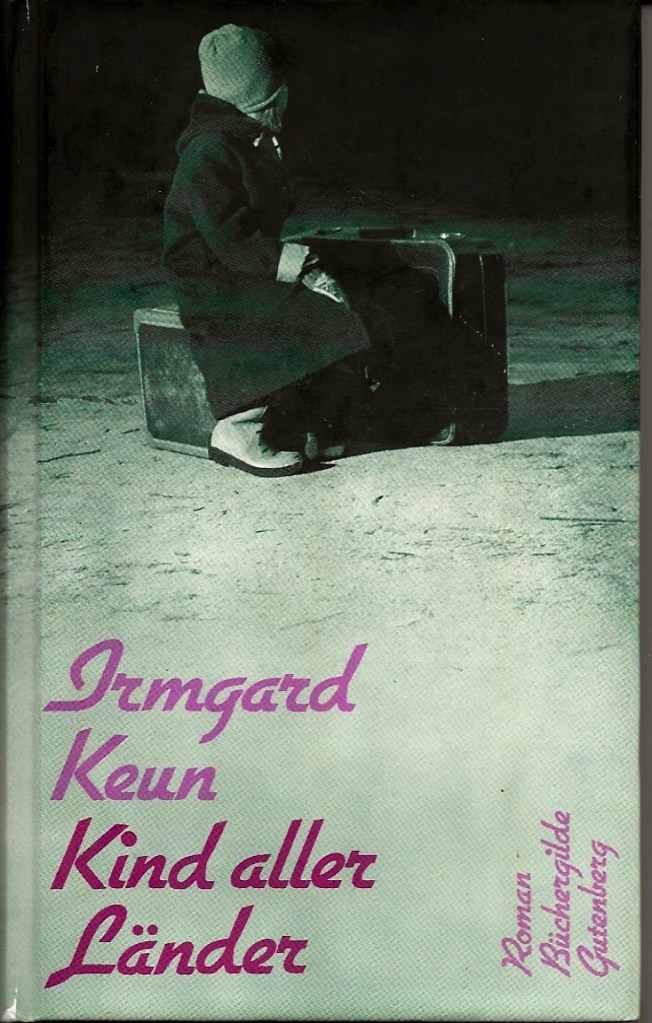
Coincidentally, I have just been reading Irmgard Keun’s 6th novel, Kind aller Länder (1938), published in Amsterdam in German. By that time, Keun had been in exile for several years, constantly looking for jobs, money, and visas, living on the edge in Belgium, later Holland. While her first two novels had been bestsellers, in the case of Silk Girl selling more than 50,000 copies before being banned,  her exile novels reached only a few thousand.  Amazingly, she managed to write four novels on the run. Kind aller Länder is narrated by Keun’s ten-year-old self, working through her adult experience of exile. Like The Silk Girl, Child of all Nations stylistically reproduces the voice of her female protagonist, in this case, the child Kully’s syntax, sentence structure, and unfiltered opinions of the adult world around her.

The novel begins in medias res, without chapter headings, without character introductions, a continuous stream of short sentences and even shorter paragraphs, in the first person voice of a very young girl:  possibly writing in her diary about how the staff in her hotel treat her as a cute little thing, i.e. until her dad disappears to find money to pay the bill. She and her mother stay behind without a penny as  „a security deposit.“ The novel’s first sentence ends with the statement that people say her father should have never married. Thus from its opening lines, the reader perceives a child who has grown old far beyond her years, constantly imperiled but innocently accepting her fate.

The Beach at Ostende, 1936

While her father travels to Prague, Budapest, Paris, and Poland, obsessively searching for work and cash, mother and daughter are stuck in a luxury hotel in Ostende, unable to buy food, often starving for days. When Kully’s birthday present arrives from her father, they can’t pay the import duty, so it remains in customs. Meanwhile, her mother cries, because she is unable to borrow money, unlike her husband who bums change from waiters, doormen, the mailman, friends, other women he seduces, fans of his writing, his Dutch publisher who pleads poverty. Kully understands that her father is a well-known novelist who hates Hitler and the Nazis hate him, so they can’t return to their home in Germany.

Stefan Zweig and Joseph Roth in Ostende, 1936. Keun was Roth’s lover

Between her mostly absent and alcoholic father – he sometimes forgets her in cafes when he is drunk – and her emotionally paralyzed mother, Kully studies a bit in two school books, but doesn’t go to school, spending her time collecting stones, mussels, and sea stars on the beach, at least until they move on to Brussels.  There, she and her mother take long walks “My mother says, that’s almost as healthy as eating.“ In the meantime, long letters from her father to her mother arrive and are quoted extensively, letters filled with hope and dreams that never go anywhere. Things hardly change when they move on to Amsterdam. And so it goes. At one point, Kully and her father travel to New York and Norfolk, VA, – her mother missed the boat and was left behind – but eventually return to Amsterdam, where the novel ends. We know her future is uncertain because the Wehrmacht will soon overrun the country.

Kindertransport arriving London, in 1938
German Refugee Children, 1941

On the novel’s last page, someone asks her, whether she is homesick. She says, she is, but always for a different country. Then she writes she is almost never homesick, if her mother is there, and never when her dad is with them. Child of all Nations is remarkable for its focus on children. While the autobiographical literature on German-Jewish intellectual refugees from Hitler is now voluminous, I know of no other work of fiction that describes the fate of their children in such an unsentimental fashion.

Arrival of Reichskomissar Arthur Seyss-Inquart in Amsterdam, 1940

Irmgard Keun’s own fate was unique. In 1940, with Germans in the streets of Amsterdam, Keun staged her own suicide – as reported in a British newspaper -, then got a SS officer to issue her a passport under her former husband‘s name, allowing her to return to her parent’s home in Cologne. She remained there in hiding for the duration of the war and lived the rest of her life in utter obscurity, unable to find publishers to reissue her famous novels. She was not republished until the 1970s in Germany, when feminist critics rediscovered her work, shortly before she died in 1982.

Happily, this century has seen the publication of much of Keun’s amazing work in English: Gilgi, One of Us (2002), The Artificial Silk Girl (2011), After Midnight (2020), Child of All Nations (2008), and Ferdinand, the Man with a Kind Heart (2020).        

Irmgard Keun, late 1970s

312: Em Gee Film Library

Archival Spaces 312

Murray Glass – Em Gee Film Library

Uploaded 6 January 2023

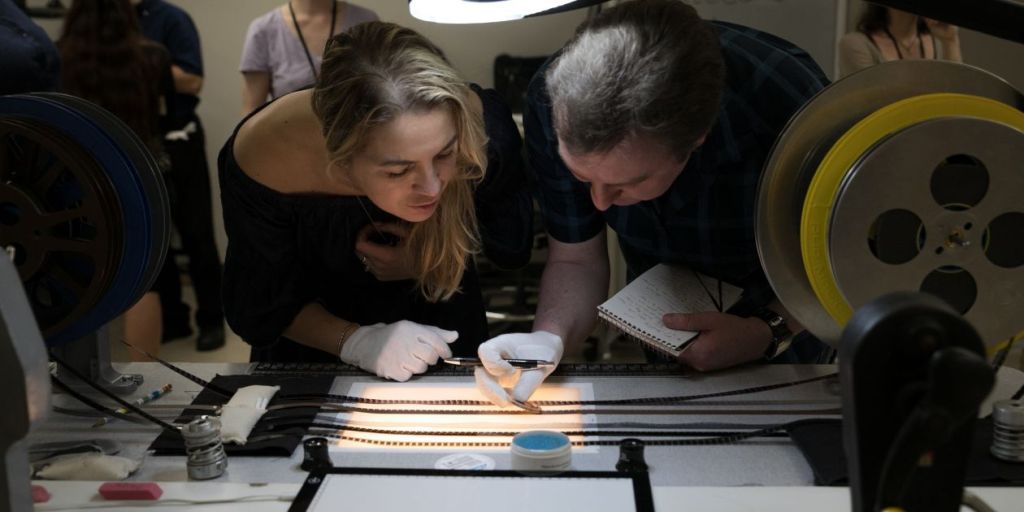
I’ve been thinking about Murray Glass for the last couple of months because I had planned to interview him for a blog, only to realize that he had died in 2019 shortly before the pandemic started, completely forgotten, certainly without any recognition of his passing in the media. Murray Glass owned and operated Em Gee Film Library, a 16mm film distributor which was in business for more than fifty years. I knew Murray for approximately 30 years, first as a client when I was researching my Lovers of Cinema on the early American avant-garde, later as a colleague and sympathetic ear after I moved to Los Angeles and became Director of UCLA Film & Television Archive. The role of film collectors and 16mm film distributors in the history of American film preservation has yet to be written, although Dennis Bartok’s A Thousand Cuts (2016) makes a good start.   

Murray Glass’s Jewish parents were Solomon and Celia Glass who had emigrated in their twenties in 1921/22 from Ostrołęka, Poland to New York, and were living in the Bronx when Murray was born on 25 October 1924. We know from the 1950 census that young Murray gave his profession as a musician and was still living in the Bronx, but no longer with his parents. By then Murray was also a film collector. His father had given him a 16mm film projector with a handful of short films in 1937. He was in the U.S. Army in 1945/46. In 1946, Murray took avant-garde filmmaker and artist Hans Richter’s film course at City College of New York, lending Richter a couple of Chaplin shorts for class; weeks later he received a $ 10.00 check in the email, which constituted his first film rental.  In a 1995 L. A. Times article, he said, “I began going to the Museum of Modern Art, and I became a film junkie.”

Last unpublished catalog

It would not be until 1962 that Murray Glass was able to turn his passion into a profession by founding Em Gee Film Library and quitting his day job as a chemist. He had also moved to Los Angeles in 1951 and married in 1952. Shortly after starting Em Gee, Glass got a call from a film professor friend who asked whether Fritz Lang could come over to see Murray’s print of Lang’s M (1931).  As Murray enthused in the Times article:  “… here was this famous director in my house. I took it as a sign. I felt like a million dollars.”

Em Gee Film Library

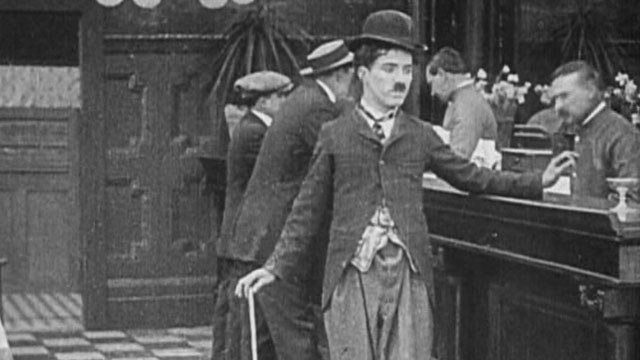
As a lover of American silent film, Murray probably grew his collection by purchasing public domain material and then renting it out. According to Em Gee film catalog 83: “the direction of our effort… (is) namely to offer one of the finest collections of historical films currently available, to which we are making daily additions.” While this sounds like salesmanship, the fact is, Glass had an astonishing breadth of historical films in all genres. With over 6,300 titles at its peak, the film library spanned the years 1893 (Edison’s Fred Ott’s Sneeze to 1965 (Roman Polanski’s Repulsion). The catalog featured Charlie Chaplin films from his Keystone, Essanay, and Mutual periods, Fatty Arbuckle, Buster Keaton, Harry Langdon, Laurel and Hardy, D. W. Griffith, as well as silent and sound features, American and foreign, like De Mille’s King of Kings (1927), Cavalcanti’s Dead of Night (1945) and Francis Ford Coppola’s Dementia 13 (1963). It is an extremely eclectic collection, and I suspect Murray distributed any film he could get his hands on, when duping prints were not protected by copyright, including exploitation films about drug use and some blue movies. Murray claimed that „he acquired whatever there was a demand for.“

Lullaby (1925, Boris Deutsch)
Lot in Sodom (1934, James Sibley Watson)

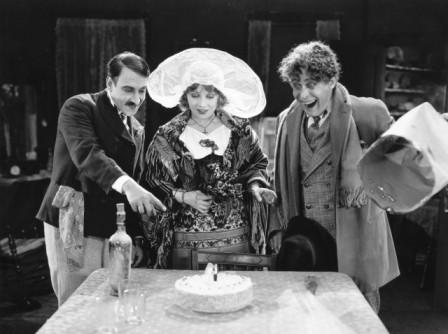
He also distributed newsreels, documentaries, silent and sound animation, and avant-garde shorts from France, Canada, and the United States.  My first contact with Murray was in the early 1990s, when I purchased a print of Boris Deutsch’s Lullaby (1925), for the George Eastman Museum. It was a film I could find nowhere else when researching the early American film avant-garde, and it illustrates the bridge Murray Glass and other 16mm film distributors played in preserving American film history, when few public institutions, other than GEM, MOMA, and Library of Congress were engaging in such film preservation efforts. The print was in very good condition – who knew about the film – so I designated it a master positive for preservation, not to exploit it, but to guarantee its survival.

Ben-Hur (1907)
Evolution (1923, Max Fleischer)

Murray was proud of the fact that he had found a 1907 one-reel version of the Kalem Film Company’s  Ben-Hur, purchasing a 35mm nitrate print at auction and donating the original film to the Museum of Modern Art, while distributing 16mm reduction prints. Glass also claimed credit for preserving Max Fleischer’s feature animation, Evolution (1923) from a tinted and toned nitrate print, he distributed most of Fleischer’s output from Koko, the Clown, and Betty Boop to Popeye, but also Lotte Reininger’s German films.  Em Gee Film was unique in that Murray Glass emphasized film preservation in his introduction to catalog 83: “… because of a variety of factors including carelessness, indifference, greed, and economics, much of our film heritage has long since disappeared into either dust, gummy messes, or disastrous nitrate conflagrations.”

David Shepard (1940-2017)

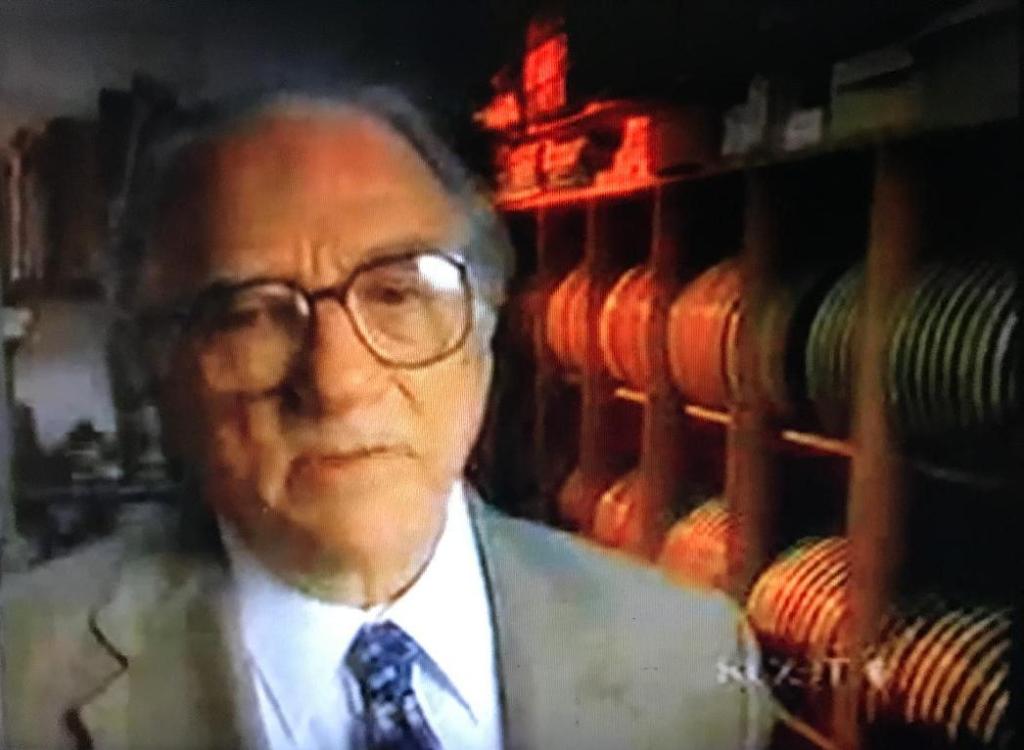
By the time I got to UCLA in 2007, Glass was shopping the collection around. He was asking $ 1.25 million, which according to most experts was over-valued. I went out to see the Em Gee Film Library sometime in 2010; Murray knew the Archive could not buy the collection, but he was hoping an “angel“ could be found to purchase the collection and donate it. In a KCET-TV interview on Life & Times, Glass noted that “universities interested in the collection plead poverty.” My “angel” wasn’t interested. David Sheppard eventually purchased the entire collection in 2011 for Blackhawk Films – now owned by Serge Bromberg’s Lobster Films – with the proviso that Murray could still access his negatives – deposited at the Academy Film Museum – for occasional collector’s prints as long as he was alive. Another proviso was that the used distribution prints would be donated to the Niles Essanay Silent Film Museum in Fremont, CA.  According to an email David sent to Serge Bromberg on 22 January 2011, “This is the most extravagant gesture I have ever made. I could have bought a nice house plus a new car for the money. Let’s hope that the Museum endures for a long, long time.”

Murray Glass died in Van Nuys, CA. on 27 September 2019. It is good to know that his legacy will live on at Niles and in Lobster’s preservation of some gems from the Em Gee Film Library.  

Charles Chaplin ay Keyston, ca. 1915

311: Sirk-Fassbinder-Haynes

Archival Spaces 311

Douglas Sirk’s All I Desire (1953)

Uploaded 23 December 2022

All I Desire, opening dissolve

For the past couple of months I have been researching and planning a lecture course for UCLA, FTV 113 Film Authors, which will focus on the careers of Douglas Sirk, Rainer Werner Fassbinder, and Todd Haynes. Not only have all three specialized in melodramas, but Fassbinder and Haynes see themselves as heirs to the Sirk legacy, both directing quasi-remakes of Douglas Sirk’s All That Heaven Allows (1954), Fassbinder’s Fear Eats the Soul (1954) and Haynes‘ Far From Heaven (2002). It has been exciting to rediscover many of the Fassbinder and Sirk films I had previously seen, sometimes decades ago, but more exciting to see films by Sirk, Fassbinder, and Haynes in a comparative hall of mirrors, each marked by the times in which they were made,  each a product of a different decade, ethnicity and gender. One film I had previously not seen was Douglas Sirk’s All I Desire (1953), a black & white film that marks the beginning of Sirk’s famous series of melodramas, including Magnificent Obsession (1954), All That Heaven Allows (1955), Written on the Wind (1956), The Tarnished Angels (1957) and Imitation of Life (1959).

All I Desire stars Barbara Stanwyck who plays Naomi Murdoch, a less-than-successful actress who returns to her family in small-town America, the fictional Riverdale, Wisconsin after she had abandoned them a decade earlier. The film opens with a voice-over, during which Naomi comments on her failed stage career, which has sunk to the level of vaudeville, “not quite at the bottom of the bill.” When her daughter, Lily, invites Naomi back to see her in the Riverdale High School play, she spontaneously decides to return home. No sooner does she arrive at the local train station, when the town gossips start spreading their deadly poison so that all eyes are on Naomi when she shows up at the high school play. Her straight-laced, still husband, Henry Murdoch, the high school principal, and her oldest daughter, Joyce, are also hardly enthusiastic about her arrival, Henry now being in a relationship with schoolmarm, Sara Harper, and Joyce engaged to a “respectable” young man. Lily, on the other hand, hopes her mother will take her back to New York to become a famous actress. In the course of the narrative, we learn that Naomi had had a long affair with Dutch Heinemann, who Naomi ends up shooting when he tries to force himself on her after her return. Henry forgives her in a happy end that has Naomi receiving a house key.

Originally, Universal considered Joan Crawford and Bette Davis for the role of Naomi Murdoch but settled on Barbara Stanwyck because she was willing to work for “little or no salary,” being in desperate need of a comeback after her career went into decline in the early 1950s. Stanwyck was also not a big enough star anymore to justify Technicolor, which, according to Sirk, would have given the domestic scenes in All I Desire a warmth and glow, like his later domestic melodramas. Instead, Sirk and cameraman Carl Guthrie created an expressionist space of light/shadows and half-truths. The film was written by James Gunn and Robert Blees, based on an adaptation by Gina Kaus of Carol Brink’s 1951 novel, Stopover. Kaus was a German refugee who had been famous for writing feminist novels in Vienna and Berlin before Hitler, and who became a successful screenwriter in Hollywood, primarily at MGM.

In his famous interview with Jon Halliday,  Sirk on Sirk (1971), Sirk also complained that producer Ross Hunter had insisted on a happy ending, although Sirk wanted to retain the darker tone of the novel’s ending in which Naomi is forced to leave Wisconsin and her family behind. That ending and the original title, Stopover, “would have deepened the picture and the character – at the same time the irony,” he said. Sirk liked Barbara Stanwyck, because “in this picture, she had the unsentimental sadness of a broken life about her,” which perfectly contrasted with the cheerful hypocrisy of the people of Riverdale and the “rotten, decrepit middle-class American family she found there.’ Indeed, one can think of All I Desire as a film noir melodrama.

But my favorite characters in All I Desire are the German cook and houseman who have worked for the Murdoch family for decades; there is a running joke about the middle-aged couple getting married, but postponing at every family crisis. Lena and Hans were played by Lotte Stein and Fred Nurney who were both German refugees from Hitler, like Sirk himself; Nurney, in particular, had had bits and supporting roles in more than half a dozen Sirk films.

Mary (1931, Alfred Hitchcock)
Summer Storm (1944, Douglas Sirk)

Born in Berlin in 1894, Lotte Stein played supporting roles in thirty-five German silent and 12 sound films. She was a character actress even in her youth, given her face made for comedy. She appeared in From Morning to Midnight (1921), one of six bona fide German expressionist film classics. After a stopover in Vienna to make a film, Stein eventually emigrated to Hollywood. Like many German-Jewish refugee actors to Hollywood, Stein’s first American film work was in an anti-Nazi film, The Strange Death of Adolf Hitler (1943), after which she continued to appear in credited and uncredited film roles, often appearing as a cook or housekeeper, as in Wallflower (1948). She briefly returned to Germany in 1951, then re-emigrated to Munich after All I Desire, where she continued acting in film and theatre until her death in 1982.

The German-American actor, Fred Nurney, was born in Des Moines, IA in 1895 as Fredrich Nurnberger-Gelingk before he returned to Germany to act in theatre, while only appearing in one uncredited role in Fritz Lang’s M (1931). His first film in Hollywood was, like other émigré actors, an anti-Nazi film, Sirk’s Hitler’s Madman (1943), followed by further examples of the genre, They Came to Blow Up America (1943), Billy Wilder’s Five Graves to Cairo (1943), and Fred Zinnemann’s The Seventh Cross (1944). Playing Hollywood Nazis in postwar war films, as well as in the Sirk films sustained his career until his retirement in 1960. 

 Finally, if anyone doubts that Douglas Sirk was a master of expressionist lighting and not just color, one need only view All I Desire. Sirk had cameraman Carl Guthrie light the many night scenes like a film noir, another indication that Sirk still wished for a dark ending.

Barbara Stanwyck, Browning’s “How do I love thee, let me count the ways…

310: The DuPont Story

Archival Spaces 310

The DuPont Story (1950)

Uploaded 9 December 2022

With Senator Gerald Nye (R, ND) back in the news as an insurrectionist and anti-Semite, the political predecessor of Jim Jordan, I was reminded of his early 30’s project of blaming Jewish bankers and armaments manufacturers, like DuPont, for getting America into World War I.  I came across that story in my research on William Thiele’s feature-length industrial, The DuPont Story (1950).

Nye Committee, 1930: Senators Wagner, Nye, Dill, Rep. McCormick, Sen. Deneen

DuPont started getting extremely bad press in the early 1930s because of persistent rumors about DuPont reaping vast profits during World War I, supplying half the world with gunpowder and explosives. “The Special Committee on Investigation of the Munitions Industry,” aka Nye Committee, under the chairmanship of Gerald Nye chased rumors of price fixing, war profiteering, and conspiring with the banks to stoke war fever in Senate Hearings, beginning in September 1934.  In fact, the production of explosives had increased from 8.4 million lbs. in 1914 to 544 million lbs in April 1917. Added to the negative ledger was the fact that DuPont also controlled General Motors which was subject to a major labor strike in 1936 that was settled in favor of the United Auto Workers. To counteract negative public images, DuPont began sponsorship of a weekly radio program, “The Cavalcade of America,” on 10 October 1935 on NBC Radio Network.  The DuPont Story was not only feature-length but also the most expensive industrial film produced up to that time.  

Muncie Star

The DuPont Story (1950) was copyrighted on 15 December 1950 and shown at company headquarters in Wilmington, DE, as well as at over 100 DuPont plants and sales offices across the country in the Spring of 1951. The Exhibitor, a Hollywood trade journal called the film “documentary-type public relations,“ noting further that it would not be shown theatrically, but was „interesting and well done.“  In fact, theatrical screenings began a month later, The DuPont Story being screened twice daily over a three-week run in Philadelphia‘s WRVA, thus reaching a general public. Not only was admission free, but DuPont also paid for each customer attending, as stated when the film was projected in a Warner Brothers theatre in Reading, PA. Business Screen gave the film extensive coverage, commenting: “While it is true that no effort was made to drag every skeleton from Wilmington’s closet, the Family depicted is a pretty human lot, with some failings and a few false heroics.” The DuPont Story won a Freedom Foundation Award in 1952. It was listed in the Educational Film Guide (1953), available for free loan on 16mm, and is today accessible on YouTube.

Éleuthère Irénée DuPont

The film opens at a DuPont chemical plant in Waynesboro, VA., where the night shift is leaving and the day shift is going to work, the narrator explaining that the company operates 72 plants in 25 States, producing hundreds of products. The color film then flashes back to the company’s founding in 1803 on the banks of the Brandywine, where the recent French immigrant, Éleuthère Irénée DuPont, who had made gunpowder in France is convinced that there is a huge market for quality gunpowder in America. The company expands rapidly, thanks to the lower cost of American powder, now equal to European products, but an explosion in 1818 destroys 85,000 lbs. of powder, costing forty men lose their lives. Under the founder’s son, Alfred DuPont, the company expands, then brother Henry DuPont, “the General,” takes over the company, while his nephew, Lamont DuPont invents dynamite before blowing himself up.

Éleuthère Irénée DuPont (Edwardd Franz), Sophie Dupont (Sigrid Gurie)

As a sponsored film from the largest chemical company in the United States, The DuPont Story sought to project the image of a modern capitalist enterprise that took its civic responsibility seriously, creating products that improved the lives of Americans, while offering employment to tens of thousands. Private enterprise was highlighted early in the film when company founder, Éleuthère Irénée DuPont, visits President Thomas Jefferson, who tells him that he will need private investors since Americans do not believe in government handouts: ““We believe our citizens should take the risks and reap the rewards.” That civic duty extended to making the nation not only independent of European sources for gunpowder but also offering gunpowder at the lowest possible price to citizens engaged in the project of nation-building.

Coleman Dupont (Douglas Kennedy), Pierre S. DuPont (Stacy Keach, Sr.)
Dupont creates Nylon

Given DuPont’s negative reputation for war profiteering during World War I, the film’s narrative of the 20th century deemphasized the production of explosives in favor of research and development of new products that fulfill the needs of the American consumer. As the DuPont Company notes on its website today: “The history of DuPont is a history of scientific and technological breakthroughs… to help people live safer, healthier lives.” Thus, the 20th century begins with the founding of a research facility and continues with a string of technological innovations, which are characterized as altruistic. In 1915, for example, the Company begins spending millions on the creation of new dyes, since America is cut off from high-quality European dyes, due to the war. In the 1920s, they invest further millions in creating fast-drying lacquer for automobiles, but the film fails to mention the company’s financial stake in the auto industry. The development of nylon for parachutes and other products is characterized by decades-long research into polymers by Dr. Wallace Carothers, while the company did its patriotic duty to the nation in World War II by supporting American defense, however without mentioning its involvement in the Manhattan Project to create a nuclear bomb.

Dr. Wallace Hume Carothers (Whit Bissel)
Dr. Wallace Hume Carothers

In its march through DuPont’s and white American history, the film featured a huge cast of Hollywood professionals who made each historical vignette credible, given that the brevity of every performance did not allow for audience identification. Here, one can see most clearly Thiele’s ability to cajole realistic performances through a few bold strokes. One wonders whether Thiele had casting rights since the production took pains to cast actors whose facial features strongly resembled known images of the DuPonts on screen, e.g. Grandon Rhodes who had already played President Jefferson in several films. Several actors had previously worked with Thiele, including Nana Bryant, Stanley Ridges, and Pierre Watkin, while David Bruce, Edward Franz, Stacy Keach, Sr., Douglas Kennedy, Walter Sande, Keith Richards, Grandon Rhodes, Lyle Talbot, Pierre Watkin and Whit Bissell, would also work with Thiele on the Cavalcade of America and The Lone Ranger series.

William Thiele who both directed and contributed to the script, structures the narrative as a series of dialogues between company leaders of various generations, illustrating significant moments in the company’s history. Despite major gaps in that history, Thiele avoids the pitfall of a boring parade of waxworks by focusing on technological development and the company’s investment in products known to the public. Thiele’s ability to extract believable performances from his actors in historical costume by featuring pithy dialogue that comes straight to the point, and an efficient mise-en-scene, make the film both entertaining and educational.