286: The Village Detective (2021)

Archival Spaces 286

The Village Detective: A Song Cycle (2021)

Uploaded 7 January 2022

The Village Detective: A Song Cycle (2021, Bill Morrison)

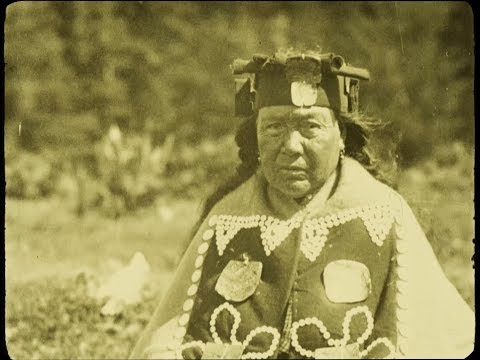
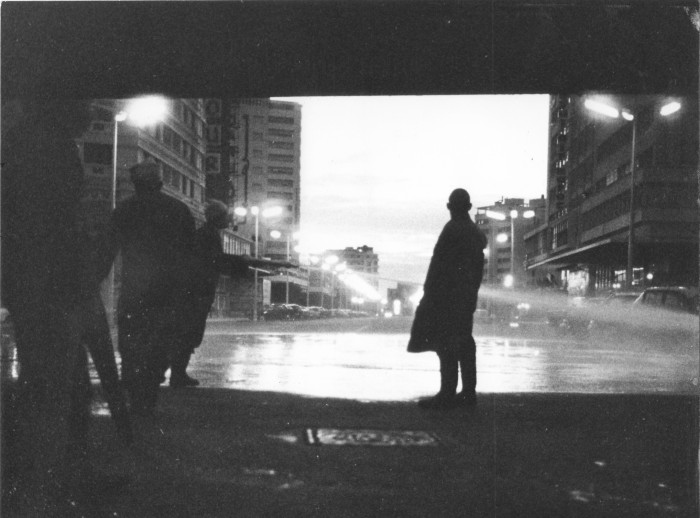
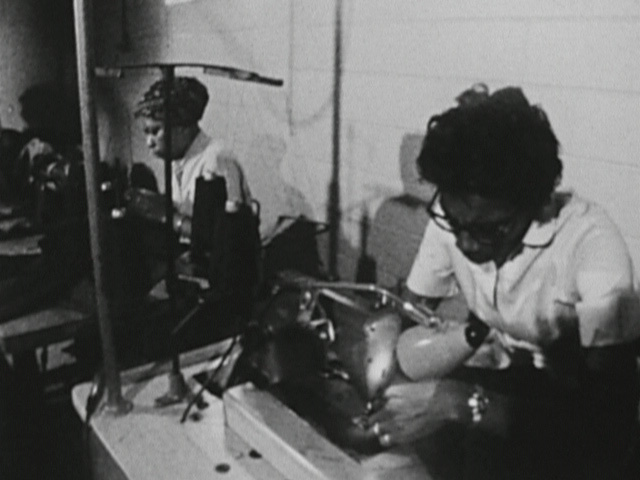
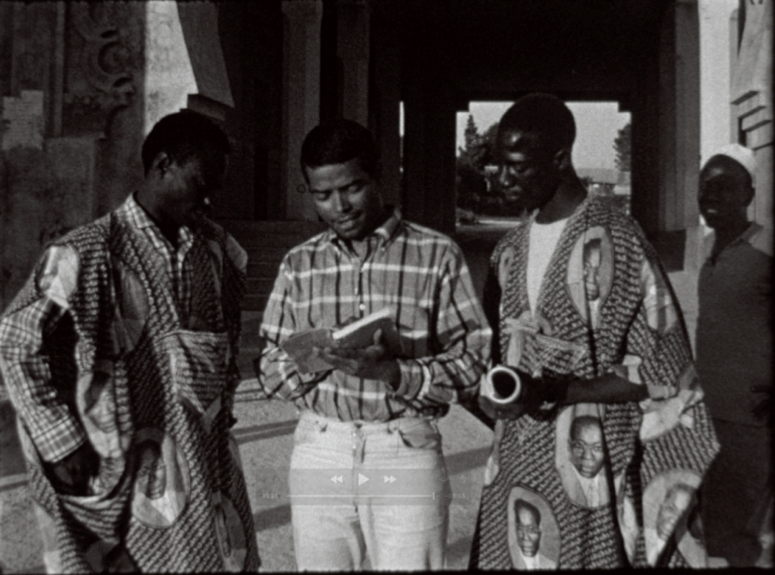
A couple of years ago I contributed to an anthology on the filmmaker Bill Morrison, The Films of Bill Morrison (2017), edited by Bernd Herzogenrath, and I have been a big fan of Bill’s since he first showedDecasia (2002), his feature-length avant-garde meditation on nitrate decomposition. So I was particularly excited when at the Orphans Film Symposium in May 2020 (Archival Spaces 244, https://archivalspaces.com/blog-feed/page/5/), Morrison showed a sneak preview of his film, The Village Detective: A Song Cycle (2021). Like Decasia, it is a film that revels in the beauty of decomposed, in this case, water-damaged film, and the abstract patterns of light and shadow it creates, all of it accompanied by a beautiful accordion-based score by David Lang.

Mikhail Zharov as Aniskin, the village cop

However, the film begins with film clips of the Soviet Russian actor Mikhail Zharov (1899-1981) being interviewed by himself, utilizing clips from his many films. Only then do we see a green underwater shot, looking up at the play of light on the surface, while the filmmaker relates receiving an email in 2016 from Iceland about the recovery of four reels of film from the ocean floor.  As the shot continues, a metal barrel is dropped into the ocean and sinks slowly to the bottom, while the opening credits appear. In the interviews and clips that follow, the audience learns that the four reels discovered by an Icelandic trawler, Fróði, are from a 1969 Soviet film, The Village Detective, a film that is neither lost nor even important, according to Russian film historian Peter Bagrov. Indeed, a restored print of the film (which exists in Gosfilmofond, the Moscow film archive) would probably bore people out of their minds.

The Village Detective

Bill Morrison’s strategy is different, namely to show very long clips of the damaged film, but only those sections that advance the main plot, concerning a Soviet police officer in a small village attempting to find a stolen accordion. While the image appears and disappears as water damage dissolves up to 90% of the film emulsion, and the Russian language track is sometimes heard, but mostly only seen in subtitles, the eye is fascinated by the abstract patterns and ghostly figures moving in and out of the frame. Intercut with this damaged footage, are intact scenes of Mikhail Zharov from the many films in which he appeared over a 60+ year career, many including songs the actor performed.

The White Eagle (1928, Yakov Protozanov)
The Road to Life (1931, Nikolai Ekk)

Zharov, who was an extremely popular actor and even had a Russian stamp printed with his likeness in 2001, began his career as an extra in 1915. He made his official film debut in 1924 in Yakov Protazanhov’s science fiction masterpiece, Aelita, and was then seen regularly in films of the Mezhrabpom-Rus, including Nikolai Ekk’s Road to Life (1931), the Soviet Union’s first talking picture, which made the actor a star. From that point, Zharov became a fixture in the socialist realist cinema of Stalin’s Soviet Union, appearing in more than fifty films, mostly as a character actor. According to Bagrov, His acting was only good when he had a strong hand to guide him, like Sergei Eisenstein in Ivan the Terrible, Part II (1946-58), where he played Czar Ivan’s guard.

The Return of Maxim (1937, Grigoriy Kozinstev, Leonid Trauberg)
Ivan the Terrible, Part II (1946/1958, Sergei Eisenstein)

Morrison juxtaposes film clips of Zharov in Outskirts (1933), Thunderstorm (1935), Comrades (1936), The Return of Maxim (1937), Peter I (1937),  The Bear (1938), New Horizons (1939), Engineer Kochin’s Error (1939),  Fortress on the Volga (1942), in which he often appeared as a thief or other shady, i.e. bourgeois, character or as a singer with a guitar or accordion. Never a hero of the revolution or a good comrade, Zharov is identified as the Soviet Union’s “most beloved iconoclast actor.” He was even blacklisted for a period in the early 1950s because his wife was the daughter to a physician implicated in the infamous “doctors’ trials” of 1949. In other words, the film is neither about a great actor nor a great lost film.

The Village Detective

So what makes the film so fascinating? Both at the beginning and the end of The Village Detective Zharov mentions that he is interested in how life gets woven into art and how art reflects life. Morrison is fascinated how four reels of a no-name Russian film reappear from the bottom of the ocean – he cites a second film, Lenin is Alive (1958) was dredged up from the ocean by a Danish trawler in 1976 – creating a massively damaged, but also visually beautiful film artifact, life creating art; much of the time we only see abstract patterns in brown and sepia with ghost-like images peeking through, but also the perforations and remains of the optical track; as with broken Greek pottery, our mind’s eye fills in the images, but we also remain ever cognizant of the materiality of film. Finally, Morrison is also interested in a forgotten film career from a now-discredited era of film history, produced in a now archaic medium of celluloid, his compiled films reflecting the reality of life under a communist dictatorship, yet always a bit contrary and off. In his final role as Aniskin as the wise old village cop, Mikhail Zharov does get to play a hero; accordingly, the scene of him finding the accordion is taken from the restored print.   

The Village Detective

285: Vienna in Hollywood Symposium

Archival Spaces 285

Vienna in Hollywood Symposium

Uploaded 24 December 2021

Casablanca (1942, Michael Curtiz)

Two weeks ago I attended and was a speaker at the Symposium, “Vienna in Hollywood. The Influence and Impact of Austrians on the Hollywood Film Industry 1920s – 2020s.” The event was hosted by the new Academy Museum of Motion Pictures, USC Libraries, USC’s Max Kade Institute, and the Austrian Consulate General of Los Angeles and was the first event of its kind staged by the new Museum. Friday, 10 December was hosted by the Doheny Memorial Library at USC, while Saturday 11 December took place in the Museum’s beautiful new downstairs screening room. Unfortunately, due to COVID, a number of the speakers coming from Europe could not attend in person and presented their work via Zoom, including the first speaker.
Man braucht kein Geld (1931, Carl Boese)

After the usual opening addresses by the organizers, the morning sessions began with Katherine Prager (Vienna City Library) who discussed “The Vienna Circles in Hollywood.” Beginning with the circle around the critic Karl Kraus and theatre/film director Bertold Viertel, she not only elaborated on the many intellectual circles of Vienna, none of which survived intact in America, but also described the Vienna Library’s extensive holdings of estate collections and correspondence. Next, Paul Lerner (USC) introduced the audience to the psychoanalyst (and possible charlatan) Fred Hacker, whose Topeka Menninger Clinic hosted numerous Freudian psychiatrists from Vienna en route to Los Angeles. Lerner also delved into the influence of psychiatry on Hollywood, e.g. that Marilyn Monroe on the advice of her psychiatrist turned down the role of Anna Freud in John Huston’s Freud (1962) or that producer Joseph Mankiewicz’s whole family was in analysis. The morning session ended with Frank Stern (U. Vienna) discussing the early German films of Hedy Kiesler, aka Hedy Lamarr, who apparently caused a mini-scandal with her film Man braucht kein Geld (1931,) before her worldwide scandal with Extase / Ecstasy (1933).  

The Emperor Waltz (1948, Billy Wilder)
The Spring Parade (1940, Henry Koster)

Two philological papers followed after lunch. Jacqueline Vansant (U. Michigan) discussed the image of Kaiser Franz Joseph in Hollywood films of the 1930s/40s, while Lisa Silverman (U. Wisconsin) looked at Billy Wilder’s Heimatfilm, The Emperor Waltz (1948), both papers noting Hollywood’s benevolent view of the old Austro-Hungarian Empire, despite Austria’s complicity in the Holocaust. In the same vein, Anjeana Hans (Wellesley) analyzed via Zoom American studio remakes of Franziska Gaal’s independent Austrian films, including Koster’s Spring Parade (1940). While Robert Dassanowsky (U. Colorado) made a case for a failed Hollywood-Vienna film agreement in 1936, Regina Range read letters by Vicki Baum, Salka Viertel, and Gina Kaus concerning their impressions of Los Angeles, and, finally, Donna Rifkind recreated the atmosphere in the house of Salka Viertel and her famous Santa Monica Salon.

Dishonored (1931, Joseph von Sternberg)

Day two at the Academy began with Noah Isenberg’s keynote, in which he explicated the Austro-German origins of Billy Wilder’s Some Like It Hot (1959), as well as its naughty phallocentric jokes,  punctuated by numerous film clips. Next, Todd Herzog’s (U. Cincinnati) gave a close reading of Joseph von Sternberg’s Austrian war/spy melodrama starring Marlene Dietrich, Dishonored (1931), while Andreas-Benjamin Seyfert (UCLA) and I reviewed the Hollywood career of film director William Thiele.  

Tilly Losch in The Garden of Allah (1936, Richard Boleslawski)

After lunch, Patricia Allmer (U. Edinburgh) introduced the work of Hollywood specialty dancer Tilly Losch, who had memorable scenes in The Garden of Allah (1936) and Duel in the Sun (1945), but few other Hollywood roles, pursuing instead a career in painting. The next panel was dedicated to composers: Steven C. Smith on Max Steiner, Nobuko Nakamura (U. Vienna) via Zoom on Erich Wolfgang Korngold, and Heather Moore (USC) on Hanns Eisler. Steiner was of course one of the most prolific and successful Viennese composers in Hollywood, while Korngold despite Hollywood success regretted that his serious music was not acknowledged by American music critics. Co-Curator of the event, Doris Berger concluded the day with a panel of Austrians working in Hollywood today.

Max Steiner score for King Kong (1933, Merian C. Cooper, Ernest B. Schoedsack)

A nitrate film screening of Casablanca (1942), brought the symposium to its conclusion, adding an artistic dimension to the proceedings, just as had Isa Rosenberger’s MTV short, “Café Vienne: Dedicated to Gina Kaus,” and Christine Wieder and Klaudija Sabo’s documentary RoughCut: Vienna Exile Below the Line.

Everyone was in agreement that the symposium was very well-organized and featured excellent hospitality. As is always the case with such symposia, the presentations were a mixed bag, both methodologically and qualitatively, some announcing one topic, then discussing another, some stringently academic others anecdotal; one speaker managed to misspell the names of all three directors whose documentary films they were discussing. Nevertheless, this was an excellent start to the Academy Museum’s extracurricular programming and one hopes they will be encouraged to host other symposia in future.

Some Like It Hot (1959, Billy Wilder)

284: Georg Höllering’s Hortobágy (1937)

Archival Spaces 284

George Höllering’s Hortobágy (1937)

Uploaded 10 December 2021

Hortobagy (1937, George Hoellering()

George Höllering’s Hortobágy (1937) is one of those films I have been chasing after for decades and was finally able to see the film at the German Kinemathek’s recent “Film Restored: The Film Heritage Festival,” in a wet-gate transferred digital copy, restored this year by the National Film Institute Hungary, using an internegative for the picture, and a safety print for sound. I was not disappointed in Hortobágy which turns out to be an anomaly in Hungarian cinema in the 1930s when domestic comedies like István Székely’s Lila Akacs/Purple Lilacs(1934) and Béla Gaál’s Meseautó/Car of Dreams (1934) dominated screens in Budapest and Debrecen. An almost neo-realist look a peasant life in the Hortobágy region of Hungary, the film’s long, languid takes and lyrical documentary style is reminiscent of Robert Flaherty’s Man of Aran (1934).

Located in the flatlands East of Budapest and West of Debrecen in central Hungary, the Horotbágy was an arid and sparsely populated steppe or puszta where distinctly Hungarian breeds of cattle, sheep, and horses were raised, the peasants maintaining their traditional and archaic way of life. Originally a center of commerce, the “Great Inn of the Hortobágy” (built-in 1781) was located on the road between Debrecen and Budapest where a stone bridge crossed the Hortobágy River, but the region dried out and the land was depopulated after the Tisza River was redirected in the 1840s. Höllering’s film documented the conflicts between tradition and modernity in a narrative that featured amateur actors exclusively, Hortobágy’s peasants and herdsmen playing themselves with surprising naturalness.

Austrian film director Georg Höllering spent more than two years under difficult working conditions producing independently what was initially only to be a documentary, the director traveling to the region in 1934 to shoot footage with his cameraman László Schäffer. In a second phase, Höllering asked the writer Zsigmond Móricz to develop a film narrative while shooting continuing through 1935. In 1936, the director produced a prologue and the film was released in March 1937. Hortobágy was a huge success throughout Europe but was heavily criticized by right-wing politicians and Hungary’s Fascist government for showing a pre-industrial view of the country. It was also a failure in the country’s cinemas because popular taste favored the kind of commercial comedies mentioned above. On the other hand, the film was imported to the United States by Sam Cummings’ Jewel Prods., where – after a battle with the New York Board of Censors and a Supreme Court injunction –  it premiered in January 1940 and did relatively well given its brief shots of nudity and the amazing depiction of the birth of a foal.

Opening with extensive shots of livestock, herding, and moving on a seemingly endless plain, the film then slowly introduces its human subjects, the Cinege family, consisting of a pater familias, his wife, Jansci, their 10-year-old son, Juliska, their daughter, and their csikós (horseman), Mihály. Everyone is preparing to go to town for the yearly market festival, where horses are studded. The slight story focuses on the boy who wants to become an engineer and keeps sneaking off to the oil well being dug at the edge of their property, much to the chagrin of the senior Cinege, and the daughter who wants to marry Mihály and not the wealthy farmer her father has chosen for her. To show his displeasure, the father destroys the bicycle Jansci has fixed up in order to cycle to the oil derrick, both symbols of modernity.  Meanwhile, Mihály and Juliska secretly meet before the village fair and have sex in the barn.

Höllering lovingly utilizes long takes to capture the daily lives of these sheepherders and horse breeders in the vast expanse of the puszta, but also the conflicts between the generations. Again, the scenes in the village and the market as peasants gather from the surrounding area have a documentary-like precision, contrasting with a fluid camera the movement of animals and their masters, as well as the myriad faces of country peasants. A particularly poignant moment involves an 80-year-old widow who travels to market to see – before she dies – the man she was not allowed to marry in her youth, the couple deciding to live out their final days together after they reunite at the festival. Jacques Lourcelles, the French film critic for Présence du cinema once wrote: “There is a cosmic dimension to Höllering’s characters, who have a forehead in the clouds and a soul among the stars.” And indeed, nature (and the weather) are constantly foregrounded, as in the violent storm that damages the oil well and kills Jansci’s horse.

Born in Vienna in 1897, George Hoellering started his film career as an exhibitor in Vienna in 1919, then moved to Berlin in the mid-1920s to produce and edit shorts. He was the production manager on Slatan Dudow’s left-wing Kuhle Wampe (1932) and on Heinz Paul’s right-wing, Tannenberg (1932), fleeing Germany shortly thereafter, because of his Jewish wife. They returned to Vienna but emigrated to London in 1937, where he managed the Academy Cinema in the West End. He also produced propaganda shorts for the British government during World War II and produced, directed, and co-wrote with T.S. Elliot, Murder in the Cathedral (1952), his last foray into film production.

He continued to manage the Academy Cinema until his death in 1980. Ironically my first knowledge of Hoellering came two years later when I found out that Helmar Lerski’s film, Avodah (1935), had been screened there in 1938 but was nowhere to be found. Miraculously, the 35mm nitrate print shown back in 1938 was found in a storeroom of the Academy, when the cinema was demolished in 1989 and is now preserved at the British Film Institute.   

283: Gotto’s Passing and Posing

Archival Spaces 283

Lisa Gotto: Passing and Posing Between Black and White

Uploaded 26 November 2021

Symbol of the Unconquered (1920, Oscar Micheaux)

Lisa Gotto, a professor of film theory at the University of Vienna, originally published her book, Passing and Posing. Between Black and White. Calibrating the Color Line in U.S. Cinema (Bielefeld: transcript verlag, 2021) in German in 2006 as Traum und Trauma in Schwarz-Weiß. Ethnische Grenzgänge im amerikanischen Film, the German title playing on the German words for dream and trauma. The book was her Ph.D. dissertation in which she analyses the racial content of six films from three different periods in American film history, arguing that historically determined film aesthetics impact the formulation of racism/anti-racism in each film. Thus, while The Birth of a Nation (1915, D.W. Griffith) and Symbol of the Unconquered (1920, Oscar Micheaux) articulate polar opposing attitudes towards race, both narratives are structured according to the conventions of classical silent film. Imitation of Life (1959, Douglas Sirk) and Shadows (1959, John Cassavettes) acknowledge their own artifice, constructing narrative self-reflexivity. Finally, with Bamboozled (2000, Spike Lee) and The Human Stain (Robert Benton, 2003), both produced after the death of 35mm cinema and the proliferation of multiple media platforms, the epistemological, semantic, and technical presuppositions of these works are queried.    

In D.W. Griffith’s ultra-racist narrative, Gotto defines white-nationalist ideological coordinates according to a strict color line between black and white, wherein the segregationist director’s venomous barbs are reserved for those persons who cross that line. The so-called mixed-race mulattoes defile the supposed purity of white blood and thereby muddle the film’s strict racial hierarchies, which simultaneously define stable class and economic relationships. Oscar Micheaux, on the other hand, constructs a racial binary between black and white from a distinctly opposite perspective, wherein the act of “passing” as an economic survival strategy in America’s viciously racist society is interpreted as a betrayal of Blackness, because passing’s temporal ambivalence is “constantly bound to the horror of concealing, denying, and white-washing.” (p. 56.)

Imitation of Life (1959, Douglas Sirk)

In the German émigré director Douglas Sirk’s Imitation of Life, whiteness is seen to be an ideological construct and a social formation, allowing the light-skinned daughter of a black maid to pass, but also consistently connecting Sara Jane’s whiteness to her African-American mother, thereby contextualizing her wish for social mobility as a denial of her family relations and rendering her emotionally torn; the inherent contradictions of the narrative thus constantly call attention to themselves, radical ambiguity becoming a stylistic device to avoid the hardest questions of race.  Cassavettes’ independent, low-budget feature, Shadows, also fosters an extreme form of ambiguity that frustrates any unified legibility, its mixed-race characters confronting their racial identity only as a background theme when confronted with racist sentiments. Skin color vacillates with the light and camera exposure, but also defines racial identity, self, and the other, allowing actors to experiment with multiple identities.

Bamboozled (2000, Spike Lee)

Spike Lee’s instrumentalization of black face in Bamboozled, in order to make manifest racist presuppositions of white America – even when confronted with a diversity and black and brown people – is primarily a critique of American cinema, but also of an audience that fails to see the bitterness behind the mask. Black face is connected to death and lynching, but also to the unreality of an entertainment reduced to smiling black mouths, eyes, and feet that eliminate any perception of humanness. In Benton’s The Human Stain, a “Jewish” (actually African-American) art history professor whose whiteness (and ability to pass) is reflected in the whiteness of the Greek statutes he studies, cannot escape his racial origins, “the ego remains constantly subjected to its racist definition.” (p. 218). Ironically, he is fired for making racist comments, but the ultimate and regrettably unmentioned irony of this film is that a white actor, Anthony Hopkins, plays an African-American passing as white, thereby metaphorically in black face.    

Lisa Gotto

Lisa Gotto’s concluding remark for The Human Stain may hold true for all race relations in a society that has not freed itself of racism, even when obvious color lines have been legally eliminated and racially ambiguity is celebrated: “The ambition of self-discovery cannot be thought beyond racist regulation because within racist society the social being perpetually remains subject to a racial typecasting.” (p. 230).  This is an important book and should be read, but I admit to feeling a certain discomfort in the fact only two of the six directors discussed here are African-American, possibly skewing the validity of any of its conclusions.

Shadows (1959, John Cassavettes)