382: Abraham Ravett

382: Abraham Ravett

Archival Spaces 382: Abraham Ravett Films in Berlin

Uploaded 19 September 2025

Łódź:22592 (2019, Abraham Ravett)

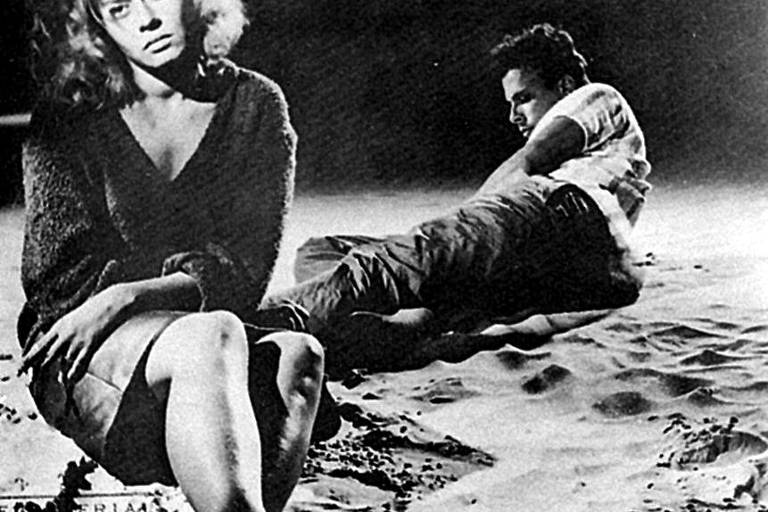
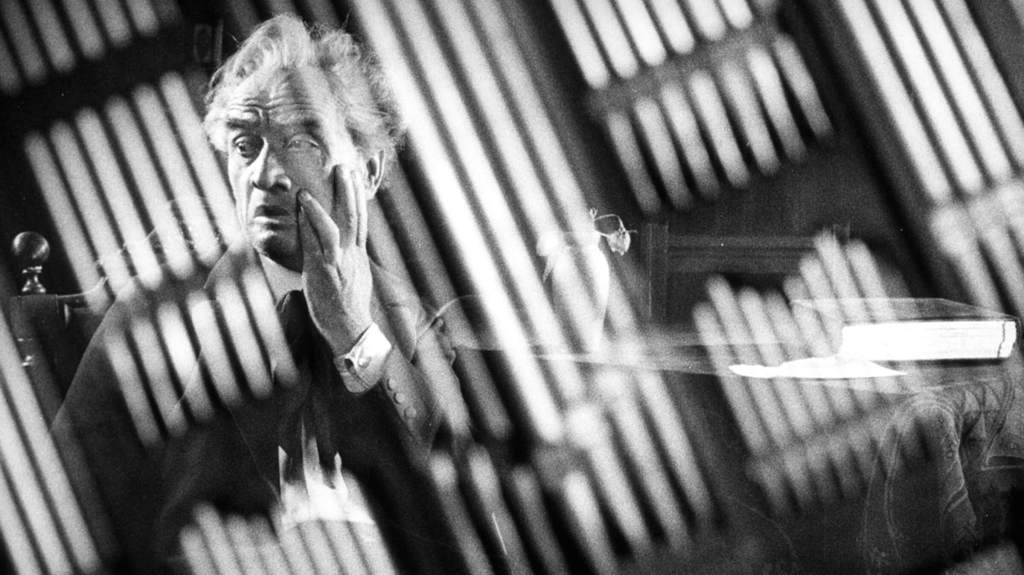
I’ve known independent filmmaker Abraham Ravett for 35 years. We met when he came to Rochester in 1990 to screen his late Hampshire College colleague, Tom Joslin’s Blackstar: Autobiography of a Close Friend (1976), one of the first films about everyday gay life. Abraham and I became friends and have kept in touch over the years, our friendship cemented by the fact that we are both sons of concentration camp survivors, whose fathers were silent. Recently, Abraham wrote to me that his films be screened in Berlin, a selection of four experimental films he has made over the years, ostensibly about his family, and the family he might have had, were it not for the Holocaust. The films will screen on 30 September at the Zeughauskino in the German Historical Museum on Unter den Linden Strasse.

Toncia and Fela Ravett

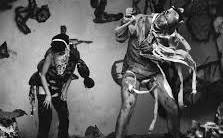
There is a mysterious image of young girls carrying chairs over their heads, obscuring their faces, that is repeated several times in Abraham Ravett’s Half Sister (1985), a shot we learn at the film’s end was taken by a Nazi cameraman in the Warsaw ghetto. Like a second image from the same source of girls exiting a door, possibly a school, it is a stand-in for Ravett’s half-sister, Toncia, who perished in the Holocaust. Abraham’s mom describes the moment her daughter was taken from her in May 1944, one of a few sound sequences in the film. But like the other films in the program, Half Sister is about absence, loss, and silence. We see modern footage of a woman at various stages in her life, implying the life Toncia may have led, but also a field burning, symbolizing the chimneys at Auschwitz. Most of the images, whether negative, out-of-focus, or flash frames, do not reveal their meaning; they are too disconnected to create coherence, just as the loss of a child and a would-be sister defies comprehension.

Łódź: 22592 (2019, Abraham Ravett)

Łódź:22592  explores the Jewish ghetto in what the Germans called Litzmannstadt in the years 1941-1944, as captured by the Jewish photographer, Henryk Ross (1910-1991).  Ross, who worked for the Nazis but was Jewish, buried the negatives in 1944, then recovered ca. 3,000 of them after the war. The collection was eventually purchased by the Art Gallery of Ontario, which published the book, Memory Unearthed. The Łódź Ghetto Photographs of Henryk Ross (2015). Ravett begins the film by placing a copy of the catalogue on a table, and then reproducing images from the book, while noting in a title, he wishes he could see images of his father, first wife, and their two children. The film is thus a search for traces of his family in their last known place of residence. It is a film about the trauma of loss, of fragments of memory and images which will never again create a whole. Ravett utilizes long takes to explore Ross’s black and white photographs of everyday ghetto life under Nazi occupation, children, street scenes, work in factories, family gatherings, the subjects often looking directly into the camera. Ravett also intercuts images of ghetto postage stamps and other public documents. The film is almost completely silent, except for snippets of ambient sound and a color image of Łódź today, its past invisible. There follows a live action shot of Abraham’s father later in life, talking but without sound. As I know from Abraham, Ravett’s father never revealed the secrets of his Holocaust survival; the end title tells us the film is dedicated to ר׆׆   חװק (Chaim Rawet). One image shows a portrait of a Jewish woman with the negative number 22592 clearly visible. Ravett highlights the number in his title. Could this be an image of his father’s first wife, who perished in the Holocaust? The film’s silence indicates that neither the filmmaker nor we shall ever know.

Notes on a Polish Jew (2012, Abraham Ravett)

Ravett’s obsessive (and seemingly futile) search for his father story is given abstract form in Notes for a Polish Jew (2012), an experimental film, created with an optical printer. The silent film opens with a freeze frame of a typical Communist era food shop in Łódź, then a brief image of a man walking through the frame who could be Abraham’s dad, but is not, because as he tells us in a description of the film “If his father had lived beyond the age of seventy-four, the following may have been the cinematic response to the city….” But the image is fleeting, the footage abstracted by slippages in the projector, flash frames, black and colored leader, scratches, sprocket holes, upside down footage, discolored frames, a Goofy cartoon. Shot in color in the 1980s, we see glimpses of ordinary Poles and an open air marketplace, but they reveal nothing of the present or the terrible past. The film ends as it begins with a man walking throught he frame, a circular narrative into a void.

One Flower (2023, Abraham Ravett)

If Łódź:22592 revisits the filmmaker’s relationship to his father, One flower (2023) is a recent film about his mother, who has been the subject of numerous previous films, including The March (1999), Lunch with Fela (2005), and Trepches (2009). At its center is a grainy photograph of a women, her head and face obscured by decomposition, the only photo his mother managed to carry from Poland to Israel and then to America. We never learn who is seen, but we read that, like Abraham’s father, her mother had a family that perished in the Holocaust. Ravett obsessively asks questions he can’t answer. Maybe that is the real message of the Holocaust. Silences dominate the film, just as the fragments of images and documents, whether a large family portrait with grandmother, grandfather and mom, passports of his parents, Abraham’s youthful sketches of his parents, unidentified images of black & white country landscapes, . children in a kibbutz or grocery lists, raise more questions than they answer. But asking those questions is itself an act of mourning and memorialization.

P.S. The Zeughaus Cinema has moved temporarily into the Pei-Bau on Hinter dem Glasshaus 3, just off Unter den Linden.

One Flower (2023,, Abraham Ravett)

381:  Tamara

Archival Spaces 381: 

Identifying Silent Film Actors

Uploaded 5 September 2025

Ein Sommernachtstraum (1925, Hans Neumann) with Tamara, Charlotte Ander

Identifying film actors who are not listed in the credits or misidentified can be a tricky business, because available filmographic resources are not always accurate and comparing images can be deceiving. I ran into this problem a number of years ago, when I helped Northeast Historic Film identify an unknown biblical epic that had been distributed in America as The Fall of Jerusalem, but turned out to be Jeramias (1923, Eugen Illés), a German film. IMDB is often not completely reliable because it is a user-generated site that depends on input and corrections from the public. I encountered both filmographic inaccuracy and photo identification issues recently again, but, as in the case of Jeramias, both issues were solved through the concerted effort of a number of international film scholars and collectors, including Jean Ritsema, Ivo Blom, Johan Delbecke, and Werner Mohr.

Tamara, Guido Seeber, Production shot A Midsummer Night’s Dream
Star Postcard

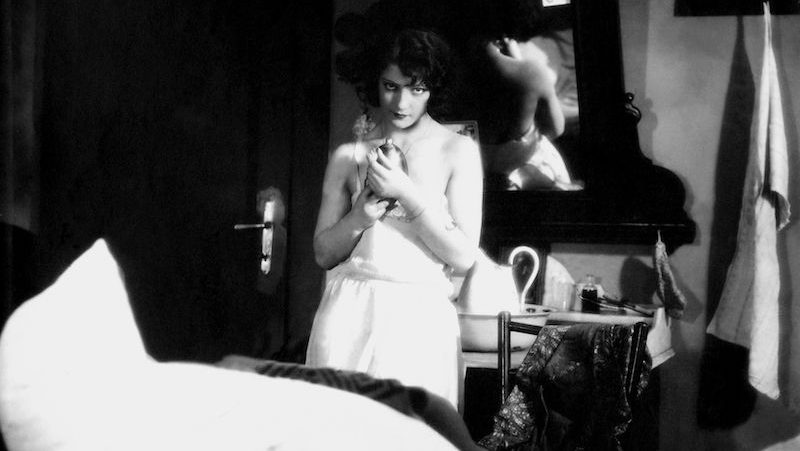
The story begins when Michigan collector Jean Ritsema contacted me in early July about identifying a postcard for “Tamara Karsavina” (Traldi 863, Ross Image Archive) from the German collector Werner Mohr, which they believed might be a shot of the character of Oberon in the German film, A Midsummer Night’s Dream (1925). I had written about that film (https://archivalspaces.com/2023/08/04/327-a-midsummer-nights-dream/) and had misidentified Oberon as Tamara Geva, as had the San Francisco Silent Film Festival and other sources. Ritsema stated that the Russian ballerina was probably still in Russia when the film was made, and also noted that she looked very similar to Tamara Tolstoi in The Joyless Street (1925), which I had restored at the Munich Filmmuseum. She also sent me a 1925 interview with Tamara (no last name) from the German fan magazine Filmland (No. 8, June 1925), which included a photo recognizable as the actress “Tamra Tolstoi,” playing Lia Leid in The Joyless Street. According to the interview, Tamara had started her career with Friedrich Zelnik in a film later identified as Eugen Onegin (1919), where she used the pseudonym Thea Pellard. Next, Ritsema sent me a link from a Belgian postcard collector, Johan Delbecke,  to an “Erna Thiele” webpage by Stephanie D’heil (www.steffi-line.de), suggesting that Dorothea Elise Alma Gertrud Thiele, an actress prominent in the mid-1910s in Germany (Homunculus, 1916), may have used various pseudonyms, including Renée Pelar, Thea Pellard, and Tamara. After her retirement from the screen, she married the Swiss painter, Peter Voltz, and became a painter herself, Tamara Voltz.  I responded that it was strange that in the Tamara interview, she had not mentioned her earlier German career. The photo of Erna Thiele on the webpage also looked very unlike the dark-haired, “Russian” beauty of Lia Leid.

Over the next weeks, we both attempted to research Tamara Geva and Tamara Tolstoi. Geva, as Ritsema noted, apparently made two films for UFA, but was only in Berlin a couple of months before moving on to Paris with her husband, George Balanchine. None of the films credited on IMDb to Geva were produced by UFA, but Gräffin Plattmamsell (1926) was distributed by UFA. Was this Geva or Tamara, or Thiele? Through continued research, I realized that Countess Tolstoi credited in the Joyless Street was actually the daughter of Leo Tolstoi, and was on a lecture tour through Europe in 1925, but was about 60 years old and played Valeska Gert’s brothel assistant. At the Munich Filmmuseum, we had credited Tamara Tolstoi as Lia Leid, but now I was no longer sure since no German version credits of the film had survived.  On the other hand, a contemporary reviewer had eroneously listed Lia Leid as Countess Tolstoi.  We also followed up on a lead from Ivo Blom that a Countess Tolstoi had appeared in La Petite Marchand d’Allumettes (1928) as a woman with a dog, again obviously the older Countess.

Dorothea Thiele’s birth certificate
Tamara Voltz 1970s

Ritsema had contacted Blom, a well-known Dutch film historian and specialist in Italian Cinema, to research the Italian films mentioned by Tamara in her interview. Blom consulted Vittorio Martinelli’s Il cinema muto italiano, Vol. 1920 and discovered that Renée Pelar had indeed starred in several Italian films in the early 1920s, including Liberazione (1920) and La donna del mare (1922). So Renée Pelar was another pseudonym for Tamara, but was she also Erna Thiele? The Erna Thiele website had also named a source as documentation for her later marriage to Voltz, so Ritsema looked up the book on WorldCat and found that a copy was housed at the UCLA Library. I ordered the book, Alfred A. Häsler’s Außenseiter-Innenseiter, 28 Porträts aus der Schweiz (1983). A chapter in the book on the Swiss painter, Tamara Voltz, confirmed that she had been born in Berlin on 23 March 1896 and spent much of her life in Locarno, Switzerland; she died in Klosters on 4 August 1985. So we thought Dorothea Thiele was indeed Erna Thiele, but also Thea Pellard, Renée Pelar, and Tamara in her fractured film career.

But in a final twist, Jean Ritsema wrote to me on the day the first version of this blog was published that Erna Thiele and Dorothea Thiele are two different actresses; the former was born in St. Petersburg on 6 May 1895 as Erna Josephine Thiele. Her filmography has now been corrected on IMDb. We still don’t know what Tamara Geva’s only possible German film credit was.

Tamara in The Joyless Street (1925, G.W. Pabst)

380: IMLS

Archival Spaces 380:

Institute of Museum and Library Services in Peril

Uploaded 22 August 2025

Back in the late 1980s and early 1990s as film curator, I applied for and received several Institute of Museum Services grants for cataloguing and preserving the film poster collections at George Eastman Museum. That federal agency had been in existence since 1976. Through the 1996 Library and Technology Act, the agency was absorbed into the independent Institute of Museum and Library Sciences, as were the activities of the National Commission on Libraries and Information Science. The Congressional Act was reauthorized in 2003 and again in 2010. Between 2016 and 2024, Congress appropriated anywhere between $230 million and $497 million to IMLS, which was divided between individual states, and a host of other programs, including those for Native Americans, Latinos, African Americans, National Museum Leadership, and Professional development. In FY 2024, $ 266 million was awarded. IMLS makes up no more than 0.0046% of the Federal budget. The grant application process is extremely rigorous, peer-reviewed, and requires periodic reporting before, during, and after the grants have been awarded.  Such funding has been absolutely crucial for film and media archives and museums, funding operations, cataloguing, collection maintenance and expansion, curatorial activities, and professional development.

Keith Sonderling, Trump’s Henchman at IMLS

In his never-ending quest to destroy American government, education and American cultural institutions, Donald Trump on 20 March 2025 appointed Keith E. Sonderling to the position of “Acting Director” of IMLS with the specific brief to eliminate the staff and the work of the agency: Executive Order, “Continuing the Reduction of the Federal Bureaucracy,” required within seven days the elimination of IMLS “to the maximum extent consistent with applicable law.”  On Monday, 31 March, circa all fifty-five employees of IMLS were put on administrative leave. The notification followed a brief meeting between Elon Musk’s DOGE staff and IMLS leadership. Employees were required to turn in all government property prior to exiting the building, and email accounts were disabled. At the same time, Sonderling cancelled all 900 open awards to museums across the United States. According to a published staff text message: “As of the end of March there were 891 open awards to museums with $180 million in federal funds (appropriated in prior fiscal years to support multiyear projects) matched with $185 million of non-federal cost share.”  

Institute of Museum and Library Services Building in Washington. D.C.

Within days, grantees were notified of the cancellation of open grants. The grant process for 2025 was paused. Yet messages were mixed. As one arts administrator with several open grants told me, IMLS was still requiring institutions to continue delivering intermediary and final reports; otherwise, they risked “becoming ineligible for future IMLS grants.” At the same time, when inquiries were made to IMLS, instructions were either contradictory or not forthcoming at all, not surprising, given that only one or two staff members remained to answer the phones. As in almost every other corner of the Trump government, including the Social Security Administration, MAGA-generated chaos reigned supreme.

The National Blues Museum, St. Louis, received $341 K in 2024 from IMLS

Within a week, nineteen members of the National Museum and Library Services Board wrote to Sonderling – in German, his name means crank or oddball – that all current-year and multi-year grants, contracts, and awards had been authorized by Congress, “are non-discretionary and must be honored.” A second letter remained unanswered, as did the first. On 4 April, a coalition of twenty-one state attorneys general filed a lawsuit against the Trump administration, claiming Trump’s executive order was illegal. Days later, the American Library Association (ALA) and the American Federation of State, County, and Municipal Employees (AFSCME) filed a lawsuit against DOGE for “the Trump administration’s gutting of the Institute of Museum and Library Services (IMLS).”

Digital Humanities Advancement Grants from IMLS have benefited Media Archives

While in response to the ALA lawsuit, U.S. District Court Judge Richard Leon on 30 April initially granted a short-term emergency injunction blocking the Trump administration’s efforts to dismantle the independent agency, the same judge in a ruling on 6 June stated that the plaintiffs had failed to establish “a substantial likelihood of success on the merits.” The court’s interpretation was frustrating because Judge Leon determined that the lawsuit was ultimately centered on contractual, not constitutional, issues. Meanwhile, on 5 June, Chief Judge John J. McConnell in the suit filed by the coalition of Attorneys General, Rhode Island v. Trump, ordered a preliminary injunction against the Trump Administration’s dismantling of three federal agencies, including IMLS. The judge found that the administration acted “without proper procedures,” violating the separation of powers, the Administrative Procedure Act, and the Take Care Clause. IMLS was supposed to comply with the order by again processing and disbursing grants, bringing employees back to the office, and scrapping plans to move the agency into a smaller office space in the Department of Labor. However, given the contradictory rulings, it is unclear whether the Trump Administration will comply. To date, the Administration has ignored the order, as it has almost every other ruling against it by the judiciary.  Write to your Senator and Congressperson to stop this outrage.

AIC amd FAC have also benefited from IMLS grants in 2024

379: Karel Čapek

Archival Spaces 379: 

Photography by Karel Čapek

Uploaded 8 August 2025

Olga Scheinpflugová with actress Adina Mandlová and puppies, 1936,

The name Karel Čapek (1890-1938) is familiar to American science fiction readers and certainly specialists in Slavic literature, but probably not many others. In the Czech Republic, however, Čapek is revered as one of the greatest authors of the first half of the 20th century; Ivan Klima, writing a biography of Čapek, claimed he had a huge influence on modern Czech literature and language. Čapek wrote the widely staged expressionist play “R.U.R.” (1920, Rossum’s Universal Robots) which coined the term robot; the dystopian science fiction novel, The War of the Newts (1936), about the discovery of a salamander-like race that civilization enslaves – until they rebel, a metaphoric description of Third World exploitation by the white races; the play, “The White Sickness” (1937) warning about Fascism, which Hugo Haas adapted as a film, Skeleton on Horseback (1937) – see Archival Spaces 243 (https://archivalspaces.com/2021/12/04/242-hugo-haas-the-white-sickness/). Apart from countless other journalistic and literary works, Čapek was nominated for seven Nobel Prizes in Literature, but never won. Completely unknown until now, though, is his prolific photographic work, which the Consulate General of the Czech Republic in Los Angeles and the Society of Arts and Sciences is now exhibiting in their Emil Kosa Jr. Gallery until 25 August. Consul Jaroslav Olša opened the exhibit on 25 June 2025.

Curated by Helena Musilová, the exhibition presents a cross-section of Karel Čapek’s amateur photographs from the 1930s, which include portraits, travel photos, still lifes, architectural images, and nature images. Using a Leica 35mm camera, his images lack the avant-garde ambitions of contemporary Czech photographers, like František Drtikol, Jaromir Funke, Jaroslav Rössler, Jindrich Štyrský, and Josef Sudek, even if the low-angle view of his brother Josef below is typical of the avant-garde. Rather, Čapek’s photographs are unpretentious, authentic, and charming, more interested in their subjects than in the Constructivist and Surrealist formal play in which the Devětsil group engaged in.

Tomáš G. Masaryk
Tomáš G. Masaryk

 Čapek’s photographic portraits are direct, informal snapshots, whether of his wife Olga Scheinpflugova, his brother Josef Čapek –BTW the actual inventor of the word robot- or Tomáš G. Masaryk, the founding President of Czechoslovakia and a personal friend of the writer. Some shots of Masaryk have him looking directly into the camera, others show him in a pensive mood, looking down, hat in hand.  Masaryk died in September 1937, only a year before the Munich Agreement gave the young Republic away to the Nazis, while Čapek himself died of pneumonia in December 1938. Olga is seen in all kinds of poses, with a pack of puppies, on the side of the road in the Dolomite Mountains with her husband and their car, or sunbathing beside a pond. According to curator Musilová, “Olga knew she was being photographed and knew how she wanted to be seen. Already in the 1930s, (she) … discovered the power of the visual diary, personal branding, and the joy of self-presentation.” An influencer. She was herself a writer and a theatre actress, a member of the Czech National Theatre, and author of numerous novels, children’s books, and at least five films before the Nazi invasion. Brother Josef Čapek, on the other hand, is seen with his dog and with a watering can in his hand, looking up at the camera, taking a break from gardening chores in his Prague villa. Apart from collaborating with his brother on literary works, Josef was a modernist painter strongly influenced by Cubism, and a cartoonist for the Prague daily paper, Lidové noviny. He was arrested by the Gestapo in 1939 and died in Bergen-Belsen Concentration Camp in 1945.

Peasant women in Orava
Lappland Tent Camp

Another set of images concerns Čapek and Scheinpflugova’s travels through Europe, where the photographer was particularly interested in documenting with anthropological precision the country’s folk culture and its technology. In Holland, he photographs windmills and large ships in the harbor; in Lapland, he documented the area’s nomadic people, their tents, certainly a tourist view but also deeply sympathetic without voyeuristic exoticism. This was also true of his images of the Orava region in north-western Slovakia, a sparsely inhabited area, where peasant customs had remained unchanged for centuries. There is a simple humanity in the photos, in tune with the slow pace of rural life, so different from the political turmoil gripping Prague at that time. The photographs reminded me of a trip I made with my parents in the Summer of 1968 to the Tatra region further East in Slovakia, which seemingly was untouched by Communism or modernity. It was there that we saw Russian tanks “on maneuvers,” tanks which only two weeks later would end the miraculous Prague Spring.   

Josef Čapek, 1930s
Josef Čapek, 1930s

As a science fiction writer, and as indicated by his photographs of ships and heavy machinery in the Netherlands, Čapek was particularly interested in modern technology. Steam engines, automobiles, factory assembly lines, machine parts, cameras, these were the stuff of German Neue Sachlichkeit, American straight photography, and advertising photography. Čapek’s photography of a huge steam engine pulling into a station not only reminded viewers of the Lumiere Brothers’ first films from the turn of the century, but also of New Realist photography with its valorization of technology, its focus on the textures and hard forms of steel, and the intricate patterns of moving machine parts. That optimistic view of technology existing for the improvement of mankind constituted Čapek’s worldview; it would disappear a decade later with the atom bomb.