377:  Hans Feld

Archival Spaces 377:

Hans Feld, Weimar Film Journalist

Uploaded 11 July 2025

Hans Feld is probably the most well-known and prolific film journalist writing for Weimar Germany’s most widely read film industry publication, Film-Kurier, after Lotte Eisner. Hans Feld was born on 14 July 1902 in Berlin and died on the same day, his 90th birthday, in 1992 in London. A complete bibliography of all his reviews and articles, Hans Feld: Redakteur und Kulturjournalist. Bibliografie Film-Kurier 1926-1932 (Munich: Text + Kritik), edited by Eva Orbanz, formerly of the German Kinemathek in Berlin, has been available for a couple of years. Unfortunately, bibliographies are the stepchild of film studies, despite their centrality to film historical and archive research, which leads me to this blog on the eve of Hans Feld’s birth/death date.

I first met Hans Feld briefly in October 1981, when we were both contributing authors to the catalogue Prussia in the Cinema, part of a major exhibition, organized by the German Kinemathek.  In August 1982, I interviewed him on the phone and corresponded with him about the photographer/filmmaker Helmar Lerski. At the time, I was researching Lerski for an exhibition and was trying to track down his then still lost film, Avodah (1934), which had been screened in London in 1938. I had found Feld’s review of Avodah in a Zionist newspaper, published in Prague. Ironically, the film turned up more than a decade later in the same West End London cinema where it was originally screened and is now preserved. Feld also told me about Lerski’s failed attempts to work for John Grierson’s documentary film unit.  I next met Feld in February 1983 at the Berlinale Retrospective, “Six Actors in Exile,” while I was writing my dissertation on anti-Nazi films by German-Jewish emigres; I interviewed him, as well as Alfred Zeisler, Wolfgang Zilzer and his wife Lotte Palfi, both of whom had appeared in Casablanca. After that, I continued my correspondence with Feld to track down some of his former colleagues who had emigrated to England, like producer Max Schach. Feld was no longer in the film business, but he knew a lot of people.

Hans and Kati Feld in 1930s
Hans Fel in 1920s

Born into the house of German-Jewish merchant, Herrmann and Hermine Feld, Hans experienced literature and theatre at an early age, thanks to his mother. During the German Revolution in November 1918, Feld joined his high school’s revolutionary council, remaining sympathetic to the Left throughout his life. He studied law, completing a dissertation on “Ministerial Responsibility as the Basis of Modern Democracy ” in 1924. Beginning in 1926, Feld contributed as a freelancer to Film-Kurier, then became editor, and finally editor-in-chief (in 1928). In 1927, he recruited Lotte Eisner to write about film for the journal. According to Eva Orbanz: “He wrote for people, wanted to help them engage, sensitized them to democracy. He understood the cinema to be an art of the masses, railed against its propagandistic misuse. According to Feld, film was to concern itself with questions of the day and take a stand in politics.” He documented German film production and was particularly interested in avant-garde and Soviet cinema. His acquaintances included Sergei Eisenstein, Conrad Veidt, Erich Pommer, and Carl Mayer. As early as 1931, Feld was being put under pressure by his Nazi-leaning boss, Ernst Jaeger. As Sergei Eisenstein wrote to Feld in a September 1931 letter, quoted by Werner Sudendorf in his obituary for Feld in Film Exil, referring to the growing Nazi power: “It’s film worthy, what we are reading about what is happening in Germany today.” 

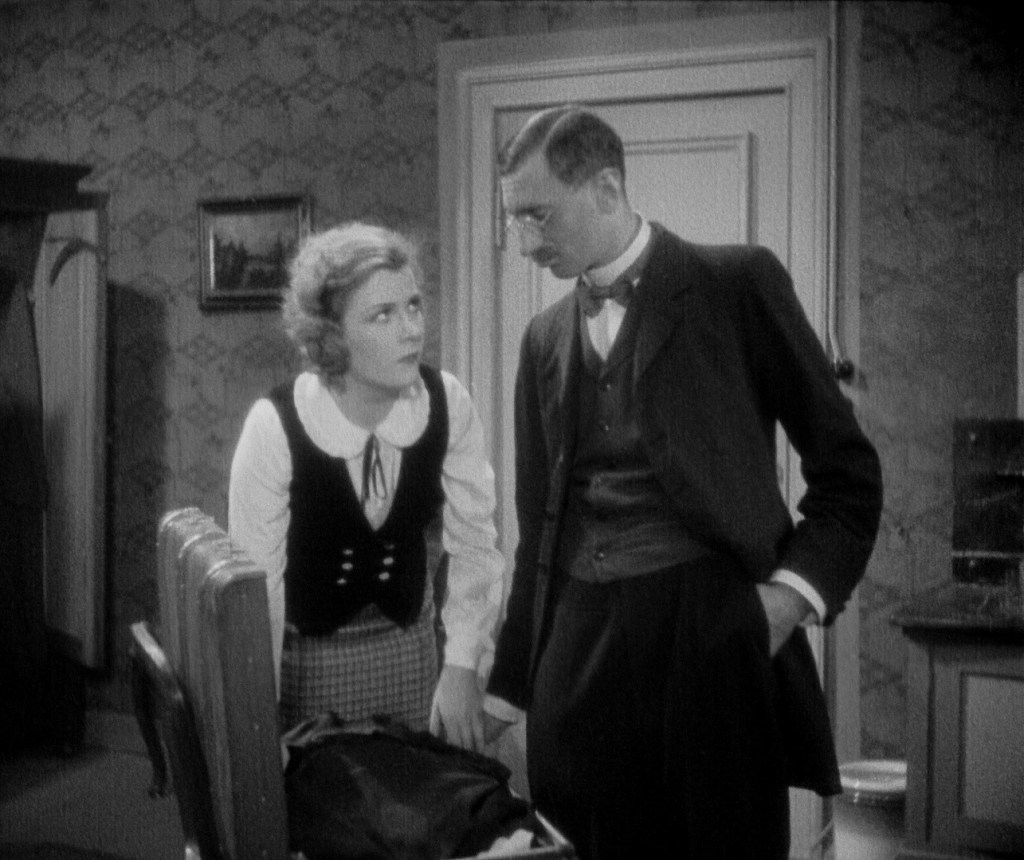
Tatra Romanze (1935, Eugen Thiele, Hans Feld)
Kuss im Schnee (1935, script Hans Feld)

In April 1932, Feld left the Film-Kurier and joined the Aafa Film Co. as production manager, but his tenure was cut short by Hitler. He initially emigrated to Prague, where he founded a cultural journal, but also published in other German exile newspapers and participated in Czech film productions, like the German version of Tatra Romance. In 1935, he, his wife Käti, and young son Michael moved on to London, where he worked for John Grierson, briefly editing World Film News. Two years later, he started a food import business, but remained active in Jewish affairs. With renewed German interest in Weimar cinema in the 1970s, he became an important film historical resource for a young generation of film scholars, including me, recording a long interview with Werner Sudendorf and Hans-Michael Bock in 1981. The same year, he received a German Film Prize from the Federal government.

People on Sunday (1929, Robert Siodmak)
Road to Life (1931, Nikolai Ekk)

The importance of bibliographies for film historical research cannot be underestimated, even if some believe internet search engines have made them obsolete.  One of my film historical bibles before the internet was The Film Index: A Bibliography; Vol. 1, the Film as Art, published in 1941 by the Museum of Modern Art, which is still useful for finding pre-WWII articles. Digitized sites, like “Lantern. The Media History and Digital Library have helped. But, in fact, trade and academic film periodicals, whether in English or other languages, remain for the most part invisible, still necessitating cumbersome searches, page by page through non-digitized microfilm, as I had to do recently with the Film-Kurier to research Alfred Zeisler. Hans Feld. Bibliografie Film-Kurier begins with Eva Orbanz’s introduction, followed by a selection of 25 essays/reviews, including reviews of Gance’s Napoleon, Brecht’s play “A Man is a Man,” Siodmak’s People on Sunday, G.W. Pabst’s Westfront 1918 and Nikolai Ekk’s Soviet film, Road to Life, which became a major bone of contention between Jaeger and Feld due to its positive tone. The next 500 pages detail every review, report, and notice Feld published in Film-Kurier, listing issue numbers, film credits when applicable, and short descriptions of the texts. The descriptions often supply film historical information that is nowhere else to be found, in particular, about unrealized film projects or contemporary scandals.  Indeed, this is a treasure trove of information about Weimar cinema.

Napoleon (1927, Abel Gance) Tryptych

376: Spielberg Film Archive

Archival Spaces 376:

Martina Weisz Named Director, Steven Spielberg Film Archive

Uploaded 27 June 2025

I first made contact in 1982 with the Steven Spielberg Film Archive in Jerusalem, when I was researching films for my exhibition, “Helmar Lerski: Photographs and Films,” at the Folkwang Museum, Essen, then in Tel Aviv, Munich, Frankfurt, and San Francisco. Back then, it was called the Abraham F. Rad Contemporary Jewish Archives in the Hebrew University of Jerusalem. Lerski worked as a filmmaker in Palestine from 1932 – 1948, so I asked director Marilyn Koolik about surviving films. I eventually visited the Rad in March of 1983, when I travelled to Israel for the first time to open the Lerski show; I was conducting research on Zionist film propaganda in the 1930s, which expanded my Lerski work to include numerous German-Jewish filmmakers who had emigrated afer 1933 to what was a referred to as Erez Israel. I returned to the Archive in June 1997 for a courtesy visit to their new facilities, as a guest of the Goethe Institute in Jerusalem. I presented a series of lectures in Israel, and again in 2009 when I was on the documentary jury of the Jerusalem Film Festival.

Ronny Loewy, Stewart Tryster, Marilyn Koolik at Spielberg Archive 1997
LAND OF PROMISE (1935)

It was Prof. Moshe Davis at Hebrew University who had founded the Abraham F. Rad Film Archive within the Institute of Contemporary Jewry in the late 1960s with Dr. Geoffry Wigoder its first director; its major donor was an Iranian-Jewish businessman, Abraham F. Rad. In 1973, the World Zionist Organization (WZO), which represented Palestinian Jewry before statehood, donated its film collections to the Archive, which included newsreel and documentary footage going back to Ya’acov Ben-Dov, who had shot British General Allenby entering Jerusalem in 1917, and released the first Jewish film in the country, Judea Liberated (1918). As early as 1927, Nathan Akselrod founded a Jewish newsreel, which morphed into a sound film newsreel in 1935. As a result of German-Jewish emigration to Palestine after Hitler’s rise in 1933, Zionist film propaganda financed by the WZO professionalized, leading to numerous productions, like Land of Promise (1936, Juda Leman) and Lerski’s Avodah (1935). After its founding, the Archive continued to acquire documentary footage of Israel and Jewish communities in the diaspora and is now a major supplier of stock footage. The Archive also has a YouTube channel, where much footage from pre-Statehood, the Holocaust, Israel, and Hebrew University can be viewed free of charge. Its Documentation Center contains print materials and still photographs relating to Jewish, Israeli, and Yiddish film.

Land of Promise (1935, Juda Leman)
Avodah (1935, Helmar Lerski)

In 1987, the Archive was renamed the Steven Spielberg Film Archive, after a major donation by the filmmaker. In 1996, the Spielberg Film Archive moved to a specifically designed facility in the Hebrew University’s Faculty of Humanities, since 2000 called the Jack Valenti Pavilion. It is jointly administered by the Avraham Harman Institute of Contemporary Jewry and the World Zionist Organization. Ms. Koolik retired in 2004, after which Stewart (Hillel) Tryster, who had been on staff since 1988, succeeded her, only to resign after a year and move to Berlin. He was succeeded by Deborah Steinmetz, who retired from the Archive in 2023 after 28 years as a member of the staff.  

Dr. Martina Weisz

On 1 May 2025, Dr. Martina Weisz became the new director of the Steven Spielberg Film Archive. Martina was born in San Salvador de Jujuy, in the northwest corner of Argentina, in the shadow of the Andes Mountains. Her father, a Maoist, was “disappeared” by the Argentinean Junta, so she spent five years in exile in Paris with her mother, where she attended primary school, before returning to Argentina after the restoration of democracy in the mid-1980s. Weisz studied political science and international relations at the Universidad Nacional in Rosario, northwest of Buenos Aires, from 1992 to 1998, receiving an M.A.. She received a second M.A. in International Relations from the Hebrew University of Jerusalem (2005), where she also completed her Ph.D. in 2013. Her dissertation was published in 2019 as Jews and Muslims in Contemporary Spain: Redefining National Borders by De Gruyter Oldenbourg. Beginning in 2009, Weisz worked as a research coordinator at the Vidal Sassoon International Center for the Study of Anti-Semitism, transitioning to a research fellow in 2017. For almost a year in 2017-18, Weisz also worked as a research expert for the European Union’s Fundamental Rights Agency in Vienna.

In a recent interview, I asked her about her hopes and goals for the future.  She said that her main focus was on expanding access to the collections through digitization. She was working to that end with the Israel Film Archive, and that networking across academic disciplines to further the digital humanities was also a goal. Finally, she felt it was important to give the public at large access to the Spielberg collections through its website, given that such documentary material about the State of Israel furthered identity politics. Cooperation with other film archives was also important because of the Spielberg’s limited budget and minuscule staff.  Good luck, Martina!

The Illegals (1947, Meyer Levin)

375: Smuggling Art

375: My career as an Art Smuggler

Archival Spaces 375

Uploaded  13 June 2025

Mikuláš Medek: Three Events (1971)

In Spring 1979 I was working as a free-lance curator on the exhibition, “Film und Foto der zwanziger Jahre/Film and Photo in the 1920s,” for the Würtembergischer Kunstverein in Stuttgart, Germany. At the time I was a year into my PhD. studies at Münster University, still living in a dormitory. I had gotten a call in September 1978 from a colleague, Ute Esklidsen, who I had met at George Eastman Museum in Rochester when we were both post-graduate interns, she a year after me. She had been hired by Tilman Osterwold, the director of the Kunstverein to curate the photography show and she asked me, if I would handle the film section. The exhibition was in fact a reconstruction of  “Film und Foto,” which had been staged in Stuttgart exactly 50 years earlier in May 1929 by Laszlo Moholy-Nagy and Hans Richter, both hired by the German Werkbund; it brought together all the various avant-garde movements in Europe and America, as they pertained to the then new media of film and photography. Richter’s film program included everything from features, like Vertov’s Man with the Movie Camera (1929), Marc Allégret’s Voyage au Congo (1927), Pabst’s Secrets of the Soul (1926) and Dreyer’s Passion of Joan of Arc (1928), to avant-garde shorts, like Richter’s Inflation (1928), Ivens’ Rain (1929), Duchamp’s Anemic Cinema (1927), and Mol’s Life in Water Drops (1928).

Hans Richter: Inflation (1928)
Marcel Duchamp: Abemic Cinema (1927)

I had my first planning meeting with Ute in Fall 1978 in Essen, an hour South of Münster, where she was living and would soon become the photography curator at the Folkwang Museum. I immediately began working on and off researching the exhibition, particularly the 1929 film program, its participants, and also locating modern sources, where the surviving films could be accessed for our program, which was scheduled to open on May 16, 1979. In the early months of 1979, I made several research trips to Paris, Frankfurt, and Stuttgart, then began writing my catalogue essay, while Ute worked on the photography and graphic design section that included examples of German New Realism, Soviet Constructivism, French Surrealism, Dutch de Stijl, American Straight and advertising Photography, and Czech Devětsil

It was in connection with the last-named art movement that Ute asked me to meet some people in Prague, where I was heading for Easter to see my Babi and Aunt Liba, and bring back some images for the exhibition. My girlfriend and I boarded a student bus to Prague in Kassel on 11 April, crossing the border to Communist Czechoslovakia in the early afternoon. Shortly behind the border, a gentleman got in and exchanged money for us into Czech Crowns at an exchange far better than the official government rate – I later learned this was sanctioned by the Státní bezpečnost (State Security). The next day, I met Mr. Venera below the King Wenceslas statue on Václavské náměstí, where he handed my three photo montages in a brown bag. I wrote in my diary:

“He was almost my height, gray hair, good-looking, badly made Czech clothing. I told him how I planned to smuggle them out of the country. His face immediately clouded over. He said if there was trouble, he couldn’t afford to have his name connected with these historical works of art.  He told me that if they asked about them on the border, I should just say my father had made them in his youth and give them up without a fuss. He then quickly said he had to leave for Brno, because his son was ill. I gave him a bag with several jazz records Ute had told me to bring from Germany. He thanked me profusely, and then he was gone, disappearing into the crowd. I was suddenly in a total daze and incredibly moved by the experience, maybe because so much had been expressed, but left unsaid. I also felt really good, because I had done something concrete for someone, and suddenly felt more connected to my roots than I had ever been, maybe because my illegal work brought me closer to my father and his resistance work in 1948.” (See https://www.cinema.ucla.edu/blogs/archival-spaces/2018/08/31/abduction-petr-zenkl)

Eužen Markalous: Fotomontage (1926)                                        
Eužen Markalous: Fotomontage (1927) 

I next visited Emilia Medekova, the widow of the famous Czech painter, Mikuláš Medek. I gave her money for the art historian Anna Farova, who had written a piece for our Film and Foto catalogue. I couldn’t meet Anna directly, because she was under heavy police surveillance, due to her signing Carta 77, which called for the Czechoslovak government to abide by its own human rights documents; she was also banned from working. Medekova and I only spoke briefly, but I felt the oppressive atmosphere under which her late husband and all Czech artists and writers suffered, with every inch of wall space covered with paintings that had never been seen in public.

Our journey out of the country turned out to be uneventful. No customs officials felt it necessary to search a bus full of poor German students. The Markalous images were exhibited for the first time in our exhibition and are now a part of the Folkwang Museum Collections.    

Postscript: In November 1986, I was nearly arrested at the Czech border for attempting to smuggle “pornography” into the country. In fact, I was a legitimate courier, carrying Muybridge “Animal Locomotion” images from George Eastman Museum, to be exchanged for E.-J. Marey photographs from the Technical Museum in Prague, and I had a letter to prove it.    

Film und Foto opening, Essen Folkwang Museum, August 1979

374: Alraune

Archival Spaces 374:

Hanns Heinz Ewers Novel, Alraune (1911)

Uploaded 30 May 2025

Alraune (1927, Henryk Galeen)

A couple of months ago, I recorded a Blu-ray commentary for the 1927 German horror film, Alraune, directed by Henryk Galeen, and distributed in America as Daughter of Destiny. The Blu-ray will be released by Deaf Crocodile around Halloween. The script by Galeen was adapted from the eponymous novel by Hanns Heinz Ewers from 1911. It became an immediate best seller in Germany and remained one for decades, although an English translation was not published until 1929 (New York: John Day Co.) and was long out of print. It was Ewers’ second novel in a trilogy around the character of Frank Braun.

Alraune (1927)
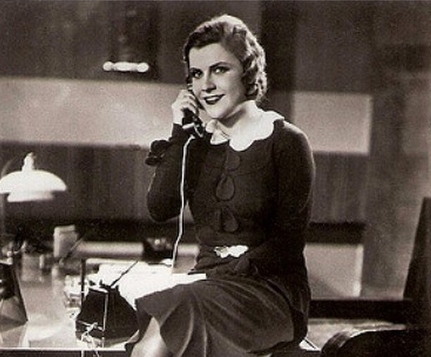
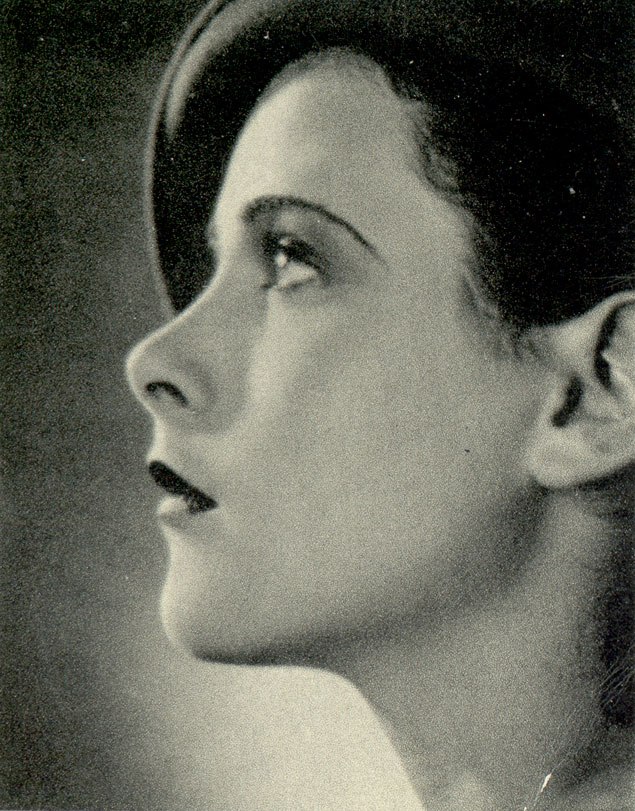
Brigitte Helm in Alraune (1927)

In Alraune, Braun collaborates with Professor Jakob ten Brinken in creating a female homunculus by impregnating a prostitute with the semen from an executed murderer. Being interested in genetics, the Professor uses artificial insemination, then adopts the girl. The resulting young woman is without morals, commits numerous monstrous acts, and drives hosts of men to their ruin. The novel is much more perverse, even anarchistic and anti-capitalist, than the subsequent film versions. Unlike the Galeen film, which begins with a hanging and the retelling of the mandrake (Alraune) legend, the novel opens in the home of the lawyer Gontram, whose youngest child, Wölfchen, will later fall victim to the young woman. Both Countess Wolkonski, who finances the experiment, and ten Brinken are introduced there, but it is Frank Braun who suggests Brinken attempt artificial insemination of a human, while the Gontrams give ten Brinken an unwanted mandrake root. Braun revels in his role as the procurer of the prostitute who will become Alraune’s mother, the next several chapters devoted to the search for a suitable harlot, finding Alma Raune, a woman of unbridled lust. However, Ewers also makes clear she is a victim who is criminally manipulated by ten Brinken and exploited by a social structure that views her and the hanged man as trash.  

Hanns Heinz Ewers (n.d.)

The girl Alraune goes to a convent school where she teaches the other children how to mutilate and kill small animals, then to a girls’ academy for the well-to-do, expelled from both. She returns home to ten Brinken’s mansion, where she begins driving various men to their deaths, including the family chauffeur, two other rival lovers, and Wölfchen Gontram, who has grown up with little Alraune. When ten Brinken is to be arrested for molesting a young female child, Alraune refuses to flee abroad with him, so he hangs himself, leaving his ill-gained financial empire in ruins. But he names Alraune his sole heir and Frank Braun, who has been completely absent from the narrative, Alraune’s guardian. When Countess Wolkonski’s daughter, Olga, pleads with Alraune to give up her protected status to save her mother’s fortune, she refuses, driving Olga insane. In retaliation, the Countess Wolkonski reveals to Alraune the secret of her birth. Frank Braun, against his better judgment, begins an amour fou with Alraune, while Frieda Gontram, who had been Olga’s best friend, also falls under Alraune’s spell. Braun can’t tear himself away from the seductress, although he manages to burn the Mandrake that Alraune had nailed to the headboard of her bed. Soon after, Alraune and Frieda climb to the roof of the ten Brinken mansion in the moonlight and fall to their deaths in a double suicide.

Brigitte Helm, Paul Wegener in Alraune (1927)

The structure of the novel is that of the author’s twelve letters to his sister, with additional sections of florid flights of fancy, seemingly divorced from the narrative. The prose is for modern German readers quite archaic, but the most shocking aspect of the novel, given its publication date, is its description of sexual behavior. Alraune herself is consistently described as tender and slight, her body resembling that of a beautiful boy with tiny breasts, who drives both men and women to distraction. One particularly long scene, after which Wölfchen Gontram dies of pneumonia, describes how the pair switch gender roles at a masked ball. Alraune is dressed as a boy in the guise of the Chevalier de Maupin, a character from a 19th-century French novel by Théophile Gautier, while Wöflchen is in drag as Richard Strauss’s Roselinde, his angelic face previously being described as feminine. Frank Baum’s fatal attraction to Alraune, it is implied, is because her body is that of a slender boy, making her attractive to the sexually indeterminate Braun. Then, there is the issue of incest, because ten Brinken also becomes hopelessly infatuated with his adopted daughter, in particular her slim, boy-like body. The relationship between ten Brinken and his young nephew, Frank Braun, may also be incestuous, given the professor’s violent feelings of betrayal. Some of Ewers’ earlier writings had been deemed pornographic by the courts.

Albert Basssermann, Brigitte Helm in Alraune (1930, Richard Oswald)

Ewers was influenced by the ideas of the conservative eugenics movement, which defined modernity as an illness leading to degeneracy. Ewers himself belonged to the radical right with anarchist tendencies. Born in 1871 in Düsseldorf, Ewers began writing poetry at the age of 17. After completing his Abitur in March 1891, he volunteered for the military but was dismissed due to myopia. Ewers’ literary career began in 1901 with a volume of satiric verse. His first novel in the Braun trilogy, The Sorcerer’s Apprentice, was published in 1909.  A world traveler, Ewers was in South America at the beginning of World War I, relocating to New York City. There, he continued to write and publish, advocating to keep the United States from joining the war as an ally of Britain and becoming embroiled in the “Stegler Affair,” involving German agents. After the U.S. joined the war, he was arrested as an “active propagandist,” but never formally charged. He was sent to the internment camp at Fort Oglethorpe, Georgia, and in 1921 released and deported to Germany. During the last years of the Weimar Republic, Ewers became involved with the Nazi Party, attracted by its nationalism, its Nietzschean moral philosophy, its initial anti-capitalism, and its cult of Teutonic culture, joining the NSDAP in 1931 with Hitler present at the ceremony. However, he did not agree with the Party’s anti-Semitism. His virulent anti-capitalism and his homosexuality soon upended his support with Nazi party leaders, especially after the Roehm Putsch in June 1934. The same year, most of his works were banned, and his assets and property were seized. After submitting many petitions, Ewers eventually secured the rescission of the ban. Ewers died in Berlin from tuberculosis in 1943. His books are mostly forgotten, although a newly translated edition of Alraune by Joe Bandel was published in 2011. Ewers is today only remembered for the three German film adaptations of Alraune and his script for The Student of Prague (1913).

Hildegard Knef, Hans Cossy in Alraune (1952, Arthur Maria Rabenalt)