Archival Spaces 412:
Czech Avant-garde Film in the 1930s
Uploaded 13 November 2026
Two programs at the Giornate del cinema muto, organized by the Czech National Film Archive in Prague, were dedicated to “the Czech Avant-Garde” from the 1930s, curated by Sylva Poláková, Alena Horníčková, and Jiří Horníček. In the catalogue, the authors mention that filmmaker Alexander Hackenschmied, whose Aimless Walk (1930) opened the show, had visited and drawn inspiration from the photo-cinegraphic avant-garde exhibition “Film und Foto” in Stuttgart in 1929; Hackenschmied reviewed the exhibit for a Prague publication, and subsequently organized an experimental photography exhibition and numerous screenings of European avant-garde films in Prague. Fifty years later, I reconstructed Hans Richter’s original film program in Stuttgart for the 50th anniversary of “FiFo” in 1979, while my colleague Ute Eskildsen did the same for Moholy-Nagy’s photo exhibit. Like many other films made by European and American film avant-gardists, working before the rise of the Essential Cinema, the Czech films exist at the intersections of amateur film, photography, advertising, industrials, architecture, and theatre. All the films were screened silent in Pordenone without musical accompaniment to emphasize their visuality.
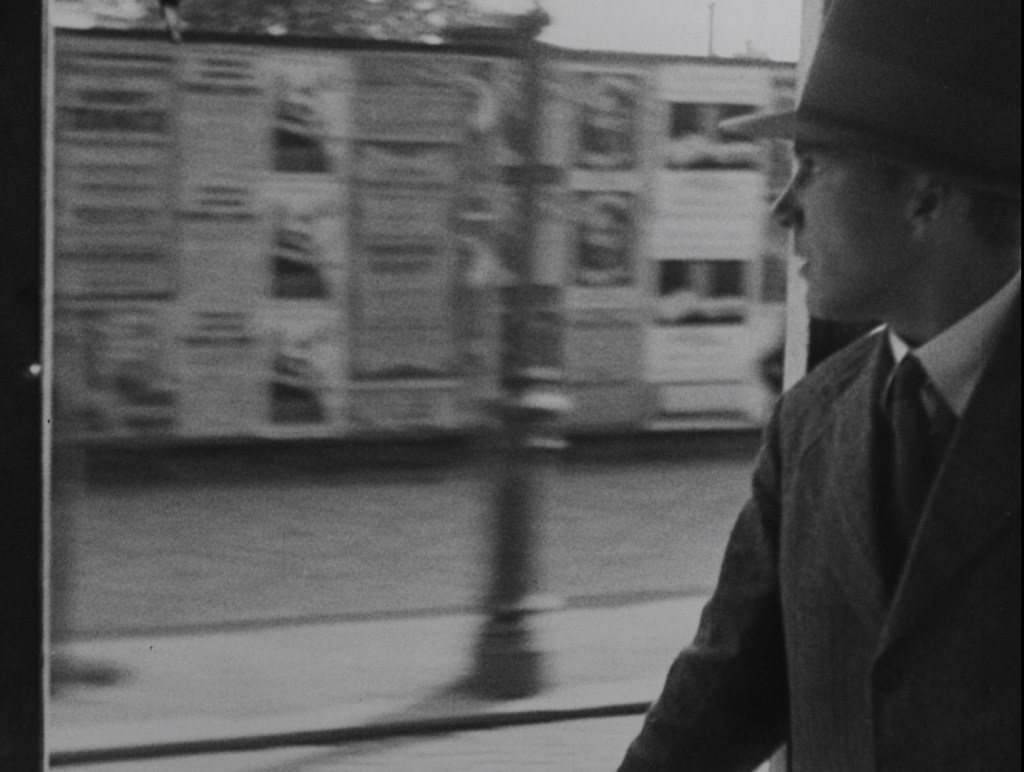
Bezucelná procházka/Aimless Walk begins with a shot of housing facades on a Prague street, before cutting to an unidentified man jumping on a trolley and traveling through the city to the suburbs. Like many French avant-garde films, Aimless Walk emphasizes moving camera shots of the urban landscape, hand-held shots of the subject walking, subjective, distorted reflections in the Vltava, abstract compositions emphasizing geometric form, extreme high and low angle shots, silhouettes. At one point we see the the unnamed male walk away, while also remaining seated in the grass, echoing surrealism. Hackenschmied (Hammid in America), who would co-direct two documentaries re the Nazi invasion of Czechoslovakia in 1939 (https://archivalspaces.com/2024/08/23/354-prelude-to-war/), and Maya Deren’s Meshes in the Afternoon (1943), creates here a veritable catalogue of avant-garde film techniques.
Atom věčnosti/Atom of Eternity (1934, Čeněk Zahradníček, Vladimír Šmejkal) is a highly allegorical short relating through poetic and elliptical images a chance sexual encounter between a young man and woman, leading to her pregnancy and suicide. The film opens with a quote from French avant-gardist Jean Epstein: “There are no stories, there are only situations without a beginning and without an end.” A musician playing a violin leads the girl on, symbolizing her seduction, cut to a champagne glass overflowing, a small nude statue, and a knife through the ace of hearts, marking its successful completion; the girl, carrying a bass drum, symbolizes her pregnancy, a close-up of an arm on the river’s shore, her death. In fact, the film encapsulates the story of seduction and abandonment found in countless popular and highly melodramatic film narratives, but through ellipsis. The amateur film directors produced several films together, including Ruce v úterý/Hands on Tuesday (1935) and Příběh vojáka/A Soldier’s Story (1935).
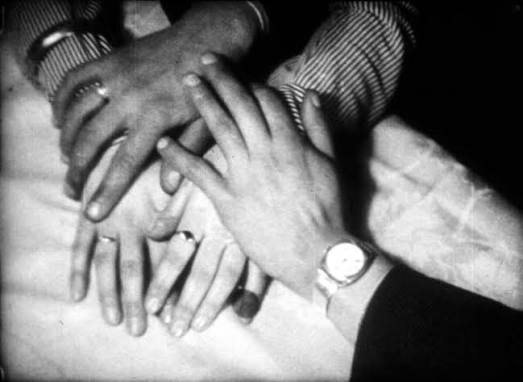
Hands on Tuesday visualizes the day in the life of an office worker, arising in the morning, commuting to work on a trolly where he meets a young woman, a day’s typing and answering mail, a dinner date, going to bed, a dream. However, we only see extreme close-ups of hands and bodies, no faces. Meaning is read primarily through the action of hands. Unlike the filmmakers’ first film, the seduction here apparently fails because a hand on her knee ends with a dismissal via a goodnight kiss at her doorstep. The humorous film ends with an animated dream (negative film) of fingers dancing as if in a chorus line at a cabaret. The film may have been influenced by Stella Simon’s Hände (1928), produced in Berlin, although that film is much more abstract in its depiction of heterosexual romance. Story of a Soldier is another metaphoric representation: A writer is mobilized, experiences the horrors of war, dreams of his girlfriend back home, is wounded and dies, the war visualized through rapid editing and toy tanks. Although in black and white, at one point two drops of red blood drip down the frame, in this avant-garde anti-war film.
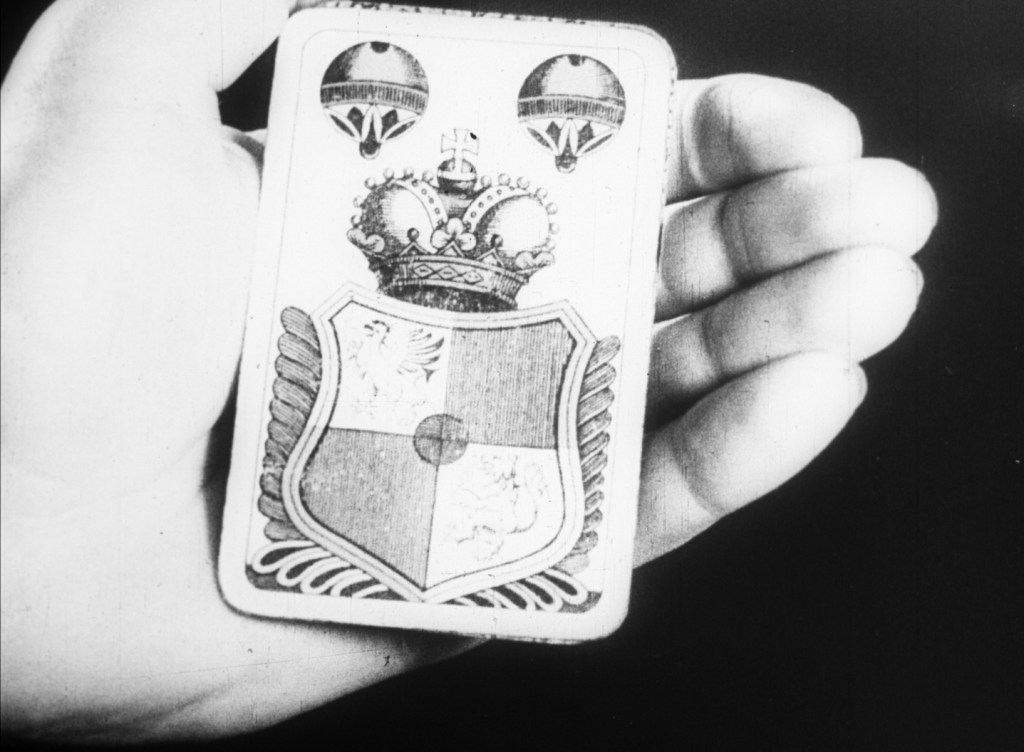
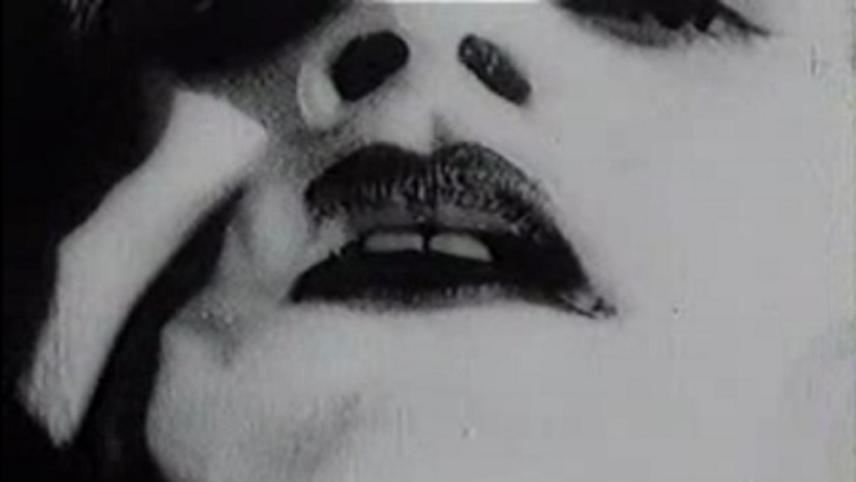
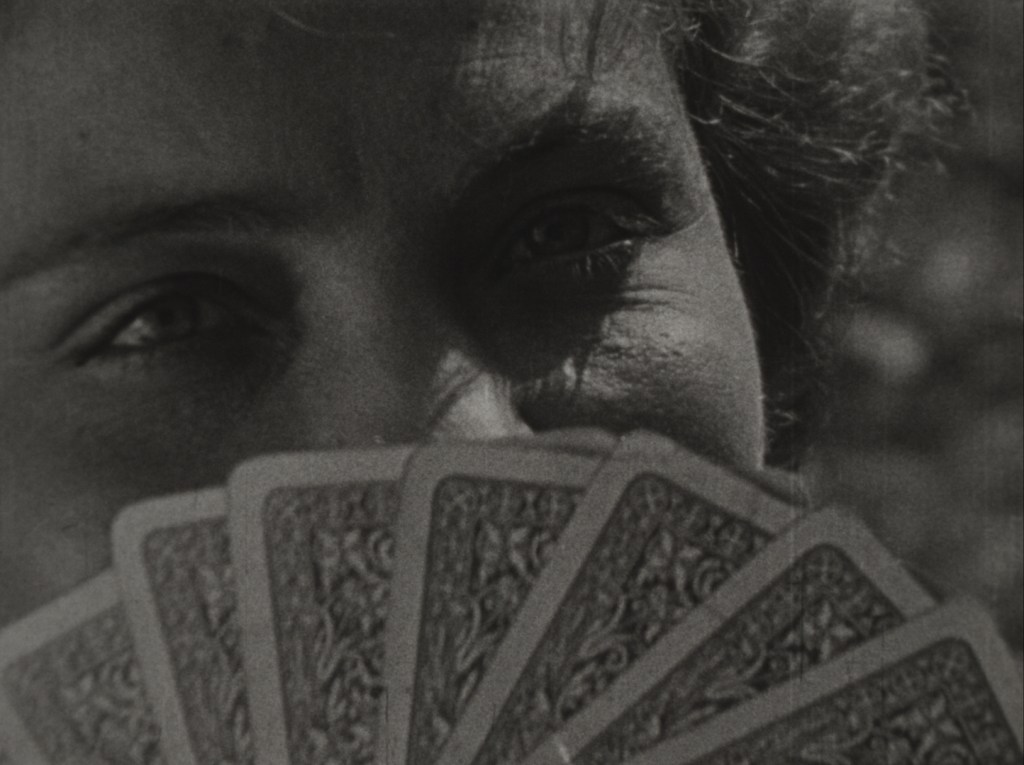
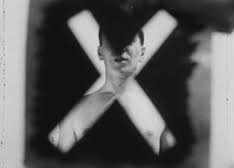
Burleska/Burlesque (1932, Jan Kučera) is an unfinished short, which rapidly intercuts animated and live action images of playing cards with footage from World War I to convey its anti-war message allegorically. The double-headed eagle on the card’s faces, denoting the Austro-Hungarian Empire, implies that authoritarian powers are sending young men to their deaths, symbolized by a flower falling from the sky. Co-directed by Čeněk Zahradníček and Vlasta Burian, the well-known stage and film actor, Maj/May (1936/76) began life as part of an experimental stage performance. Consisting of highly eroticized, close-up images of a blonde woman, a naked man behind wire mesh, and a transvestite, the film oscillates between landscapes of hair blowing in the wind, skin, painted lips/eyes, and shadows of hands; an upside-down, high-contrast image of the woman’s arms slowly opening reads as the exposure of her vagina; the woman and her (fe)male lover kiss. The film explodes sexual taboos without ever showing any genitalia.
The second program of Czech avant-garde films featured industrials and advertising films that feature experimental film forms, just as “Film and Foto” and its curators hadn’t differentiated between “l’art pur l’art” and commercial work. Unlike the later promulgated Mekas version of Avant-garde film history which rejected any commercial motives. Richter’s own highly praised avant-garde shorts began their lives in the 1920s as advertising films, a fact that was later surpressed.
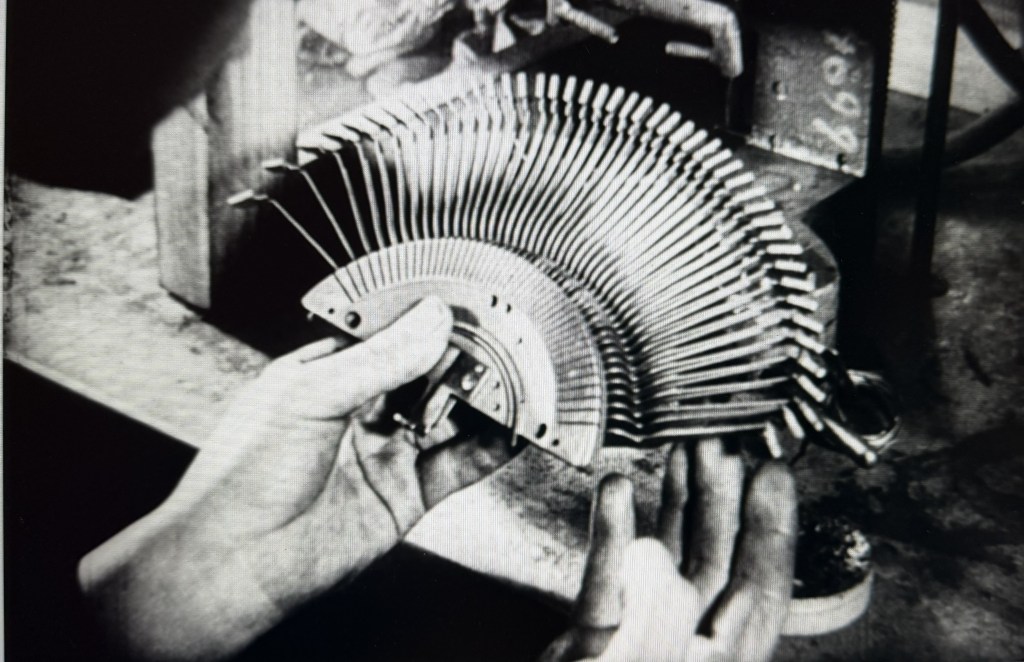
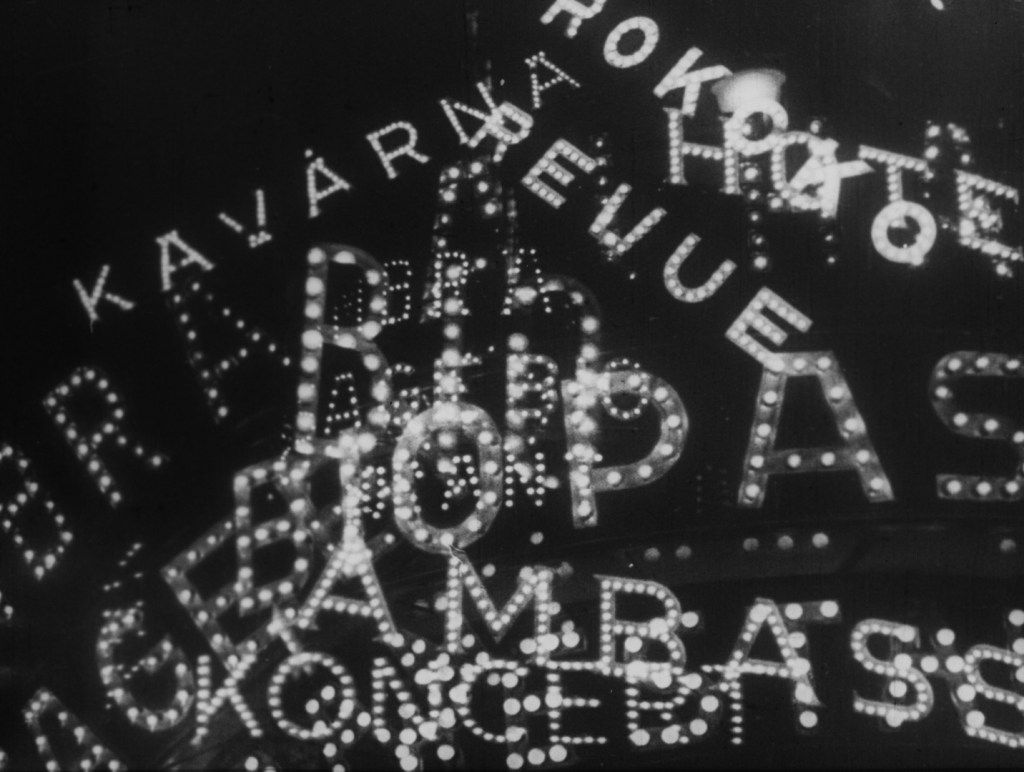
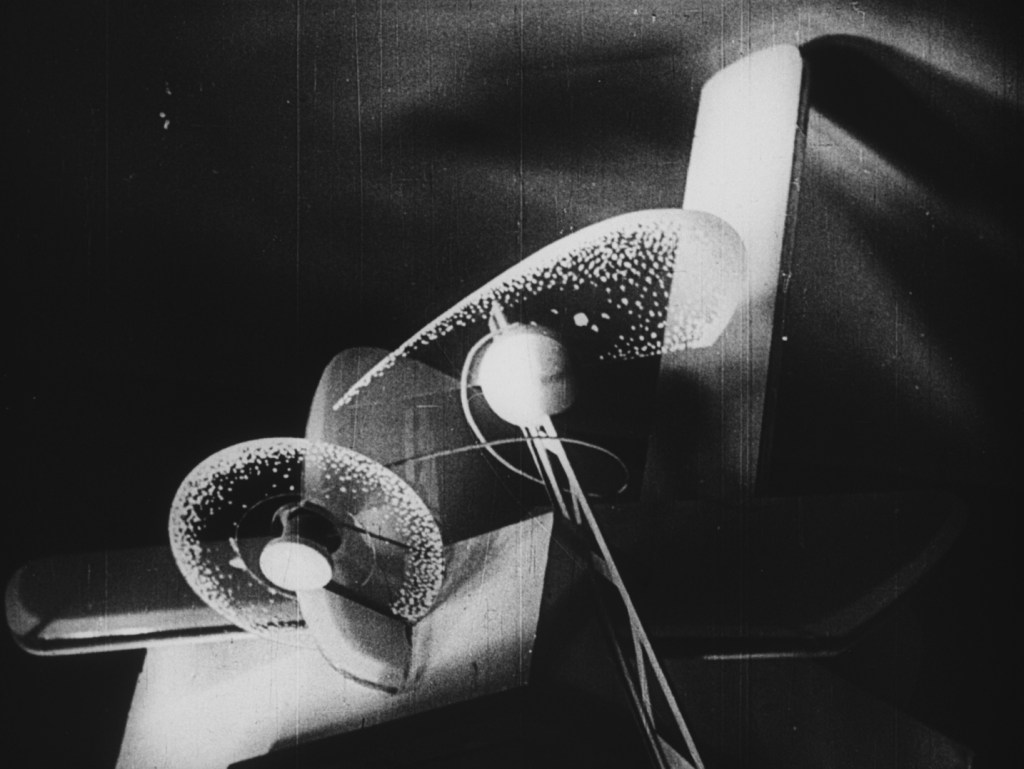
Praha, město sta věží/Prague, City of a Hundred Spires (1928, Jaroslav Hesoun) focuses on the city’s numerous church and secular steeples, privileging extreme camera angles. Útok na Prahu/Attack on Prague (1930) is an advertising film, its unusual compositions documenting Prague’s invasion by tractors, produced by the Škoda works Pilsen, headed for an agricultural trade fair. Praha v záři světel/Prague in the Glow of Lights (1928, Svatopluk Innemann), commissioned by the Municipal Electricity Corp., begins at dusk, then explores the city’s night life, its electric advertising, its stores and shop windows, its cafés, dance halls, and cabarets, all made technically possible through flood lights on monuments and busy streets, and the newly introduced panchromatic film stock; I watch th film through my father’s eyes, a ninne year old walking th same streets. The same year, Eugène Deslaw produced the very similar Les nuits électriques in Paris. Světlo proniká tmou/Light Penetrates the Darkness (1930, Otakar Vavra), a highly abstract avant-garde film, memorializes Zdeněk Pešánek’s kinetic-light sculpture at Prague’s transformer station, employing positive-negative film and multiple exposures to bring the sculpture to life, just as Laszlo Moholy-Nagy would for his Light-Space Modulator in his animated film, A Lightplay: Black White Gray (1931). Jak vzniká psací stroj?/How is a Typwriter created? (1934, A. Kovářík) is a delightful and funny industrial, utilizing stop-motion animation to illustrate without inter-titles or sound narration the construction of Remington typewriters in the first Czechoslovak Republic.
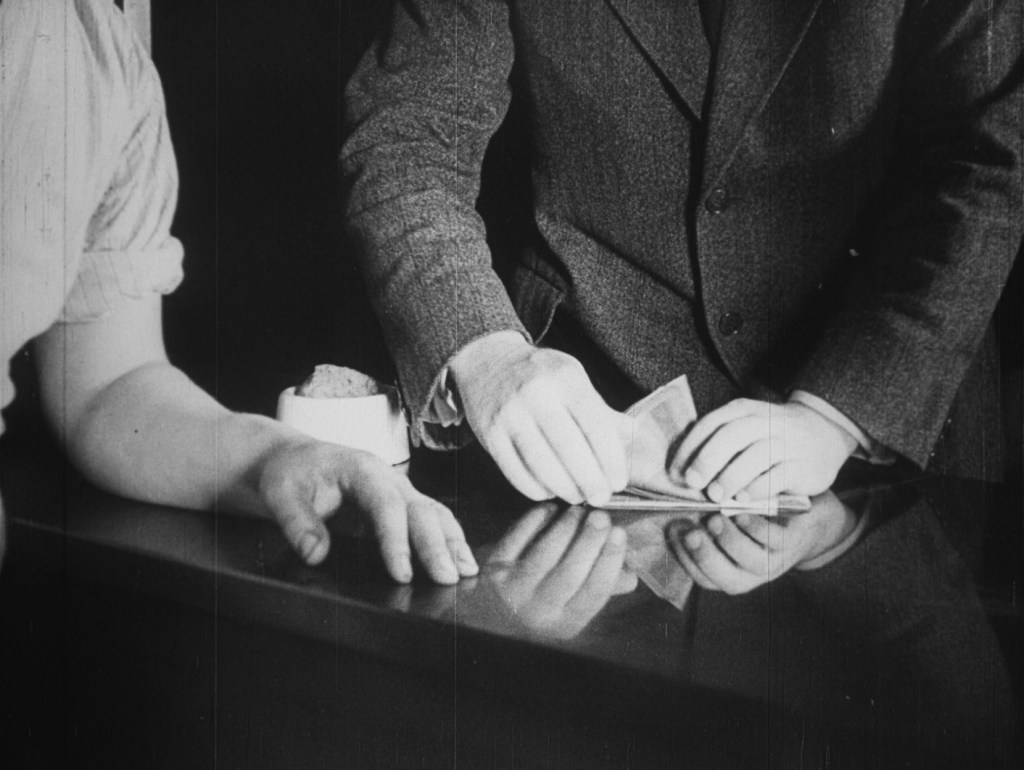
Finally, Peníze jsou krví hospodářského organism/Money is the Lifeblood of the Economic Organism (1932), financed by a Czech bank, illustrates how putting your wages in a bank, rather than in a sock or under your bed, helps drive the economy forward, an especially important message in the midst of the Depression.
Except for Aimless Walk, all of the films in these two programs were unknown to non-Czech avant-garde film historians, possibly because they were mostly produced in the 1930s, a period which established film historians declared avant-garde film production to be dead: after the International Congress of Independent Cinema at La Sarraz (1929) and the introduction of unaffordable sound film. A revision now seems in order, especially since Hammid establishes a direct bridge between the American film avant-garde and the Czechs, just as Hans Richter connected German and American avant-garde film through his exile to America from Berlin. To learn more, you can view the documentary series, Czech Film Avant-Garde on YouTube.