Archival Spaces 409:
Stummfilmtage Bonn 2026
Uploaded 2 October 2026
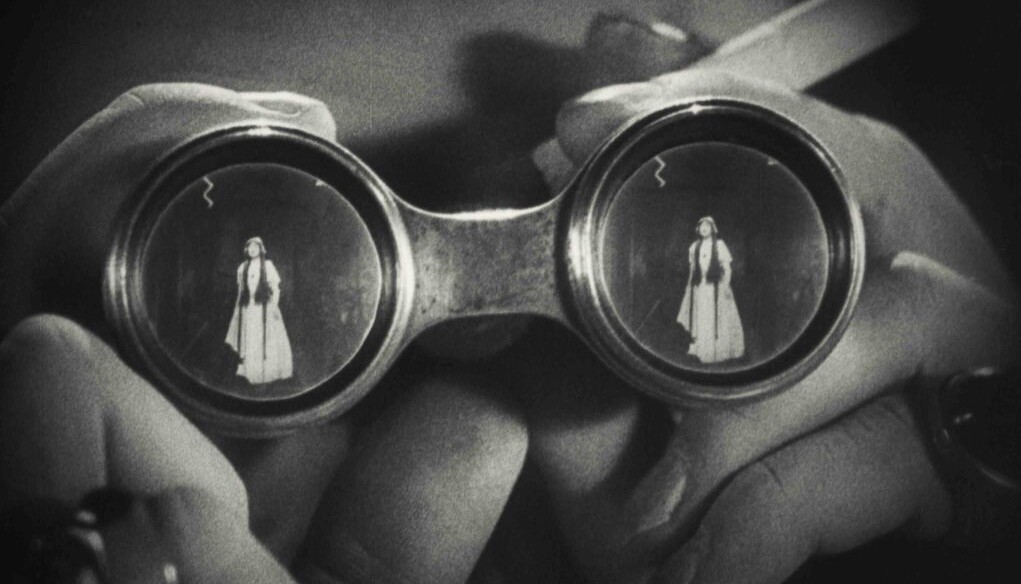
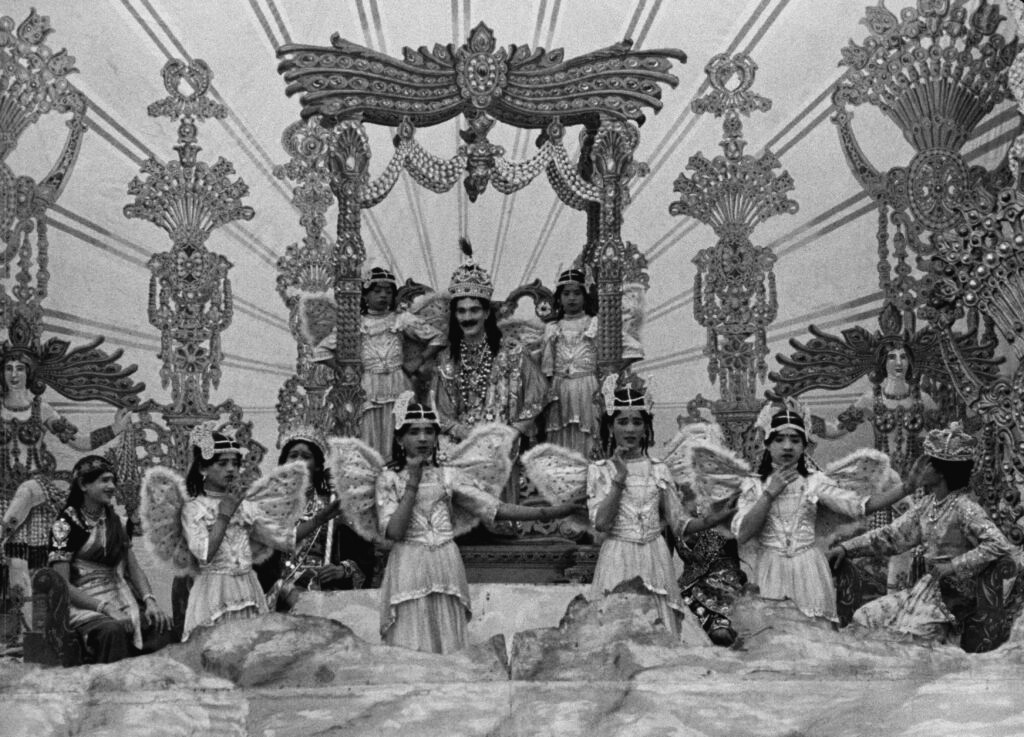
This is the final installment of my report on this year’s Silent Film Festival in Bonn, Germany. Thursday’s program (8/20/26) began with two religiously themed films, Béhula (1922) and L’Inferno (1911). The former is an exceedingly rare 1920s film from India, a country where probably 97% of silents are lost. The film is based on a Bengali legend about the Hindu serpent goddess Manasa, who takes revenge on a rich merchant who defies her. His newlywed son is killed, leading Béhula, the bride, to argue her case at a heavenly tribunal. Starring the Anglo-Indian actress Patience Cooper, the film was restored in 4K from a nitrate print, without intertitles, belonging to the Fondation Jérôme Seydoux-Pathé. Pathé cameraman Camille Legrand directed the mythological drama in Calcutta for cinema mogul Jamshedji Framji Madan. While some of the sets are paper, the art direction takes inspiration from Hindu folk art; the film’s narrative construction and editing are not without some sophistication.
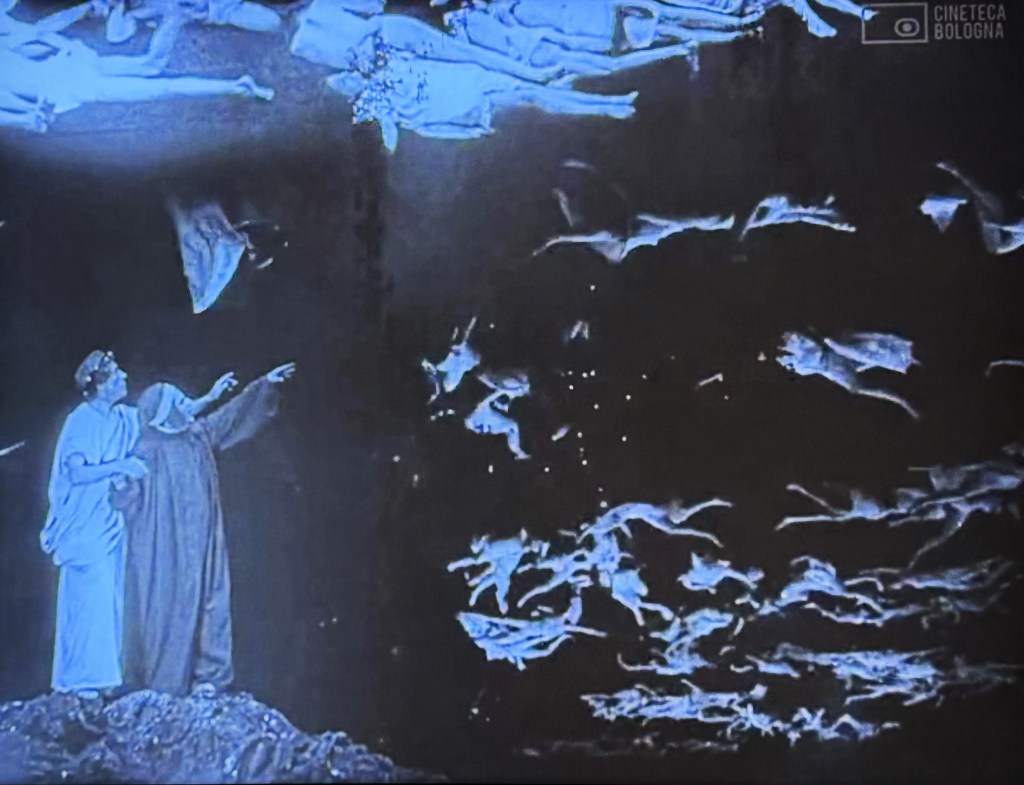
L’Inferno / Dante’s Inferno (1911, Francesco Bertolini, et/ al.) was digitized in 2021 in 4K by the Cineteca di Bologna from 35mm safety elements, struck in 2007 at the British Film Institute from a nitrate print, and two acetate dupe negatives from the Danish Film Institute and the National Film Institute Bulgaria. Regarded as Italy’s first feature film, L’Inferno initiated Italy’s cycle of historical epic films from antiquity, premiering weeks before Giovane Pastrone’s The Fall of Troy (1911), and was successfully distributed in the United States. Based on Dante’s first cantica of The Divine Comedy, the poet Virgil guides Dante through the many circles of Hell. Dante hears the stories of some of the sinners, e.g., Francesca di Rimini and her brother/lover, Paolo, their stories shown in flashbacks. Hell itself consists mostly of long shots taken in a barren mountainous landscape and on studio sets, reminiscent of Georges Méliès, both in their layered construction and sophisticated use of multiple exposures. Through careful camera placement, putting sinners in the foreground and Dante and Virgil in the background, the film creates “giants” who take the pair to the next lower level of hell. The tinting further enhances L’Inferno’s visual flair. Interestingly, the film pays particular attention to two historical Popes, Anastasius II and Nicholas III, burning in hell for committing heresy and simony, respectively.
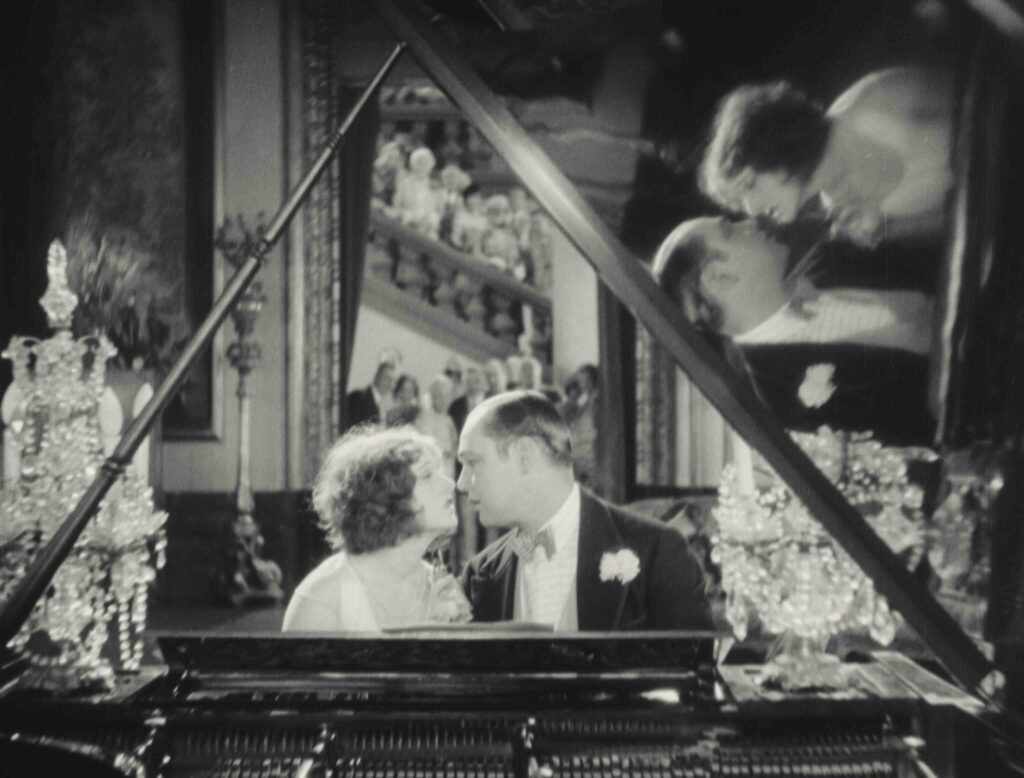
The Garden of Eden (1928, Lewis Milestone) was digitally restored in 2025 by the San Francisco Film Preserve from a 35mm acetate print at George Eastman Museum, and shots from material at the Library of Congress. An original Technicolor sequence does not survive. Corinne Griffith stars as Toni, a Viennese woman who wants to become an opera singer but ends up in a Budapest cabaret, where she is almost seduced by Henri. With Rosa, her wardrobe woman, she flees to Monte Carlo, the city of counterfeit counts, where Rosa turns out to be a real Baroness. There she meets and falls in love with the wealthy Richard Dupont (Charles Ray). At the planned wedding, Henri arrives, the groom’s uncle, leading to numerous complications. Based on a German play of the same name from 1926, written by Rudolph Bernauer and Rudolf Österreicher, who had together written numerous successful comedies and an operetta, the film offered the kind of fantasy Hollywood loved. Milestone, not known for comedy, adds some Lubitsch touches, but Ray is pale as the romantic lead.
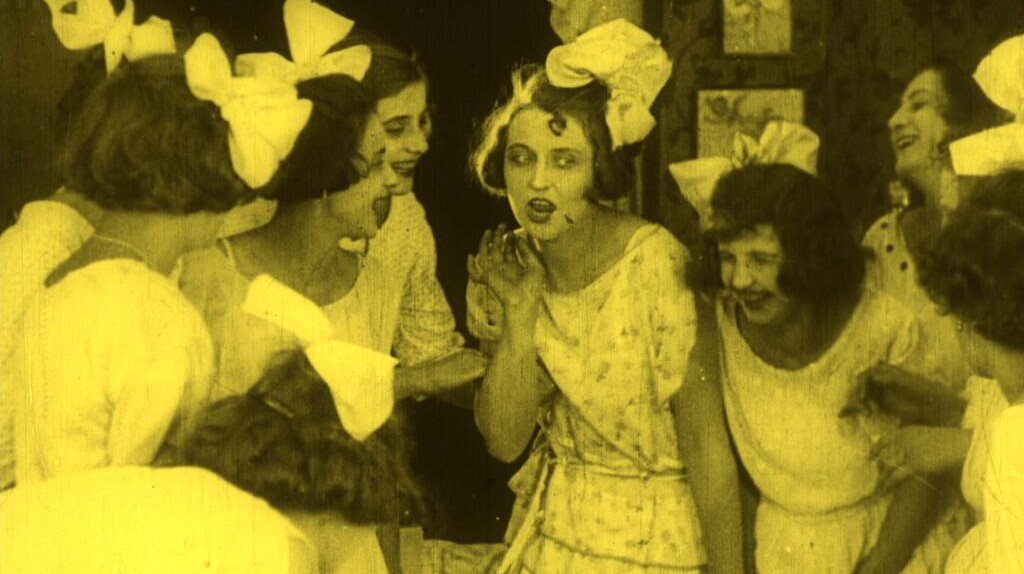
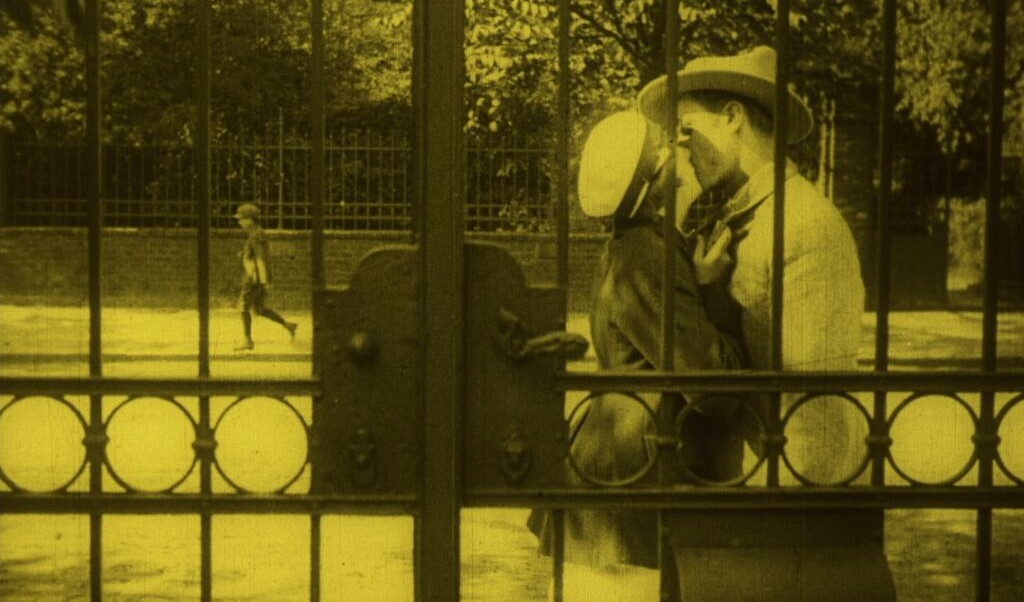
Adam and Eva (1921, Vaclav Binovec) is a Czech comedy, written by the film’s star, Suzanne Marville, who plays a double role; the film was digitized in 2023 from a 35mm dupe negative in the collections of the Národní filmový archiv, Prague. Adam and Eva are fraternal twins who, as children, constantly play tricks on each other and grow up with an intense animosity between them. When, as 16-year-olds, Eva attracts a suitor, Adam decides to dress up as Eva and cause trouble. Meanwhile, Eva realizes what is going on, dons male attire as Adam, and convinces their father to follow the couple. After Adam as Eva kisses Dr. Novotný, Eva as Adam asks for a kiss, leading to the father thrashing both of them, before cutting off Eva’s hair because he thinks she’s Adam. The gender complications and confusions wrought by the cross-dressing twins are intensified because the audience knows both roles are played by Marville, one of Czech cinema’s biggest stars in the 1920s.
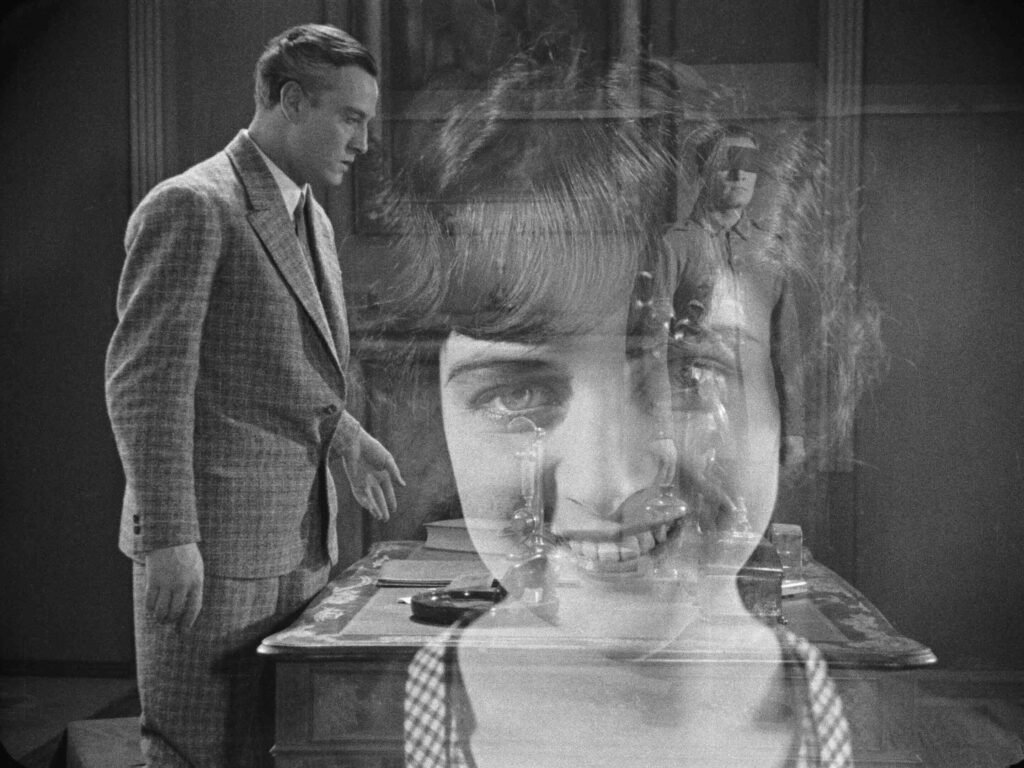
An original nitrate negative of Dr. Besels Verwandlung/The Fugitive Love (1927, Richard Oswald) at Filmarchiv Austria, as well as two nitrate positives of the French (CNC Paris) and English (BFI London) export versions, were utilized by Filmarchiv Austria and the Deutsches Filminstitut & Museum to create a 4K digital master in 2024/25 that is complete, except for three minutes. The intertitles, featuring unique design elements, were taken from the original negative. Oswald, one of the most prolific filmmakers of the Weimar Republic, directs an essentially pacifist film about a German soldier who returns to the Western front in 1918 after he learns his wife has cheated on him. Wounded, he removes the dog tags from a dead French soldier and takes his place in France, even falling in love with the soldier’s wife. In several scenes with Curt Bois and Ilka Gruening (both later featured in Casablanca), playing Polish Jews, the film exposes French antisemitism, and its pacifism is expressed in frequent shots of war-wounded without limbs walking the streets. Nevertheless, a ponderous film, given that the German risks being shot as a spy and puts both his own family in Germany and his adopted family in France through much pain, simply because he can’t face his cheating wife? A little weird.
Bonn’s silent film festival featured numerous excellent restorations in a diverse program this year. Happily, Oliver Hanley, who has taken a position as Head of Collections and Deputy Director of Filmmuseum Potsdam, will continue as co-curator of Bonn’s silent film festival next year.