Archival Spaces 408:
Summfilmtage Bonn 2026
Uploaded 18 September 2026
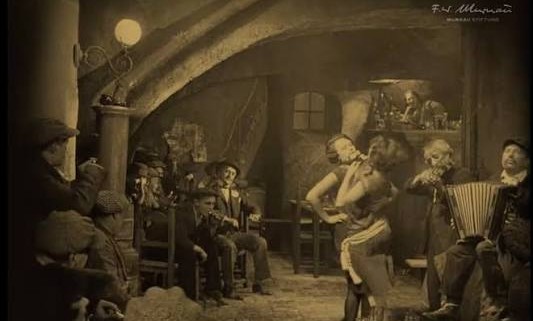
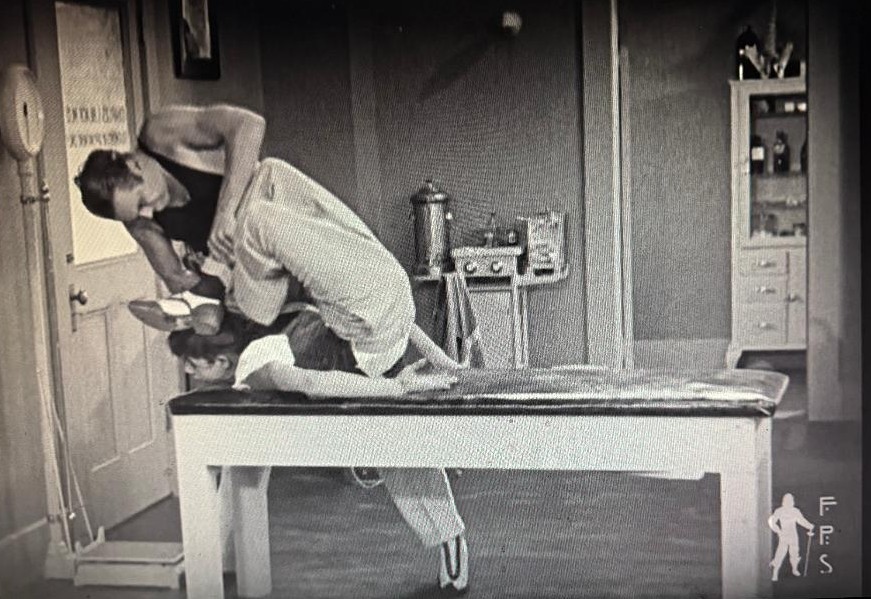
The Bonn Silent Film Festival’s online streaming program continued after its opening film, The Saga of Gosta Berling (See Archival Spaces 407) with Kid Boots (1926, Frank Tuttle), starring Eddie Cantor and Clara Bow. The film was digitally restored in 2021 from a 1926 work print and a 4th generation safety positive from 1966 by the Film Preservation Society and Paramount. Being Cantor’s first film, after he had starred in the Broadway stage play by the same name, the film is a trifle. Its fast-paced comedy translates to the screen with much physical slapstick, facilitated by Cantor’s talent for extreme body contortions. Cantor as Kid Boots is an inept tailor fleeing an irate customer, who meets and instantly falls in love with the customer’s girlfriend (Clara Bow), then hooks up with a wealthy acquaintance trying to make his divorce legal. It’s all quite silly, but Clara Bow is always worth the price of admission.

Wonders of the Sea (1922), directed by J. Ernest Williamson and photographed by his brother, George M. Williams, the team had, for the first time, shot moving-image footage deep below the ocean’s surface, using his specially constructed submarine, the “Photosphere,” in Thirty Leagues under the Sea (1914). The 4 K restoration by the Austrian Film Museum in 2026 is based on a 35mm nitrate print of the French release version, with additional material coming from a nitrate print sourced from the Eye Museum, Amsterdam. The editing and color scheme are based on prints from Brussels and the Cinémathèque Française, while the intertitles were translated from the French, with its typography based on a reel from the National Sound and Film Archive of Australia. In the one-hour documentary, we see a young woman swimming in coral reefs off Bermuda, and two divers explore shipwrecks and battle a dangerous Mora Eel, a giant octopus, and a shark. The m most interesting aspect of this documentary fiction is that the film visualizes its own means of production, the tube leading down to the submarine, the camera and operator at the bottom, pointing the camerainto the ocean beyond the glass.


Schatten der Weltstadt/Shadows of the City (1925) was first restored in analog by the Bundesarchiv from an original nitrate negative in 2008, then digitized in 2016 in 2K, while the tinting scheme is based on an original nitrate print and tinting instructions on the negative. The film opens with a montage of urban scenes and a suicide, then cuts to a posh private reception where a newly minted police prefect pimps his own wife (Ellen Richter), then, ends up dead. Paris is a two-class society, rich and very poor. The wife, who has her own lover, is acquitted of murder, but everyone believes she is guilty, so she investigates and finds the killer herself. Ellen Richter, Germany’s action-adventure queen in the 1920s, plays a battered woman, all the men in her life physically and mentally abusing her. This film perfectly embodies German cinema’s sophisticated replication of American crime genre narratives, however, with a darkness never seen in Hollywood.
Bubis Locken (1919) is an unidentified short film in the “Bubi” series, directed by Hanna Henning, one of Germany’s first woman directors, a metteur en scene who focused on children to explore issues of gender. The film was digitized in 4K from a surviving 16mm print by the Deutsches Filminstitut & Filmarchiv, Frankfurt. It’s a sweet film about a sixth grader who gets his baby curls cut, since he is about to become a teenager, but has to learn that messing with the love life of his older brother has consequences.
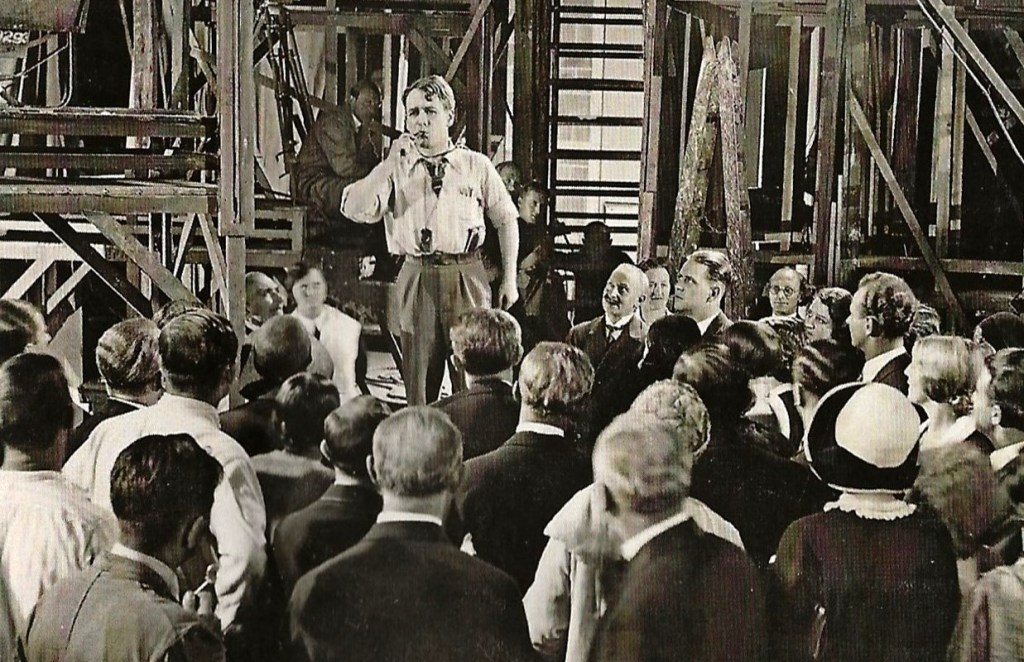
Die große Sehnsucht/The Great Yearning (1930, István Székely), opens in a motion picture studio, where a sound film musical is being shot. It stars Camila Horn as an ambitious extra, who lands a starring role, but sacrifices her boyfriend in the process. I had seen the sound version three years ago at Hamburg’s Cinefest, but Bonn screened the silent version, which was distributed in German cinemas not yet wired for sound. While the film visualizes the technical details of the new sound process, – the studio floor is always filled with people! – making the film self-reflexive a priori, the silent film seems even more self-aware, thanks to intertitles that tell us what we see, e.g., when Luis Trenker is seen in the studio cafeteria with Elga Brink and Hans Adelbert von Schlettow, he is told he will be in a scene of The Great Yearning; Harry Liedke is asked to do a walk-on as he is walking on. Later at a private studio party, Maria Paudler and a male colleague spoof Marlene Dietrich and Emil Jannings in The Blue Angel, a film that had only been released five months earlier. Both that film and Sehnsucht include songs by Frederick Hollander, who would work for Lubitsch in Hollywood, as would Paul Dessau, a composer close to Brecht. Die große Sehnsucht featured cameos from more than a dozen German film stars, including Lil Dagover, Anny Ondra, Olga Tschechowa, Charlotte Susa, Gustav Diesel, Karl Huszar-Puffy (Charles Puffy), Fritz Kortner, Franz Lederer, Fritz Rasp, and Conrad Veidt, of whom four went into exile. After 1933, director Steve Sekely returned briefly to his native Hungary, before landing in Hollywood, as would assistant director Laszlo Benedek, supervisor Curtis Bernhardt, and producer Joe Pasternak. Unlike American films with heterosexual romance reaffirmed, the “Happy End” here is the film’s wrap, with not a spot of sentimentality for the dumped boyfriend.
(To be continued)