Archival Spaces 404:
Voskovec & Werich
Uploaded 24 July 2026

My Dad grew up in Prague in the 1930s, a teenager. He later raved to me about Voskovec and Werich, who he had seen both on stage at the Liberated Theatre, and in the cinema. I thought about him when I recently pulled out of my shelf a 4 DVD box set of four Voskovec and Werich films, produced by the Czech National Film Archive (2010). Jiří Voskovec and Jan Werich, both born 1905, were comedians who managed to be both avant-garde and popular. Although I had a vague memory of seeing Hej rup! / Heave Ho! (1934), I was not prepared for the comic madness visible in that film and the others: Pudr a Benzin / Powder and Gas (1931), Peníze nebo život / Your Money or Your Life (1932), and Svět patří nám / The World is Ours (1937). Both emigrated to America before the Nazis invade Czechoslovakia in March 1939, where Jiři becomes George Voskovec in Hollywood, most prominently in Twelve Angry Men (both Studio One, 1954,and Siney Lumet theatrical feature, 1957), while Werich returned to (Communist) Czechoslovakia.
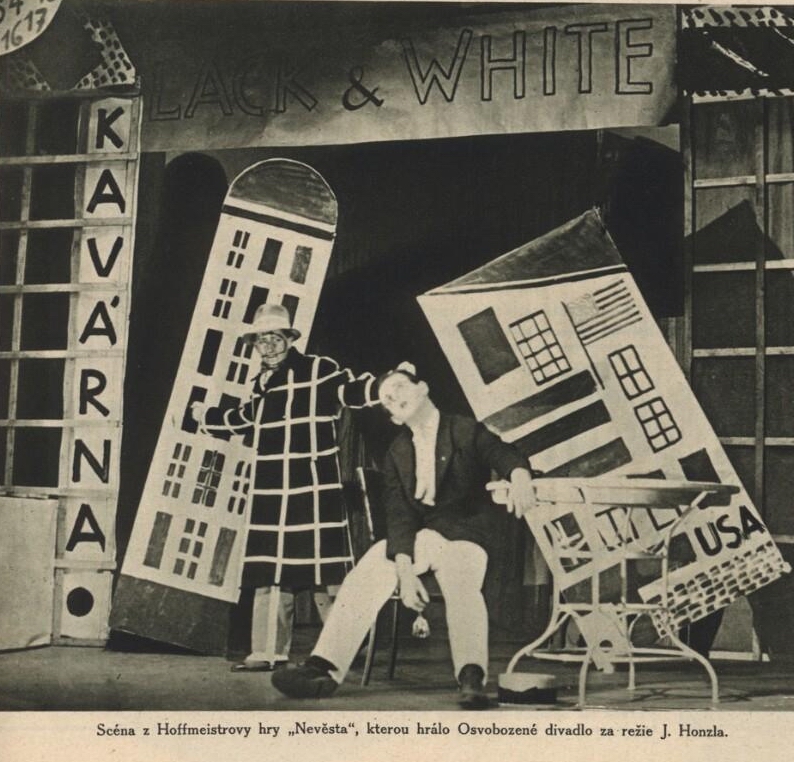
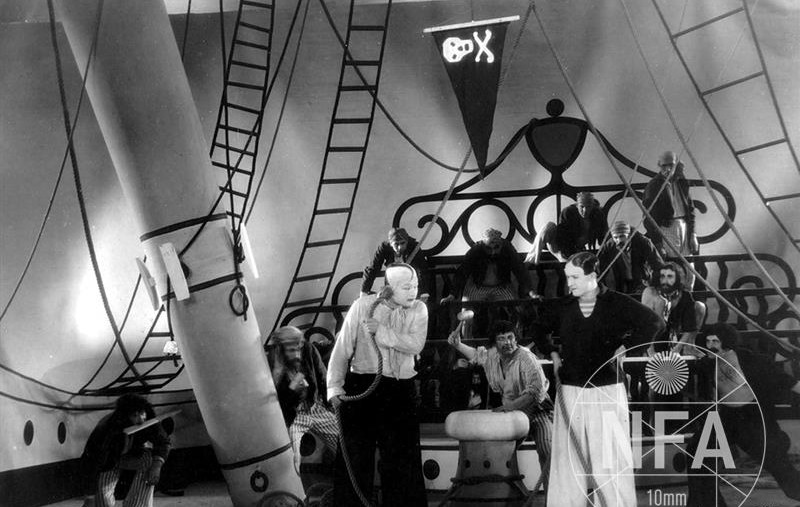
Jiří Voskovec, originally Jiří Wachsmann and Jewish, and Jan Werich, from Prague-Smichov, a working-class district, met in high school in Prague’s New Town, then joined the Osvobozené divaldo /Liberated Theatre, founded in 1925 by the Czech avant-garde group, Devětsil. Under the leadership of the art theorist Karel Teige and his Dadaist Manifesto, Devětsil’s nearly 100 members included poets, architects, painters, photographers, film and theatre directors. Prominent among the were poet Vítěslav Nezval, literary theorist, Roman Jakobsen, journalist, translator, and Kafka’s lover, Milena Jesenská, and the art photographer, Jaroslav Rössler. Like the Russian Constructivists and the Italian Futurists, Devětsil called for work that was close to life, but eschewed realism, giving preference to popular culture, poetry in everyday objects, skyscrapers, airplanes, mime and graphic design. Voskovec and Werich had their first theatrical hit in 1927 at the Liberated Theatre with “The Vest Pocket Revue,” which amalgamated comedy homages to Chaplin, Harold Lloyd and other American silent film comedians. The same year they took control of the directorship of the Liberated Theatre, where they performed in ever more stringent anti-fascist plays until it was closed down in 1938.
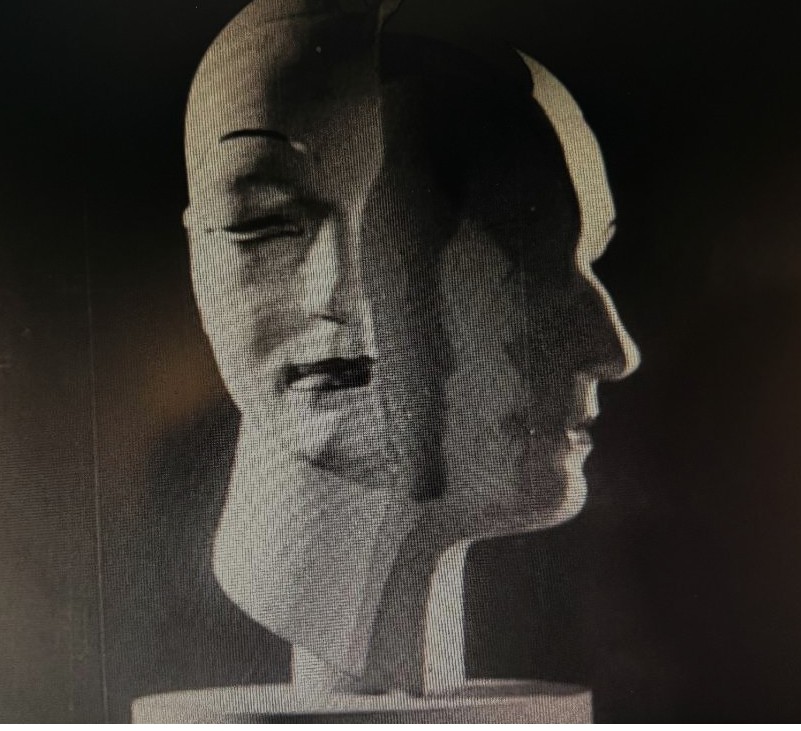
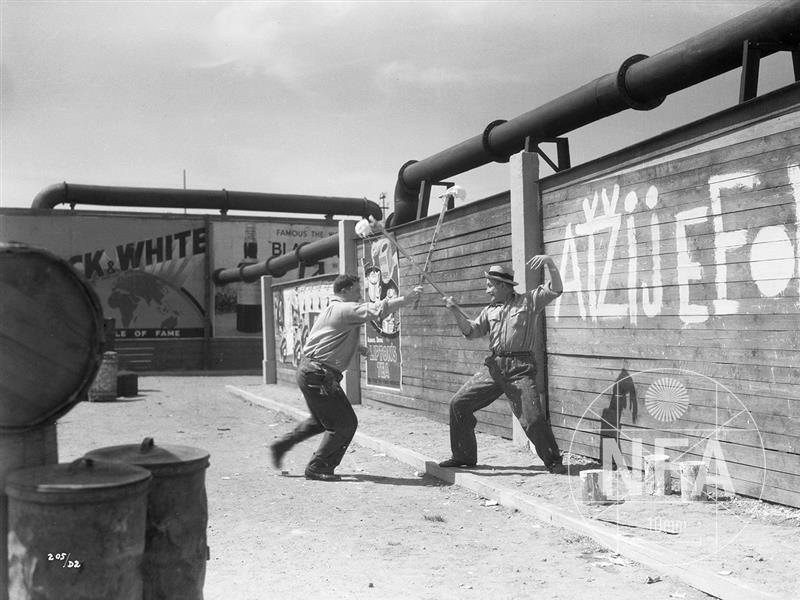
While Voskovec had appeared in a few Czech silent films under the pseudonym Petr Dolan, Voskovec and Werich’s first film together was Powder and Gas (1931, Jindřich Honzl). The film opens with a trick: A view of Prague’s Hradčin castle is revealed to be on a plate in a tourist shop, the following scenes satirizing the city’s tourist agency, Čedok. The title itself refers to cocaine and petrol, since the somewhat episodic plot mixes gangster film conventions (a cocaine ring) with a backstage musical, the two most popular American cinema genres in 1930. The cabaret numbers are staged by Voskovec and Werich, who are seen as a taxi driver and policeman, a boxer, and as amateur actors. The comedy routines, like the opening traffic accident, a picnic with their mutual love interest, a boxing match, and their songs, ”Aesop and the Puppet” and “Life is just a coincidence,” originated in their stage revues. The plot revolves around two male friends pursuing a girl, the actress Marta (Ela Šárkova), who actually is in love with the musical play’s author, while the actress’s brother has been dealing coke and is trying to escape his gangster suppliers. It’s all a bit discombobulated as classical narrative cinema, but Voskovec and Werich were clearly applying Dada principles of comedic collage, assembly, and juxtapositions of popular culture.
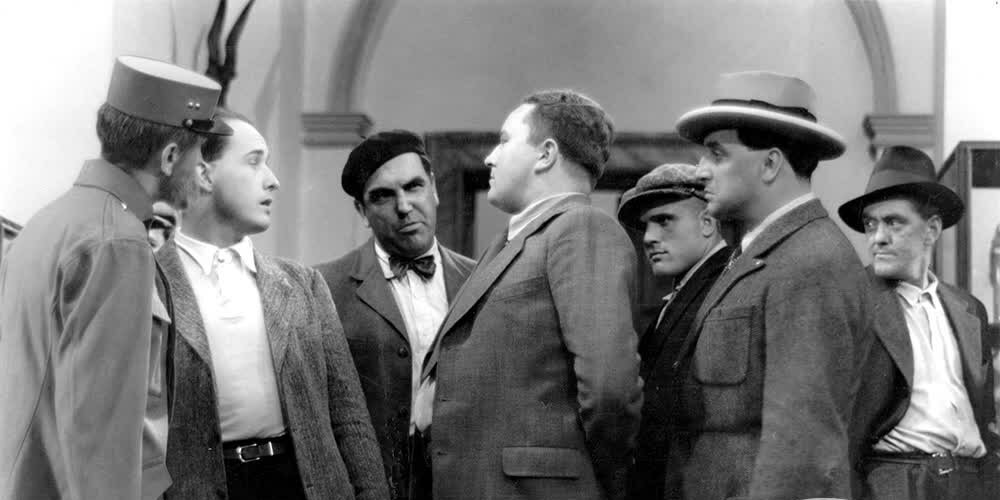
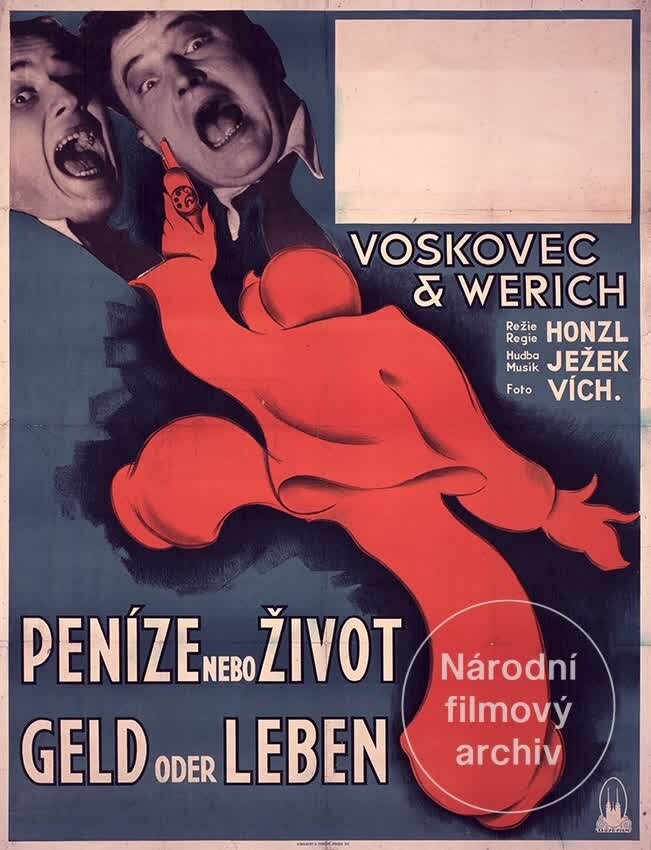
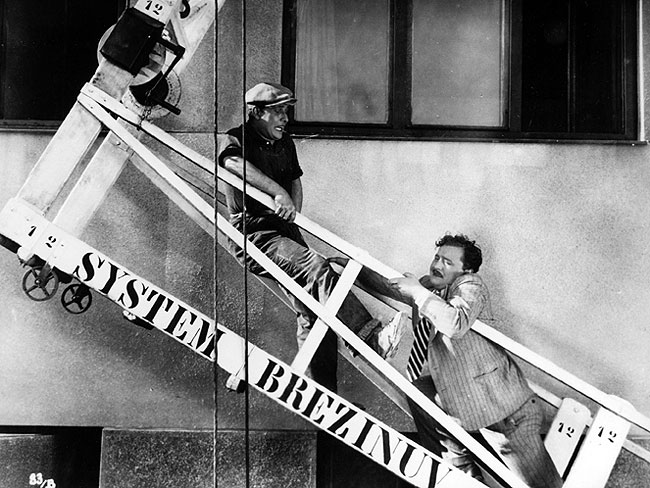
Voskovec and Werich’s second sound film, Your Money and Your Life (1932) opens with a more than ten-minute montage sequence that visualizes without dialogue the path of a stolen necklace from its owner through dozens of hands to Tonda (Werich) who accidentally comes into possession of the stolen goods. In a park he meets his childhood friend, Pepic (Voskovec), who is attempting to hang himself, due to his wife’s infidelity, and together they look for the necklace’s owner, pursued by the gang of thieves, and a desperate fake German count who hopes to pay his debts with it. An endless chase, with a less than coherent plot, involving Pepic’s new unfaithfu bride, the film is filled with absurdist elements, individual scenes turning into skits and dialogue jokes, pure slapstick and physical comedy in homage to silent American comedians, including a hilarious boating scene.
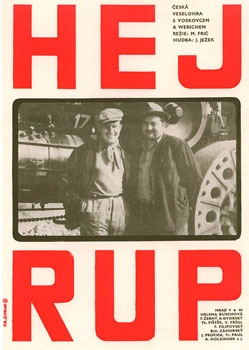
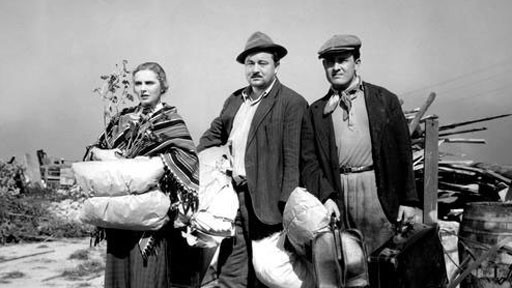
Worker’s, Let’s Go is a Dadaist fantasy of Karl Marx’s proletarian paradise where the workers seize the means of production and outsmart the capitalists, simultaneously exposing the plight of the unemployed in the midst of the world-wide Depression. The film opens when Mr. Worst (Josef Skrivan), the owner of the canned milk trust decides to destroy Simonides (Werich), the owner of the milk cannery-trust by keeping him drunk. Worst is a nasty old man in a wheelchair (the actor died in 1942 in Auschwitz), while Simonides figures out he got screwed by unscrupulous bankers, and joins forces with the unemployed worker, Filip (Voskovec). After spending a night in a homeless shelter, Filip and Simonides (and many unemployed workers) finish a building on a piece of real estate the former capitalist still owns, then create a worker-owned milk cooperative that eventually defeats Worst. Numerous scenes are played for comedy, e.g. when Simonides presses his pants with a steam roller, which runs amok, the fast-motion construction of the building to the tune of the song “Heave, Ho!”, or when Worst’s police attempt to keep the workers from attending a stockholder’s meeting, leading to a Keystone Cop-like chase. When Filip meets a young woman (Helena Bošova), they discuss their love of cinema, in particular, Chaplin, Fairbanks, and Mozhukhin.
Given that Svět patří nám / The World is Ours (1937) is an overtly anti-Fascist film, one of the few anti-Nazi flms produced in Europe in the 1930s, it deserves more than a few lines; I will discuss it in my next blog.