Archival Spaces 403:
Weimar Germany’s Most Popular Unknown Film Star
Uploaded 10 July 2026
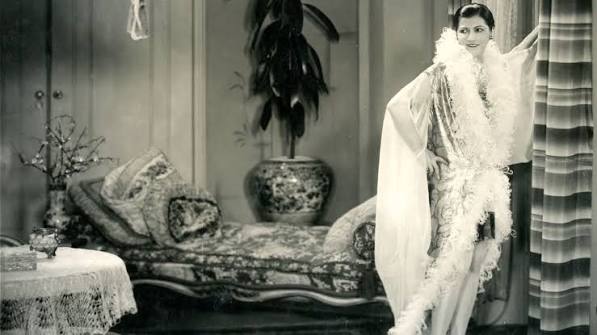
Despite having starred in ca. 70 films, despite having been one of the most popular actresses in Weimar Germany, and despite operating her own production company throughout the 1920s and early 1930s, Ellen Richter is invisible in the canons of classic German film histories of Siegfried Kracauer, Lotte Eisner, Heinrich Fraenkel, Enno Patalas, and Thomas Elsaesser. Such a lapse is the result of an implicit bias for art cinema and against popular film genres, and a blinndspot for women filmmakers (and actresses) who could be agents of their own fate. It also didn’t help that her career came to a crashing halt with the rise of the Nazis, and that she (like Mary Pickford) was functioning more as a film producer than a film star, once sound films entered the picture. Not until the third decade of the 21st century with the publication of Philipp Stiasny and Oliver Hanley’s Ellen Richter. Die große Unbekannte des Weimarer Kinos (Vienna: Synema, 2026), which translates as Ellen Richter. The Great Unknown of Weimar Cinema, has that glaring omission been rectified.
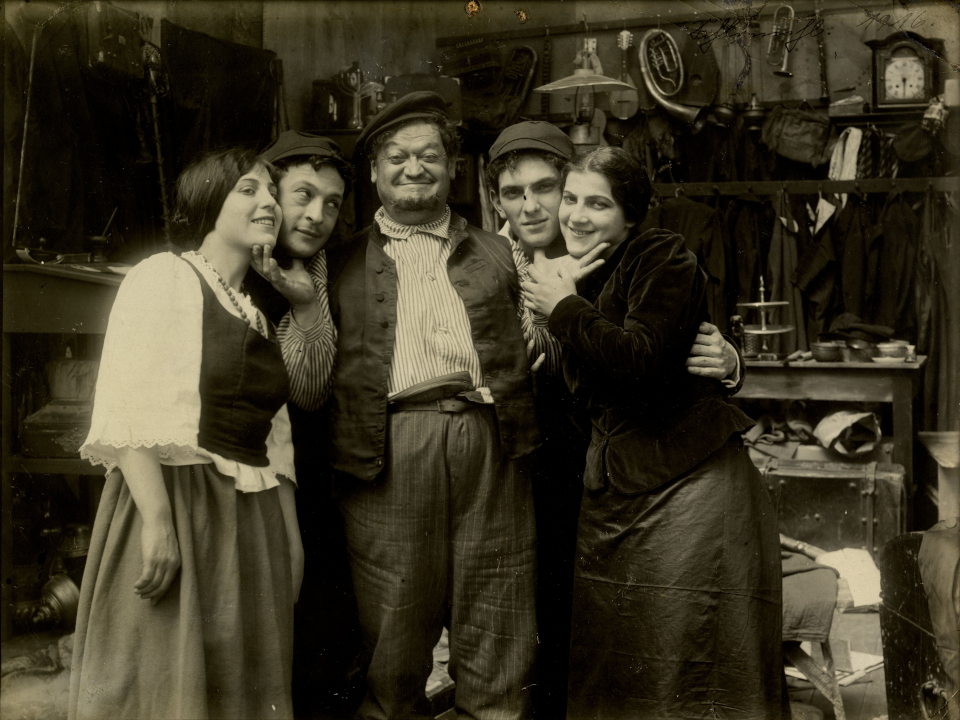
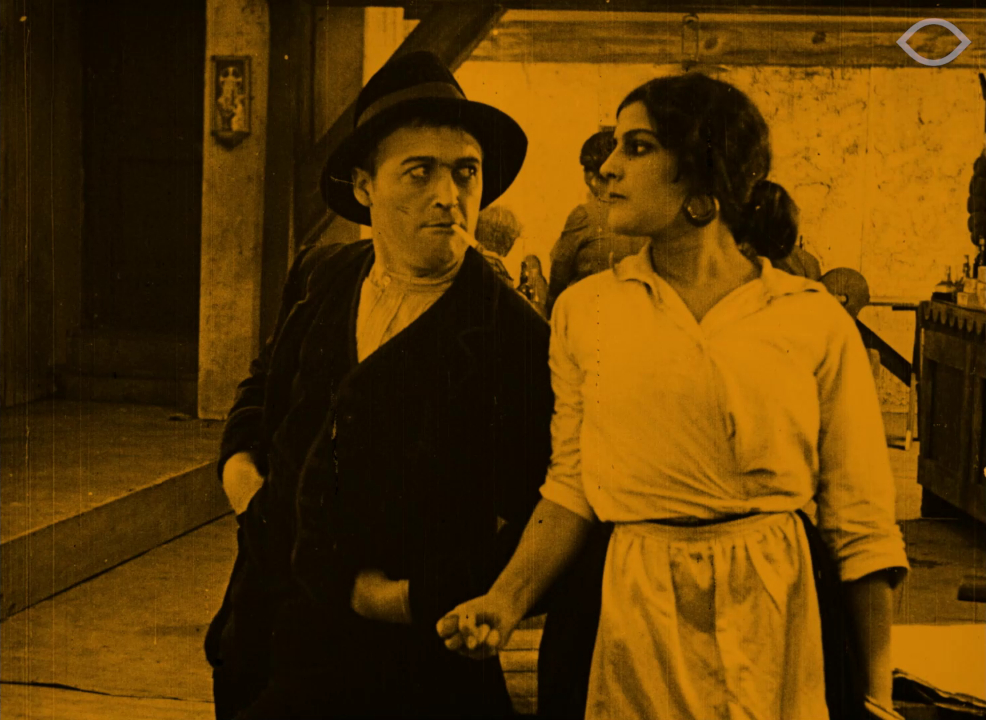
Born in Vienna in July 1891 as Käthe Weiß, the daughter of a Jewish tailor and his wife, who had emigrated to the capital from Hungary, she took the name Ellen Richter with her theatrical debut at the Brno City Theater in 1908. After residencies in Vienna, Munich, and Berlin, she forsakes the theater in 1915 for a career in the new medium of film, where she almost immediately lands starring roles, e.g. in Richard Oswald’s Schlemiehl (1915) and Richard Eichberg’s Life for a Life (1916); her star image is already apparent in the latter film: young, slender, her dark hair and eyes marking her as “southern European,” a code for the emotional and sexual. Between 1915 and 1918, she will star for Eichberg in 13 melodramas, often with crime and action elements, opulent sets, and stirring mass scenes, making them both stars. Meanwhile, she is also featured in melodramas, adventure films and war propaganda films. For the 1918-19 season, she is the star of her own film series, directed by Rudolf Meiner, produced by the Frankfurter Film Co., and written by Dr. Willi Wolf whom she will marry, and who will soon become her exclusive producer-director.

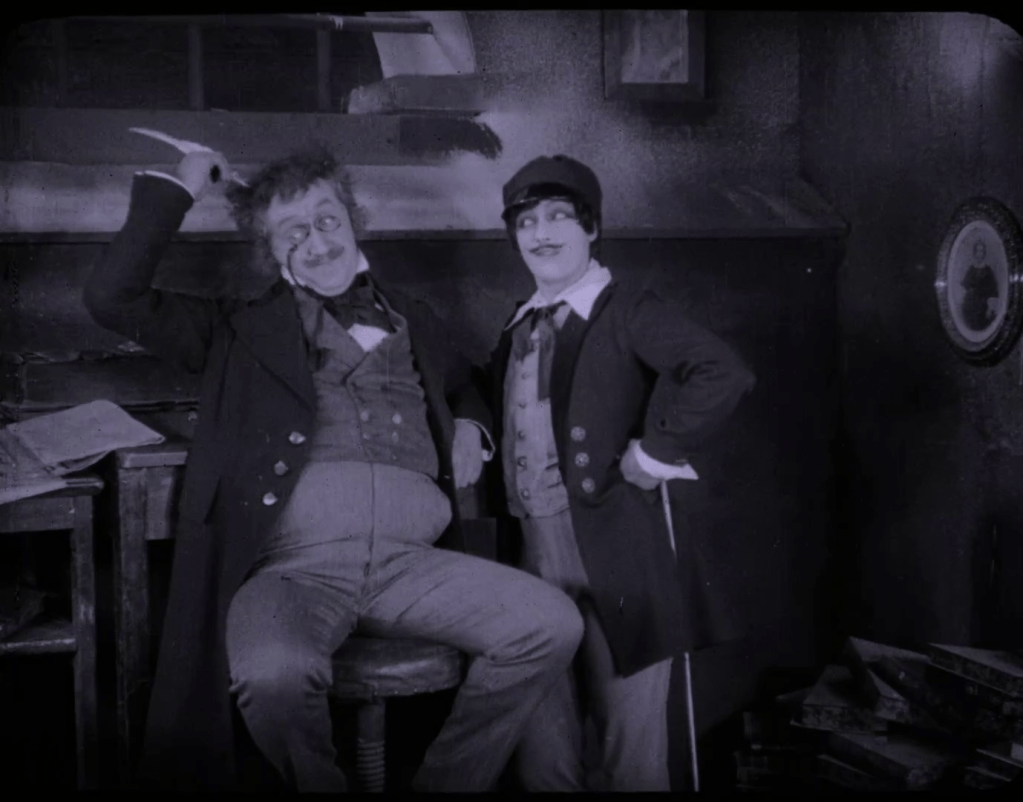
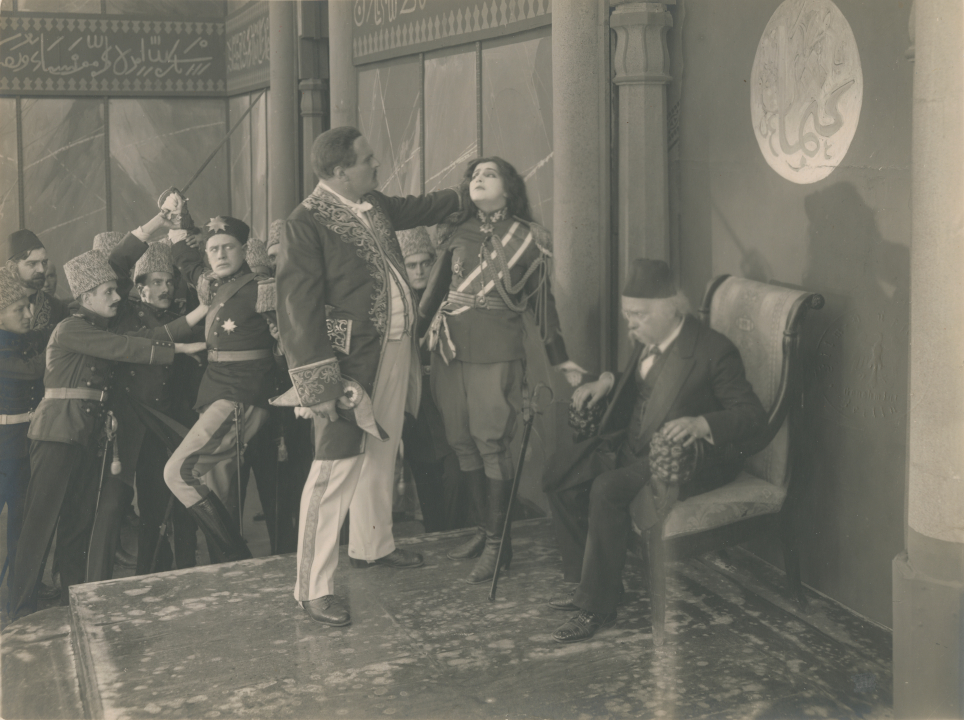
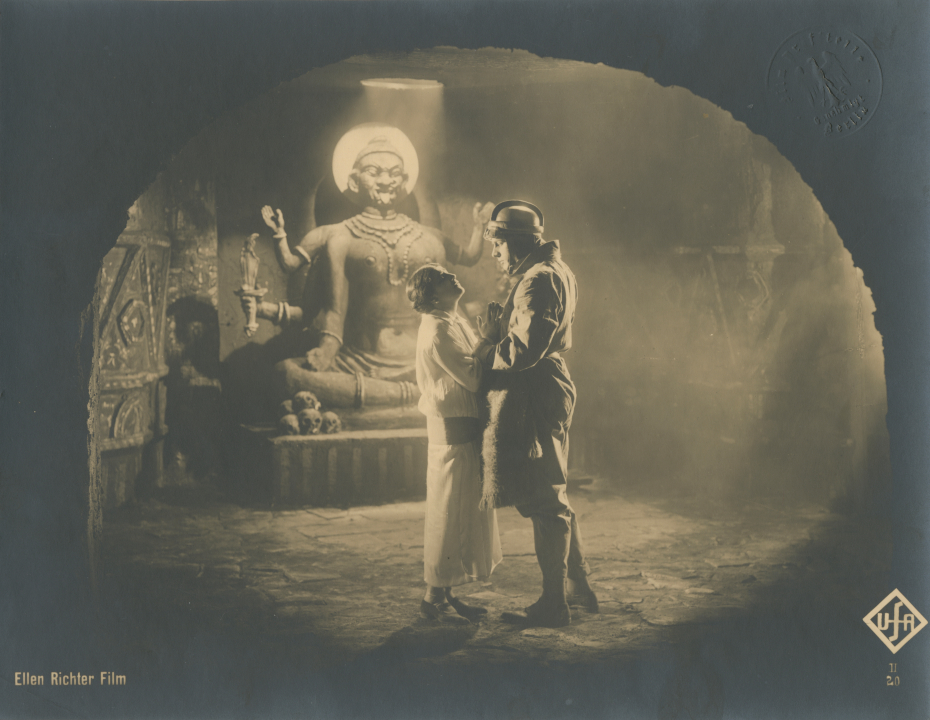
The Ellen Richter-Film GmbH is founded in 1920 by Richter and Wolff, their films distributed through the UFA, specializing in then popular historical subjects, beginning with Mary Tudor (1920). She follows up with Madame Sans-Gêne (1921) and Lola Montez, the Dancer of the Queen (1922), in both films playing independent, modern women who defy patriarchal conventions. Lola Montez, which Max Ophüls will remake more than 30 years later, becomes Richter’s favorite role, playing an actress, as in so many of her earlier and later films. When the historical cycle, which had started with Lubitsch’s Madame Dubarry (1919), runs its course, Richter and Wolf switch to furiously paced travel/adventure films, often released in multiple parts. In The Mystery of the Sphinx (1921), The Adventuress of Monte Carlo (1921), The Woman with Millions (1923), and Flight Around the Globe (1925), the couple offer German audiences visual pleasure through exotic, real locations (few studio sets) in Southern Europe, the Balkans, North Africa, and Asia, and thrilling action; the implausibility of the plots, which one contemporary critic calls “lovable nonsense” (p. 145), hardly matters.
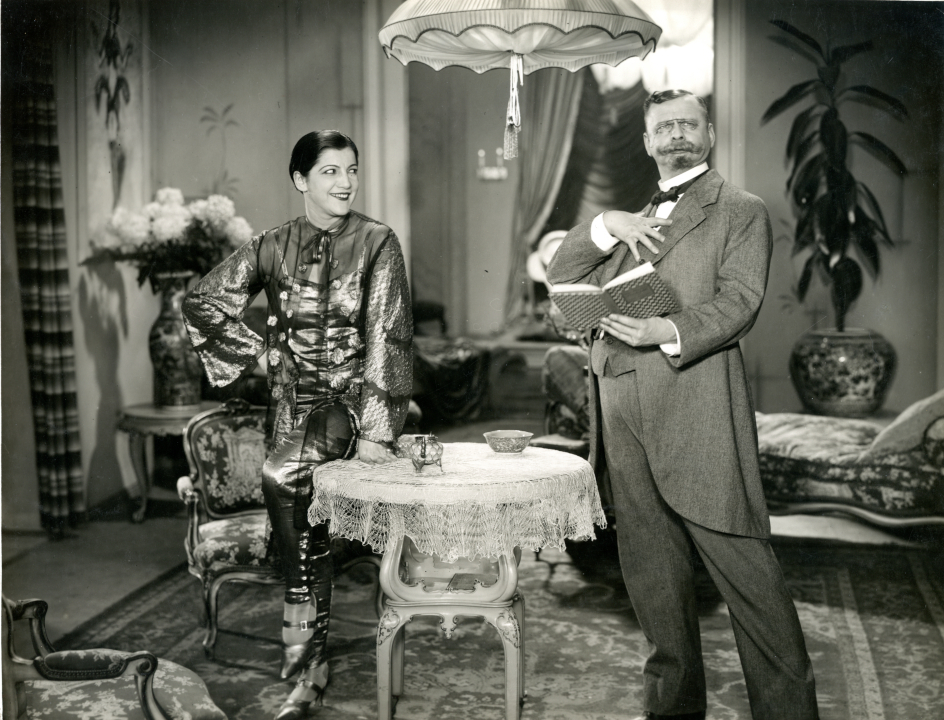
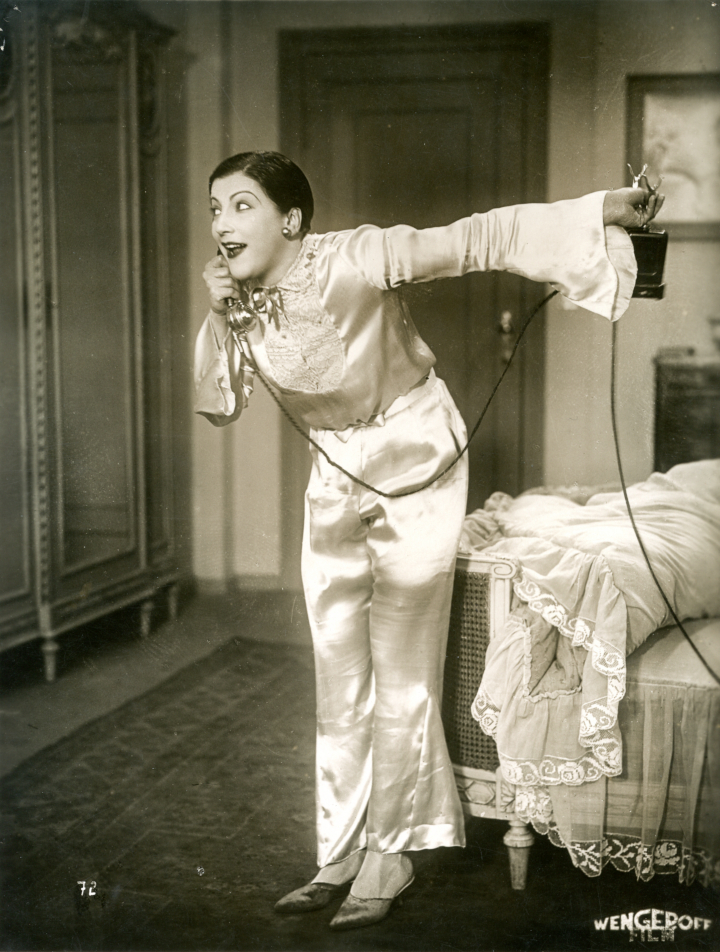
In the mid-1920s, Richter returns to comedies (and light operettas), genres she had excelled at in her theatre career but only seldom turned to after her early film success, A Great Idea (1916). With Heads Up, Charley! (1927), The Imaginary Baron (1927), Saucy Suzy (1928), and Morality (1928), Ellen Richter epitomizes the modern woman, cross-dressing, changing identities and costumes, her short cropped “Bubikopf” hair signaling her status as a 1920s flapper. The first two films also featured a young Marlene Dietrich in her first starring roles. Despite being based on a 1906 play, Moral, brutally lampooned middle class philistinism, servility, and censorship in what was thought to be libertarian Weimar Germany. The film’s burghers would soon become staunch Nazis.
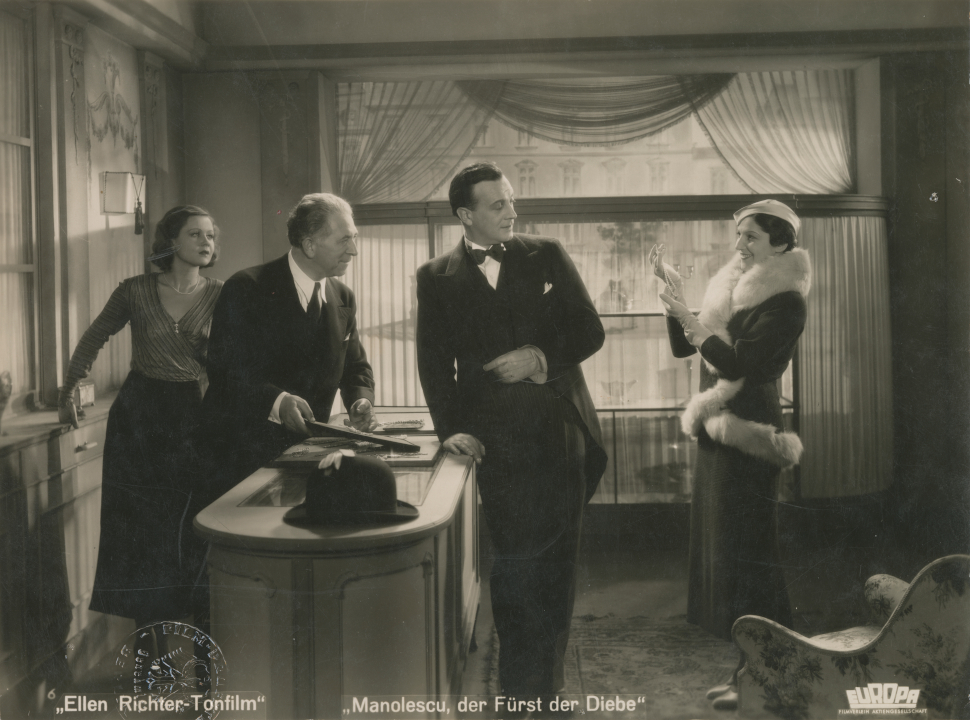
With the coming of sound, Ellen Richter continues producing films for her company, but only stars in one film, The Adventuress of Tunis (1931), – a throwback to her most popular adventure/travel films – and appears in a supporting role in three others; her first two produced sound films, Only You (1930) and Madame Pompadour (1930) are musicals needing a star with a stronger singing voice; she does not appear. Critics notice Richter’s strong Viennese accent in Tunis, but it is probably her age, she is now 40, more than anything else that forces her into supporting roles. Even after the Nazis blacklist both Richter and her Jewish husband, the Ellen Richter Film Co. is allowed to produce two more films, not that the couple can profit from their success. The Richter and Wolff emigrate first to Austria in 1935, then to Paris in 1938, to Hollywood in 1940, after Wolff escapes from a French internment camp. When their foray to Hollywood fails, they move to New York, where Wolff takes up his former profession as a dentist, as he had done in Vienna and Paris.
Willi Wolff dies in 1947 in Nice, while Ellen Richter spends the rest of her life until her death in Düsseldorf in 1969, unsuccessfully fighting the German government to recover her wealth and film assets, stolen by the Nazis and their West German successors. Anyone who has seen The Woman in Gold (2015) knows the story. For the authors, Philipp Stiasny and Oliver Hanley, who have done an amazing job working in film archives, researching Richter’s surviving film prints and her history, the actress won them over, thanks to her “self-deprecating irony, her humor, her incredible camera presence, her cross-dressing, and her many multifaceted characters, whether femme fatales or world-traveling adventuresses.”(p. 12, my translation)
This book also proves to me that well-made popular cinema was not just the purview of American cinema, but also existed in Berlin; maybe that is why so many German-Jewish émigrés were successful in Hollywood.


