Archival Spaces 401:
Ardiouma Soma Accepts Award
Uploaded 26 June 2026
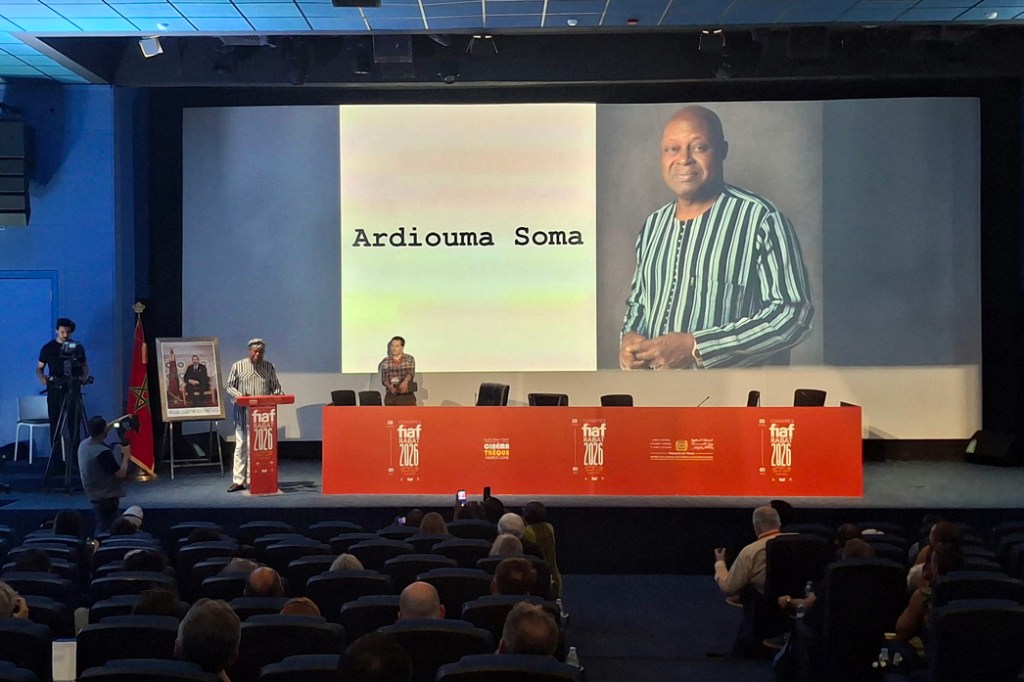
In April, at the 2026 FIAF Conference in Rabat, Morocco, Ardiouma Soma, the retired festival director of the Festival Panafricain du Cinéma et de la Télévision de Ouagadougou (FESPACO) and a representative of the Cinémathèque Africaine de Ouagadougou (CAO), received the prestigious FIAF Award from FIAF President Peter Bagrov. According to a press release, the Award “recognizes, in particular, the recipient’s dedication and contribution to the preservation of, and access to, the world’s film heritage, for the pleasure of today’s audiences, as well as for the benefit of future generations.” Previous recipients of the FIAF Award since 2001 have included: Manoel de Oliveira, Ingmar Bergman, Hou Hsiao-hsien, Peter Bogdanovich, Nelson Pereira dos Santos, Agnès Varda, Jan Švankmaje, Jean-Pierre and Luc Dardenne, Christopher Nolan, Jean-Luc Godard, Walter Salles, Tilda Swinton, Guillermo del Toro, and Wim Wenders. FIAF’s Executive Committee members approved Mr. Soma’s Award for his achievements in a long career advancing film archiving in Burkina Faso and more broadly the preservation and promotion of Africa’s rich film heritage.
FESPACO was founded in 1969 in Ouagadougou, the capital of Burkino Faso, thanks to an initiative of Burkinabe filmmaker Ousmane Sembène in association with the Journées Cinématographiques de Carthage (Carthage Film Festival); the Festival now takes place every other year, alternating with Carthage. While the Tunisian Festival focuses, though not exclusively, on North African and Arab cinema, Ouagadougou has become the continent’s most important film festival for African Cinema. In 1995, the Festival began awarding separate prizes for television work. FESPACO’s new headquarters was inaugurated in 2005, after construction had begun in 1994. Mr. Ardiouma Soma was its Directeur Generale from 2014 to 2020. Festival prize winners have included over the years: Souleymane Cissé’s Baara (1979), Med Hondo’s Sarraounia (1987), Idrissa Ouedraogo’s Tilaï (1991), Abderrahmane Sissako’s En attendant le Bonheur (2003), Hailé Gerima’s Teza (2009),Dani Kouyaté’s Katanga, la danse des scorpions (2025).
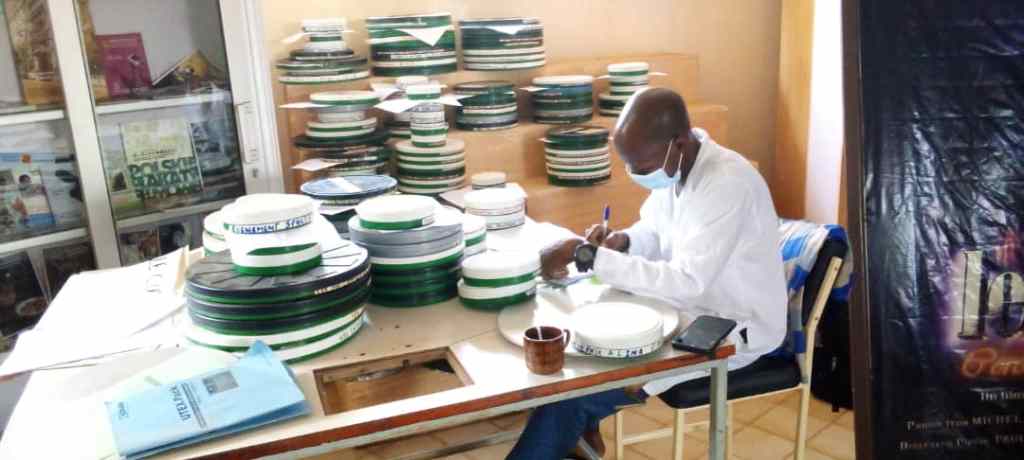
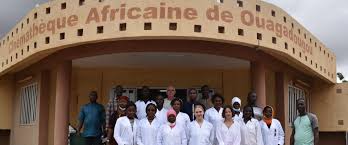
In 1973 the filmmakers at the Pan-African Festival of Film and Television (FESPACO) who had formed the Pan-African Federation of Filmmakers (FEPACI) decided to give their films to establish a collection of films in Burkina Faso. In 1985, FEPACI Secretary General Gaston Kabore appealed again to African filmmakers to donate copies of their films to the future African film library, given that the Festival had been storing large numbers of films from previous festivals. It also asked that the new archive be able to copy and preserve these works. The increase in production of African films, reflecting African cultural values and identities, increased awareness among filmmakers of the need to preserve these images. It took a while, but in 1989, the Cinémathèque Africaine de Ouagadougou, now a public institution of Burkino Faso, was established.
The mission of the Cinémathèque Africaine de Ouagadougou is two-fold, according to its website: 1. To preserving African film memory for future generations; 2. To promote and enhance this heritage to ensure greater visibility for African cinema worldwide. COA’s goals include: A. Ensuring continuous exposure for African cinema; B. Developing collections to stimulate endogenous reflection and research on African cinema; C. Enabling consultation of films for a better understanding of contemporary African history; D. Serving as an inexhaustible source of inspiration for film and audio-visual professionals; E. Offering screenings through regular programming of retrospectives and by organizing exhibitions to contribute to the cinematographic education of the public. The Film Library currently holds more than 12,000 films of all genres, including 380 35mfilms, 548 16mm films, 2,300 films on ¾” U-Matic videotape, 2,227 films on VHS video, 170 films on BETACAM, 4350 digital films on DVD and Blu-ray, and more than 2,000 films on hard drives, USB drives, and DCPs.
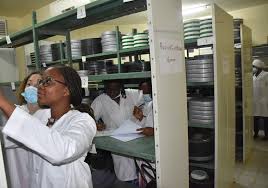
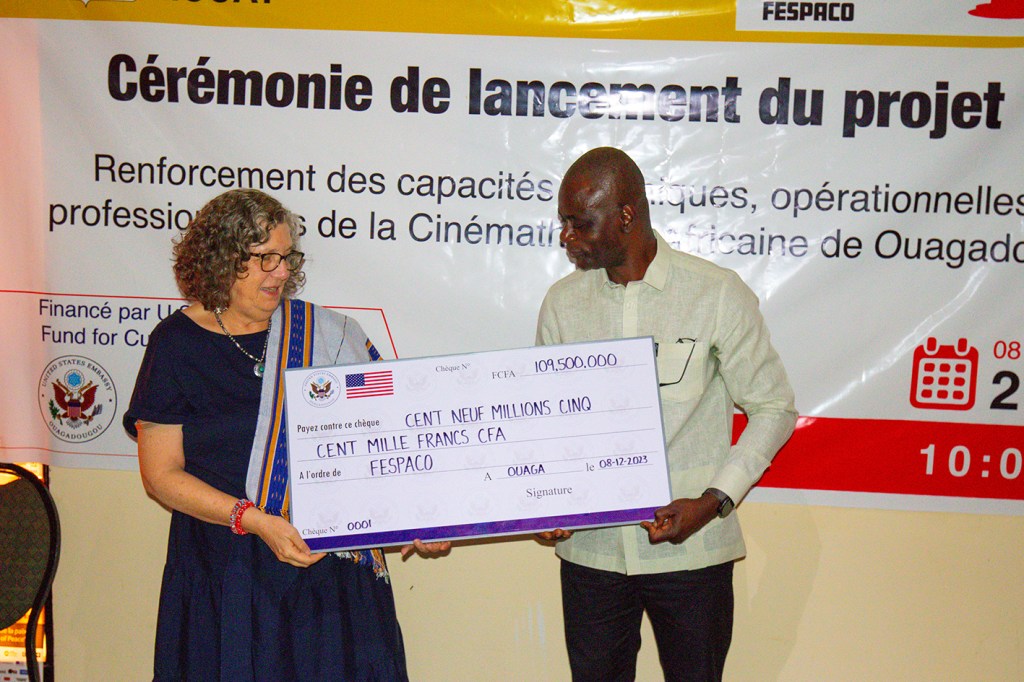
Given that almost all of African cinema is now produced in digital formats and that the rise of Nigerian cinema (Nollywood), in particular, has been the result of lower cost video and digital video formats becoming readily available on the continent, the African Film Library began a project to strengthen its technical, operational, and professional capacities in the digital realm. The project’s launch ceremony in December 2023 was presided over by Burkino Faso’s Minister of Communication, Culture, Arts, and Tourism, represented by his Special Advisor, Yacouba Bonkoungou. At the ceremony the then American Ambassador to Burkino Faso, her Excellency Sandra Clark presented a check for 109.5 million West African CFA francs, or approximately $195,535. According to a press release from FESCAPO, the amount represents the total cost of the project; the funds will be used to strengthen and digitize the African Cinémathèque.
While there are larger film archives in North Africa and in South Africa, it is hoped that FIAF’s recognition of Ardiouma Soma and the Cinémathèque Africaine de Ouagadougou will strengthen nascent efforts to preserve the moving image heritage of the whole continent of Africa.