Archival Spaces 402:
Film Preservation Hoaxes
Uploaded 12 June 2026
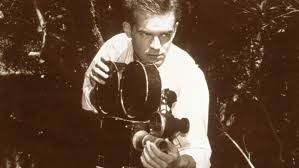
Recently, a story circulated on the net that a film archivist at the Carnegie Library in Coeur d’Alene, Idaho, Rebecca Lang, had found an unlabeled film canister in the basement, which turned out to be a previously unknown silent film from 1923 with Buster Keaton. The “nearly complete 35mm nitrate print” was The Forgotten Signal, found “along with original distribution notes and a handwritten letter from the local theater owner who had stored it there in 1928.” The sensational news spread like wildfire through the virtual biosphere, as Buster Keaton fans and film historians wondered why no such title could be found in any existing Keaton filmography, nor had the film been copyrighted. According to the source, “the Library of Congress and the Academy Film Archive confirmed the print was of high historical value,” because it contained scenes and gags not found in any known surviving examples of Keaton’s work. Finally, the discovery demonstrated that important cultural artifacts could be found in the most ordinary places. Less than twenty-four hours later, the lost Keaton film was proven to be a hoax.
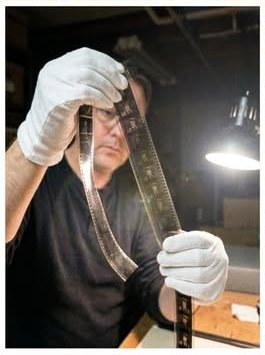
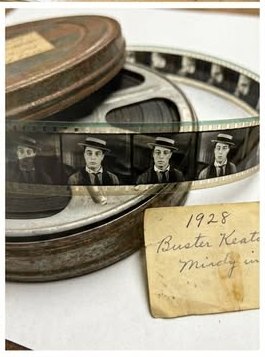
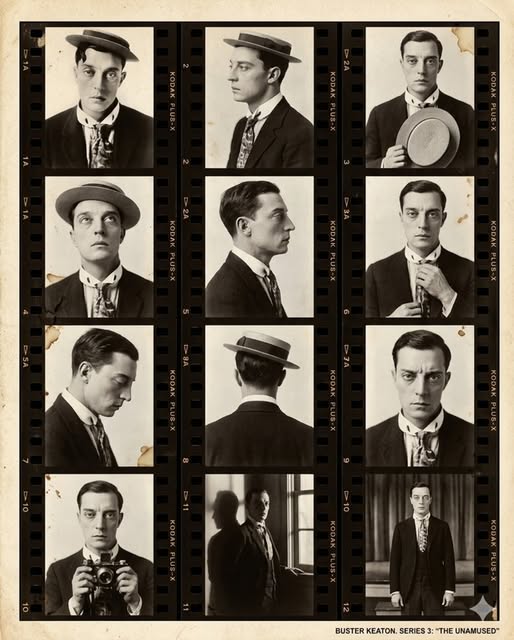
It was film preservationist Paul E. Gierecke who in a post on 18 May on Facebook exposed the hoax, noting that a anonymous FB poster (Uhhgv622) specialized in sensationalized stories “touting the discovery of rare, lost, or unknown materials, e.g. a lost recording studio hidden behind a wall in a theater, a rediscovered silent film studio, discovery of a lost Buster Keaton film;” even established film historians have fallen prey to his/her hoaxes. Before Paul’s post, other commentators had questioned the authenticity, noting that the frames depicted in the accompanying image of the story were printed horizontally on the film, as if it were Vistavision, a historical impossibility in 1923. As Paul noted, this was AI nonsense, a con, a scam. To prove his point, he included an AI image of a Keaton photographic contact sheet, created by another FB prankster, David B. Pearson, who also specializes in fake AI images of silent movie stars:

All this brouhaha would be eminently forgettable if it circulated only among film historians and buffs who would immediately recognize the hoax, but film preservation and archiving have now entered the public consciousness, so the average consumer may not recognize such fabrications. In fact, we are now inundated with AI images of supposedly historical and/or contemporary events. Who is to know?


More than 50 years ago, Orson Welles warned about art forgeries and hoaxes in his film, F is for Fake (1973); Welles had, of course, also staged his own elaborate hoax in 1938 with the radio show, The War of the Worlds. All this reminds me of the most sensational film preservation hoax, perpetuated by New Zealand filmmakers, Costa Botes and Peter Jackson, in Forgotten Silver (1995). First screened in October 1995 on New Zealand’s TV ONE, the program was accompanied by an interview with Peter Jackson in the magazine, New Zealand Listener, explaining how a collection of 35mm nitrate reels had been found in the shed of his late neighbor. The “lost history” of the pioneering New Zealand filmmaker, Colin McKenzie, caused a sensation, prompting scores of letters from people enraptured by the discovery of New Zealand films from before/after World War I, before any filmmaking by natives had been documented. Numerous film experts, including Leonard Maltin, attested to the find’s historical veracity. The day following the broadcast, the “mockumentary” was exposed as a hoax, but nevertheless went on to be screened at countless film festivals and even won prizes.
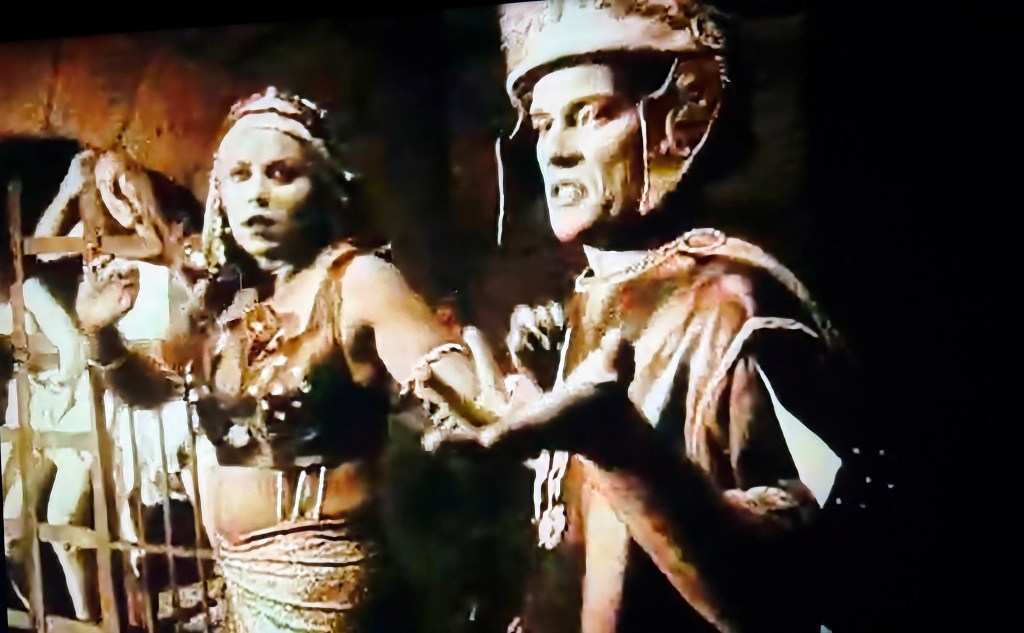
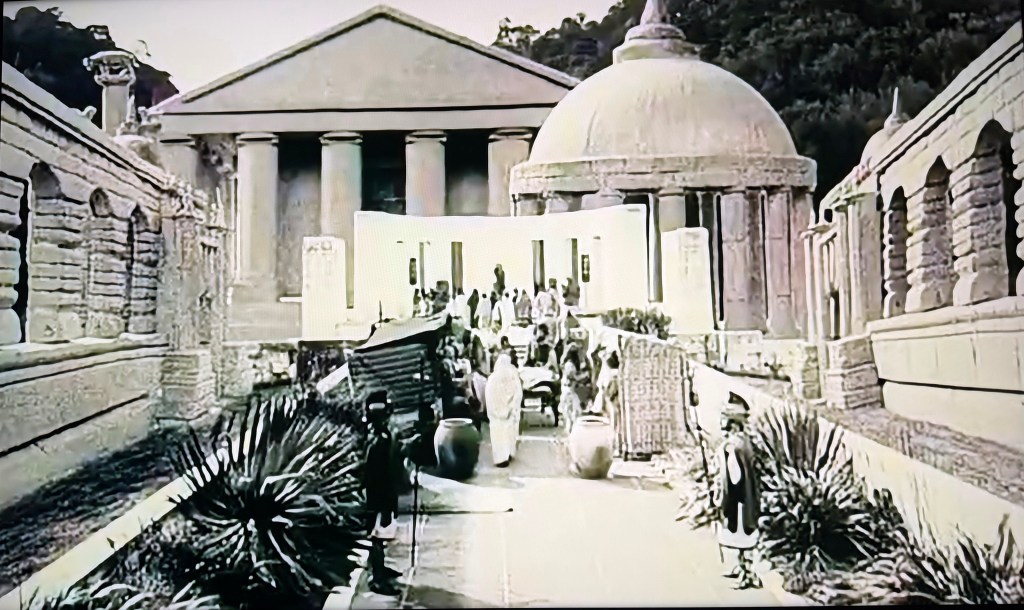
Born in 1888, McKenzie supposedly began making and screening films at age 12, projecting images with a bicycle-powered system and home-made film emulsion from egg whites (see Lumiere’s autochromes). In 1903, he filmed a successful flight before the Wright Brothers. He produced the first feature-length sound film in 1908, The Warrior Season (Oskar Messter created sound films in 1903). He and his brother used red berries from the (fictional) photina acquafolium to manufacture the first color film in 1911. During World War I, his brother shot footage at the Battle of Gallipoli, before he was killed in action.
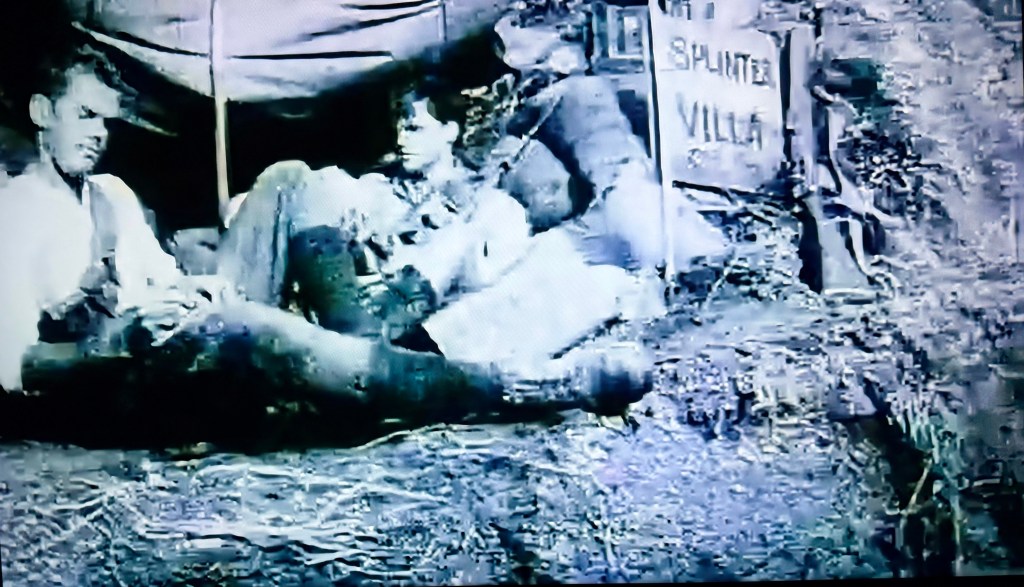
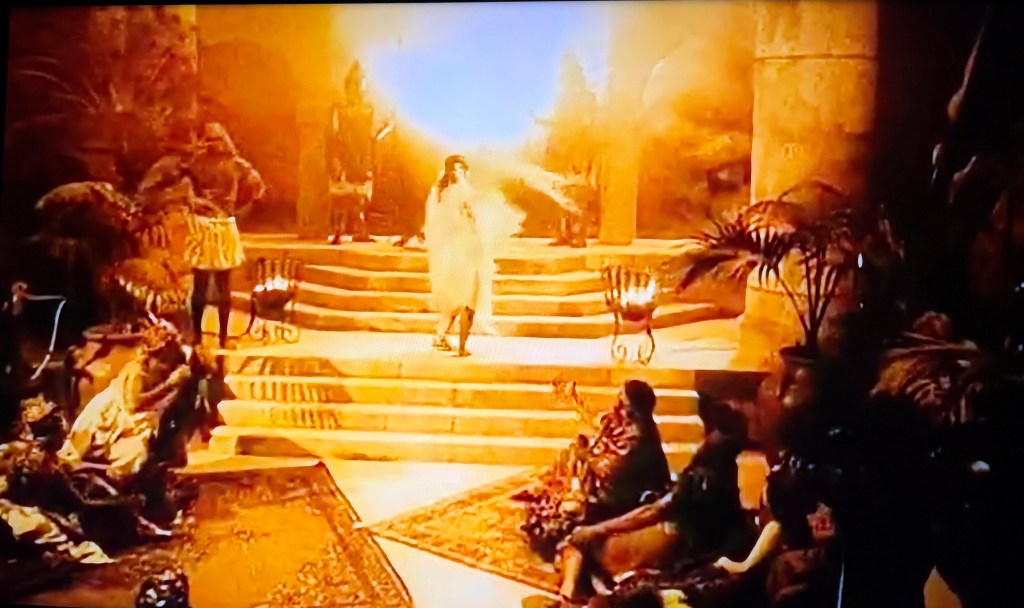
His greatest epic, Salome, was more than ten years in the making, lost since 1931, until it was found in a secret vault in the New Zealand jungle, beneath monumental sets, also uncovered after 60 years. His life ended in a battle during the Spanish Civil War, the camera capturing the moment of his death. Forgotten Silver’s last twelve minutes document the world premiere of Salome, a retelling of the well-known biblical tale, at least what was left of the unfinished film. The film starred his brother’s wife, whom he married after his sibling’s death.
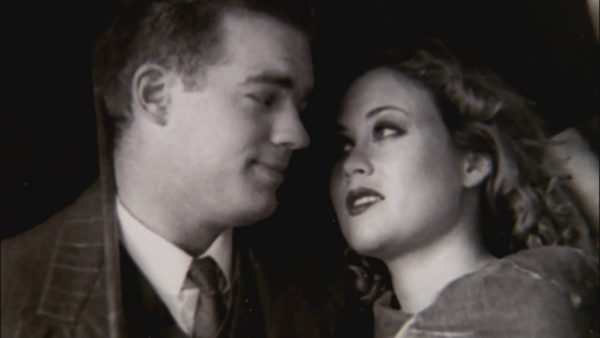
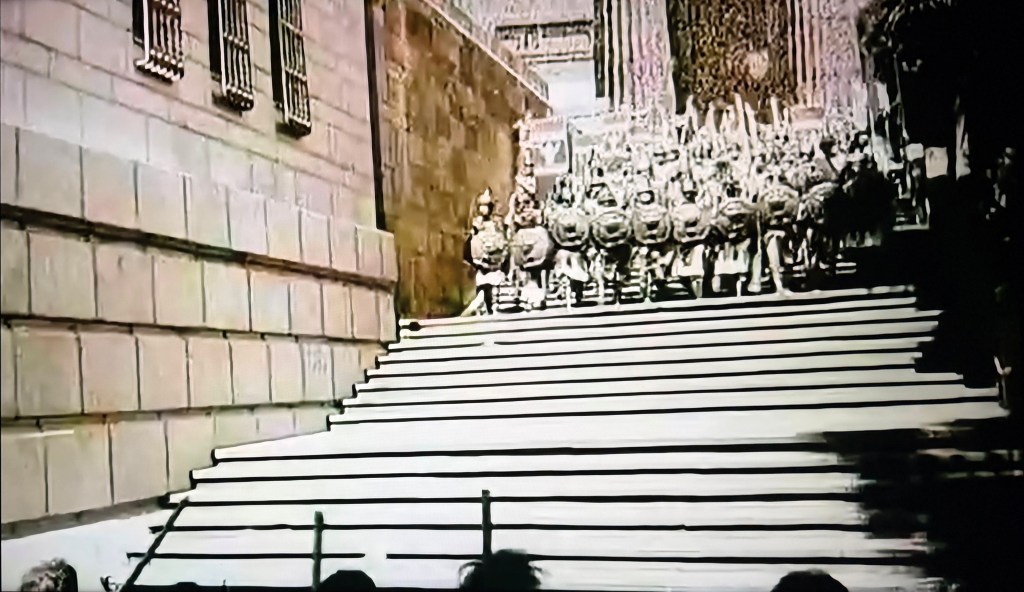
Jackson, who was responsible for creating all the historical footage, is a master of cinematic deception. For the untrained eye, Salome looks like a 1920s biblical epic, except the camerawork is too busy and the actors’ faces too modern. The fake newsreel footage of early air flight, Gallipoli and the Spanish Civil War is even more convincing, unless you know that newsreel cameramen knew better than to film in the line of fire. Yet, there are also narrative inconsistencies, and other preposterous “facts.” But Peter Jackson learned his lessons well and would apply them to colorizing, distorting, and even falsifying the footage from the Battle of the Somme in They Shall Not Grow Old (2018).