Archival Spaces 398:
German Cinema’s Low Point
Uploaded 1 May 1951

Today is my birthday. I (and my twin brother, Michael) were born in a medieval town in Germany’s Rhineland, Bad Münstereifel, seven months preemies and weighing 3 lbs each. Since we were born in a convent, not a hospital, we were given an emergency baptism by the Cellitinnen Sisters, who told my mother we would be dead soon. We survived and emigrated to America in December 1951.
Had my parents gone to one of the cinemas that year that survived the Allied bombing in the war, they would have been treated to an almost unending stream of commercial films of inferior quality. While the Allied government had, in the first years after World War II, pursued a denazification policy for the film industry, by 1951, after the establishment of the Federal Republic in May 1949, most former Nazi filmmakers, even the worst criminals, like Veit Harlan – the director of the anti-Semitic Jew Süß (1940) – were back in the saddle, producing films. Of the ca. fifty films released in the Federal Republic that year, all but three were retreads and remakes of Nazi films, melodramas, historical films, comedies, crime dramas, Heimat films, produced by directors, writers, and actors who had willingly submitted to Dr. Joseph Goebbels Propaganda Ministry, thereby morally supporting Adolf Hitler’s genocidal war.
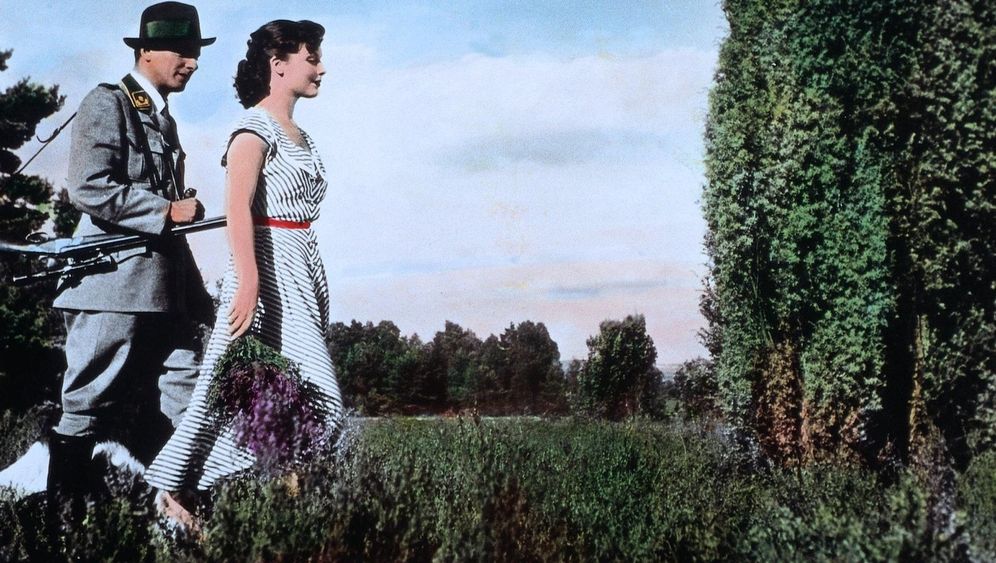
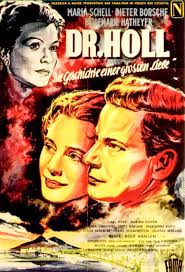
For example, the two biggest box office successes of 1951 were So grün ist die Heide / Green is the Hearth (1951, Hans Deppe) and Dr. Höll (1951, Rolf Hansen), the first giving birth to hundreds of Heimatfilms, the second to another particularly German postwar genre, the Ärztefilm, doctors’ films; both directors had produced Nazi propaganda films. These film melodramas, however, contributed to German amnesia about the Holocaust – Heide was situated in the North German moors, not a bombed-out building in sight, an amalgamation of every Heimatfilm trope of the previous 20 years, but in color. Höll presented German doctors as noble and self-sacrificing, even relinquishing their personal happiness, rather than as willing participants in the euthanasia of tens of thousands of Germans, as “unworthy of life.” Modern film scholarship hasn’t necessarily rehabilitated these films, but it has sought to read between the lines, discovering repressed social tensions.
The three films that rose above the abject mediocrity of West German film production were Die Sünderin/The Sinner (released in February), Der Verlorene/The Lost One (released in September), and Das Haus in Montevideo / The House in Montevideo (released in December).
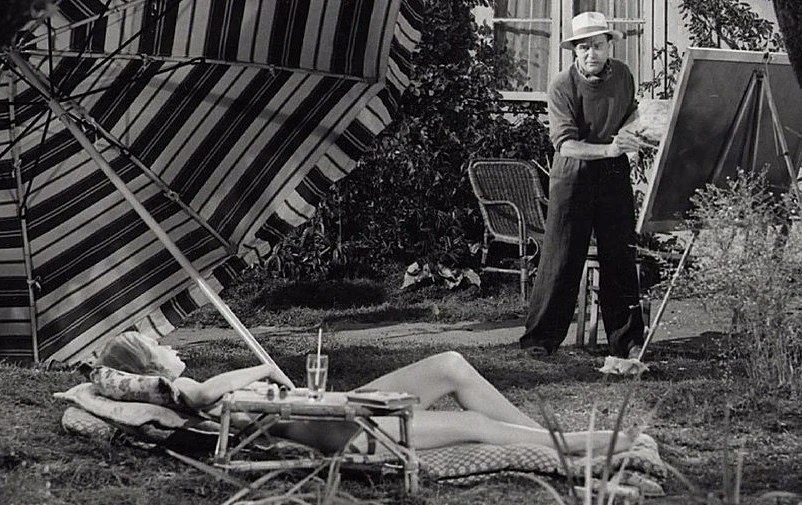
The biggest film scandal of the new West German Republic propelled Die Sünderin to one of the year’s most popular films, drawing more than 2 million viewers in its first three weeks of release. The Catholic Bishops advocated a total ban, as did the national censorship office. When that failed, they organized riots and stink bombs in theatres. Hildegard Knef, as a call girl who falls in love with a mortally ill and suicidal painter, convinces him to try a risky brain operation, which is successful, at least temporarily. Restored to life, his paintings of her bring him fame, but the brain tumor that is blinding him returns; she assists him in his suicide, then follows him to the grave. Knef, very briefly seen in the nude, was initially the casus belli, but it was the double suicide that sent Papist tempers ablaze. Fifteen years later, my German landlady would still scream “whore” at the TV every time Ms. Knef appeared on screen. Yes, it was pure melodrama, but consistently presented through the female protagonist’s voice, in voice-over in complex flashbacks, and visually through her camera p.o.v. and other distancing devices. Director Willi Forst conceived Die Sünderin as a morality play, asking whether a prostitute could be considered moral if she sacrificed everything for a doomed man.
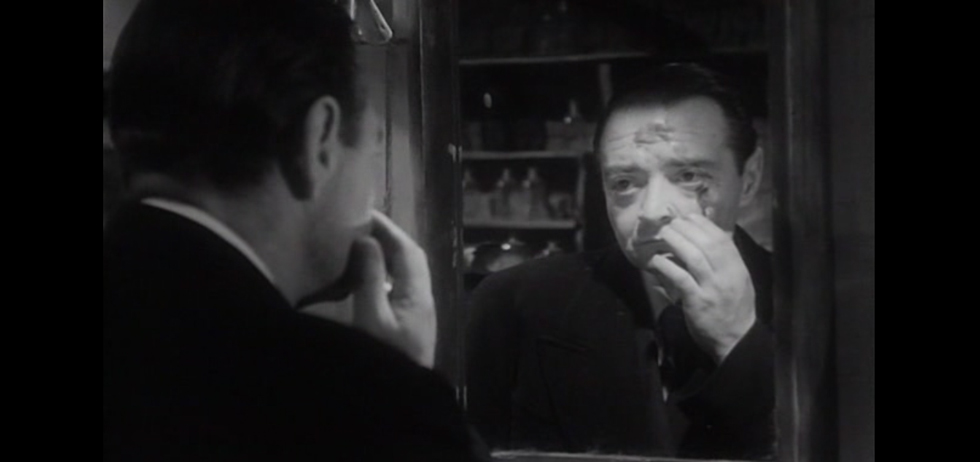
Directed by and starring Peter Lorre, Der Verlorene follows Dr. Rothe as a serial killer who murders his fiancée for stealing his medical research, then murders other women. His counterpart is his assistant, Hoesch, who works for German counterintelligence, slept with Rothe’s fiancé, and sweeps murder under the table. Later, Hoesch arrests and kills a group of anti-Nazi officers and government officials, referencing the July ’44 conspiracy. After the war, both are on the run, hiding in a Displaced Persons Camp. Unlike the opportunistic Hoesch, who is completely amoral – as were most Nazis – Rothe feels guilty and wants to die, eventually after a long night of drinking, killing Hoesch, then throwing himself in front of a train. Dr. Rothe allegorizes the role of the German people in Nazi Germany, without ever displaying a Swastika, a self-image postwar German audiences did not want to see: the film disappeared from cinemas less than two weeks after opening, while Lorre kept the film out of the American market, fearing reprisals from the McCarthyites. Nazi-trained film journalists resented the fact that Lorre, a German-Jewish refugee from Hitler, who had “led a good life under palm trees,” while they suffered through bombing raids, had lectured them on Nazi Germany. A film maudit, Der Verlorene, remains an important modernist analysis of postwar Germany, its gaps and fissures, and film noir lighting reflecting the moral chaos of a country searching for a new identity.
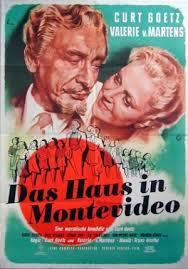
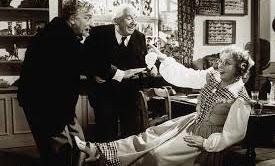
Curt Goetz was a Swiss-Jewish comedian/playwright who was able to perform and write screenplays (Glückskinder, 1936) in Nazi Germany, before “being stranded on tour in America” at the beginning of World War II. He and his wife, Valerie van Martens, returned to Switzerland in 1945 and started touring Germany with his new play, “Das Haus in Montvideo,” which he adapted to film in 1951. Goetz plays an uncompromisingly authoritarian and pedantic German professor who prefers corporal punishment for his twelve children and requires them to thank him for the beating. He inherits a fortune from a long-lost sister, whom he threw out of the house because she had a child out of wedlock. Yet, when he learns the terms of will, he is willing to compromise his moral principles and his own daughter, who is required to have a baby out of wedlock, but the happy end reveals that his own marriage was illegal, making him the father of twelve bastard children. Nowhere is the recent Nazi past visible, even if Goetz lampoons the very bourgeoisie that supported Hitler. The film was a monster hit, maybe because authoritarian school teachers had long been a target for humor in German cinema, even during the Third Reich, with films like The Punch Bowl (1944).
Interestingly, then, all three films deal with moral dilemmas at a time when Germans were still reeling from the moral abyss of fascism.
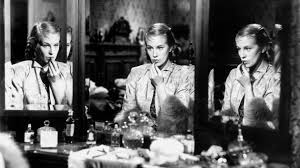
Call Girl, Artist’s model/lover, murderess


Happy Birthday to you and your brother Michael! Although I’ve known you since college days, I didn’t know you had a twin brother! Is your birthday April 30, or May 1,1951?
“Uploaded 1 May 1951”?
LikeLike
Thank you. May Day. I hope you are well. Best wishes, CHRIS
Sent from the all new AOL app for iOS
LikeLike