Archival Spaces 397:
Eternal Mask’s Art Director
Uploaded 17 April 2026
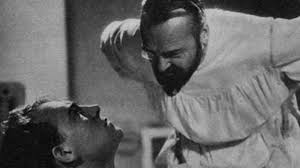
I have been catching up on the films of Werner Hochbaum on YouTube, a filmmaker best known for his leftist feature, Brothers (1929), about a dock strike in Hamburg. Politically in danger after 1933, Hochbaum moved to Austria, where he directed several films, including what Robert Dassanowsky calls a masterpiece of Austrian cinema, Die ewige Maske (1935) / The Eternal Mask. With its narrative focused on medical ethics and malpractice, it is indeed a film that could not have been produced in Nazi-Germany, although its “Aryan” cast and crew would have been acceptable to Goebbels’s Propaganda Ministry. The exception is the German-Jewish art director Hans Jacoby, who, after a long career in Berlin, stopped briefly in Austria before emigrating to Argentina, where he was active in the emerging film industry.
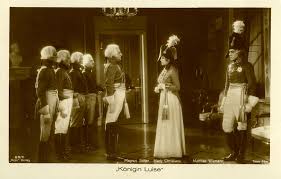
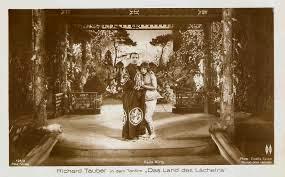
Born in Berlin in 1898, Hans Jacoby made his debut in Fritz Lang’s Four Around a Woman (1920), working as an assistant to Ernst Meiwers and Erich Czernowski on The Black Panther (1921). By 1923, Jacoby was receiving sole credit as art director, working with well-known foreign directors, like Benjamin Christensen, A.W. Sandberg, Jaap Speyer, Georg Asagaroff, and Gennnaro Righelli, as well as second-string Germans, like Fritz Wendhausen, Lothar Mendes, and Gerhard Lamprecht, all of them producing commercial melodramas and comedies. His career really takes off in the late 1920s, when he art directs six films in 1928 and five in 1929, including the big-budget costume film, Queen Luise (1928). With the coming of sound, Jacoby forms a partnership with director Max Reichmann, producing the Richard Tauber musicals, The Alluring Goal (1930) and Land of Smiles (1930), among others. His last productions in the Weimar Republic are Ellen Richter’s Manolescu, Prince of Thieves (1933) and Franz Osten’s The Judas of Tyrol (1933), both produced independently. Although co-produced in Berlin, the Heimat film The Lost Valley (1934) was shot in Switzerland.
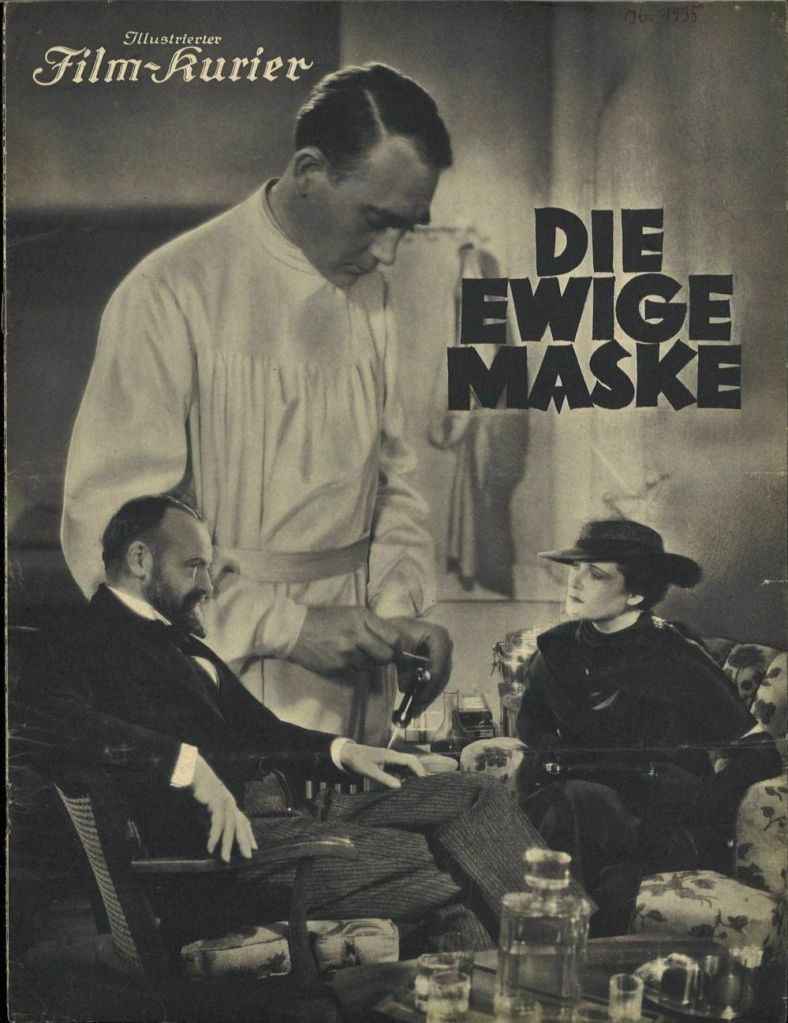
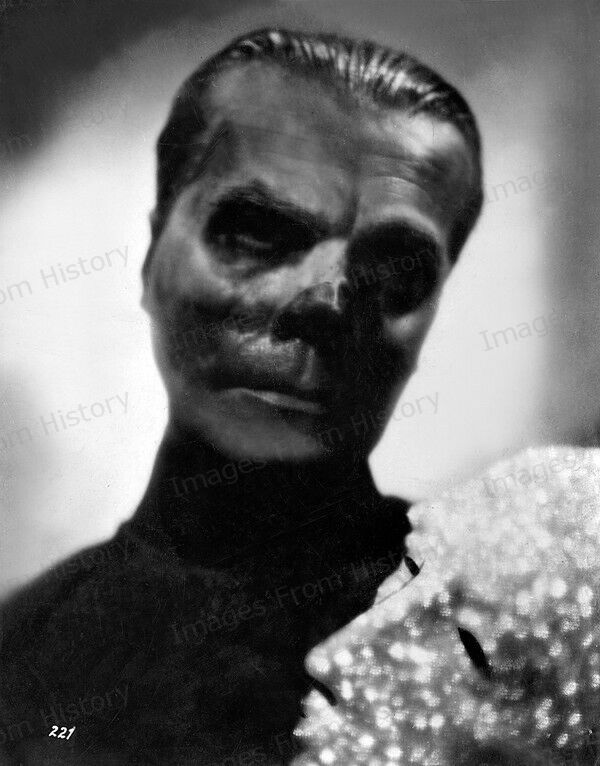
With The Eternal Mask, shot in Vienna, Jacoby reaches new aesthetic heights. The film opens in a busy hospital, the camera moving from a close-up of a cross inside a medical cabinet, then dolling back and following various nurses and doctors down an endless hospital corridor. A meningitis epidemic has broken out, and a young doctor, against his superior’s orders, injects a patient with an experimental serum, leading to the patient’s death; suffering from extreme guilt, the young doctor falls into a psychosis. In contrast to the sterile, realistic hospital setting, Hochbaum stages the psychosis in long expressionist dream images of light and shadow, which bleed into the hospital sets in the film’s final scenes. The juxtaposition between reality and psychotic perception is underscored by Jacoby’s striking art direction, which creates a 30-meter-wide waterway, an entire hospital block, and a dark labyrinth of corridors, reminiscent in its flatness and chiaroscuro lighting of The Cabinet of Dr. Caligari.
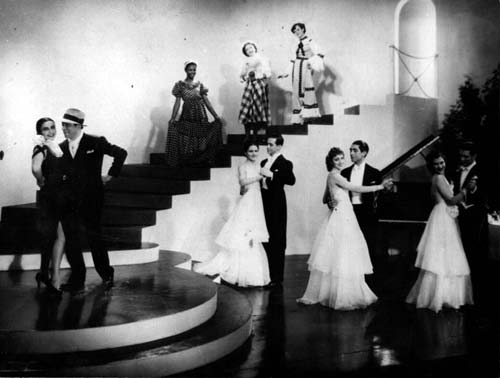
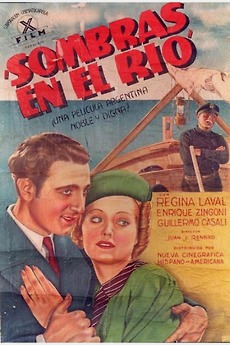
Despite winning an award at the Venice Film Festival in 1935, the film was predictably banned in Germany; Hans Jacoby was expelled from the Reich’s Film Chamber in 1938, which begs the question: how did he get in? His identity as Jewish is not confirmed. Nevertheless, by that time, Jacoby had already emigrated to Buenos Aires, where in 1936 he was responsible for the art direction on the musical comedy, Así es el tango (1937). He is credited as Juan Jacoby Renard. However, finding work in Argentina was not so easy. It would be two years before Jacoby worked again, this time as a director on an independently produced film that utilized mostly amateur actors: Sombras en el río (1930) / Shadows of the River. It is a working-class story of the romance between an employee in a meatpacking plant and a fisherman. Argentine critics, however, panned the film of the novice director because its often beautiful images were marred by amateurish acting.

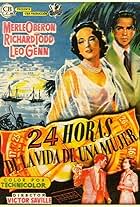
It would be five long years before Jacoby worked again, but in 1944, he became general manager of the country’s largest film production company, Argentina Sono Film. His second art direction for the company, Luis César Amadori’s Apasionadamente (1944), was a major success. According to Variety, the producers sought favor with the government by shooting in the Argentine lake district, which they were promoting for tourism: “The melodrama centered on a taciturn painter whose care for a paralytic daughter keeps him from the arms of a supposedly rich and certainly frivolous socialite.” For his next film, 24 Hours in the Life of a Woman (1944), Jacoby worked with the Hollywood-trained director, Carlos F. Borocosque. The fact that the story was based on Stefan Zweig’s short story and was a remake of a 1931 German film may have gotten Jacoby the job. It is the story of a wealthy widow whose monotonous life changes when she meets a gambler in a Monte Carlo casino. A Buenos film critic wrote of the film: “Juan J. Renard’s sets, including the magnificent reconstruction of the Monte Carlo casino and its surroundings, as well as a vast gaming room with hundreds of extras, were adorned with great visual beauty.”
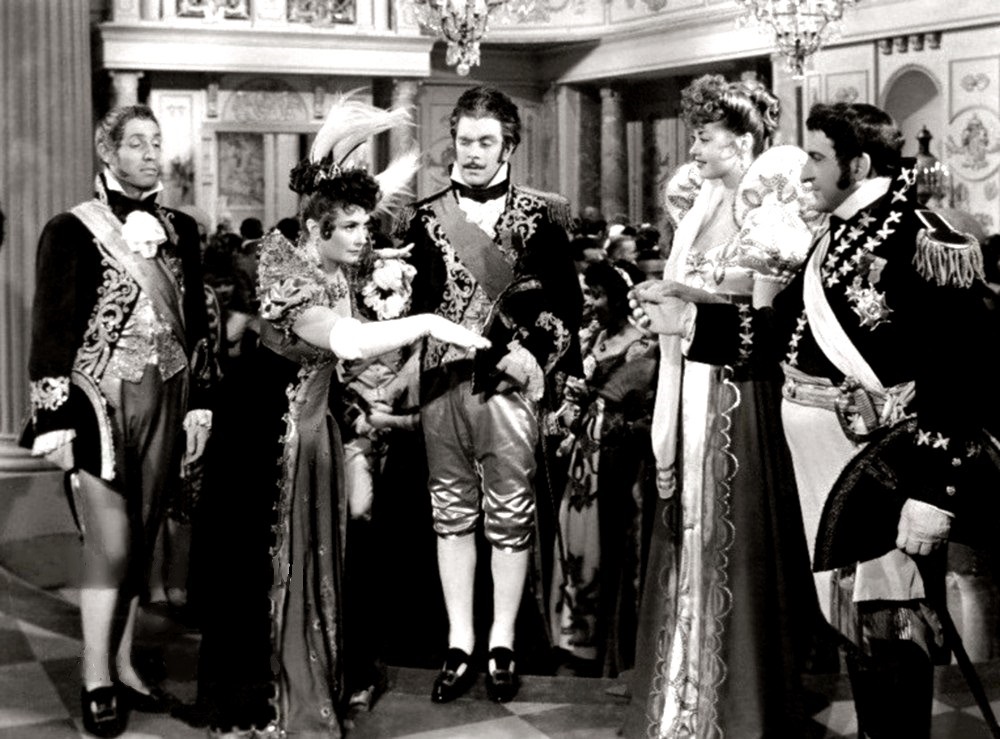
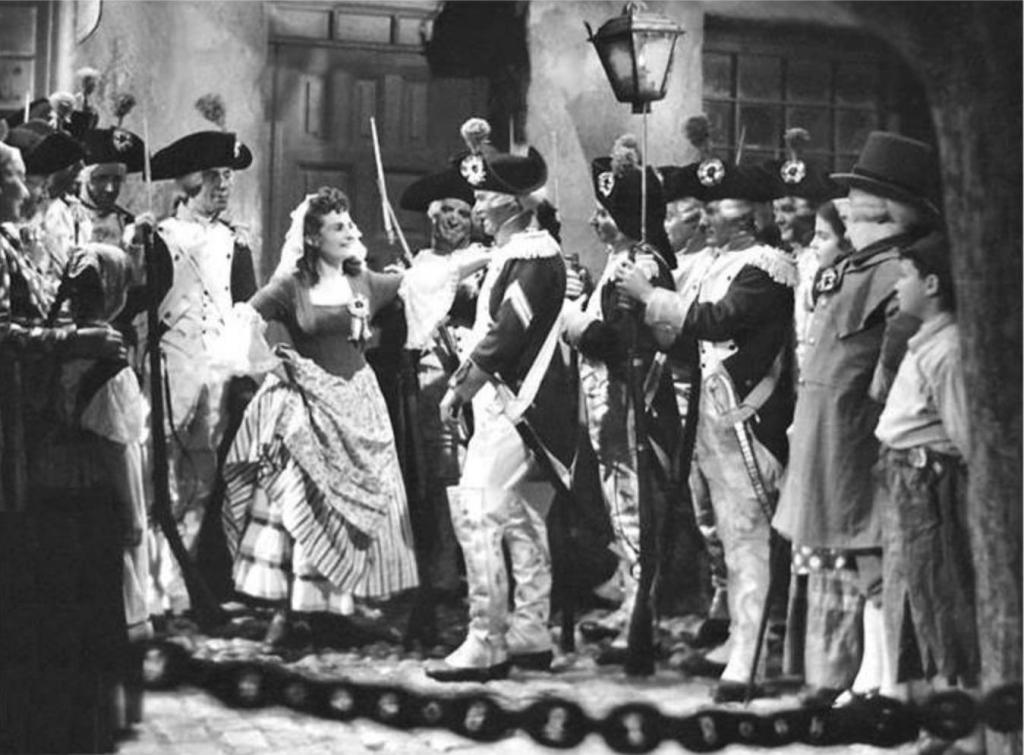
Jacoby’s next big production was an adaptation of an often-filmed Victorien Sardou play from 1893, Madame Sans-Gêne, directed again by Luis César Amadori. The story of a laundress snubbed by the aristocrats in the court of Napoleon, who becomes a Duchess, was a parody of Sardou’s play. The film’s star, Niní Marshall, one of Argentina’s most famous actresses, also acted in Mexican films. According to Variety, “Its chief claim to distinction is the lavishness of period settings and costuming and the scope of its action, unusual for an Argentine director.”
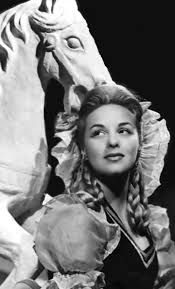
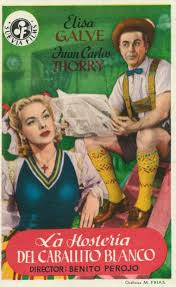
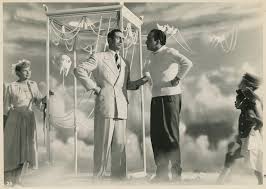
Hans Jacoby’s last two film productions before retiring or leaving the film industry were La Hosteria Del Caballito Blanco (1949), directed by Benito Perojo, and Cita en las estrellas (1949). The former was a loose adaptation of the Ralph Benatzky – Robert Stolz operetta, Im weißen Rößl /The White Horse Inn, which Erik Charell had staged so successfully in Berlin in 1930. Jacoby, who had designed several Heimat films, was more than qualified to create the Bavarian atmosphere of the plot. Premiering in Buenos Aires in June 1948, the film ran for five weeks in first run, grossing as much as the most star-studded Hollywood feature, and breaking a record for Argentine productions. Production costs at $250,000 were unusually high for a Buenos Aires studio, visible in prodigally lavish décor, original costumes, and crowd scenes with hordes of extras. In Cita en las estrellas, two lovers separate and marry other partners. When the former lover dies, his former partner becomes delirious, believing she can find him in heaven. According to an Argentine film critic, the film displayed elements of surrealism, which informed Jacoby’s depiction of heaven.
We don’t know why Hans Jacoby retired from the film industry, barely over 50. His life after that point remains hidden, although he apparently sent out feelers after 1949 for employment in Germany and Hollywood through Paul Kohner’s Agency. He died on 19 December 1967 in Buenos Aires. He was, as far as I know, the only prominent German Jewish film refugee to gain a foothold in the Argentine film industry.