Archival Spaces:
Bonfires of the Humanities
Uploaded: 15 May 2026
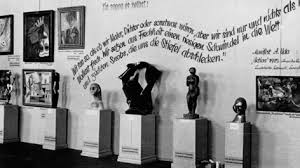
I’ve been combing through my papers before I send them on to the George Eastman Museum, and I stumbled across my review of Degenerate Art. The Fate of the Avant-Garde in Nazi Germany, curated by Stephanie Barron and exhibited in 1991 in Los Angeles, Chicago, and Washington, D.C. From today’s P.O.V., it was a seminal exhibit, not only because it addressed in a completely interdisciplinary way, and for the first time for Americans, the anti-Semitic and anti-modernist policies of the Third Reich, but also the lessons it had for Reaganite America. Reading the review today, I’m even more struck by the parallels between Germany 1937, America 1991, and DJT’s reign today. In this context, the exhibition “Degenerate Art” was not just an historical look at avant-garde painting, film, literature, music, and photography, but a powerful political comment on the state of art in culture in America in the 1990s (and today).
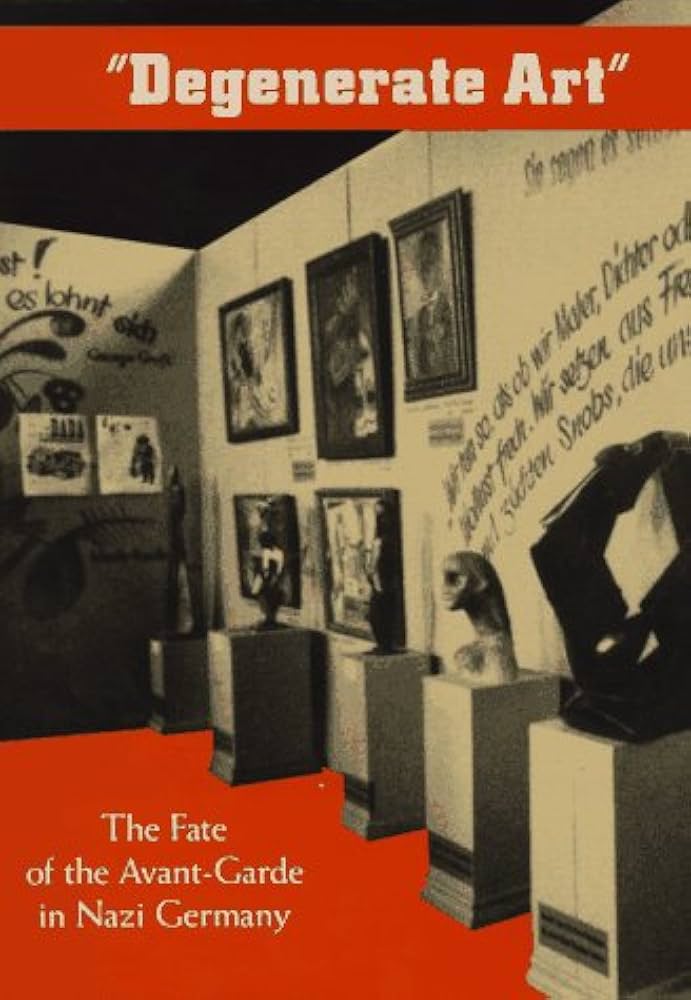
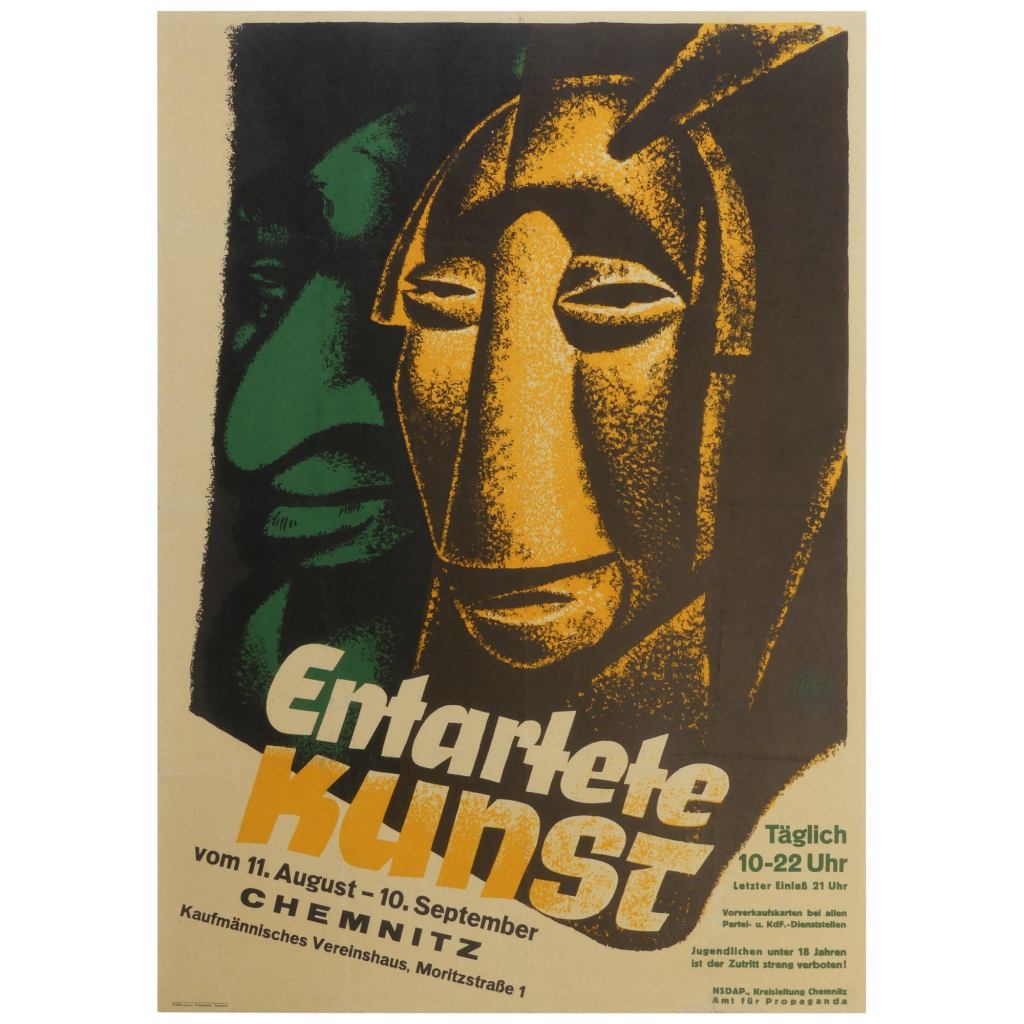
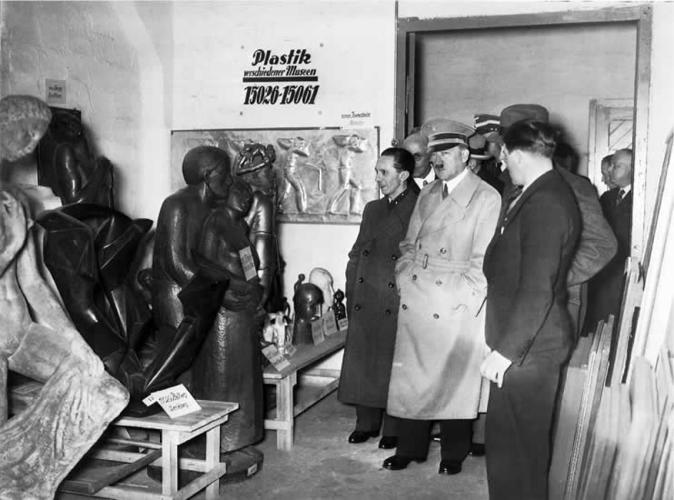
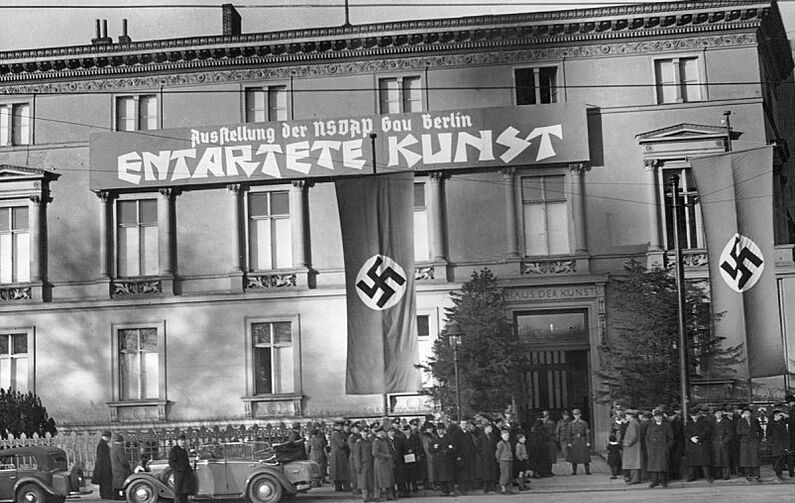
Organized by Stephanie Barron, curator of twentieth-century art at the Los Angeles County Museum, this exhibition was five years in the making. It attempted to reconstruct one of the most infamous modern art exhibitions of all time, Entartete Kunst, organized by the Nazi art bureaucrats in 1937 and shown in Munich and twelve other German cities in the following four years. Having confiscated over 16,000 paintings, sculptures, and drawings, representing some of the finest Expressionist, Dadaist, New Realist, and Constructivist art in Europe, the Nazis put on display 650 of those works, which they thought best symbolized the crimes of modern art against the political, moral, and religious sensibilities of Germans. Unbelievably, the original exhibit was eventually seen by three million people, making it the most popular exhibition of modern art of all time. The contradictions inherent in such a monstrous and monumental project were visible in the new exhibition, which, in taking the same name, enlarged the scope of the original to include not only artworks from 1937 that miraculously survived, but also rooms dedicated to banned literature, music, and film. Apart from the overwhelming power of the art itself, visitors were struck by the continuous parallels to Amerika in 1991, a fact which many documented in comments in the exhibition’s guest book.
“I left because of Hitler. He is a painter, too, you know, and there didn’t seem to be room for both of us in Germany,” said George Grosz in New York in 1942. The quote was one of a series, presented in the exhibition’s entrance gallery. Looking at the oversized photographs of the authors quoted, one could ask, how could a nation turn its back on so many great minds? The answer is forthcoming in the next room, where a video monitor presents a Wagnerian pageant, a parade of Germanic Valkyries, celebrating the 1937 opening of the “House of German Art,” and its exhibitions of Germany’s so-called artistic triumphs: pseudo-classical Aryan warriors, cast in bronze, chaste, idealized German girls, ripening in oil to produce soldiers for the fatherland.

Yet, as the introductory gallery makes abundantly clear, the attacks of the right against modern art began long before the Fascists actually took power. Even in the mid-twenties, when German museums and art curators in Berlin, Dresen, Mannheim, Essen, and Stuttgart were among the most progressive in the world, actively supporting both their German contemporaries and French and other European modernist works, right-wingers increasingly attacked these institutions for misappropriating government funds to buy “cultural bolshevist” art. Then as now, the question of public funding was used by conservatives not only as an excuse to attack the aesthetic merits of individual works of art, but also, more importantly, to destroy art museums, which, as public institutions, had come to reflect the liberal image of Weimar Germany. The labels in “Degenerate Art” included the names of the artists and the prices paid by museum curators, who supposedly joined together with art critics and dealers in a fantastic Jewish conspiracy to waste taxpayer monies on trash. After 1933, no less than twenty-one museum directors were fired from their posts, art criticism was banned, and countless artists were forced to emigrate or forbidden from working. This administration’s war on art and culture begins with the Kennedy Center and ends with the defunding of NEA, NEH, PBS, and IMLS, with the firing of the Librarian of Congress sandwiched in between, while MAGA Republican school boards ban hundreds, if not thousands, of books.
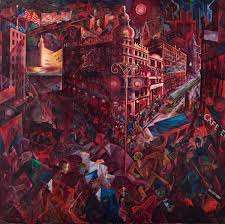

Ironically, many of the confiscated works that survived the Holocaust exist only as a result of the opportunistic greed of many Nazi officials, who also needed to finance a war. In June 1939, literally weeks before the Germans marched into Poland, the Galerie Fischer in neutral Switzerland auctioned off over 125 lots, including van Gogh’s Self-Portrait, Chagall’s Blue House, and Georg Grosz’s Metropolis (1925), most selling under value. The auction, which was attended by such luminaries as Joseph von Sternberg, Joseph Pulitzer, Jr., and Pierre Matisse, the painter’s son, is documented in detail in the exhibition and in a catalogue essay by Stephanie Barron.
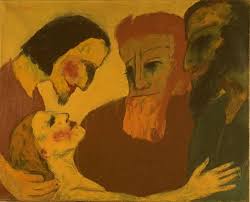
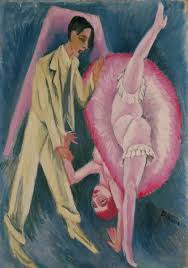
The works of no fewer than 109 German artists were included in the Degenerate Art exhibition. In reconstructing the original exhibition, the designers have retained the original structure, without, however, including the blatantly inflammatory wall texts of the original. Thus, the first room presents religious subject matter, grouped in 1937 under the headings, “Insolent mockery of the divine under Centerist rule” and “Revelation of the Jewish soul,” including Emil Nolde’s Christ and the Sinner (1929), Max Beckmann’s Crucifixion (1909), and Ludwig Gies’ sculpture Crucified Christ (1921). Like our latter-day born again legislators and school boards, the Nazis loved to cloak themselves in a religious mantle, to undercut the credibility of their political enemies: “Public institutions were allowed to purchase so-called works of art, which made fun of Christian symbols in a manner which I dare not reproduce here,” said Adolf Hitler at the exhibition’s opening, according to German newspaper reports.
Sexuality has, of course, always been the other stick with which to beat opponents, then as now. In 1937, the Germans called it “An insult to German womanhood,” and “The ideal-cretin and whore,” when they displayed Max Ernst’s The Creation of Eve (1929) and Ernst Ludwig Kirchner’s Dancing Couple (1925). Our President may be a pedophile, a serial philanderer, and an egomaniac, but he loves to cloak himself in the Christ.


” Bonfires of the Humanities” Very good!
LikeLike