Archival Spaces 379:
Photography by Karel Čapek
Uploaded 8 August 2025

The name Karel Čapek (1890-1938) is familiar to American science fiction readers and certainly specialists in Slavic literature, but probably not many others. In the Czech Republic, however, Čapek is revered as one of the greatest authors of the first half of the 20th century; Ivan Klima, writing a biography of Čapek, claimed he had a huge influence on modern Czech literature and language. Čapek wrote the widely staged expressionist play “R.U.R.” (1920, Rossum’s Universal Robots) which coined the term robot; the dystopian science fiction novel, The War of the Newts (1936), about the discovery of a salamander-like race that civilization enslaves – until they rebel, a metaphoric description of Third World exploitation by the white races; the play, “The White Sickness” (1937) warning about Fascism, which Hugo Haas adapted as a film, Skeleton on Horseback (1937) – see Archival Spaces 243 (https://archivalspaces.com/2021/12/04/242-hugo-haas-the-white-sickness/). Apart from countless other journalistic and literary works, Čapek was nominated for seven Nobel Prizes in Literature, but never won. Completely unknown until now, though, is his prolific photographic work, which the Consulate General of the Czech Republic in Los Angeles and the Society of Arts and Sciences is now exhibiting in their Emil Kosa Jr. Gallery until 25 August. Consul Jaroslav Olša opened the exhibit on 25 June 2025.


Curated by Helena Musilová, the exhibition presents a cross-section of Karel Čapek’s amateur photographs from the 1930s, which include portraits, travel photos, still lifes, architectural images, and nature images. Using a Leica 35mm camera, his images lack the avant-garde ambitions of contemporary Czech photographers, like František Drtikol, Jaromir Funke, Jaroslav Rössler, Jindrich Štyrský, and Josef Sudek, even if the low-angle view of his brother Josef below is typical of the avant-garde. Rather, Čapek’s photographs are unpretentious, authentic, and charming, more interested in their subjects than in the Constructivist and Surrealist formal play in which the Devětsil group engaged in.


Čapek’s photographic portraits are direct, informal snapshots, whether of his wife Olga Scheinpflugova, his brother Josef Čapek –BTW the actual inventor of the word robot- or Tomáš G. Masaryk, the founding President of Czechoslovakia and a personal friend of the writer. Some shots of Masaryk have him looking directly into the camera, others show him in a pensive mood, looking down, hat in hand. Masaryk died in September 1937, only a year before the Munich Agreement gave the young Republic away to the Nazis, while Čapek himself died of pneumonia in December 1938. Olga is seen in all kinds of poses, with a pack of puppies, on the side of the road in the Dolomite Mountains with her husband and their car, or sunbathing beside a pond. According to curator Musilová, “Olga knew she was being photographed and knew how she wanted to be seen. Already in the 1930s, (she) … discovered the power of the visual diary, personal branding, and the joy of self-presentation.” An influencer. She was herself a writer and a theatre actress, a member of the Czech National Theatre, and author of numerous novels, children’s books, and at least five films before the Nazi invasion. Brother Josef Čapek, on the other hand, is seen with his dog and with a watering can in his hand, looking up at the camera, taking a break from gardening chores in his Prague villa. Apart from collaborating with his brother on literary works, Josef was a modernist painter strongly influenced by Cubism, and a cartoonist for the Prague daily paper, Lidové noviny. He was arrested by the Gestapo in 1939 and died in Bergen-Belsen Concentration Camp in 1945.
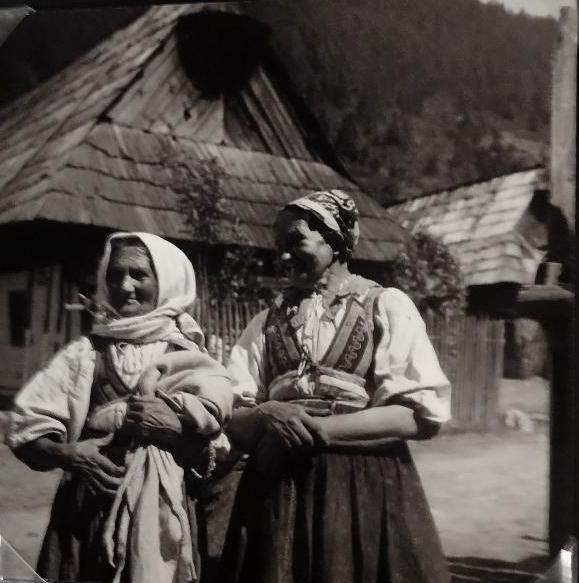
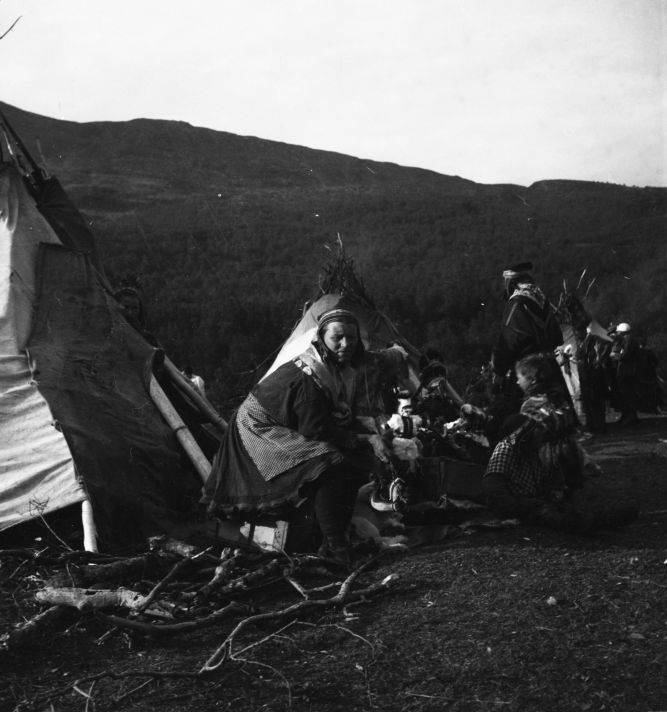
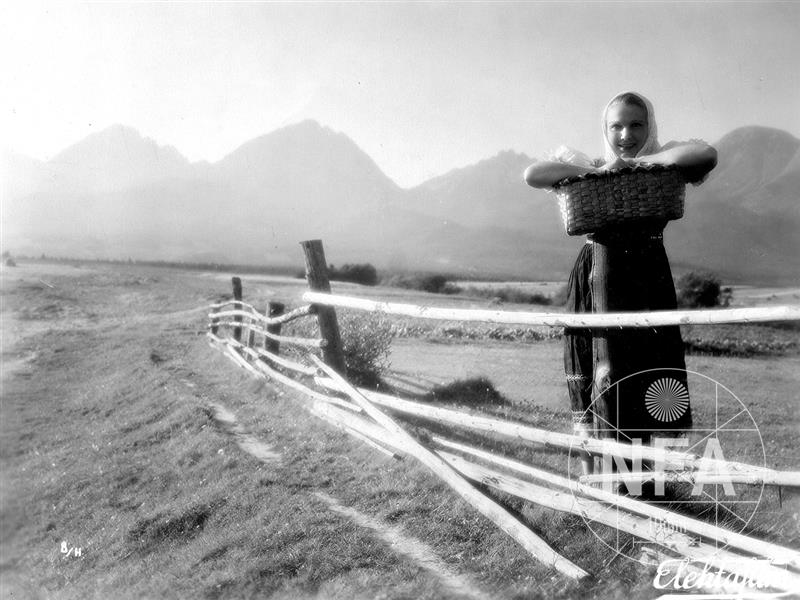
Another set of images concerns Čapek and Scheinpflugova’s travels through Europe, where the photographer was particularly interested in documenting with anthropological precision the country’s folk culture and its technology. In Holland, he photographs windmills and large ships in the harbor; in Lapland, he documented the area’s nomadic people, their tents, certainly a tourist view but also deeply sympathetic without voyeuristic exoticism. This was also true of his images of the Orava region in north-western Slovakia, a sparsely inhabited area, where peasant customs had remained unchanged for centuries. There is a simple humanity in the photos, in tune with the slow pace of rural life, so different from the political turmoil gripping Prague at that time. The photographs reminded me of a trip I made with my parents in the Summer of 1968 to the Tatra region further East in Slovakia, which seemingly was untouched by Communism or modernity. It was there that we saw Russian tanks “on maneuvers,” tanks which only two weeks later would end the miraculous Prague Spring.


As a science fiction writer, and as indicated by his photographs of ships and heavy machinery in the Netherlands, Čapek was particularly interested in modern technology. Steam engines, automobiles, factory assembly lines, machine parts, cameras, these were the stuff of German Neue Sachlichkeit, American straight photography, and advertising photography. Čapek’s photography of a huge steam engine pulling into a station not only reminded viewers of the Lumiere Brothers’ first films from the turn of the century, but also of New Realist photography with its valorization of technology, its focus on the textures and hard forms of steel, and the intricate patterns of moving machine parts. That optimistic view of technology existing for the improvement of mankind constituted Čapek’s worldview; it would disappear a decade later with the atom bomb.












 Archival Spaces