243: Hugo Haas’ The White Sickness

Archival Spaces 243

Hugo Haas’ The White Sickness (1937) restored; a Plague Allegory

Uploaded 22 May 2020

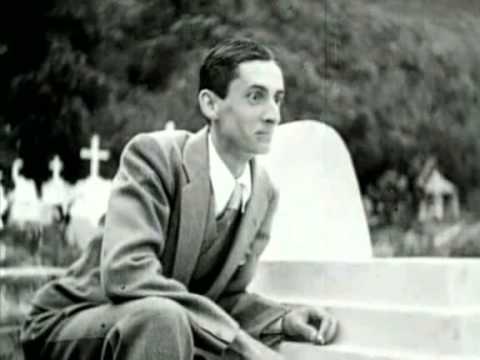
Thanks to my archivist colleague and friend, Adrian Wood, I learned that the Národní filmový archive in Prague has restored Bílá nemoc (1937) from the original nitrate negative (the sound came from a nitrate print) and made it available online on their You-Tube channel with English subtitles (https://www.youtube.com/watch?v=HJMUIBEzYnI).  An adaptation of a play by Karel Čapek, The White Sickness or Skeleton on Horseback, as it was called in the United States, was one of the few films my dad consistently mentioned to me when we talked about films that he remembered from his youth. I was also interested in the film, because it was directed by Hugo Haas, who fled Czechoslovakia after the Nazi occupation in 1939 – he was Jewish – and had an interesting career in Hollywood as an actor and low-budget filmmaker, one of many Central European refugees. Finally seeing the film, I realized that it visualized a worldwide pandemic as a political allegory.

BILA NEMOC (1937)

The film opens with a superimposition of soldiers marching towards the camera and a camera moving into a balcony where “the Marshall” gives a bellicose speech, while a large crowd cheers below; he declares the nation ready to enlarge the country’s borders by force.  The camera then pans down over the crowd, where we see a bearded gentleman, who we learn later is Dr. Galen, turning away. In the following scene, the camera tracks horizontally from a crucifix to medical charts hanging above bedposts, as patients below muse off camera about their illness which first appears as a form of leprosy with white dermatological spots, but inevitably leads to death. Hugo Haas thus sets up through contrasting camera movement two harbingers of death: 1.) An unnamed fascist regime that glorifies war rather than peace, consciously symbolizing Adolf Hitler and Nazi Germany; 2) A highly communicable,  mysterious, and deadly disease, for which there is no apparent cure and which originates in China and is expanding to a worldwide pandemic through hand-shaking. Fascism sacrifices the youth of humanity, the virus kills the elderly who are usually responsible for making wars, i.e. war is like the virus. Indeed, we never see the concrete manifestations of the disease, just as the war itself remains hidden off-screen, amplifying the allegorical nature of the narrative.

Dr. Galen (Hugo Haas), who we see in the first scene, has found a cure, but he is not ready to make it public unless the Marshall and other world leaders agree to forsake their armies and all wars. Instead, he only treats the poor who are unable to pay and are most often the victims of war.  The ensuing conflict rages between the forces of the military-industrial complex which are unwilling to give up war profits for peace, and the doctor who steadfastly refuses to treat the representatives of power, as they successively succumb to the white disease. It is only when the country’s megalomaniac dictator becomes ill after he has attacked a small neighboring country (clearly Czechoslovakia) with disastrous effects for his army, that there seems to be hope to end the plague. However, the masses crazed by mindless nationalism have other ideas

Published play

Born in 1890 in what is now the Czech Republic, Karel Čapek achieved world renown with his expressionist play, “R.U.R.” (1920), which coined the term robot, and his satirical dystopian science fiction novel, War with the Newts (1936). In 1937, his anti-Nazi play, “Bilá nemoc,” premiered at the Czech National Theatre in Prague, starring Hugo Haas, who also directed. Haas then wrote the screenplay and hired virtually the whole cast of the original for his filmed adaption, which premiered on 12 December 1937. The film was partially funded by the Czechoslovak government, certainly a courageous move at the time. While the film was banned in Nazi Germany, it was released in other European countries before World War II began in Europe. While Čapek died in December 1938, just before the Germans invaded Czechoslovakia in March 1939, – the Gestapo tried to arrest him only to learn he was already dead –  Haas supposedly smuggled a print into the United States when he emigrated; it was released by Carl Laemmle in 1940.

Baron Krog – the Capitalist Arms Manufacturer and his nameless secretary

Given its theatrical origins, Bilá nemoc is heavily dialogue driven, but is striking for both its leftist political stance – the capitalist armaments manufacturer Baron Krog (Vaclav Vydra) is clearly identified as a willing supporter of the militarist dictator (Zdenek Štepanek), who believes himself to be the savior of the nation and immune to any disease. He recklessly and knowingly shakes hands with the stricken Baron Krug. Thus, the rich and powerful fall prey to their own machinations, while the film saves its sympathies for the urban poor. However, the film ends on a highly cynical note when the masses protest the Marshall’s call for an end to the war. However, for today’s audiences, the film’s depiction of the pandemic, the overriding sense of fear it engenders in the not yet afflicted, the helpless victimization of the innocent, and the incredible arrogance of a leader who believes he is immune with an “I don’t need to wear a mask” attitude, all strike a very contemporary chord for anyone living in coronavirus America.

JEALOUSY (1945, Gustav Machety) Jane Randoph, Nils Asther and Hugo Haas

An incredibly popular star in Czech cinema in the 1930s, Hugo Haas would play mostly supporting roles in Hollywood during the 1940s, but in 1951 saved enough money to set up his own independent film production company, where he began producing, directing and starring in a series of lurid, low budget melodramas. Most are variations on the theme of older men who form liaisons with much younger, often amoral women, including Pickup (1951), The Girl on the Bridge (1951), Strange Fascination (1952), The Other Woman (1953), and Hit and Run (1957).In 1961 he returned to Europe, settling in Vienna, where he occasionally appeared on Austrian television; he died there in December 1968. The White Sickness remains his most enduring work, one of the only anti-Nazi films made in Europe before the  Holocaust

For my dad as a seventeen-year-old high school student in Prague,Bila nemoc probably represented a political awakening; less than two years after the film’s premiere, he was incarcerated in KZ Sachsenhausen-Oranienburg and would eventually be active both in the anti-Nazi and the anti-Communist underground. 

Poster, 1952

242: Movie Theatres & the Pandemic

Archival Spaces 242

Will Movie Theatres Survive the 2020 Plague?

Uploaded 8 May 2020

On Thursday, 30 April, Ross Melnick and the Carsey-Wolf Center at the University of California at Santa Barbara hosted an online panel discussion, “Moviegoing in the Age of COVID-19,” with Manohla Dargis (New York Times) and Alison Kozberg (Art House Convergence) about the future of movie theatres. While there was some pessimism about the present state of cinema culture, the general tenure of the discussion was positive, noting that they (and hopefully many other people) miss not seeing films with an audience in a big theatre and that the hunger of moviegoers for that experience will survive the present plague. Such a positive attitude is not surprising, given their expressed nostalgia for movie theatres and their professional attachment to them. But this may be a minority view of patrons, certainly of those under the age of 30, who seemingly prefer smart phone viewing. The fact is that Disney, Warner Brothers, and Universal are now launching online platforms for the release of new films, as well as their back catalogs. Indeed, Universal released the new Trolls movie online, leading AMC to ban Universal from their screens.

trolls-world-tour-watch-online.png
Disney’s Trolls World Tour (2020)

These developments make me less optimistic about the survival in this country of all but art houses and subsidized non-profit screening spaces. In an article in the San Francisco Chronicle (5-3-30)Jonathan Kuntz, himself a long-time moviegoer, notes that the present pandemic is accelerating online delivery of moving image entertainment, and that except for special event screenings, “everything else will be streaming.” What is certain is that this crisis will change the film industry, just as the Spanish Flu pandemic of 1918 had huge consequences for the structure of the film business. The 1918 influenza pandemic killed 50 million people across the globe, including 675,000 Americans in 1918/19.

Public Service Advertisement

Richard Koszarski was the first modern day film historian to remind us of the Spanish Flu’s horrific influence on film-going in the 1918 pandemic, a fact that film historians, like Benjamin Hampton, Maurice Bardèche/Robert Brasillach, and Lewis Jacobs took for granted. In an article in Film History (2005), Richard noted that “Photoplay estimated that 80 percent of the movie houses in the United States and Canada had closed for between one and eight weeks, losing $40,000,000 in revenue and putting 150,000 employees temporarily out of work. Production in California was said to have been cut by 60 percent, while the eastern studios ‘ceased completely’.”

https://pmcvariety.files.wordpress.com/2020/04/variety-magazine-flu-pandemic.jpg

While the first outbreak of the Spanish Flu in the United States may have been on a military base in Kansas is early 1918, the Flu raged mostly in Europe until September, when it hit Boston, New York, and Philadelphia hard. Surprisingly, theatre owners refused to close until ordered by city officials, although New York’s theatres remained open with show times staggered to avoid crowding on subways in and out of Times Square. It also banned smoking and standing-room admissions in theaters but allowed theatres to fill seats without social distancing. However, even where cinemas stayed open, the audiences stayed away for fear of contracting the deadly virus, attendance dropping often below 50%. By November 1918, the Flu was everywhere, although some cities, like St. Louis, which had instituted social distancing early, had significantly fewer deaths than San Francisco, which reopened prematurely. Los Angeles had closed all theatres and places of amusement on 11 October, later mandating the wearing of masks. Many other cities, like Indianapolis, also ordered the wearing face masks, although they seemingly did little to stop the spread of the virus.

https://cdn1.thr.com/sites/default/files/2020/03/spanish_flu_4_embed.jpg
Seattle Tram Conductor with face mask (Courtesy NARA Archices)

The National Association of the Motion Picture Industry announced an embargo on their release of new films in October, and film production in and around Hollywood ground to a halt during October and November, while the shooting of crowd scenes was banned even longer. Even though film production recovered by early 1919, many smaller producers and countless mom and pop exhibitors went out of business. So how did the Spanish Flu change the industry structurally?

Adolph Zukor

Even before the virus hit, Paramount’s Adolph Zukor was in a huge struggle against First National Exhibitors’ Circuit, a distribution network formed in 1917 to amalgamate 26 first-run cinema chains.   Adolph Zukor, who had been producing films since 1912 through Famous Players, and distributing films through Paramount Pictures since 1914, saw his theatre clientele suddenly disappearing. According to Benjamin Hampton, Walter Irwin told Zukor that he could destroy First National, if he built first-run cinemas in every city where First National owned theatres. After a merger with First National failed, and the incredible losses independent theatre owners suffered during late 1918 and early 1919, due to the flu pandemic, Zukor went into action. He secured a $ 10 million loan from Wall Street and purchased 135 theatres in the Southern States in 1919; by 1921, Paramount-Publix had acquired a total of 303 first-run theatres in major cities across the country, creating the first vertically integrated film company in the United States, controlling production, distribution, and exhibition. Given that in Europe Nordisk, Pathé Frères, and UFA had previously already gone that route, which would become the model for all the American majors by the mid-1920s, it is likely that Zukor would have consolidated, regardless of the pandemic, but it undoubtedly created an economic opportunity.

New York’s IFC Film Center on COVID-19 hiatus

Similarly, the move to digital distribution of movies directly into the home is a trend that has been accelerating for the past ten years, but the corona virus pandemic of 2020 may actually deal the coup de grace. AMC Theatres, which is carrying $ 4.9 billion of debt, is likely to file for bankruptcy shortly with its stock plummeting. John Fithian, CEO of the National Association of Theatre Owners, predicted in a speech to Congress in late March that the great majority of this country’s theatre owners will go bankrupt if Congress does not give them financial relief in Corona Virus rescue legislation. If we are witnessing the death of cinema(s), I will be in mourning. Unlike my daughter’s generation who has grown up watching movies on smart devices, I have always been happiest in a darkened space where dreams can be real. 

Oriental Theater in Milwaukee, Wisconsin

241: Show Trial. HUAC and Hollywood

Archival Spaces 241 

Thomas Doherty’s  Show Trial. Hollywood, HUAC, and the Birth of the Blacklist (2019)

Uploaded 24 April 2020

Thomas Doherty’s Show Trial Hollywood, HUAC, and the Birth of the Blacklist relies on original historical evidence, including documents, newsreels, contemporary newspaper reports, and the official protocols of the HUAC Hearings of October 1947, to recreate a historical event that constituted on of this country’s  greatest violation of the Bill of Rights on a grand political stage. Doherty’s book on the HUAC’s hearings sifts through the insignificant to give weight to the consequential, vigorously cutting through the Committee’s noise. But make no mistake about it, just as today we have our dangerous and now deadly struggle with a President who believes he can rule by fiat, so too were Congressmen then willing to violate the rights of defendants to eliminate enemies and further their own political careers.

Doherty opens his book with “Backstories,” where he enumerates the numerous historical reasons why the House Un-American Activities Committee took such a lively interest in the film industry; an industry that had more or less faithfully toed the government’s line for decades. They included the founding of the Screenwriters Guild in the 1930s, and the cartoonist union strikes of 1941 against Disney, and 1945 against Warner Brothers, labor actions which constituted a direct threat to the absolute power of the studio bosses. Then, there was the issue of Hollywood’s premature anti-Fascism, leading to the first HUAC hearings in Hollywood in 1940 under Martin Dies, which was supposed to investigate the German-American Bund, but quickly pivoted to anti-Communism, but thanks to united industry resistance failed to generate any publicity.

Warner Brothers Strike, 1945

The Book’s next section, then, gives a detailed accounting of each Hearing’s nine days. Doherty emphasizes that these hearings are “show trials” constructed for their publicity value, as much as to eliminate any opposition, just as the Stalinist purges in Russia of the late 1930s had; caught, like HUAC’s hearings by the motion picture camera. Doherty described Committee Chairman,  J. Parnell Thomas, thus:

“(he) refused to permit lawyers to coach or advise their clients, although Consultations between attorneys and clients were usually permitted in congressional hearings. He allowed some witnesses, usually the Friendlies, to read opening statements, but denied the right to others, usually the Unfriendlies. The hearing was too public to be a star chamber and too open-ended to be a kangaroo court, but it was not a judicial proceeding either. It was a bastard hybrid, part show, part trial.”  (p. 105)

Lauren Becall, Humphrey Bogart, Committee for the First Amendment

Each witness receives a short biography before Doherty characterizes their testimony. Among the “friendly” witnesses were studio bosses Jack Warner, Louis B. Mayer, and Walt Disney, the actors, Adolphe Menjou, Robert Taylor, Robert Montgomery, George Murphy, and Ronald Reagan, the director’s Leo McCarey and Fred Niblo Jr., as well as an array of lesser industry lights. Many happily named names of supposed Communists in Hollywood, others were more reluctant, like, Gary Cooper, who just mumbled he “weren’t no friend of the Commies, … because it isn’t on the level.” (p. 171)

In subsequent chapters, Doherty describes the efforts of the Committee for the First Amendment, an ad hoc group of Hollywood liberals, who after one trip to Washington and rallies throughout the USA, caved in the face of the anti-Communist onslaught. Among them: Humphrey Bogart, Lauren Becall, Edward G. Robinson, Danny Kaye, Marsha Hunt, and Paul Henreid. The actors staged events outside the HUAC Hearing rooms and dramatized the violation of human rights in the chambers. Most members recanted their participation to save their careers or ended like Marsha Hunt and Paul Henreid on the Blacklist.

The real war of words began with the testimony of John Howard Lawson, one of the highest paid screenwriters in Hollywood, and surreptitiously the acknowledged cell captain to the town’s Communists. Like his fellow accused, the so-called “Hollywood Ten,” e.g. Dalton Trumbo, Albert Maltz und Alvah Bessie, Howard was first gaveled into silence by the hammer of Committee Chair Thomas, and then forcibly removed from the room by D.C. Police when he continued to insist on reading his opening statement. They believed in their Constitution guaranteed the right to free speech, meaning they refused to answer the question of their membership in the CPUSA. Thomas destroyed numerous gavels during the hearings, especially when Samuel Ornitz noted the extremely high percentage of Jews among the Ten, accusing the Committee of Anti-Semitism. The efficiency with which the Committee asked the essential question, “Are you or have you ever been a member of the Communist Party?” increased daily, so by the time Lester Cole appeared, he was gaveled out of the room in less than six minutes.  

House Un-American Activities Committee Hearings, October 1947

The 1947 HUAC Hearings ended with a victory for the liberals, because HUAC was not able to make its case to the public that Hollywood brimmed with Communist propaganda, but that victory was turned into a defeat, when the major studios released “the Waldorf Statement,” which pledged to no longer hire known Communists, leading to the creation of the “Hollywood Blacklist.”  Fearing losses at the box office, just as they were relinquishing their monopoly power over film exhibition, due to the government’s Paramount Consent Decree, the studios betrayed some of their most productive and valuable artists, then turned around and hired them surreptitiously for pennies on the dollar of their previous wages. Dalton Trumbo won two Oscars for screening writing under fake names, while hundreds of film industry workers were unemployable for a decade or longer.   

Given the meticulous documentation of the events around the 1947 HUAC Hollywood Hearings, the book offers a superb introduction to the complexities of the era to a younger generation; many may not realize that the Trump presidency is not the first American government to ignore basic Constitutional rights.

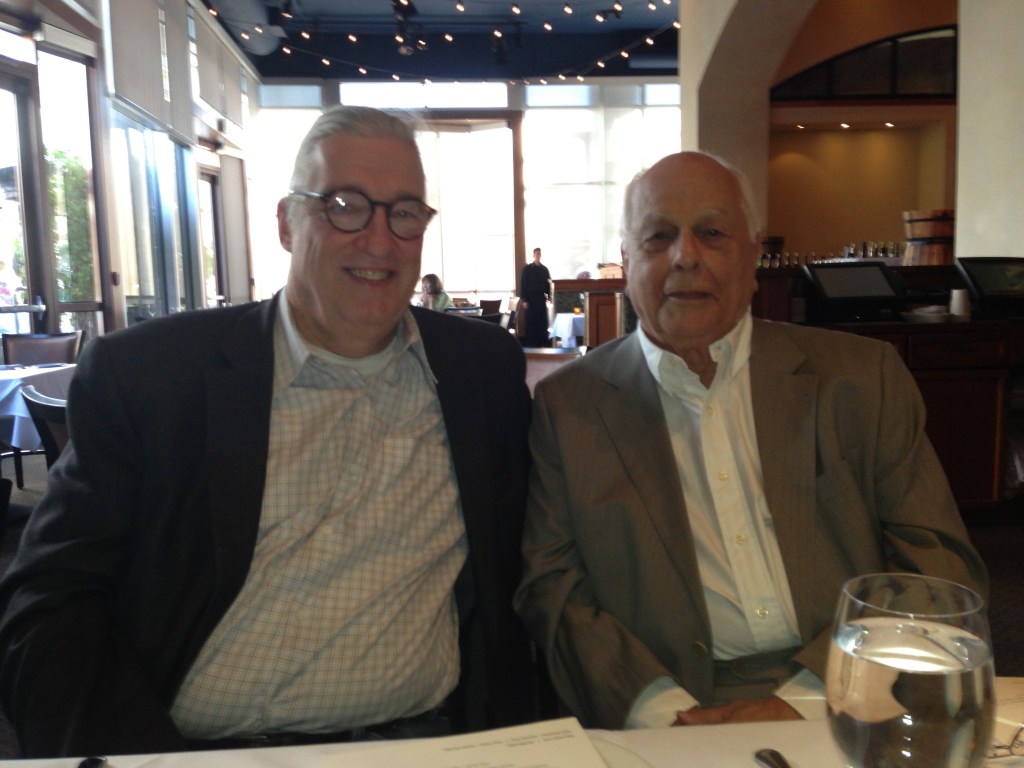
Scott Feinberg, Thomas Doherty, JCH, Ross Melnick

240: Nollywood

Archival Spaces 240        

Nollywood

Uploaded April 10, 2020

For years I was planning a Nollywood film series at UCLA, but the difficulty of researching and finding films in what was a very informal video-based industry proved insurmountable. Nollywood refers of course to the cinema of Nigeria, which only came to prominence in the 1980s and is now the largest film industry in Africa and the third largest in the world after the United States and India. It was the invention of VHS tape that catalyzed a boom in the Nigerian video film market. Jimi Odumosu’s Evil Encounter (1980), a horror film released directly to video was the first major hit, although pirated copies far outsold legitimate ones, and the market’s lack of regulation has continued to be a problem. The actual boom really kicked off with Kenneth Nnebue’s Living in Bondage (1992), a film about a Satanic cult that promises wealth to its followers. Suddenly, Nigerian film actors become household names across the African continent. By 2013, Nollywood revenue reached $11 billion, contributing 1.4% to Nigeria’s economy. While the first generation of Nollywood films was extremely low budget and poorly made, higher budgets and digital production in the last ten years have dramatically increased salability abroad, although copyright and distribution issues still pose major challenges. Apart from the domestic audience, Nollywood films are seen throughout Africa and in the Nigerian diaspora. Today, Nollywood subscription services for online streaming, as well as YouTube, have increased visibility even more; Netflix has more than three dozen films available. In preparation for my class on Hollywood’s international relations, I recently viewed a number of them and still want to see more.

The Figurine (2009, Kunle Afolayan), starring the director, Ramseay Nouah and Omoni Oboli, opened at the Rotterdam Film Festival and other international festivals, broke all box office records in Nigeria, and is considered the first critical success of the present Nollywood wave. It was also one of the first films to use various social media outlets to spread word of mouth, now an absolute necessity for online delivery. While attending a national youth camp, two friends find an ancient fetish in a shrine, Araromire, which, according to legend (explicated in an opening black and white scene), brings seven years good luck, then bad. The young men are rivals for the same girl, who chooses one of them, but both become hugely successful before the curse kicks in. Interestingly, the film oscillates between tribal superstition and modern crime, its “horror” elements downplayed in favor of very real human envy, jealousy, adultery, and murder. As in the case of Living in Bondage, material wealth is the great motivator in a society that is characterized by economic disparity.  


The Figurine (2009, Kunle Afolayan)

Taxi Driver: Oko Ashewo (2015, Daniel Oriahi), starring Femi Jacobs and Ijeoma Grace Aku, is a film noir, but also a comedy. Registering the highest opening weekend gross for any Nigerian film at the time, it was shot mostly on the nighttime streets of Lagos, in high contrast digital. Color. The film opens with a young man from the countryside arriving in Lagos by bus, where he inherits a taxi from his late father. Naive and gullible, Adigun is plunged into a nether world of Yoruba gangsters who control the livery business, and the women of the night who are his primary customers, guided by the friend of his late father who turns out to be an evil opportunist. Somehow, he survives all of it and even falls in love, giving this noir a happy end. While some critics considered its ending over-determined and confusing, it is also a closely observed, socially critical tale of the brutal life of Nigeria’s urban poor who struggle daily without success.    

Lionheart (2018) stars Genevieve Nnaji, whose debut as director this was, as an upper-class businesswoman, who must take over from her aging father, Chief Ernest Obiagu, an ailing bus transportation company, the Lionheart of the title. The film takes place in Enugu, in southeastern Nigeria, home of the Igbo people (formerly the capital of Biafra). Battling sexism in a male-dominated industry, and some duplicitous colleagues, the heroine must also negotiate the sensitive politics of family relations, because her father has named his brother and her uncle to head the firm when he has a heart attack. Opening at the Toronto Film Festival, Lionheart became the first Nigerian film acquired as an original by Netflix. The film was also the first to be nominated by Nigeria for a Foreign Language Academy Award but was ultimately disqualified, because much of the film is in English with only some Igbo, as are most Nigerian films playing in the upper classes.

Lionheart (2018, Genevieve Nnaji)

Also situated among Nigeria’s upper classes, but in the capital of Lagos, The Wedding Party (2016, Kemi Adetiba) offers a comedic look at an ostentatious wedding, in the vein of Crazy Rich Asians. Starring Adesua Etomi and Banky Wellington, as the bride and groom, whose parents are separated by tribal and cultural differences, the groom’s mother is particularly aggressive in her opposition, because she believes her son is marrying beneath his station. Then there are the groom’s ex-girlfriends who want to upend the betrothal, and his father’s significantly younger mistress trying to crash the party, as do the poor relatives of the bride. The comedy is particularly revealing in presenting differing social mores in Nigerian society, codified in religion, fashion, and food, but ultimately everyone comes together. Opening to an enthusiastic audience at the Toronto Film Festival, it is small wonder the film was the commercially most successful ever made in Nigeria, supplanted only a year later by The Wedding Party II (2017).