269: 1970s Women Directors

Archival Spaces 269

Liberating Hollywood. Women Directors & the Feminist Reform of 1970s American Cinema

Uploaded 14 May 2021

The following review was originally written in October 2019 but remained unpublished. With a woman of color winning an Oscar for directing this year, this book remains hugely relevant.

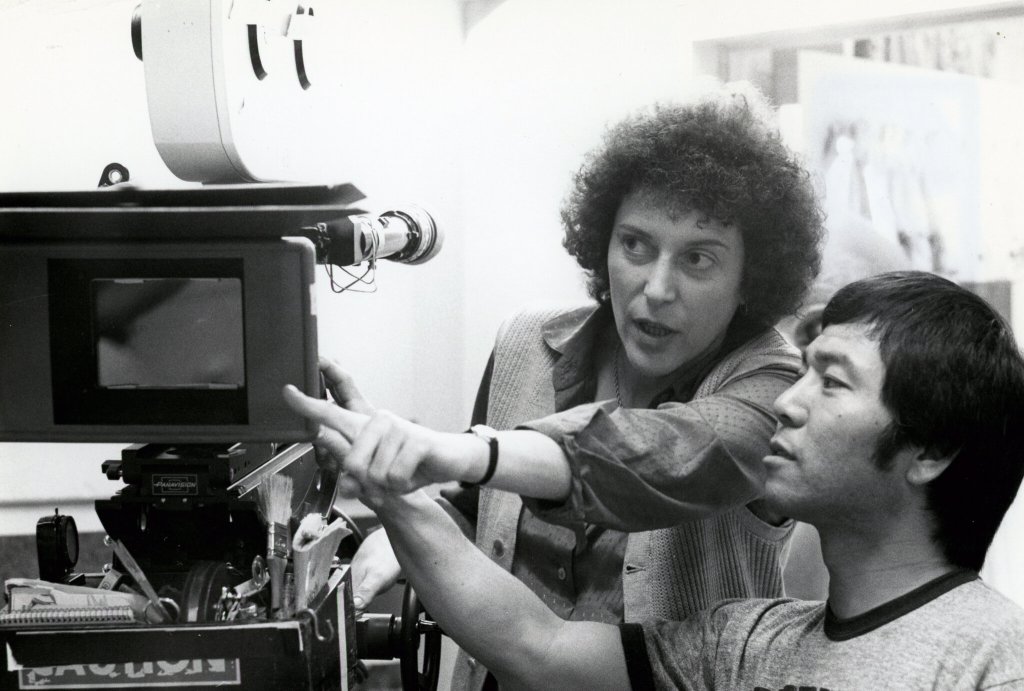
Elaine May directing A NEW LEAF (1971)

In October 2019, it was announced in the trade press that Elaine May was, at 86 years old, making her first film in more than three decades, Crackpot, starring Dakota Johnson (a project that has still not materialized). May, the former partner of Mike Nichols, belonged to the first generation of Hollywood women film directors, influenced by 1970s feminism. Elaine May is one of the subjects in Maya Montañez Smukler‘s book, Liberating Hollywood. Women Directors & the Feminist Reform of 1970s American Cinema (Rutgers University Press, 2019), based on her dissertation at the University of California at Los Angeles (UCLA). The book won the Richard Wall Book Award of the Theatre Library Association.  

While American fiction filmmaking in the silent era featured literally dozens of women as writers, directors, and producers, the consolidation of the industry in 1920s Hollywood into a monopolistic system of production, distribution, and exhibition transformed filmmaking into a bastion of male privilege. While a small cadre of women survived as scriptwriters into the 1930s and 40s, only two women directors are known to have had modest careers between 1930 and 1970: Dorothy Arzner and Ida Lupino. With the rise of feminism, women began pushing for more responsibility behind the camera, and Smukler’s book analyses for the first time the success or lack thereof of the sixteen women who directed their first features in this period. It is a fascinating tale of small victories and major frustrations, involving gender issues that have yet to be resolved even now, exemplified by Elaine May’s banishment for 32 years after the mega-flop, Ishtar (1987), a film which has enjoyed rehabilitation in the last decade.

Ida Lupino

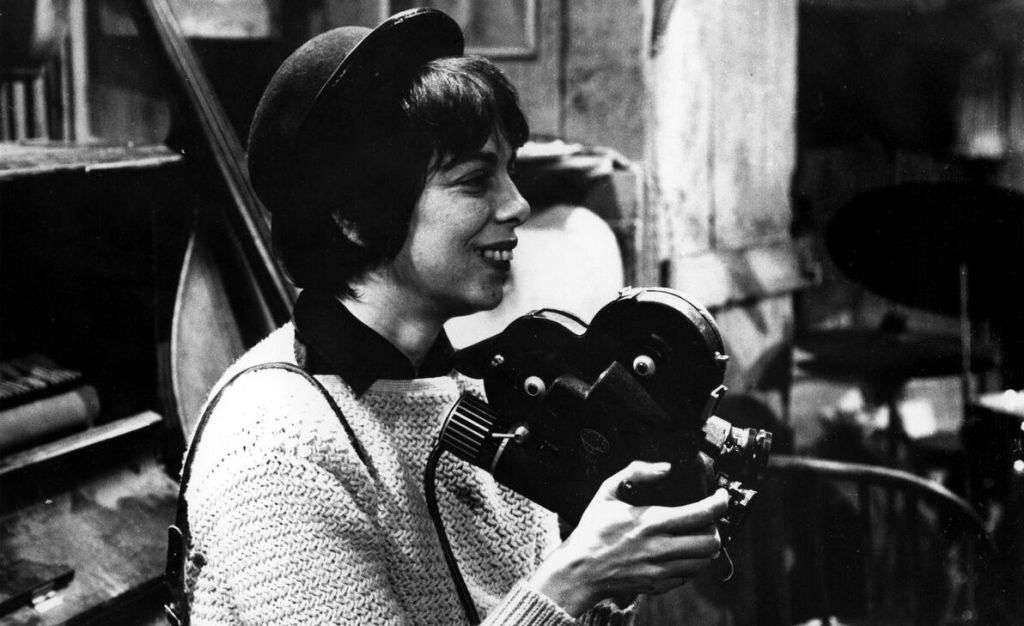
Before discussing the first attempts of women to reform Hollywood in the 1970s, Smukler offers a brief prologue that pays homage to independent women filmmakers who worked out of New York in the 1960s, making fiction features, including Shirley Clarke and Juleen Compton. Clarke’s The Connection (1961), The Cool World (1963), and Portrait of Jason (1967) were art houses successes, before she moved to Los Angeles, taught at UCLA in the late 1970s, and made an unsuccessful run at Hollywood. Compton’s films, Stranded (1964) and The Plastic Dome of Norma Jean (1966) were produced independently and then promptly forgotten after very limited runs. They were recently preserved by UCLA Film & Television Archive.

Shirley Clarke

In Chapter 1, Smukler sets the stage by noting that in 1970 the country’s two film schools most closely tied to Hollywood, UCLA and the University of Southern California (USC), matriculated only fifty women but 850 men. Clearly, this stepping stone to Hollywood – mythologized by the „movie brat generation“ of Steven Spielberg and George Lucas – was for men only, so women had to organize. Smukler discusses various political attempts to influence Hollywood. In March 1969, the Equal Employment Opportunity Commission (EEOC) conducted hearings in Los Angeles, revealing gender and racial discrimination in the film industry’s hiring practices, but enforcement proved impossible in the face of indifference and intransigence. The 1964 Civil Rights Act was also brought into play, but the equally guilty studios and craft unions blamed each other, so nothing changed. Finally, the Writer’s Guild Women’s Committee, founded in 1972, began aggregating employment information to prove gender bias, but their repeated meetings with studio executives also ran aground. The studios argued that the marketplace and the industry’s self-regulation would lead to change, not government intervention.

Joan Micklin Silver

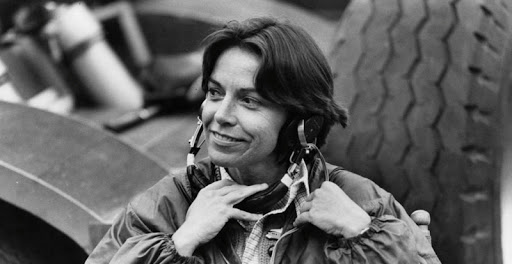
In Chapter 2, Smukler differentiates between studio, art-house, and exploitation films as production cultures where a limited number of the women found initial success. Elaine May is represented as the sole woman working in a mainstream studio environment when she directed A New Leaf (1971). Directors Barbara Loden (Wanda, 1971), Karen Arthur (Legacy, 1974), Joan Micklin Silver (Hester Street, 1975), and Penny Allen (Property, 1979) all directed independent features which succeeded on the art house circuit. Stefanie Rothman was a Roger Corman protégé, directing It’s a Bikini World in 1967, before producing the box office exploitation smash, The Student Nurses (1970). Also working in the (s)exploitation field were Beverly Sebastian (The Love Clinic, 1968) and Barbara Peeters (Just the Two of Us, 1970). Not surprisingly, these female exploitation directors had to temper their feminist themes with nods to male fantasies. The Student Nurses, for example, featured strong and independent women who nevertheless had to expose their breasts like clockwork throughout the narrative.

Stephanie Rothman

Some, like Rothman, Silver, and Sebastian were helped by their producer husbands, but Smukler demonstrates that other male mentors, like Roger Corman, “rarely… created the stepping-stones for career progression that for their male colleagues were typical…” (p. 45). Other husband-wife partnerships included Joan Rivers/Edgar Rosenberg (Rabbit Test, 1978), Anne Bancroft/Mel Brooks (Fatso, 1980), and Jane Wagner/Lily Tomlin (Moment by Moment, 1978), all of whom directed their first and only films for mainstream distributors.

Joan Tewkesberry

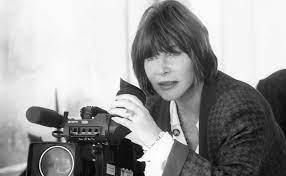
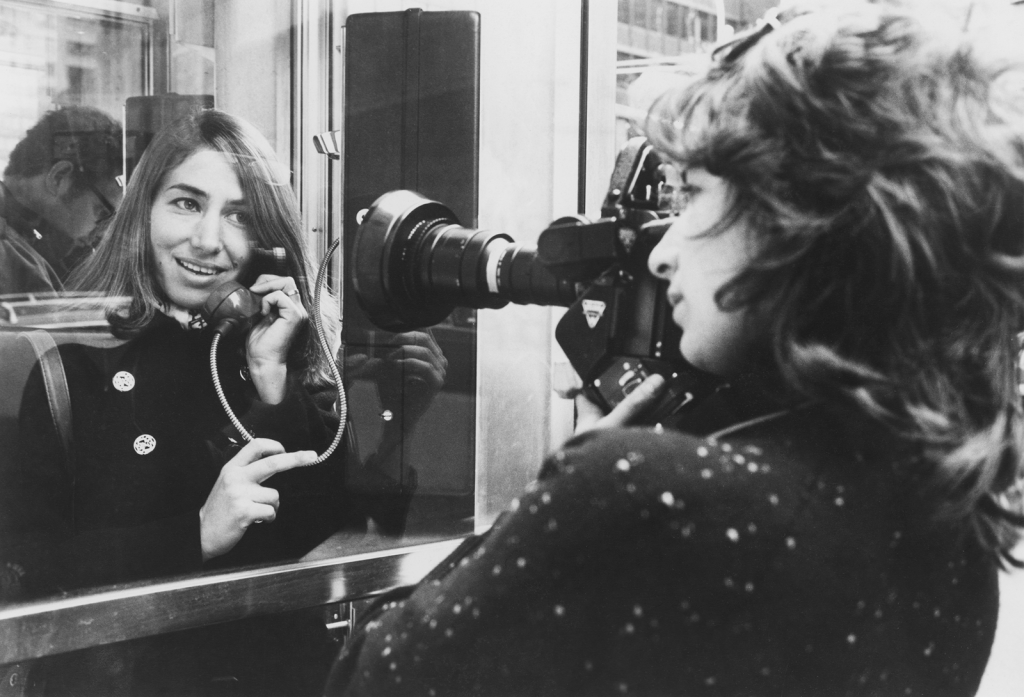
Smukler notes at the beginning of chapter 3 “While Hollywood seemed occasionally willing to appropriate feminism to boost its revenues and reputation, its unwillingness to hire women – both in front of and behind the camera – illustrated how the film business was determined to contain its female employees’ success – and with it, their power – even if doing so meant losing money that these directors and actresses could have made for their studios.”(p. 163). That is the essence of the story of women in Hollywood throughout this book. Smukler next discusses the directorial careers of Joan Darling (First Love, 1977), Jane Wagner, Joan Tewkesbury (Old Boyfriends, 1979), Joan Rivers, and Claudia Weill (Girlfriends, 1978), all of whom directed their first films in the late 1970s. Almost all the women named here enjoyed only very brief careers as feature film directors, but some of them were able to sustain themselves with television work, which was geared more towards female audiences. As Joan Tewkesbury noted: TV movies “were cheap to make and women watched them… The men watched sports and the women watched these TV movies.” (p. 186)

Lee Grant

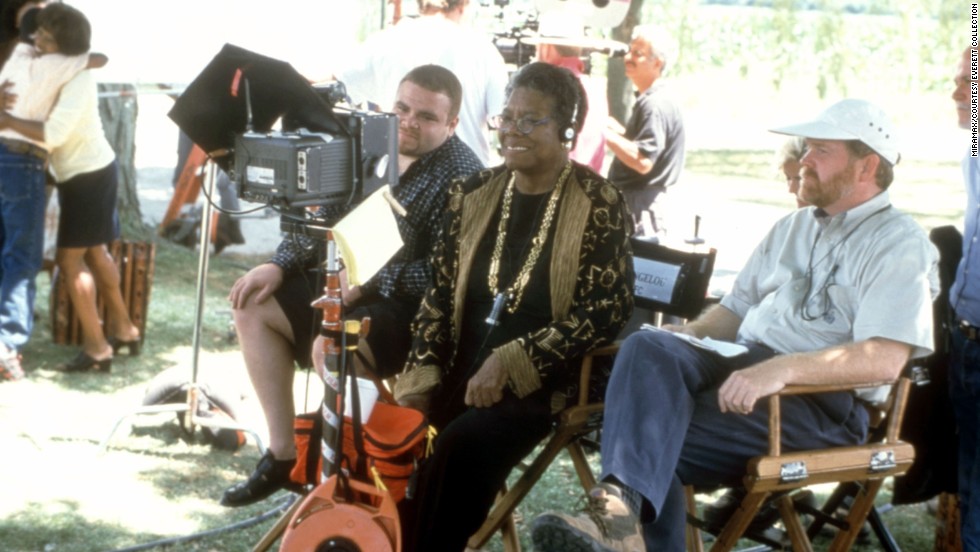
In the remaining pages of the chapter, Smukler discusses the history of the American Film Institute’s Directing Workshop for Women, founded in 1974, which had been set up after persistent complaints that the AFI program privileged men: Only three of the AFI’s first 65 filmmaking grants were given to women. The workshop initially trained, among others, Anne Bancroft, Lee Grant (Tell Me a Riddle, 1980), Nancy Walker (Can’t Stop the Music, 1980), and Maya Angelou (Down on the Delta, 1998). The first three of course had major careers as actresses. Yet for all the propaganda value the AFI has culled from the workshop, none of the women in the early cohorts transitioned to mainstream Hollywood film careers, although Grant would produce a sizable body of work in documentary and television movies.

Maya Angelou directing DAWN ON THE DELTA (1998)

Smukler’s final chapter analyses the tortured relationship of the Director’s Guild with women, and the efforts of a group of feminists to push the DGA to accept more women through its Women’s Steering Committee – founded in 1979 –, making a direct appeal to the film companies, and finally through an EEOC legal case which ultimately failed. DGA resistance came not only from a significant number of males in the DGA but, more surprisingly, from DGA members of colour, who expected their grievances to be resolved before women stepped up to the plate.

In her epilogue, Smukler points to women directors who produced their first films in the 1980s and in contrast to 70s women, were often able to sustain much longer careers, in part, thanks to the spadework of their older sisters. In 2020, women represented 16% of directors working on the 100 highest-grossing films in 2020, the best year ever for women, who only represented 4% of directors in 2018. By presenting the creative biographies of the first modern generation of women directors in tandem with their political struggles for employment equality, Maya Smukler has written an important contribution to the history of women behind the camera in Hollywood.

Claudia Weill shooting JOYCE AT 34 (1974, Joyce Copra)

268: The Emergence of Early Television 1878-1939

Archival Spaces 268

Seeing by Electricity. The Emergence of Television, 1878-1939

Uploaded 30 April 2021

Even though we think of television as only coming to public consciousness several decades after the birth of cinema, one of the epiphanies of Doron Galilli’s new book, Seeing by Electricity. The Emergence of Television, 1878-1939 (Duke University Press, 2020), is that theoretical conceptions of cinema and television emerged virtually at the same time, it initially being unclear which medium would first come to fruition. Furthermore, it was not until the cinema had entered its mature, industrial phase in the 1920s and the first practical television systems had been developed that media-specific definitions of film and television were first articulated. In presenting evolving theoretical models of television from early visionaries to modernist avant-garde theorists, Galili’s media archeology demonstrates that American television as an entertainment broadcasting system was hardly a foregone conclusion.

Indeed, as Galili notes in his first chapter, early conceptions of television were intimately connected to the telephone and the telegraph, rather than optical toys as was cinema, and were seen as visual extensions of those technologies. The focus was on the simultaneous transmission and reception of moving images, whereas cinema developed out of technologies for recording and projecting images, mostly for entertainment purposes, rather than direct communication. In other words, two different media environments, and not just their ontological differences as chemical or electronic media, characterized the development of cinema and television. At the most basic level, film eliminated time by recording it, television obliterated space through simultaneous transmission between different locations.  Galili’s second chapter digs deeper by aligning the development of cinema and television with 19th century theories of optics and the human nervous system, which was thought to function through electrical impulses. Both media were seen as prosthetic extensions of the human eye (the film camera as an eye is a central metaphor of 1920s modernist film theory), but television could see the world instantaneously. 

1910 French postcard by Villlemard

Even after cinema became a reality and began rapidly developing into a coherent system of production, distribution, and exhibition, the exhibition of “actualities” still evoked a sense of being there in the moment, just as television promised “liveness.” That very notion of liveness is what television broadcasters would highlight, in order to distinguish it from cinema. Not that all early television attempts were that “live:” In 1934, Gaumont-British relayed eight feet of film of an airplane race from Australia to England by wireless telegraph, a process that took 68 hours, thus rivaling present download speeds for uncompressed movies. But cinema also began to define itself in contrast to the electrical transmission of images: “As cinema created for itself a distinct and coherent media identity, it charted new intermedial contexts and thereby distinguished itself from the sphere of transmission media.” (p. 93)

Siemen’s Selenium Eye, Scientific American, 1876

In chapter 4, Galili discusses the history of radio broadcasting, noting that its institutionalization in the United States as a system of privately owned, commercially operated broadcasting networks during television’s experimental phase (1920s) made it the dominant model for American television, while European nations followed a state-owned model for radio and later television. However, both radio and TV depended on a one-way model of transmission from centralized broadcaster to consumer, rather than the telephone’s two-way communication. As in his earlier chapter, where the author discusses television’s visual depiction in early cinema, he here looks at the many interesting and fun examples of television use in classic movies.

In his final two chapters, Galili analyzes modernist film theory’s prognosis for television, focusing on Dziga Vertov’s concept of the “Radio-Eye,” and Rudolf Arnheim’s 1930’s writings on television. The former emphasizes to a much greater degree than generally acknowledged that Vertov’s ideal – though unrealized – media for bringing unvarnished reality to the masses was television, rather than film, decoded in a Marxist terms. Interestingly, one of the central metaphors of his greatest film, The Man With the Movie Camera (1929), is the simulation of sound and instantaneous transmission (radio/television). Galili has a harder time making a case for Gestalt psychologist Rudolf Arnheim, who, following his standard work, Film as Art, denied television, like sound film, any artistic characteristics, since it was a hybridized, impure medium. Rather, writing from Fascist Italy, Arnheim focuses on television’s potential for totalitarian control and “maintains that the state should utilize the advantages of television in order to reawaken communal feelings and save the creative power of individuals from being ‘weakened by the division of labor,’ a statement that comes dangerously close to undergirding Italian Fascist ideology.

Man With the Movie Camera (1929, Dziga Vertov)

In highlighting the dichotomies between cinema and television, between recording and transmission, between analog chemical film and electronic signals, while noting the continuous overlaps in conceptions and technical evolution, Doron Galili has vastly increased our knowledge of both media, while also illuminating the digital landscape of today, where film and television are no longer distinguishable. Ironically, the COVID pandemic has brought us back to television’s first conceptional model as a two-way tele-visual communication media through Zoom, WhatsApp, and Facetime.

Japanese Television-phone, 1968

267: Ufa’s Aryanization

Archival Spaces 267

The „Aryanization“ of the Ufa

Uploaded 16 April 2021

Der Kongress tanzt / The Congress Dances (1931, Erik Charell), Ufa’s worldwide mega-hit

Some historians have always understood the Third Reich as a dictatorship that suppressed democratic institutions and oppressed, even murdered its citizenry without due process, but as the example of Germany’s largest film company, the Universum Film A.G. (Ufa) demonstrated, a significant portion of the population, including the business community, the military and the judiciary were willing conspirators in the establishment of Adolf Hitler and the National Socialist Party before Hitler was legally named Chancellor in January 1933. Even before the Nazi government passed anti-Semitic legislation, banning Jewish people from public life, the Ufa’s Board of Directors, in what the Germans call „voraus eilendende Gehorsamkeit” (anticipatory obedience) declared contracts with their German-Jewish employees to be null and void.

When the Nazis declared a nationwide boycott of Jewish businesses on 1 April 1933, it resulted in the destruction and looting of Jewish businesses by Brown Shirts, while innocent Jews were beaten and humiliated in the streets. Obviously, the Ufa’s Board of Directors could not have known that the fascist disregard for law would manifest itself in violence and death when they met on the morning of 29 March – the same morning the papers announced the boycott. But they did vote to fire no less than twenty-four prominent film directors, writers, and actors.  Attending the meeting were Ludwig Klitzsch (CEO), Ernst Hugo Correll (Production chief), Alexander Grau (Film Theatre Dept.), Hermann Grieving (Studio Operations, Accounting), Paul Lehmann (Newsreels, Advertising Films), and Wilhelm Meydam (Distribution), as well as some non-Board members and company lawyers, the latter responsible for dissolving contracts.

Alfred Hugenberg and friend in 1933

Although the company’s majority stockholder, Dr. Alfred Hugenberg, was a member of Hitler‘s cabinet, the Board minutes reflect a certain guilty reticence on the Board’s part, probably because the talent involved were their biggest moneymakers. Then there was the uncomfortable fact that one of their own, Meydam, was a so-called „half-Jew,“ who was not forced out until 1941. But, in fact, Joseph Goebbels had informed Klitzsch of Nazi plans for the 1 April Jewish boycott, before the papers announced it, so the CEO was prepared. As a result, Jewish Board members Salomon Marx and Curt Sobernheim were not even invited to the meeting and were officially removed shortly thereafter, „due to the national revolution in Germany.“ Marx, who had been a member of the Board since its founding in 1917, died in October 1936, after his private bank had been confiscated, while Sobernheim fled to Paris, where he was murdered by German occupation forces in June 1940, days after the Fall of France.

Rosa von Borsardy and Anton Walbrook in Walzerkrieg (1933)

On 29 March fifteen of Ufa‘s most important filmmakers were sacked, while the fate of nine others was tabled in the hopes of quietly keeping them, a hope that proved illusory.  Except for the head of UFA Distribution, Hermann Kahlenberg and five secretaries, all the axed employees were prominent film talent: two producers (Erich Pommer, Fritz Wechsler), four directors (Ludwig Berger, Erik Charell, Erich Engel, Vikor Gertler), four scriptwriters (Robert Liebmann, Hans Müller, Otto Hein, Fritz Zeckendorf), two composers (Werner Richard Heymann, Gérard Jacobson), three actors (Rosy Barsony, Julius Falkenstein, Otto Wallburg), a set designer (Rudi Feld) und two technical department heads (Gerhard Goldbaum, Georg Engel).

Most were, at that moment, in production: Erik Charell was in pre-production on an Odyssey film, while Pommer, Berger, Liebmann, Müller, and Barsony were making War of the Waltzes (1933), and Heymann and Jacobson were in post-production on Season in Cairo (1933). The latter was directed by Reinhold Schünzel, another „Halbjude“, whose contract had been renewed to finish the film before the end of April. Schünzel was able to continue working for Ufa as an „honorary Aryan“ (Goebbels) until 1937, then got into political hot water over the supposed anti-Hitler satire, The Land of Love (1937). Only Erich Engel, who was on the list for leftist sympathies, rather than racial „impurity,“ was able to continue his career in Nazi Germany after that fateful Ufa Board meeting.

Kurt Gerron and Dolly Haasin Dolly macht Karriere (1931)

Ultimately, many other German-Jewish filmmakers were victims of the Ufa’s policies, not just those specifically named in the minutes. For example, Billy Wilder and Walter Reisch were also under contract in 1933, the latter actually suing Ufa for breach of contract. Ditto Fritz Zeckendorf. Film director Kurt Gerron was fired after he finished his film in May 1933. Gerron, who was also a well-known character actor, co-starring in The Blue Angel (1930), worked for the Nazis again in 1944, when as an inmate of Theresienstadt Concentration Camp, he was forced to direct a Nazi propaganda film about the happy communal life in Theresienstadt (1944), before being murdered in Auschwitz.

Ufa’s anti-Semitic blacklist, included other first tier talent, like producers Gregor Rabinowitsch, Arnold Pressburger and Alfred Zeisler, scriptwriters Irmgard von Cube, Otto Eis, Max Jungk, Felix Joachimson, the cameraman Otto Kanturek, composers Friedrich Hollaender, Bronislav Kaper and Franz Wachsmann, and actors Walter Rilla and Rose Stradner, and eventually Anton Walbrook, because he was gay.

The Rabinovitch-Pressburger films were international hits

One wonders how many lower-level film technicians (not named in the credits), – painters, carpenters, plumbers, gaffers, camera assistants, drivers, etc. – lost their livelihood in this anti-Semitic purge? Since the movie theater business had literally been founded in Germany as elsewhere by a generation of Jewish pioneers, it stands to reason that literally hundreds of employees in Ufa’s extensive first-run theater circuit were also fired. There are no statistics for Germany, but Klaus Christian Vögl has compiled figures for Austria after the so-called „Anschluss“ in 1938. In Vienna alone, the Nazis „Aryanized“ over eighty cinemas, which had a value of 6.6. million Reichsmarks.

Jewish Cinema in Vienna, 1938

Of the eighteen filmmakers fired by the Ufa on 29 March, at least five are known to have perished in the Nazi German genocide, i.e. almost one-third.  While Fritz Gertler actually survived the camps, Wallburg, Goldbaum, Zeckendorf, Jacobson, and Liebermann died at the hands of the Nazis. The others survived, with only some of them able to continue their careers in Hollywood or elsewhere. The Ufa’s decision to fire Jewish employees prior to any anti-Semitic government legislation sadly indicated the willingness of German private industry to accommodate the Nazis. Their action constituted literally the first shot in a war against European Jewry, genocide, and confiscated Jewish wealth financing Nazi Germany’s ultimately failed wars of aggression. 

Theresienstadt (1944, Kurt Gerron)

266: Josephine Baker’s Cinematic Prism

Archival Spaces 266

Josephine Baker’s Cinematic Prism

Uploaded 2 April 2021

Earlier this week, I participated in an online book launch at the Finger Lakes Environmental Film Festival (https://www.ithaca.edu/finger-lakes-environmental-film-festival) for Terri Simone Francis’s book, Josephine Baker’s Cinematic Prism (Indiana University Press, 2021). I was invited to be on the panel because as a young curator at George Eastman Museum in the late 1980s, I had helped preserve and make available to the African-American community several rare Josephine Baker films that seemingly only existed in unique copies in our archive. I noted that I had first encountered “La Bakaire” as a teenager in the 1960s in Germany where she appeared regularly on the type of Saturday night variety shows I detested.  After the Archive preserved Zou Zou (1934, Marc Allégret) and Princess Tam Tam (1935, Edmund T. Gréville), as well as some of the Folies Bergère footage, I presented Josephine Baker programs in Boston, New York, Chicago, Washington, DC, Minneapolis, and Durham, NC; at Film Forum in October 1987 the crowds were so great that traffic came to a standstill in downtown Manhattan. Afterward, Jean-Claude Baker invited Bruce Goldstein, the Nicholas Brothers, Fayard and Harold, my wife and myself for dinner at his 42nd Street after-theatre brasserie, Chez Josephine, a little more than a year after it had opened. Jean-Claude, who was at the time writing his own biography of his adopted mother (published 1993), became an acquaintance, who we would see on subsequent visits to New York.

Unlike several biographies about Baker, Terri Francis’s book analyses for the first time Baker’s film career, rather than her life, mixing close textual analysis with historical contextualization. Baker was in fact unique in that she had starring roles in several French films, at a time when her career possibilities in Hollywood films would have been limited to playing stereotyped, walk-on roles as a domestic or mammy. Instead, Josephine Baker moved to Paris in 1925, where she became a huge star at the Folies Bergère, sustaining a career there as a dancer and singer for fifty years. That fame was based on her infamous semi-nude banana dance, so that her public image vacillated between the demeaning stereotypes of black minstrelsy, the sexual allure of an ebony goddess, and liberated independent womanhood. To explicate the many different sides of Baker, Terri Francis employs the metaphor of the prism, which, with the changing light, offers ever different views.

Francis begins with a lengthy discussion of Baker’s banana skirt routine, explicating it as a potent symbol for primitivist and colonialist ideologies signifying persons of color, connecting her to nature, but also to underdeveloped cultures in relationship to supposedly superior white, modern European civilizations. Francis argues that the banana dance is not just a performance, as captured on film, but also performative, in the sense that Baker is simultaneously and self-reflexively satirizing her position as an object for white man’s desire. Indeed, her cabaret performances continued to negotiate these ambiguities and contradictions.

Siren of the Tropics (1927)

In the following chapters, Terri Francis presents close textual analyses of her three main features, The Siren of the Tropics (1927, Henri Étiévant and Mario Nalpas), a silent, Zou Zou, and Princess Tam Tam, in which Baker speaks fluent if vernacular FrenchAll three films offer a version of Baker’s own rags to riches biography, in which an untrained woman of color morphs into a European musical star. In her chapter on Zou Zou, Francis discusses the 18th century case of Alice Baartman, an African woman who was “exhibited” to British and French audiences, noting that Baker, like Baartman, was perceived as an exotic object, available to curious audiences for visual inspection. Significantly, while she is undoubtedly the star of these films, she is ultimately not the “love interest” for the white male hero. Indeed, Baker as Papitou, Zou Zou and Alwina, fantasizes about the European male object of her desire, but love remains unrequited, while the white male loves only whiteness. Francis demonstrates this mise en scene of gazes precisely by pointing to Jean Gabin in Zou Zou constantly looking away from Baker as she speaks to him towards her girlfriend, whom he desires. Thus, while her stage shows fore-grounded Baker as an object for white colonialist fantasy, her films visualize her subjectivity as a sexual woman of color, while keeping her within an ideological frame of European negrophilia. Politely kept in her place as other, Baker is left to continue her entertainment career or return to her roots, as she does in Princess Tam Tam. Clearly, while the French film industry was willing to have the dark-skinned Baker star in mainstream feature films, an impossibility in Hollywood, it, too, was worried about the specter of miscegenation, which remained a threat to white control of the colonialist imaginary.

Baker’s place in black film history, if mentioned at all, is usually that of a European outlier, divorced from the hard realities of white supremacist America, the race films produced at its periphery, or today’s more mainstream black films. Yet Francis, by focusing on the African-American press reception of Baker and her films, connects Baker directly to black film history, valorizing her as a hope for black cinema in America, but also demonstrating that she was consistently integrated into African-American social consciousness. In other words, Francis theorizes a bifurcated African-American cinema,. split between America and the African-American diaspora, where seminal figures like Paul Robeson and Melvin van Peebles worked.   

Princess Tam Tam (1935)

Finally, a note that in no way diminishes Terri Francis’s critical achievement: it is curious that Francis avoids any discussion of Baker’s well-known queerness, although such a discussion could have been easily integrated into her prism analysis as just another facet, and may even be supported in the text, e.g. in Zou Zou’s relationship to Claire, and, more obtusely in the white-white-black relationship triangles in the other films. Francis’s Josephine Baker’s Cinematic Prism, by melding textual analysis with historical contextualization, even showing how Baker remains an icon for contemporary entertainers, like Beyoncé, makes a seminal contribution to African-American film history.   

Still from Zou Zou (1935)