257: Cinefest Hamburg

Archival Spaces 257

Cinefest: Cinema, War and Tulips

Downloaded 4 December 2020

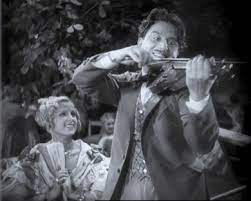
The 17th International Festival of German Film Patrimony, sponsored by the Hamburg Cinegraph, screened online from 14 to 22 November: “Cinema, War and Tulips. German-Dutch Film Relations;” it was accompanied by a film historical conference (20-22 November). I’ll discuss the conference in my next blog, while focusing on the film program today, which presented 11 Dutch films, made between 1929 and 1939, the majority being so-called “exile” films made by German émigrés from Nazi Germany. I’ve been trying to track down some of these films since the 1980s when researching my dissertation on Anti-Nazi films made by German émigrés in Hollywood. I became aware of the Goethe Institute Amsterdam presenting a film program and catalog on German refugees to Holland in the 1930s, documenting the incredible influence they had on jump-starting the Dutch film industry. 

Thanks to the influence of German émigrés and some Dutch expatri­ates returning from Germany, the indigenous sound film industry in the Netherlands blossomed. The producers Gabriel Levy, Leo Meyer, and Rudi Meyer, the directors Jaap Speyer, Ludwig Berger, Max Nosseck, Friedrich Zelnik, Rudolf Meinrad, Richard Oswald, Henry Koster, Max Ophüls, and Kurt Gerron, as well as the script writers Jane Bess, Walter Schlee, and Alexander Alexander, played a decisive role in this development. However, due to the size of the domestic market and the limited possibili­ties for export, these films remained relatively unknown outside Holland.  Surprisingly, of 31 films produced in the Nether­lands in the 1930s, 23 can be classified as “exile” films, including Bleke Bet (1934, Richard Oswald), De vier Mullers (1934, Rudolf Meinert), De Big von het Regiment (1935, Max Nosseck),  Drei Wenschen (1937, Kurt Gerron) and Vadertje Langbeen (1938, Friedrich Zelnik). Considered mindless entertainment by some critics, many of these films nevertheless offer fissures that communicate the anxieties of exiled German-Jewish artists.

Zeemansvrouwen / Sailor’s Wives (1929/2003)

The present series started with three Dutch sound films, before the rise of Nazism brought German filmmakers to the Netherlands. Zeemansvrouwen / Sailor’s Wives (1929/2003, Henk Kleinman), which was to be the country’s first sound film, was released silent and only sonorized in 2003 (with post-synchronized dialogue); it is a neo-realist melodrama of a pregnant fishmonger, shot around Amsterdam’s docks.  Likewise, Jaap Speyer’s De Jantjes / The Tars (1934), produced by Leo Meyer, Holland’s second sound film, plays in the same milieu of Amsterdam’s Jordaan district and concerns three sailors returning home, who are unable to adapt to civilian life, while popular folk songs mitigate the tragedy. Finally, Dood Water / Dead Water (1934, Gerard Rutten) visualizes the reclamation of land from the Zuidersee, but killed off the local fishing industry; while the opening documentary prologue is a patriotic even nationalist hymn to progress, the fictional narrative that follows focuses on the human toll of modernization.

I first heard about De Kribbebijter The Cross Patch (1935, Henry Koster) when I interviewed Koster about his career in 1976. A light comedy of mistaken identities with music, De Kribbebijter concerns a Baron, a wealthy grouch who disowns his son for wedding his secretary and is trying to marry off his daughter to an accountant, whereby the children have their own ideas. Koster, who had specialized in comedies in Germany (The Ugly Girl, 1933) and Austria, before discovering Deanna Durbin at Universal, keeps it light, despite the Depression economics that motivate the action. The film was produced by Leo Meyer, who would become Holland’s most important distributor after World War II and would continue a correspondence with Koster well into the 1960s, and co-written by Alexander Alexander and Jane Bess, one of the most prolific women screenwriters in Weimar.

Mystery of the Mondscheinsonata (1939, Karel Lamac)

Kurt Gerron’s Het Mysterie van de Mondscheinsonate / Mystery of the Mondscheinsonate (1935), based on Willy Corsari’s detective novel, is a crime drama about the murder of a retired cabaret star, supposedly at the hands of her dance partner. With its expressionist cabaret set harking back to Weimar, Het Mysterie also touches on German exile themes, in particular, the threatened loss of economic status and identity, which motivates the murder. The film can also be considered a pure German exile film, given that the director, scriptwriter (Walter Schlee), producer (Leo Meyer), cameraman (Akos Farkas), art director (Erwin Scharf) and sound technician (Gerhard Goldbaum) were émigrés.

Another crime drama that starts out as a horror-comedy based on Arnold Ridley’s often filmed play,  was De Spooktrein / The Ghost Train (1939, Karel Lamač), which dumps a motley crew of train passengers in a deserted, “haunted” train station. Like many “haunted house” films of the period, the focus is on the eccentricities of the various characters who are trapped against their will. The ghosts turn out to be weapons smugglers, a highly politicized subject released only weeks after the start of World War II, but Lamač avoids politics like the plague, as did all Dutch features in the period, given the censorship restrictions of the government regarding discussion of Nazi Germany.  

The three best films in the program were undoubtedly Max Ophüls’ Komodie on Geld / Comedy about Money (1936), Ludwig Berger’s Pygmalion (1937), and Douglas Sirk’s Boefje (1939), the latter produced by Leo Meyer. I had seen the first two films at the Berlinale 1983 but realized just how good they were. All three films allude to themes of exile. Komodie om Geld satirizes the obsessive quest for money, its “rags to riches to rags story” closely resembling the fate of many émigrés, while the décor of the cabaret recalls Weimar Cubism and art deco. Pygmalion, starring Lili Bouwmeesteras Eliza Deuluttel, receives an exile-centric reading of Shaw’s text, in that language defines class and status, a fact that German refugees were painfully aware of, given they were forced to work in foreign languages after the loss of Germany. Boefje, which means brat in Dutch, concerns a good boy who is invariably regarded as a juvenile delinquent by the authorities, simply because of his origins. The prejudices encountered by Boefje as a member of the Lumpenproletariat reflect the situation of German Jewish refugees:  Often without passports, residency permits, or working papers, they were literally hounded from country to country by the authorities, like common criminals.  

Given the Nazi invasion of the Netherlands in 1940, Holland remained a transit country for German émigrés, most eventually finding their way to Hollywood, although some, like Rudolf Meinert, Willy Rosen, and Kurt Gerron, were murdered in Nazi concentration camps, while Rudi Meyer survived Auschwitz, and Ludwig Berger remained hidden with false papers until war’s end. According to Ivo Blum, Leo Meyer committed suicide in Amsterdam in 1944. Jane Bess emigrated to Nazi-infested Argentina, while Alexander Alexander disappeared without a trace.  

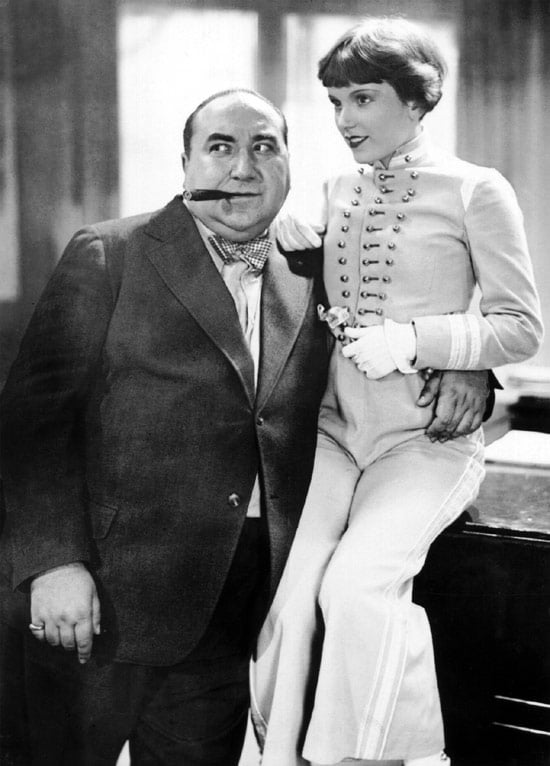
Rudolf Meinert
Kurt Gerron

256: Hannah Arendt

Archival Spaces 256

Hannah Arendt – the Movie (2012)

Downloaded 20 November 2020

Hannah Arendt, ca. 1952 (Karl Rabe)

There is a scene near the end of Margarete von Trotta’s masterful biopic, Hannah Arendt (2012), in which Prof. Arendt’s academic colleagues move away from her as she sits down in the faculty cafeteria, after in February 1962 she has published her controversial reportage, Eichmann in Jerusalem. The scene is fictional but is a visual indication of just how Arendt herself became a pariah after the controversy around her New Yorker articles erupted, leading to what Irving Howe in 2013 called a “civil war” among New York intellectuals. Watching the scene, I immediately flashed back to Hugo Münsterberg, one of the first film theorists, who like Arendt was ostracized by his academic colleagues (Harvard), because of his unpopular pro-German views during World War I.  Like Münsterberg, Arendt enjoyed popular fame far beyond academia, becoming mass-media stars, publishing bestsellers. Most importantly, both were naturalized Americans of Prussian-German Jewish heritage, who carried with them the intellectual baggage of their upbringing, melding the logophilia of Judaism with the Prussian instance on the letter of the law, principles, and duty.

Rather than present a biography of Hannah Arendt, von Trotta focuses on the period 1961-63, when Arendt traveled to Jerusalem to observe the Eichmann trial. Left out, are her childhood in Königsberg, East Prussia, studies in the late 1920s at university with Martin Heidegger (with whom she has a love affair), Edmund Husserl, and Karl Jaspers, her internment in the notorious Gurs French concentration camp (1940), her emigration to New York, and 30-year marriage to Heinrich Blücher.

The film opens with Eichmann’s dramatic abduction from Argentina by the Mossad, then cuts to Hannah Arendt lying on a couch in her darkened New York apartment on the Upper West Side, smoking; the scene is repeated several times, also ending the film. In this juxtaposition, we get action and thought. Arendt believed in human thought, rejecting Heidegger’s insistence (in a flashback lecture) that thought does not lead to knowledge. Her central concern in the reportage is Eichmann’s ability to act without thought. The closing scene also implies a more emotional level, as Arendt contemplates with a heavy heart the many friends she has lost.

Hannah Arendt (2012, Margarete von Trotta)

As one friend after another has peeled off in the wake of her Eichmann work, she is unable to compromise her principles, once she formulates her working thesis about Eichmann, even as the film is structured to justify her actions and writing. Two of the most painful scenes of Arendt’s loss involve Kurt Blumenthal (who turns away from her on his death bed) and Hans Jonas, German-Jewish colleagues she had known for more than thirty years.

Kurt Blumenthal and Arendt discussing case in Jerusalem in Hannah Arendt

Actress Barbara Sukowa, who is remembered for her great role in R.W. Fassbinder’s Lola (1981) plays Arendt brilliantly, having previously given a Cannes-awarded performance in Margarete von Trotta’s Rosa Luxembourg (1986), about the doomed leader of the German Communist Party. Although Sukowa in no way physically resembles Arendt, she quietly reproduces Arendt’s intellectual rigor, her stringency, her uncompromising theoretical principles, even in the face of overwhelming public criticism. She is characterized at two different times as arrogant and unfeeling, a view that overlaps with the American view of Münsterberg and his Teutonic pedagogical dogmatism.

Arendt’s great accomplishment was that she secularized the public discourse around Nazi war criminals, which was still dominated by mythological terms, like, monsters (Hitler), devils (Goebbels), insane demons (Himmler), who had misled the German people, introducing instead the today widely accepted concept of the “banality of evil,” namely that Eichmann was an ordinary, even unremarkable German, a loyal bureaucrat who was only following orders and intentionally turned off his moral compass. Since the publication of Daniel Goldhagen’s Hitler’s Willing Executioners: Ordinary Germans and the Holocaust (1996), we, of course, know that tens of thousands of Germans participated in the murder of the Jews.

Von Trotta’s film structures the scenes of the Eichmann trial, consisting both of original newsreel footage and staged scenes, to support Arendt’s thesis, showing Eichmann as cold-bloodedly refusing to take any responsibility for the fate of the humans he put on trains to the extermination camps. As Arendt notes in a lecture to her students, neither German Fascism, nor the system of anti-Semitism was on trial in Jerusalem, rather, Eichmann was being tried for his own actions, which could not be directly connected to crimes of murder. Unlike her anarchist-leaning husband, Blücher, who believed there was no legal basis for the trial, Arendt did want to make Eichmann responsible for his actions, supporting his execution. But at the time, few people accepted the premise of “the banality of evil.” Almost half the film, therefore, visualizes the extremely negative public reaction to Arendt’s article by friends, colleagues, and neighbors: A Mossad agent she knew as a student in Berlin threatens her, an upstairs neighbor calls her a Nazi whore in a note passed on by the building’s doorman.

Original Television news footage of Eichmann, the “man in the glass booth.”

The bone of contention, as even the New Yorker editors recognized before publication, was that many believed Arendt was blaming Jewish leaders for cooperating with Eichmann and, therefore, to blame for their own destruction. In fact, Arendt argued that it was the very amorality of the Nazis, their unwillingness to think about their personal responsibility, rather than rampant anti-Semitism, which allowed for the total moral collapse of both the Nazis and their victims. According to Arendt, the leaders of the so-called Judenrate (Jewish councils) of necessity shared in the responsibility for keeping the trains running. Such a brutal but realistic theory was intolerable to living victims of the Holocaust, less than twenty years after the war. Indeed, Arendt could be criticized for failing to consider their emotional state as survivors. Many scholars also agree that she probably underestimated the virulent emotional and intellectual force of anti-Semitism. Kurt Blumenthal admonishes her for not “loving her people,” but she responds she never loved any people, Jewish or otherwise, but only friends. Ironically, it is those she is losing.

Arendt and Hans Jonas in Hannah Arendt

Hannah Arendt believed her own intellectual integrity had to be maintained at all costs, even if she was ostracized, even if uncomfortable truths hurt those around her. Like the Sukowa version of Rosa Luxembourg as imagined by von Trotta, Arendt here is seemingly willing to give up everything for her principles, and her right as a woman to express them; feminist icons in the making. Fulfilling another feminist ideal, Arendt is also portrayed as a warm and loving spouse to Blücher, who had rescued her from Gurs. It was possibly arrogance and philosophical coldness in a man’s world of cuddly women that allowed her to become one of the greatest philosophers of the 20th century.  

255: Leo Hurwitz’s Strange Victory

Archival Spaces 255

CINE SALON BEYOND with Leo Hurwitz’s Strange Victory (1948)

Uploaded 6 November 2020

Leo Hurwitz

Dartmouth’s Film and Media Studies Department recently sponsored a CINE SALON BEYOND (online) with host Bruce Posner and Tom Hurwitz, the award-winning documentary filmmaker who is the son of Leo Hurwitz. The event included clips from Tom’s soon-to-be-released Can You Bring It? (2020), Leo Hurwitz’s best-known film, Native Land (1932) as well as Leo’s Hunger (1932) and Strange Victory (1949) in their entirety. The Salon also highlighted Tom Hurwitz’s new website, https://leohurwitz.com/, where twenty-four of Leo Hurwitz’s films can now be streamed, including the above titles, as well as Pie in the Sky (1934), The Plow that Broke the Plains (1936), The Heart of Spain (1937), The Museum and the Fury (1956), and his magnum opus, Dialogue with a Woman Departed (1980). While I have written about Hurwitz’s earlier work, I had not yet seen Strange Victory, which proved to be a revelation.

Strange Victory (1948, Leo Hurwitz)

I first met Leo Hurwitz in late November 1981, when I attended the Leipzig International Documentary Film Festival, when the East German State Film Archive staged a retrospective, “American Social Documentary, 1930-1945,” recuperating progressive filmmaking. Only a handful of Americans attended the Festival that year, so I received a Thanksgiving dinner invitation from fellow Americans, Anne and Will Roberts, filmmakers from Athens, Ohio, held at Leipzig’s Auerbach’s Keller (memorialized in Goethe’s “Faust, Pt. I”). No turkey, only duck with dumplings and apple sauce, but we make due. Other guests included Leo Hurwitz and Leo Seltzer, two survivors from the Film and Photo League who were being feted in Leipzig. At 72, Leo Hurwitz was still full of piss and vinegar, at least as far as his politics were concerned. I spent much of the evening talking to Leo, who had cut sections of Native Land into his new film, Dialogue with a Woman Departed, which I thought was a wonderfully poetic and utterly romantic view of left-wing politics. Several months later, I saw the 225-minute film dedicated to Hurwitz’s second wife, Peggy Lawson, again at the Berlinale’s Forum of Young Cinema, where Leo discussed the film at length with West German students.

Tom Hurwitz opened the Zoom Salon with a brief biography of his dad, noting that Leo (born 1909) saw his first silent Hollywood films around 1915, and felt intuitively that they were more make-believe than real, or as Tom put it, “Leo felt he had been hit over the head, leaving the cinema.” As a result, Hurwitz gravitated as a young man to left-wing politics, joining the Film and Photo League of the International Workers Relief (a Communist front organization), where he produced political newsreels with, among others, Leo Seltzer, Robert de Luca, Sam Brody, and C.O. Nelson. Their work acted as an antidote to the commercial newsreels of the major Hollywood studios, with titles like America Today (1932) and The World in Review (1933-34). Like these newsreels, Hunger (1932), is a compilation of suppressed commercial newsreel and Film and Photo League footage, documenting a huge march on Washington for unemployment insurance and immediate cash relief for America’s 12 million unemployed.  As Tom noted, Leo Hurwitz was a big fan of Russian filmmakers V. Pudovkin, A. Dovzhenko, Joris Ivens and Soviet editing styles, and became extremely proficient at cutting together newsreel footage from disparate sources to create a unified narrative of class struggle.

Taking their lessons from Pudovkin’s theory, On Film Technique, Hurwitz wished to move beyond the journalism of the Film and Photo League to produce aesthetically engaging documentaries, founding Nykino and Frontier Films with Ralph Steiner, Willard Van Dyke, Michael Gordon, Irving Lerner, Sydney Meyers, and Ben Maddow. As Tom Huwritz noted, the first four-named left the film collective in 1937, due to ideological conflicts and the group’s closeness to the CPUSA, Van Dyke going on to produce the liberal-capitalist documentary, The City (1939), while Gordon went to Hollywood. Meanwhile, Hurwitz and Strand spent years working on Native Land, a daring experimental documentary with staged fictional scenes about the violent history of the labor movement that unfortunately went under, because America’s entrance into World War II heralded a moratorium on labor agitation in favor of the war effort. We restored the film at UCLA in 2011.

Made at the height of American anti-Communist hysteria, Strange Victory posited the theory that America had defeated Nazism in Europe after four years of war, but that fascist ideology was still alive and well in the United States, in particular the country’s racist Jim Crow laws and anti-Semitic housing restrictions. As the narrator asks: “If we won the war, why does it look like we lost?” or “Why are the ideas of the losers still alive in the land of the winner?” While the film’s first third compiles war footage, the latter sections visualizes e.g. the difficulties of African-American fighter pilots to get a job in the airline industry or any job other than menial cleaning work; racial segregation victimizes all minorities, including Jews: “We keep our yellow stars hidden in quotas.” An extended scene of babies of various ethnicities in a maternity ward makes the point that we are all equal at birth, but only then, because white privilege kicks in as soon as they leave the hospital. Like Native Land, Strange Victory is brilliantly edited with a sparse, poetic narration (that includes a female and a male voice), and staged scenes of everyday racism. The New York Daily News called the film Communist propaganda, leading to its suppression and Leo Hurwitz’s blacklisting.

Strange Victory (1948, Leo Hurwitz)

According to Tom Hurwitz, blacklisting not only limited his father’s employment in subsequent years, but also caused the suppression of all his political work and his rightful place in film history as one of the 20th century’s foremost American documentarians. Milestone Films restored and released several of Hurwitz’s films in 2015, but hopefully, the new website will also contribute to his rehabilitation.     

Dialogue With a Woman Departed (1980, Leo Hurwitz) with Peggy Lawson

254: Giornate del cinema muto

Archival Spaces 254

Giornate del cinema muto: Limited Edition

Downloaded 23 October 2020

Given the continued worldwide COVID pandemic, the organizers of the Giornate del cinema muto, decided to stage an abridged version of the “Days of Silent Film” online, 3-10 October 2020. Each day’s program included at least one feature, – always a new restoration or a rediscovered film – and either a program of shorts and presentations of newly published books or master classes in silent film composing. Viewers could link up to the program for a ridiculously low fee, and each show was available for twenty-four hours, making it possible for viewers in any time zone to see the films easily. Another element I really appreciated was a short documentary prior to the feature about the film archive that had contributed to the program, beginning with the Library of Congress, followed by the Eye Institute, Amsterdam, the China Film Archive (Bejing), the National Film Center (Tokyo), Cineteca Italiana (Milan), the Greek Film Archive (Athens), the Munich Filmmuseum, George Eastman Museum, and the Danish Film Institute.  

Venice, 68mm Biograph film, ca. 1898

The Festival began on Saturday evening with a series of nine shorts, entitled “The Urge to Travel” (1911-1939), that began in New York, then traveled virtually to Kraków, Poland, through the Swedish countryside to Ostende, Belgium, along the Moldau near Prague, then to the beaches at Trieste, and, finally to London. Many of the films were tinted and toned, but the real pleasure of these overseas journeys into the past was the fact that we are now all armchair travelers, due to COVID. The same held true to the program of Biograph shorts on Sunday, all of them shot on 68mm film, giving these digital versions an uncanny sharpness in detail, – they were scanned at 8K – as we again traveled virtually to the beginning of the 20th century to Ireland, Berlin, Amsterdam, Venice, Paris, and Windsor Castle, London. Seeing the way people move, their fashions,  the incredible details of their lives, made these images truly a window into the past.

The eight features of the festival, while crossing numerous genres, nevertheless focused in the widest sense on stories of family relations, whether in peril or in formation. This look at our most intimate human interactions and emotions was a smart decision, taking the smaller streaming screen into account. Penrod and Sam (1923, William Beaudine) was an absolutely charming piece of Americana, a little comedy-melodrama about growing up in a small town, boys building forts on the empty lot next door, staging make-believe wars with rival gangs, reminding us that until recent children played together, rather than staring at computer games. Unlike other Hollywood examples of the genre, the film steers clear of cheap sentimentality, even when the film’s boy hero is confronted with death.  

Penrod and Sam (1923, William Beaudine)

Guofeng (1935, Luo Mingyou, Zhu Shilin), starring Ruan Lingyu and Li Lili, the former tragic star of Shanghai cinema, concerns two sisters who are in love with the same man, the older sister withdrawing from the competition, even though she is already secretly engaged. While the older sister adheres to the virtues of Chiang Kai-shek’s “New Life” movement – following tradition, social responsibility, frugality, and modesty – the younger sister divorces her husband who financed her education and chases material pleasure, thereby destroying her family. A day later, the Giornate returned to Asia with Where Lights Are Low (1921, Colin Campbell), a Hollywood melodrama produced and starring Sessue Hayakawa as Chinese Prince Tsu Wong Shih who falls in love with the daughter of his gardener; he goes to America to study and must eventually rescue his fiancé from white slavery. Unlike the previous film, Prince Tsu comes down on the side of modernity, rather than tradition.

Guofeng (1935)
Tempesta in un Cranio (1921, Carlo Campogolliana)

La Tempesta in un cranio/Storm in the Skull (1921, Carlo Campogolliana) is an Italian comedy about a wealthy writer who believes he may be going insane, due to a hereditary predisposition, and experiences a series of surreal adventures that let me indeed doubt his sanity, but turn out to be an elaborate trick played on the writer by his fiancé and his friends to convince him he is indeed sane. Another newly discovered comedy, this time a musical from Greece, Oi Apachides ton Athinon/The Apaches of Paris (1930), follows the fate of an impoverished nobleman, known as “The Prince” in the bohemian quarters of Athens, who is roped into a scheme to fool a nouveau riches and falls in love with the daughter, only to return to his fiancé from the working classes. Based on an operetta, many songs were performed off-camera to accompany the film.

Abwege (1928, G.W. Pabst)

The most modern film at the Giornate was G.W. Pabst’s Abwege/The Devious Path, 1928, a new digital restoration first screened at the Berlinale in 2018. Starring Brigitte Helm as a bored wife of a wealthy lawyer, the film subtly displays the breakdown of a marriage, as both partners are seemingly unable to communicate their feelings to each other, their displeasure coded through minute movements of lips and eyebrows. Meanwhile, the search for excitement is embodied in a continuously moving camera that glides through 1920s Berlin’s luxurious world of nightclubs, drugs, and kept women. It is the economy of its means, embodied in Pabst precision editing, – the film was produced as a quota quickie – that makes Abwege an unqualified masterpiece of Weimar modernity. At the opposite end of the modernity spectrum is Cecil B. DeMille’s old-fashioned The Romance of the Redwoods (1917), a “western” starring Mary Pickford as a plucky young woman who travels West during the California Gold Rush and successfully negotiates the all-male world of the prospecting camps, converting through her love an outlaw into an upstanding citizen.  Although I missed the last day of screenings, including a program of Laurel and Hardy shorts, it was a great week of films.

Nevertheless, I really missed not being in Pordenone, because, of course, a big part of the festival is social, meeting friends and colleagues between screenings, having an Aperol Spritz at the Bar Posta, across the square from the Teatro Verdi or eating a meal at one of the many great restaurants, whether the Osteria Al Cavaliere Perso, the Prosciutteria DOK, Al Lido or Al Gallo, all within minutes of the theatre. The center of town is almost exclusively pedestrian zones, so it is always a pleasure to just promenade past the many shops to clear out your head when you have spent ten hours in the cinema. Hopefully, next year!