255: Leo Hurwitz’s Strange Victory

Archival Spaces 255

CINE SALON BEYOND with Leo Hurwitz’s Strange Victory (1948)

Uploaded 6 November 2020

Leo Hurwitz

Dartmouth’s Film and Media Studies Department recently sponsored a CINE SALON BEYOND (online) with host Bruce Posner and Tom Hurwitz, the award-winning documentary filmmaker who is the son of Leo Hurwitz. The event included clips from Tom’s soon-to-be-released Can You Bring It? (2020), Leo Hurwitz’s best-known film, Native Land (1932) as well as Leo’s Hunger (1932) and Strange Victory (1949) in their entirety. The Salon also highlighted Tom Hurwitz’s new website, https://leohurwitz.com/, where twenty-four of Leo Hurwitz’s films can now be streamed, including the above titles, as well as Pie in the Sky (1934), The Plow that Broke the Plains (1936), The Heart of Spain (1937), The Museum and the Fury (1956), and his magnum opus, Dialogue with a Woman Departed (1980). While I have written about Hurwitz’s earlier work, I had not yet seen Strange Victory, which proved to be a revelation.

Strange Victory (1948, Leo Hurwitz)

I first met Leo Hurwitz in late November 1981, when I attended the Leipzig International Documentary Film Festival, when the East German State Film Archive staged a retrospective, “American Social Documentary, 1930-1945,” recuperating progressive filmmaking. Only a handful of Americans attended the Festival that year, so I received a Thanksgiving dinner invitation from fellow Americans, Anne and Will Roberts, filmmakers from Athens, Ohio, held at Leipzig’s Auerbach’s Keller (memorialized in Goethe’s “Faust, Pt. I”). No turkey, only duck with dumplings and apple sauce, but we make due. Other guests included Leo Hurwitz and Leo Seltzer, two survivors from the Film and Photo League who were being feted in Leipzig. At 72, Leo Hurwitz was still full of piss and vinegar, at least as far as his politics were concerned. I spent much of the evening talking to Leo, who had cut sections of Native Land into his new film, Dialogue with a Woman Departed, which I thought was a wonderfully poetic and utterly romantic view of left-wing politics. Several months later, I saw the 225-minute film dedicated to Hurwitz’s second wife, Peggy Lawson, again at the Berlinale’s Forum of Young Cinema, where Leo discussed the film at length with West German students.

Tom Hurwitz opened the Zoom Salon with a brief biography of his dad, noting that Leo (born 1909) saw his first silent Hollywood films around 1915, and felt intuitively that they were more make-believe than real, or as Tom put it, “Leo felt he had been hit over the head, leaving the cinema.” As a result, Hurwitz gravitated as a young man to left-wing politics, joining the Film and Photo League of the International Workers Relief (a Communist front organization), where he produced political newsreels with, among others, Leo Seltzer, Robert de Luca, Sam Brody, and C.O. Nelson. Their work acted as an antidote to the commercial newsreels of the major Hollywood studios, with titles like America Today (1932) and The World in Review (1933-34). Like these newsreels, Hunger (1932), is a compilation of suppressed commercial newsreel and Film and Photo League footage, documenting a huge march on Washington for unemployment insurance and immediate cash relief for America’s 12 million unemployed.  As Tom noted, Leo Hurwitz was a big fan of Russian filmmakers V. Pudovkin, A. Dovzhenko, Joris Ivens and Soviet editing styles, and became extremely proficient at cutting together newsreel footage from disparate sources to create a unified narrative of class struggle.

Taking their lessons from Pudovkin’s theory, On Film Technique, Hurwitz wished to move beyond the journalism of the Film and Photo League to produce aesthetically engaging documentaries, founding Nykino and Frontier Films with Ralph Steiner, Willard Van Dyke, Michael Gordon, Irving Lerner, Sydney Meyers, and Ben Maddow. As Tom Huwritz noted, the first four-named left the film collective in 1937, due to ideological conflicts and the group’s closeness to the CPUSA, Van Dyke going on to produce the liberal-capitalist documentary, The City (1939), while Gordon went to Hollywood. Meanwhile, Hurwitz and Strand spent years working on Native Land, a daring experimental documentary with staged fictional scenes about the violent history of the labor movement that unfortunately went under, because America’s entrance into World War II heralded a moratorium on labor agitation in favor of the war effort. We restored the film at UCLA in 2011.

Made at the height of American anti-Communist hysteria, Strange Victory posited the theory that America had defeated Nazism in Europe after four years of war, but that fascist ideology was still alive and well in the United States, in particular the country’s racist Jim Crow laws and anti-Semitic housing restrictions. As the narrator asks: “If we won the war, why does it look like we lost?” or “Why are the ideas of the losers still alive in the land of the winner?” While the film’s first third compiles war footage, the latter sections visualizes e.g. the difficulties of African-American fighter pilots to get a job in the airline industry or any job other than menial cleaning work; racial segregation victimizes all minorities, including Jews: “We keep our yellow stars hidden in quotas.” An extended scene of babies of various ethnicities in a maternity ward makes the point that we are all equal at birth, but only then, because white privilege kicks in as soon as they leave the hospital. Like Native Land, Strange Victory is brilliantly edited with a sparse, poetic narration (that includes a female and a male voice), and staged scenes of everyday racism. The New York Daily News called the film Communist propaganda, leading to its suppression and Leo Hurwitz’s blacklisting.

Strange Victory (1948, Leo Hurwitz)

According to Tom Hurwitz, blacklisting not only limited his father’s employment in subsequent years, but also caused the suppression of all his political work and his rightful place in film history as one of the 20th century’s foremost American documentarians. Milestone Films restored and released several of Hurwitz’s films in 2015, but hopefully, the new website will also contribute to his rehabilitation.     

Dialogue With a Woman Departed (1980, Leo Hurwitz) with Peggy Lawson

254: Giornate del cinema muto

Archival Spaces 254

Giornate del cinema muto: Limited Edition

Downloaded 23 October 2020

Given the continued worldwide COVID pandemic, the organizers of the Giornate del cinema muto, decided to stage an abridged version of the “Days of Silent Film” online, 3-10 October 2020. Each day’s program included at least one feature, – always a new restoration or a rediscovered film – and either a program of shorts and presentations of newly published books or master classes in silent film composing. Viewers could link up to the program for a ridiculously low fee, and each show was available for twenty-four hours, making it possible for viewers in any time zone to see the films easily. Another element I really appreciated was a short documentary prior to the feature about the film archive that had contributed to the program, beginning with the Library of Congress, followed by the Eye Institute, Amsterdam, the China Film Archive (Bejing), the National Film Center (Tokyo), Cineteca Italiana (Milan), the Greek Film Archive (Athens), the Munich Filmmuseum, George Eastman Museum, and the Danish Film Institute.  

Venice, 68mm Biograph film, ca. 1898

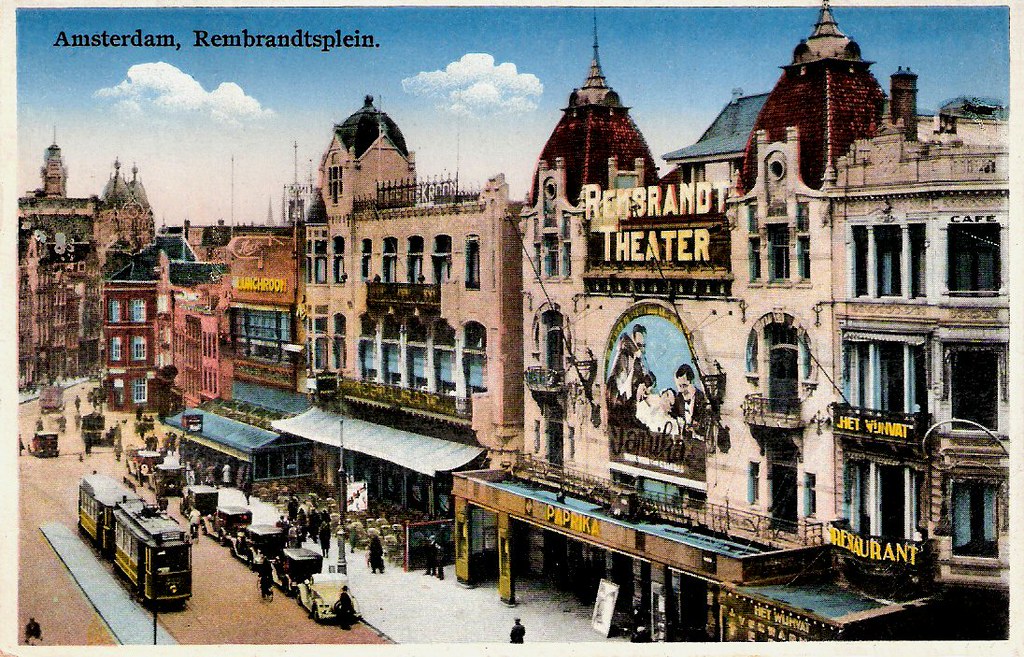
The Festival began on Saturday evening with a series of nine shorts, entitled “The Urge to Travel” (1911-1939), that began in New York, then traveled virtually to Kraków, Poland, through the Swedish countryside to Ostende, Belgium, along the Moldau near Prague, then to the beaches at Trieste, and, finally to London. Many of the films were tinted and toned, but the real pleasure of these overseas journeys into the past was the fact that we are now all armchair travelers, due to COVID. The same held true to the program of Biograph shorts on Sunday, all of them shot on 68mm film, giving these digital versions an uncanny sharpness in detail, – they were scanned at 8K – as we again traveled virtually to the beginning of the 20th century to Ireland, Berlin, Amsterdam, Venice, Paris, and Windsor Castle, London. Seeing the way people move, their fashions,  the incredible details of their lives, made these images truly a window into the past.

The eight features of the festival, while crossing numerous genres, nevertheless focused in the widest sense on stories of family relations, whether in peril or in formation. This look at our most intimate human interactions and emotions was a smart decision, taking the smaller streaming screen into account. Penrod and Sam (1923, William Beaudine) was an absolutely charming piece of Americana, a little comedy-melodrama about growing up in a small town, boys building forts on the empty lot next door, staging make-believe wars with rival gangs, reminding us that until recent children played together, rather than staring at computer games. Unlike other Hollywood examples of the genre, the film steers clear of cheap sentimentality, even when the film’s boy hero is confronted with death.  

Penrod and Sam (1923, William Beaudine)

Guofeng (1935, Luo Mingyou, Zhu Shilin), starring Ruan Lingyu and Li Lili, the former tragic star of Shanghai cinema, concerns two sisters who are in love with the same man, the older sister withdrawing from the competition, even though she is already secretly engaged. While the older sister adheres to the virtues of Chiang Kai-shek’s “New Life” movement – following tradition, social responsibility, frugality, and modesty – the younger sister divorces her husband who financed her education and chases material pleasure, thereby destroying her family. A day later, the Giornate returned to Asia with Where Lights Are Low (1921, Colin Campbell), a Hollywood melodrama produced and starring Sessue Hayakawa as Chinese Prince Tsu Wong Shih who falls in love with the daughter of his gardener; he goes to America to study and must eventually rescue his fiancé from white slavery. Unlike the previous film, Prince Tsu comes down on the side of modernity, rather than tradition.

Guofeng (1935)
Tempesta in un Cranio (1921, Carlo Campogolliana)

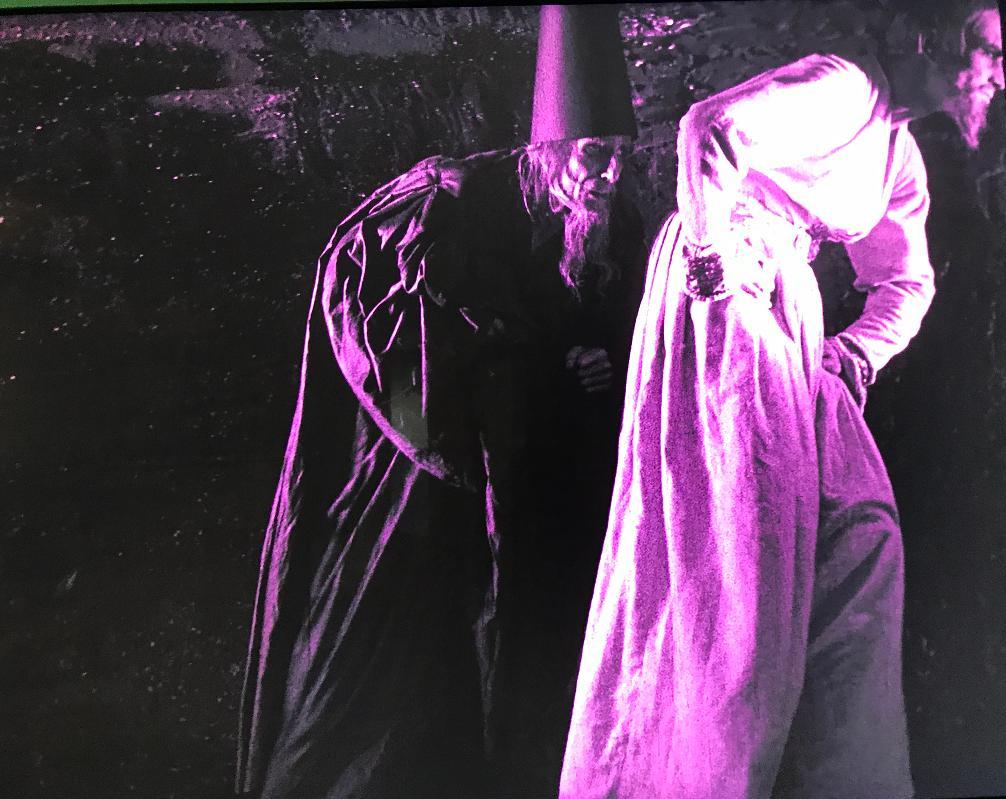
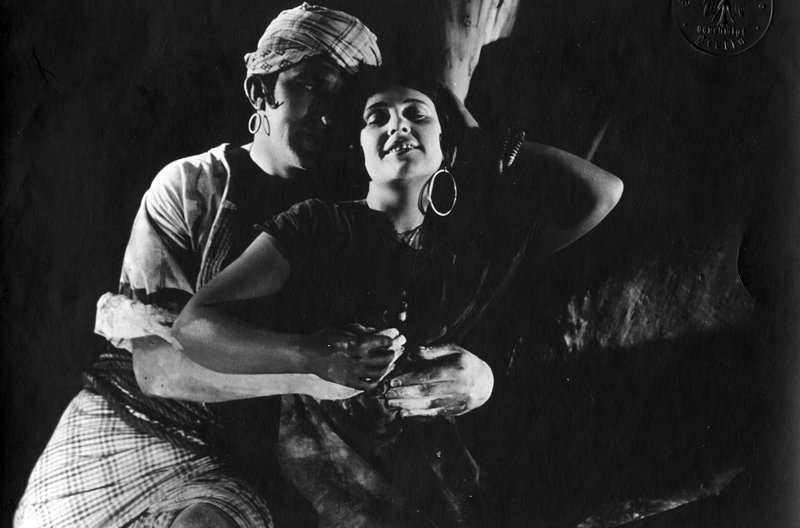
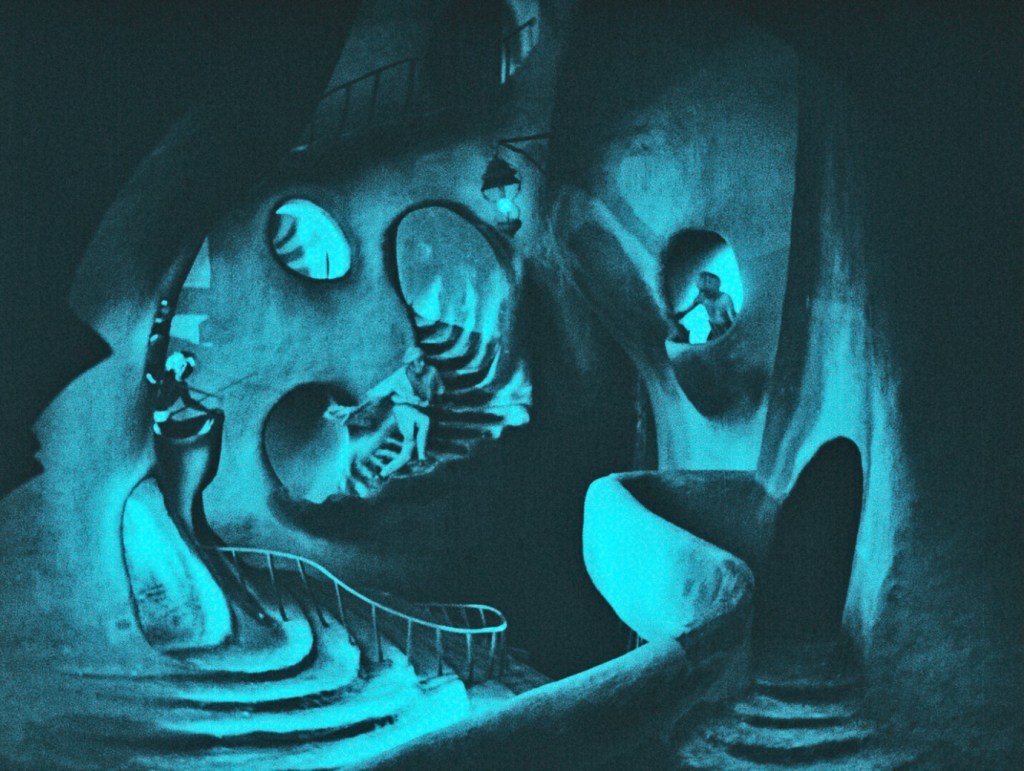
La Tempesta in un cranio/Storm in the Skull (1921, Carlo Campogolliana) is an Italian comedy about a wealthy writer who believes he may be going insane, due to a hereditary predisposition, and experiences a series of surreal adventures that let me indeed doubt his sanity, but turn out to be an elaborate trick played on the writer by his fiancé and his friends to convince him he is indeed sane. Another newly discovered comedy, this time a musical from Greece, Oi Apachides ton Athinon/The Apaches of Paris (1930), follows the fate of an impoverished nobleman, known as “The Prince” in the bohemian quarters of Athens, who is roped into a scheme to fool a nouveau riches and falls in love with the daughter, only to return to his fiancé from the working classes. Based on an operetta, many songs were performed off-camera to accompany the film.

Abwege (1928, G.W. Pabst)

The most modern film at the Giornate was G.W. Pabst’s Abwege/The Devious Path, 1928, a new digital restoration first screened at the Berlinale in 2018. Starring Brigitte Helm as a bored wife of a wealthy lawyer, the film subtly displays the breakdown of a marriage, as both partners are seemingly unable to communicate their feelings to each other, their displeasure coded through minute movements of lips and eyebrows. Meanwhile, the search for excitement is embodied in a continuously moving camera that glides through 1920s Berlin’s luxurious world of nightclubs, drugs, and kept women. It is the economy of its means, embodied in Pabst precision editing, – the film was produced as a quota quickie – that makes Abwege an unqualified masterpiece of Weimar modernity. At the opposite end of the modernity spectrum is Cecil B. DeMille’s old-fashioned The Romance of the Redwoods (1917), a “western” starring Mary Pickford as a plucky young woman who travels West during the California Gold Rush and successfully negotiates the all-male world of the prospecting camps, converting through her love an outlaw into an upstanding citizen.  Although I missed the last day of screenings, including a program of Laurel and Hardy shorts, it was a great week of films.

Nevertheless, I really missed not being in Pordenone, because, of course, a big part of the festival is social, meeting friends and colleagues between screenings, having an Aperol Spritz at the Bar Posta, across the square from the Teatro Verdi or eating a meal at one of the many great restaurants, whether the Osteria Al Cavaliere Perso, the Prosciutteria DOK, Al Lido or Al Gallo, all within minutes of the theatre. The center of town is almost exclusively pedestrian zones, so it is always a pleasure to just promenade past the many shops to clear out your head when you have spent ten hours in the cinema. Hopefully, next year!

253: White Nationalism Black Legion

Archival Spaces 253

White Nationalist Terrorism is nothing new in America: Re-Viewing The Black Legion (1937)

Uploaded 9 October 2020

White Nationalist Terrorist i n Kenosha

Last week at the first presidential debate, Donald Trump refused to condemn the white nationalist and racist organization, “The Proud Boys,” just as he has encouraged other racist groups, like the American Nazis, whom he characterized as “good people” after Charlotte. In Kenosha, a 17-year-old white nationalist calmly shot two BLM protesters dead and walked merrily past police; he is now a “blood hero” of the Right. Only yesterday, thirteen Michigan “militia” men were arrested for conspiring to kidnap the Michigan Governor, because she defied Trump, who verbally abused Gretchen Whitmar as the murder plot hit the news.

Radical right-wing groups have always been a part of the American fabric, just as racism runs deep throughout American society, but until this President, they have remained splinter groups. The Guardian recently quoted Southern Poverty Law statistics that noted a 55% increase in such hate groups, exerting enormous influence online, since Donald Trump became president. During the Great Depression, the Ku Klux Klan and other terrorist organizations thrived. Economic stress fueled hatred then as now, but white nationalists under Franklin D. Roosevelt could not count on covert support from the highest level of government, as they do today.  In the Warner Brothers’ film, The Black Legion (1937, Archie L. Mayo), white, racist terrorists are successfully prosecuted.

Lobby Card for The BVlack Legion (1937)

The film is based on the actual “Black Legion,” a white nationalist group in the 1930s Midwest, especially in Michigan(!), a Ku Klux Klan splinter group that numbered as many as 135,000 members. The film fictionalized the actual kidnapping and murder of Charles A. Poole in May 1935 in Detroit, a Works Progress Administration organizer, for which the government prosecuted 49 members of the Black Legion, of which eleven were convicted of murder, thanks to the testimony of Dean Dayton, a former Legionnaire.

Dean Dayton at 1937 Detroit Trial

In the film, Humphrey Bogart plays factory worker Frank Taylor (a fictionalized Dayton) who is passed over for promotion to foreman in his factory and becomes embittered by the “foreigners who are taking away jobs from red-blooded Americans.” He joins the Black Legion, which burns down the farm of foreman Joe Dombrowski allowing Taylor to get the job. However, he is quickly demoted for not handling a machine malfunction on the floor, because he was in the lavatory recruiting for the Legion. The next foreman is also tortured, but he doesn’t get the job back. Taylor alienates his wife and slips into drunkenness, finally killing his friend, Ed Jackson, who threatened to expose the Black Legion. Like Trump and his white nationalist followers, Taylor articulates grievances and rage against nebulous scapegoats, because he believes that “native-born Americans,” i.e. white people, experience economic hardship at the hands of the other.  

Black Legionaires
Klu Kllux Klan, n.d.

In a speech to the Legion, Alf Hargrave claims that foreigners who have enriched themselves with American jobs, hold an alien, un-American doctrine, “and are plotting to seize our government and overthrow the republic.” He states further that the Legion will purge the land of traitorous aliens, creating a “free, white, 100% America.” Like the dog whistles used today, the American fascists in the 1930s used code words to stoke racial fear and hatred. But like the Nazis and Communists of the 1930s, the Black Legion also terrorized its own members into silence and submission: In a midnight initiation ceremony in the woods, the gathering garbed in black KKK robes, Taylor swears an oath that binds him to undying loyalty, demanding damnation of his eternal soul, if he betrays the organization. To further undergird the oath, Hargrave gives Taylor a shell casing, saying the bullet will find him or his family, if he betrays his oath. When he is arrested, a Black Legionnaire posing as a lawyer appears in Taylor’s cell to remind him of the bullet waiting for his family if he talks. Interestingly, in a scene added by Warner Brothers after production was completed, Taylor’s lawyer states to the judge in private chambers, he was unaware of Taylor’s murderous activity. The Academy’s MPAA files would probably tell us why the after-shoot, but I suspect it has to do with absolving the legal profession of any culpability as fascist collaborators.

Humphrey Bogart

Warner Brothers became interested in the case as early as the Black Legion trial in 1936, sending a staff member to observe the trial and come up with story ideas. The original story was written by Robert Lord, who also produced the film and insisted on casting Bogart (at the time a supporting player), because he felt Edward G. Robinson, who was originally cast, looked too much like a foreigner, i.e. Jewish. The Black Legion maintained KKK secrecy protocols from hoods to humiliation, leading the Clan to sue Warner Brothers for patent infringement; the suit was thrown out of court. Like the KKK, the Black Legionnaires hated all foreigners, as well as Jews, Catholics, and other minorities, although no African-Americans or other people of color actually appear in the film. That is surprising, given that Detroit was already heavily black, just as it was a Black Legion stronghold, but Warner Brothers, like other Hollywood studios, still practiced – by a process of exclusion – a different form of racism. The film was praised by the critics and earned Robert Lord an Oscar nomination for his screenplay, while the National Board of Review named Black Legion Best Film of 1937.

In the movie trial, — true to WB’s support of Roosevelt’s administration, —  the judge reaffirms American ideals, grounded in Democracy, as he scolds the accused white nationalist terrorists: “Your idea of patriotism and Americanism is hideous to all decent citizens. It violates every protection guaranteed in the Bill of Rights, contained in our Constitution. The Bill of Rights, assuring us all religious freedom and the right to person and property, is the cornerstone of American patriotism…  We cannot afford to have racial or religious hatred stirred up, so that innocent citizens become the victims of accusations brought in secrecy or of terrorists who inflict their vigilante judgment.”

I used to see Black Legion as a melodramatic treatment of an isolated historical moment, but, in the age of Trumpism, I realize that, like Robert Rossen’s All the King’s Men (1949), it is a warning that American Democracy and our liberty have to be actively protected, even when the terrorist is our own president.    

Trade Periodical Advertisement for The Black Legion

252: Digital Asset Symposium

Archival Spaces 252

DAS – Digital Asset Symposium (Online)

Uploaded  25 September 2020

The Digital Asset Symposium – DAS – , originally scheduled for New York’s Museum of Modern Art in June, finally took place online on September 16-17, 2020. Organized by the Association of Moving Image Archivists, and sponsored by a host of vendors from the archival field, it was the tenth meeting of digital film/media specialists since 2007, the last four at MOMA. I had not attended DAS since 2012 when it was held in Los Angeles (https://www.cinema.ucla.edu/blogs/archival-spaces/2012/11/08/das-2012-lifecycle-digital-asset).  Given the East-West coast time difference for a virtual event, the symposium was limited to four hours of programming each day, beginning at 1 PM EST/10 AM PST.

After AMIA President Dennis Doros welcomed everyone, moderator Nick Gold introduced Ant Rawston of Microsoft Research, who discussed “Project Silica,” an initiative to utilize glass as a long term storage medium for digital media. Unlike hard drives or even clouds, which have a limited lifespan, fused silica promises to remain stable for storage over ten thousand years and is not subject to environmental decay, whether by heat, humidity, or cold (unlike any other known media carrier). So far, Microsoft has proven the concept, but both write and read speeds of data are apparently not yet viable for commercial exploitation. Another issue: once written, data is baked in and can’t be written over, unlike all plastic media. While Rawston gave no indication of when archivists will be able to purchase the silica medium, he indicated that its sale is only a matter of time.

Example of Microsoft’s Silica digital storage media

Next, Kyle Evans from Tape Ark/Seagate, discussed “Digital Data Preservation Across Industries – A Shared Experience,” focusing on the energy sector’s data. Unfortunately, other than noting that analog tape should be transferred to digital, the talk offered little to archivists who have been dealing with decaying audio and videotape for decades. More interesting was Sally Hubbard, Maureen Harlow, and Athena Livano-Propst’s discussion of the Public Broadcasting Corporation’s efforts to combine semantic and machine learning technology to create richer metadata sets for non-textual content, while employing standards-based cataloging procedures. Semantic technology is text-based, for example, Google searches, in contrast to machine learning technology which is image-based. Google Images searches work by searching text around images. Combining the technologies will eventually allow for complete searches of text and images, giving researchers the ability, e.g., to find an image of Elmo eating vegetables.

The final presentation of the day saw Ricky Riccardi, Director of Research at the Louis Armstrong House Museum in Queens, New York, introduce the Museum, in particular, its massive digitization efforts over the past several years. Few people know that the jazz trumpeter and singer, Louis Armstrong (1901-1971), spent his free time in the last twenty years of his life, personally archiving all his recordings, film and television shows, tapes, scrapbooks, and even trumpets in a house he purchased in 1951 for his wife, Lucille. In 1986, the Collection was transferred to Queens College and in subsequent years a professional archivist was hired, the collection opened to researchers (1994), and the house refurbished as an historic landmark (2003). With a $2.2 million grant from Robert Smith’s Fund II Foundation in 2016, the Armstrong House hired Deluxe and other vendors to digitize the entire collection, creating more than 60,000 digital assets. Since the 2019 COVID Pandemic shut down the house temporarily, Riccardi has created numerous online exhibits on various topics, where visitors can experience media by simply registering. In 2021 a new research center is scheduled to open across the street from the House.    

Louis Armstrong at home in Queens

Thursday began with another museum intervention, the Museum of Modern Art Film Department’s presentation of their new exhibit, “Private Lives – Public Images,” which for the first time explores the Museum’s amateur and home movies.  That collection goes back to the days of Iris Barry (1930s), when the Museum accepted the home movies of Biograph Film Co. executives, as well as those of Douglas Fairbanks and Mary Pickford, while later collections came from artists and others donating their work. Curated by Ron Magliozzi, Katie Trainor, Brittany Shaw, and Ashley Swinnerton, the exhibition attempts to find an adequate presentation form for moving images, beyond the usual screenings in theaters. The question they asked themselves was how to differentiate various kinds of film images, so they don’t all look the same? After searching cataloging records, the curators viewed over 600 films, before selecting more than one hundred, viewable on different-sized, custom-made monitors (digitally) and in analog film projections. The exhibition is open to the public through 21 February 2021.

“Private Lives – Public Images,” Museum of Modern Art Exhibition

Next, Chris Lacinak, President of AVP, presented “Bursting the Inverse Bubble: Audio and Video in the Information Economy,” which picked up the earlier thread on creating new search mechanisms for audiovisual information.  Noting that full-text searches, which became possible 25 years ago have revolutionized our lives as much as anything in the net, Lacinak decried the still inadequate tools for searching audio and video, given that the amount of such data on the web alone (as well as in archives) is staggering. Challenges to creating such search engines include 1. The private nature of many collections, 2. Lack of interoperability, 3. Closed-loop systems, 4. Lack of democracy. AVP is currently developing a search machine (Audiovisual Metadata Platform) that will search metadata, e.g. transcripts of podcasts, to make the search on non-text material easier.

Decomposed analog videotape.

Next, Kelly Pribble, Studio Engineer at Iron Mountain, and Gregory Maratea, the Company’s Director of Global Client Solutions, discussed Iron Mountain’s workflow, policies, and procedures for the storage of physical and digital assets. In particular, they discussed decay, stabilization and digitization of analog tape formats, then presented their preservation work on the Tupac Shakur Collection, which includes non-media and media assets. Finally, Mike Castro and Randal Luckow, VP of the HBO Archive and Director, Archives and Asset Management, respectively, discussed the monumental task of collecting, archiving, and preserving literally everything associated with the eight seasons of the hit television show, Game of Thrones (2011-2019). Once the show was a success, HBO management decided to collect everything, in order to have material for various fan experiences, including exhibitions and a studio tour. Apart from 3,707 hours of actual footage, they collected sets, props, costumes, photos, designs, other material from 18 different departments. In their workflow, they were careful to follow standard archival practice regarding diplomatics, respect de fonds, provenance, and original order. They are presently building a new archive facility outside Belfast and a studio tour will hopefully open there in Summer 2021.

Game of Thrones (HBO, 2011-2019)

Overall, this abbreviated DAS was extremely interesting for moving image archivists and librarians. Interestingly, five of eight presentations came from private industry, rather than archivists at non-profit institutions. This is a profound change in the archival field over the past twenty years, indicating the degree to which private industry has adopted scientifically based archival practice. On the other hand,  organizers should consider how they can differentiate themselves better from AMIA’s own annual conference and “the Reel Thing,” since several DAS presentations were firmly entrenched in analog archival practice with only brief nods to digital asset management. 

DAS in the age of COVID