Archival Spaces 326
San Francisco Silent Film Festival
Uploaded 21 July 2023
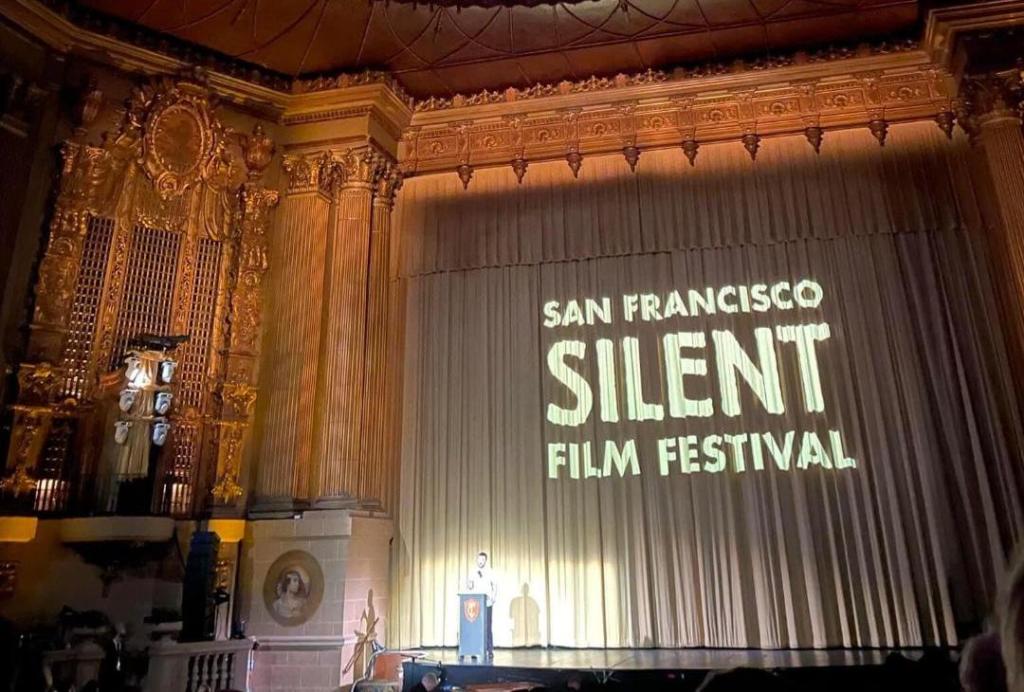
The San Francisco Silent Film Festival opened on the evening of 12 July with a screening of Douglas Fairbanks’s The Iron Mask (1929) at the Castro Theatre. This year’s program over four full days offered a mix of American melodramas and comedies, as well as films from Germany, the Czech Republic, Ukraine, France, and Japan. I arrived on Thursday morning in time to catch their annual archivists program, “Amazing Tales from the Archives.” The dense program of six films per day was exhausting, but the Festival’s hospitality. meeting many colleagues and old friends, and the general excellence of the program made it worth the trip.

Despite being a student of silent cinema for decades, I had never heard the term “trap drummer,” which according to musical instrument collector, Nicholas White, refers to the sound effects made by musicians who accompanied silent films, along with the piano player or orchestra. White discussed the profession and demonstrated sound effects – everything from Model T autos to lions roaring, using archaic contraptions, some purchased, some homemade. It was a revelation. Equally interesting was Kyle Westphal’s (Chicago Film Society) presentation of a previously lost short film, Doll Messengers of Friendship (1927), which documented a unique exchange of dolls between American and Japanese children at a time when relations between the two countries were very strained, due to Republicans passing the Immigration Act of 1924, which prohibited immigration from Asia and Japan into the United States and was specifically designed to maintain white supremacy in the United States. In a well-structured presentation, Westphal enumerated the many steps necessary to identify the film, and, finally, contact its Japanese sponsors.


The rest of Thursday was dedicated to the American films, Man and Wife (1923), The Johnstown Flood (1926), Up in Mabel’s Room (1926), and Stella Maris (1925), which were mostly mid-grade Hollywood programmers, although Johnstown Flood offered spectacular disaster scenes, accompanied by the Mont Alto Orchestra, and Up in Mabel’s Room proved to be a light boudoir comedy of errors that had learned much from Ernst Lubitsch and was an obvious audience pleaser.
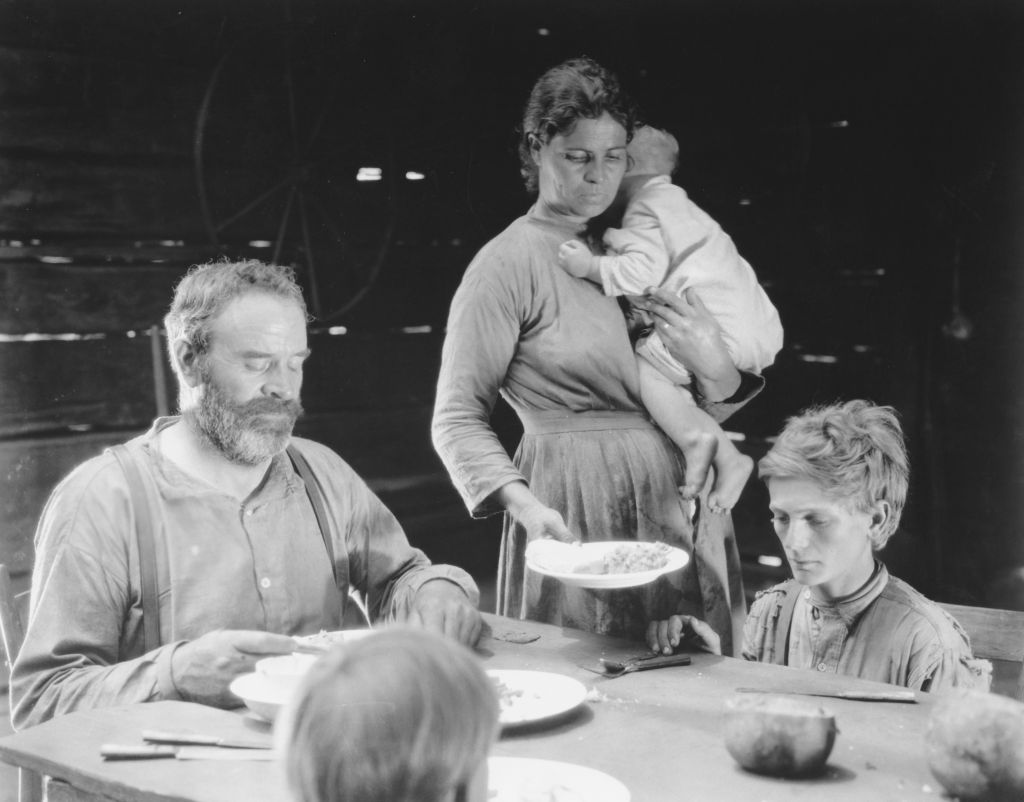
Friday began with the first unqualified masterpiece, Karl Brown’s little-seen Stark Love (1927), which I first viewed at Eastman Museum as an intern in 1976 and had never forgotten. Shot in the Smoky Mountains of Appalachia with amateur actors, Brown’s film may be the only truly neo-realist film of Hollywood’s silent era, a film that prettifies nothing in its depiction of poor mountain folk. The rugged mountains, inaccessible valleys, and primitive living conditions are in full view, as is the close-knit community of former Anglo-Saxon pioneers, whose women are treated as beasts of burden and sent to early graves. Meanwhile, Brown’s landscapes through various seasons avoid the picturesque while capturing a raw, often brutal nature. The Hollywood happy end – undoubtedly a concession to Paramount – allows one young woman, promised to a neighboring widower twice her age, to escape to the city, but it doesn’t diminish the impact of the preceding narrative of hardship.


The day continued with more American genre films, including Flowing Gold (1924), a Rex Beach take on the Texas oil boom; Padlocked (1926), Allan Dwan’s adaptation of another Rex Beach novel about moral hypocrisy; Buster Keaton’s admittedly minor first feature, Three Ages (1923), which nevertheless features some spectacular stunts; Sessue Hayakawa’s The Dragon Painter (1919) in a new restoration, shot partially in the Japanese Garden of Pasadena’s Huntington Gardens; and Paul Leni’s The Cat and the Canary (1927), which literally established Hollywood’s “old dark house genre” on horror comedy.


Saturday’s foreign films were my favorites, and not because I prefer non-Hollywood films; give me an (American) Lubitsch, Maurice Tourneur, or John Collins and I’m in the front row. The Czech film, The Organist at St. Vitus Cathedral (1929), was an amazingly atmospheric melodrama, shot mostly in real locations around Prague’s Hradčany Castle, its magnificent Cathedral, and Alchemist’s Alley. For me a particular please, because I recognize almost all the Mala strana locations. It was Martin Frič’s sophomore effort as a director, whose career would continue through the 1960s and well over 100 films. The film concerned an aging organist and a nun who returns to a secular life, brought together by the nun’s father who commits suicide in the organist’s tiny home. Featuring highly expressionist lighting and a typically Czech dark mood, the film ultimately caters to popular taste with a happy end. Czech films in the 1920s were all about national identity, – given that before 1918, all films had to be in German – so St. Vitus Cathedral is rich with cultural meaning for the Czech audience.
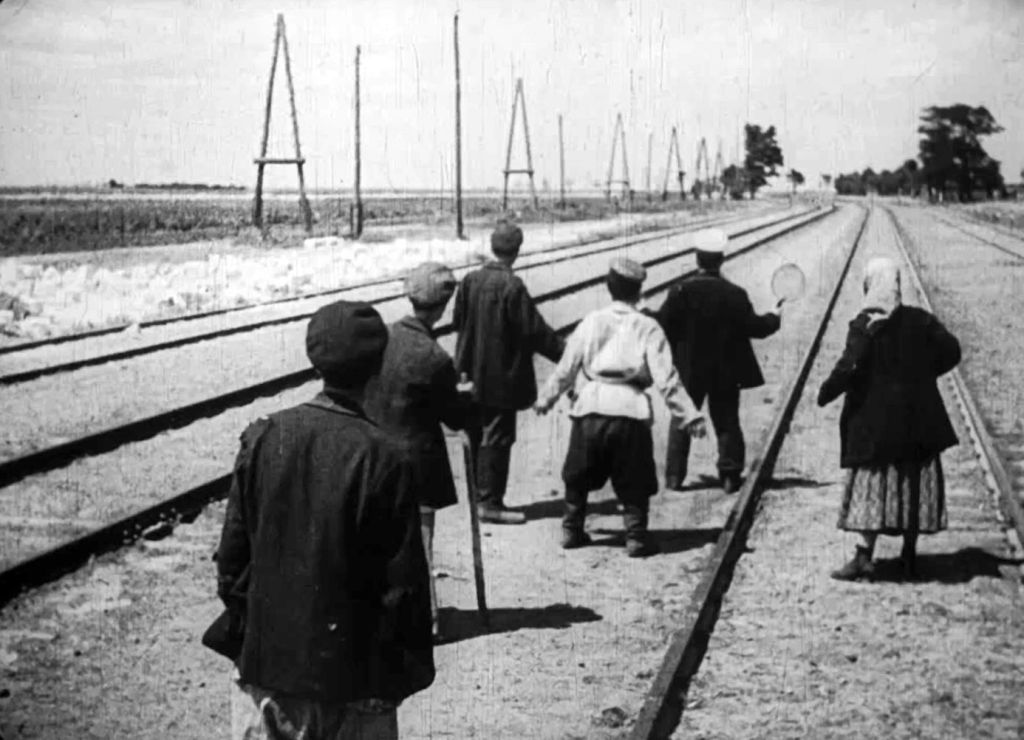
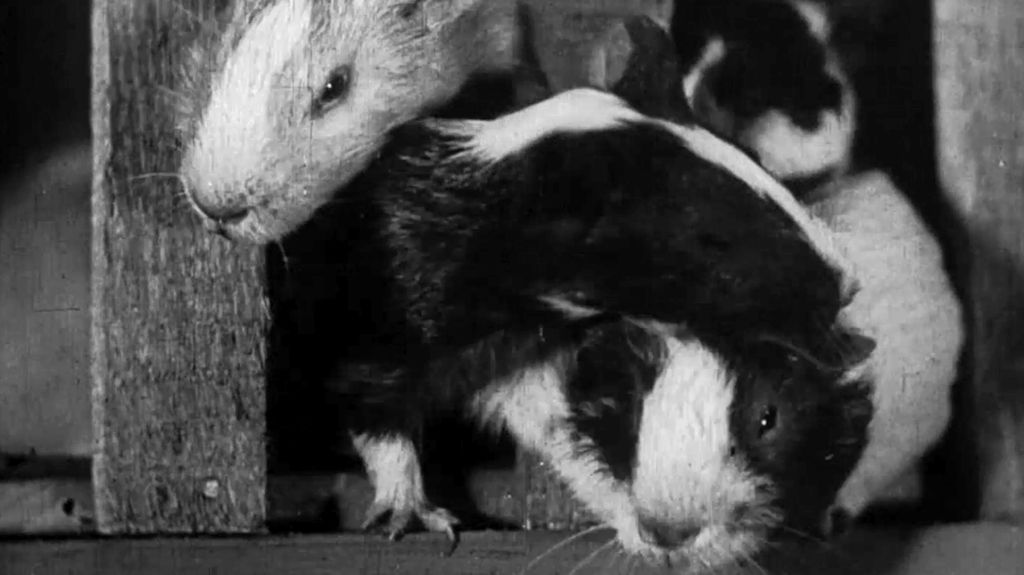
In a change of mood, the Ukrainian absurdist comedy, Pigs Will Be Pigs (1931), was a full frontal attack on Communist bureaucracy, as indolent railroad officials lose a vital grain seed shipment, and hinder the delivery of two guinea pigs, because there are no regulations for such a shipment. While succeeding levels of bureaucrats deny responsibility, the guinea pigs multiply into the hundreds in a rural whistle-stop and are ultimately fed the lost grain, while Communist slogans proclaim the victory of the five-year plan and form a commission to study the guinea pig problem. Given that Stalin instituted the Holodomor, Ukraine’s man-made famine a year after this film’s production, which led to the death of millions of Ukrainians, the film’s aborted planting of grain, due to the lost seed, is particularly poignant.
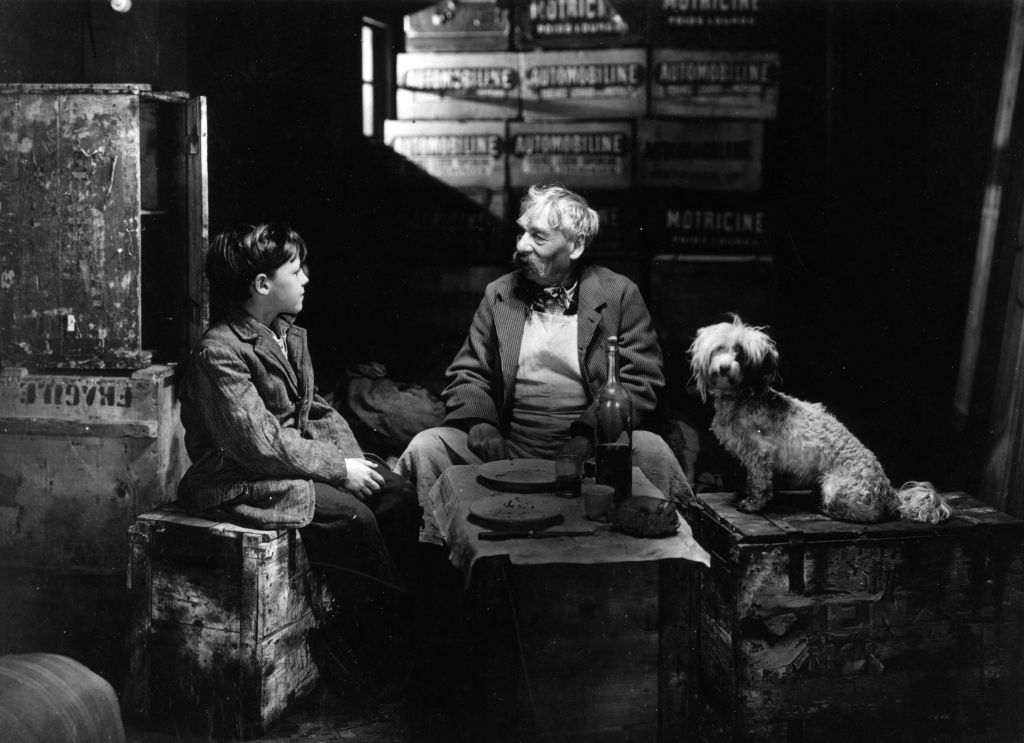
Another dark poetic masterpiece, Jacque Feyder’s Crainquebille (1922) became for historians a central work of the first French film avant-garde. The story of an elderly but energetic push-cart vegetable vendor who gets caught in the machinations of the French legal system after supposedly insulting a cop, Monsieur Crainquebille descends after a short prison sentence into alcoholism and the Lumpenproletariat, abandoned by his former bourgeois customers. Shot on location in Paris, in particular around the now long-gone Les Halles markets, Feyder’s film highly realist film remains steadfastly unsentimental.
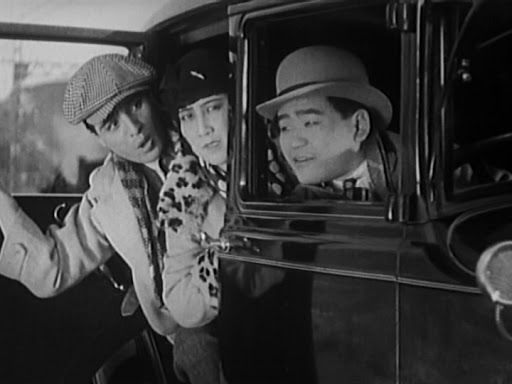

Saturday closed with another one of Yasujiro Ozu’s American-influenced Tokyo gangster films, Walk Cheerfully (1930), which, like Gangster Girl (1933), involves a small-time wise guy trying to go straight after falling in love with a middle-class woman. While featuring numerous moving camera shots and quick cutting, unlike the later static camera images of his later “Japanese” films, Ozu’s control of the medium is already wholly developed, while the film’s final shot of a clothesline not only foreshadows a stable domesticity for its protagonists but also presages what would become a signature image in his later films.
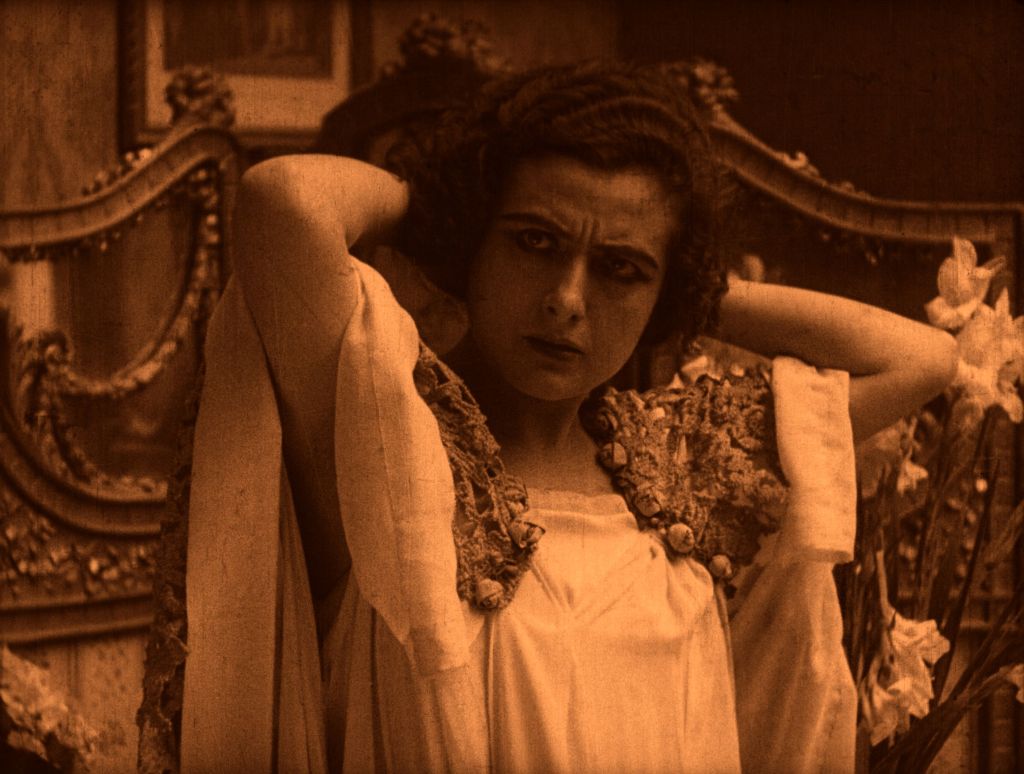
Finally, I want to mention Sunday’s Voglio a Tte!, aka La Fanciulla di Amalfi (1922), directed by Roberto Roberti (Sergio Leone’s father), and starring Francesca Bertini, Italy’s most famous silent film diva. While the film’s story of a wealthy young Englishman suffering from mental issues who falls in love with an Amalfi Coast fisherwoman stretches credulity – the film only works because silence hides the linguistic and cultural divide – Bertini and the Italian scenery are luminous. However, the Italian censorship authorities determined the image of a poverty-stricken fisherman’s community to be detrimental to Italy’s honor, so the 1925 released film states these are Spaniards, a move undermined by accompanist Stefan Horne supplying a wonderful score of Neapolitan folk songs, just as the music by Günther Buchwald, Utsav Lal, Will Lewis, Wayne Barker and Maud Nelissen provided a magnificent acoustical environment for the Festivals many other films.
P.S. I will have more to say about the German A Midsummer Night’s Dream (1925) in my next blog.


Nice reviews! I agree with really loving Stark Love, and finding The Organist in St. Vitus Cathedral very atmospheric, if a bit melodramatic. One small correction: in your second paragraph, it’s “trap drummer,” a term that survives in jazz music, which sometimes refers to a drum set as a “trap kit.” I had thought that the word “trap” was associated with the drummer in a vaudeville act or comedy films “catching” falls, gunshots, and the like. But Nick White, who had studied this time a lot more than I have, maintained at his talk that “trap” is short for “contraption.”
LikeLike