380: IMLS

Archival Spaces 380:

Institute of Museum and Library Services in Peril

Uploaded 22 August 2025

Back in the late 1980s and early 1990s as film curator, I applied for and received several Institute of Museum Services grants for cataloguing and preserving the film poster collections at George Eastman Museum. That federal agency had been in existence since 1976. Through the 1996 Library and Technology Act, the agency was absorbed into the independent Institute of Museum and Library Sciences, as were the activities of the National Commission on Libraries and Information Science. The Congressional Act was reauthorized in 2003 and again in 2010. Between 2016 and 2024, Congress appropriated anywhere between $230 million and $497 million to IMLS, which was divided between individual states, and a host of other programs, including those for Native Americans, Latinos, African Americans, National Museum Leadership, and Professional development. In FY 2024, $ 266 million was awarded. IMLS makes up no more than 0.0046% of the Federal budget. The grant application process is extremely rigorous, peer-reviewed, and requires periodic reporting before, during, and after the grants have been awarded.  Such funding has been absolutely crucial for film and media archives and museums, funding operations, cataloguing, collection maintenance and expansion, curatorial activities, and professional development.

Keith Sonderling, Trump’s Henchman at IMLS

In his never-ending quest to destroy American government, education and American cultural institutions, Donald Trump on 20 March 2025 appointed Keith E. Sonderling to the position of “Acting Director” of IMLS with the specific brief to eliminate the staff and the work of the agency: Executive Order, “Continuing the Reduction of the Federal Bureaucracy,” required within seven days the elimination of IMLS “to the maximum extent consistent with applicable law.”  On Monday, 31 March, circa all fifty-five employees of IMLS were put on administrative leave. The notification followed a brief meeting between Elon Musk’s DOGE staff and IMLS leadership. Employees were required to turn in all government property prior to exiting the building, and email accounts were disabled. At the same time, Sonderling cancelled all 900 open awards to museums across the United States. According to a published staff text message: “As of the end of March there were 891 open awards to museums with $180 million in federal funds (appropriated in prior fiscal years to support multiyear projects) matched with $185 million of non-federal cost share.”  

Institute of Museum and Library Services Building in Washington. D.C.

Within days, grantees were notified of the cancellation of open grants. The grant process for 2025 was paused. Yet messages were mixed. As one arts administrator with several open grants told me, IMLS was still requiring institutions to continue delivering intermediary and final reports; otherwise, they risked “becoming ineligible for future IMLS grants.” At the same time, when inquiries were made to IMLS, instructions were either contradictory or not forthcoming at all, not surprising, given that only one or two staff members remained to answer the phones. As in almost every other corner of the Trump government, including the Social Security Administration, MAGA-generated chaos reigned supreme.

The National Blues Museum, St. Louis, received $341 K in 2024 from IMLS

Within a week, nineteen members of the National Museum and Library Services Board wrote to Sonderling – in German, his name means crank or oddball – that all current-year and multi-year grants, contracts, and awards had been authorized by Congress, “are non-discretionary and must be honored.” A second letter remained unanswered, as did the first. On 4 April, a coalition of twenty-one state attorneys general filed a lawsuit against the Trump administration, claiming Trump’s executive order was illegal. Days later, the American Library Association (ALA) and the American Federation of State, County, and Municipal Employees (AFSCME) filed a lawsuit against DOGE for “the Trump administration’s gutting of the Institute of Museum and Library Services (IMLS).”

Digital Humanities Advancement Grants from IMLS have benefited Media Archives

While in response to the ALA lawsuit, U.S. District Court Judge Richard Leon on 30 April initially granted a short-term emergency injunction blocking the Trump administration’s efforts to dismantle the independent agency, the same judge in a ruling on 6 June stated that the plaintiffs had failed to establish “a substantial likelihood of success on the merits.” The court’s interpretation was frustrating because Judge Leon determined that the lawsuit was ultimately centered on contractual, not constitutional, issues. Meanwhile, on 5 June, Chief Judge John J. McConnell in the suit filed by the coalition of Attorneys General, Rhode Island v. Trump, ordered a preliminary injunction against the Trump Administration’s dismantling of three federal agencies, including IMLS. The judge found that the administration acted “without proper procedures,” violating the separation of powers, the Administrative Procedure Act, and the Take Care Clause. IMLS was supposed to comply with the order by again processing and disbursing grants, bringing employees back to the office, and scrapping plans to move the agency into a smaller office space in the Department of Labor. However, given the contradictory rulings, it is unclear whether the Trump Administration will comply. To date, the Administration has ignored the order, as it has almost every other ruling against it by the judiciary.  Write to your Senator and Congressperson to stop this outrage.

AIC amd FAC have also benefited from IMLS grants in 2024

379: Karel Čapek

Archival Spaces 379: 

Photography by Karel Čapek

Uploaded 8 August 2025

Olga Scheinpflugová with actress Adina Mandlová and puppies, 1936,

The name Karel Čapek (1890-1938) is familiar to American science fiction readers and certainly specialists in Slavic literature, but probably not many others. In the Czech Republic, however, Čapek is revered as one of the greatest authors of the first half of the 20th century; Ivan Klima, writing a biography of Čapek, claimed he had a huge influence on modern Czech literature and language. Čapek wrote the widely staged expressionist play “R.U.R.” (1920, Rossum’s Universal Robots) which coined the term robot; the dystopian science fiction novel, The War of the Newts (1936), about the discovery of a salamander-like race that civilization enslaves – until they rebel, a metaphoric description of Third World exploitation by the white races; the play, “The White Sickness” (1937) warning about Fascism, which Hugo Haas adapted as a film, Skeleton on Horseback (1937) – see Archival Spaces 243 (https://archivalspaces.com/2021/12/04/242-hugo-haas-the-white-sickness/). Apart from countless other journalistic and literary works, Čapek was nominated for seven Nobel Prizes in Literature, but never won. Completely unknown until now, though, is his prolific photographic work, which the Consulate General of the Czech Republic in Los Angeles and the Society of Arts and Sciences is now exhibiting in their Emil Kosa Jr. Gallery until 25 August. Consul Jaroslav Olša opened the exhibit on 25 June 2025.

Curated by Helena Musilová, the exhibition presents a cross-section of Karel Čapek’s amateur photographs from the 1930s, which include portraits, travel photos, still lifes, architectural images, and nature images. Using a Leica 35mm camera, his images lack the avant-garde ambitions of contemporary Czech photographers, like František Drtikol, Jaromir Funke, Jaroslav Rössler, Jindrich Štyrský, and Josef Sudek, even if the low-angle view of his brother Josef below is typical of the avant-garde. Rather, Čapek’s photographs are unpretentious, authentic, and charming, more interested in their subjects than in the Constructivist and Surrealist formal play in which the Devětsil group engaged in.

Tomáš G. Masaryk
Tomáš G. Masaryk

 Čapek’s photographic portraits are direct, informal snapshots, whether of his wife Olga Scheinpflugova, his brother Josef Čapek –BTW the actual inventor of the word robot- or Tomáš G. Masaryk, the founding President of Czechoslovakia and a personal friend of the writer. Some shots of Masaryk have him looking directly into the camera, others show him in a pensive mood, looking down, hat in hand.  Masaryk died in September 1937, only a year before the Munich Agreement gave the young Republic away to the Nazis, while Čapek himself died of pneumonia in December 1938. Olga is seen in all kinds of poses, with a pack of puppies, on the side of the road in the Dolomite Mountains with her husband and their car, or sunbathing beside a pond. According to curator Musilová, “Olga knew she was being photographed and knew how she wanted to be seen. Already in the 1930s, (she) … discovered the power of the visual diary, personal branding, and the joy of self-presentation.” An influencer. She was herself a writer and a theatre actress, a member of the Czech National Theatre, and author of numerous novels, children’s books, and at least five films before the Nazi invasion. Brother Josef Čapek, on the other hand, is seen with his dog and with a watering can in his hand, looking up at the camera, taking a break from gardening chores in his Prague villa. Apart from collaborating with his brother on literary works, Josef was a modernist painter strongly influenced by Cubism, and a cartoonist for the Prague daily paper, Lidové noviny. He was arrested by the Gestapo in 1939 and died in Bergen-Belsen Concentration Camp in 1945.

Peasant women in Orava
Lappland Tent Camp

Another set of images concerns Čapek and Scheinpflugova’s travels through Europe, where the photographer was particularly interested in documenting with anthropological precision the country’s folk culture and its technology. In Holland, he photographs windmills and large ships in the harbor; in Lapland, he documented the area’s nomadic people, their tents, certainly a tourist view but also deeply sympathetic without voyeuristic exoticism. This was also true of his images of the Orava region in north-western Slovakia, a sparsely inhabited area, where peasant customs had remained unchanged for centuries. There is a simple humanity in the photos, in tune with the slow pace of rural life, so different from the political turmoil gripping Prague at that time. The photographs reminded me of a trip I made with my parents in the Summer of 1968 to the Tatra region further East in Slovakia, which seemingly was untouched by Communism or modernity. It was there that we saw Russian tanks “on maneuvers,” tanks which only two weeks later would end the miraculous Prague Spring.   

Josef Čapek, 1930s
Josef Čapek, 1930s

As a science fiction writer, and as indicated by his photographs of ships and heavy machinery in the Netherlands, Čapek was particularly interested in modern technology. Steam engines, automobiles, factory assembly lines, machine parts, cameras, these were the stuff of German Neue Sachlichkeit, American straight photography, and advertising photography. Čapek’s photography of a huge steam engine pulling into a station not only reminded viewers of the Lumiere Brothers’ first films from the turn of the century, but also of New Realist photography with its valorization of technology, its focus on the textures and hard forms of steel, and the intricate patterns of moving machine parts. That optimistic view of technology existing for the improvement of mankind constituted Čapek’s worldview; it would disappear a decade later with the atom bomb.

378: An Early Irish Film

Archival Spaces 378:

The Irish Film Company’s Knocknagow (1918)

Uploaded 25 July 2025

The eviction of the Brian Family, Knocknagow (1918, Fred O’Donovan)

The San Francisco Film Preservel presented an online lecture by Veronica Johnson on 18 July about the still little-known Film Company of Ireland (1916-1920), focusing on the company’s feature, Knocknagow (1918). An Irish film historian, Dr. Johnson, is following up on work done by Steven Donovan, Kevin Rockett, Maryanne Felter et al., who published a special issue on the Film Company of Ireland (FCOI) in the Australian online film journal, Screening the Past (http://www.screeningthepast.com/issue-33/). Listening to the talk, I had to think about Liam O’Leary (1910-1992), a good friend of my mentor George Pratt, whom I had the privilege of interviewing at the Paris FIAF Congress in 1988. His book, The Silent Cinema (1970) was on my bookshelf next to Pratt’s Spellbound in Darkness. O’Leary was a huge advocate of an Irish National Film Archive, which was finally established in the year of O’Leary’s death and now holds his huge collection of Irish film history material.

Dr. Veronica Johnson on Zoom

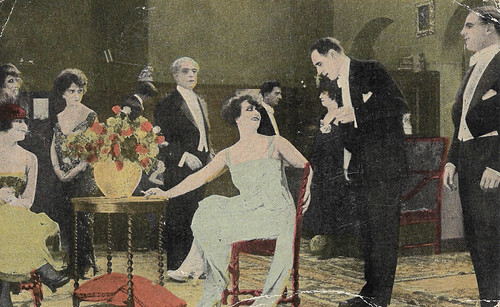
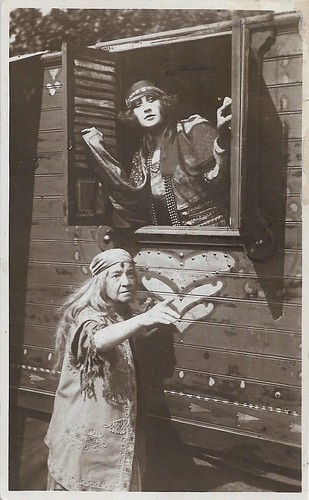
The Film Company of Ireland was founded by Henry Fitzgibbon, Ellen “Nell” O’Mara Sullivan, and James Mark Sullivan in March 1916. The couple had married in 1910, before the Irish-American returned to America, where he was involved in Democratic politics. After he had a brief diplomatic career as U.S. Ambassador in San Domingo, the Sullivans moved to Dublin in 1915. FCOI developed an association with the well-known Abbey Theatre in Dublin and was able to hire actors Fred O’Donovan and J.M. Kerrigan. By the end of 1916, FCOI had released nine short comedies. O’Neil of the Glen was a realistic drama and the only film that has survived; others were destroyed during the Easter Uprising of 1916; the majority were directed by J.A. Kerrigan, who would have a substantial career in Hollywood after 1923. In 1917, the Company produced seven more films, some of them multi-reel dramas, before going bankrupt at year’s end. It was at that point that Nell Sullivan, whose family had means, purchased FCOI.      

O’Neil of the Glen (1916, J.M. Kerrigan)

Knocknagow (1918) was FCOI’s first major feature, based on the most popular Irish novel of the 19th century, Charles J. Kickham’s 1873 Knocknagow. Novel and film visualize in very realistic detail the plight of Irish farmers, already hammered by the potato famine of mid-century, who are now being evicted from their land to make way for large cattle ranches, even though the aristocratic English landlord is shown in a positive light in the film, while his evil land agent creates havoc.  Like the novel, there are no overt political references to the Iris Rebellion, but land tenancy and forced emigration are important issues.   

Mat Donovan, Knocknagow (1918, Fred O’Donovan)
Maurice Kearney, wife, (1918, Fred O’Donovan)

Shot on location in County Kerry, on Ireland’s southwest coast, the film premiered on 30 January 1918 in Clonmel, County Tipperary, then toured the country before commencing a one-week run in Dublin on 22 April 1918. Meanwhile, the Sullivans had left for America, where they hoped to distribute the film to large Irish-American audiences. Pathé showed an initial interest, but then demurred, possibly because of the film’s two-hour-plus length. The film was screened at the Fremont Temple in Boston, where it was viewed by Irish Cardinal William Henry O’Connell, and discussions were held with the Schuberts, but the film never received any distribution in America and thus proved to be a financial disaster. Nell Sullivan, who held the copyright to the film and was uncredited as the scriptwriter, died in May 1919, most probably during the Spanish Flu Epidemic, as did one of her children.  Her husband, James, though reported in the American press as having died, returned to America with his surviving children and lived until 1935 in Florida. Meanwhile, the Film Company of Ireland completed two more now lost films, before its final demise in 1920

James and Nell Sullivan

In making Knocknagow, the Sullivans wanted to produce a more realistic view of Ireland than had been circulated in popular culture. As James Sullivan noted in an interview before leaving for America, “We desire to show Ireland sympathetically; to get away from the clay pipe and the knee breeches; to show Ireland’s rural life, with pride in the same; to show Ireland’s metropolitan life intelligently, depicting the men and women of the 20th century—in short, Ireland at its best in every walk of human endeavor.” (Evening Herald, 13 April 1918)

Bessie Morris, Mat Donovan, Knocknagow (1918)
Eviction by Pender, Knocknagow (1918)

Knocknagow was restored in 2012 by the British Film Institute and is available on the Internet Archive in an 80-minute version. In the first forty minutes, the plot meanders a bit, but then the land agent Pender begins the evictions, throwing farmers off the land and burning their homes. Several love dramas between various couples ensue, with Mat Donovan, the nominal hero, leaving for America because he believes Bessie Morris loves another. Pender conspires to have Mat falsely arrested for stealing the collected rents while boarding a ship in Liverpool, although it is actually Pender who has purloined the funds. Donovan is eventually released, and Pender is arrested, allowing the farmer to search for Bessie in America before returning to Ireland with his bride. Given the epic scope of the novel, the film reveals narrative gaps, and many scenes are relatively static long shots, but Knocknagow remains an interesting document of Irish nationalism.

Knocknagow (1918, Fred O’Donovan)

377:  Hans Feld

Archival Spaces 377:

Hans Feld, Weimar Film Journalist

Uploaded 11 July 2025

Hans Feld is probably the most well-known and prolific film journalist writing for Weimar Germany’s most widely read film industry publication, Film-Kurier, after Lotte Eisner. Hans Feld was born on 14 July 1902 in Berlin and died on the same day, his 90th birthday, in 1992 in London. A complete bibliography of all his reviews and articles, Hans Feld: Redakteur und Kulturjournalist. Bibliografie Film-Kurier 1926-1932 (Munich: Text + Kritik), edited by Eva Orbanz, formerly of the German Kinemathek in Berlin, has been available for a couple of years. Unfortunately, bibliographies are the stepchild of film studies, despite their centrality to film historical and archive research, which leads me to this blog on the eve of Hans Feld’s birth/death date.

I first met Hans Feld briefly in October 1981, when we were both contributing authors to the catalogue Prussia in the Cinema, part of a major exhibition, organized by the German Kinemathek.  In August 1982, I interviewed him on the phone and corresponded with him about the photographer/filmmaker Helmar Lerski. At the time, I was researching Lerski for an exhibition and was trying to track down his then still lost film, Avodah (1934), which had been screened in London in 1938. I had found Feld’s review of Avodah in a Zionist newspaper, published in Prague. Ironically, the film turned up more than a decade later in the same West End London cinema where it was originally screened and is now preserved. Feld also told me about Lerski’s failed attempts to work for John Grierson’s documentary film unit.  I next met Feld in February 1983 at the Berlinale Retrospective, “Six Actors in Exile,” while I was writing my dissertation on anti-Nazi films by German-Jewish emigres; I interviewed him, as well as Alfred Zeisler, Wolfgang Zilzer and his wife Lotte Palfi, both of whom had appeared in Casablanca. After that, I continued my correspondence with Feld to track down some of his former colleagues who had emigrated to England, like producer Max Schach. Feld was no longer in the film business, but he knew a lot of people.

Hans and Kati Feld in 1930s
Hans Fel in 1920s

Born into the house of German-Jewish merchant, Herrmann and Hermine Feld, Hans experienced literature and theatre at an early age, thanks to his mother. During the German Revolution in November 1918, Feld joined his high school’s revolutionary council, remaining sympathetic to the Left throughout his life. He studied law, completing a dissertation on “Ministerial Responsibility as the Basis of Modern Democracy ” in 1924. Beginning in 1926, Feld contributed as a freelancer to Film-Kurier, then became editor, and finally editor-in-chief (in 1928). In 1927, he recruited Lotte Eisner to write about film for the journal. According to Eva Orbanz: “He wrote for people, wanted to help them engage, sensitized them to democracy. He understood the cinema to be an art of the masses, railed against its propagandistic misuse. According to Feld, film was to concern itself with questions of the day and take a stand in politics.” He documented German film production and was particularly interested in avant-garde and Soviet cinema. His acquaintances included Sergei Eisenstein, Conrad Veidt, Erich Pommer, and Carl Mayer. As early as 1931, Feld was being put under pressure by his Nazi-leaning boss, Ernst Jaeger. As Sergei Eisenstein wrote to Feld in a September 1931 letter, quoted by Werner Sudendorf in his obituary for Feld in Film Exil, referring to the growing Nazi power: “It’s film worthy, what we are reading about what is happening in Germany today.” 

Tatra Romanze (1935, Eugen Thiele, Hans Feld)
Kuss im Schnee (1935, script Hans Feld)

In April 1932, Feld left the Film-Kurier and joined the Aafa Film Co. as production manager, but his tenure was cut short by Hitler. He initially emigrated to Prague, where he founded a cultural journal, but also published in other German exile newspapers and participated in Czech film productions, like the German version of Tatra Romance. In 1935, he, his wife Käti, and young son Michael moved on to London, where he worked for John Grierson, briefly editing World Film News. Two years later, he started a food import business, but remained active in Jewish affairs. With renewed German interest in Weimar cinema in the 1970s, he became an important film historical resource for a young generation of film scholars, including me, recording a long interview with Werner Sudendorf and Hans-Michael Bock in 1981. The same year, he received a German Film Prize from the Federal government.

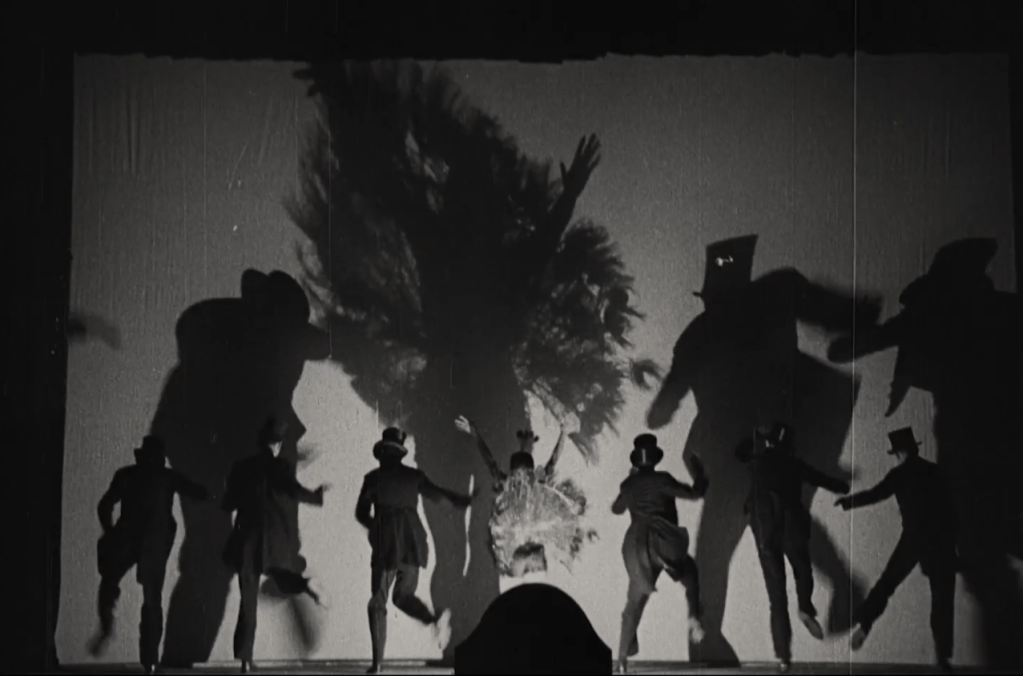
People on Sunday (1929, Robert Siodmak)
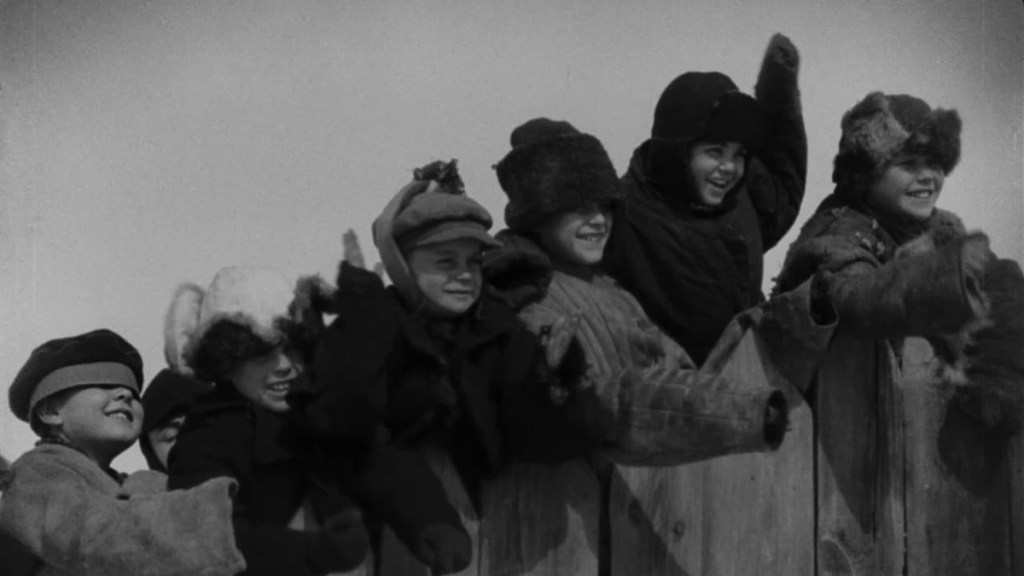
Road to Life (1931, Nikolai Ekk)

The importance of bibliographies for film historical research cannot be underestimated, even if some believe internet search engines have made them obsolete.  One of my film historical bibles before the internet was The Film Index: A Bibliography; Vol. 1, the Film as Art, published in 1941 by the Museum of Modern Art, which is still useful for finding pre-WWII articles. Digitized sites, like “Lantern. The Media History and Digital Library have helped. But, in fact, trade and academic film periodicals, whether in English or other languages, remain for the most part invisible, still necessitating cumbersome searches, page by page through non-digitized microfilm, as I had to do recently with the Film-Kurier to research Alfred Zeisler. Hans Feld. Bibliografie Film-Kurier begins with Eva Orbanz’s introduction, followed by a selection of 25 essays/reviews, including reviews of Gance’s Napoleon, Brecht’s play “A Man is a Man,” Siodmak’s People on Sunday, G.W. Pabst’s Westfront 1918 and Nikolai Ekk’s Soviet film, Road to Life, which became a major bone of contention between Jaeger and Feld due to its positive tone. The next 500 pages detail every review, report, and notice Feld published in Film-Kurier, listing issue numbers, film credits when applicable, and short descriptions of the texts. The descriptions often supply film historical information that is nowhere else to be found, in particular, about unrealized film projects or contemporary scandals.  Indeed, this is a treasure trove of information about Weimar cinema.

Napoleon (1927, Abel Gance) Tryptych