299: Orphanistas Gather

Archival Spaces 299

NYU Orphans Film Symposium

Uploaded 7 July 2022

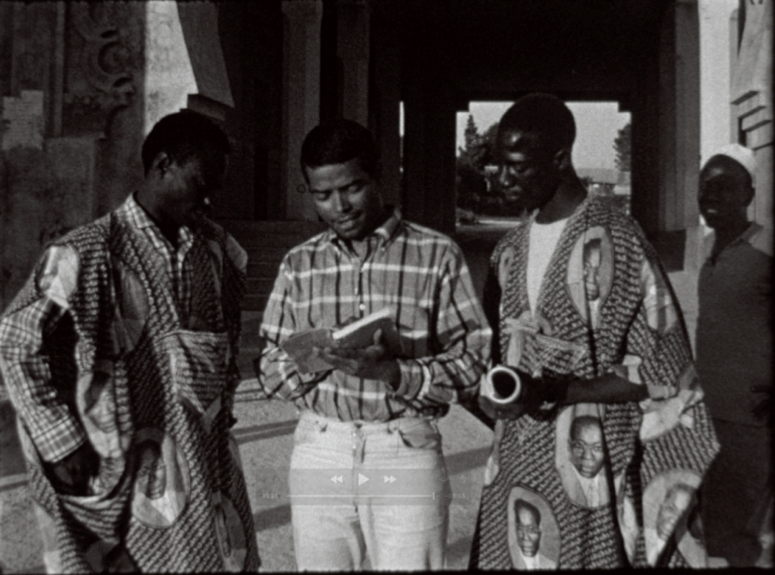
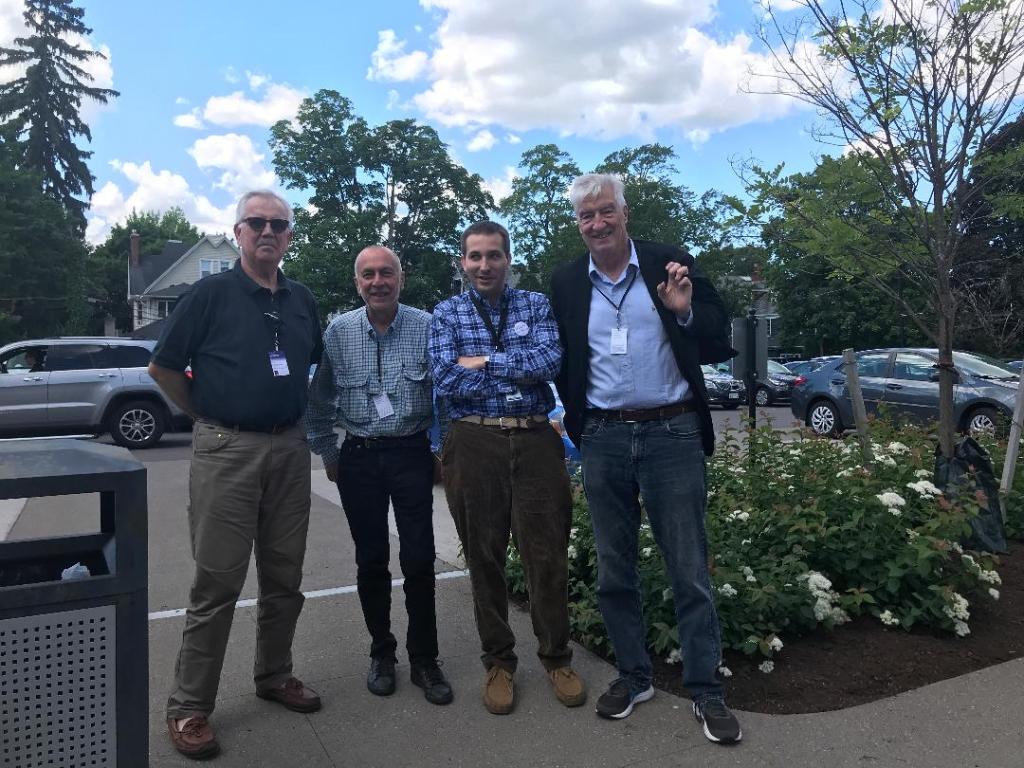
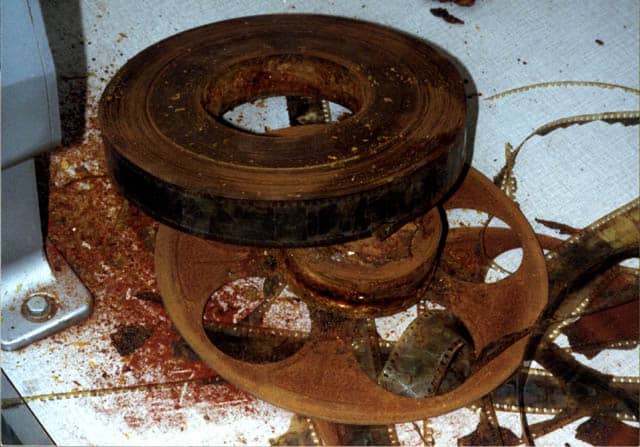
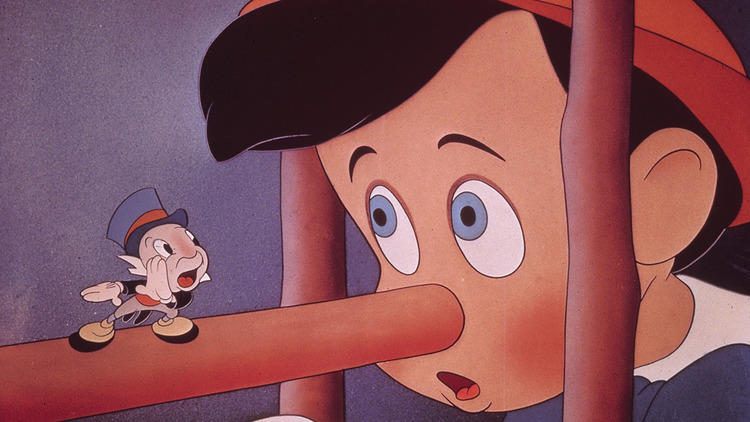
I attended my first Orphans Film Symposium in 1999, which was also the first iteration of what has become an important event in the moving image archival field. Orphan films refer to films that have fallen out of copyright or have never been copyrighted, their owners long gone. But OFS has expanded the meaning to denote all those moving image works which have been neglected, lost, invisible in cultural memory, therefore under-utilized and under-appreciated. Founded and still directed by Dan Streible, professor in the Moving Image Archive Program (MIAP) at NYU, the Symposium from 15-18 June this year was held in and co-organized by Concordia University, Montreal. I attended via Zoom, which meant I was blacked out of a number of screenings. The theme for the Symposium was Counter-Archives, which potentially entailed reading the archive against the grain, discovering hidden archives, addressing practices of repurposing “found” film materials, contextualizing their historical and ideological origins, and articulating community ownership in the light of new media economies. Or as the Orphans website notes: “We mean to invoke a disposition toward ‘orphan films’ that foregrounds not just abandoned materials but also stories, themes, and peoples often underrepresented, absent, or silenced by historical struggles for power, access, and survival. We aspire to include orphan films redressing historical injustice in its many forms and contexts, and to embrace films that offer such communities a voice and visibility.” 

Albert Kahn Archives of the Planet

The concept of a cinematic counter-archive was first articulated by Paula Amad in her study of the Albert Kahn Archives in Paris, the first Google Earth-type project; beginning in 1912, and running for almost twenty years, Kahn hired a whole battery of photographers and cameramen to visually document the planet, the way cartographers mapped the world, producing 183,000 meters of film. According to Amad, the counter-archive consists of Bergsonian images from memory that have no utilitarian or evidentiary purpose, but merely exist to be forgotten. In its focus on the incidental, the everyday, the non-essential information at the fringes of the image, the Kahn project constitutes a counter-archive.  

De Ciera Manera (1972, Sara Gomez)
The Navajo Moves into the Electronic Age (1968)
Totem Land (1927)

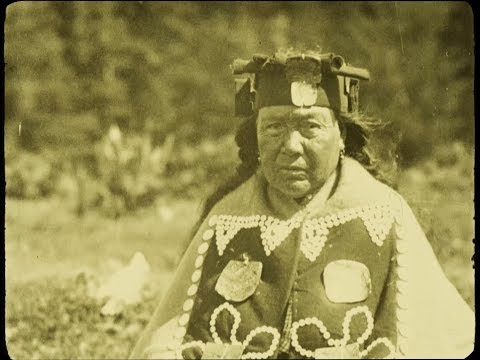
Thursday morning began with two cataloging and preservation projects focusing on Latin America: 1) The Sara Gomez restoration project – Cuba’s most famous female documentarian – at the Vulnerable Media Lab at Queen’s University, and 20 the Columbian project to preserve video from the Atrato and Columbia Pacific Archive (1994-2008) which documents Native and Afro-Columbian community protests against the government’s war on leftist guerillas, during which they became collateral damage. The next panel discussed two Native American projects, which attempt to create community-based counter-narratives to mainstream images of those communities: The Tribesourcing Southwest Film Project recruited members of the Diné community to produce commentaries on a collection of films about the Navajo, while Tom Child of the Kwagu’t First Nation has been preserving the estate of George Hunt, his ancestor who worked with ethnographic filmmakers Edward S. Curtis (Land of the Headhunters) and Franz Boas, but never received proper credit. 

Malcolm X: Struggle for Freedom (1964, Lebert “Sandy” Bethune)

The afternoon began with a presentation from the Smithsonian African American Museum (NMAAHC) about Lebert “Sandy” Bethune’s unfinished film Pan Africa (1972), while the Media Ecology project explored “the idea of Africa” in American newsreels and other found footage, noting that western images of Africa only produce a self-portrait, depicting the Continent as an exotic land without history or culture, and only civilized through colonialism. Next, we returned to America to explore the Willie P. Jackson collection at NMAAHC, which documented life around Solomon Lightfoot “Elder” Micheaux’s Church of God in Washington, DC., and viewed a compilation of a police-recorded press conference given by Malcolm X in 1962, after a deadly police riot killed unarmed Black Muslims; the tape had been long suppressed by L.A. P.D. but is now held by UCLA Library. The afternoon ended with striking Kodachrome home movies from 1947 of the Melungeons in East Tennessee, a mixed-race ethnic community of European, Native, and African American lineages.

Otisvillle Fim Club: A Mad Man’s World (1978)
seeds of Discontennt (Detroit Audio Project)

 Friday morning focused on previously hidden collections in private hands, including a selection of home movies about the Canadian resident schools, where First Nations children were incarcerated for decades, the Portable TV collection in Rochester, N.Y. focusing on the racist urban renewal policies of city government in the 1960s/70s, and Canadian gay men’s tapes by artists who died of AIDS. In the latter presentation, the speaker accused mainstream archives and the Orphans Symposium itself of homophobia in preserving AIDS estate collections, a claim only partially justified, given the decades-long work of Jon Gartenberg and the AIDS Estate Project. The last two presentations of the morning discussed the New York State Otisville Training School for Boys film club films, and the discovery of a Detroit audio collection, involving interviewing discontented black Detroit youth, the latter now available online at the Wisconsin Center for Film and Theatre Research.

Esdras Baptista at work, n.d.
Memmortigo (1933, Delmir de Caralt)

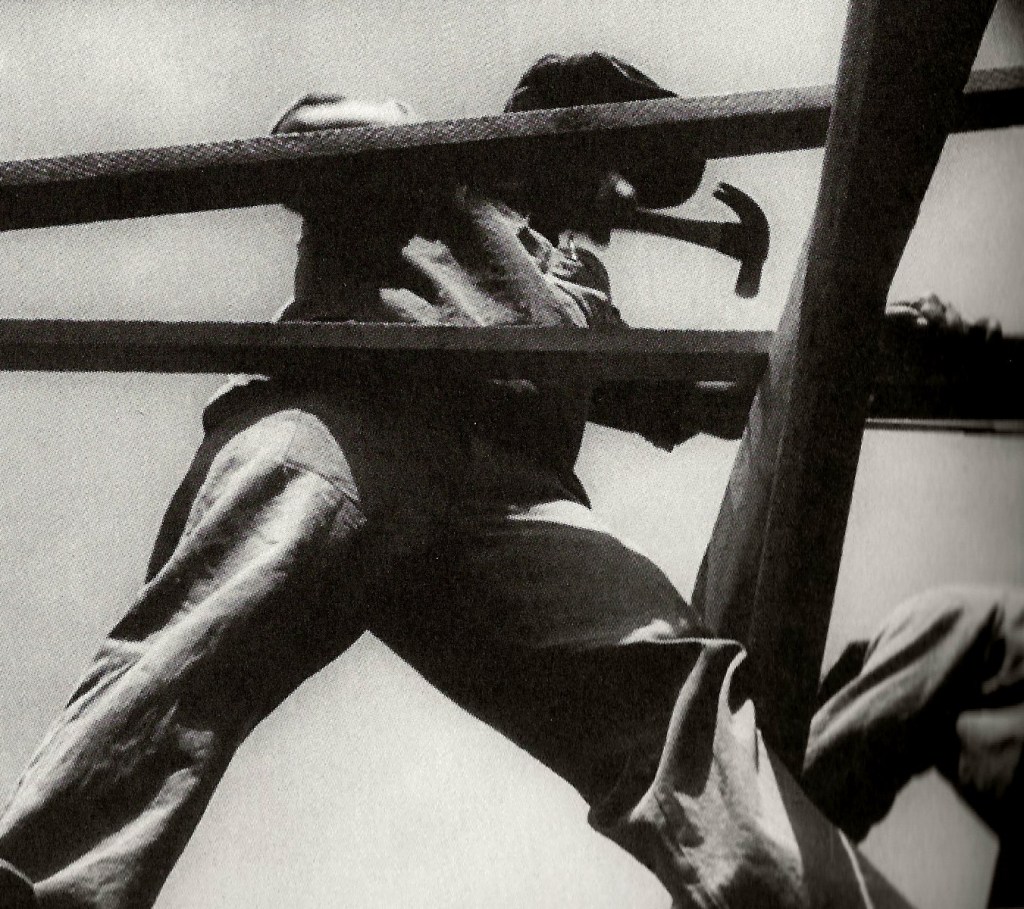
In the afternoon session, panelists from Mexico and Spain screened student films from the 1950s, in the former case made by CREFAL (Regional Center for Fundamental Education in Latin America) to educate illiterate peasants in liberal democracy. Next, the Universidade Fluminense Federal in Brazil introduced the work of Communist filmmaker Esdras Bapitista who documented leftist political activity in Brazil for decades. Before Orphanistas viewed a selection of four films about or by radical worker organizations in the USA, Japan, and Norway, to end the afternoon, they discovered Memmortigo (1933, Delmir de Caralt), a newly restored avant-garde film from Catalonia. The title translates as Suicide, the film a metaphoric journey through life, its well-dressed hero on a walk through the countryside; employing the Kuleshov effect, in that whatever the young man sees in p.o.v cuts expresses his internal psychic state.  Memmortigo is an important addition to the international film avant-garde, especially as it intersects with amateur films.

Six et douze (1968, Ahmed Bouanani)

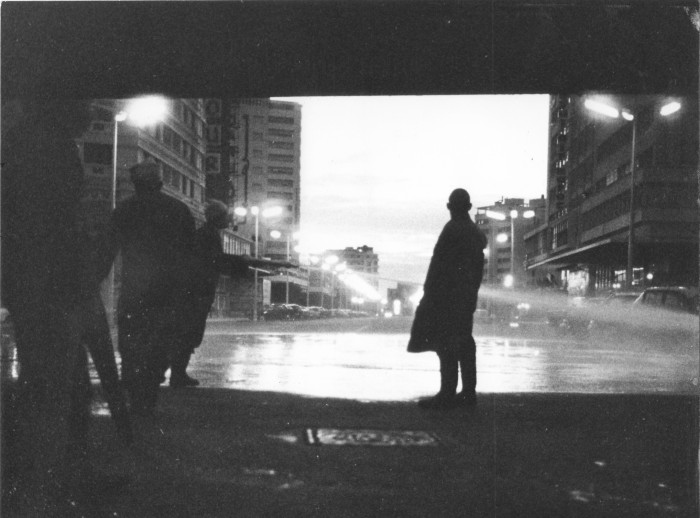
The first two presentations Saturday morning introduced the efforts of Cine-Archiv (Paris) to preserve the surviving fragments of Med Hondo’s first, never released Ballades aux sources (1965), and the establishment of the archive of Moroccan filmmaker Ahmed Bouanani, whose film Six et Douce (1968) – a city film about Casablanca – was screened. The next two sessions were dedicated to the Black Panthers: The Yale film archive screened Breakfast (1970) and other films by Josh Morton, a radical filmmaker allied with the New Haven Panthers at that time, and NMAAHC showed clips from a restoration in progress of Black Chariot (1971), a community financed fiction feature film by actor/ writer Robert L. Goodwin; the Christian inflected film about a Panther-like organization bombed in its Santa Monica premiere – in contrast to the contemporary Sweet Sweetback’s Baadasssss Song (1971) – and was considered lost for decades.

Ain’t Nobody’s Business…. (1978)
Inside Women Inside (1978)

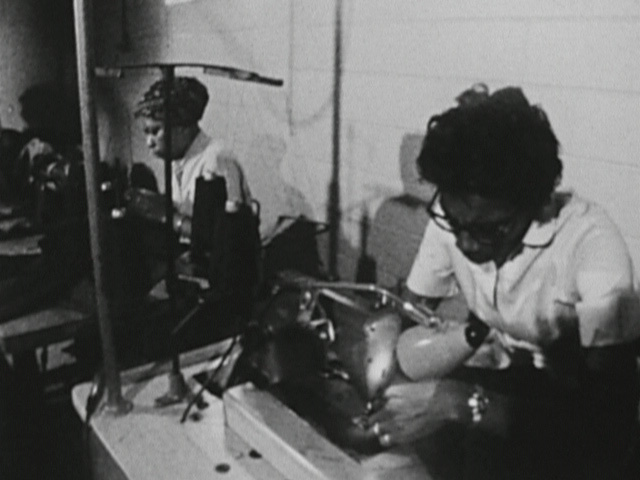
The symposium’s final session was dedicated to Ithaca College’s Participatory Community Media Project, which screened several films, including Ain’t Nobody’s Business (1978) about battered women and Inside Women Inside (1978), about women incarcerated in the prison system, both as fresh and relevant today as forty years ago. The Project’s touring program of forty-one films, now available for universities and libraries, privileges use value over commercial value, short forms over long, collaborative authorship over individual creation, local/micro issues over global ones, small gauge over professional technology, thus creating new exhibition spaces and empowering both makers and audience. 

The Orphans Symposium is known for bringing archivists and academics together to discuss processes of collecting, preservation, cataloging, and access, and this iteration was no exception. Orphans’ vibe is non-confrontational, more about support and feeling good, or as one long-time presenter put it, “entertainment,” than critical discourse, which is its strength. However, there is an unexpressed notion that every piece of celluloid or videotape is valuable in and of itself, without presenters often communicating its significance, without contextualizing the material within history, thereby coming dangerously close to a fetishization of rare objects. This reservation aside, nowhere can one get a better idea of developments in the archival field than at the Orphans Film Symposium.   

Ballades aux source (1965, Med Hondo)

298: James Card Lecture

Archival Spaces 298

James Card Memorial Lecture at Nitrate Picture Show

Uploaded 24 June 2022

James Card ca. 1975 with one of his legendary sports cars

Below is an excerpt of my James Card Memorial Lecture at the recent Nitrate Picture Show at George Eastman Museum on 4 June 2022. As some people know, I started my career there:

47 years ago I began my career as a motion picture archivist, although at the time I don’t think I knew that was actually happening.  In September 1975, I moved from Boston to Rochester, New York, and began a one-year postgraduate internship in the film department at George Eastman Museum, funded by the National Endowment for the Arts.  As far as I can tell, it was the first formal moving image archive training program in the United States. Getting the internship was more luck than anything else. I had finished my master’s degree at Boston University in May, having written a thesis on “Ernst Lubitsch and the Rise of UFA.”  Wishing to follow Lubitsch’s tracks to Hollywood, I applied for and received a fellowship from the Louis B. Mayer Foundation Oral History Program at the American Film Institute, in order to interview German Jewish refugees from the film industry who had fled Hitler after 1933.  While I was doing research at the AFI’s old Greystone Mansion, I got a call from Eastman’s assistant director, Andy Eskind, asking me if I would like to have a paid internship in GEH’s film department. Apparently, their chosen candidate had changed his mind and gone to Washington’s Folger Library.  When I asked how they had heard about me, I was told that they had called my thesis advisor, Prof. Evan Cameron, because he had organized a major film conference at Eastman a year earlier. I had written a paper about nitrate film preservation for Evan in a seminar after I had told him I wanted to be a film historian or critic, not a filmmaker.  

George Eastman Mansion
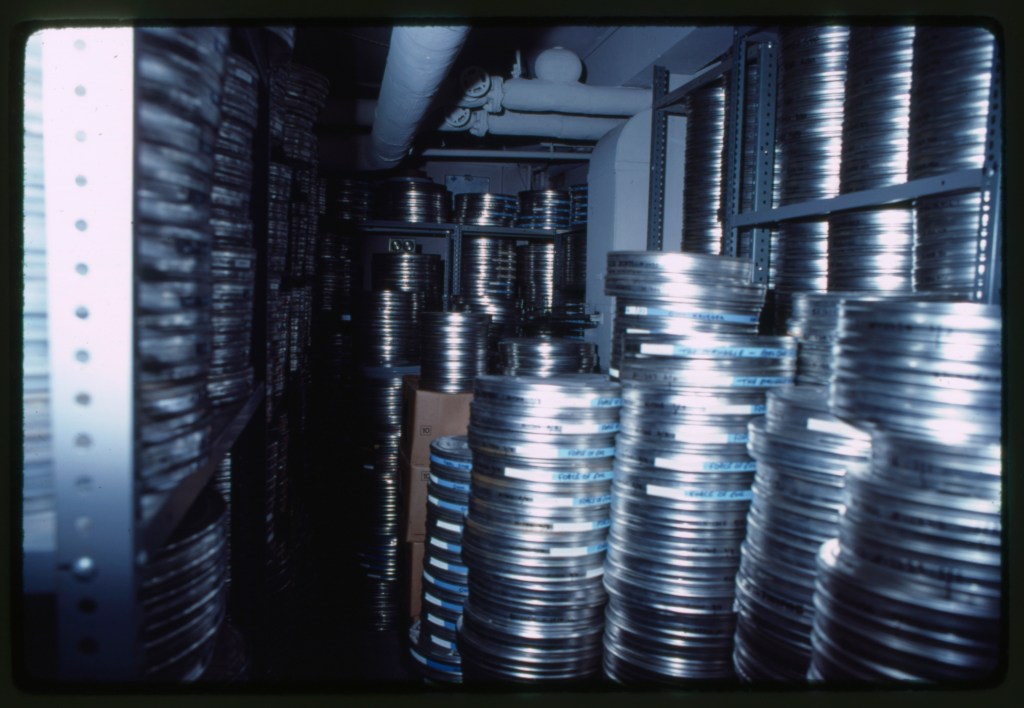
Old vaults in the basement of the mansion

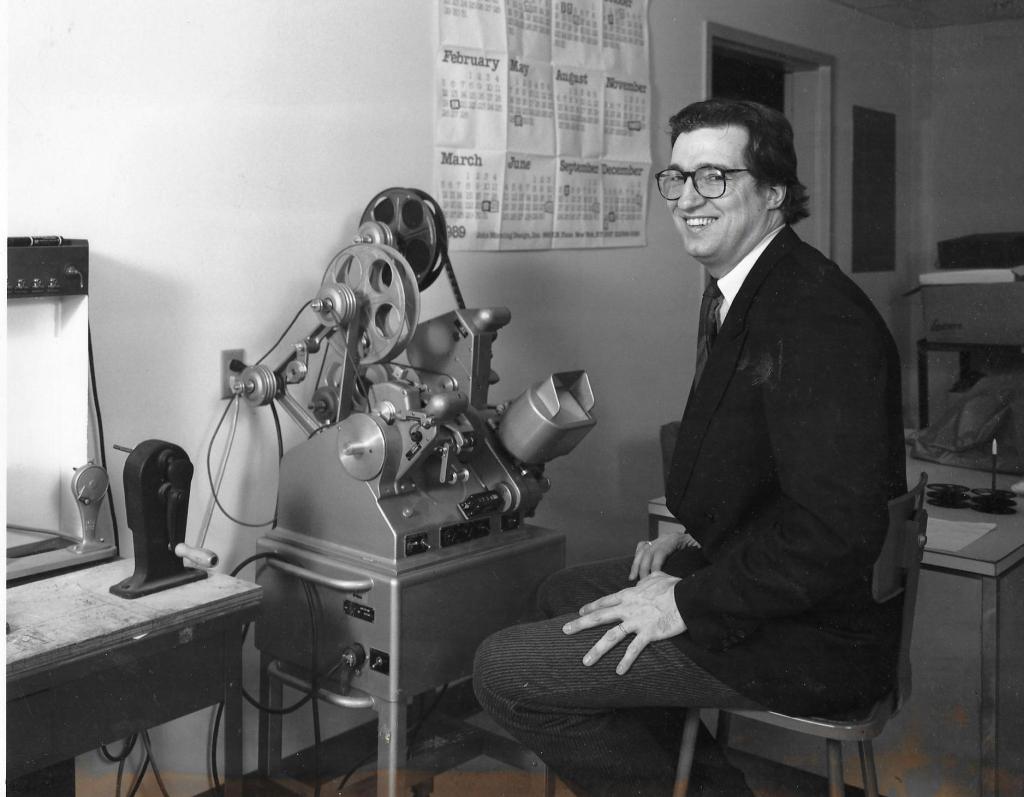
In any case, I suddenly had my first archival job. The film department at Eastman was still run by legendary film collector and archivist, James Card, who immediately took a liking to me, because he had studied in Germany and was an incurable Germanophile.  He became my first mentor, as did George Pratt, the department’s assistant curator. The staff was tiny: Marshall Deutelbaum, who eventually moved to a professorship in film studies at Purdue University, Kay McRae, Card’s longtime secretary, Allan Bobey, and projectionist Bob Ogie.

James Card at old Strong Nitrate vaults at back of Eastman property

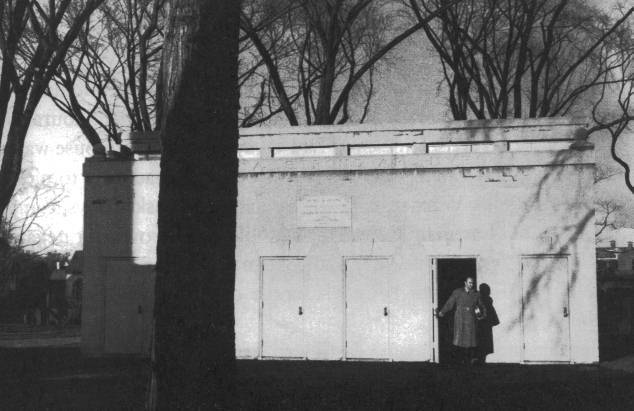
My first job at Eastman Museum that September was conducting an inventory of the nitrate vaults at the back of the property.  I think I spent three months in those vaults with Jonathan Doherty, the son of museum director Robert Doherty, diligently writing down all the information on every can.  We had absolutely no training on the handling of nitrate film, which is unthinkable today, given the many hazards to which we were exposed in the old nitrate vaults. The irony was that Jim Card was dead set against any kind of cataloging or inventory.  This was an era when the FBI was still looking for film pirates, and many of the films in the archive (as in every major American archive) were there semi-legally, often having been procured in the collector’s market. 

George Pratt, 1958, Theodore Huff Room
Theodore Huff Room, 3rd floor, Eastman Mansion, 1986

As an intern, I was involved in almost all departmental activities, including preservation and programming, and learned mostly by doing. I also spent almost all of my free time watching films from the vaults. My whole sense of film history changed.  Like most film students, I had a “greatest hits” notion of film history, meaning I had seen some of the classics from Griffith to Fellini, but now I was getting a vertical, as well as a horizontal view of film history. On weekends I would often project films for friends of Card who had come to see films or do research. I also spent a lot of time in the old library, reading film historical texts. Meanwhile, George Pratt educated me in the use of primary source material and its importance for film historical research, patiently guiding my way through the maze of files, books, film magazines, and photographs. We would begin with a particular filmographic problem and then, as if on some grand treasure hunt, ferret out all the relevant information, oftentimes resolving an issue after flipping through one of George’s legendary notebooks.

When I left Eastman, I knew I wanted to be a film historian working in an archive, but there weren’t really many jobs in the field back then.  I went to Europe and eventually started a Ph.D., while occasionally doing freelance work as an archive researcher.  Eight years later that I returned to Eastman Museum to become an associate curator of film, still guided by the lessons that Jim Card and George Pratt, each so different, had taught me. In a 45-year career, I’ve been privileged to synthesize those lessons, putting my archival work in the service of film history and film historical writing in the service of film archives.

James Card, 1970s
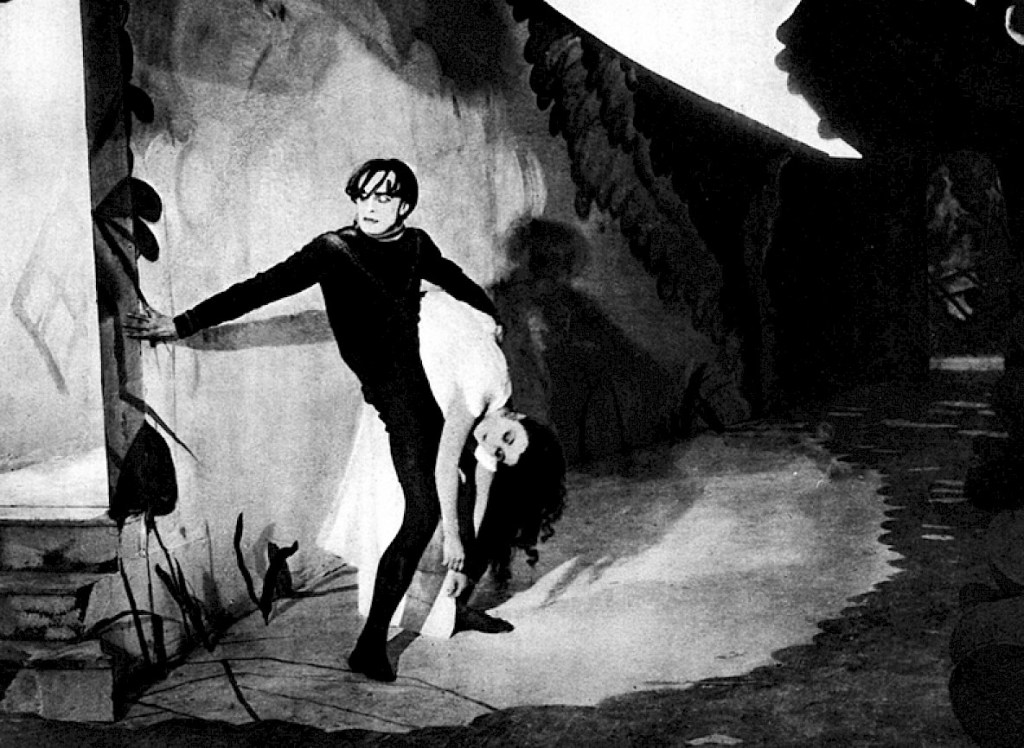
Cabinet of Dr. Caligari (1919. Robert Wiene)

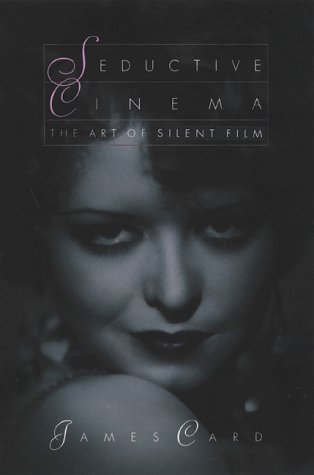
The first time I met Jim was in his office on the third floor of the old Eastman House mansion, standing in front of a photographic portrait of himself dressed as Werner Kraus in The Cabinet of Dr. Caligari. In his autobiography, Seductive Cinema, Card wrote that a 9.5mm print of Caligari was the second film to enter his collection, bought in Heidelberg in 1936, when he was an exchange student in Germany. Later, Card would say that the only reason he had gone to Germany was to find a print of Caligari.  It was the same year that Langlois founded the Cinémathèque, supposedly by starting a collection of nitrate films in his bathtub.  Card’s first acquisition had been James Sibley Watson’s The Fall of the House of Usher (1928), F.W. Murnau’s Faust the third.  Could I have ever imagined then that I would reconstruct Caligari at the Munich Filmmuseum twenty years later or that Fall of the House of Usher would become a central piece of evidence in my book on the neglected early American avant-garde?

Nitrate film fire

Card’s example also has led me to treat nitrate with respect, but not with exaggerated fear.  He was always totally incensed when he spoke of the policy in certain national archives, such as the British Film Institute of destroying nitrate once it had been copied. While nitrate fires had occurred, and such fires were indeed extremely dangerous, nitrate could be handled safely. Contrary to what many younger archivists who have never handled nitrate material may think, nitrate will seldom self-ignite. If one is not smoking, nitrate film can not only be examined, but it can also reveal stories that disappear in preservation to polyester or digital. My own guilty pleasure at Eastman and later in Munich was to look at nitrate prints on an editing table, for cataloging purposes or in the course of reconstruction. Time has also proven Card correct in terms of nitrate’s longevity. While the American Film Institute’s battle cry of the 1970s was “Nitrate Won’t Wait,” the field now realizes that nitrate can wait, if it is stored properly and inspected regularly.  Indeed, RIT research in the 1990s demonstrated that nitrate will last hundreds of years.

Viewing film in new Eastman archive building, ca. 1992

297: Nitrate Film Fest

Archival Spaces 297

Nitrate Picture Show at George Eastman Museum

Uploaded 10 June 2022

After a two-year hiatus, due to the COVID Pandemic, the 6th Nitrate Picture Show was held in Rochester, N.Y. between 2 – 5 June 2022 at George Eastman Museum. Organized by the GEM Film Department’s relatively new curator, Peter Bagrov, the festival included twelve feature films from five countries and a host of shorts. The prints came from as far away as Tokyo and Paris and as close as GEM’s own nitrate vaults, but also from the Museum of Modern Art, the Academy Film Archive, the Library of Congress, and UCLA. Given the severe restrictions on the shipment of nitrate anywhere, one must applaud the very real ingenuity and perseverance necessary for the task. At the opening, Bagrov noted that this film festival had a limited life span because it was becoming increasingly difficult to find projectable nitrate prints, but he hoped to continue the Nitrate Picture Show for at least another ten years, which may or may not be optimistic.

Pat Loughney, Paolo Cherchi Usai, Peter Bagrov, Chris Horak, four George EastmanMuseum film curators at the Nitrate Picture Show.

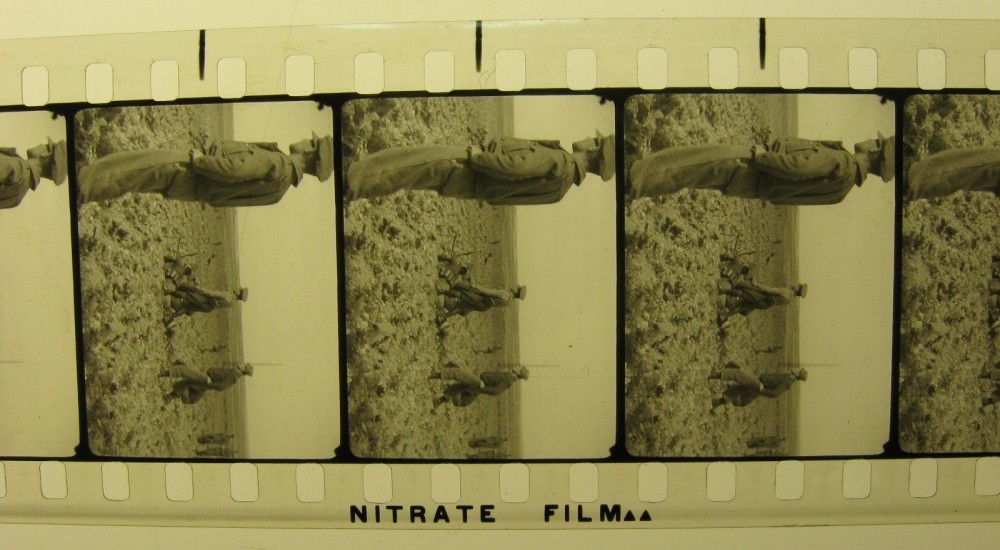
In 1889, Eastman Kodak began commercial production of nitrate base film, which was delivered to Thomas Edison in 1892 as cellulose nitrate. It was a pyroxylin plastic, made up of organic material. Cotton or wood fiber was treated with a mixture of nitric and sulfuric acids. It was then processed with the addition of solvents, plasticizers, and flame retardants. The result in chemical terms was a nitrate ester of cellulose with the following chemical formula: [C6H9O5(NO2) ] n. This base material is then mixed into a viscous solution with solvent and a plasticizer and spread on a slow-moving, heated, chromium-plated drum. The solvent then evaporates through the influence of heat, leaving a thin layer of film. The technique of solvent casting had to be very precise so that the film had a uniform thickness. Unfortunately, the solvent can’t be completely removed, leading the film to shrink as the solvent continues to evaporate over a period of years. However, this first motion picture base met all the criteria needed for projecting moving images. It was strong, flexible, maintained its shape under varying conditions, and was virtually transparent. Only material of superior strength could hold up in the film projector, given the millimeter separations between perforations. Eastman originally delivered the film in 70mm rolls, which were then sliced into 35mm rolls, creating a standard that lasted over one hundred years.

Decaying and combusting nitrate film

The problem with nitrate base motion picture film was that it was chemically unstable. In particular, it was highly flammable, having a very low flash point. According to A.S.A. testing, nitrate film can self-ignite at a temperature of 300 degrees F., and decomposing nitrate in unventilated conditions has been known to ignite at temperatures as low as 125 degrees F. The base will invariably shrink with age. The degree of shrinkage is measured with a micrometer gauge, which can then be translated into percentages. If a film’s base shrinks more than 2%, the film will no longer run smoothly through a projector, since the distance between perforations has changed too much, causing the pulldown mechanism in the projector to tear the film. Finding nitrate prints with an acceptable shrinkage becomes more difficult with each passing year.

Due to a late-arriving flight and other commitments, I missed a number of films, including William Dieterle’s The Portrait of Jennie (1948), Western Approaches (1944, Pat Jackson), a Technicolor documentary drama of merchant seaman, the newly discovered Trail of the Hawk (1935-50, Edward Dmytryk), a rereleased B-Western with additional footage, Marcel Carne’s Le Jour se léve (1939), and this year’s final “blind date,” Walt Disney’s Pinocchio (1940). Other films I had previously seen included Schlussakkord (1937, Douglas Sirk), The Unholy Three (1927, Jack Conway), and G.PW. Pabst’s The Joyless Street (1925). Indeed, I had used the very same extremely abridged print of the latter – bought by James Card from a Cleveland junk dealer – to complete my 1998 Munich Film Museum restoration of Die freudlose Gasse.

For me, the biggest discovery was Mikio Naruse’s Meshi / Repast (1951), which was not only the most immaculate nitrate print I have ever seen but also close to a masterpiece. After seeing Apart From You (1933) at the San Francisco Silent Film Festival (see https://archivalspaces.com/2022/05/13/295-sfsff/), and Naruse’s first surviving film, No Blood Relation (1932) on TCM last month, I now consider Naruse equal to Kenji Mizoguchi as a director of women. Setsuko Hara – one of Ozu’s favorite actresses – plays a housewife who has moved to Osaka from Tokyo with her husband, but now finds her life has been reduced to the endless drudgery of housework, while her husband becomes insensitive to her emotional needs; she wants to return to work, but there are no jobs. Utilizing a minimum of dialogue, Naruse employs closely framed shots and associative editing to construct a feminist narrative that despite its over-determined happy ending articulates numerous questions about women and gender in post-war Japan. It also made me realize that Naruse’s pre and postwar films are all of a piece in their concerns over gender relations and female desire.

Shockingly, I had never seen Alfred Hitchcock’s Rope (1948), a Technicolor feature famous for the director’s attempt to film the whole story in a single take by shooting ten-minute takes on a single set that are invisibly edited.  Based on the infamous Leopold-Loeb murder, two wealthy friends murder a mutual friend, store the corpse in a trunk and then invite family and friends to a dinner party, staged on the trunk. Like Meshi, the 35mm nitrate print of Rope was flawless, except for the change-over marks which most people don’t even see. It is clear that Hitchcock’s intricate camera movement took significant planning and rehearsal, but also forces the viewer to contemplate the characters’ every action as if a participant in the room. Made three years after the defeat of Adolf Hitler, the film is Hitchcock’s meditation on the Nazi’s belief in the Arayan superman to justify the immorality of murder and genocide. Not three years before, Hitchcock had directed a documentary, German Concentration Camps Factual Survey (1945/2014), after the liberation of Bergen-Belsen KZ, released only decades later as Memory of the Camps (1945/2014).

I also had never viewed Ernst Lubitsch’s Cluny Brown 1946), maybe the only surviving Lubitsch I had not seen in my 49 years of research on Lubitsch. It is out on video, but I’m so happy I waited for this near-perfect nitrate print. I’ve always thought that nitrate shined most in black and white, the silver nitrate shimmering with a luminosity that acetate film never duplicated. Kodak chemists told me it was all in my head.

The romantic comedy takes place in pre-war London and concerns Cluny Brown’s young female domestic who is continuously criticized for not knowing her place but is also mentored by a free-spirited European refugee who seemingly actively undermines the rigid British class system. While Peter Bagrov argued that the film was an under-rated masterpiece, I found it a sweet comedy, but certainly not in the same class as Ninotchka  (1939) and The Shop Around the Corner (1940), maybe because the December-May romance between Charles Boyer and Jennifer Jones stretches credulity, especially in our “Me, Too” era.   

One can only hope that Peter’s prediction about the longevity of the nitrate viewing experience will come to pass, but even then, seeing original first-generation film prints in all their visual glory is now officially a once-in-a-lifetime experience, especially for those of us who mourne the end of the analog era.

296: Reinhard Heydrich’s End

Archival Spaces 296

Operation Anthropoid

Uploaded 27 May 2022

Gen. Josef Kohoutek, my great uncle.

Exactly 80 years ago, on 27 May 1942, the so-called Reichsprotektor of Bohemia and Moravia, Reinhard Heydrich, was wounded in an assassination attempt by members of the Czechoslovak Army in exile in an operation code-named Anthropoid. Flown in by the Royal Air Force and coordinated on the ground with Obrana Národa (Defense of the Nation), the Czech resistance group made of former officers of military intelligence, the operation succeeded when the architect of the Holocaust, died on 4 June of his wounds. The assassination leads to massive reprisals against the Czechoslovak people, including the utter eradication of the village of Lidice outside Prague and its inhabitants, the arrest of 13,000 Czech citizens, and the killing of as many as 5,000. My great uncle, Gen. Josef Kohoutek, a member Obrana Národa, was executed on 19 August 1942 at Plötzensee (Berlin), in a direct reprisal for Heydrich’s death.

SS Obersturmbannfuehrer Reinhard Heyrich
The dead at Lidice, June 1942.

A member of the Czechoslovak Army General Staff, my uncle had married my grandmother’s sister, Milada Koulová in February 1923, the couple remaining childless. Teta Mila’s father, and my great-grandfather, was Ing. Václav Koula, General Director of ČKD (Českomoravská Kolben Danĕk), the country’s largest manufacturer of cars, motorcycles, and trams; it was converted by the Nazis to producing armaments for the Wehrmacht. The main factory in Prague-Vysočany was located just below the two villas belonging to my family. Although V. Koula had retired by the Nazi invasion in March 1939, my grandfather, Ing. Jan Horák, worked as an executive for the same company. After his incarceration in a Concentration Camp in November 1939 at Sachsenhausen-Oranienburg, my father joined the underground. Unwilling collaborators and resistance fighters in the same family; a Czech fate.

V. Koula (Center, Back), J. Horak, Bozena Horakova, Gen. J. Kohoutek, the children are my father, Jerome Horak, and my Aunt, Libuse.
Mila and Josef Kohoutek

General Josef Kohoutek was born in Hodějice, a village just East of Brno, Moravia, on 3 March 1896 and graduated from high school in Brno in 1915. After completing reserve officer training in the Bosnian-Herzegovinian IV Regiment of the Austrian Army, he was sent to the Italian front. He was captured on 18 Sept. 1917 at Carzano, better said deserted to the Italian side, where he joined the Czech Legions, eventually earning an Italian and Czechoslovak War cross for shrapnel wounds to his neck. Meanwhile, my grandfather Jan Horák deserted on the Eastern front and joined the Czech Legions in Russia. Horák returned to private life, while Kohoutek continued his military career after the Armistice, studying at Prague’s War College (1923-25), then joining the Army’s 10th Division, before moving to Army Intelligence, becoming its head in 1933. According to one report, “Josef Kohoutek contributed significantly to the development of plans for the defense of the republic, especially mobilization, at a time of deterioration of the international situation.” After the Nazi occupation in March 1939, he became a government bureaucrat in the Price Control Office but also joined the clandestine Obrana Národa.

Col. Josef Kohoutek, 1920
Gen. Kohoutek (front row, 4th from right) and General Staff Czechoslovak Army, 1937

According to the indictment of the Supreme Prosecutor’s Office of the People’s Court in Berlin on 15 October 1941, Gen. Kohoutek was arrested on 6 February 1940 at his home in Prague Vysočany (next door to my grandparents’ house) and had been detained in Berlin-Moabit Prison since 3 September 1940.  Kohoutek’s indictment for treason, along with seven other members of Obrana Národa read: “The accused have put themselves in the service of the illegal Czech military organization Obrana Národa and as members of the Bohemian Military command have supported a secret conspiracy after the establishment of the Protectorate of Bohemia Moravia. The goal of the organization was the violent separation of Bohemia Moravia, the Sudeten Gau, and other areas from the Reich and the creation of an independent Czechoslovak Republic.” Later in the indictment, the prosecutor characterizes the founding of the Czechoslovak Republic in October 1918 as “less the attempt at the independence of a national group and more an artificial creation by Western democracies wishing to brutally destroy the German Reich.”  

Obrana Národa was founded by Gen. Josef Bílý in April 1939 within weeks of the Nazi occupation with the goal of organizing an uprising, but soon became more focused on intelligence gathering and minor acts of sabotage, while maintaining contact with the government-in-exile in London under Edvard Beneš. While the organization was able to infiltrate the Gestapo and place members in armaments factories who reported back to London on Nazi military production, the Gestapo also penetrated Obrana Národa, decimating the organizational leadership in February 1940, May 1942, and June 1944, although each time it was reorganized.

Berlin Moabit Prison
Execution chamber at Berlin Ploetzensee

On 28 December 1941, the RAF flew Jozef Gabčík and Jan Kubiš, along with seven other Czech soldiers to Bohemia, where they were hidden by members of Obrana Národa, including my aunt Mila Kohoutová who had joined the organization. After the successful attack, the Gestapo could find no leads on who was responsible for the assassination, while the assailants hid with two Prague families, then moved to the basement of the Karel Boromejsky Church in Prague-Vinohrady. Unfortunately, one of the group, Karel Čurda, turned himself into the Gestapo and revealed the names of their local contacts for a 1 million Reichsmarks reward.  SS troops laid siege to the church but were unable to take the assailants alive, despite a force of 750 Storm Troopers.

Jan, Michael, Chris Horak, Libuše Horaková, Božena Horaková, Jerome V. and Peter Horak, Mila Kohoutková, 1966

In October  1945, my aunt Milady Kohoutková received a Czechoslovak War Cross for her and her husband’s resistance, and Gen. Kohoutek was promoted posthumously by President Edvard Beneš to Brigadier General. The Communist Putsch in March 1948, suppressed the history of Obrana Národa in favor of the myth of an all-Communist resistance to the Nazis. And, in the aftermath of my father’s indictment and sentencing to imprisonment in absentia for treason in 1952, Mila Kohoutková was thrown into prison for five years by the Communist government. When I met her in 1965, she still lived in the same house at Pod Krocinkou, next door to my grandparents, all now united in the family crypt.

Koula-Horak Family Crypt,PragueProsek