331: Budapest Classics Film Marathon

Archival Spaces 331

Budapest Classics Film Marathon

Uploaded 29 September 2023

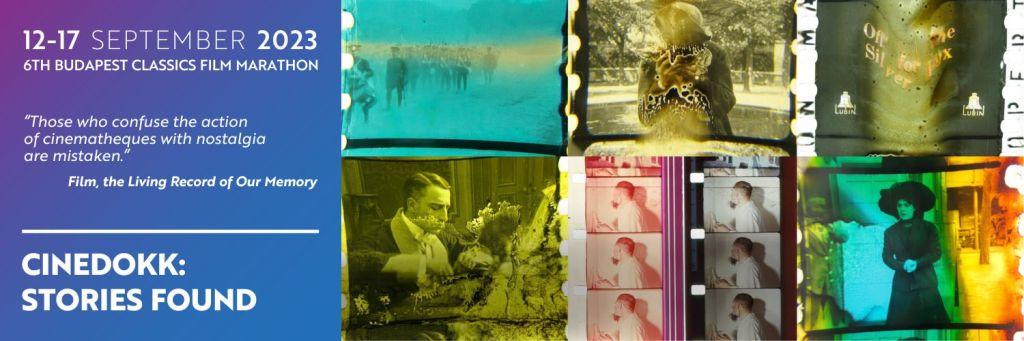
The 6th iteration of the Budapest Classics Film Marathon happened from 12 – 17 September with an eclectic mix of restored films, 48 of them to be exact. The Festival this year featured a focus on Hungarian filmmakers abroad, Alexander Korda, Emeric Pressburger, and Andre de Toth, but also the work of Andrew and Kevin McDonald, Emeric’s grandsons (Trainspotting, Last Kind of Scotland), Gazdag Gyula – my former colleague at UCLA -, Hungarian women directors, Kinuyo Tanaka, Sports films, Films about cinema, animation, and the grab bag Open Archives. Curated by National Film Institute Director, György Ráduly and his team, the Fiilm Marathon program strategy has been ever more successful, drawing huge crowds and sold-out theatres. There was also a three-day symposium, two days dedicated to archival work, one day film history, focusing on Hungarian filmmakers abroad. In the interest of transparency, I should note I was invited to Budapest to participate in that symposium.
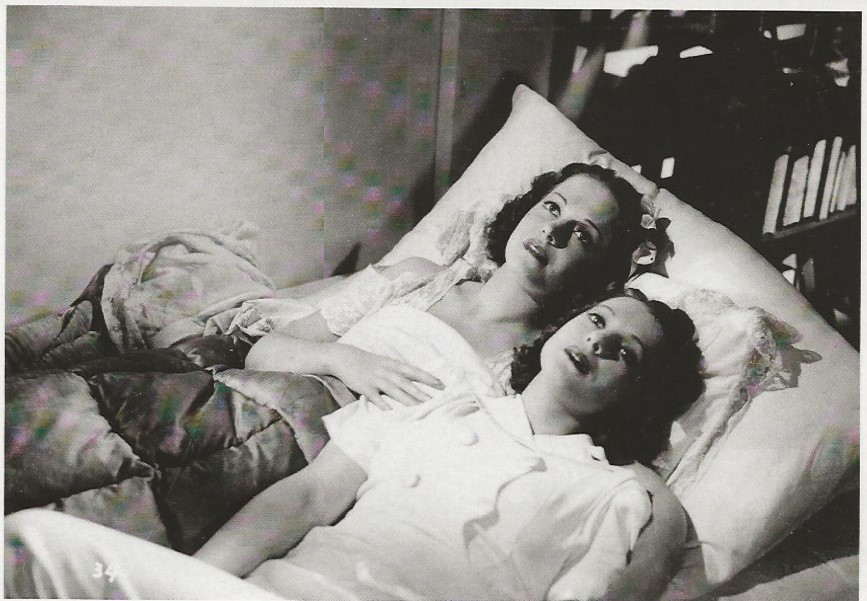
Two Girls on the Street (1939, Andre de Toth)
None Shall Escape (1944, Andre de Toth)

“Familiar Strangers,” as the morning session was titled, opened with Steven Kovács guiding the audience through the truths and fictions in the biography of André de Toth, who fled Hungary in 1939 and became a cult director in Hollywood, turning out crime dramas and westerns with style, despite B-film budgets. There was a lot of discussion, spilling over into cocktail receptions of whether Endre Tóth was Jewish, half-Jewish, or not-Jewish; no final conclusion. Catherine Portuges followed with a talk on de Toth’s None Shall Escape (1944), the only wartime anti-Nazi film to visualize explicitly the Holocaust. Next, Galina Torma discussed art director Marcell Vértes, who began his career as a cartoonist in Budapest and would win an Oscar for art direction for Moulin Rouge (1953).

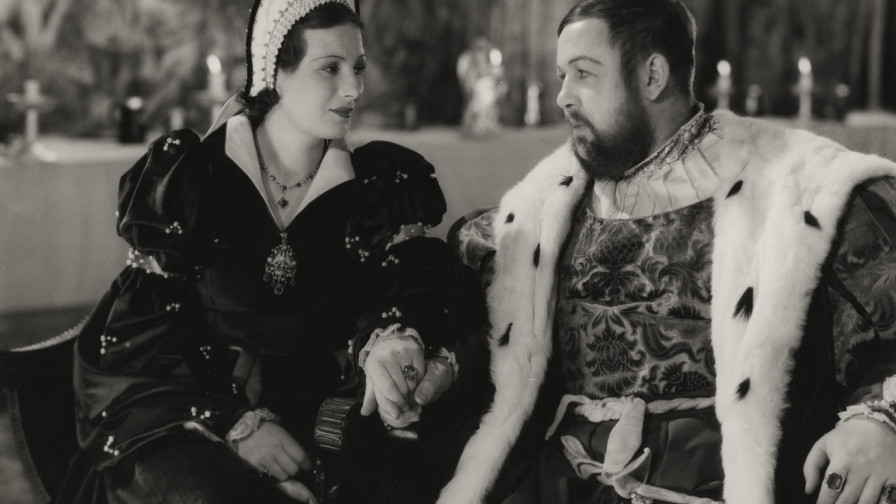
The Private Life of Henry VIII (1933, Alexander Korda)
The Four Feathers (1939,Zoltán Korda)

The afternoon session, “The Kordas and their Circle,” included talks by Josephine Botting on archival traces of Alexander Korda in the British Film Institute’s collections; Korda’s career began in Hungary in the 1910s, moved between Berlin, Paris, and Hollywood in the 1920s, and settled down in London as one of the U.K.’s most important producers, the founder of London Films, after the worldwide success of The Private Life of Henry VIII (1933). Ágnes Széchenyi discussed the similarly meandering career of Lajos Biró, an exceptional Hungarian scriptwriter who worked for Korda and Ernst Lubitsch. Finally, Ferenc Takács discussed the British cinema’s nationalistic fantasies of Empire, directed by the Hungarian emigre Zoltán Korda, Alexander’s younger brother.

Lajos Biro
Melchoir Lengyel
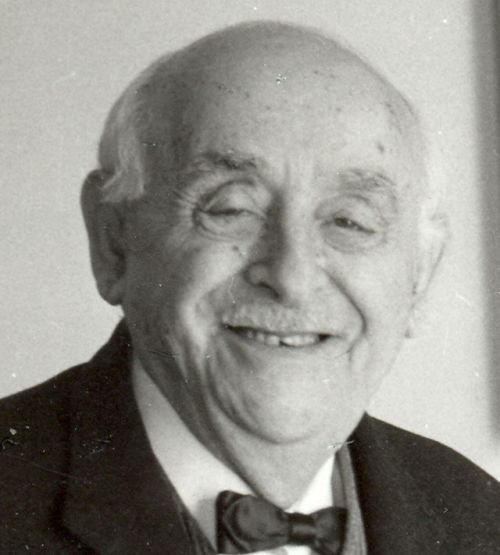
Miklos Laszlo

What this mini-symposium (and corresponding films in the program) demonstrated was that while there has been much research on Russian film exiles from 1917, and on German émigrés from Hitler, little has been published on Hungarian refugees, probably because most were viewed as economic immigrants, rather than as forced emigrants. Many Hungarians, like Korda, Michael Curtiz, Victor Varconi, Moholy-Nagy, and Bela Balasz fled after the failure of the 1919 Hungarian Communist revolution, others, like Steve Sekely, Lici Balla, Szöke “Cuddles” Szakall, Ladislaus Fodor, Emerich Kálmán, Alexander Laszlo, Lili van Hatvany, Andrew Marton, and Joe Pasternak, after anti-Semitic laws in Hungary barred them from employment. After the conference, Steven Kovács sent me his piece, “How Did Hungarians Do It? The Hungarian World of Ernst Lubitsch” (Bright Lights Film Journal), in which he argues that the contributions of Hungarian writers have been undervalued in Hollywood historiography, including writers, like Ferenc Molnár, Lajos Biró, Melchoir Lengyel, Ernest Vajda, Géza Herczeg, Miklós László, and László Bús Fekete. Furthermore, Hungarians penetrated all the Hollywood film professions, whether Bela Lugosi (actor), Laszlo Szusc (agent), George Pal (animator), Erno Metzner (art director),  Miklós Rózsa (composer), Leslie Kardos (director) or Ernst Matray (choreographer). Then … there was a whole other group of Hungarians who made German films for the Third Reich, like Géza von Bolváry, Arzén von Cserépy, Josef von Báky, Marika Rökk, and others. Co-curator of the Marathon, Janka Barkóczi, has identified more than 800 Hungarians working in the film industries of Paris, Berlin, London, and Hollywood.

Thanks to the hospitality of the Hungarian National Archive, I attended a McDonald family screening of The Old Scoundrel (1932), Emeric Pressburger’s only Hungarian language film, and his last UFA film, before he emigrated to England. The film is a charming if stereotypical story of life on the Puszta with a faithful old bailiff squirreling away the money of his gambling-addicted Baron, and being accused of embezzlement, when in fact he has saved the fortune for the Baron’s daughter and heir. After the film Kevin and Andrew McDonald wondered how to interpret what or may not have been an anti-Samitic remark in a film written by their grandfather. A sentimental and nationalistic affair, the German version, Es leuchtet die Pusta was not released until February 1933 with much the same cast. Its female lead, Rose Bársony, however, would be fired by the UFA on 29 March 1933, along with two dozen other Jewish employees, while Hungarian star Marika Rökk would become UFA’s “Nazi Ginger Rogers.”

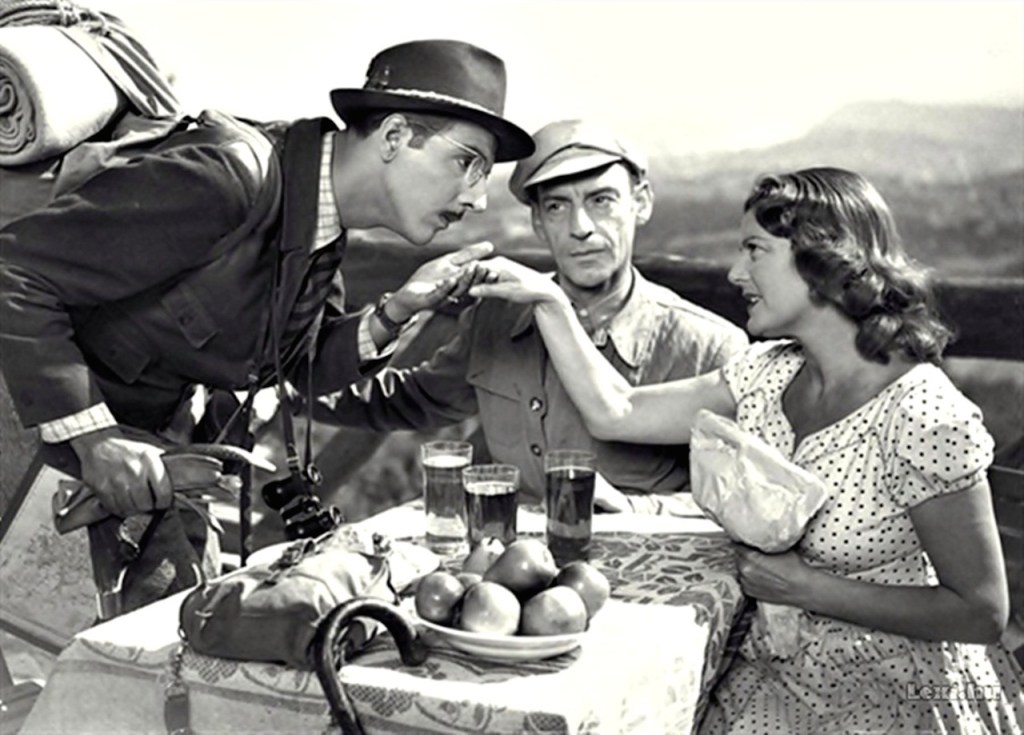
State Department Store (1952, Viktor Gertler)

André de Toth’s Two Girls on the Street (1939) follows the fate of two young women, one who works as a musician in an all-girl band after being disowned by her family due to an unwanted pregnancy, the other a peasant who comes to Budapest for work. Seemingly proto-feminist, it’s mitigated by the fact that the young farm girl is nearly raped by an engineer at the construction site where she works, then falls in love with him with a happy end: marriage. Not to mention the fact he’s at least fifteen years older. Much of the film was shot on location in Pest’s Újlipótváros district, which experienced a housing boom in the 1930s, featuring much modernist architecture influenced by the Bauhaus.

I was also happy to see Viktor Gertler’s State Department Store (1952), a Stalinist propaganda musical-comedy about a Budapest Department Store whose empty shelves are blamed on the CIA. Gertler had also been sacked in the infamous March 1933 meeting of the Ufa Board, despite having edited Ffa’s biggest moneymakers (Drei von der Tankstelle, Congress Dances). He moved back to Hungary the same year and started directing, but was blacklisted again as Jewish in 1937, living illegally in Brussels during World War II, then returning to Communist Hungary, where he resumed his career as a prolific film director. Despite its propagandistic elements, the film was not without charm, light-hearted with lots of singing and dancing along the Danube.

The Whistling Cobblestone (1971, Gyula Gazdag)

Finally, I caught two documentaries by Gyula Gazdag, The Selection (1970) and The Whistling Cobblestone (1971), which were amazing for their biting critique of Communist society. The short visualizes the selection process for a band for a Party event, while the feature concerns a group of high school boys who volunteer for a labor camp in the countryside, but are left hanging without work, because of absolute mismanagement. Both films reveal the astounding level of everyday corruption under Communism, the latter film being banned, but then released to become a cult film, championed by younger generation Hungarians. My teaching colleague, Gyula Gazdag taught for years at UCLA, before retiring in 2015 to Vienna, so I was delighted to see him again.

330: Foolish Wives

Archival Spaces 330

Flicker Alley’s Foolish Wives (1922)

Uploaded 15 September 2023

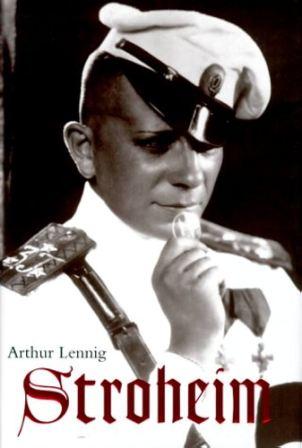
I met Arthur Lennig several times in the mid-1970s to late 1980s, mostly at IAMHIST (International Association of Audio-Media and History) Conferences, where he talked about his work on Stroheim and Griffith. He was really quite passionate about his research, that energy resulting in his Stroheim book (Lexington: U. Press Kentucky, 2000). He didn’t have much good to say about MOMA, I remember. Prof. Lennig gets a big credit from James Layton (and all the restorers in the booklet to Flicker Alley’s release of the restored Foolish Wives (1922). In 1972, Lenning attempted an early restoration, working from two different prints.

Arthur Lennig

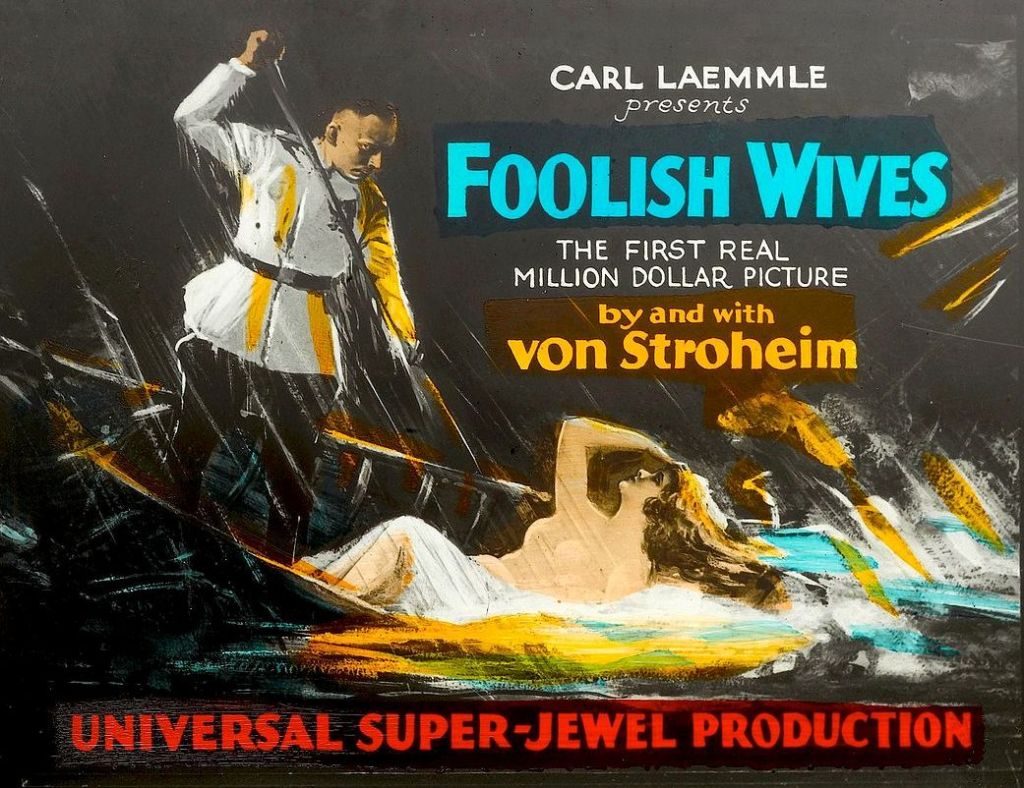
When Erich von Stroheim’s Foolish Wives opened on 11 January 1922 at the Central Theater on Broadway, it had a length of 14 reels (14,120 ft) and was hailed by critics, like Harriet Underwood of the New York Herald Tribune, as another masterpiece by one of America’s greatest directors. It was the first film by Carl Laemmle’s Universal to play Broadway, the studio previously producing mostly low-budget programmers and shorts. Yet, immediately after the premiere, the film was cut down to ten reels (10,620 ft), then even further, due to censorship cuts demanded by State Censorship Boards. Irving Thalberg, Universal’s Boy Wonder had demanded the cuts because the film’s extreme length would not play in the Hinterlands, Universal’s usual market, therefore its astronomical costs could not be amortized. The film played for a year on Broadway but still lost money; von Stroheim’s reputation never recovered; he became known as a manically uncompromising and wasteful director. 

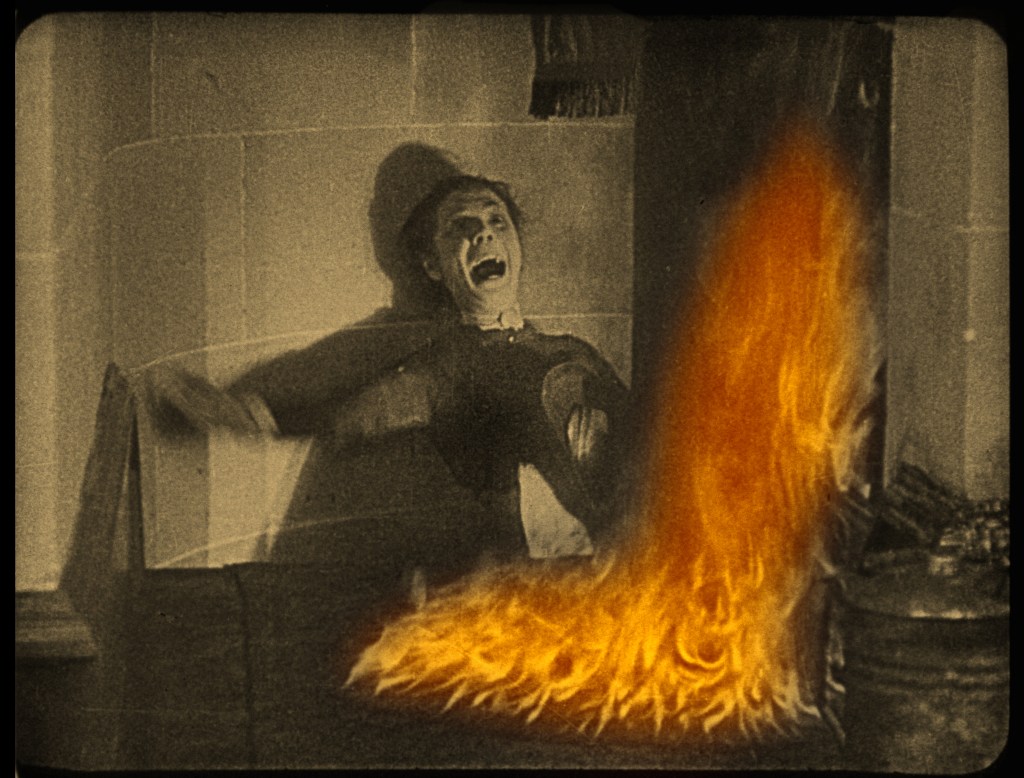
However, that was not the end of the carnage; Stroheim’s first cut came in at 30 reels, to be shown in two parts on two consecutive evenings. In 1928, Universal planned to rerelease the film, probably with sound, re-editing it down to a mere eight reels and replacing the titles, then scraping the project. That version, which survived at the Museum of Modern Art, as well as a second Italian source, as Lennig  (and Richard Koszarski) discovered, were all audiences had ever seen, until in October 2017, Rob Byrne of the San Francisco Silent Film Festival and Dave Kehr of the Museum of Modern Art decided to attempt a reconstruction which would approximate von Stroheim’s film. They found an Italian release print, which had also originated from the 1928 version, but from the export version negative; crucially it included the film’s climactic fire scenes missing in MOMA’s version. Working with a team that included James Layton, Kathy Rose O’Regan, and Peter Williamson, Byrne and Kehr were able through extended research in print archives to reedit the film closer to Stroheim’s vision, consulting an original shooting script and continuity, and Sigmund Romberg’s piano score, among other documents. Using censorship records they also recreated many of Stroheim’s original titles, while Foolish Wives’s color, consisting of tints, tones and hand-colored scenes was added, based on the Italian print and other hand-colored films by Gustav Brock.

Dale Fuller in Foolish Wives (1922)

A restoration plan was made for the 1,953 surviving shots and then restored frame by frame in a digital edit, the restoration premiering in 2020 at the San Francisco Silent Film Festival. The restoration team also made the decision to preserve both the film’s grain structure and other surface imperfections to retain the film’s original look. That 147-minute version (9,766 ft) has now been released by Flicker Alley, allowing for the first time a glimpse of what Stroheim’s film had achieved.

Erich von Stroheim, Maud George
Iris Barry, 1930s

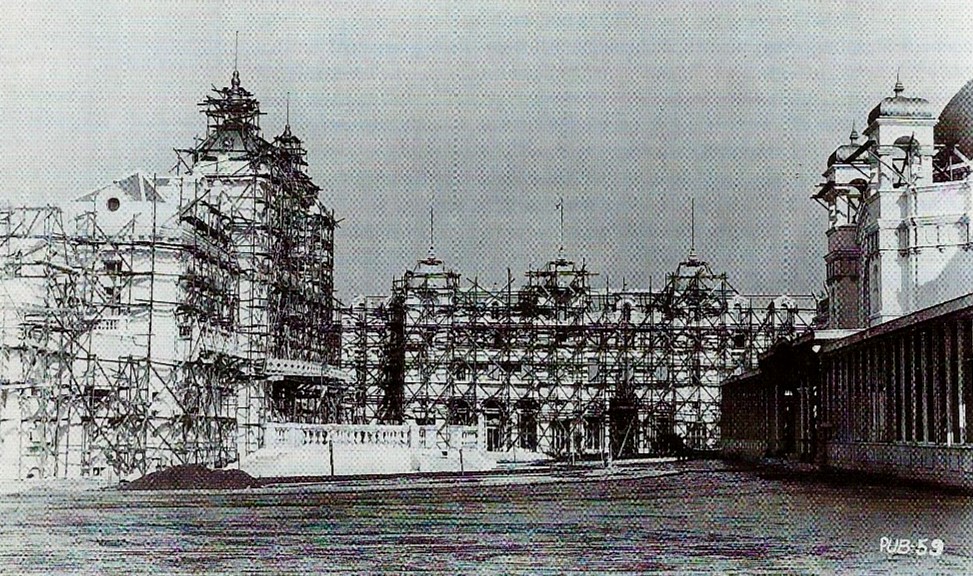
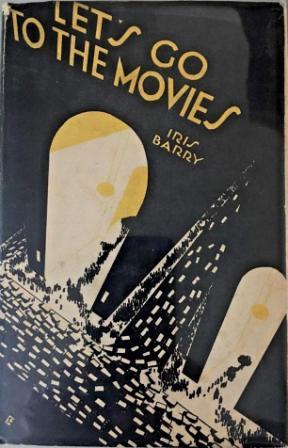
Iris Barry, later founding film curator at MOMA famously wrote in her book Let’s Go to the Pictures (1926) that Stroheim had taught Americans about nuanced acting, the importance of the tiniest gesture in establishing character. He not only directs himself, defining his character with minute changes in physiognomy, but also his costars, in particular Maud George, Mae Bush, Cesare Gravina, and Dale Fuller who would become Stroheim regulars in subsequent films. Indeed, Stroheim’s insistence on realism in the gigantic exact replica sets of Monte Carlo, the costumes, and acting was unlike anything American cinema had previously produced.  It had taken 11 months to complete shooting, all the while R.H. Cochrane, Universal’s P.R. man announced the rising dollar costs on a giant billboard on Times Square. Stroheim was still shooting close-ups when Thalberg had the cameras confiscated; moving to Metro, Thalberg would next butcher Stroheim’s magnum opus, Greed (1923).

Erich von Stroheim in Foolish Wives
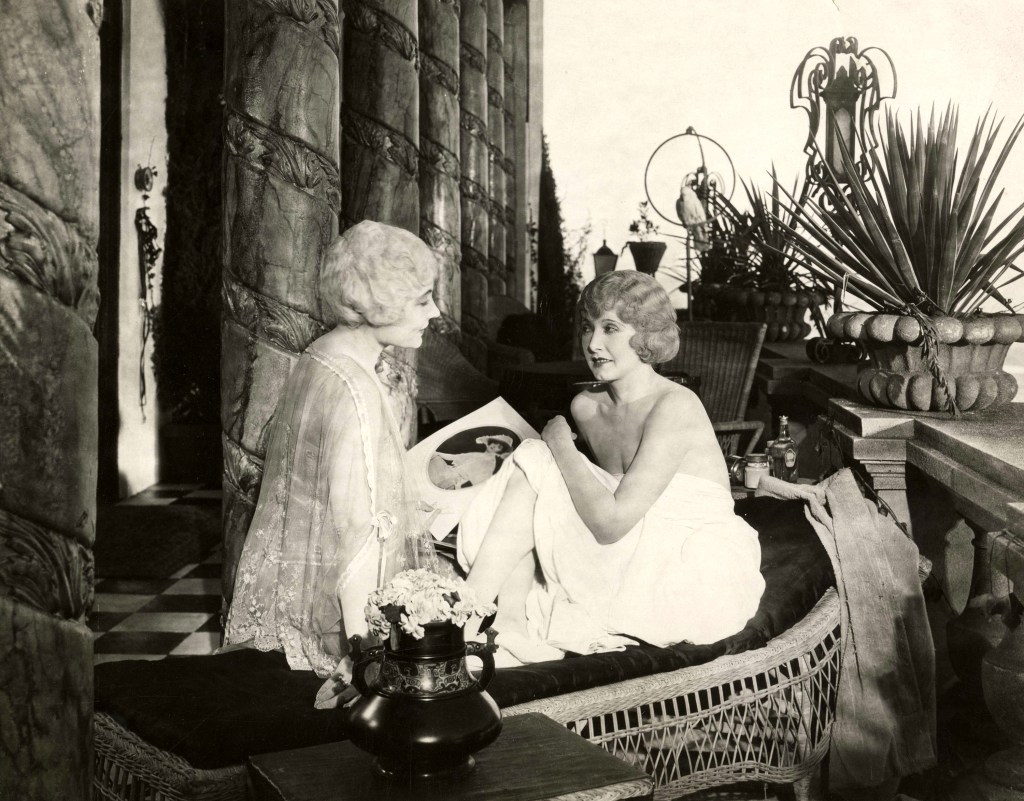
Maude Geoge, Helen Hughes (aka Miss Dupont)

Shooting his most important scenes first, so the studio could not remove him from the picture, von Stroheim played the lead role of the fake Count Sergius Karamazin, who with his two “cousins,” the Princesses Olga and Vera Petschnikoff, operate a counterfeit money scheme, while cheating at the Casino. It is implied that the thoroughly amoral Count not only sleeps with his cousins, but has impregnated the maid, attempted to rape the feeble-minded daughter of his counterfeiter, and seduced the wife of the American Ambassador. Karamazin can’t help himself, he is obsessed with sex and money, his ever-present monocle and elongated, burning cigarette exuding his supreme arrogance and egoism. Things, of course, all end badly for the crooks, but never had American audiences seen such unapologetic evilness and corruption, given that American films almost never strayed far from the boy meets girl happy ends. The film’s melodrama is however mitigated by the film’s realism, which Stroheim achieved through extreme compositions in depth, masses of extras in crowd scenes, and attention to details everywhere. Indeed, the film’s realism allows von Stroheim to peel away layers and layers of artifice to reveal the sordidness and corruption of a post-World War I society bent on pursuing pleasure for its own sake.

This film is a must-see for anyone only familiar with the mangled 16mm versions previously in circulation or anyone who has never seen a Stroheim film. Flicker Alley’s Blu-ray/DVD is also chocked full of bonus materials, including an original short from 1922 on the making of the film, several new documentaries, before and after comparisons, a photo gallery, and an illustrated souvenir booklet with more information on the film’s fate and restoration. 

329: Tales from the Vault

Archival Spaces 329

Tales from the Vaults: Film Technology over the Years and across Continents

Uploaded 1 September 2023

Autokinema Mobile Cinema Unit, Albanian National Film Archive, Tirana.

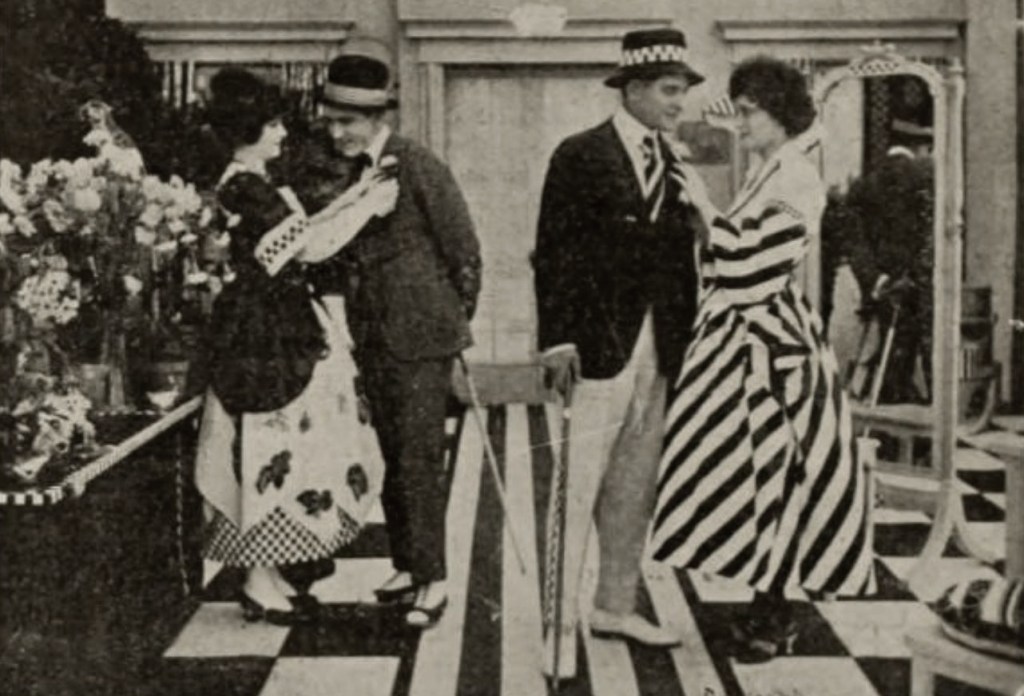
When I was a post-graduate intern at George Eastman Museum in the mid-1970s, I was sent by the Film Department to Yonkers, New York, to deliver a 28mm print of The Yellow Girl (1915) to Don and Karl Malkames; Father and son both had been storied cameramen in the New York film scene going back to the 1930s. They had built a 28mm gate for their home-made optical printer, so GEM could begin preserving their huge “3-M Company Collection” of 28mm, of which The Yellow Girl was the most sensational find, its modernist set and costume design unlike anything else seen at the time. Credit for that find went to Marshall Deutelbaum and George Pratt, my mentors. The Malkames had already done similar work for parts of MOMA’s Biograph Negative Film Collection, which required restoring a non-standard sprocket-hole system printer. Talking to the two veterans, I realized that film technology, itself constantly changing, also had to be preserved, otherwise the job of making film history accessible would not be possible. At Eastman I got to explore the “Equipment Collection,”  but until that moment, I had only seen obsolete technology’s historical, but not its practical value. I also understood that the medium of film and the institution of cinema was material-based in the extreme, an epiphany whose full force I would only really understand after we moved into the virtual world of digitality; Materiality itself has become obsolete.

The Yellow Girl (1915, Edgar Keller), George Eastman Museum

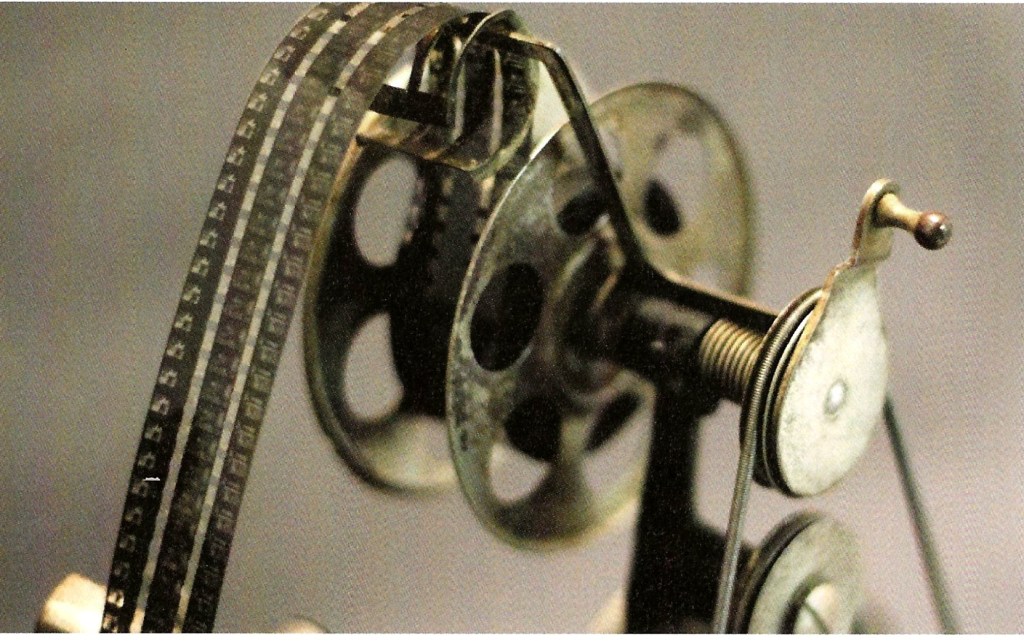
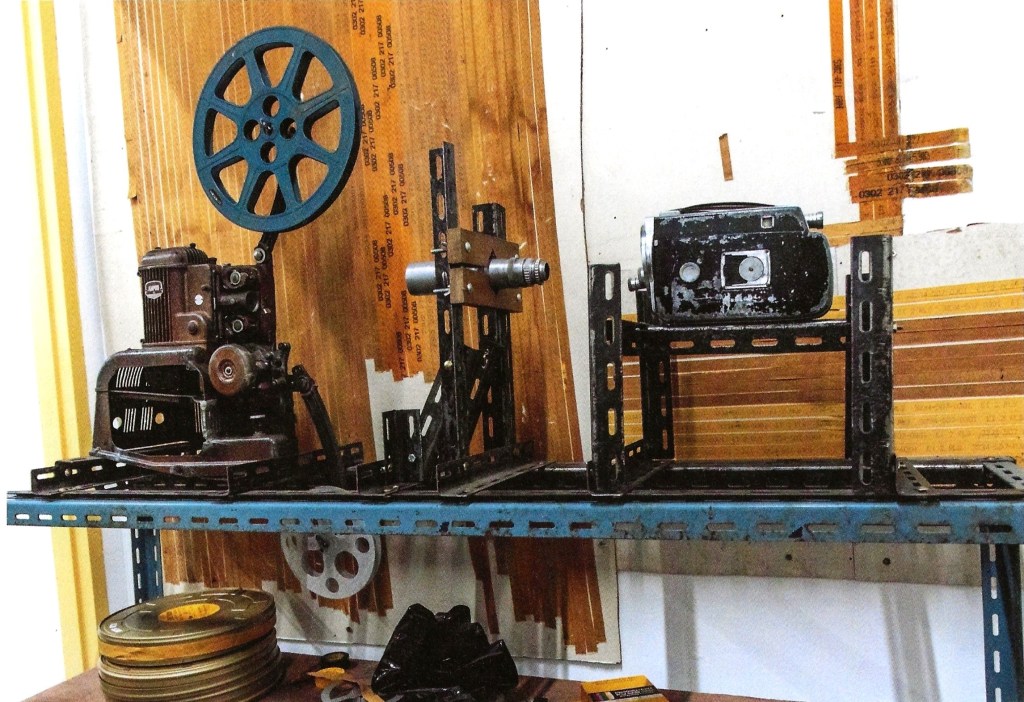
The Malkames are mentioned twice in Tales from the Vaults. Film Technology over the Years and across Continents/Histoires d’appareils. La technologie du cinema á travers les années et les continents, a dual-language publication of FIAF (Fédération international des Archivs du Film), edited by Louis Pelletier and Rachel Stoeltje. The book, itself an international cooperation, reinforces the point that the artifacts of film technology, the hardware, need to be preserved and studied. In compiling a richly illustrated coffee-table-sized book with alphabetically organized entries, the editors thus narrate and illustrate the interplay between film technology, film archeology, film preservation, and film aesthetics. Dozens and dozens of authors, literally from around the globe, relate fascinating stories of exactly 100 objects, material remnants from the analog world of moving image production and exhibition.

Challenge Sciopticon, Universite Laval, Quebec City
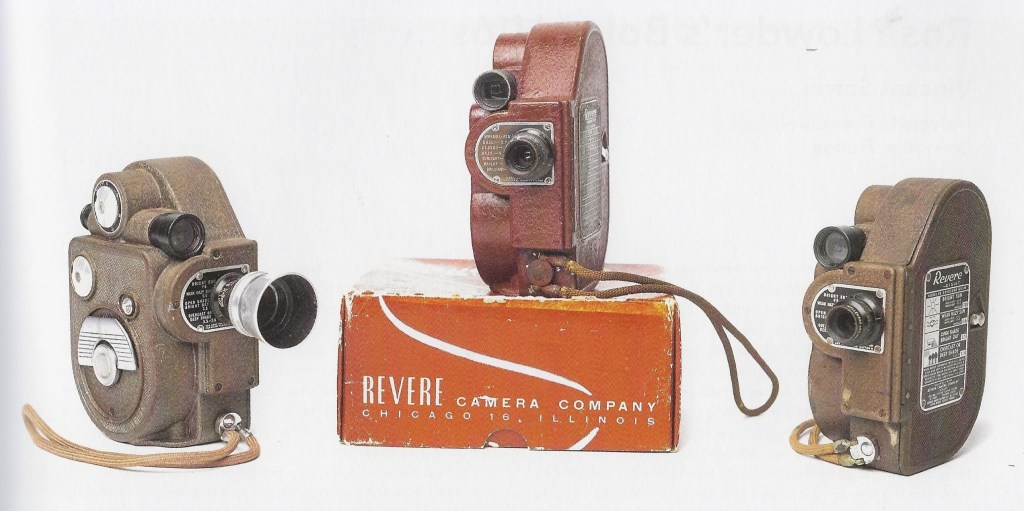
Revere Model 88 Camera, Indiana University Libraries Moving Image Archive, Bloomington

The 100 encompass everything from film cameras to projectors, optical printers to VCRs, pre-cinema optical toys to mobile projection vans, editing tables, film splicers, flip books, and more, industrial-produced and home-made.  Pelletier calls these technical devices “the ghostwriters of film” because “cameras and microphones are kept off-screen, the editing benches and the printers toil in the dark….” (p. 30) Until recently, film object collections were stepchildren in most moving image archives, often in deep storage, in the dark, while film restorations gleamed in the light of LCD screens.  While I was at UCLA FTVA, the extensive television set and equipment archive was finally put into an archival environment and curated in open storage; Mark Quigley’s entry on the Smith 2” Videotape Splicer describes that collection’s history.  

Billy Bitzer, Biography Printer, MOMA, New York
Edison 22mm film projector with film, Hugh M. Hefner Foundation Moving Image Archive, USC, Los Angeles

 Apart from the physical descriptions of the objects and their utilization, entries often relate the circumstances of the object’s survival and their eventual entrance into an archive. The journeys such objects took, moving from utilitarian purpose to obsolescence, also visualize the relationships of cinema pioneers to film collectors and moving image archivists, the last named often involved in real detective work and donor cultivation. For example, the 1908 Biograph Printer mentioned above had been salvaged by William L. Jamison, a motion picture pioneer who had started in Edison’s Black Maria studio and was now a “field investigator” for MOMA. He and Biograph cameraman Billy Bitzer refurbished the printer in 1940 and began making prints from the negatives that Jamison had also salvaged from the studios in the Bronx. The printer then fell into disuse, only to be revived by the Malkames team in 1969. Then, there is the story of the Edison Home Kinetoscope film projector, introduced in 1912, which screened 22mmm films with three rows of images, running forward, then backward, then forward again. The USC H.M. Hefner Moving Image Archive acquired the amateur projector in 1968 from Sol Lesser, Hollywood B-film producer and passionate film technology collector, who as early as the 1930s began dreaming of a film museum. Curator Dino Everett and Marsha Gordon recently demonstrated the Edison projector, using 100-year-old film.

Hamman Film Splicer, Austrian Film Museum, Vienna

Janneke van Dalen sums up these preservation narratives best when she comments on the stories of an Austrian Film Museum archivist and film cutter: “Ms. Schlemmer’s interconnected stories and practice make us aware that a film collection is not just a storage space full of films and objects, but a living thing; an interplay between space, objects, and people in which the technical is connected to the stories behind the films, and inalienably linked to the people preserving them.” (p. 118)

Alexeieff/Parker Pinscreen, Centre national du cinema, Boi d’Arcy
Cinema Machine Gun with 16mm Camera, State Central Film Museum, Moscow

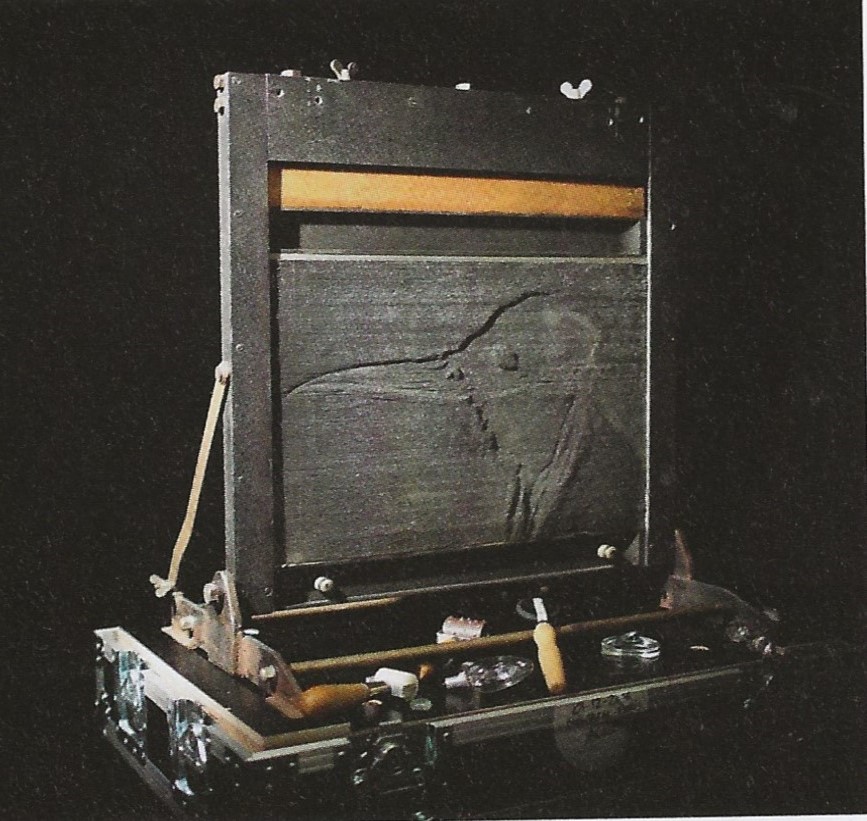
Another fascinating thread in Tales from the Vaults celebrates the medium’s technological dead ends, engineered objects that either were unsuccessful commercially or never made it beyond a prototype, undergirding the theory of film’s discontinuous development, moving forward in fits and starts, rather than in linear time. There is e.g. the Alexeieff/Parker Pinscreen, used by the animation artists to create Night on Bald Mountain (1933), considered by many a surrealist animation masterpiece. Alexandre A. and Claire P. had built an animation stand with 500,000 pins held into place by paraffin wax which were manipulated and filmed frame b frame. Until recently, no other artist had ever used the device. On the other hand, Alexandre Medvedkin’s 16mm Machine Gun Camera, which was invented for use by newsreel cameramen on the Russian war front between 1942 and 1945, outlived its utility once the “Great Patriotic War” ended. The surviving camera gun saw battle action during the assault on Königsberg, East Prussia, some of its footage appearing in the documentary Königsberg (1945). Chris. Marker celebrates Medvedkin in The Last Bolshevik (1993).

Aleksandar Gerasimov’s Camera System for Sound, Croatian Cinematheque, Zagreb
Pathé Frères Grand Modèle Camera, Museo del Cine Pablo C. Duros Hicken, Buenos AAires

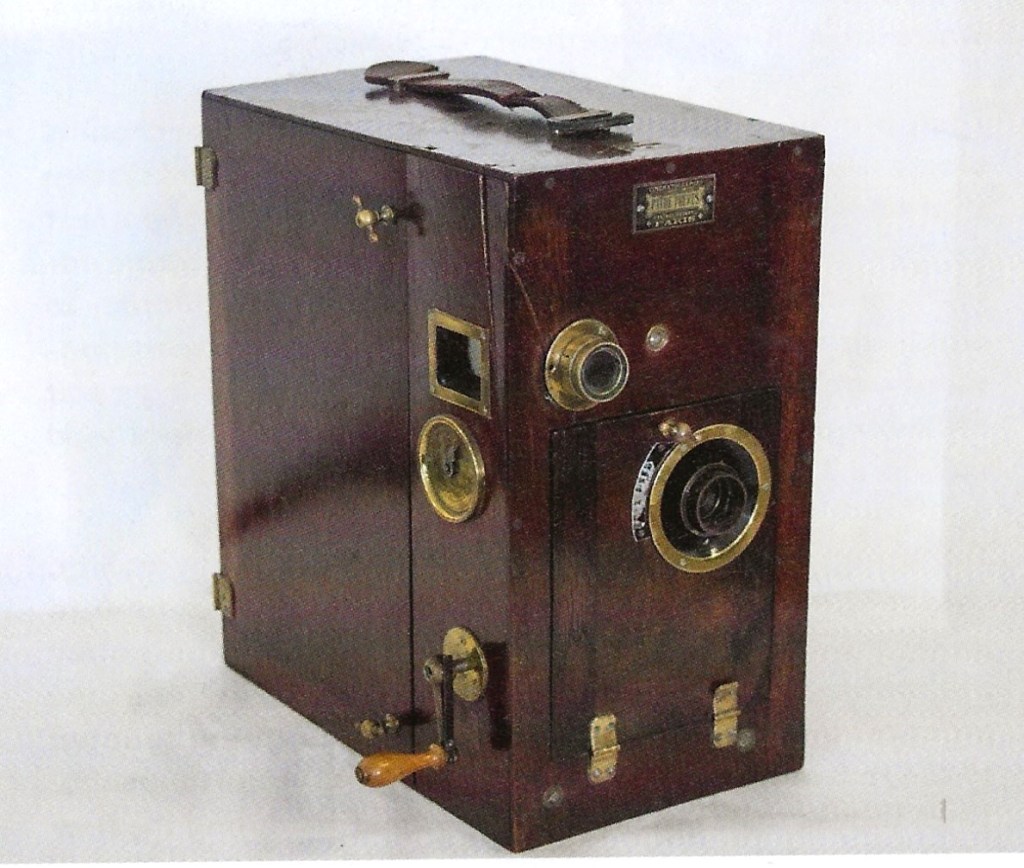
Many of the entries not only document the far-flung distribution of film technical equipment but also local modifications of the same. The Croatian Cinematheque now houses Aleksandar Gerasimov’s jerry-rigged sound film camera, which he built around 1930 using two existing silent 35mm cameras, one for image, and one for sound, since the local School of Public Health could not afford new sound film cameras.  Then there is a 1910 Pathé Frères Grand Modèle Camera, built in Paris, which was used by Argentine film pioneer Mario Gallo in his pre-World War I film productions; he had purchased the camera from local film distributor Max Glücksmann before it ended in the collection of the Museo del Cine Pablo C. Ducrós Hicken, Buenos Aires.

One question I would have liked to see authors and editors address, is the elephant in the room, the above-mentioned digitality. If an impetus to collect these objects was in part to make new analog preservation copies, how does that change an object’s utility value when computers can retrieve information from almost any medium?  How do the material archives of cinema not become obsolete in the face of AI and digital access? For me, the answer lies in our hunger for the real. Until algorithms can reproduce touch, smell, and sight in seamless images, – faculties needed for survival by our ancestors, – we will continue to hunger for the real and the world of objects. But that may be a generational p.o.v., I’m afraid.     

In conclusion, Tales from the Vaults is a great read because it allows us to revel in the real.  Whether you skip around between the entries or read alphabetically, each object has its own unique story which also illustrates how archives come into existence.

BYMPS II 16mm Step Printer, with Czech Meopta Club 16mm projector and 16mm Cine-Kodak Model K-100, Thai Film Archive, Bangkok

328: Bonn Silent Film Fest

Archival Spaces 328

Bonn Silent Film Festival

Uploaded 18 August 2023

Anna May Wong, Alexander Granach in Groβstadtschmetterling (1929)

I first wrote about the Bonn Summer Cinema – International Silent Film Festival two years ago. This week I’ve again been able to view films at the Festival for this 39th iteration from 10 – 20 August 2023. As in the past several years due to the COVID pandemic, the Festival has continued to make films available online for forty-eight hours after the screening, allowing not in Bonn to actually view the program. The show was programmed by Artistic Directors Eva Hielscher and Oliver Hanley. The Festival is continuing for a couple more days, so you still have an opportunity to see films @ https://www.internationale-stummfilmtage.de/en/home-en.  What I like about the Bonn  Film Fest is that they consistently show unknown or little-seen work, rather than the classics, which ostensibly would bring more audiences. I was able to see a number of films on my bucket list and discovered several more that were completely unknown to me.

Like many Weimar era German films, Groβstadtschmetterling/City Butterfly (1929, Richard Eichberg) opens on a Caligari-like fairground, where the grotesque Coco the Clown (Alexander Granach) doubles as a barker for the show, where Mah (Anna Mae Wong) is an exotic dancer. Coco is in love with Mah, forcing unwanted attention on her, even after she escapes the itinerant life.  Her budding relationship with Kusmin, a Parisian painter, is interrupted by a wealthy female patron who becomes Kusmin’s lover. The film thus avoids the specter of miscegenation, leaving the film’s star, Anna May Wong, to relinquish her object of desire.  Anna May Wong was a huge star in Germany and the U.K. after Richard Eichberg brought her to Europe in 1928 from Hollywood, where she was only playing Asian stereotyped secondary roles. She starred in four films, including the multiversion Hai-Tang (1930), before returning to B-film Hollywood.  

L’invitation au voyage (1926, Germaine Dulac)

Even though I had researched pioneering woman director, Germaine Dulac who not only helped establish the first French film avant-garde but also published film theoretical work, I had not seen L’invitation au voyage (1927), which was recently restored at Amsterdam’s EYE Museum. The film follows a neglected housewife as she visits an exclusive club for upper-class patrons wanting to consort with sailors. The opening design recalls German expressionism, and Dulac constructs a film and meta-film that remains totally subjective through a visual orchestration of looks, gestures, and objects, while providing a catalog of new film techniques, including accelerated montage, superimpositions, quick pans and tracks, out-of-focus shots, and fast motion. Insisting on the legitimacy of woman’s desire, even in tawdry haunts, Dulac crafts romantic visions of love that allow for a return to the real world.   

I had seen the Norman Studios’ all-black cast melodrama, The Flying Ace (1926), but was impressed this time with its very professional editing. Starring Laurence Criner and Kathryn Boyd, the former railroad detective who solves a robbery, the primary suspect being the girl’s father, the film is one of the few all-black cast films from the 1920s that has survived intact. Although the film is deeply rooted in middle-class values, I was struck by the negative image of the local cop, whose mixture of Keystone oafishness and serious danger seems to embody the black community’s ambiguous relationship to the police. The real hero of the film, as far as I’m concerned, is the one-legged assistant to the detective (Steve Reynolds), who disguised as a bum chases down the robbers on foot and with a bicycle, his crutch morphing at one moment into a leg for peddling and into a rifle the next. Unfortunately, the producers had no funding for actual flying sequences – they are staged – unlike L’Autre aile/The Other Wing (1924, Henri Andréani), which has spectacular aerial sequences in its story of two feuding aviatrixes. Unfortunately, much of the film is boudoir drama, staged by a film director who began his career in 1908.  

Congratulations on Graduating (1932)

The previously lost Ukrainian silent, Congratulations on Graduating (1932), is the first children’s feature by Ukrainian woman director, Ivha Hryhorovych. It is thanks to the Federal German Archives that this film (and the likewise previously lost Ukrainian Pigs Will Be Pigs [1931]), were digitized from 35mm prints that had been placed in the Nazi Reichsfilmarchiv; both silent films include a title that states it is a punishable offense to reveal the film’s contents to the public. Made after the institutionalization of Stalinist Socialist realism, the film does have its propagandistic elements. But Hryhorovych also inserts a feminine, sympathetic depiction of a bullied teenager who attempts suicide because he is a poor student and will be kicked out of the Young Pioneers. The director’s lyricism also recalls Alexandr Dovzhenko in her love for nature in the Ukrainian countryside and moments of tenderness in the depiction of children on the cusp of adulthood.

In Spring (1929, Mikhail Kaufman)

Another Ukrainian film that shared Dovzhenko’s love of nature was In Spring (1929), directed by Mikhail Kaufman who was the cameraman in Dziga Vertov’s The Man With the Movie Camera (1929). He was also Vertov’s brother and had a falling out with him which lead Kaufman to produce his own film, even using rejected out-takes from Vertov’s film.  In Spring, while featuring similar montage and camera techniques to the earlier film, focuses much more on nature and on individuals, opening with scenes of melting snow, showing people at work and at play, and observing birds in their nests. This version, restored by Amsterdam’s EYE, includes 20 minutes more footage than the YouTube version, specifically footage of Orthodox religious processions which were cut by the Soviet censors. It ends with a joyous montage of peasant dancing, thereby highlighting community rather than technology, as had Vertov’s film.  

As noted, six more films will be available online through 23 August. The films are accompanied by internationally known musicians, including the Aljoscha Zimmermann Ensemble, Cellephone (Paul Ritell, Tobias Stutz), Neg Morley, the Monte Alto Motion Picture Orchestra, Elaine Loebenstein, Filmsirup (Michael Hendricks, Christian Carazo-Ziegler), Misha Kalinin/Roksana Smirnova, Richard Siedhoff, Neil Brand/Frank Bockius, Daan van den Hurk/Mykyta Sierov, Stephan Horne,  Elizabeth-Jane Baldry, Céline Gailleurd/Oliver Bohler, and Teuvo Puro.

In Spring (1929, Mikhail Kaufman)