343: Vanderbilt TV News Archive

Archival Spaces 343

Vanderbilt Television News Archive

Uploaded 22 March 2024

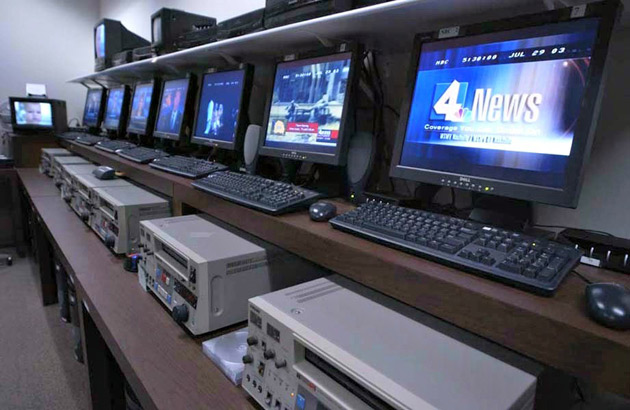
In the early 1980s, before the Association of Moving Image Archivists (AMIA) constituted itself, film archivists met yearly under the guise of the Film Archives Advisory Committee/Television Archives Advisory Committee (FAAC/TAAC). The Vanderbilt Television News Archive was one of the first institutions to join TAAC, having been founded in 1968 to tape off-air all national news broadcasts from ABC, NBC, and CBS, with CNN (1995) and Fox News (2004) added later. Its mission, then as now, was “to create, preserve and provide access to the news broadcasts from the U.S. national television networks.” From almost the beginning two issues were apparent, one legal, one organizational. On the legal front, the question was whether the University had a right to copy and preserve copyrighted material. In fact, CBS sued Vanderbilt in 1973 for what it termed the unauthorized editing, videotaping, and distributing for a fee of copies of the “C.B.S. Evening News” with Walter Cronkite. CBS eventually dropped the suit, after Tennessee Senator Howard Baker inserted a clause into the Copyright Law that protected libraries taping television news from prosecution. The second question was whether these recordings on ¾ inch U-Matic videotape were archival since they weren’t “originals.” That argument became moot, once all moving image media began migrating to digital. In the early 2000s Vanderbilt began digitization of 37 years of analog tapes (30,000 tapes), which currently includes 1,443,318 records and constitutes one of the most complete historical records of the past 50 years.

Today, the Vanderbilt Archive works in concert with the Library of Congress’s Motion Picture, Broadcasting, and Recorded Sound Division. Copies of its recordings are sent to LOC, which guarantees long-term preservation while providing for onsite access. Vanderbilt’s present staff includes curator Nathan Jones, director Jim Duran, and three catalogers and technicians, overseen by chief digital strategist, Clifford Anderson. Beyond the actual taping and preservation of the video material, the greatest amount of work goes into cataloging and attaching keywords to the material, so it can be found in the vast database.

Vanderbilt 3/4″ Tape recorders/playback

While in the analog era, researchers looking for historical television news material had to travel to Nashville to view material on-site, the Vanderbilt Television News Archive now allows researchers to peruse its huge catalog and makes the material accessible through its streaming site (https://tvnews.vanderbilt.edu/explore), but with restrictions. Material can be researched in three different ways: 1. By clicking on the “Search” button at the top right of the webpage, 2. By inputting a date, or 3. By clicking on a menu of collections, which include topics like Space Exploration, Weather, Sports, War, Medicine, Personal Computing & Technology, the Arts, Protests, and Celebrities.   

Vanderbilt landing page for research

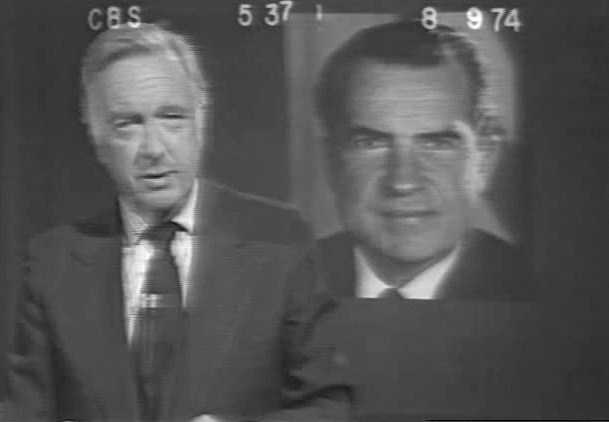
To continue research, you must become a registered user, which is accomplished at no cost. Once registered, I typed in the Nixon resignation, and found more than twenty clips, plus numerous others of anniversaries of the resignation, those of Vice-President Spiro Agnew, and other staff members. Each entry includes both a “details” and a “clip” button. The details button provides more information about the clip, including a brief description of the clip, the reporter(s) involved, and the length of the clip. The clip button puts the clip into a basket or allows you to remove the clip. The basket icon at the top right of the page then asks you to “order” the clip and takes you to a pricing page. Much to my surprise, the cost of three clips, totaling twenty-seven minutes came to a whopping  $ 127.00 to loan, unless you go to Vanderbilt to view on-site or your institution becomes a member of the Archive. As the website notes: “Streaming video is available to a limited audience and to limited parts of the collection due to copyright considerations. Currently, only individuals associated with sponsoring colleges and universities can view streaming video.” Unlike other public archives, like UCLA and the Library of Congress, which allow you to stream newsreel material free of charge, Vanderbilt charges fees. While such fees seemed reasonable in the analog era, when the archive had to find the tape, and make a copy (until recently on DVD, previously on analog tape), it now seems excessive. Why not allow low-resolution access for free and charge users for high-resolution images, since the cost of duplication has already been covered and exists on a server?  

Walter Cronkite on Nixon’s resignation

The term “loan” is also a misnomer, since the link is only available for one month, and does not include licensing fees. Any use beyond simple research, e.g. for inclusion in a documentary film, requires contacting the network that owns the broadcast, where the user will be charged additional substantial licensing fees. While this site is therefore useful for commercial users with deep pockets, it is a disappointment for academic and amateur users who are researching historical topics.     

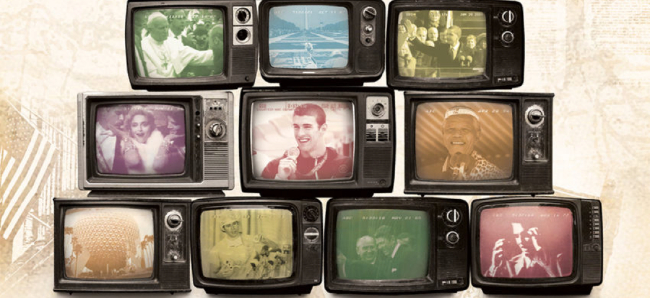
TVs galore, image from Vanderbilt webpage

342: R.I.P. Wolfgang Klaue

Archival Spaces 342

Wolfgang Klaue (1935-2024)

Uploaded 8 March 2024

Wolfgang Klaue in 2009, receing an honorary prize of the DEFA Foundation

Wolfgang Klaue, the former director of the Stattliches Filmarchiv der DDR (SFA) and, after German reunification, the founding director of the DEFA Stiftung, died on 16 February. He was a giant in the field of film preservation, winning a UNESCO Silver Medal in 1988, founding the FIAF Summer School, was President of the International Association of Film Archives from 1979 to 1984, and was a member of FIAF’s Executive Committee from 1969 to 1991. No one did more for good relations between film archives on both sides of the Cold War ideological divide between Soviet bloc countries and the capitalist West than Wolfgang Klaue.

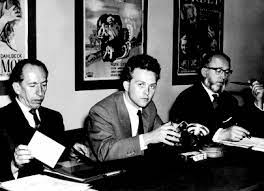
I first met Wolfgang at the FIAF Brighton Conference in June 1978, which he attended with his predecessor as head of the film archives of the German Democratic Republic, Herbert Volkmann; I was a graduate student in Germany at the time and eager for film contacts in both East and West. I met him again in 1981, when I was invited to attend the Leipzig Documentary Film Festival for the first time, and then saw him several more times in Leipzig in the following years. He and his assistant, Manfred Lichtenstein really helped me out of a major jam, when I arrived in Leipzig without a visa for the GDR, because the East German border guards at Checkpoint Charlie had given me a visa for East Berlin only, despite my showing them my official invitation to Leipzig for the festival; I could have been arrested for being a spy. I always knew Manfred to be a good colleague, and a real supporter of Wolfgang, so I guess I was surprised when I found out that he was the STASI agent in the Archive, whose job it was to keep tabs on Klaue and others. I didn’t think any less of him, he was doing a job required by a dictatorship. Later, my relationship with Wolfgang became much closer, i.e. he became a real mentor after I became curator of the George Eastman Museum and a regular attendee at FIAF conferences.

WOlfgang Klaue at 1959 FIAF Conference
Herbert Volkmann

Born on 6 August 1935 in the Iron Mountains (Erzgebirge), near the border between Saxony and Czechoslovakia, Wolfgang Klaue studied philosophy at the Humbolt University in Berlin, hoping to become a theater dramaturge. Completing his studies in 1957, he was hired by the Deutsche Film A.G. (DEFA) as a dramaturge in the Studio for the popular scientific film that same year, but before the year was out, he joined the staff of the State Film Archive, which had been founded only two years earlier in 1955, having completed an internship there while a student.

In 1969, Klaue became Director of the Staatliches Filmarchiv. Even though Klaue was of necessity a member of the Socialist Unity Party, and remained politic in deference to his superiors in the East German government, he walked a fine line between compliance and passive resistance. Through his leadership Archive staff was able to travel abroad, communicated continuously with “enemy” colleagues in the West, and had steady access to Western film publications; the Archive was also a haven for many who did not seamlessly fit into the system. Like Volkmann, some came after experiencing political difficulties elsewhere. As one co-worker later admitted to Klaue, she would have emigrated, had she not worked at the film archive. My own experience was that the colleagues at SFA were among the friendliest, most passionate,  unbureaucratic, and helpful in any FIAF archive, even though they were subject to all the daily ideological, financial, and material shortcomings of the German Democratic Republic.

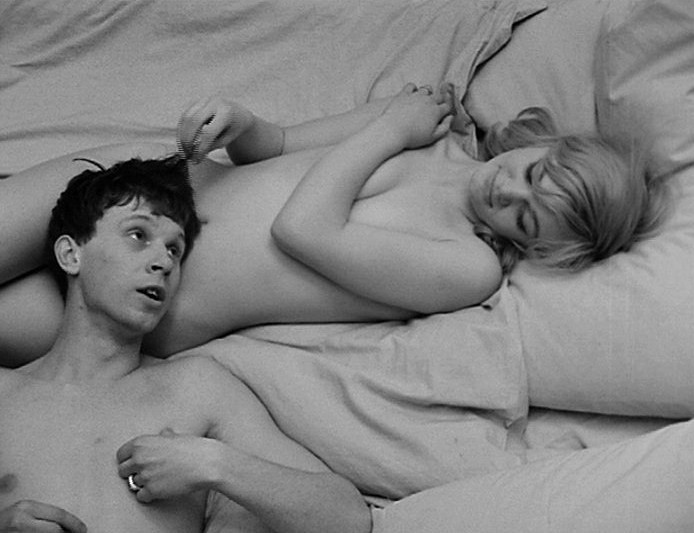
Loves of a Blonde (1965, Milos Foreman)

Compliance with ideological directives and passive resistance to some regulations was the strategy. When in December 1965 the government banned a whole year of film production at DEFA, while harshly censuring its filmmakers, Klaue and Volkmann quietly stored the films in secret vaults rather than destroy them, allowing them to be rediscovered after reunification. Films shown at the SFA’s Camera Cinema were not always passed by government censors, as required by law. Indeed, public programming and publications were the most sensitive and under the most ideological scrutiny, with Klaue getting officially reprimanded for screening Milos Foreman’s The Loves of a Blonde (1965). Self-censorship was a fact when writing film history, yet in the 1970s a Leipzig retrospective on the German Workers Film movement tiptoed around the fact that its founder, Willi Münzenberg, could not be mentioned.   

Opening of “Der amerikanischer Film”, 10 April 1988, Erwin Geschoneck (center) with other GDR luminaries

At FIAF conferences, I would often seek Wolfgang out to practice my German, but also because he was so forthcoming with ideas and information and I saw his leadership as a model to be emulated. From my vantage point at that time, the SFA was the least dysfunctional of all the German film archives. In April 1988, then, I had the opportunity to work directly with him, when he suggested I train the docents for a huge exhibition on American film in East Berlin, sponsored by the U.S. Information Agency. The exhibition on the ground floor of the Berlin Radio Tower at Alexanderplatz opened with literally several thousands of visitors lined up around the square and subsequently broke all attendance records. During that time, Klaue took me on personal tours of the Film Archive, the Babelsberg UFA studios, and the Konrad Wolf Film School in Babelsberg, where I gave a lecture. It was the first time I spent several weeks in East Berlin without going to West Berlin, and it allowed me to see how different the perspective was behind the wall.

That same year in October, I was able to return the favor when Klaue, Manfred Lichtenstein, and Günter Schulz toured the George Eastman Museum, Niagara Falls, and later were guests at a cocktail party in Chicago, hosted by my mother-in-law for a film history conference at the University of Illinois at Chicago.  We also began an unfortunately short-lived exchange program (due to reunification), since Eastman Museum had many unique German titles on nitrate film and I was having trouble getting anyone’s attention in the other German archives. When I moved to the Munich Filmmuseum in 1994, Klaue again became a steady confidant, even though by then he had been relieved of his duties and was working on research projects as a contractee at the Federal German Archives. Happily in 1998, he began setting up the DEFA Foundation to oversee the rights to more than 8,000 films produced in the GDR, and was its founding director from 1999 to 2003. He also helped create the DEFA Film Library at U. Mass Amherst with Barton Byg, which has made many, many rare GDR films accessible to American scholars. I last communicated with him in 2021, when he apologized for not attending a ceremony where I received an honorary award from the German Cinematheque Association, an award he had previously received in 2019. He was truly one of the good guys.

341: Most Expensive Industrial Film Ever

Archival Spaces 341

Most Expensive Industrial Film Ever

Uploaded 23 February 2024

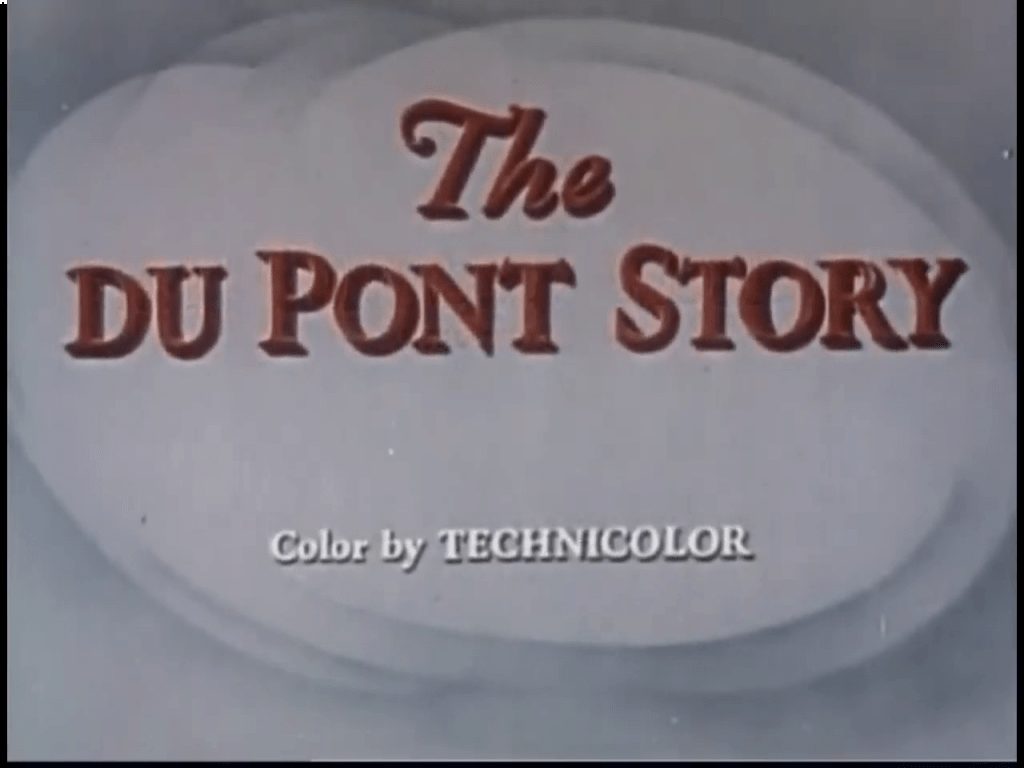
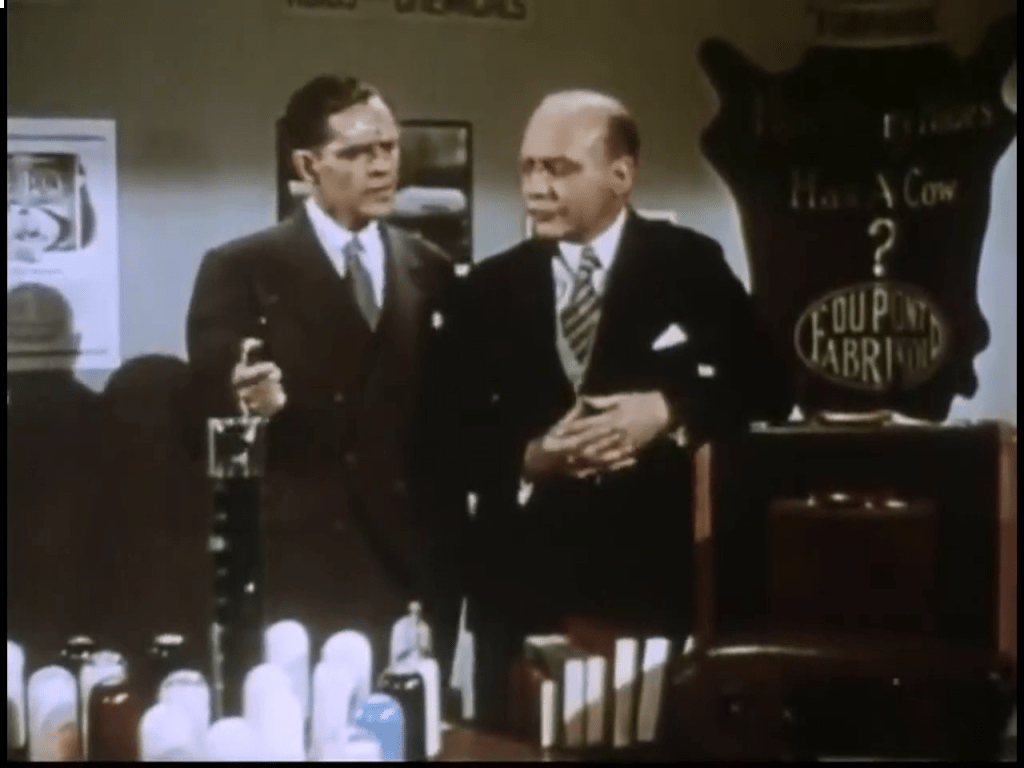
In 1948, the Apex Film Co., a company founded by former MGM executive Jack Chertok to produce educational, industrial, and other sponsored films, was hired by E.I. Du Pont de Nemours to produce a feature-length color industrial on the history of the DuPont Company for its 85,000 employees: The Du Pont Story (1950) was the most expensive sponsored film ever made with an unheard of budget of $250,000 ($3,200,000/2024). Under the working title, “This Work Goes On,” it was based on a non-fiction book by William F. Dutton, Du Pont – 140 Years, published by Scribners in 1942. The film featured more than 225 actors, including Sigrid Gurie, Stanley Ridges, Lyle Talbot, Stacy Keach, Sr., Donald Woods, and Whit Bissell, along with hundreds of extras. It was shot in a Hollywood rental studio on as many as ninety-one sets, which replicated many original sites in Wilmington, Delaware. According to an Apex spokesperson, “It will not play down munitions or anything else, but will be a straight history which will include company faults and mistakes and how they were overcome.” The DuPont Company, on the other hand, hoped the film would instill in younger employees “the same pride in the background and traditions of DuPont as the old-timers have.”

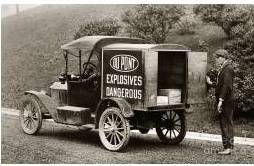
DuPont Company truck, 1916
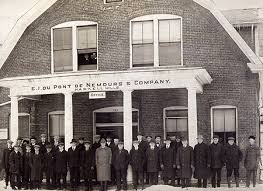
Main Office staff, 1918

In point of fact, DuPont had learned that public relations through mass media was an essential element of modern business administration, but only shortly after the Depression hit when DuPont started getting extremely bad press because there had been persistent rumors about the company reaping vast profits during World War I by supplying half the world with gun powder and explosives. “The Special Committee on Investigation of the Munitions Industry”, aka Nye Committee, under the chairmanship of Gerald Nye (Republican, N.D.) confirmed rumors of price fixing, war profiteering, and conspiring with the banks to stoke war fever in Senate Hearings, beginning in September 1934. In fact, the production of explosives had increased from 8.4 million lbs. in 1914 to 544 million lbs in April 1917. While Nye, an outright Fascist, and Adolf Hitler sympathizer, hoped to smear the American banking system with antisemitic slurs, the attacks stung DuPont. Added to the negative ledger was the fact that the DuPont family also controlled General Motors which was subject to a major labor strike in 1936 that was settled in favor of the United Auto Workers and had broad public support. To counteract negative public images, DuPont began sponsorship on 10 October 1935 on NBC Radio Network of a weekly radio program, “The Cavalcade of America.” Indeed, the radio show, which presented important moments from American history and always began with the Company’s slogan, “Better Living through Chemistry,” contributed substantially to the largely positive image of DuPont by the end of World War II.

The Du Pont Story (1950, William Thiele)
DuPont Chemical Plant, Parkersburg, WV

The Du Pont Story (1950) was copyrighted on 15 December 1950 and was shown in Wilmington, DE, and at over 100 DuPont plants and sales offices across the country in Spring 1951. Theatrical screenings soon began, running twice daily over three weeks in Philadelphia‘s WRVA. Not only was admission free, DuPont paid cinema owners for each customer attending. It was listed in the Educational Film Guide (1953), available for free loan on 16mm, and is today available on YouTube.

The Du Pont Story (1950) with Eduard Franz, Sigrid Gurie
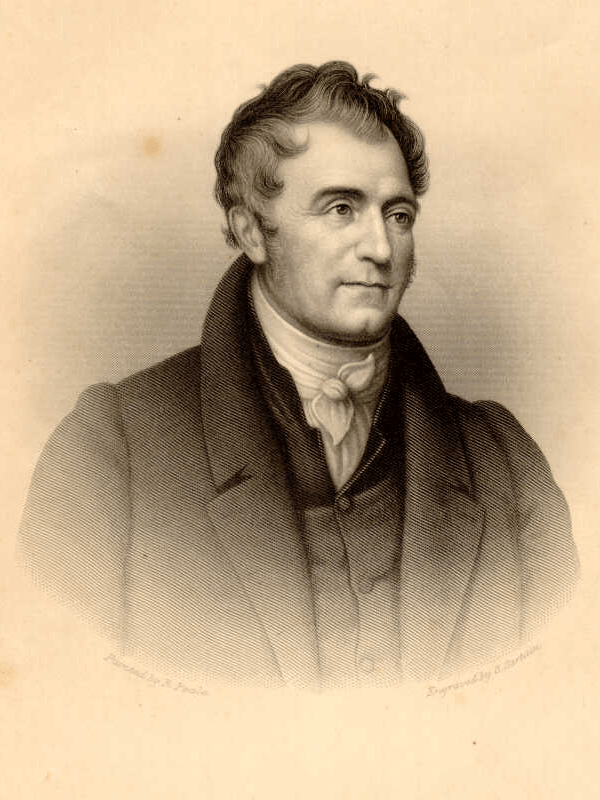
Éleuthère Irénée du Pont

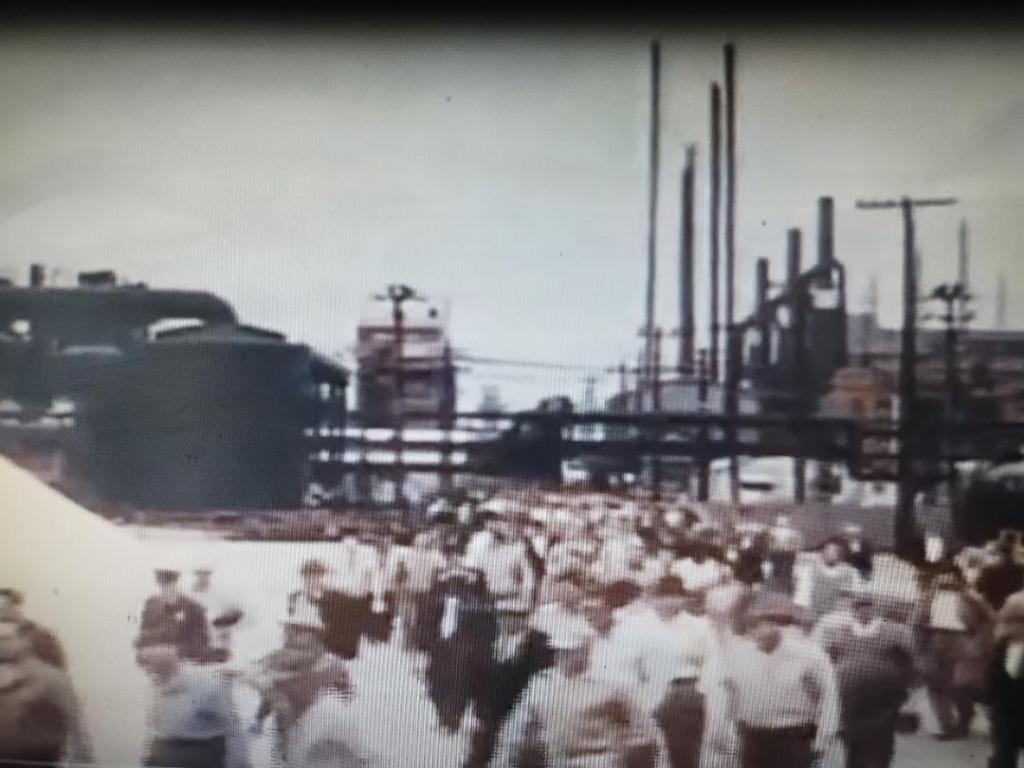
The film opens at a DuPont chemical plant in Waynesboro, VA., where the night shift is leaving and the day shift is going to work, the narrator explaining that the company operates 72 plants in 25 States, producing hundreds of products. The color film then flashes back to the company’s founding in 1803 on the banks of the Brandywine, where the recent French immigrant, Éleuthère Irénée du Pont, who had made gunpowder in France, is convinced that there is a huge market for quality gunpowder in America. The company expanded rapidly, thanks to the lower cost of American powder, now equal to European products, but an explosion in 1818 destroyed 85,000 lbs. of powder, costing forty men their lives. Under the founder’s son, Alfred du Pont, the company expands, then brother Henry du Pont, “the General,” takes over the company, while his nephew, Lamont duPont invents dynamite before blowing himself up.

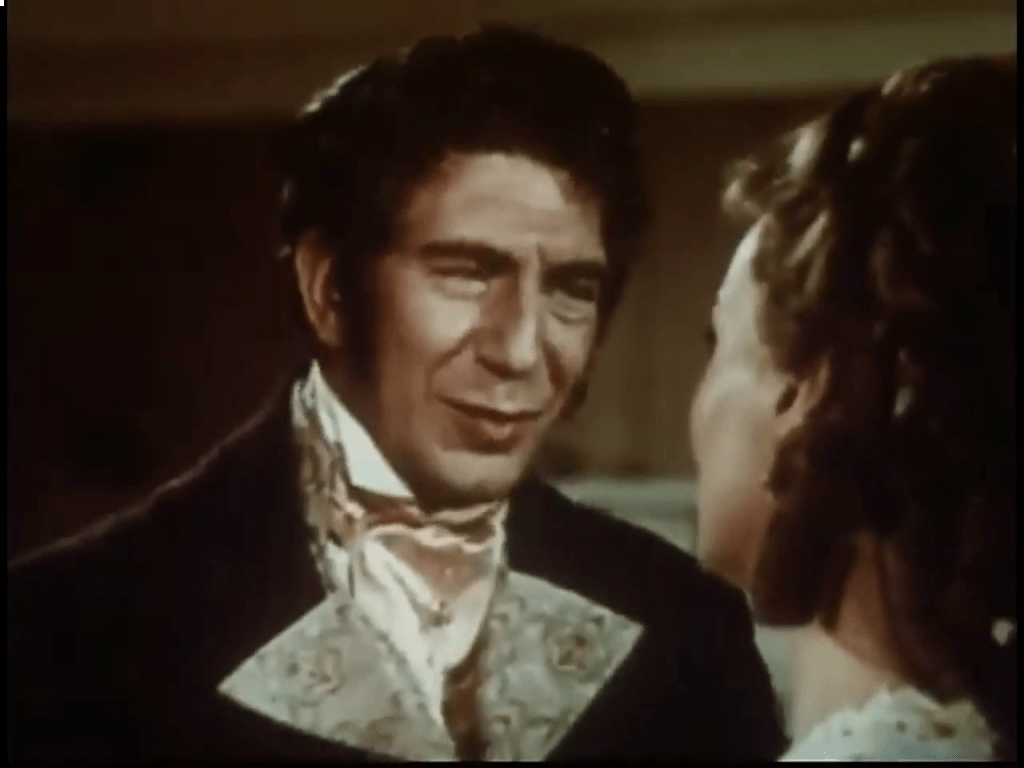
The Du Pont Story with Lyle Tallbot (Eugene du Pont), David Bruce
The Du Pont Story with Whit Bissel (Wallace Carruthers)

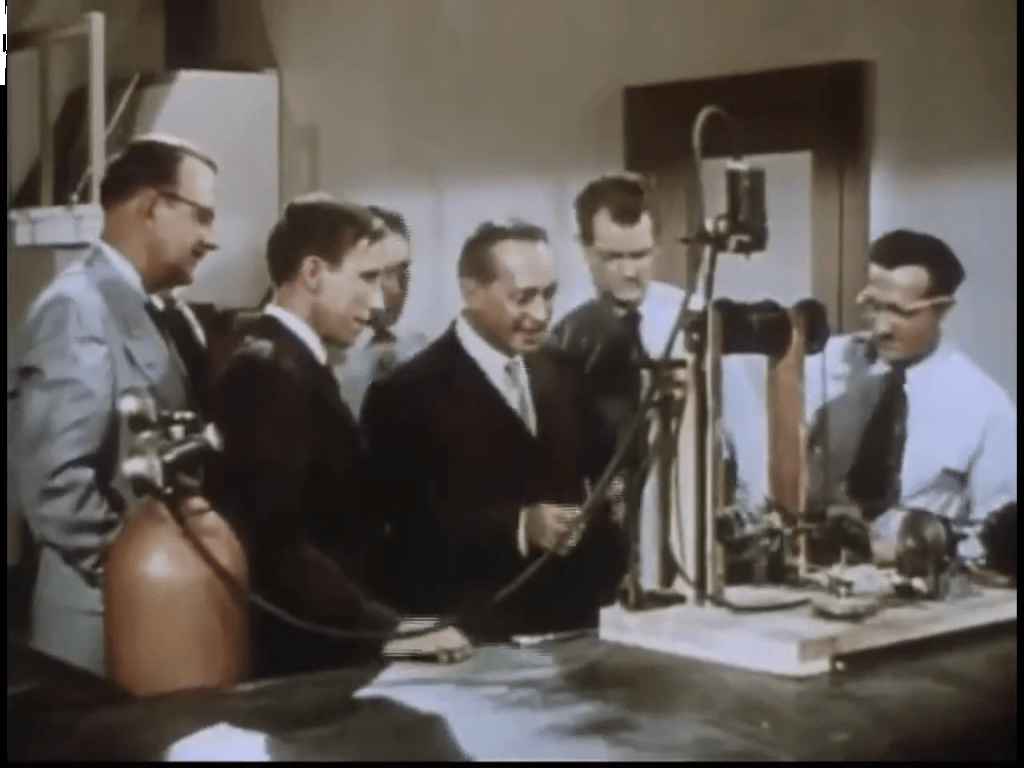
After Henry du Pont’s death, Eugene du Pont modernized the company’s administration before he died in 1902. Coleman du Pont becomes President, Pierre du Pont CFO, and Alfred du Pont head of production. Coleman pushed for expansion into new product lines and in 1903 organized an experimental laboratory to do basic research on new products like solvents, fabrics, plastics, and dyes because the “sound way to success is fulfilling a need.” DuPont also surveys the public about its needs for synthetic fabrics, like cellophane, rayon, and nylon. In 1940, Walter S. Carpenter became the first President who was not a family member, followed in 1948 by Crawford Greenewalt. Both Carpenter and Greenewalt play themselves in the film’s final reel.

The Dupont Stroy: Donald Wooids (Irénée duPont), Stacy Keach (Pierre S. duPont)
The Dupont Story: Walter S. Carpenter, Crawford Greenewalt

As a sponsored film from the largest chemical company in the United States, The Du Pont Story sought to project the image of a modern capitalist enterprise that took its civic responsibility seriously, creating products that improved the lives of Americans, while offering employment to tens of thousands. Given DuPont’s negative reputation for war profiteering during World War I, the film’s narrative of the 20th century deemphasized the production of explosives in favor of research and development of new products that cater to American consumers. Technological innovations are characterized as altruistic. In 1915, for example, the Company began spending millions on the creation of new dyes, since America was cut off from high-quality European dyes, due to World War I. In the 1920s, they invested millions in creating fast-drying lacquer for automobiles, but the film fails to mention the company’s financial stake in the auto industry. The development of nylon for parachutes and other products is characterized by decades-long research into polymers by Dr. Wallace Carothers, while the company did its patriotic duty to the nation in World War II by supporting American defense, however without mentioning its involvement in the Manhattan Project to create a nuclear bomb.

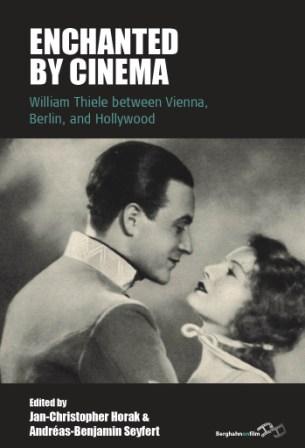
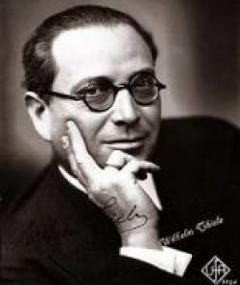
William Thiele, the subject of my new book, directed and contributed to the script. He structures the narrative as a series of dialogues between company leaders of various generations, illustrating significant moments in the company’s history. Despite major gaps in that history, Thiele avoids the pitfall of a boring parade of waxworks by focusing on technological development and the company’s investment in products known to the public, while coaxing pithy performances from his cast of cameos. Soon after, Thiele would direct thirty-six episodes of the TV version of The Cavalcade of America, sponsored by DuPont.

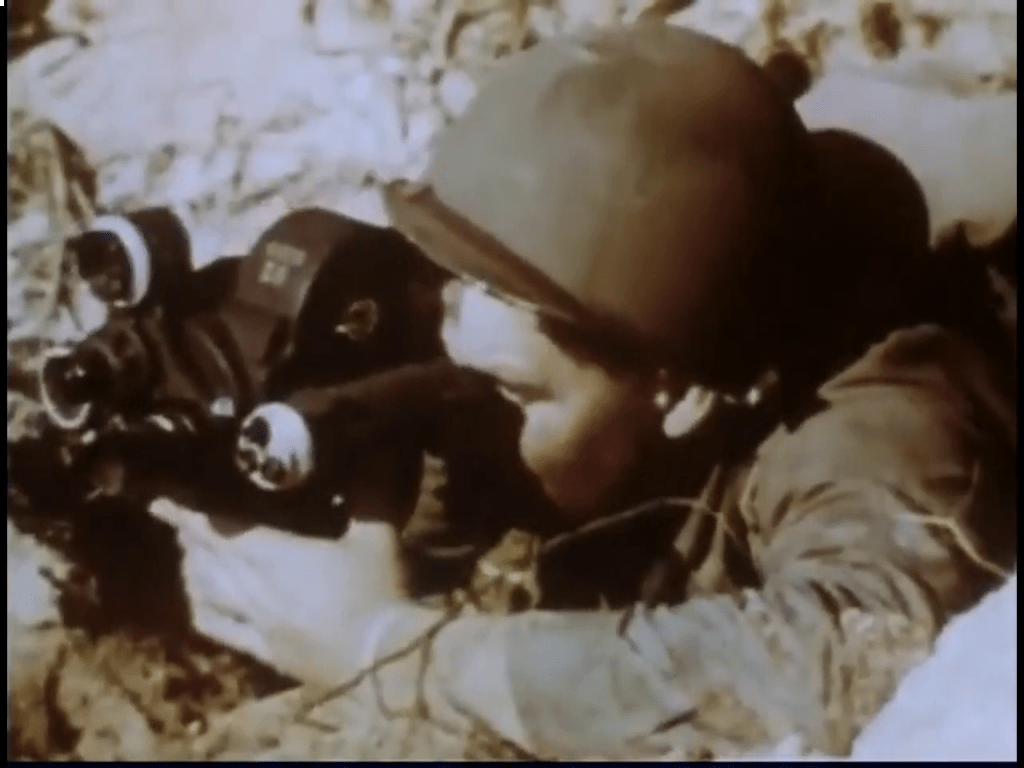
The Dupont Story: Dupont motion picture film at the front in World War II

340: Zone of Interest

Archival Spaces 340

The Zone of Interest

Uploaded 9 February 2024

The infamous selection ramp at Auschwitz-Birkenau today

In June 1990, I flew to Katowice, Poland to work on a traveling exhibit of American film, developed by the now-defunct U.S. Information Agency. While there I took a day trip to Oświęcim, better known by its German name, Auschwitz. In  Auschwitz I, the work camp, visitors first viewed a short film, made by the Russians in 1945 that barely mentioned the word Jews, shockingly, and included only a Catholic funeral; the signage in the onsite exhibits mentioned the number of Poles, Czechs, Hungarians, etc. killed, but failed to identify them as Jews. I then asked my driver to take me to Auschwitz-Birkenau, the death camp, but there were no signs to direct us, so we had trouble finding it. Once there, I noticed that there were ordinary Poles living in what had been the villa of Camp Commandant Rudolf Höß – again no signage anywhere – and apartment buildings and wash hanging on clotheslines within a hundred feet of the gas chambers. This was literally months after the Communist government of Poland had fallen, so it was not surprising that anti-Semitism still informed the presentation; on the other hand, today it is a crime in Poland to say the Poles participated in the Holocaust.

Höß family villa today.
Aerial view of Auschwitz Birkenau with Höß Villa top left

I remembered that trip watching Jonathan Glazer’s The Zone of Interest (2023) recently, an extremely disturbing film, possibly because it eschews any visual depiction of violence. The film begins with the title appearing in grey on white on screen, switching to white on black, then slowly fading to black, the darkness continuing over atonal music for seemingly minutes, both an elegy and an overture. Halfway through the film, Glazer fades from a close-up of a rose to a completely red screen and holds the shot, one of Glazer’s experimental techniques. He later uses a thermal imaging camera to film two black and white scenes of a young Polish girl hiding food in places where inmates will find it, while the film ends with cinema verité shots of Polish charwomen today cleaning the gas chamber, the crematoria, the exhibits of hair and shoes in Auschwitz I, which heightens the everyday banality of what we have witnessed.  

Zone of Interest (2023, Jonathan Glazer)

The action begins with a long shot of a German family in bathing suits, swimming, picking berries, then returning home, where Rudolf Höß and his family celebrate the Commandant’s birthday. While he is in SS uniform, there is little indication here or anywhere else in the film that we are in Auschwitz. For the family, it is a privileged, happy life with a large house, numerous servants, and free food and clothing. Only the soundtrack with its non-stop din of dogs barking, gunshots, screams beyond the high wall, and the chimneys constantly belching smoke and fire reveals where we actually are, while the stench of burning bodies is inscribed in the faces of newcomers, like Höß’s mother-in-law.

Sandra Hüller as Hedwig Höß in Zone of Interest

It takes a focused eye to see the horror of genocide, e.g. when Hedwig Höß tries on a full-length fur coat brought to her by an inmate, when dad chases the kids out of a creek after finding something, presumably human remains, when the oldest boy in his Hitler Youth uniform inspects a pouch of gold teeth, later locking his brother in the greenhouse and making a hissing sound, or when an inmate spreads ashes in the garden for fertilizer. Yet, when Frau Höß tends her garden or hosts pool parties for friends, the family steadfastly looks away, just like the majority of good German citizens looked away when their Jewish neighbors were deported. Hedwig quickly burns her mother’s note, after she flees without a word. The first family crisis occurs only when Höß is transferred to KZ Oranienburg, the wife insists on staying in her paradise, because country life is good for the children. She is apparently ok with her husband being almost pathologically detached, getting sex from inmates in his office, or showing more tenderness to his horse than to her.

Christian Friedel as Höß with Topf & Sons, builders of the crematoria
Friedel in Zone of Interest

Other than the title, there is virtually no connection to the Martin Amis novel, on which the film is ostensibly based. The novel concerns the Commandant’s jealousy, when he thinks his wife is having an affair with another SS Officer. The never consummated affair is barely hinted at in a greenhouse scene in The Zone of Interest, where Frau Höß gives a cigarette to an SS officer and quietly smokes with him.

The real Höß (right) with SS Buddies
Aus einem deutschen Leben (1977) with Elisabeth Schwarz, Götz Georg
Aus einen deutschen Leben (1977, Theodor Kotulla)

Not mentioned in any contemporary reviews of The Zone of Interest is that Glazer was probably conceptually inspired by another source: Theodor Kottula’s 1977 German feature, Aus einem deutschen Leben (translated: A German Life, but released as Death is My Trade), based on Rudolf Höß’s published autobiography. While Kotulla’s film covers Höß’s career from World War I to Auschwitz, we see no violence, no selection ramp, no killings, although we and two inmates hear them. Both films treat the happy bourgeois family similarly, ignoring the horror, Höß consciously shielding them from the specifics of his job. Kotulla and Glazer keep their actors at a distance, their performances cold, unemotional, with rare exceptions zombie-like. In both films the Commandant reviews architectural drawings for new more efficient crematoria, but, as was with all Nazi terminology, language obfuscates, speaking of units processed rather than human beings.

It was that level of dehumanization that allowed ordinary Germans after the war to turn themselves from a nation of perpetrators into a nation of victims, steadfastly repressing their crimes for more than a generation.

Coda: After discussions with my colleague Raye Farr (formerly of the Holocaust Museum, Washington, D.C.), it seems clear, the film’s geography is ambiguous. Höß’s villa was outside Auschwitz I, the work camp, not Birkenau, as I have assumed all these years, but the proximity of the large crematoria, seen belching smoke and fire from the villa, suggest Auschwitz II, which would have been behind and west of the villa. The infamous ramp at Birkenau only became operational in 1944 with the arrival of the Hungarian Jews, the old ramp lying between Auschwitz I and II.

Zone of Interest (2023) pool party in the shadow of industrialized death