355:  Charles Puffy

Archival Spaces 355

Puffy’s Tragic End

Uploaded 6 September 2024

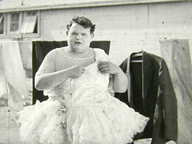
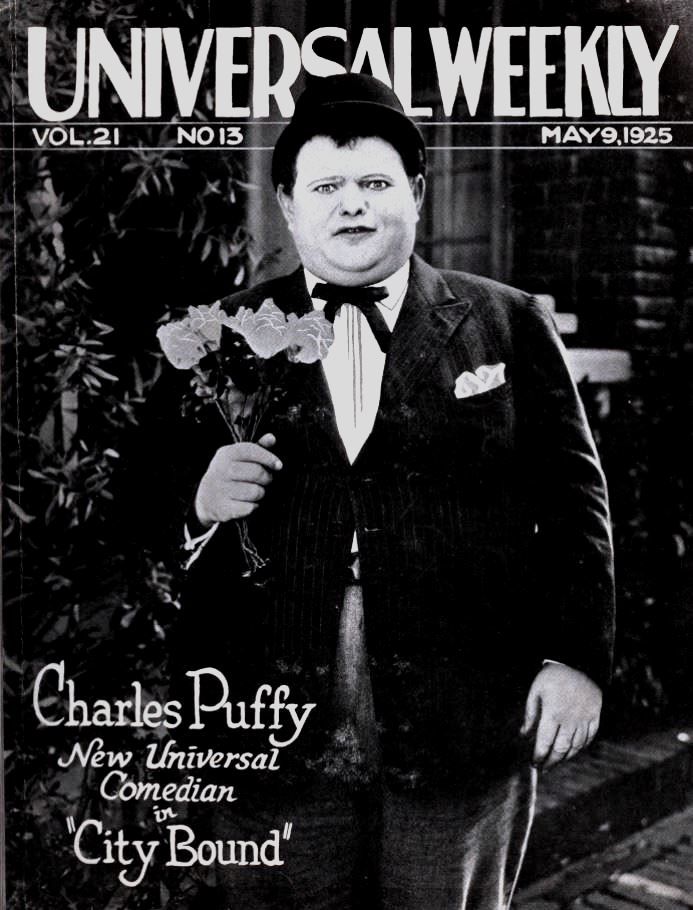
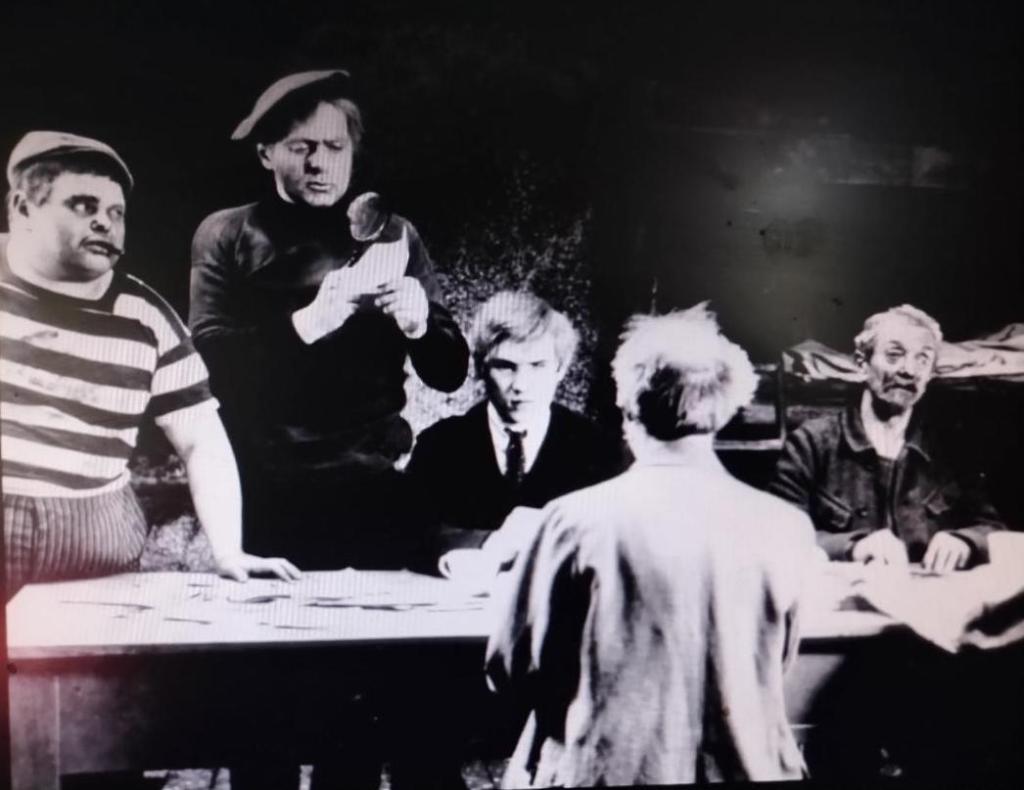
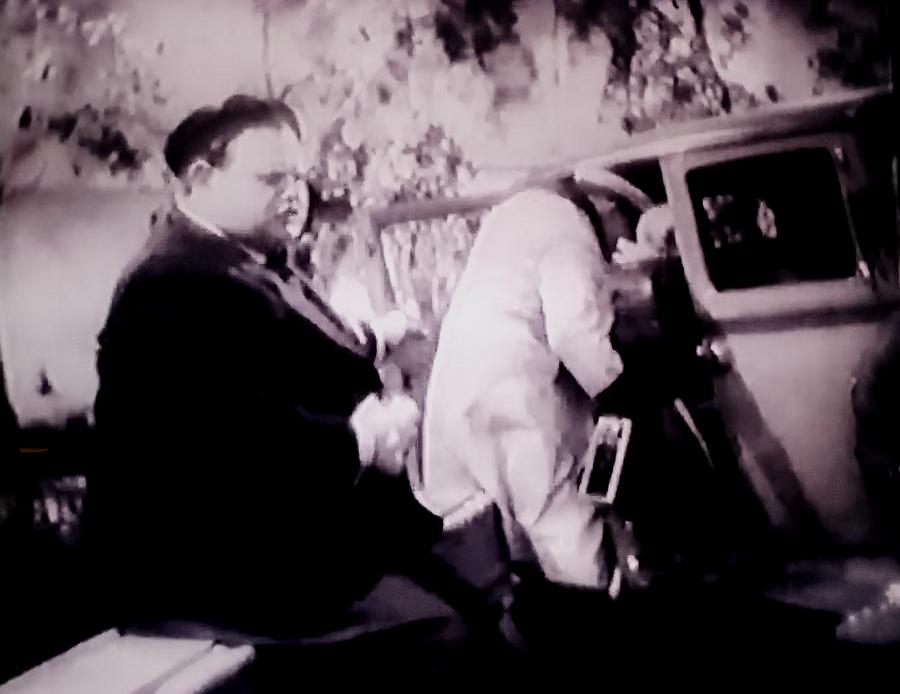
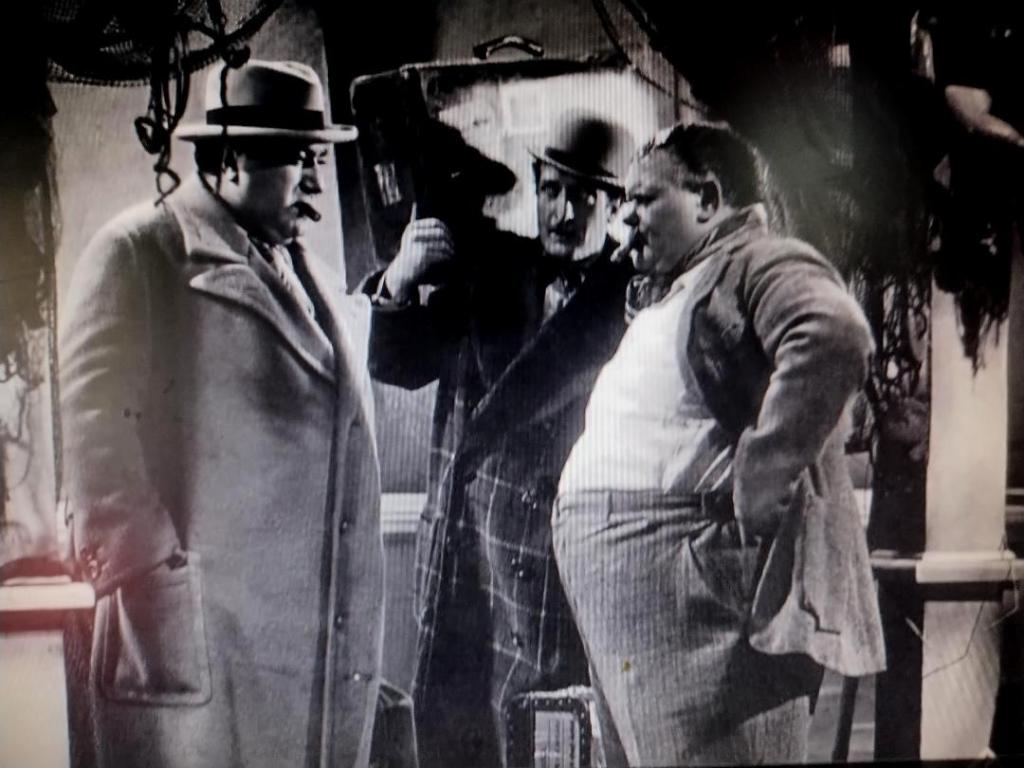
Whenever they needed a fat man, Károly Huszár at 290 lbs. was there. Starting his film career with Michael Curtiz in Hungary in 1913, the comedian moved to Germany in 1920, before becoming a star of short comedies for Universal in 1924, as well as a character actor in features. When sound arrived, he returned to German cinema, where he remained popular, at least until Joseph Goebbels declared him a sub-human, after which he was able to work a few more years in Austria and  Hungary, before anti-Semitic laws made him unemployable there, too.  After that, his traces seem to disappear. Was he murdered by Nazis, like so many  Hungarian  Jews?  Two filmographic websites state he died in Tokyo, but are unconfirmed. It was not until I read the published letters of Paul Kohner (Ich bin ein unheilbarer Europär. Briefe aus dem Exil, edited by Heike Klapdor) that I learned the truth of Puffy’s tragic end.  

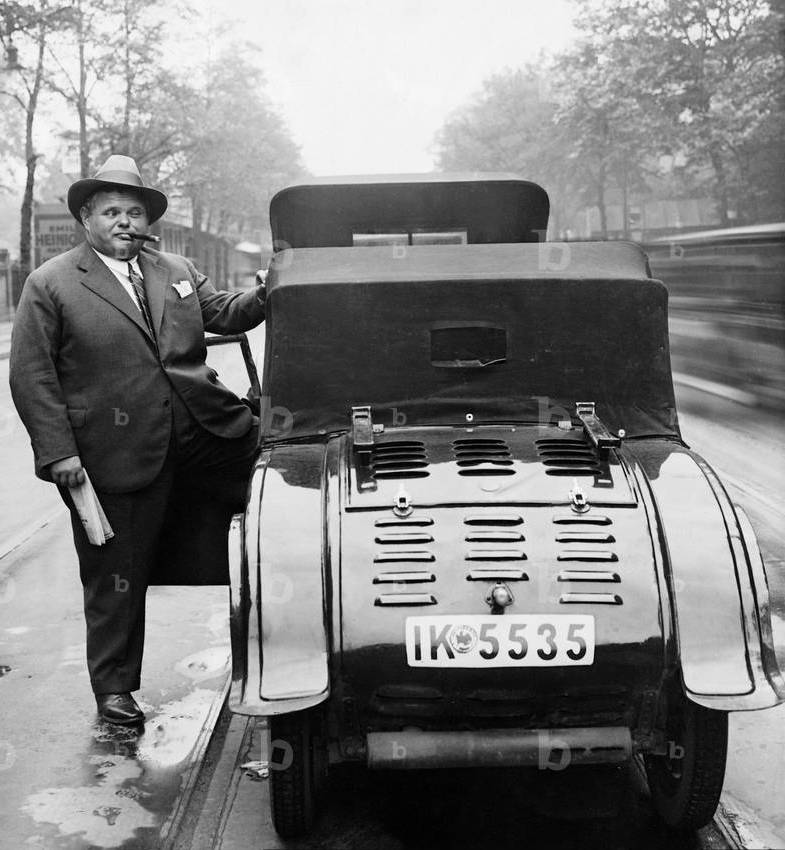
Károly Huszár in Berlin
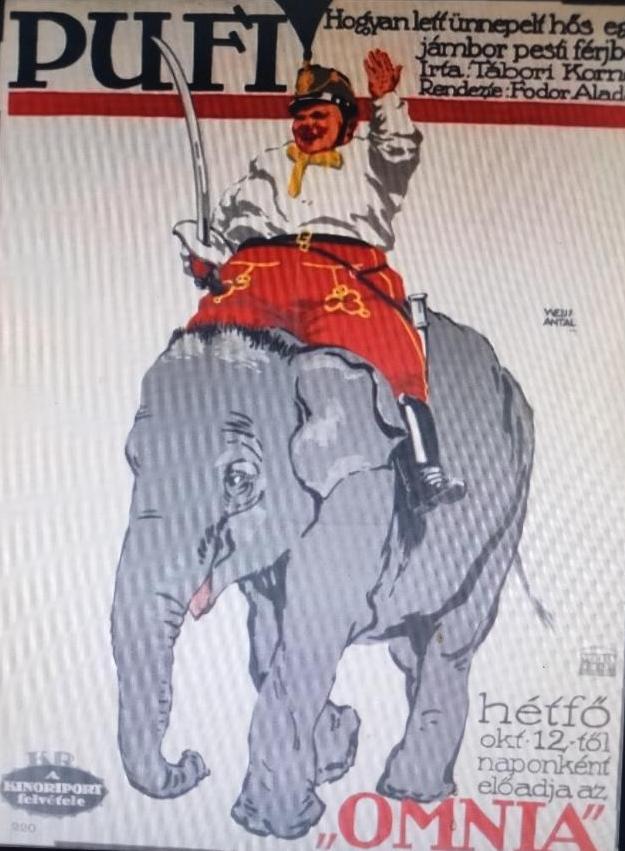
Pufi – How a Devout Husband from Pest Got Married (1914, Aladár Fodor)
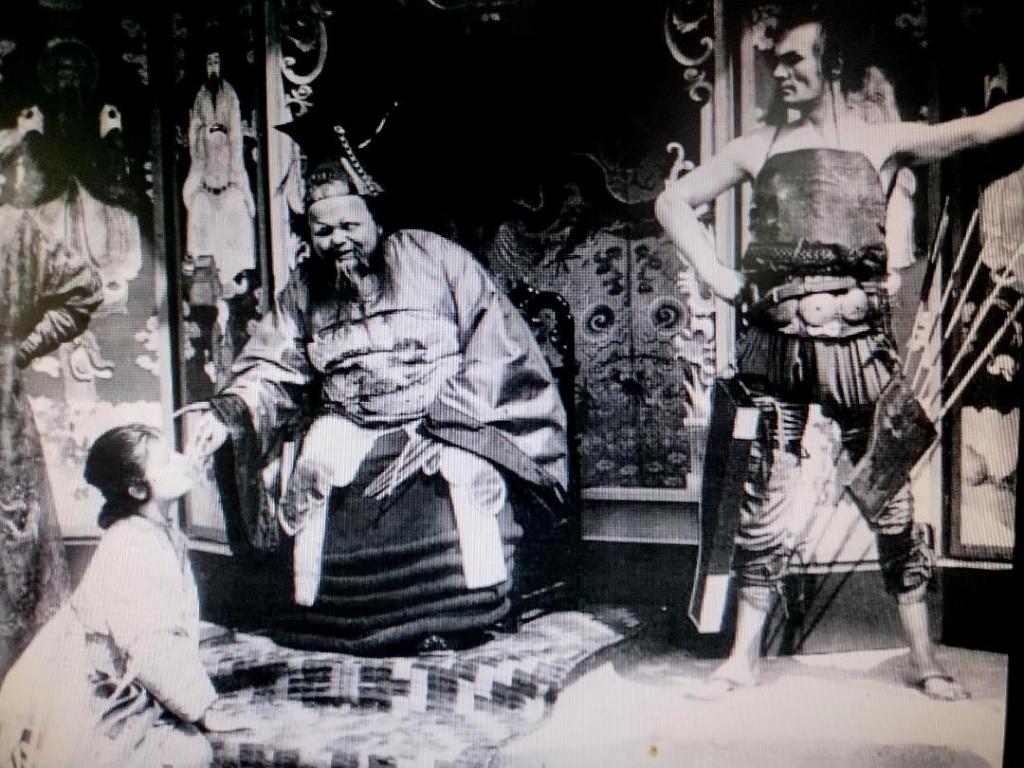
Destiny (1921, Fritz Lang)

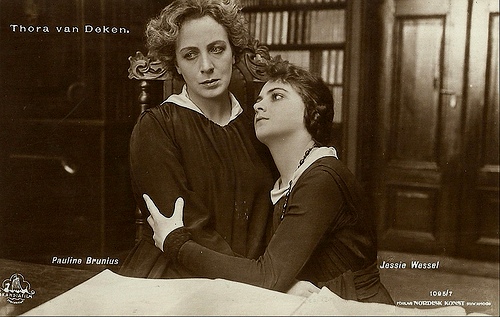
Károly Hochstein was born in Budapest on 3 November 1884 into a Hungarian-Jewish family. As a teenager, he was a champion swimmer, then joined the Actors’ Training School of the National Actors’ Association the year it was founded  (1903), before making his theatrical debut in 1905. Gaining a significant amount of weight, Huszár created the character of Pufi, which means Fatty in Hungarian, after joining Endre Nagy’s Budapest cabaret in 1910. By 1914, he was starring in slapstick comedies in his Pufi guise in Pufi – How a Devout Husband from Pest Got Married (1914) and Pufi Buys Shoes (1917), then played roles in two Hungarian features under Michael Curtiz, before the failed Hungarian revolution sent him to Germany. In 1921 alone, Karl Huszár played in no less than fifteen films as a supporting player, including George Jacoby’s six-part adventure film, The Man Without a Name and Fritz Lang’s Destiny (as the Emperor of China), followed in 1922 by Lang’s Dr. Mabuse, der Spieler.

Kick Me Again (1925, Zion Myers)
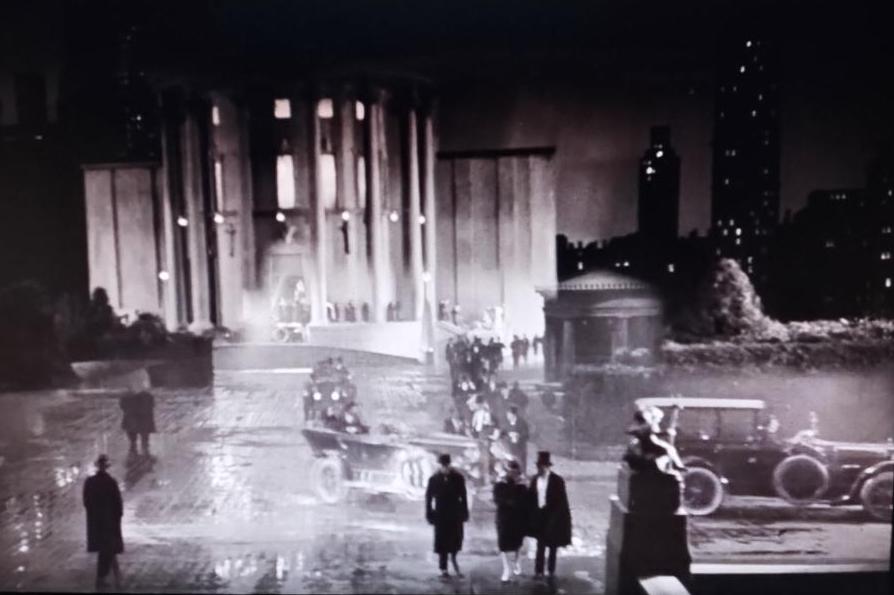
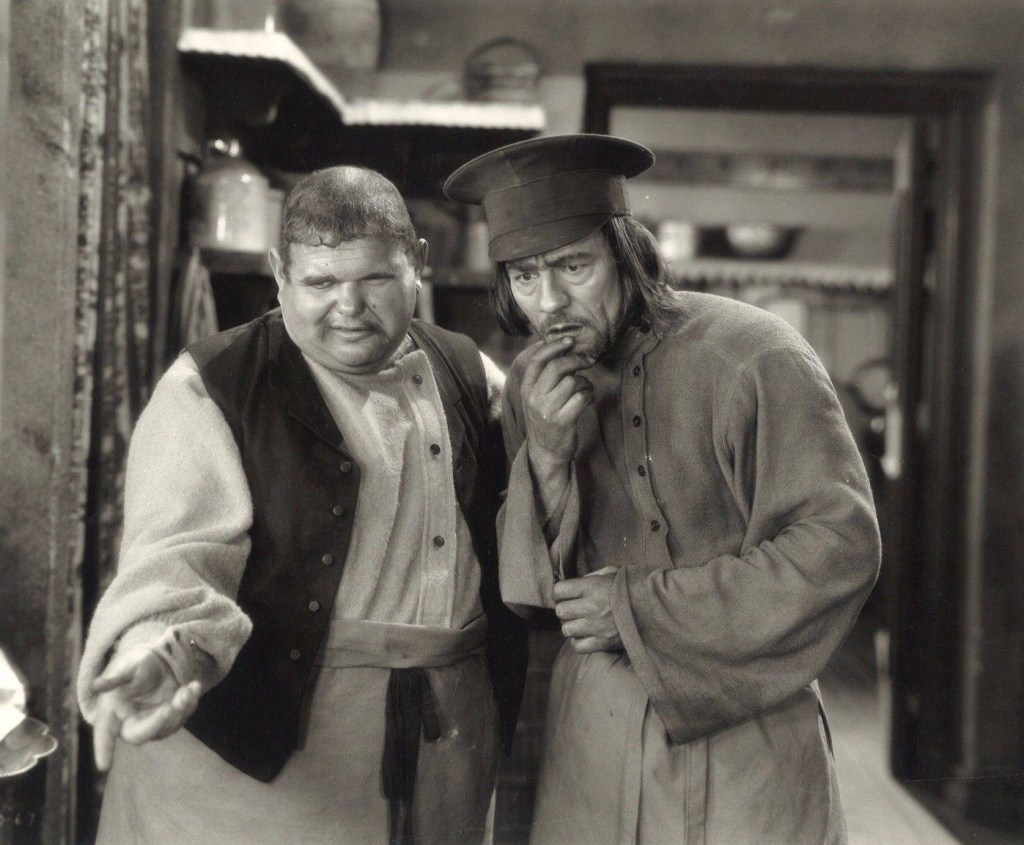
Mockery (1927, Benjamin Christensen)

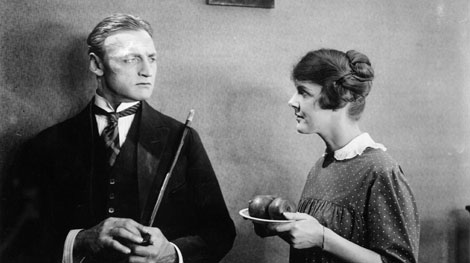
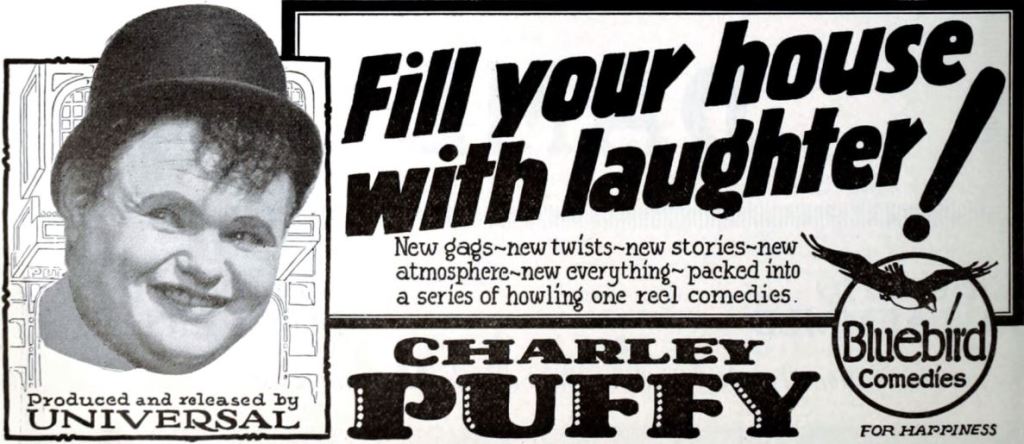
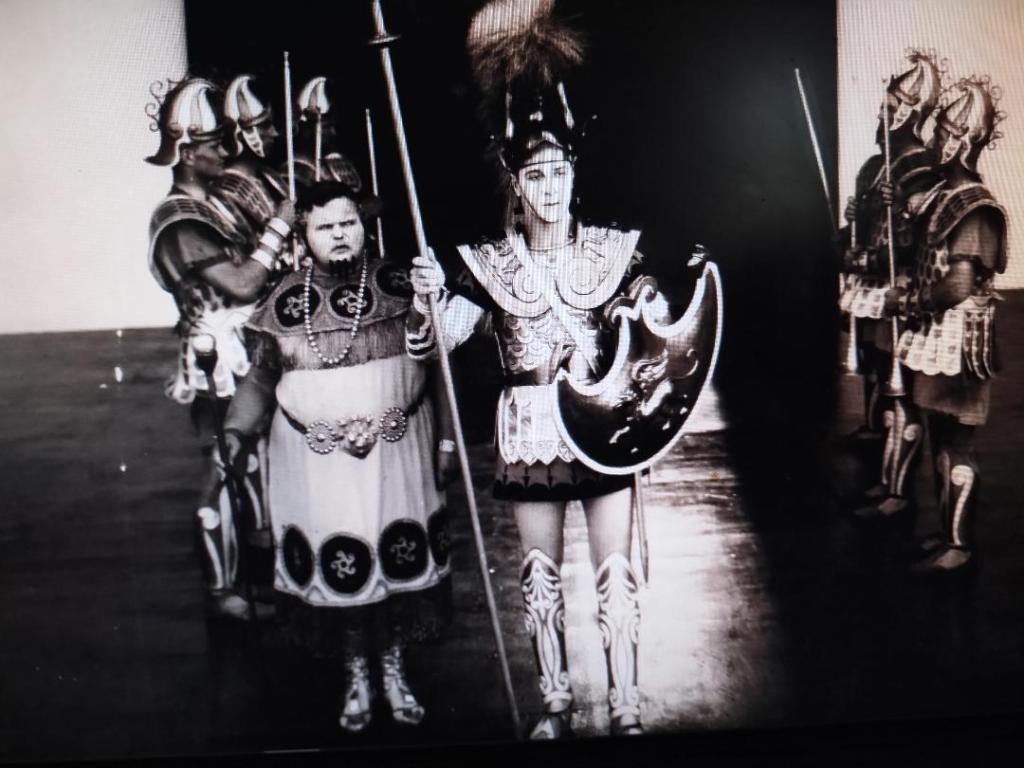
 In 1924 Carl Laemmle hired him on one of his European junkets, starring him in no less than fifty Bluebird comedies as Charles Puffy, a slapstick successor to the disgraced Rosco “Fatty’ Arbuckle. Puffy also shined in character parts in such ambitious films as Benjamin Christensen’s Mockery (1927), Alexander Korda’s The Private Life of Helen of Troy (1927), and Paul Leni’s The Man Who Laughs (1928), before the coming of sound ended his American career. By then he had made millions, allowing to purchase his country estate, Nógrádveröce, on the Danube north of Budapest. His accent-free German made him a favorite character actor at UFA in Babelsberg so he commuted from his estate to Berlin and Vienna for film shoots.

Curt Gerron, Hans Albers, Huszar-Puffy in The Blue Angel (1930, Josef von Sternberg)
Huszar-Puffy in Rakoczy-Marsch (1933, Steve Sekely)

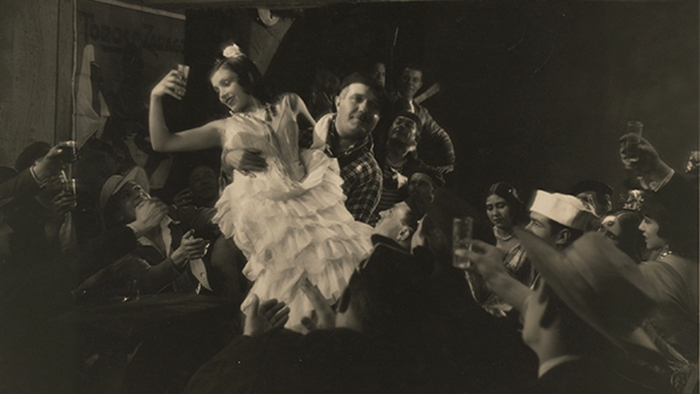
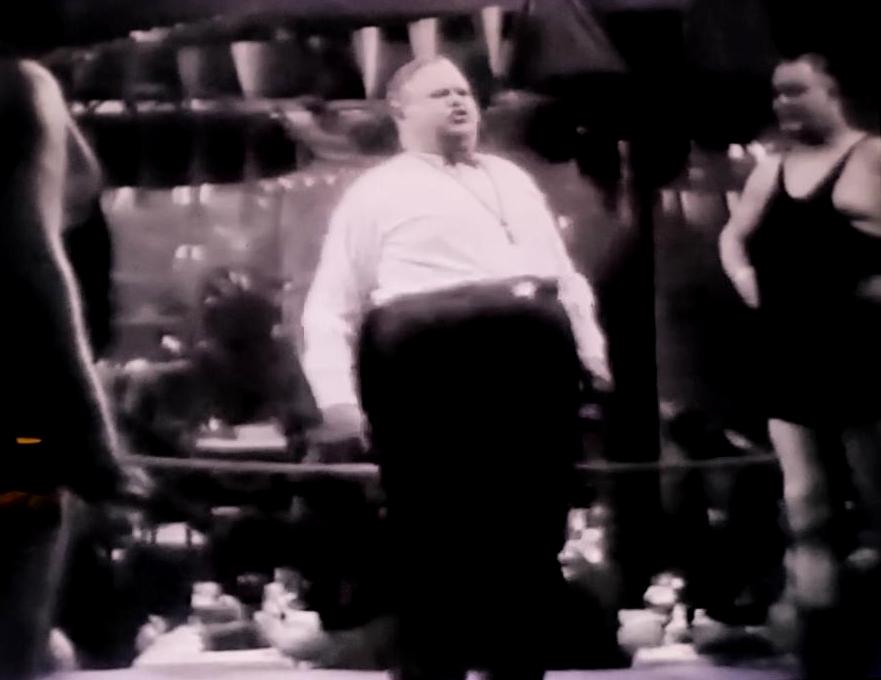
Now appearing under the name Karl Huszar-Puffy, the actor played an innkeeper in The Blue Angel (1930), a pesky suitor in My Cousin from Warsaw (1931), a wrestling referee in Five from a Jazz Band (1932), and an army veterinarian in Rokoczy-March (1933), among many other supporting roles. The last named film was produced in German in Budapest, where Puffy was able to appear subsequently in seven more films, including several dual language versions, like 4 ½ Musketeers (1935) and Little Mother (1935) before Hungarian anti-Semitic laws blacklisted him in 1938.

Paul Kohner in Hollywood

As early as April 1933 Puffy had written to his friend Paul Kohner, then a producer at Universal, that the Nazis were “idiots and bandits.” By March 1938 with no work in sight and Austria now nazified, Huszar wrote to Kohner for help to get to America, since Kohner was now an independent agent representing the European community in Hollywood. Puffy wrote he had invitations from Louis B. Mayer, Jack Warner, and others, but an expired American reentry visa, no quota number, and no ability to take his money out of the country and that he couldn’t live as a beggar abroad. Kohner and Huszar exchanged several more letters in 1938, Puffy worrying he couldn’t sell his estate, Kohner arguing to just leave it all behind and save his life. In 1939, Kohner tries repeatedly to secure an affidavit for Puffy, writing to Joseph Schenk at Fox, Jack Warner, L.B. Mayer, and Ernst Laemmle, before Warner agreed to an affidavit in June and a $ 100 a week contract in September 1940. Kohner suggests traveling by train across Russia, paying for his ticket with Hungarian Forints, then taking a ship from Vladivostok using Dollars. However, Huszar states in a letter on 14 September that he can’t leave yet because his affairs are not in order, and the journey via Vladivostok is too risky, especially if he is interned by the Soviets.

Karl Huszar as one of Mabuse’s henchmen in Dr. Mabuse, der Spieler (1922, Fritz Lang)

Finally, on 11 June 1941, Kohner wires $600 to a Japanese steamship company for Huszar and his wife’s ship’s passage and a “Bon voyage” telegram to the actor. However, the Wehrmacht invades the Soviet Union on 22 June, making Puffy an enemy alien – Hungary by then an ally of Nazi Germany -, so that he and his wife are arrested in early July and disappear without a trace. Kohner frantically writes letters to find him, to friends in Hollywood, to the State Department, etc. but four years later he is still searching when he writes a letter to Sergei Eisenstein on 15 June 1945. Not until 1947 does Kohner learn of Puffy’s fate from an Austrian doctor who survived the Gulag.

Huszar-Puffy in Meine Cousine aus Warschau (1931, Carl Boese)
Fuenf von der Jazzband (1932, Erich Engel)

According to Richard Winter’s letter to Kohner on 28 May 1947, Charles Puffy and his wife were arrested in Vladivostok boarding a ship to freedom, and transported to a Soviet internment camp in Novosibirsk. There, Dr. Winter treated Puffy who had rapidly lost weight, causing heart problems and sleeplessness. In June 1942 the whole camp was transferred to Camp Spassk, near Karaganda, Kazakhstan, where Charles spent much time in hospital, before dying of dysentery in June 1943. By then, the actor who had made a career being a funny fat man was nothing more than skin and bones.

Charles Puffy in The Private Life of Helen of Troy (1927, Alexander Korda)

354 Prelude to War

Archival Spaces 354

Prelude to World War II: Documentaries

Uploaded 23 August 2024

Czech demonstrators in Prague after the Munich Agreement in Crisis (1939)

In the Summer of 1938 my dad, Jerome V. Horak, was mobilized into the Czechoslovak Army and received rudimentary basic training when it looked like an invasion by Nazi Germany was imminent. Less than a month later, he was sent home, after Neville “Peace in Our Time” Chamberlain, the British Prime Minister, stabbed the Czechs in the back by caving into Adolf Hitler’s demands to annex the so-called Sudentenland, border areas in Czechoslovakia with large German-speaking populations, despite a defensive alliance with the Czechs. On 1 October 1938, the Wehrmacht marched in without a single shot fired, the Central European nation losing its mountainous natural border, making any resistance futile. Somehow, my dad managed to finish his matura, only to be arrested in his freshman year at Prague’s Technical University by the Gestapo. Obviously, I had to think about my dad watching a new Blu-ray release by Flicker Alley, “Against the Storm,” which features two films, Crisis: A Film of “The Nazi Way” (1939) and Lights Out in Europe (1940) that together document the political developments in Czechoslovakia and Poland/England as they nervously prepared (or didn’t) for a war against German Fascism.  

Herbert Kline
Alexander Hammid
Hans Burger

Herbert Kline, an American journalist affiliated with the Communist Party, had gone to Spain to fight in the Spanish Civil War for the Republican side, where he collaborated on two documentaries, Heart of Spain (1937) and Return to Life (1938). After Hitler’s so-called “Anschluß” of Austria in March 1938, which left tiny Czechoslovakia almost completely surrounded by the Third Reich, an invasion seemed imminent. Kline and his wife Rosa Harvan traveled to Prague, where they joined forces with Alexander Hackenschmied and Hans Burger to capture the crisis mood in that fateful Summer. of ’38. All three would share writing and directing credits while Hackenschmied, who had produced avant-garde and advertising films in Prague and would later shorten his name in America to Hammid, marrying Maya Deren, also acted as cinematographer, and co-editor. Burger, a German-speaking Czech Jew, also functioned as a producer, before emigrating to America, then returned to Germany with the U.S. Army to co-direct with Billy Wilder, the first film shot in a concentration camp, Death Mills (1945).

Map of German minorities in Crisis (1939)

Shortly after the premiere of Crisis on 11 March 1939 in New York, days before the Nazis occupied what remained of the Czechoslovak Republic, Kline and Hammid traveled to Poland and Great Britain, where they filmed the prelude and aftermath of Nazi Germany’s invasion of Poland on 1 September 1939. That film, Lights Out in Europe, premiered in New York on 13 April 1940. Both films were distributed by art house specialists Arthur L. Mayer and Joseph Burstyn, and greeted with ecstatic reviews, according to Thomas Doherty, the author of the accompanying booklet, but ironically, the left-wing press was less keen, accusing the filmmakers of giving too much screen time to the Nazis. Indeed, the two films, which Kline considered to be two parts of the same film, convey a sense of unease, apprehension, and danger, which were hardly the stuff of uplifting Communist agitprop.   

Sudenten Germans Salute in Crisis (1939)
Gas Mask fitting inn Crisis (1939)
Czech fortifications in Crisis (1939)

The rhythm of Crisis is determined by the Nazis both within and outside Czechoslovakia, and the reactions of the Czech government and its domestic allies. Guided by Adolf Hitler’s Mein Kampf, prominently displayed in the film’s second image, the followers of Konrad Heinlein’s Sudenten Party are portrayed as vicious agitators and propagandists who sew discontent among Czech German-speaking populations, openly advocating for Hitler, protected by the Czech Republic’s democratic freedoms they sought to undermine. The democratically-minded Czechs are seen as resilient fighters, willing to join with their French, British, and Russian allies to defeat Hitler, preparing for war during the May crisis, then mobilizing in August, psychologically crushed by their abandonment, especially by the French, with whom they shared a long tradition of cultural exchange.

“Voskovec and Werich” explain the anti-Nazi alliance in Crisis (1939)
Werich and Voskovec sing for anti-Nazi Youth in Crisis (1939)

Organizations like the left-wing Solidarity advocate for peaceful co-existence between the Republic’s various ethnic minorities. Through the eyes of a young female student, Mirka, we see Czechs bringing food packages to poor Sudenten Germans, staging cultural events for anti-Nazi German refugees, and promoting peace. Jiři (George) Voskovec and Jan Werich, the extremely popular leftwing cabaretists are seen explaining the English-French-Russian alliance with Czechoslovakia as the safety pin holding it together, and singing for a children’s event. Both artists fled to America.

Crisis (1939)
Neville Chamberlain sucking up to Hitler in Crisis (1939)

But all Czech efforts are for naught when Chamberlain negotiates with Hitler without the participation of the Czechs, forcing President Beneš to resign. Crisis ends with an uncertain almost elegiac note with the sanctioned occupation of the border regions and the title: “Remember: Peace and freedom and the right to live – they can only be possible in lands where men are determined that the swastika shall not be raised in triumph…”

Kindertransport of Jewish children arrive in London in Lights Out in Europe (1940)
“We Want to Go Home to the Reich,” Danzig banner in Lights Out in Europe (1940)

While Crisis focused on Czech resistance, Lights Out in Europe documents the failure on the part of the British and Polish governments to prepare seriously for war, choosing instead to nurture a false optimism that their people will remain out of harm’s way, even as Confessions of a Nazi Spy (1939) and boatloads of refugees warn Londoners of Nazi Germany’s intentions. Meanwhile, as in Czechoslovakia, Nazi Fifth Columnists destabilize the free state of Danzig, leading many Polish and German Jews to flee the city. Only after the invasion of Czechoslovakia in March 1939 did Poland begin securing its borders, while a general mobilization was only ordered in August, Poland’s generals confident they could withstand German tanks with cavalry and horse-drawn armaments.

Gas Masks in London drill in Lights Out in Europe (1q940)
Polish Cavalry preparing to confront German tanks in Lights Out in Europe (1940)

Not surprisingly, the Hitler-Stalin Pact of 23 August is downplayed and the Soviet invasion of Poland from the East is not even mentioned, given Kline’s political sympathies. Similarly, the film ends shortly after the invasion of Poland, not with rousing cries for armed resistance, but with memories of the dead of World War I, as British soldiers return to the trenches of northern France:  “Soldiers ask why war? Peace to end all war has never been tried.” With its focus on refugees, delayed social reforms, national paralysis, and WWI dead and wounded, the film is elegiac avant guerre.

British newspaper headline in Lights Out in Europe (1940)
World War I dead on the fields of France in Lights Out in Europe (1940)

For anyone interested in how German fascism divided and conquered its enemies, just as white nationalist Americans create divisions in our own democracy today, these two films should be required viewing. Beautifully restored, with audio commentaries by Thomas Doherty and Maria Elena de las Carreras, and other bonus materials, this Blu-ray set makes history palpable.

British Fascist leader Oswald Mosley follows in his German master’s footsteps in Lights Out in Europe (1940)

353: Anti-Nazi Western

Archival Spaces 353

John Wayne’s Anti-Nazi Western

Uploaded 9 August 2024

When I wrote my dissertation on anti-Nazi films made in Hollywood by German Jewish Refugees, I included chapters on the depiction of the Fifth Column, life in Nazi Germany, and the anti-Nazi resistance in occupied Europe. I mentioned that the topic of anti-Nazi refugees from fascism was for the most part avoided by Hollywood filmmakers, although there were some prominent exceptions, including So Ends Our Night (1941), based on the novel Flotsam by Erich Maria Remarque, Billy Wilder’s Hold Back the Dawn (1941),  A Voice in the Wind (1944), and, most famously, Casablanca (1943).  Now literally forty years later, I’ve discovered Three Faces West (1940), while browsing YouTube. I thought I was going to see a John Wayne western, but to my surprise, this film about farmers trekking from the dust bowl of North Dakota in the 1930s to new land in Oregon opens with a Viennese doctor and his daughter, who are refugees after the Nazi Anschluss of Austria in 1938, thus amalgamating the western and anti-Nazi film genres.

Sigrid Gurie, John Wayne in Three Faces West (1940, Bernard Vorhaus)

Once I did some research, I realized I was not the first to rediscover Three Faces West. Jacqueline Vansant, who has written extensively about the image of Austrians in Hollywood cinema, published a piece, “Austrian and Dust Bowl Refugees Unite in Three Faces West” (Journal of Austrian-American History, Vol. 1, No. 1 (2017): 98-116), that offers a detailed analysis of the film, especially its evolution through various script stages. While Vansant sees the film as a low-budget, albeit more optimistic version of The Grapes of Wrath (1939, John Ford) that pleas for sympathy for impoverished farmers and foreign refugees through an Austrian-American romance, I’m more interested in the hybridity of two seemingly contradictory genres, genres separated by temporal and narrative spaces.   

Real-life refugee Wolfgang Zilzer as Dr. Rudolf Preussner in Three Faces West
Dustbowl conditions in Three Faces West

Although the film was originally to be released as The Refugee, the actual advertising campaign emphasized the Western in its release title, in its poster art, in its narrative, and in its star, John Wayne. And yet, the film opens with a refugee story: European doctors who have fled Europe are interviewed on a popular New York radio program, where they plead for jobs in America, willing to work in the Hinterlands at subsistence wages. It is a plea for the economic and social integration of anti-Nazi exiles into the American heartland, where xenophobia and American isolationism dominate. The ensuing film will indeed prove that even a famous surgeon from Vienna (Charles Coburn) is willing to make sacrifices for the community that has adopted him, while the natives realize that foreigners can be an asset to the community. Republic Studios’ attempt at creating sympathy for refugees among its core rural audiences came before any major studio took up the cause. That initiative may have been thanks to scriptwriter Samuel Ornitz and director Bernard Vorhaus, both members of the Hollywood Anti-Nazi League and blacklistees after 1947. As Vansant reports, the film actually reflected a real-world fact: The American Medical Association created legal hurdles for refugee physicians wishing to work in America unless they were willing to volunteer in doctorless rural communities.

Preacher Russell Simpson greeting parishioners
Preacher blessing townspeople on their journey West

With the arrival of a large wave of German-Jewish filmmakers between the Anschluss and the start of World War II in September 1939, right-wing journalists in Hollywood, like Hedda Hopper, began railing against “the invasion” of foreign talent into the film industry, unjustly claiming that they took away jobs from Americans. Indeed, German-speaking émigrés were responsible for approximately a third of all anti-Nazi films made during the war, but, according to sociologist Leo Rosten in 1939, recent refugees constituted only a minute fraction of foreign-born producers, directors, and scriptwriters working in Hollywood.

After arriving in Ashville Forks, Dr. Braun and his daughter, Leni (Sigrid Gurie), slowly integrate themselves into the community (and Leni falls in love with hero John Philllips) after initially wishing to flee the dustbowl conditions they find. Meanwhile, the film portrays a rural community in distress, defeated by drought and continual dust storms, until they decide to pack up everything and move to Oregon. Under the leadership of Phillips (John Wayne), the whole town forms a motorized wagon train. This modern Western, then, features genre set pieces, like revolts against the wagonmaster’s authority, thievery among the trekkers, a hero in self-doubt about leading his people, and arduous journeys over mountains and through deserts, before reaching the promised land. The community is held together, as in a John Ford Western, by the church and preacher (Russell Simpson) who appears repeatedly.

German refugee Roland Varno as the Nazi with Gurie and Coburn
Building the promised land in Oregon

 Finally, a happy end is in sight, except that Leni’s German fiancé, Eric (Roland Varno), who had supposedly died trying to protect Dr. Braun and Leni in Vienna turns up to claim his bride. However, when they meet him in San Francisco, he has turned into a full-fledged Fascist, spewing Nazi ideology, allowing Leni to walk out and join the man she loves in Oregon, where Ashford Forks has risen again. The film ends with the camera tracking back on a scene with a marriage and an open-air church service, the community of refugees and farmers anticipating a bright future. 

Genre mash-ups, as seen here were not uncommon in the anti-Nazi film, with comedy, gangster films, crime dramas, and melodramas often in the mix. And as Janet Staiger tells us, genre mixing was a frequent strategy of Hollywood filmmakers, going back to the 1920s, but this modest little 75-minute film does seem to be an exception in attempting to capture urban and rural audiences through a Western story with a contemporary twist.

Simpson, Gurie, Wayne, Coburn, and Spencer Charters in Three Faces West

352: Riefenstahl

Archival Spaces 352

Meeting Leni Riefenstahl

Uploaded 26 July 2024

Riefenstahl filming Nuba Tribe in The WOnderful Horrible LIfe of Leni Riefenstahl (1993, Ray Mueller)

In March 1976, Robert Doherty, the Director of George Eastman Museum asked me to travel to New York to meet with Leni Riefenstahl, the infamous film director of Triumph of the Will (1935) and Olympia, Parts I and II (1938). At the time, Riefenstahl had recently published her photo book, The Last of the Nuba (1974), and was working on a new project of underwater sea life, Doherty was negotiating with her to acquire some original prints from both projects. She in turn had asked him to help her find the negative to the English-language version of Olympia, Pt. I, which had gone missing, and because I spoke German, Doherty thought I should meet her, even though I was only a post-graduate intern in the film department. After years of radio silence, Riefenstahl had again been in the news, causing controversy when she traveled to Los Angeles in September 1974 to receive an Award from Cinecon, while some (misinformed) feminist film critics lifted her onto their shields as an early woman filmmaker.

Riefenstahl underwater

Riefenstahl was staying in a swanky apartment on Park Avenue, where I was ushered into a spacious living room with several original impressionist paintings on the wall. After introductions, she immediately proceeded to tell me how she had learned scuba diving at the age of 71, and how dangerous it had been to swim among sharks in the Caribbean, but that it was worth it because the images were so beautiful.  I had not yet read Susan Sonntag’s devastating pan of her Nuba book, where she theorized that Leni had applied the same Fascist aesthetics to the seven-foot-plus Black Nuba bodies, as she had to Nazi Storm Troopers and Aryan athletes, but I intuitively maintained a healthy emotional distance, as a listened politely.

Olympia: Fest der Voelker (1938)
Photo from Die Nuba von Kau (1976)

As Riefenstahl noted to me in a letter from 17 April 1976, she was most concerned about the whereabouts of her negatives, which she had sent to the Harvard-based filmmaker Robert Gardner more than a decade earlier who was planning to rerelease the film through his own distribution company, after he asked her to break her contract with McGraw-Hill. The negs had last been seen at WNET.  She also hinted that she was looking for a permanent archival home for all her Olympia negatives because she didn’t trust the Germans who still treated her like a pariah, and was willing to ship them to Rochester if I found the missing negatives.  I returned to Rochester, reported back to Doherty, and set about writing to film labs around the country, miraculously finding them in the MPL film lab in Memphis, Tennessee. After writing to Riefenstahl with the news, the negatives were shipped to Eastman, while the German negatives for Olympia arrived a short time later.

Adolf Hitler w/ Leni Riefenstahl
Riefenstahl salutes from The Wonderful, Horrible Life of Leni Riefenstahl

I thought that would be the end of it, but it wasn’t. Not even a year later, I was knocking on Riefenstahl’s Tengstrasse 20 door in Munich’s fashionable Schwabing district, recommendation in hand from my boss, James Card, who thought Leni could help. I had moved back to my parent’s home in Italy after my internship ended at GEM and was looking for work in Germany in the film business. I was ushered into her living room by Horst, her long-time secretary. Riefenstahl immediately began complaining that the Socialists had taken over Germany (actually the Social Democratic Party under Helmut Schmidt who was more of a liberal), and I quickly realized that under the veneer she was still a Nazi.

Riefenstahl, production shot from Tiefland (1943-44)

She couldn’t help me which was all for the best, since I’m sure a recommendation from her would not have been to my advantage, especially since some years later Nina Gladitz premiered her film, Time of Darkness and Silence (1982) on Riefenstahl’s utilization of Sinti and Roma during World War II for her fiction feature Tiefland(1943-54),  who were then returned them to a concentration camp where they were murdered. (Riefenstahl sued and won, banning the Gladitz film for decades). Instead, I became a PhD. candidate in Münster, after interviewing for programs in Munich, Berlin, and Tübingen.
Josef Thorak: Banner Carier
Arno Breker: Readiness III

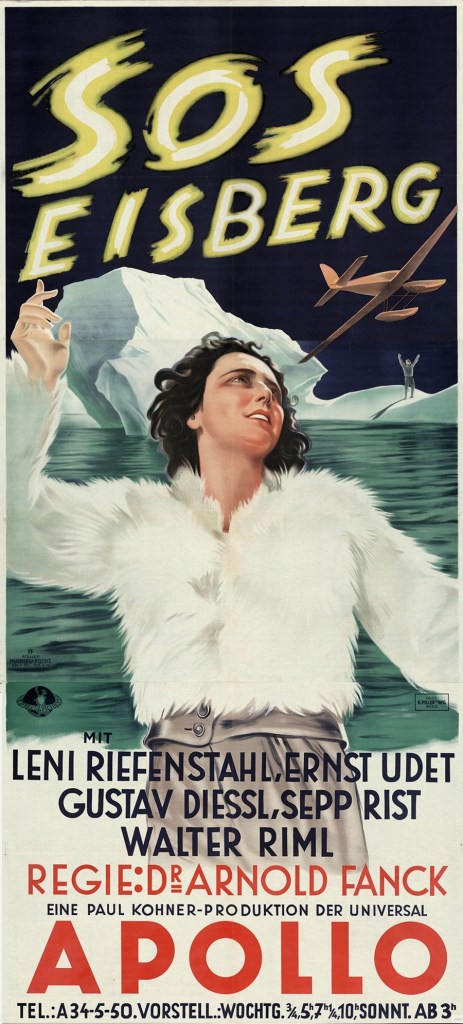
And I would talk to Riefenstahl yet again, almost two decades later. Having become Director of the Munich Filmmuseum in 1994, I negotiated the acquisition of the estate papers of Dr. Arnold Fanck with the proviso to curate a retrospective exhibition. Fanck had not only been the inventor of the German “mountain’ film but had given the minimally talented dancer Riefenstahl her first film role in The Holy Mountain (1925), then cast her in four more films, including The White Hell of Piz Palü (1929). By the 1940s, though, the tables had been turned. Fanck was out of work because Goebbels hated him, so Riefenstahl hired Fanck to make a series of short documentaries on Nazi artists like Arno Brecker and Josef Thorak for her production company. Given her close relationship with Hitler, she retained the rights to all her work, despite the violent objections of the Propaganda Minister, keeping them after the war, while almost all other Nazi films passed into the hands of the German government via the UFA.

 In order to screen Fanck’s last films in the exhibition, I had to get permission from Riefenstahl and Horst, who was still working for her. She did give us screening rights but charged the Museum a hefty fee. I can’t say I shed any tears when she died at the age of 101 in September 2003, again proving that evil often survives when the good die young.

The White Hell of Piz Palu (1929. Dr. Arnold Fanck, G.W. Pabst)