Archival Spaces 386:
Pordenone’s Days of Silent Film, 2 – 12 October 2025
Uploaded 14 November 2025
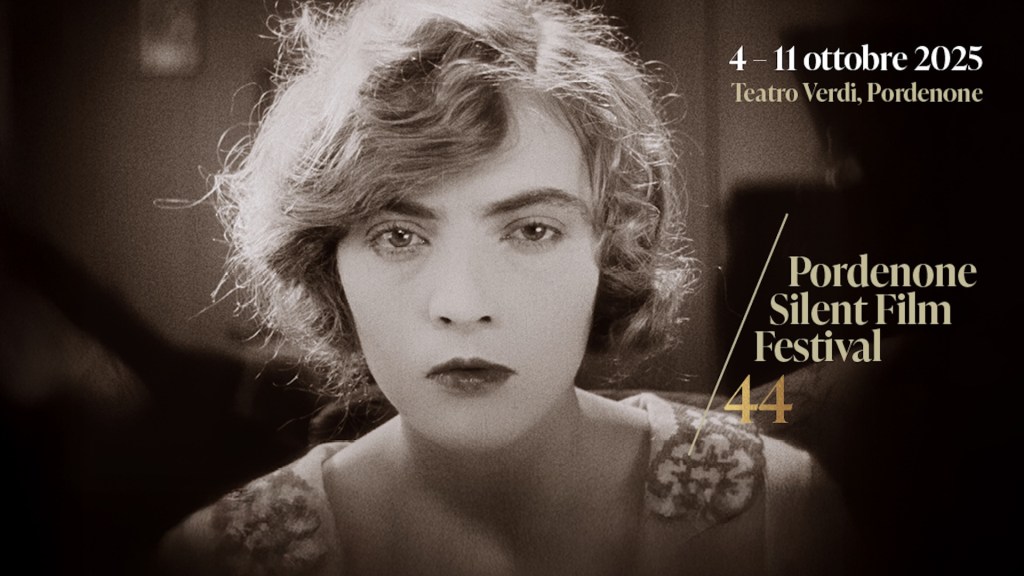
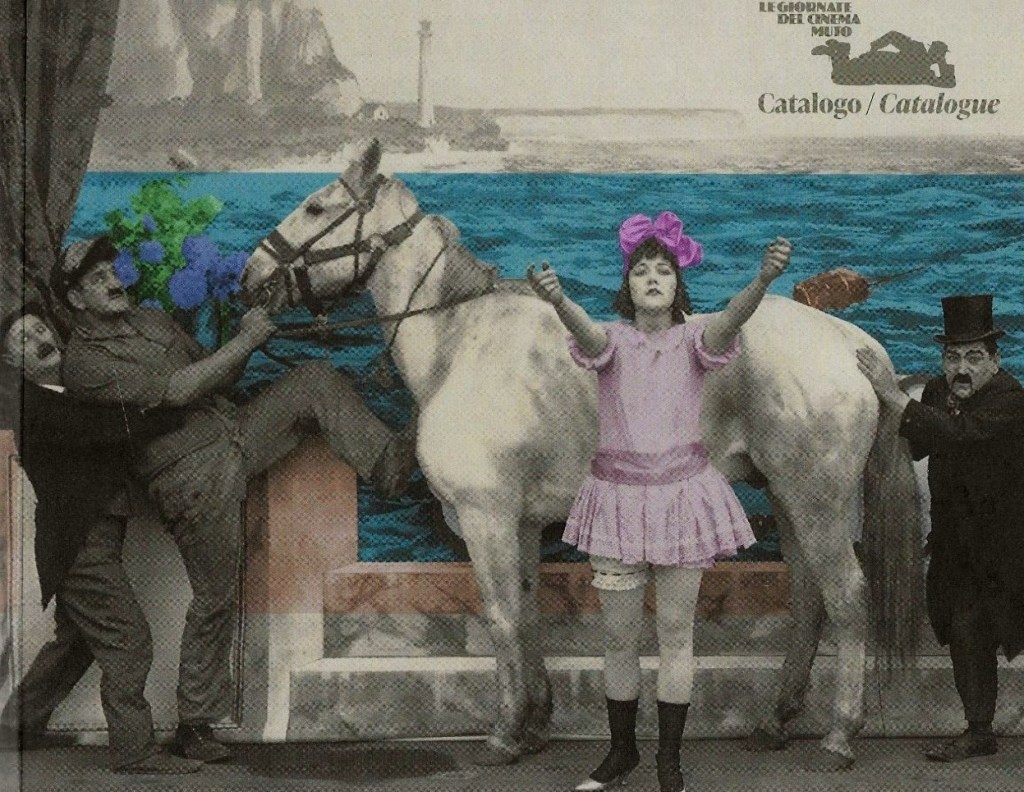
It was the first time in six years I was back in Pordenone, Italy, for the Giornate del cinema muto, having been forbidden by the powers that be at UCLA to travel to the oldest silent film festival in the world, two days before my departure in 2019. While I enjoyed watching films on the big screen, always with live musical accompaniment, I quickly realized that the best part of the Giornate was meeting the many old friends I have accumulated in the last 37 years, since attending my first festival in 1988. Among them in no particular order: Serge Bromberg, Donald Sosin, Neal Brand, Thomas Christensen, Peter Bagrov, Don Crafton, Susan Ohmer, Bill Uricchio, Martin Loiperdinger, Charles Musser, Ulli Rüdel, Piera Patat, Livio Jacob, Federika Dini, Oliver Hanley, Eva Hielscher, Tom Dogherty, Phil Carli, Günter Buchwald, Jane Gaines, Laura Horak, Federica Dini, Ivo Blom, Martin Koerber, Cathy Surowiec, Geoff Brown, Doron Galili, Catherine Cormon, Dave Kerr, Paolo Tosini, Lea Jacobs, Ben Brewster, Byrony Dixon, Richard and Diana Kosarzski, Sabine Lenk, Frank Kessler, Jeffrey Masino, Robert Byrne, Elif Rongen-Kaynakçi, Stacy Wisnia, Mark Williams, David Pierce, Phil Rosen, Eva Orbanz, Tony Kaes, André Gaudrault, Erika Wottrich, and Richard Abel. Many of them came to my wife Mindy’s aid when she broke her hip outside the theatre and spent ten days in an Italian hospital, especially Jay Weissberg and the Giornate team.
The Pordenone program is so rich with screenings from 9 AM to midnight that, unfortunately, I missed important programs due to jet lag, inertia, or meetings. I would have liked to see, including early cinema, the Belgian avant-garde, Cyrano Bergerac (1923), and the Chaplin Connection/Slapstick programs. As a result, my comments are limited to some highlights and revelations.
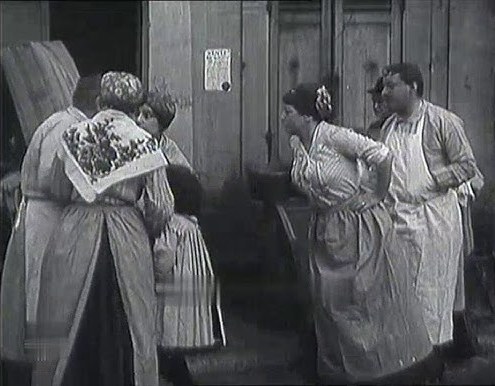
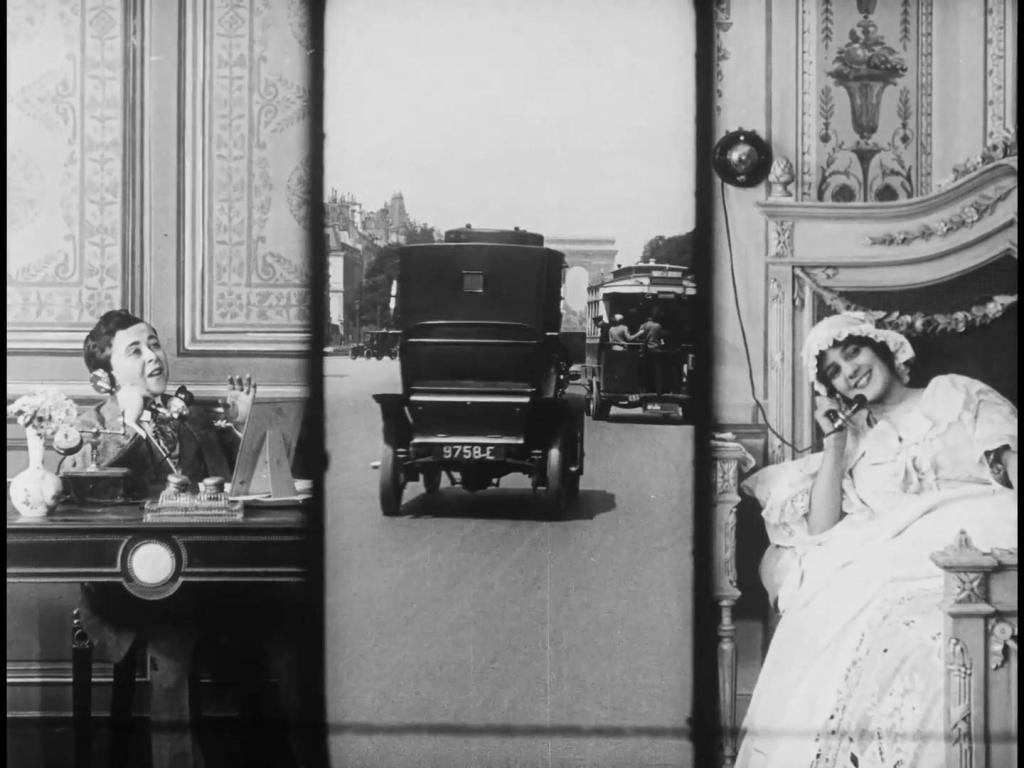
The first screening to blow me away was a Louis Feuillade program of pre-World War I shorts, including The Vipers (1912), Le Nain (1912), and The Heart and the Money (1912). Feuillade, most famous for the surrealist serial, Les Vampires (1915), is master of economy, utilizing multiple exposures and split screens to express dreams and desires, employing actors whose subtly of gesture create a realism that has nothing in common with the melodramatic catalogue of stock gestures seen in American films from the period, composing images in depth that communicate meaning through mise-en-scène. The Vipers visualizes the havoc caused by town gossip, forcing a poor widow to flee; Le Nain is a Cyrano story of an extremely diminutive writer who suffers rejection at the hands of normal-sized women; Heart ends in suicide, when an ambitious mother forces her daughter to marry an older, rich man, rather than the poor fisherman she desires. Probably generated from original Gaumont negatives, the digital copies were breath-takingly beautiful, subtle in grey scale, with an extremely high resolution.
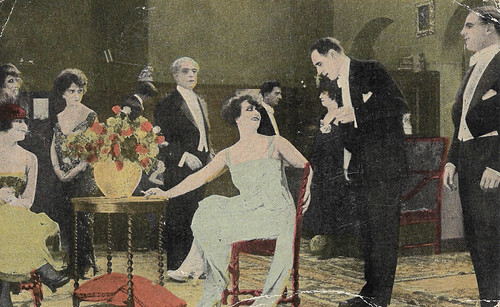
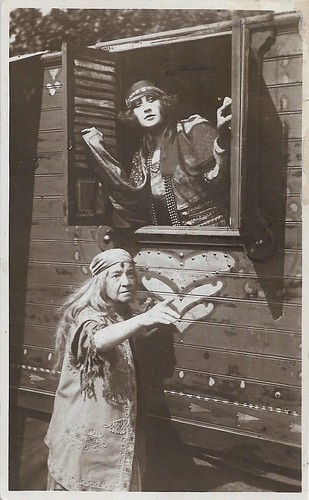
The three melodramas of Italian diva Itala Almirante Manzini I viewed were a surprise; divas from 1920s Italy tend to fall off film historical radar, but Manzini was impressive, the actress switching social classes from film to film: L’innamorata (1920), Zingari (1920), La piccolo parrochia (1923). Much less well-known than her rivals, Lydia Borelli and Francesca Bertini, Almirante Manzini rose to prominence with Cabiria (1914), but many of her films have disappeared, leading to neglect. In The Lover, she plays an upper-class, man-eating vamp, concerned only with her own social pleasures, who drives at least one man to suicide and threatens another; her own suicide to save that same lover is, however, overdetermined. Manzini next dominates the screen in Zingari, where her action heroine defies her father and his Roma clan to pursue actively the man of her dreams, a rival clan leader, burning down a barn, creating chaos, all in the interest of feminine erotic desire. Several women told me they loved this film. I understood intellectually, but didn’t quite feel it. I’m glad they pointed it out to me. With The Little Church, the diva plays an orphan who marries rich, but is mercilessly harassed by a domineering mother-in-law; an illicit affair with a callous playboy almost destroys the couple’s marriage, until Mother finally embraces her daughter-in-law. All three films featured well-constructed and opulent production design.
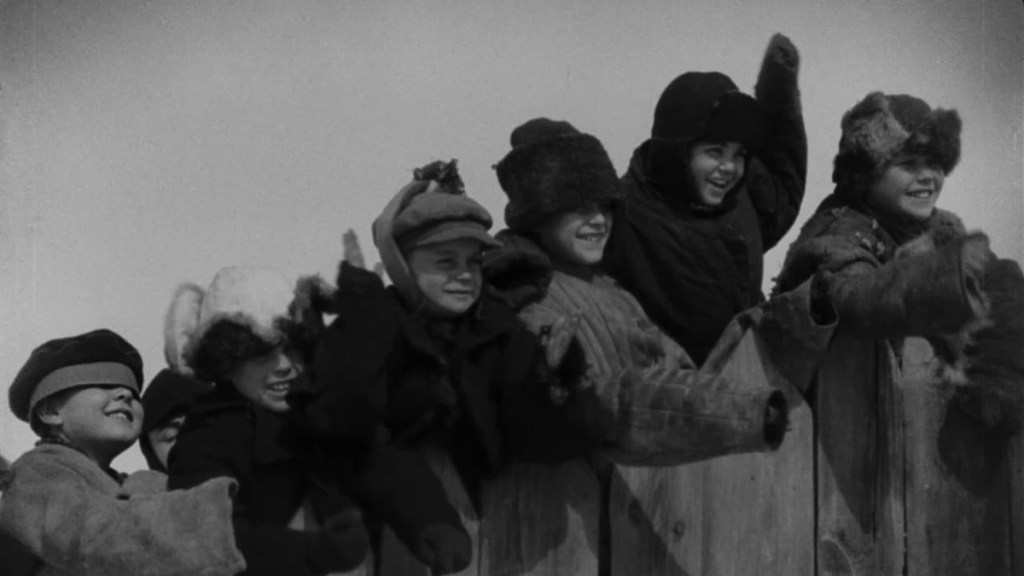
A major discovery was the Soviet Ukrainian children’s films, Adventures of a Penny (1929, Aksel Lundin), and Robinson on His Own (1929, Lazar Frenkel), which were edited in the Russian style, but also filmed on location in Kyiv. The first title follows a gang of working-class boys in the Czarist era, who cause trouble for adults but are loyal and charitable, even when betrayed by the spoiled boy seed of a stingy bourgeois landlord. The central character in Robinson, a bookworm, lives in his dreams until the harsh reality of his environment catches up and he has to be rescued by the Young Pioneers. The film was criticized by the Nomenklatura for its joyous celebration and spoofing of American westerns and adventure films, unable to hide its fascination. Both films expressed an optimism for the new Communist society, in keeping with its target audience of young citizens, in marked contrast to another Soviet film, Wings of a Serf (1926, Yuri Tarich). In terms of art direction and costuming, one can see its influence on Sergei Eisenstein’s Ivan the Terrible, its baroque style, its reliance on mise-en-scene over montage, but the first Ivan is significantly more violent and perverse. First, we see the Boyars rape, pillage, and murder serfs, because they are the masters, then Czar Ivan’s entourage rape, pillage, and murder the Boyars, before Ivan strangles his Czarina, she having slept with a serf. That serf, our hero, dreams of flying, fashions wings, and successfully lifts off- the wonders of cinema – only to be sentenced by Ivan to a beheading, for “going against God’s wishes by flying.” A lesson in autocracy.

Love and Duty (1931, Bu Wancang) stars Ruan Lingyu, in her first surviving role, the doomed star of many Shanghai dramas screened at the Giornate in 1997. A bit long at 2 ½ hours, the film concerns the tragic love affair of two upper-middle-class Chinese in Shanghai, who fall for each other as teenagers, their relationship upended by Chinese patriarchy, when the father orders his daughter into an arranged marriage. Years later, the couple meet again and decide to elope, thereby becoming social pariahs. Although the story itself is melodramatic, the acting is realistic and underplayed, and the camera work and set design are both modern and unobtrusive. Bu Wancang focuses on social issues, the privileges of the ruling class, the harsh punishments meted out to transgressors of social morality, the strict demarcation of social classes, the unjust power relations between chauvinist men and victimized women, and the sins of the parents transferred to the children.
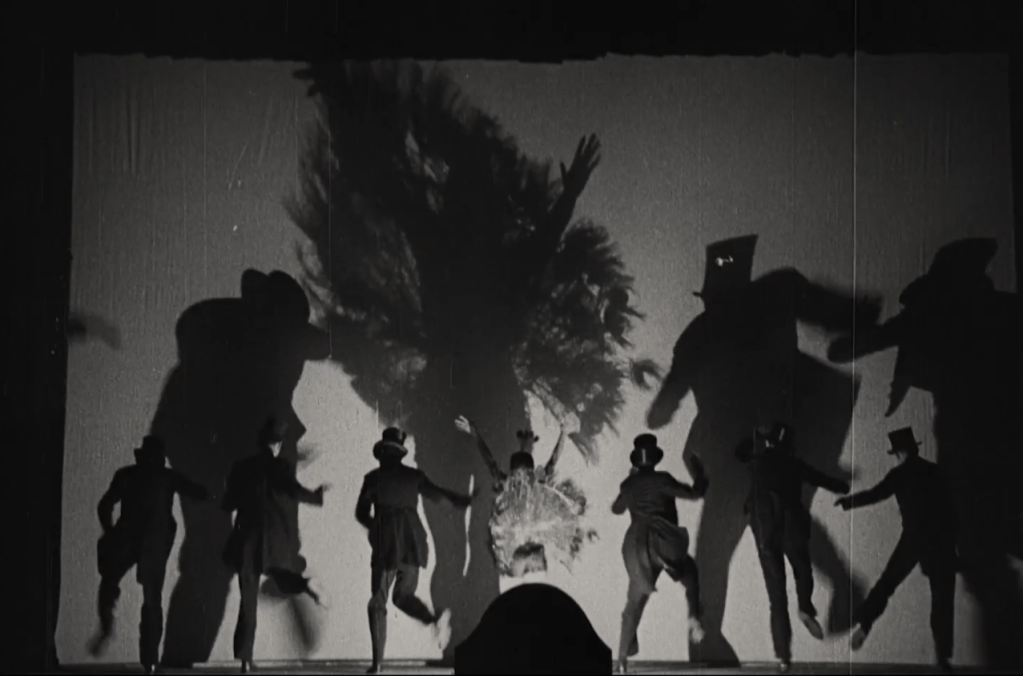
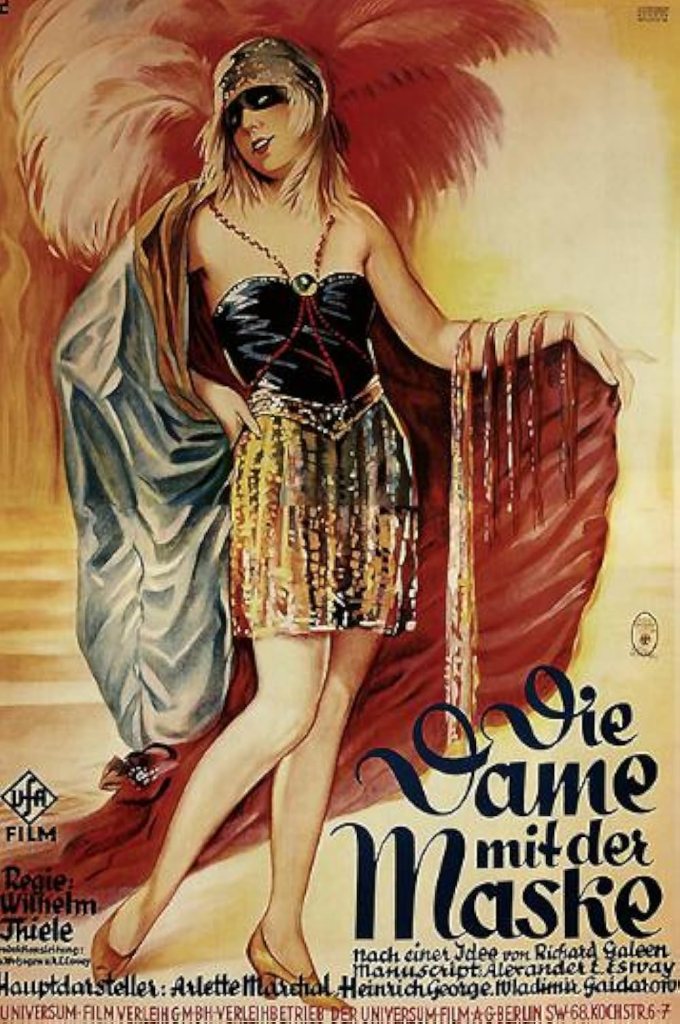
Finally, it was a particular pleasure to see Wilhelm Thiele’s The Lady With a Mask (1928), which I had not seen, despite publishing a book on Thiele last year. The opening montage, Inflation, a five-minute tour de force constructed by Hans Richter, has been a favorite of mine since I programmed it in 1979. The experimental short sets the stage for a class conflict between impoverished nobility and uncouth, i. e. working class and nouveaux riches. Produced by UFA after German Nationalist Alfred Hugenberg had bought the company, the film clearly reveals its political sympathies for the upper-class, aristocratic heroine, the daughter of a baron, and her Russian émigré boyfriend, himself a former prince. She must work half-nude in a cabaret to make ends meet, a fact she tries to hide from her father; her friend is a waiter, hoping for better days. All the class-specific biases towards morality, money, and ethics boil to the surface. In contrast, Thiele’s nearly sarcastic view of the working class serves up an overweight, wealthy inflation speculator who threatens the heroine sexually, and who is more suited to the plebian tastes of his cute but dumb showgirl squeeze. But Thiele complicates the proceedings by suggesting that the slob actually falls genuinely in love with his social superior, making him ultimately a pitiful if not sympathetic character. Formally, Thiele continually plays with shadows and silhouettes, some realist, some aesthetic, some narrational, including the heroine’s nude form behind a screen. Their lack of legibility communicates the unreality of the German inflationary period, when a loaf of bread cost over 1 million Reichsmarks.
 Archival Spaces
Great review, Chris, was nice to see you in Pordenone, and I hope Mindy fully recovered.
LikeLike
This was a wonderful little survey, Chris, with a lot of things I’ll be seeking out as they become available to me. But I have to ask: Why were you forbidden by UCLA to travel to the Giornate? Did they feel the cost of flying you out was too prohibitive?
Roughly, — Dan Jeremy Brooks
President of the Aurora Film Society http://www.projexploitation.com http://www.aurorafilmsociety.org http://www.aurorafilmsociety.org http://www.projexploitation.com http://www.projexploitation.com
LikeLike
No, I was fired, a firing the Universty had to rescind and let me retire in good order.
LikeLike
Oh yowsa! That’s crazy. I’m guessing there must be a heck of a story there . . .
Roughly, — Dan Jeremy Brooks
President of the Aurora Film Society http://www.projexploitation.com http://www.aurorafilmsociety.org http://www.aurorafilmsociety.org http://www.projexploitation.com http://www.projexploitation.com
LikeLike