Archival Spaces 362
Kurt Gerron’s Ein toller Einfall (1932)
Uploaded 13 December 2024

Back in June, I wrote about the UFA film operettas of the early 1930s, noting that many resisted the move to classical Hollywood narrative, displaying instead a high degree of self-reflexivity, employing direct address, featuring both song and dance, and emphasizing the artificiality of their settings in a mythical Europe. The cohort of UFA directors included Kurt Gerron, the German-Jewish actor-director and cabaret performer, whose films completely jettison any semblance of plot to create a cabaret of music, dance, and comedy. This was especially true for his 1932 production, Ein toller Einfall (A Mad Idea), which was loosely based on a boulevard farce (1890) by Carl Laufs, and scripted by Philipp Lothar Mayring and Fritz Zeckendorf. The film starred Willy Fritsch, Dorothea Wieck, Ellen Schwanneke, Rosy Barsody, and a host of character actors, including Max Adelbert, Jakob Tiedtke, Paul Hörbiger, Theo Lingen, Adele Sandrock, Oskar Sima, and Wilhelm Bendow.
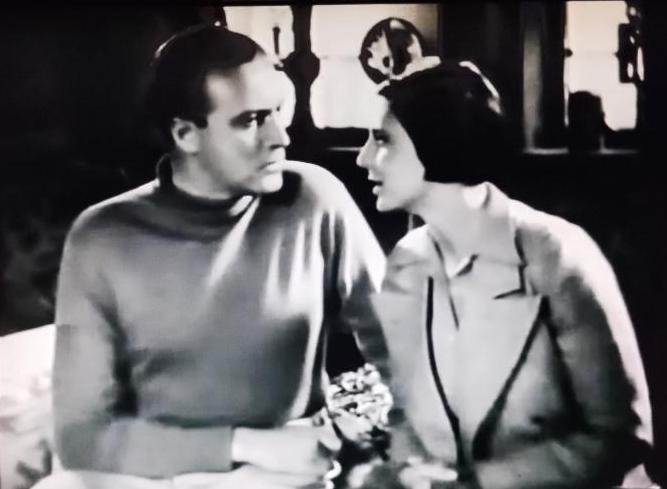
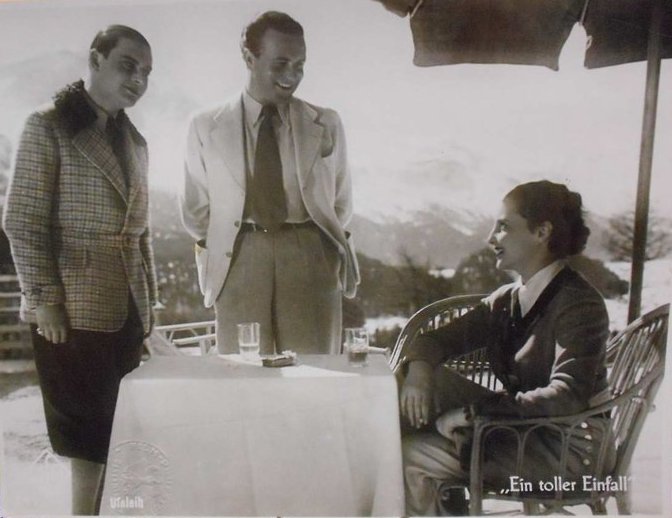
A Mad Idea takes place in an unnamed Swiss ski resort (location: St. Moritz), where Paul Lüders (Fritsch), an artist and nephew of a cash-poor millionaire, Michael Lüders (Tiedtke), moves into his uncle’s villa to escape his many ex-lovers. There, his art dealer sidekick, Birnstiel (Adelbert), begins inadvertently renting out rooms. Soon they are running a hotel, while a gaggle of ladies pursues Paul, including ex-girlfriend Anita (Barsony), Evelyn Müller (Schwanneke), the daughter of the head of the “Miller Girls” dance troupe (Leo Slezak), Mabel Miller (Wieck), the daughter of a prospective buyer for the villa, Marga (Genia Nikolajewa), the wife of a composer, and, of course, the Miller Girls. Paul falls for Evelyn but thinks she is Mabel, all the while fighting off Anita. Other couples form and split. Apart from the romance threads, there are subplots and running gags reinforcing the insanity. Like Gerron himself, of whom the critic Paul Marcs (PEM) wrote, “He shoots sentences. Words are whipped. Their rhythm electrifies, allowing no resistance. Speed and agitation breath down his back,” the film is frenetic, e.g. Borsody manically dancing in almost every scene, even alone in the hotel corridor. Indeed, numerous plot confusions highlight its carnivalesque narrative structure, a cabaret with musical and comedic sketches, set pieces around Alpine tourism, spiced with plenty of visual barbs against the wealthy.
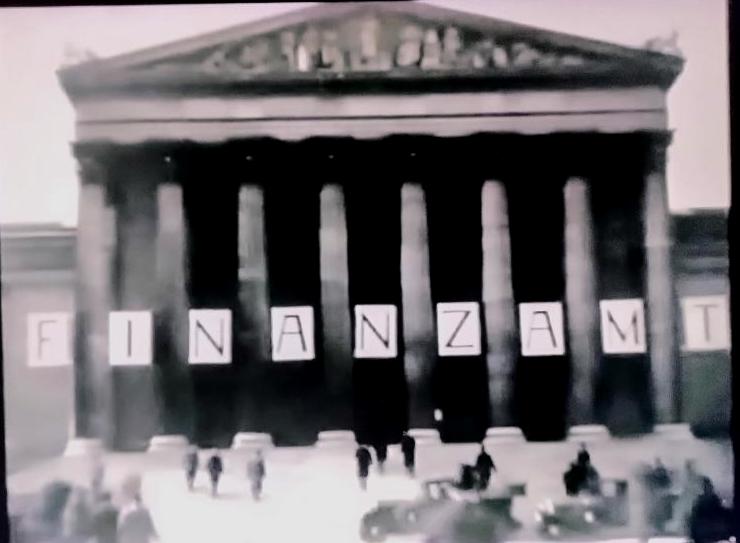
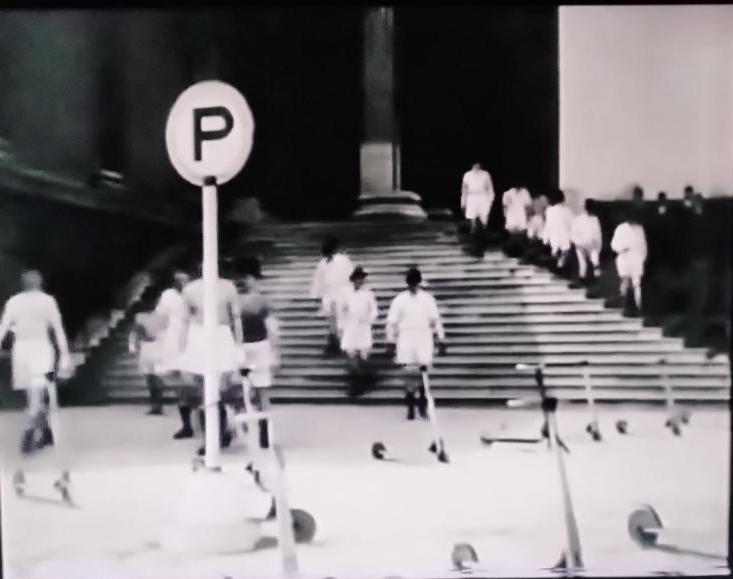

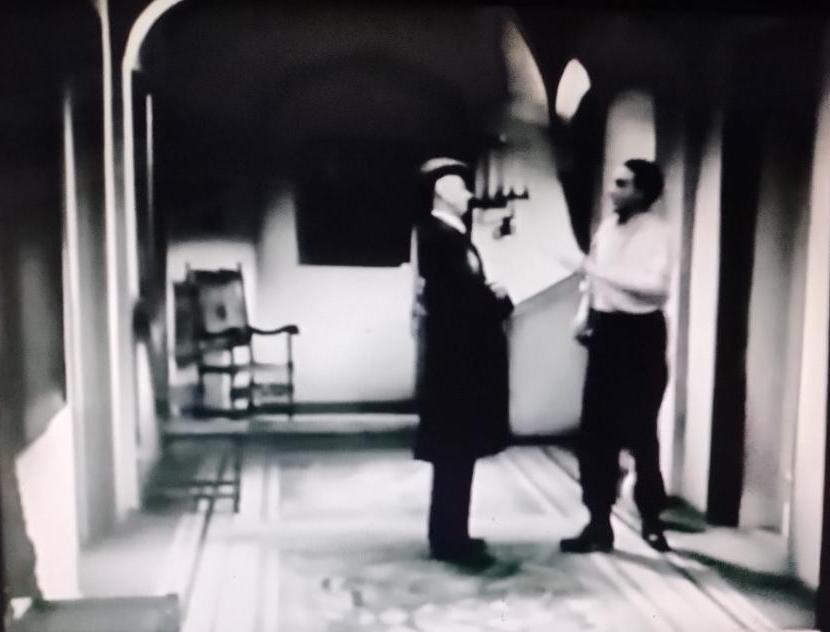
Indeed, the film begins with a visual joke re: the rich: Following panoramic images of the Alps behind the credits, Uncle Lüders enters a neo-classical building (the tax authorities) from his limousine, then he and a dozen others leave in their underwear and ride away on scooters. It’s a dream, but then a taxman arrives. In another scene, Birntiel rants about the rich, who he expects to “bathe in champagne and spend money,” not haggle over the price of a hotel room, as does Evelyn. Birnstiel likes order, so he throws the framed photos of Paul’s harem in the trash and cancels his dates with dozens of women, dutifully checking them off the list. Birnstiel introduces the St. Moritz location with a self-reflexive description of Alpine stereotypes, a visual parody of travelogues. In a similar vein, Gerron references Ernst Lubitsch’s door fetish with an extended final scene in the hotel’s long corridor, as guests frantically search for their desired or real mates in the chaos of doors slamming.
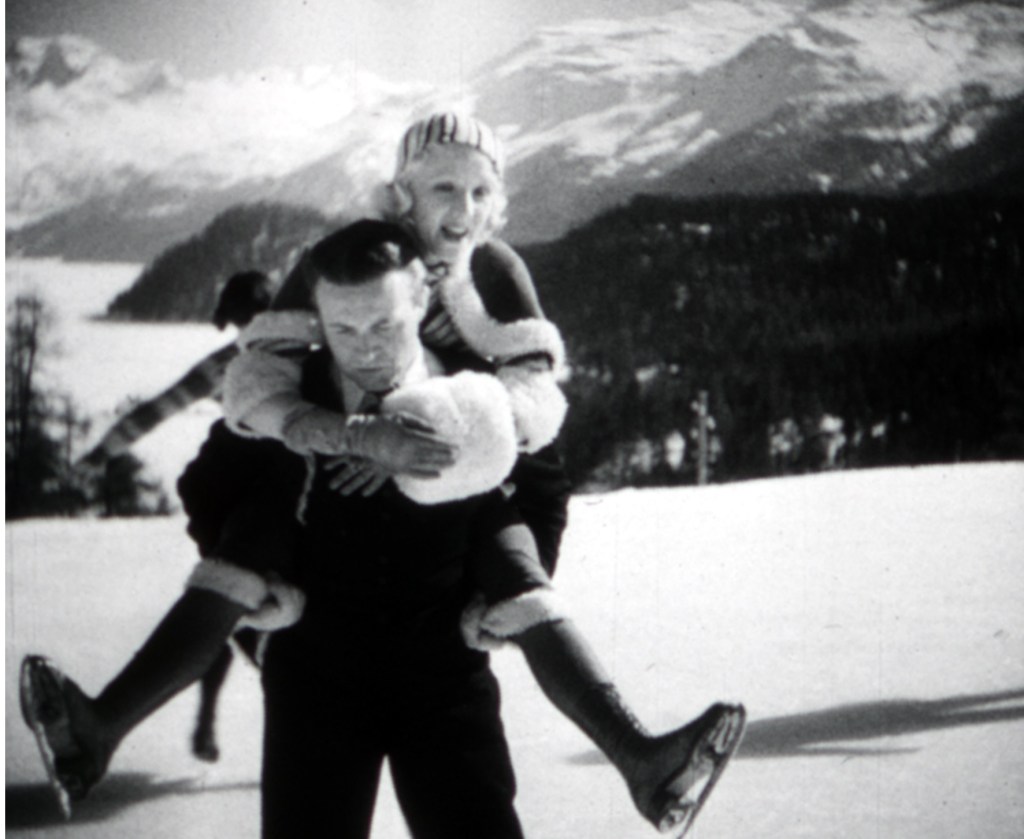
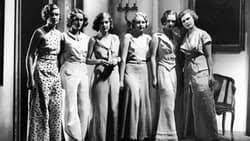
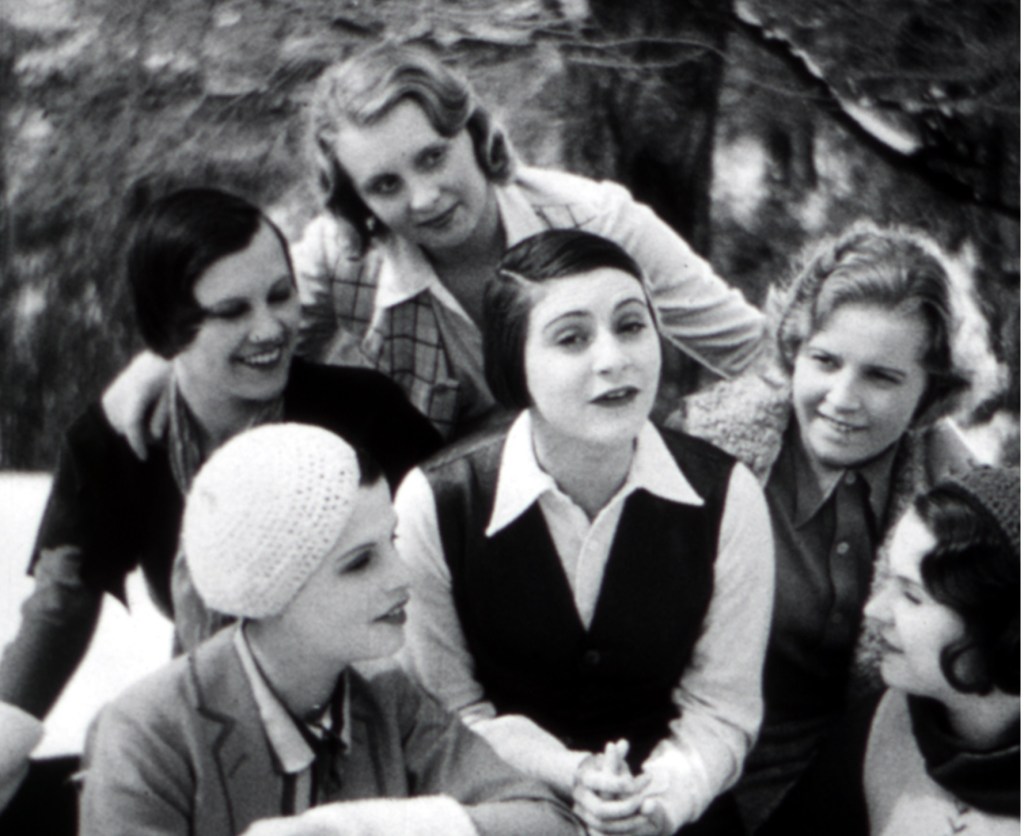
Born Kurt Gerson, Gerron had started his career on the legitimate stage – he played Tiger Brown in Brecht’s “Three Penny Opera,” – then gravitated to cabaret in the late 1920s, forming the Jewish comic duo “Beef and Steak” with Sig Arno in their own short-lived cabaret. In 1931, UFA hired him to direct a series of six cabaret short films for producer Bruno Duday, the latter also producing Ein toller Einfall. The film’s two hit songs were written by Fritz Rotter (music by Walter Jurman and Bronislav Kaper), who all specialized in cabaret Schlager. Small wonder that Gerron gives a wide berth to his comedians and their Schticks. For example, Wilhelm Bendow who plays a guest allergic to noise of any kind is constantly confronting loud guests, then gets drunk and becomes himself a nuisance. Paul Hörbiger plays a dim-witted butler but spends most of the film sampling the villa’s wine cellar and holding drunken soliloquies. The head waiter, Theo Lingen, continuously insults the guests, his smarminess in keeping with his star persona. Max Adelbert as Birnstiel is fast-talking throughout with an acid wit. Finally, I recognized Julius Falkenstein in a cameo as a pedantic hotel guest who pointedly corrects Paul’s grammar in the hotel corridor before disappearing. He is not credited in the print, nor in any filmographies but the tall, lanky Falkenstein was under contract at UFA. The actor was featured in no less than 26 films in 1932, many of them cameos, after appearing in The Congress Dances and Berlin Alexanderplatz, two major successes. He had also played a major supporting role in Lubitsch’s The Oyster Princess (1919), as had Jakob Tiedke, reminding viewers again that Jewish humor was very much at work here.

Ein toller Einfall opened in Berlin in May 1932. Within a year, tragically, numerous participants would be blacklisted by the Nazis for being Jewish, including Falkenstein, Barsony, Schwanneke, Nikolajewa, Rotter, Jurmann, Kaper, Harry Halm, and Ferdinand Hart. Even before the official Nazi blacklist was in place, Gerron and writer Fritz Zeckendorf were fired from the UFA on 1 April 1933; both were later murdered in Auschwitz.

 Archival Spaces
I love your blog, Jan. Always something interesting that sends me down a rabbit hole. The material on the Weimar film musicals is particularly exciting. You’re a treasure.
Thanks so!
Best,
Scott Weiss
LikeLike
Thanks, Scott! I appreciate it.
LikeLike