Archival Spaces 355
Puffy’s Tragic End
Uploaded 6 September 2024
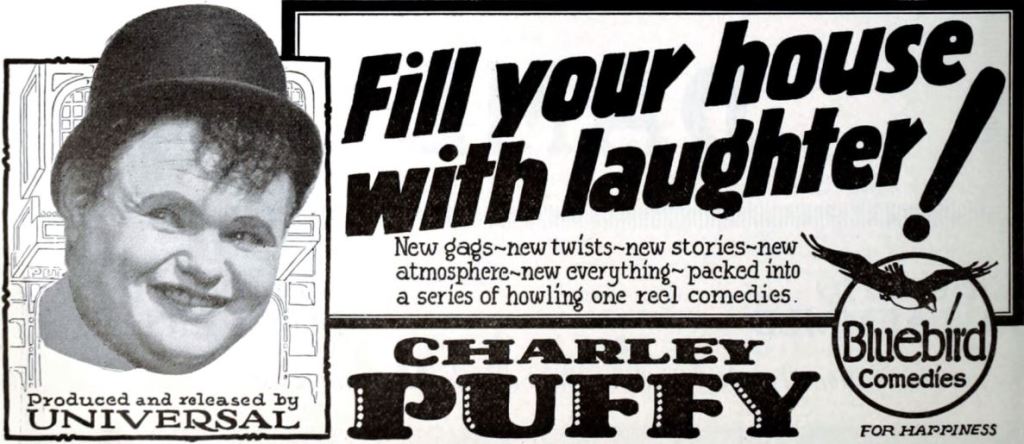
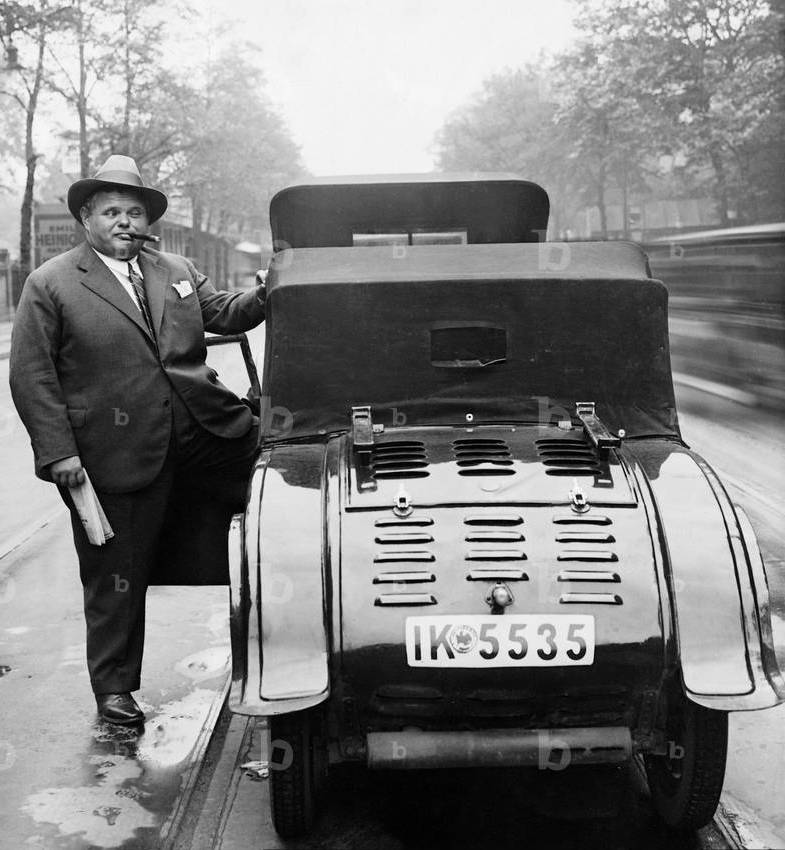
Whenever they needed a fat man, Károly Huszár at 290 lbs. was there. Starting his film career with Michael Curtiz in Hungary in 1913, the comedian moved to Germany in 1920, before becoming a star of short comedies for Universal in 1924, as well as a character actor in features. When sound arrived, he returned to German cinema, where he remained popular, at least until Joseph Goebbels declared him a sub-human, after which he was able to work a few more years in Austria and Hungary, before anti-Semitic laws made him unemployable there, too. After that, his traces seem to disappear. Was he murdered by Nazis, like so many Hungarian Jews? Two filmographic websites state he died in Tokyo, but are unconfirmed. It was not until I read the published letters of Paul Kohner (Ich bin ein unheilbarer Europär. Briefe aus dem Exil, edited by Heike Klapdor) that I learned the truth of Puffy’s tragic end.
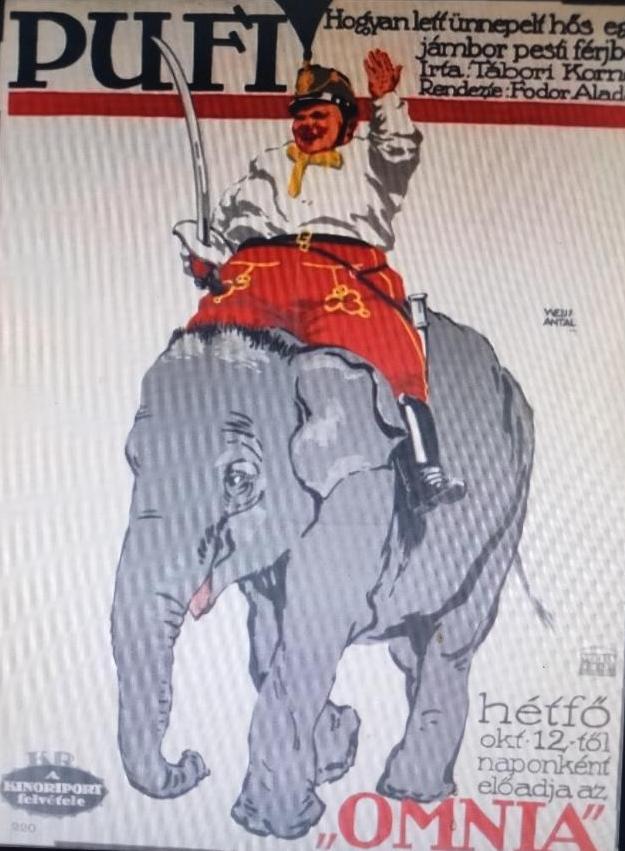
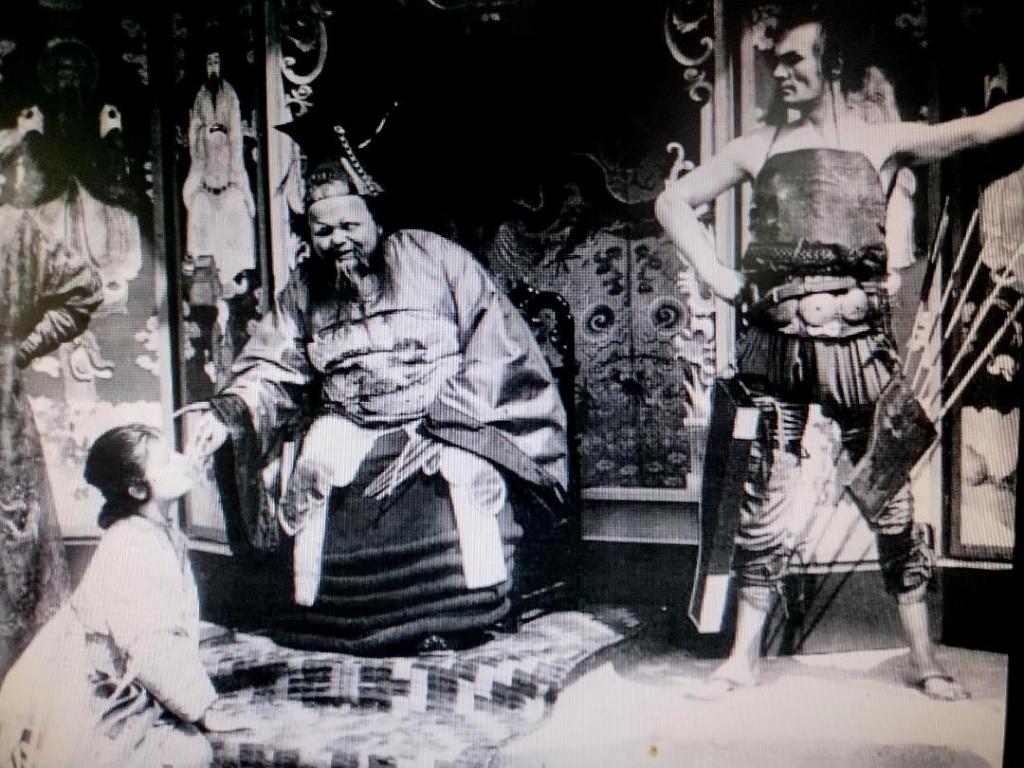
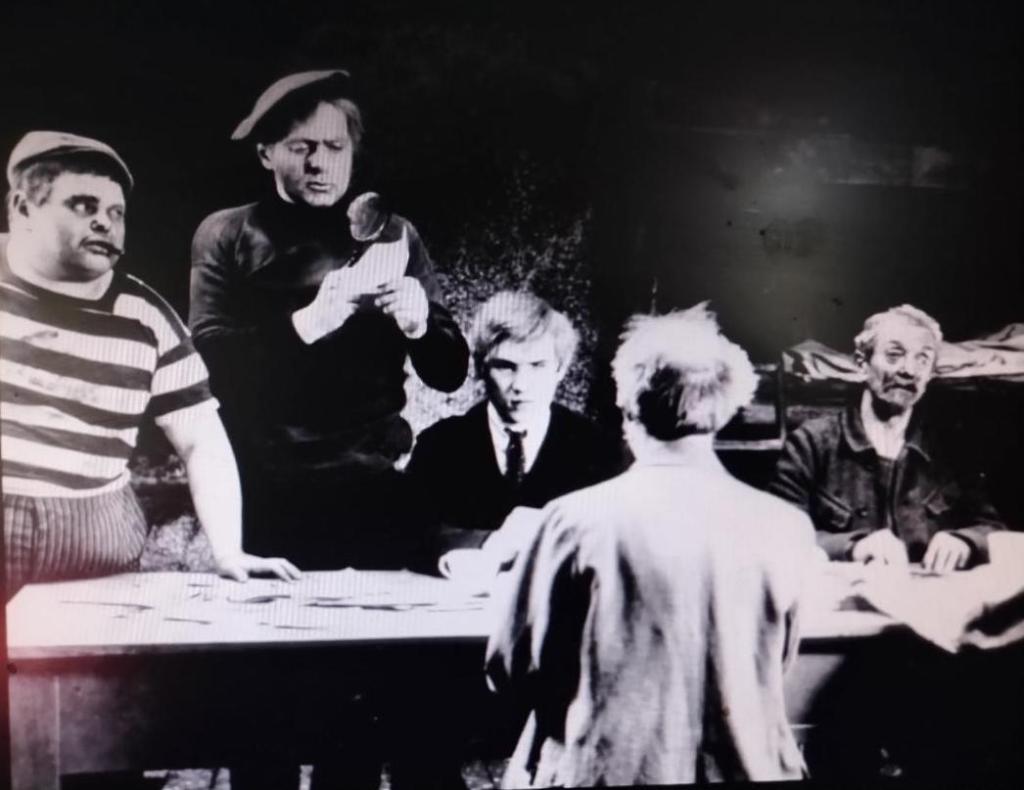
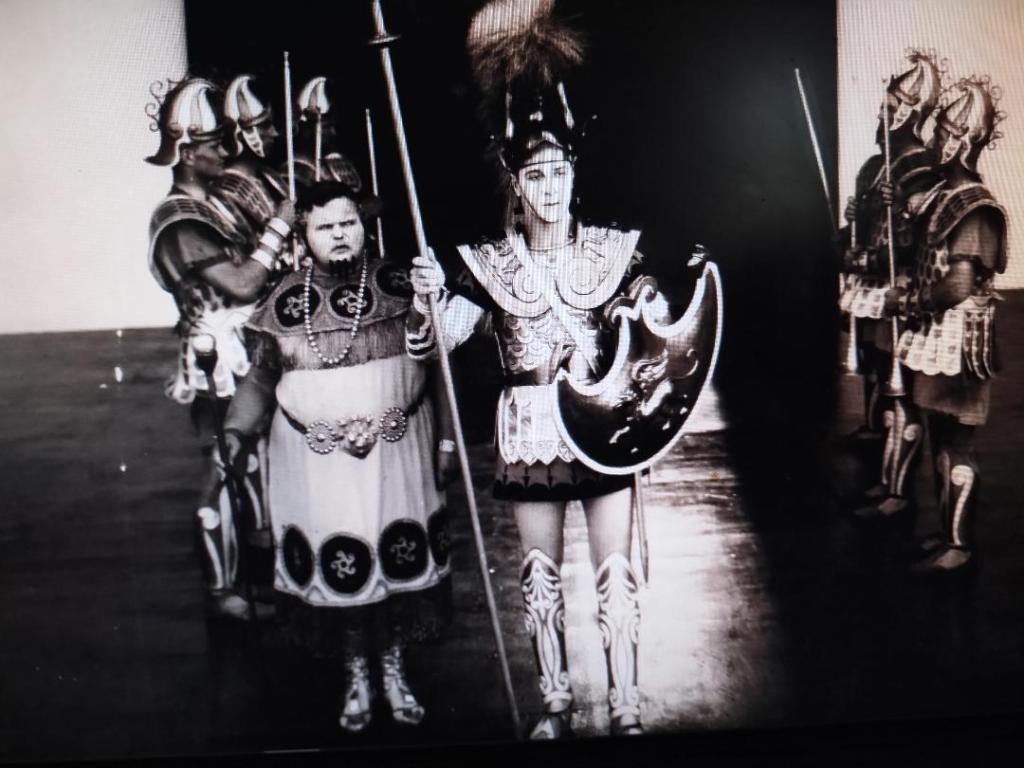
Károly Hochstein was born in Budapest on 3 November 1884 into a Hungarian-Jewish family. As a teenager, he was a champion swimmer, then joined the Actors’ Training School of the National Actors’ Association the year it was founded (1903), before making his theatrical debut in 1905. Gaining a significant amount of weight, Huszár created the character of Pufi, which means Fatty in Hungarian, after joining Endre Nagy’s Budapest cabaret in 1910. By 1914, he was starring in slapstick comedies in his Pufi guise in Pufi – How a Devout Husband from Pest Got Married (1914) and Pufi Buys Shoes (1917), then played roles in two Hungarian features under Michael Curtiz, before the failed Hungarian revolution sent him to Germany. In 1921 alone, Karl Huszár played in no less than fifteen films as a supporting player, including George Jacoby’s six-part adventure film, The Man Without a Name and Fritz Lang’s Destiny (as the Emperor of China), followed in 1922 by Lang’s Dr. Mabuse, der Spieler.
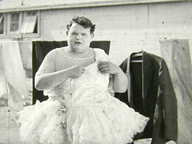
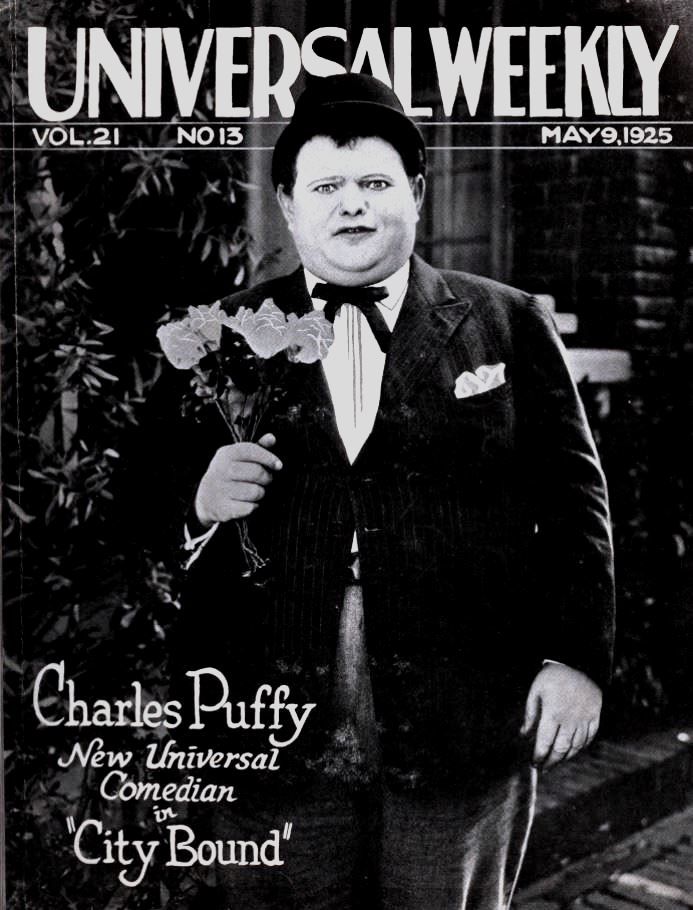
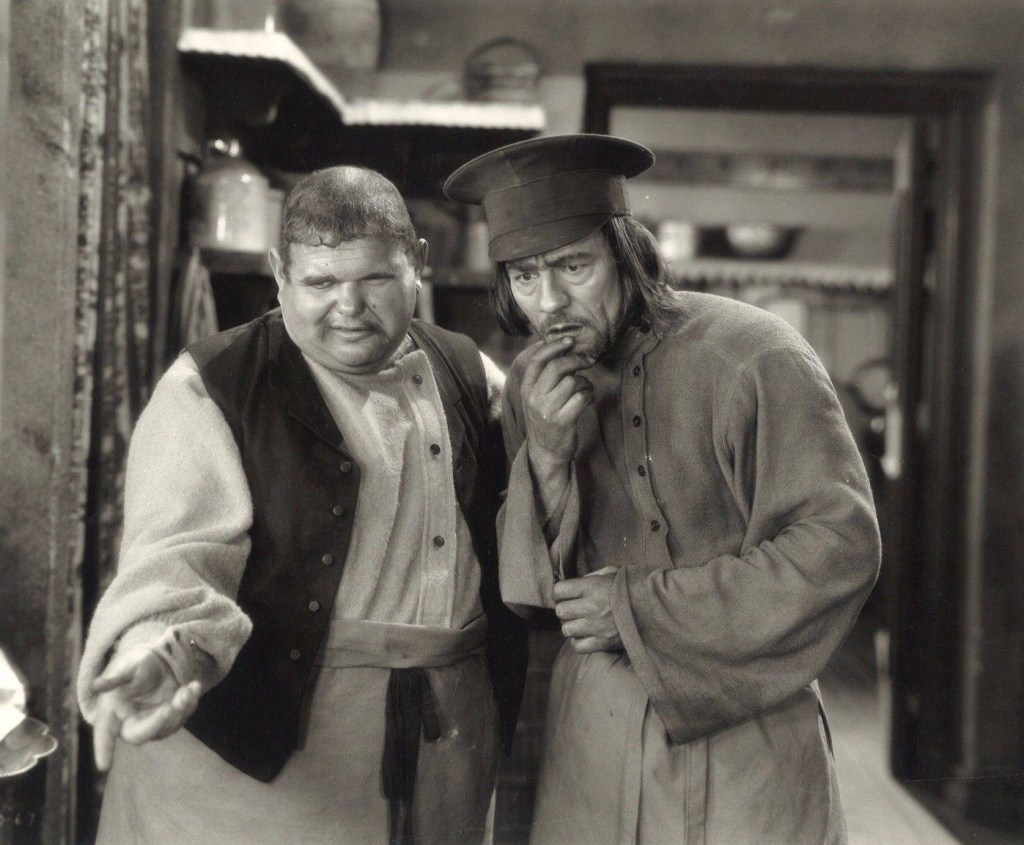
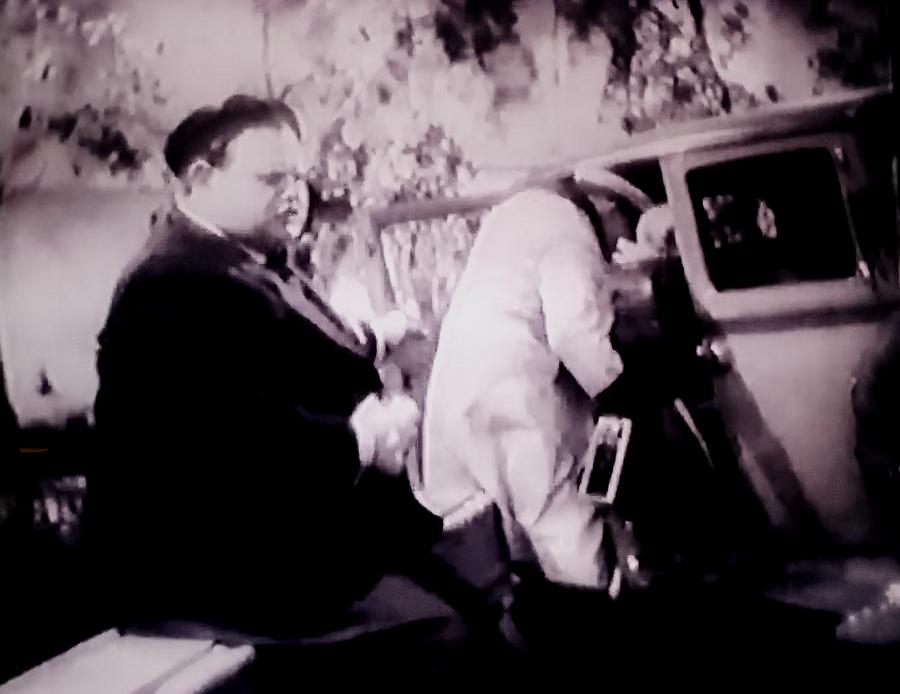
In 1924 Carl Laemmle hired him on one of his European junkets, starring him in no less than fifty Bluebird comedies as Charles Puffy, a slapstick successor to the disgraced Rosco “Fatty’ Arbuckle. Puffy also shined in character parts in such ambitious films as Benjamin Christensen’s Mockery (1927), Alexander Korda’s The Private Life of Helen of Troy (1927), and Paul Leni’s The Man Who Laughs (1928), before the coming of sound ended his American career. By then he had made millions, allowing to purchase his country estate, Nógrádveröce, on the Danube north of Budapest. His accent-free German made him a favorite character actor at UFA in Babelsberg so he commuted from his estate to Berlin and Vienna for film shoots.
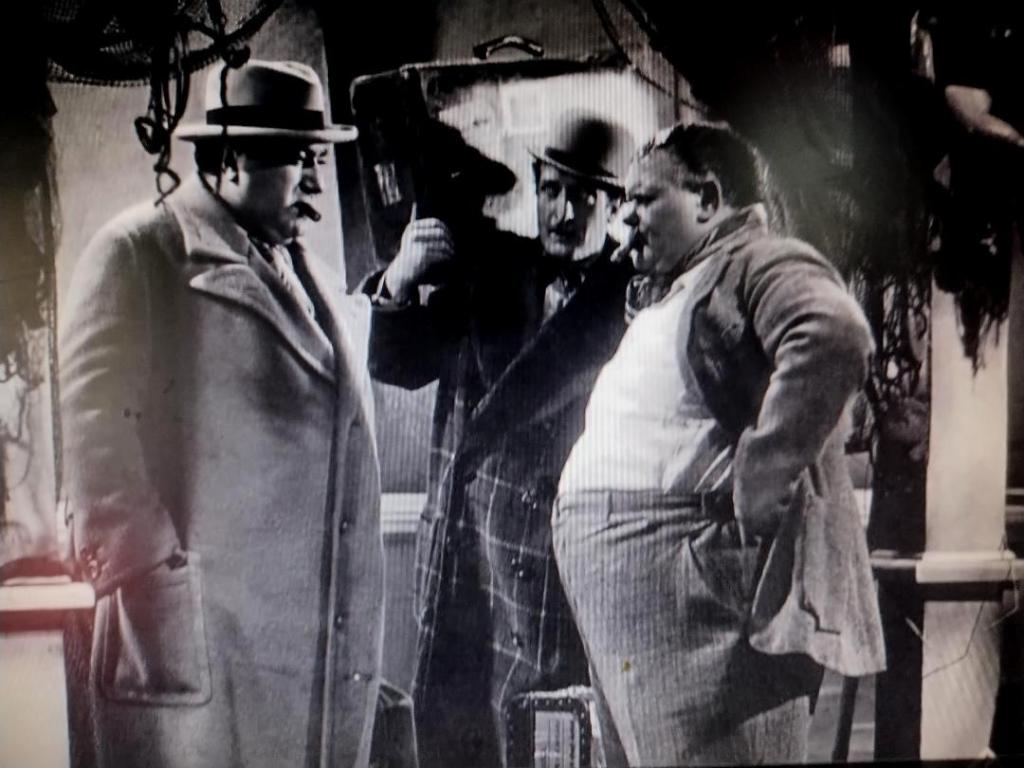

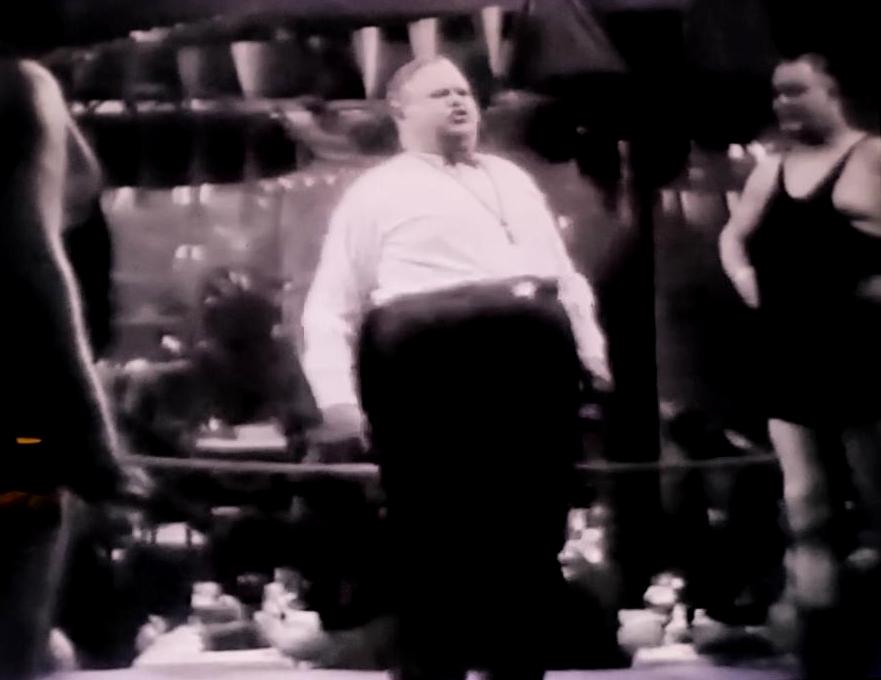
Now appearing under the name Karl Huszar-Puffy, the actor played an innkeeper in The Blue Angel (1930), a pesky suitor in My Cousin from Warsaw (1931), a wrestling referee in Five from a Jazz Band (1932), and an army veterinarian in Rokoczy-March (1933), among many other supporting roles. The last named film was produced in German in Budapest, where Puffy was able to appear subsequently in seven more films, including several dual language versions, like 4 ½ Musketeers (1935) and Little Mother (1935) before Hungarian anti-Semitic laws blacklisted him in 1938.

As early as April 1933 Puffy had written to his friend Paul Kohner, then a producer at Universal, that the Nazis were “idiots and bandits.” By March 1938 with no work in sight and Austria now nazified, Huszar wrote to Kohner for help to get to America, since Kohner was now an independent agent representing the European community in Hollywood. Puffy wrote he had invitations from Louis B. Mayer, Jack Warner, and others, but an expired American reentry visa, no quota number, and no ability to take his money out of the country and that he couldn’t live as a beggar abroad. Kohner and Huszar exchanged several more letters in 1938, Puffy worrying he couldn’t sell his estate, Kohner arguing to just leave it all behind and save his life. In 1939, Kohner tries repeatedly to secure an affidavit for Puffy, writing to Joseph Schenk at Fox, Jack Warner, L.B. Mayer, and Ernst Laemmle, before Warner agreed to an affidavit in June and a $ 100 a week contract in September 1940. Kohner suggests traveling by train across Russia, paying for his ticket with Hungarian Forints, then taking a ship from Vladivostok using Dollars. However, Huszar states in a letter on 14 September that he can’t leave yet because his affairs are not in order, and the journey via Vladivostok is too risky, especially if he is interned by the Soviets.
Finally, on 11 June 1941, Kohner wires $600 to a Japanese steamship company for Huszar and his wife’s ship’s passage and a “Bon voyage” telegram to the actor. However, the Wehrmacht invades the Soviet Union on 22 June, making Puffy an enemy alien – Hungary by then an ally of Nazi Germany -, so that he and his wife are arrested in early July and disappear without a trace. Kohner frantically writes letters to find him, to friends in Hollywood, to the State Department, etc. but four years later he is still searching when he writes a letter to Sergei Eisenstein on 15 June 1945. Not until 1947 does Kohner learn of Puffy’s fate from an Austrian doctor who survived the Gulag.
According to Richard Winter’s letter to Kohner on 28 May 1947, Charles Puffy and his wife were arrested in Vladivostok boarding a ship to freedom, and transported to a Soviet internment camp in Novosibirsk. There, Dr. Winter treated Puffy who had rapidly lost weight, causing heart problems and sleeplessness. In June 1942 the whole camp was transferred to Camp Spassk, near Karaganda, Kazakhstan, where Charles spent much time in hospital, before dying of dysentery in June 1943. By then, the actor who had made a career being a funny fat man was nothing more than skin and bones.
 Archival Spaces
Thank you for your tragic report of Charles Puffy.
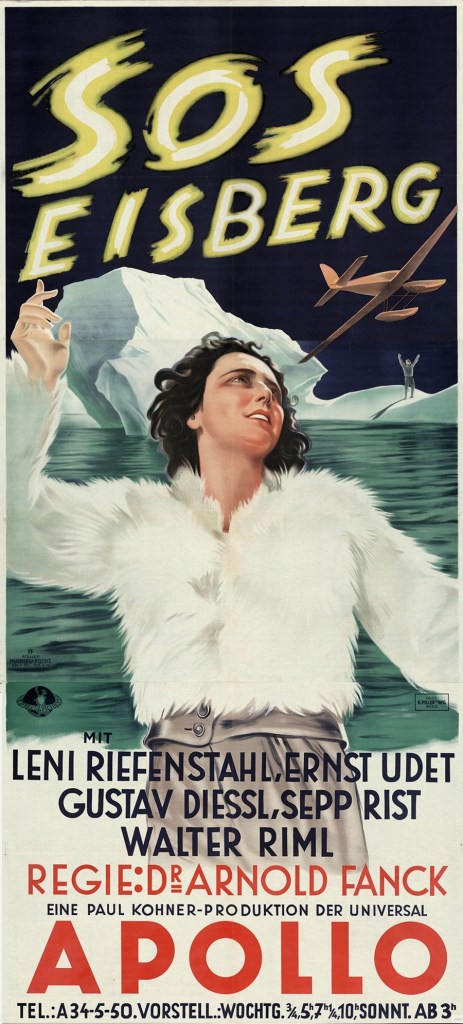
In your article there is a poster of Paul Kohners film SOS Eisberg. This is the poster of the Apollo Kino in Vienna, where the Austrian premiere of this Universal Film (Carl Laemmle/Paul Kohner) took place on October 19th, 1933 after the earlier start at Ufa Palast in Berlin on August 30th, 1933. The poster mentioned not only Paul Kohner but also the name of my father Walter Riml, photographer, actor and cameraman. He played in SOS Iceberg and at the same time in „Northpole Ahoi“ that was shot simultaneously in Greenland under director Andrew Marton, as a satire of Arnold Fancks SOS Eisberg. This film was produced also via Carl Laemmles/Paul Kohners Universal and was the last feature film of the german universal production.
LikeLike
Thank you for your comment.As you may know, I published a book on Dr. Arnold Fanck in 1997 which discussed the film in and mentioned your dad many times.
LikeLike
Terrific and interesting (as well as tragic as you mentioned) Chris. It reminds us that there were/are so many people who are lost to time that contributed to, and had some level of impact on the industry. Over the years, some of my favorite research relates to those folks who we consider unknown or neglected today. Thanks again.
Buckey.
LikeLike
Thanks, Buckey. I hope you are doing well.
LikeLike