Archival Spaces 324:
RIP Hans Helmut Prinzler
23 June 2023

On Tuesday, a friend in Berlin sent me a German newspaper digital clipping with the news that the former director of the Deutsche Kinemathek in Berlin, Hans Helmut Prinzler, had died on Sunday 18 June. During the day I kept thinking about how our lives had intersected over more than forty years, during which I experienced him as an influential film historian, then as an extremely well-respected colleague, and finally as a fellow blogger. When I was the director of the Munich Filmmuseum in the late 1990s he was a trusted advisor, indeed he was partially responsible for me getting the job in Munich. He liked to call me “der Amerikaner.” Hans Helmut was the gentlest of souls, who understood that helping his staff excel only enhanced his own reputation, a kind man who never raised his voice as far as I know, and who with his calm demeanor always sought compromise even in heated debates. His staff at the Kinemathek and many others in the field worshiped him.

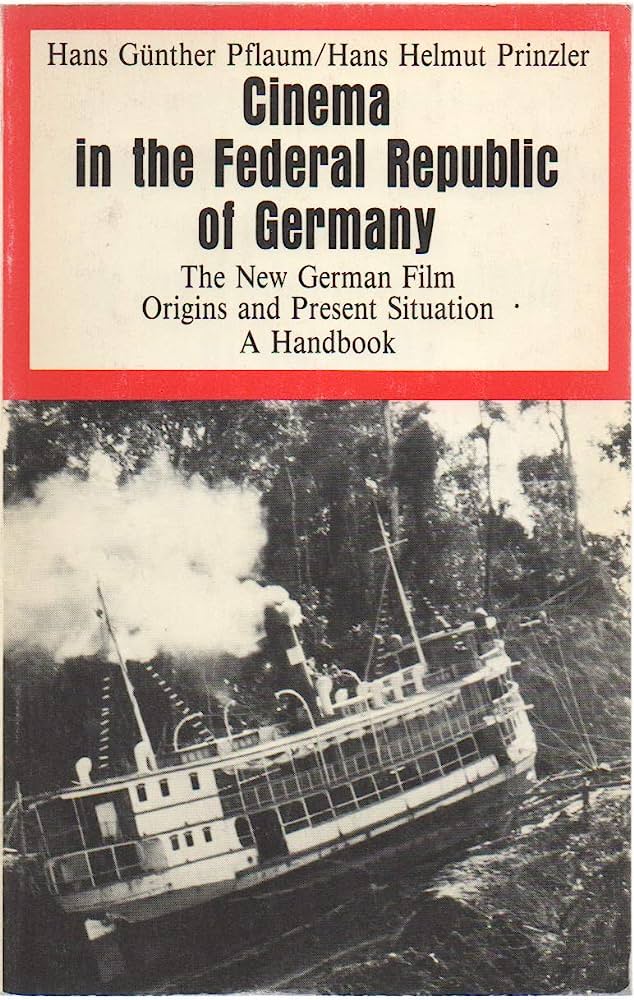

I first met Hans Helmut in 1980 when as a Ph.D. candidate in Münster I was asked by the German Kinemathek to join the team screening “Prussian” films for the city of Berlin’s major exhibition and catalog. He had joined the staff of the Kinemathek under Director Heinz Rathsack less than two years before. I was already well acquainted with his name, having read his work on Luis Buñuel, Luchino Visconti, Robert Bresson, and others, in Hanser’s monograph series, as well as his book, Cinema in the Federal Republic of Germany (1979). Knowing of my doctoral research on German Jewish Exiles, he asked me in 1981 to contribute to the Berlinale retrospective on Curtis Bernhardt (1982). I was only one of many young scholars Hans Helmut consistently promoted by offering them a chance to publish.

Born in Berlin on 23 September 1938, Hans Helmut Prinzler began studying Journalism, Theatre, and German in 1958 at the universities of Munich and Berlin, joining the Department of Journalism at the Free University in 1966 as a graduate student with what would become an unfinished dissertation project on West German films screened in the GDR. Three years later he joined the administration of the German Film and Television Academy (DFFB) under Dr. Heinz Rathsack, as the newly created Director of Studies, after student protests had rocked the institution. Hans Helmut was not only responsible for organizing admissions and coordinating film courses but also established a publications program and encouraged students to write about film topics, because, as he later admitted, he had “an obsessive relationship to printed paper and was always concerned that students write about their own work and that of the Academy.” (Quoted by Frederick Lang in a DFFB history).

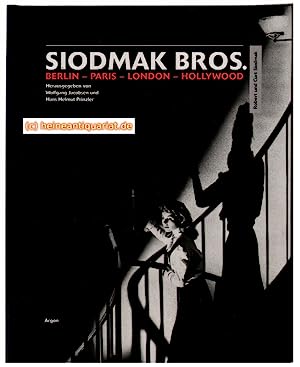
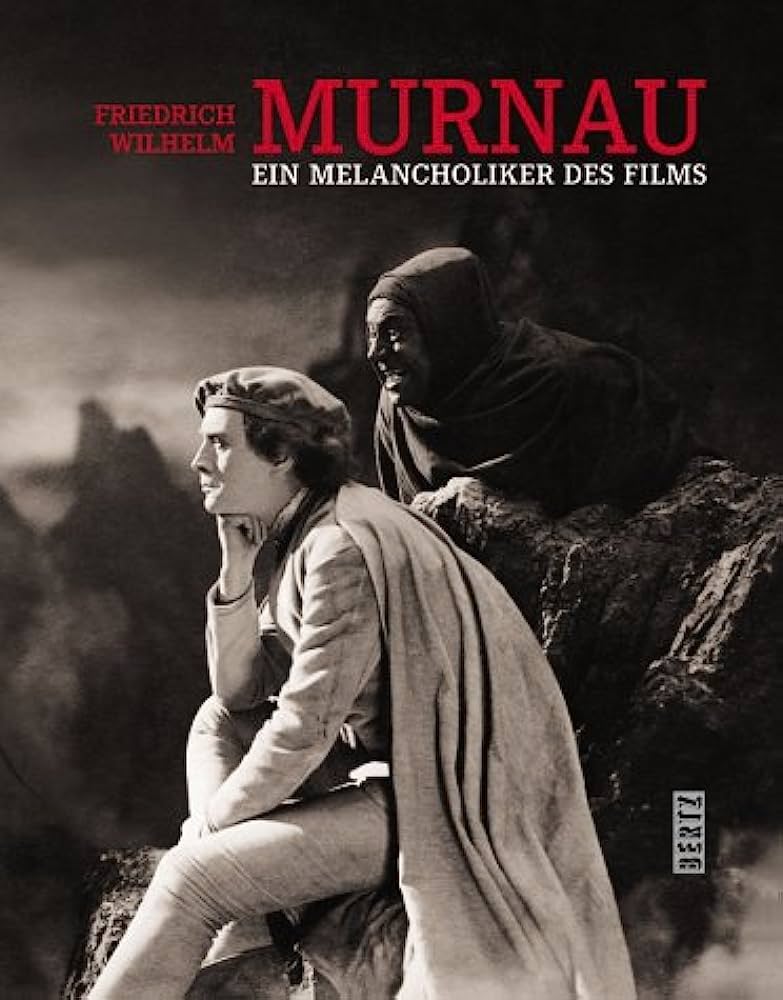
That wish to document film history would continue once Prinzler moved to the Kinemathek as the department head responsible for exhibitions and publications. While keeping his DFFB duties, Rathsack had become Kinemathek’s Chairman of the Board, a position Prinzler inherited when Rathsack passed away in 1990. From the 1980s through the early 2000s, Hans Helmut Prinzler was responsible for an amazing series of Berlinale retrospectives: German exile actors (1983), Ernst Lubitsch (1984), Rouben Mamoullian (1987), Erich Pommer (1989), Erich von Stroheim (1994), William Wyler (1996), G.W. Pabst (1997), the Siodmak Brothers (1998), Fritz Lang (2001), and F.W. Murnau (2003), always accompanied by serious books that consistently broke new film historical ground. During his time at the Kinemathek, when his administrative duties were substantial, Prinzler’s productivity as an editor and writer was staggering, publishing over forty books. His History of German Cinema (1993) brought together many scholars, has remained a standard German-language work, and included my essay, “German Exile Cinema.” On top of all that, Prinzler also founded the Kinemathek’s newsletter Film Geschichte (1996-2005) and the journal FilmExil (1992-2005).

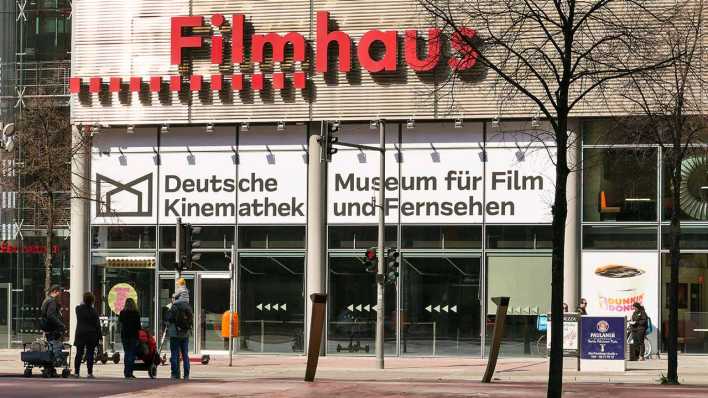
After becoming Head of the Deutsche Kinemathek, Prinzler continued Rathsack’s long-planned project to build a new home for the Kinemathek. It was a Herculean task that took twenty years, finally succeeding when in 2000 the Kinemakek, as well as the DFFB and the Arsenal Cinema moved to Berlin’s Sony Center on Potsdamer Platz. At the same time, the Kinemathek opened the German Filmmuseum, certainly one of Hans Helmut’s crowning achievements. The 25-year lease Prinzler signed will unfortunately expire in 2024. See my blog No. 319 (https://archivalspaces.com/…/14/319-deutsche-kinemathek/)
Meanwhile, I had become Film Curator at the George Eastman Museum and regularly saw Prinzler at the Berlinale, in particular at the fabulous parties he and his wife Antje Goldau – herself a well-respected film critic – would host at their Berlin Sybel Str. flat. It was a who’s who of German film historians and critics, with an occasional star thrown in, and they lasted until late in the night. It was at one of those parties in February 1994 that Hans Helmut introduced me to Lothar Just, a film journalist who worked for Eberhard Hauff, the director of the Munich Film Festival. Knowing I was a candidate for Director of the Munich Fillmmuseum, Lother grilled me for two hours at the party, then reported back to Hauff who politicked for my appointment. Hans Helmut became my most important mentor once I got the position and had to negotiate minefields, like the annual Kinemathek Association meetings of the German film archives.
After Prinzler’s retirement from the Kinemathek in 2006, he continued his publications activity, as well as being appointed Director of the Film Section of the Berlin Academy of Arts. Starting in 2007 until the week before his death, Prinzler published a blog (https://www.hhprinzler.de/) with reviews of new film books. I always looked forward to the monthly emails announcing his latest reviews which were never judgmental but always strove to describe as objectively as possible the contents and goals of the book. His former colleague, Martin Koerber, wrote to me after Hans Helmut’s passing: “This website alone is a life’s work which will hopefully survive. One can use it as a lexicon in order to research relevant film literature.”
R.I. P. Hans Helmut. I will miss you, as will your colleagues and friends.

 Archival Spaces
It is wonderful to learn more about film professionals and what they contributed to the field. Many of us just know the name, not the achievements, and activities, and the contributions of archivists.
LikeLike