319: Deutsche Kinemathek

Archival Spaces 319

Deutsche Kinemathek in Peril

Uploaded 14 April 2023

While in Berlin in February for the Berlinale, I heard the first disturbing reports that the Deutsche Kinemathek, one of Germany’s oldest film archives will lose its space in 2025 in the Sony Building, where it has maintained offices, archives, and the Museum for Film and Photography for the last 23 years. While the Arsenal Cinema, operated by the Friends of the Kinemathek, as well as the German Film and Television Academy (DFFB), both co-tenants in the building, have found new locations, there seems to be at present no other plans for the Kinemathek, other than boxing up the collections, maintaining a website, and organizing traveling exhibitions. Back in California, I started doing research to track down the veracity of the rumors and have learned the following.

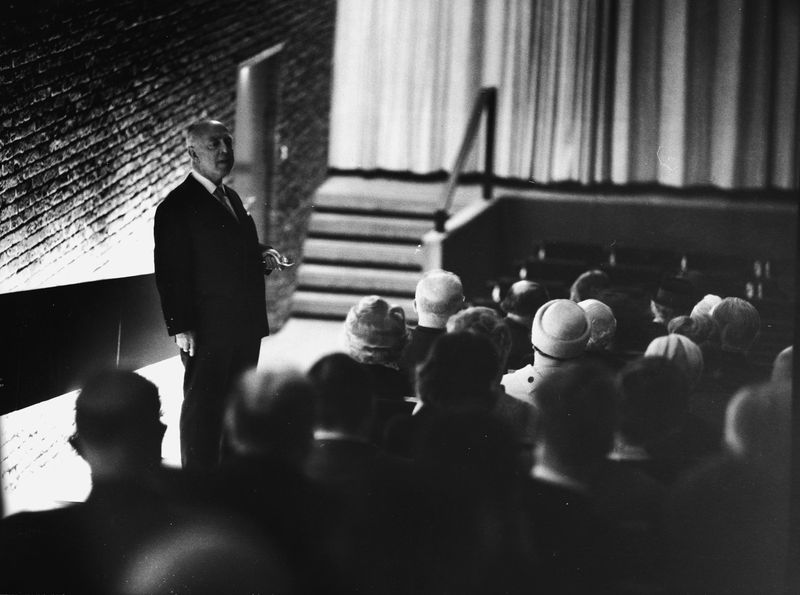
Gerhard Lamprecht opening Kinemathek in 1963
Theodore Heuss Platz in 1960s
Berlinale Retrospective, 1998
Berlinale Retrospective, 2017

The Deutsche Kinemathek opened in February 1963, when the West Berlin State acquired the film, document, and equipment collections of German film director, Gerhard Lamprecht, whose multi-volume filmography of German silent cinema is a standard work. Organized as a non-profit public foundation with financing from West Berlin, the Archive became a member of FIAF two years later. Beginning in 1977, the Kinemathek organized the Retrospectives of the Berlinale, their catalogs consistently breaking new film historical ground, especially their focus on German exile filmmakers. Its collections house 26,000 films, 30,000 scripts, 16,000 posters, and 60,000 film programs, as well as numerous estates, including the Marlene Dietrich and Paul Kohner Archives. I first started doing research in the Kinemathek in 1974, when preparing my master’s thesis on Ernst Lubitsch. At the time, the Kinemathek was housed in a building on the Theodore-Heuss-Platz, where it shared a library and facilities with the DFFB. Throughout the 1980s, the Kinemathek’s director, Heinz Rathsack, attempted to build a new facility at the Esplanade on the south bank of the Landwehr Canal and just west of the Potsdamer Platz’s no man’s land, but his death in December 1989 and German Reunification put an end to those plans. Hans-Helmut Prinzler became his successor, and successfully directed the institution until April 2006.

Deutsche Kinemathek at Potsdamer Platz
Florian Bolenius, Rainer Rother

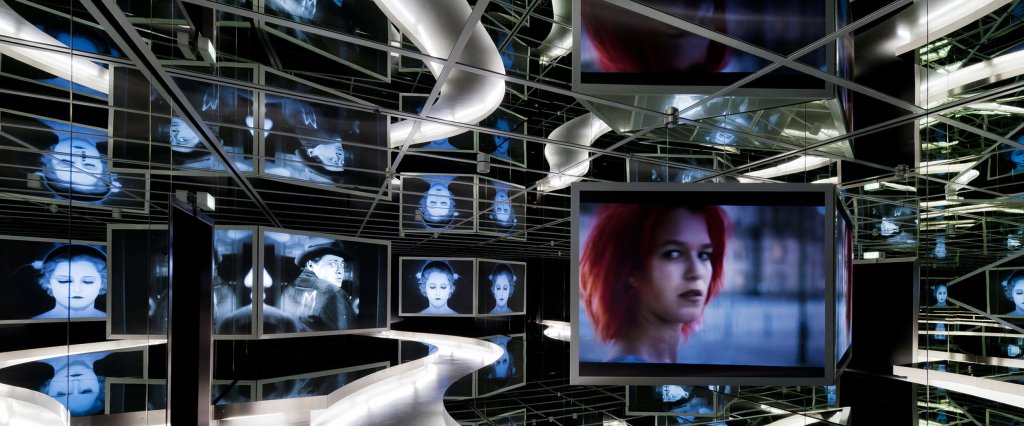
After Reunification in 1990, the Sony Corporation acquired a 320,000 sq. ft. site at the Potsdamer Platz from the city of Berlin city for US $61.6 million with the proviso that it offers space below market value to the Kinemathek, the DFFB, and the Arsenal cinema in their planned complex, designed by Helmut Jahn. In 1999, the three institutions opened their doors with a 25-year lease. The Museum of Film and Television opened in 2006 with the Kinemathek paying approximately 3 million Euros a year rent for all its spaces. At the same time, the German Federal government through the Ministry of Culture took over the Kinemathek’s financing, naming an artistic director, Dr. Rainer Rother, and a business director, Florian Bolenius, for the Kinemathek. In February 2008, Sony sold the complex to a German and American investor consortium, and in 2017 Oxford Properties and Madison International Realty purchased the complex for 1.1 billion Euros. As early as 2015, the Kinemathek attempted to negotiate an extension of their lease but failed because of costs.  

Gallery, Museum of Film and Television, Berlin

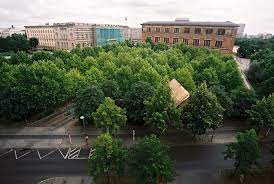
Then in February 2017, two Berlin newspapers, Berliner Morgenpost, and the Tagesspiegel, announced that the Kinemathek and the Berlinale would move into a to-be-constructed building on a parking lot next to the Martin Gropius Bau, an exhibition hall in the center of Berlin. The Minister of Culture, Monika Grütters, was quoted in a later Tagesspiegel article:  “A film center for Berlin, in which the Berlinale, the Deutsche Kinemathek, and maybe the DFFB finds a home is a good idea. The idea stands or falls with the right location, and of course financing.”(Tagesspiegel, 15 May 2017) The cost of the new building is estimated at 100 Million Euros. Dieter Kosslick, then head of the Berlinale, also strongly favored the Gropius site for the Berlinale’s new headquarters.

DFFB’s new home in Berlin-Moabit
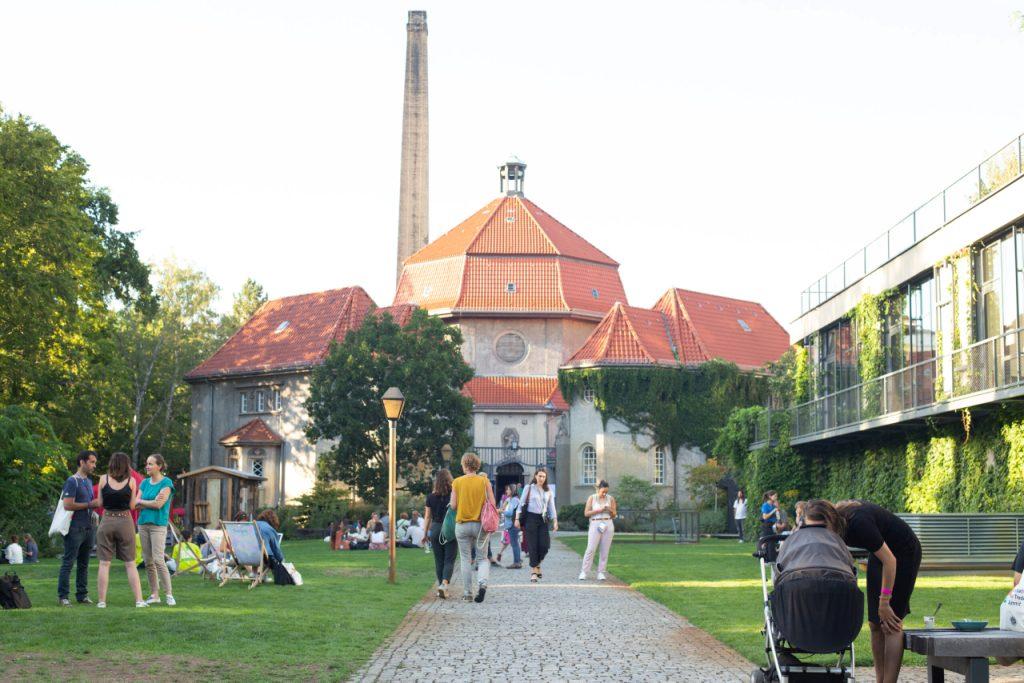
Arsenal’s new home in a former crematorium in the Silent Green district

However, because of the pandemic, there seemed to be little further forward movement, until Der Tagesspiegel reported in November 2022 that both the Film and TV Academy and the Arsenal had found new homes in Berlin. The former will move to Berlin-Moabit into a former industrial park at the Friedrich-Krause-Ufer, a couple miles north of the Brandenburg Gate. Funded by the City of Berlin, the DFFB announced in the Summer of 2022 that it will become part of a new research and media campus. The Arsenal Institute for Film and Video Art will relocate in 2025 to the working-class suburb of Wedding, in the new culture district “Silent Green,” where it will join other media institutions. Not only its archives but also a new 180-seat cinema will be built in a former crematorium. (Tagesspiegel, 4 November 2022) The article repeated unchanged the plans for the Kinemathek’s new home at the Gropius Bau from five years earlier.

Monika Grütters
Claudia Roth

However, a change in government from the Christian Democrats to the Social Democrats in 2021, lead to the succession of Claudia Roth (Green Party) to the Ministry of Culture. She has paid lip service to the government’s commitment to building a film center in Berlin, but so far the land has not even been purchased, much less construction begun. According to someone close to the Ministry of Culture, Roth sees any new construction of cultural buildings with suspicion, wishing instead to encourage the repurposing and reuse of older buildings that can be made energy efficient. Yet, Rainer Rother had as early as 2015 attempted without success to find a suitable building belonging to the government that could be renovated. When I asked Claudia Roth at the recent Oscar reception at the Villa Aurora about the Kinemathek construction, she mouthed her support for the Gropius site, then literally ran away before I could ask any follow-up questions. Emails to her office, requesting information about plans and financing have gone unanswered.

Having spent eight of my twelve years as Director of the UCLA Film and Television Archive planning and building a new archive in Santa Clarita, I understand that it could take as long as a decade to build a new Deutsche Kinemathek. One wonders how the film archive will survive, once it closes its doors in 2025. Who will take up its cause, if not the German federal government that is responsible for its survival?     

Martin Gropius Bau parking lot under trees

318: Richard Scheckman

Archival Spaces 318

Richard Scheckman in Memoriam

Uploaded 31 March 2023

I met Ricky Scheckman in the mid-1980s when I first attended the Syracuse Cinefest, having recently become a curator at George Eastman Museum in Rochester. Organized by the Syracuse Cinephile Society, the long weekend event had been founded by Phil Serling in 1980, and brought together film collectors from around the country, often braving terrible March winter storms. It was there that I first met such legendary film collectors as William K. Everson, Alex and Richard Gordon, Howard Kolodny and Gordon Berkow, as well as a younger (my) generation, including Leonard Maltin, Ed Hulse, Richard Bann, Joe Yranski, and Michael Schlesinger; Jim Card, my first film archive boss, was also a regular attendee. 

Photo: Martin Grams
Syracuse Cinefest Dealer’s Room

Ricky was a rabid collector of films and memorabilia, and right from the start of Cinefest to its shuttering in 2015, Ricky was one of its programmers and a cinephile. As Leonard Maltin noted in his blog on Scheckman’s passing, “if you arrived at a dealer’s room at a convention like Cinefest after he did you lost out on the real goodies. The dealers might as well have placed a ‘Ricky Was Here’ sign on their tables.” But if you didn’t know him you hardly noticed him in Syracuse. Despite his major contribution to the success of Cinefest, Rick was usually quietly hovering at the back of the theatre or in the halls outside the makeshift theatre and dealer’s room, smiling, greeting people, but never in the front of the room, introducing films or taking credit for supplying the many rare 16mm prints we would all enjoy. Joe Yranski remembered that when the Cinefest staff celebrated their 30th anniversary, they made a cake with the name of the founders on it, including Ricky’s. Seeing the cake, Ricky turned on his heels and left, locking himself into the hospitality suite and refusing to answer phone calls. That was Ricky; just don’t make a fuss about him! At the time I had no idea, not being a television watcher, that “Schecky” was nationally known for his on and off-camera roles on the Late Show with David Letterman

Ricky Scheckman introducing a film at “Mostly Lost” (Library of Congress)

Born in December 1955 in Hollis (Queens), New York, Ricky was adopted as an infant and spent his whole life in his parents’ home.  He earned his Bachelor’s Degree from New York University and an MBA in Finance from Baruch College in Queens in 1982. That same year, he joined Letterman as a film coordinator only three weeks after the show’s premiere, because they had already called him so many times to get rare footage of this or that and it was just cheaper to hire him than pay the rental fees. As Mark Evanier wrote on his blog, “If twenty minutes before tape time, the writers suddenly came up with a bit that required film of a monkey washing a cat, Shecky knew where to find it. He was, as a small number of people are in their jobs, utterly irreplaceable.” Ricky who had been collecting films since a teenager eventually formalized his collection as F.I.L.M Archives with his business partner Mark Trost, becoming its “Chairman of the Board” in 1986, according to his Linkedin page. Sometime during his thirty-three years with Letterman from February 1982 to May 2015, Ricky also started appearing on camera, most famously as Elvis Presley returned from the grave, but also in other roles. A YouTube video by the Letterman staff memorializes those appearances: https://www.youtube.com/watch?v=dbZokshpZyA.

After both Letterman and Cinefest ended in 2015, Ricky seemingly happily retired. Ricky felt incredibly lucky that his initial hobby had afforded him such an exciting career. At the same time, there was always a hint of wistfulness or sadness, when he talked about his Letterman reunions as if it had all come to an end too soon. He sold his large 16mm film collection recently to the Library of Congress, but the stock shot business continues since he made digital video copies of all his films. He was content to travel the globe, documented on his Facebook page, and attend gatherings of film collectors, like the Library’s “Mostly Lost” weekends and Cinecon over Labor Day in Los Angeles.

Letterman Reunion, October 2021
Ricky, July 2009

As I noted in an email to our mutual close friend, Joe Yranski: Ricky was such a warm and loving person. From the moment Martha and I met him at Syracuse Cinefest back in the 1980s, we took him into our hearts; that was especially true for Martha who always worried about him, whether he wasn’t lonely, whether he was taking care of himself. Ricky loved our daughter, Gianna, who was also adopted, and would always ask about her. We always looked forward to seeing him at dinners in Syracuse or lunches, later on, annual trips to New York or LA during Cinecon. For years we talked about going out to Colorado together to his brother’s ranch but it never happened. For me, he was such a gentleman, soft-spoken and reserved, happy to share his love of film and mutual friends but also keeping parts of himself back. 

Ricky died on March 10, 2023, at Bellevue Hospital after having had serious health issues for about six months. The world is a less happy space without him.

317: Berlinale II

Archival Spaces 317

Berlinale II

Uploaded 17 March 2023

Because of the closing of two major venues around the Potsdamerplatz, the Festival’s previous geographic center, this year’s Berlinale was a challenge, just in terms of getting from one theatre to the next, since they were spread out all over town, from the Kurfurstendam in the West to the Alexanderplatz in the East, to an inhospitable concert venue with folding chairs in the extreme southeast. Happily, Berlin’s public transport system is more than excellent; a $40 weekly pass gives you unlimited travel, day and night. Apart from the Competition, I focused on the Berlinale’s Generation program, a K — 12 series that has almost never let me down in terms of presenting complex narratives a world away from Disney’s crap; these films take children seriously without talking down to them.

Ha’Mishlahat (Delegation, Asaf Saban)
Darvazeye Royaha (Dream’s Gate, Negin Ahmadi)

Ha’Mishlahat (Delegation, Asaf Saban) follows a group of Israeli teenagers who take a class trip in their senior year to Auschwitz and other Nazi death camps. In some ways, it is weirdly reminiscent of a teen comedy – the popular 1970s Israeli Lemon Popsicle series is referenced – with petty jealousies and losing one’s virginity on the agenda, but also deftly expresses the confusion, embarrassment, shock, helplessness, and speechlessness of students confronted with the physical extermination of their grand-parents generation. An actual grandfather of one of the students, himself a survivor, is along to narrate his experience, but he too is overcome with emotion, unable to communicate. A young woman, e.g. steals a victim’s shoe from an exhibit at Sobibor, then photographs it surreptitiously in a modern Polish shoe store display, but is also wracked with guilt for the theft. Left behind at a rest stop on the way to Auschwitz, a young man is picked up by a Polish farmer who takes him to his village, where he is asked in front of the mayor and townspeople to bless a burnt-out synagogue; he, too, is speechless. Finally, a Polish girl from Cracow admits she has never been to Auschwitz, which is 45 miles from her home, a perfect symbol of the gulf between Poles and Jews, even today.         

Darvazeye Royaha (Dream’s Gate, Negin Ahmadi) is a personal documentary, shot on an iPhone and 8mmm video by a young Iranian-Kurdish woman who travels to the Syrian war zone to portray women her own age who have joined the “Women’s Protection Unit of the YPJ” (Kurdish Army) to fight against the Turkish Army and ISIS. All the women express the desire for freedom and to escape subjugation, often from their own fathers and brothers who have joined ISIS, and through the film, we see their heavy losses of life. When they are not fighting, they return to being children, playing video games, dreaming of marriage and families. The filmmaker herself oscillates between hope and despair, unable to see any kind of viable future for herself in a world where women are treated as less than dirt.

And the King Said, What a Fantastic Machine (Axel Danielson, Maximilian Van Aertryck)

And the King Said, What a Fantastic Machine (Axel Danielson, Maximilian Van Aertryck) is a Sewdish documentary that begins with the first photographic image by Joseph Niépce (1839) and ends with the tidal wave of images on YouTube, using archival footage, amateur videos, live-streaming material, and private images to not only explain the evolution of photographic images on our everyday reality but also how young people can evaluate their veracity and protect themselves from misinformation. There are images that take your breath away, but one wonders though whether the breakneck speed of the montage may not mitigate against any rational understanding of what is being shown.

Mimi (Mira Forney)

Made for much smaller children, the Slovakian film Mimi (Mira Forney) visualized the story of Romy, a very young girl whose canary “Mimi” has escaped, so she embarks alone on a search of the woods behind her apartment building. She takes the new canary her mother has bought her in a cage with her in the hopes of luring Mimi, and almost loses it to a ferocious dog. Along the way, she meets real hikers and campers, but also mythological figures, and even the ghost of a WWII German soldier. Through the confrontation with various characters, Romy and the children in the audience learn to cope with loss and the diversity of human motivations. Seemingly a bit long at 83 minutes for small children, the kids stayed with it, helped by the fact that a German speaker orally translated the English subtitles.

Le proprietà dei metalli (The Property of Metals, Antonio Bignini)

For slightly older children, Le proprietà dei metalli (The Property of Metals, Antonio Bignini), tells of a ten-year-old boy in a remote and poor village who seemingly has the psychokinetic gift to bend metals. He remains unselfconscious about his ability until a scientist from the city comes to observe and experiment with him, eventually taking him to a university for a controlled experiment, where he is unable to perform. Nevertheless, in its sensitive portrait of the boy the film communicates to children both the value of science and its limitations, the fact that some phenomena cannot be explained.

Reality (Tina Satter)

Finally, I have to mention a remarkable film I saw in the Panorama section, Reality (Tina Satter). Soon available on HBO, this fictional film, presented in real-time, visualizes the original arrest and interrogation by the FBI of Reality Winner, the young former NSA translator who in 2018 was sentenced to the longest prison term ever imposed for leaking a government document, five years; She had given to the internet website The Intercept a single internal report, detailing Russian involvement in the 2016 election of Donald Trump, hardly a national security issue. Taken verbatim from the interrogation transcript of the FBI, conducted in an empty room of Reality’s rented home, the film demonstrates the way the FBI interrogators brow-beat, cajole, and pacify the young woman who slowly realizes her dream of a government career rapidly dissipating. It features an amazing performance by Sydney Sweeney. In the aftermath of the first interrogation, Trump’s weaponized Justice Department and Fox News turn a basically naïve young woman into a monster, a vicious, anti-American traitor who deserves to die, even as U.S. Senators use the leaked report to investigate Russian culpability in Trump’s election. For director Satter, she is a feminist martyr.

The first photograph by Joseph Niépce (1839)

316: The Berlinale

Archival Spaces 316

Berlinale Competition

Uploaded 3 March 2023

The 73rd Berlinale took place between 16 – 26 February. I attended for the first time since 2019 because the COVID pandemic had kept me away. The largest film festival in the world, after Cannes and Venice, the Berlinale presents approximately 450 films in various programs, including the Competition, Encounters, Berlin Specials, Panorama, Generation (Kids), Forum, Retrospective, Homage, and Perspective German Cinema. In past years I’ve focused on the retrospective, which made up the archival portion of the festival. However, under festival directors Mariëtte Rissenbeck and Carlo Chatrien there has been a marked deemphasis on historical programming – past festival retrospectives under the aegis of the Deutsche Kinemathek not only discovered film historical terra incognita but published ground-breaking catalogs – in favor of reprising audience favorites. As a result, I turned my attention to the Competition, which featured 19 films from eleven countries. The highlights:

Bai Ta Zhi Guang (The Shadowless Tower, Zhang Lu)

Bai Ta Zhi Guang (The Shadowless Tower, Zhang Lu) begins in a cemetery, as a Chinese family visits the grave of the grandmother. We see an image of Confucian piety, but as the narrative reveals, it is an illusion. The father is not the father, the mother not the mother, rather the attached brother is the father to the little girl, and the absent, divorced mother lies dying in hospital; the family was estranged from the grandfather because he had been possibly unjustly accused of molesting a woman and sent to prison. Soon the brother discovers his father is alive while beginning a relationship with a young woman who was herself adopted as an orphan. All seemingly struggle to make ends meet. The story is revealed in quiet, contemplative images, shot in one of the few remaining old quarters of Beijing, Chinese modernity has taken its toll on traditional family relationships, their economic security, and the city itself.

Tótem (Lila Avilés)

Tótem (Lila Avilés) brings an extended family in Mexico City together to celebrate the 40th birthday of a young painter who is near death from cancer. As the painter’s sisters, parents, brothers, and various children gather in the hours before the party, emotions run high vacillating between hope and despair; worrying about the family’s overwhelming debt due to hospital bills, shielding the children from the inevitable, drinking too much to dull the pain, all the while putting on a brave face for the celebrant. The film’s final images are of the empty house which we assume had to be sold to cover the debts, but also reveal the break-up of the family. The female director who is particularly sensitive to the children’s performances won the Ecumenical Jury Prize.

Le grand chariot (Phillippe Garrel)
Roter Himmel (Christian Petzold)

Le grand chariot (The Plough, Phillippe Garrel) visualizes a different kind of dissolution as a family of French puppeteers attempt to stay faithful to their archaic craft, as first the mother (before the film begins), then the father and grandmother die, while the brother decides to become a stage actor, the troupe’s only non-relative descends into madness after deciding to return to painting, and the remaining sisters are defeated by dwindling audiences and a storm that destroys their theater. With an on-again-off-again voiceover reminiscent of the French New Wave, the film’s pacing is deliberately slow, unspooling like time itself in an age when puppets rather than video games could spark the imagination of children. Veteran director Garrel won the Silver Bear for direction. 

Christian Petzold’s Roter Himmel (Afire) begins with two friends traveling to a family vacation home on the Baltic German coast, one a writer, the other preparing a portfolio for an art school application. There they unexpectedly meet another house guest, a young woman who becomes the object of the writer’s aggression – he’s worried about his latest novel – while the budding art student falls in love with a local lifeguard. When wildfires break out, leading to tragedy for the gay couple, the writer must reassess not only his failed novel but his relationship with the woman.

Suzume (Makato Shinkai)

Possibly a first for the Berlinale Competition, the Japanese animé, Suzume (Makato Shinkai), looks and feels like a Miyazaki film. The story of a 17-year-old girl who lost her mother when she was a small child and now lives with her aunt. Mixing realism and mythological fantasy as Miyazaki had, the film follows Suzume who falls in love with a beautiful young man, one of the gatekeepers to the doors of a nether world, where a giant worm periodically breaks to the surface to cause havoc through massive earthquakes. As the pair chase from one gate to the next, Susume realizes that she had passed through a portal as a child during the earthquake that killed her mother.  

Blackberry (Matt Johnson)

Just how quickly modernity’s technological advancement can upend even digital innovations is illustrated in the Canadian feature, Blackberry (Matt Johnson). Initially engineered by a group of super nerds more interested in endlessly rewatching Star Wars, the Blackberry smartphone’s rise to a 45% share of the market is organized by an unscrupulous salesman before the iPhone and the SEC – the CEO had back-dated stock options –  kill the product literally overnight. Told as a rise-and-fall farce, the film’s rapid pacing matches the relentless competition that has characterized the digital world.