335: Alfred Zeisler

Archival Spaces 335

Alfred Zeisler

Uploaded 24 November 2023

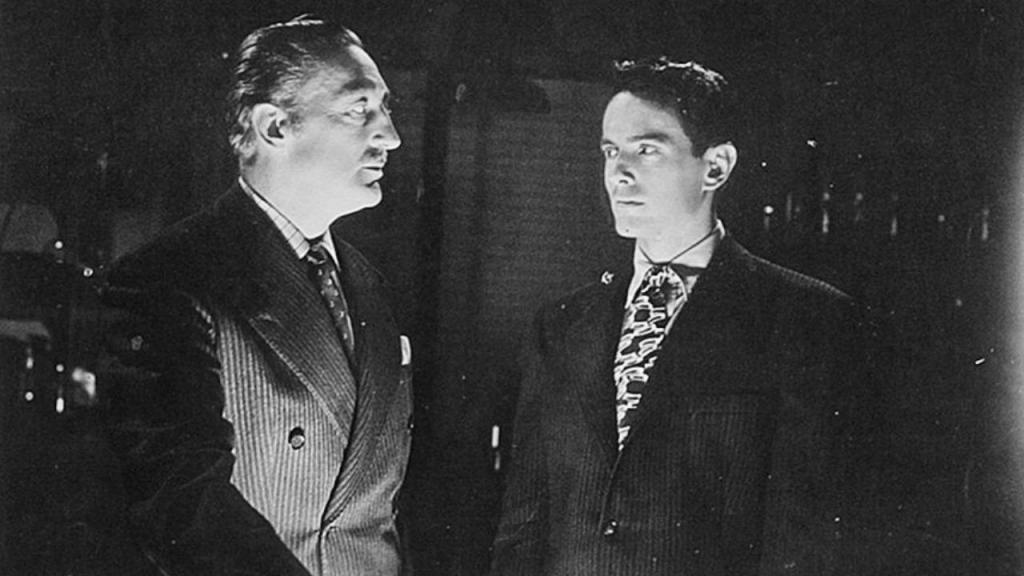
Warren William and Peter Cookson in Fear (1946)

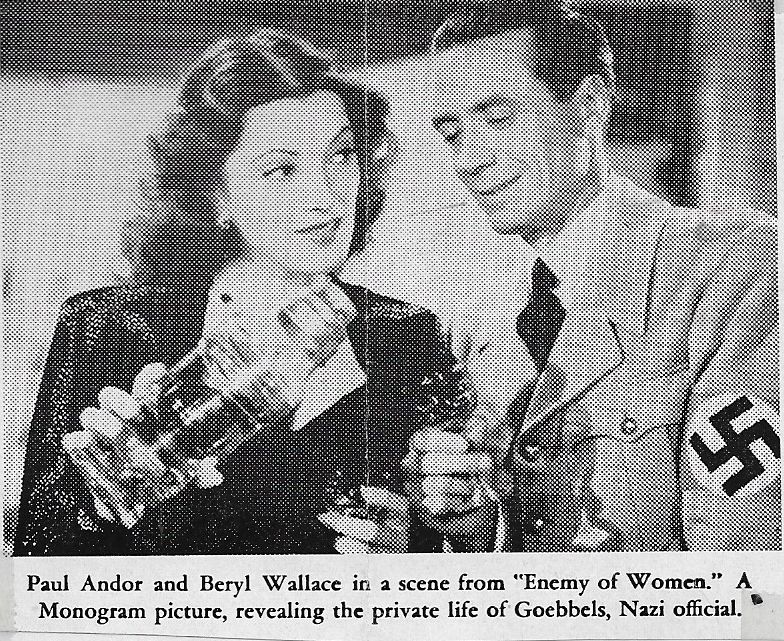
I first interviewed Alfred Zeisler in April 1983, when he attended a Berlinale Retrospective; I was in the final throws of writing my dissertation which included a chapter on Zeisler’s biopic of Dr. Joseph Paul Goebbels, Enemy of Women (1944). Zeisler had been a powerful producer at UFA, heading one of four production units, along with Erich Pommer, Bruno Duday, and Günter Stapenhorst.  Unlike many German émigrés, Zeisler was seemingly not Jewish, because he continued working in Germany until at least 1935, having been born an American citizen. Why had he left? Zeisler hinted it was political because he and Goebbels had crossed swords. Surprisingly, no files for Zeisler were to be found at the Berlin Document Center (now Bundesarchiv), where all Nazi Party documents are archived. I’ve now returned to my Zeisler research by writing an article on his popular detective films.

Zeisler in The house on 92nd Street (1945)

Henry Alfred Zeisler was born in Chicago on 26 September 1892. His father, Moritz Zeisler, born in Moravia, Austro-Hungary, in 1856, and was Jewish, the family was probably originally from the Ukraine. Moritz Zeisler was an actor, who spent at least two years in America, acting on German language stages in New York and Chicago, where he played middle-aged character parts. Alfred’s mother, Metha E. Engelbrecht, was born around 1870 in Austria. The family moved back to Berlin in May 1894, when Moritz Zeisler joined the company of the Königliches Schauspielhaus (Royal Theatre), while little Henry attended school in Berlin-Charlottenburg.
Zeisler was eighteen when his father died, so he followed in his father’s footsteps, a journeyman actor in Zwickau, Berlin, Vienna, and Prague over the next ten years. He returned to Berlin in 1921, having made up his mind to work in the film industry, since his acting career was not going anywhere fast. Through Albert Pommer, Erich’s brother, he got a job as a production assistant at UFA for Fritz Lang’s Destiny (1921), but quickly moved on to the Harry Piel Film Company, writing three detective-adventure films for the producer-director-actor. In writing crime scripts for Piel, Zeisler learned the craft from one of the best, setting Zeisler on his future path as a crime specialist.

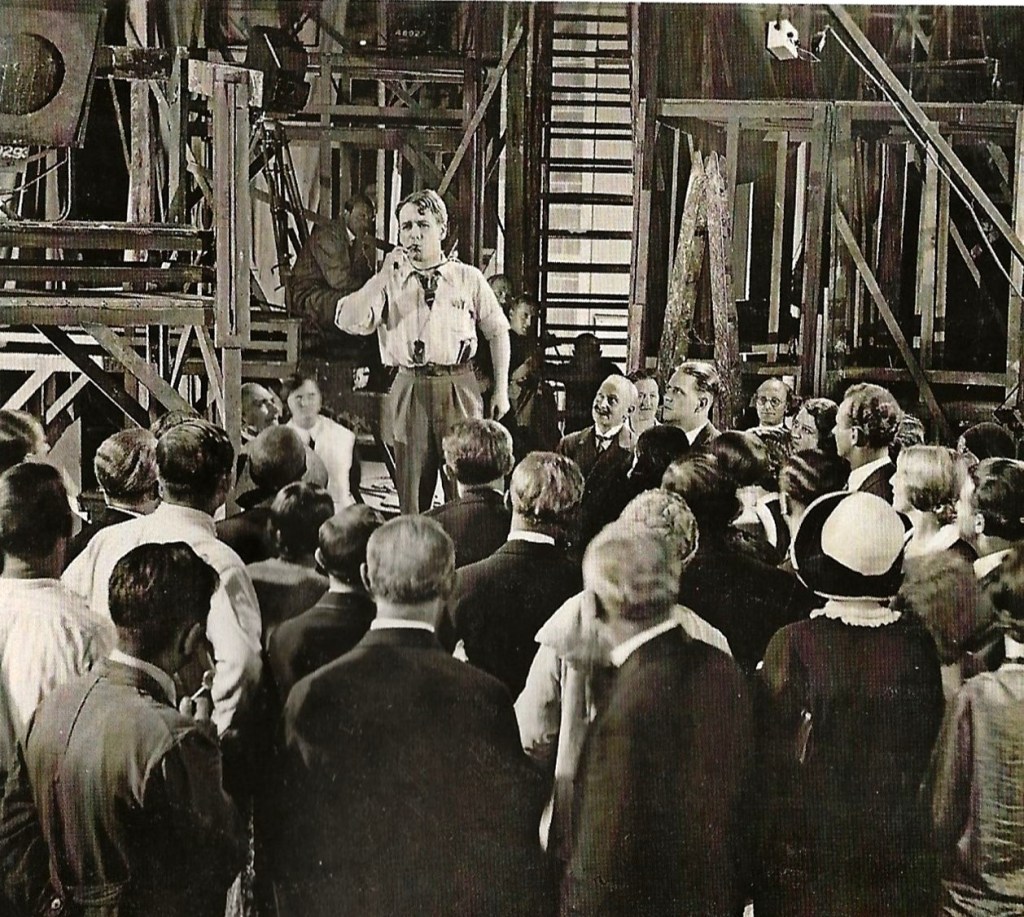
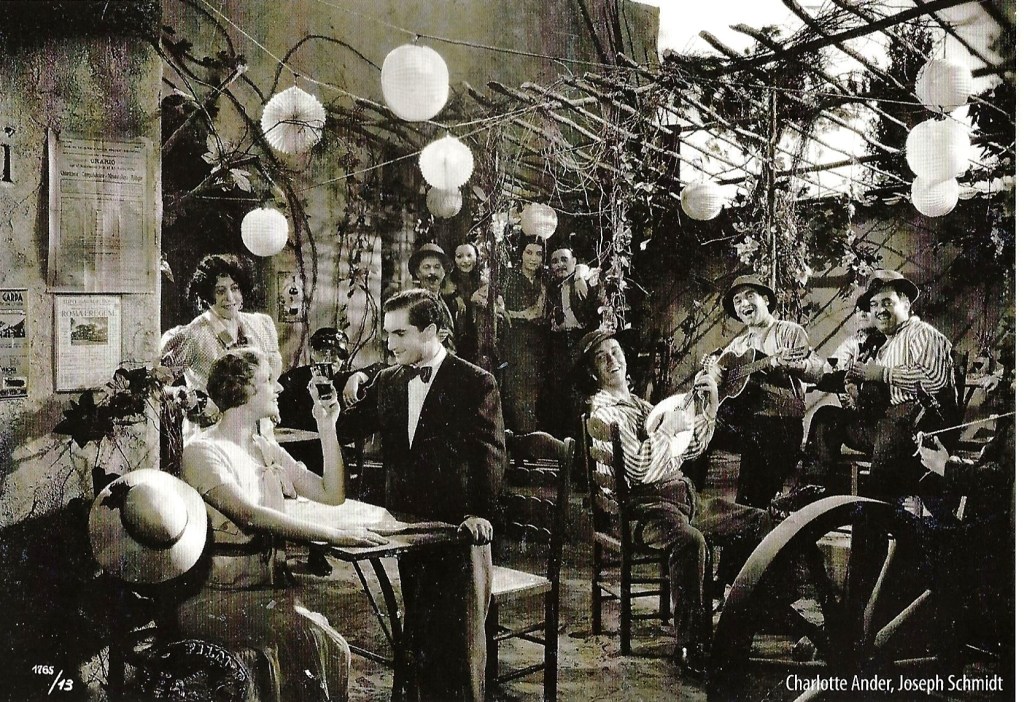
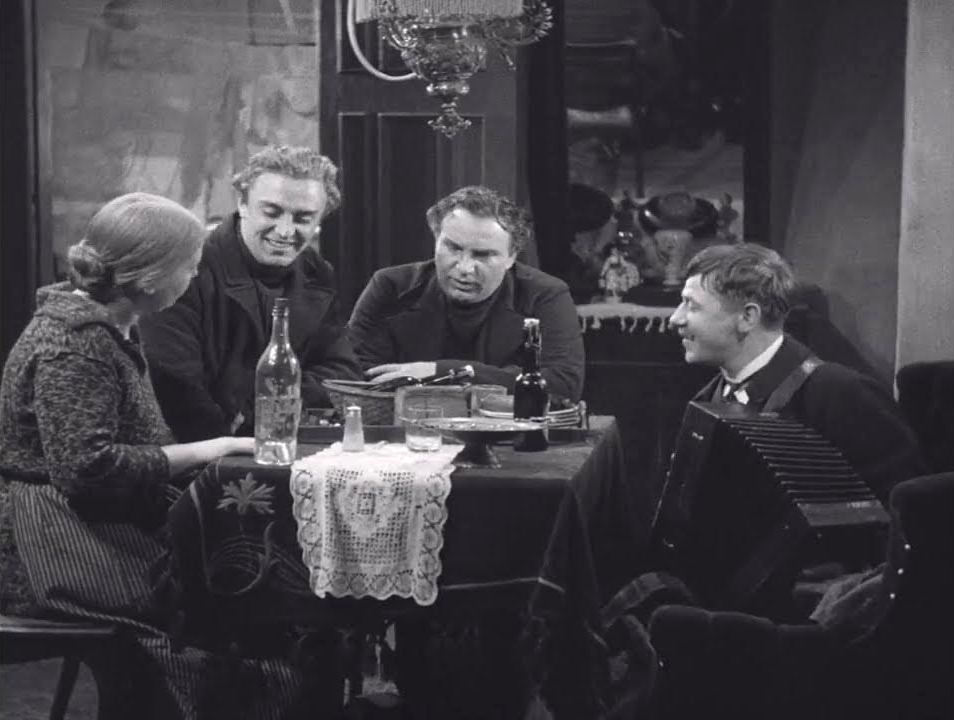
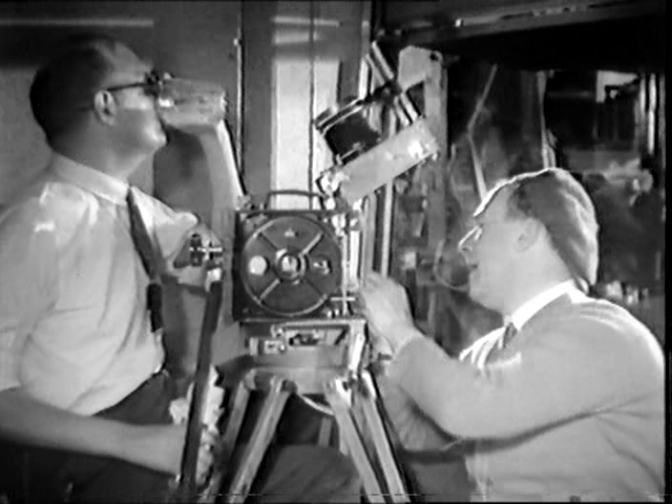
Der Schuss im Tonfilmatelier (1930)
The Shot in the Film Studio

By the mid-1920s Zeisler was working as a successful producer for the Deulig Company, then moved back to UFA in the same capacity in 1927. However, Zeisler’s biggest successes came with the coming of sound. He directed and produced Der Schuβ im Tonfilmatelier/Shot in the Film Studio (1930), a murder mystery, which was a commercial and critical success; in it, Zeisler’s police detective actually solves the crime using sound film technology. Zeisler received a bonus, because he had in his hyphenated role brought the film in far under budget. His next crime drama, Express 13 (1931) featured night scenes on location – a first – and involved an attempted assassination on a night train. With his crime film Der Schuβ im Morgengrauen/Shot at Dawn (1932), Zeisler became the golden boy at UFA, having shot German and French language versions simultaneously for the price of one film. Thus, in Spring 1932 he was made head of his own production unit, and in 1935 Zeisler named production head for the whole studio.

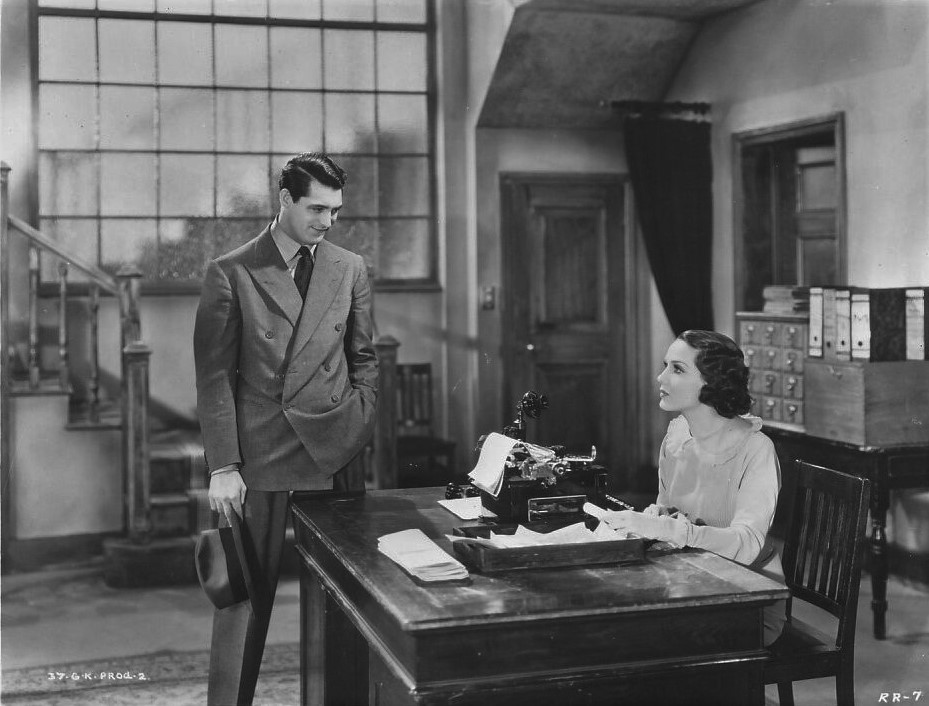
Cary Grant in The Amazing Quest of Mr. Ernest Bliss (1936)
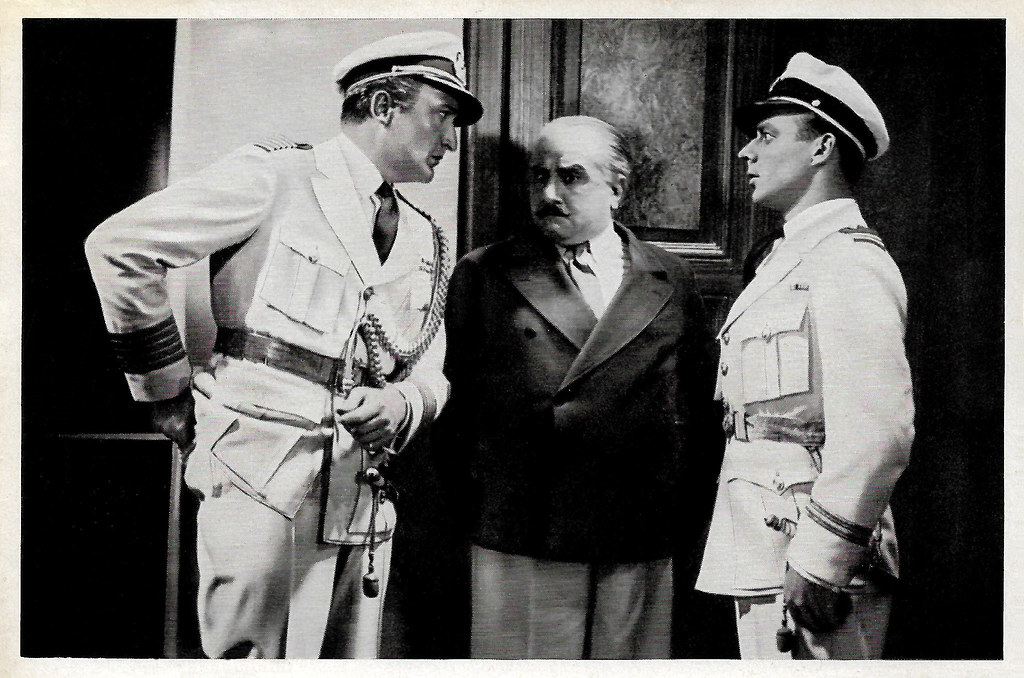
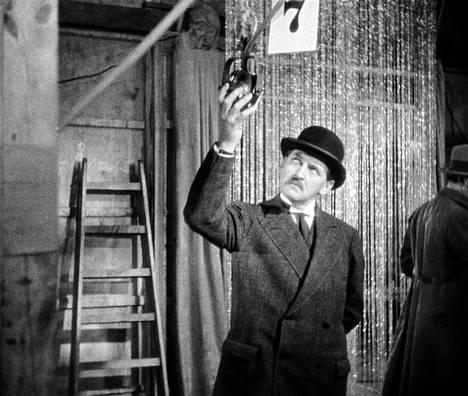
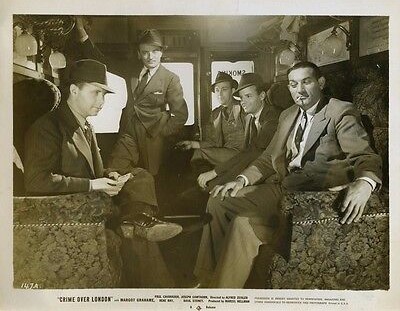
Crime Over London (1937)

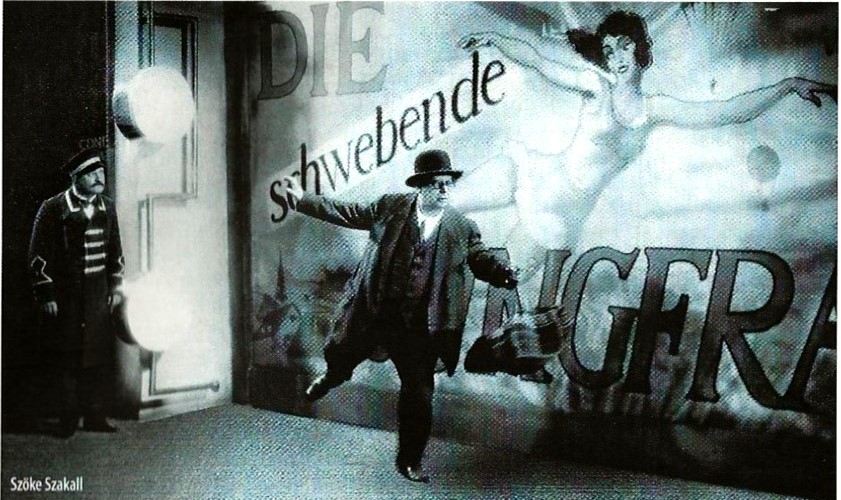
Why Zeisler chose to emigrate in September 1935 is not completely clear since his Dutch wife, Lien Dyers, was a film star at the studio and she had to give up a flowering career. One can assume that as an American citizen, Zeisler was not forced to prove his Aryan lineage, so the Nazis might not have known his father was Jewish (in their eyes) or was he allowed to work, despite being “Half-Jewish,” like Reinhold Schünzel or company executive Hugo Corell? Zeisler recalled that the Gestapo searched his offices at UFA, because an illegal anti-Nazi publication, Das Braunbuch (1934), which uncovered the truth about the Reichstag’s fire, was circulating on the lot.  Zeisler said he not only read it but was involved in a resistance cell. Apparently, Goebbels also hated Zeisler, so he asked Ludwig Klitsch, his boss at UFA, to take a leave of absence to produce a film in London. On the other hand, Zeisler’s grandson, Dillon Beresford reports, Zeisler had confessed to his daughter that he was working as a spy for the Soviet Union, given he knew Hitler personally and had access to information. In Hollywood rumors surfaced he was a Communist, complicating his American career and making him a constant FBI target, leading ultimately to him losing his US citizenship.

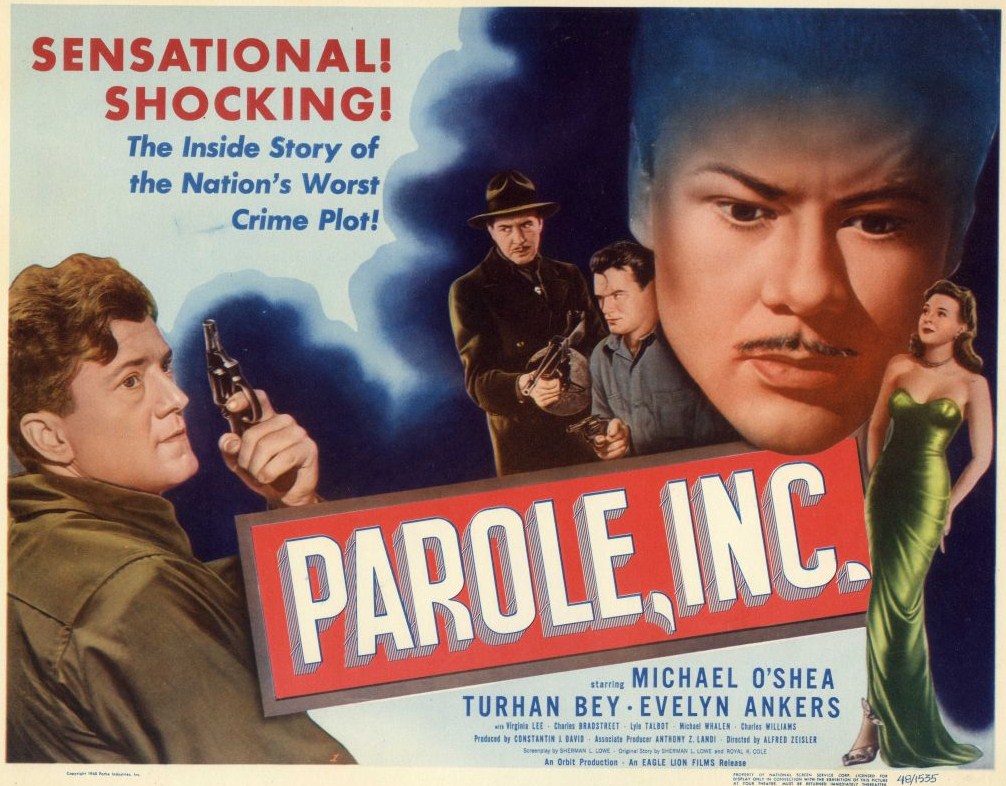
Once in England, Zeisler teamed up with the émigré producer Otto Klement to direct The Amazing Quest of Mr. Ernest Bliss (1936) with Cary Grant. After two more films, Zeisler and Dyers moved to Hollywood in October 1937. But neither he nor his wife had any luck. They would soon divorce and he would not direct again until 1943, when he produced Enemy of Women, which was cut by 50 minutes by the distributor, turning a serious biography into an exploitation film. He then directed three very low-budget crime dramas for Monogram and Eagle-Lion, including Fear (1945) a well-reviewed adaptation of Dostoyevsky’s Crime and Punishment.  After a few minor acting gigs, Zeisler called it quits. Exile had not been kind to him.

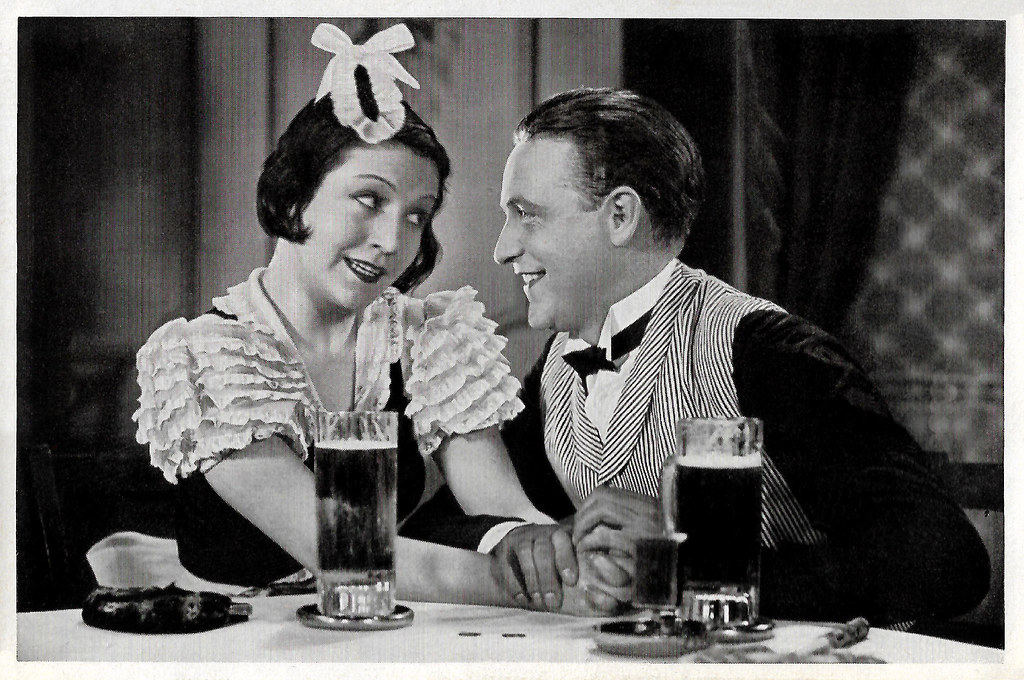
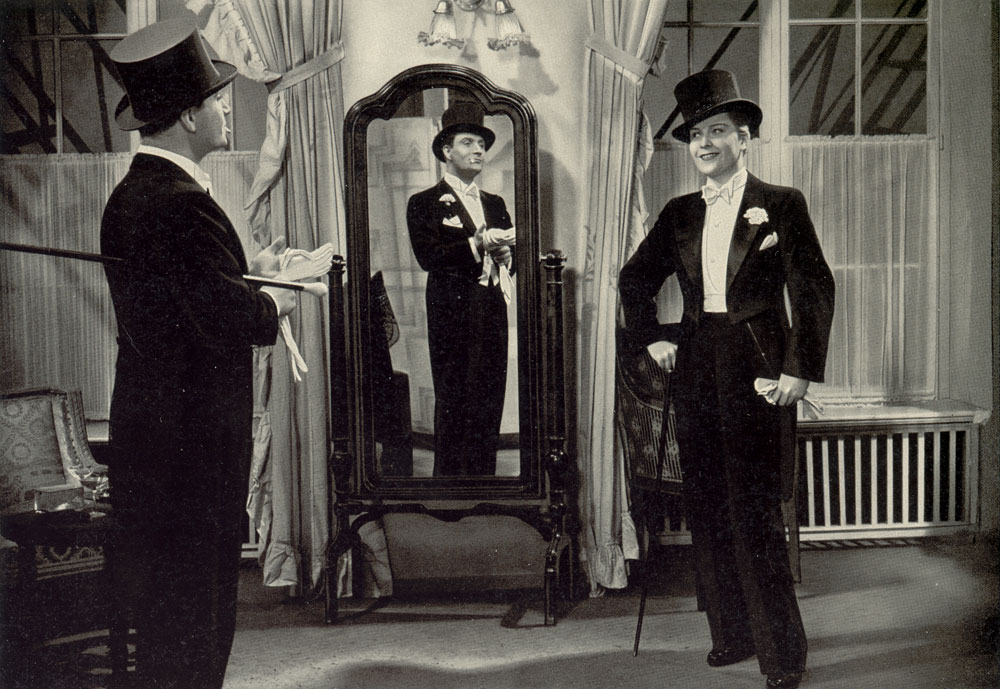
Anton Wohlbrück, Renate Müller in Viktor und Viktoria (1934)

334: Ivo Blom’s Cabiria…

Archival Spaces 334

Ivo Blom’s Quo Vadis?, Cabiria and the Archaeologists

Uploaded 10 November 2023

Reproduction Jean-Leon Gérôme’s Pollice verso (1872)

In 2005, I published an article, “The Strange Case of the Fall of Jerusalem,” which won the Katherine Singer Essay Award and dealt with the archival identification of a biblically-themed film that was only known by its American States Rights release title. In describing the archival process of identification, I researched Italian costume epics from the pre-WWI era, thinking the film could be Italian and pre-war, before finally discovering it was a German film, Jeramias (1923, Eugen Illés). In that research, I also learned what a huge impact Italian costume pictures, like The Last Days of Pompeii (1913) and Cabiria (1914) had in America, actually forcing U.S. producers to switch to feature-length films, rather than continuing to make shorts, as dictated by the Motion Picture Patents Company. I was therefore particularly interested in Ivo Blom’s new book, Quo Vadis?, Cabiria and the Archaeologists. Early Italian Cinema’s Appropriation of Art and Archeology (2023, edizione Kaplan) which quite unexpectedly discusses the amazing level of sophistication of these early cinematic representations of Roman and Carthaginian antiquity.

Joaquin Phoenix in Gladiator (2000, Ridley Scott)

In his introduction, Ivo Blom identifies the 19th-century historical genre painters Jean-Léon Gérôme, Lawrence Alma-Tadema, Georges-Antoine Rochegrosse, and Henrí-Paul Motte as the archeologists of his book title. These insiders at the Paris Art Salons, at least for a while, used actual archeological objects to create a visual world of Roman antiquity that has entered into the collective imaginary, recycled, reused through a multitude of media, like Gérôme’s Pollice verso (1872), which has reverberated through our images of not only a Roman gladiator arena but the very idea of thumbs up or down. Ivo Blom defines that kind of channel-hopping in terms of transnationality and intermediality.

Postcard reproduction from Quo Vadis? (1913, Enrico Guazzoni)

One of the ironies of the early Italian cinema’s appropriation of paintings by Gérôme and other realist-trained painters of historical subjects was that by the time filmmakers borrowed their iconography for mise-en-scène, costumes, sets, and props, these painters had been out of fashion for at least two decades; their reuse in the new medium actually increased media presence. Thus, in his first chapter, Blom demonstrates how certain painted images of antiquity wandered from the easel to the operatic stage, to book illustrations, to postcards, to advertising, to magic lantern shows, so that Enrico Guazzoni and Giovanni Pastrone would not even have had to see Gérôme’s paintings in the flesh – although that possibility is also documented, – but only one of the many reproductions in circulation. Indeed, the early Italian epics were not the first cinematic form to appropriate historical paintings, Blom discusses the preponderance of so-called tableaux vivants or living pictures, which were popular as stage attractions and in cinema around 1900.

Luigi Maggi’s The Last Days of Pompeii (1908)
The Sign of the Cross (1932, Cecil B. DeMille)

Henryk Sienkiewicz’s 1896 novel, Quo Vadis, was published in numerous illustrated versions in Italy before Enrico Guazzoni and the Italian Cines company released their film, Quo Vadis (1913) which included reproductions of Gérôme’s paintings. The first film version of Quo Vadis (1901), produced by Pathé and co-directed by Ferdinand Zecca, also quoted Pollice verso, as did Luigi Maggi’s The Last Days of Pompeii (1908), Stuart Blackton’s The Way of the Cross (1909, Vitagraph) and subsequent versions of The Sign of the Cross by Edison (1914) and Cecil B. DeMille (1932). Blom argues that Gérôme’s paintings were in fact proto-cinematic in their construction of space and therefore imminently adaptable to cinema.

Postcard reproduction from Quo Vadis? (1913, Enrico Guazzoni)
Alma-Tadema’s The Roses of Heliogabalus (1888)

Another major influence on Guazzoni’s Quo Vadis was the paintings of Alma-Tadema in terms of staging, and “particularly the use of props and deep staging.” (p. 108)  Like other painters of antiquity, Alma-Tadema made use of actual archeological objects from Roman times, especially furniture and other props. which then entered into the visual vocabulary of Guazzoni’s film and other Italian epics. Alma-Tadema’s composition in deep space also became a visual feature in many Italian silent epics, which layered space through set elements like curtains and stairs.

Cabiria (1914, Giovanni Pastrone)
Henrí-Paul Motte‘s Baal dévorant les prisonniers de guerre (1876)

Giovanni Pastrone’s Cabiria (1914), which Blom considers “the apex of the historical genre in early Italian cinema” (p. 169), likewise, gives evidence of a rich iconography from previous sources, including the illustrations by Georges-Antoine Rochegrosse for the 1900 edition of Gustave Flaubert’s 1862 novel, Salammbô. Blom zeroes in on two set pieces, the Temple of the Moloch and the boudoir Sophonisba, both also described by Flaubert, to demonstrate how their iconography originated in earlier 19th-century sources, including paintings and opera stagings. Apparently, more than sixty “academic” paintings took their themes from Flaubert’s Salammbô. Georges-Antoine Rochegrosse’s Salammbô et les colombes (1895) functioned as a model for Sophonisba’s boudoir, while numerous other illustrations by the painter were also referenced in Cabiria.

ReproductionGeorges-Antoine Rochegrosse’s Salammbô et les colombes (1895)
Cabiria (1914, Giovanni Pastrone)

In a final chapter, Blom doggedly researches the Carthaginian, Egyptian, and Roman collections in Italian and French archeological museums, finding that the painters used these sources for specific depictions of objects, while Pastrone owned a printed source of Carthaginian objects, now housed at the Museo del Cinema in Turin.     

This is an incredibly well-researched and fascinating book at the intersection of cinema, archeology, and art history; its detailed footnotes alone could fill another book. A must-read for anyone interested in Italian and/or silent cinema, it proves once again the degree to which even popular entertainment cinema in the “transitional” era strove for aesthetic legitimacy through references to art and literature.

Cabirria (1914), the elephants would end up in D.W. Griffith Intolerance (1916)

333 Adrian Brunel

Archival Spaces 333

 Adrian Brunel and British Cinema in the 1920s

Uploaded 27 October 2023

Adrian Brunel

Back in 1978 when I began researching Hans Richter’s film program for a 50th anniversary reconstruction of Film und Foto (1929), a seminal exhibition reprising the avant-garde photography and film of the 1920s, I first came across the name of Adrian Brunel. The official FiFo catalog only listed “three English burlesques by Brunel” in its 11th film program, which included Fernand Léger’s Ballet Mécanique (1924), and E.A. Dupont’s Varieté (1925), so in 1979 we screened A Typical Budget (1924), Cut It Out (1925), and So This is Jollywood (1925), short films which parodied Topical Budget newsreels, government censors, and the British film industry, respectively. The Brunel name only seldom turned up in subsequent years, so my ears pricked up when I met Josephine Botting, Fiction Curator at the British Film Institute, who told me about her book, Adrian Brunel and the British Cinema in the 1920s. The Artist vs. the Moneybags (Edinburgh University Press, 2023), which is based on her PhD. Research in the huge Brunel Estate Collection at the British Film Institute (https://euppublishingblog.com/2023/04/05/adrian-brunel-blog/). Discussing whether the eight Brunel burlesques made between 1923 and 1925, should be considered avant-garde films, Josephine Botting mentions their similarity to both the Leger film and René Clair’s Entr’Acte (1925), as well as the fact that Jacques Ledoux screened another Brunel short, Crossing the Great Sagrada (1923), in an experimental film program in Brussels in 1949.  The generic uncertainty regarding the Brunel shorts had very much to do with the state of Britain’s film industry in the 1920s.

Born in London in 1889, Adrian Brunel entered the film industry in August 1915 as a booker for Moss Empire’s Bioscope, having been excused from war service. A little more than a year later, Brunel formed his first film production company, Mirror Films, with Harry Fowler Mear, releasing the five-reel melodrama, The Cost of the Kiss in February 1917, which however failed to find a distributor. As Botting notes, over-production on the one hand, and lack of quality, on the other, seriously hampered the development of British cinema in the silent era. As a result, generally negative views about British cinema by film historians meant the silent cinema was very much under-researched, except for Alfred Hitchcock, Brunel’s one-time assistant. While Hitchcock soared in subsequent years, Brunel struggled at the fringes. Botting argues, then, that studying Brunel’s seemingly failed career tells us at least as much about the structural weaknesses of the British film industry, as it does about Brunel as an auteur maudit.

Crossing the Great Sagrada (1923)
Cut It Out (1925)

The fact was that Brunel’s work, according to his own statements in his autobiography and elsewhere, quoted by Botting, was considered too “high brow” for the low expectations of the commercial film industry. That Brunel was a founding member of the London Film Society which screened art films, also did not endear him to commercial film producers. Referencing the partially commercially successful but hard-to-categorize burlesque films, Botting quotes Brunel’s friend and colleague Ivor Montagu, another talented but marginalized director: “(the burlesques) were responsible for Brunel’s negative reputation within the industry: ‘he was accounted a dangerous intellectual because he specialized in satirical one-reelers . . . it was axiomatic in the trade that audiences would not accept satire and that anyone intelligent enough to be satirical was dangerous’.” (p. 34)  Brunel’s up-and-down career is thus marked by industry unwillingness to hire Brunel except for quota quickies and salvaging jobs, while the features he did complete were subverted by unstable industry conditions.

After a brief stint at the Ministry of Information, Brunel joined the British Actors’ Film Company in January 1919, where he wrote three screenplays, including The Auction Mart (1920), which the producer labeled “high brow,” then viciously attacked the distributor for destroying his work, before resigning in March 1920.  Almost immediately he joined Minerva Films, a company founded with writer A.A. Milne to produce four short comedies, which the company could not sell, despite good reviews; Botting retrospectively evaluating them as “highly cinematic and containing some original and genuinely amusing devices.” (p. 59). After another stint with Solar Films which also only produced financial messes, Brunel directed The Man Without Desire (1923) for Atlas-Biocraft which was modeled on the paintings of Pietro Longhi, did good business in its initial West End run in February 1924, then quickly sank into obscurity, possibly due to resistance by film renters who objected to the film’s high art pretentiousness; Botting mentions its expressionist lighting (shot in a German Studio) and Venice locations. It’s a “Ripple van Winkle” story of an 18th-century count waking up 200 years later. Botting states the film is one of Brunel’s most impressive achievements.

Blightly (1927)
The Constant Nymph (1928)

Next, Brunel joined Michael Balcon’s Gainsborough Film, where the director again felt that he was undervalued, plum assignments going to former assistants, like Graham Cutts. In 1926, Brunel was assigned to direct a war film, Blighty (1927) which detailed life on the British home front during World War II. Despite a low budget, Brunel and Montagu managed to craft an art film that garnered good reviews and was a financial success. He next directed The Vortex (1928) from a Noel Coward play, which flopped miserably in April 1928. However, his follow-up, The Constant Nymph (1928), proved to be his most successful film, both commercially and artistically, despite the fact that he was forced to work with novice director, Basil Dean. A 1929 readers poll for Film Weekly named Constant Nymph the most popular film of the previous year, while Blighty made it to 8th place. Despite being considered one of the great directors of British cinema in that moment, Adrian Brunel could subsequently only get work making quota quickies, most of which have not survived.
Brunel directing The Vortex (1928)
While Parents Sleep (1935)

In a final chapter, Botting reviews Brunel’s ever more marginal career in the British sound cinema, until his death in 1958. Botting concludes: “Adrian Brunel’s career, which looked so promising at various points, was ultimately a failure in terms of his own ambitions and aspirations. This was partly attributable to the difficult and unstable conditions that existed within the British film industry, but also to Brunel’s own reluctance to compromise his artistic ideas. This led some in the trade to regard him as a highbrow, and his views on the lack of culture of industry bosses undoubtedly did not endear him to them.” (p. 209) This is a quick, informative, and entertaining read for anyone interested in the British film industry before it stepped on the world stage with the arrival of Alexandre Korda.

Ivor Novello in The Vortex (1928)

332: The Spanish Dancer (1923)

Archival Spaces 332

The Spanish Dancer (1923) on Blu-Ray

Uploaded 13 October 2023

I first saw Herbert Brenon’s The Spanish Dancer (1923) in 1996 at the Giornate del Cinema Muto, when the Festival presented a mini-retrospective, “A Kiss for Herbert Brenon.” I had first discovered la Negri in her German films with Ernst Lubitsch, most of which I watched on a Steenbeck at the Deutsche Kinemathek in Berlin in 1974, the Summer I was researching my master’s thesis on Ernst Lubitsch and the Rise of Ufa. A year later as an intern at Eastman Museum, I fell in love with many of her American films, in particular Forbidden Paradise (reunited with Lubitsch), A Woman of the World (1925), Hotel Imperial (1927), and Barbed Wire (1937). My boss, Jim Card, was also a big fan of Pola’s – he had a thing for dark-haired actresses: Louise Brooks, Eleonore Powell, Sybille Schmitz. – and showed me Willi Forst’s Mazurka (1935), an Austrian production where Negri spoke and sang German. With Lubitsch, but also with American directors, Pola Negri exuded an exotic sensuality, her wild dark hair promising passion without restraint.

The color print with Dutch titles shown in Pordenone had originated at Amsterdam’s EYE Institute, which had made a copy from the original tinted nitrate print that had been donated to the then-named Nederlands Filmmuseum by a private collector back in 1957.  At the time, this was not a lost film; numerous abridged copies of varying lengths had been in circulation through Kodak’s 16mm Kodascope Libraries. But it was also clear that there were still missing scenes, which made it difficult to follow the plot. In 2008, Kevin Brownlow announced he had a 16mm print of The Spanish Dancer, which included scenes that were not in the Amsterdam print. Another 35mm nitrate print with Russian intertitles was then found at the Cinémathèque Royale de Belgique in Brussels but was missing two of its nine reels. But figuring out what went where would have been very difficult, even with a direct comparison of all the surviving versions, at least until in 2009 a shooting script was found at the Margaret Herrick Library of the Academy of Motion Picture Arts & Sciences that listed all the intertitles and the duration of each scene. That paved the way for a new digital restoration by the Eye Institute that premiered at Pordenone in 2012 and is now available on Blu-ray from Milestone Films.

Based on an 1844 play, “Don César de Bazan” by Adolphe d’Ennery and Philippe François Pinel Dumanoir (and a subsequent 1872 opera comique by Jules Massenet), the “Spanish Cavalier” was announced by Paramount in 1922 as a big budget production, starring Rudolph Valentino and Nita Naldi and directed by Fred Niblo. At virtually the same time, United Artists announced that Lubitsch would also adapt the play for his first American film, starring Mary Pickford, Rosita (1923). Lubitsch had brought his script with him from Berlin, “Karneval in Toledo,” written by Hanns Kräly and Nobert Falk for Lubitsch’s star, Pola Negri; they had however had a falling out after their last German film, Die Flamme  (1923).  When Valentino pulled out of the project in September 1922, Paramount rewrote it for Pola Negri (who had arrived in America a couple months before Lubitsch), then cast Antonio Moreno as Don César de Bazan in February 1923. In May, an English director known for his elaborate costume dramas, Herbert Brenon was hired; a year later he would make Peter Pan (1924). Both Lubitsch’s Rosita and Brenon’s The Spanish Dancer were released within a month of each other in September and October 1923, which according to one source negatively impacted Rosita’s box office potential. Both films are big-budget extravaganzas, but critics have been divided about which version was the better film, even while a comparison of the plots reveals significant differences.

The digital restoration of The Spanish Dancer, now on view on Blu-ray, was supervised by Rob Byrne, Annike Kross, and Elif Rongen-Kaynakçi at Haghefilm. While the script indicated 253 intertitles, the Dutch and Russian language versions only had 172 each. Forty-eight percent of the final restoration came from the Dutch print, while the Soviet print contributed 29% of the new image; all 253 intertitles were recreated from either translations or the shooting script. Kevin Brownlow’s (Photoplay) contributed several crucial sequences from their 16mm print, as well as English titles that could be matched to the screenplay, while Lobster’s 16mm print provided one important sequence of 17 shots not seen elsewhere. The final restoration includes 1170 shots, while the script lists 1228 shots. It is possible that many of these shots were never produced.    

Pola Negri plays Maritana, a Roma dancer and fortune teller who falls in love with Don Caesar de Bazan (Moreno), an aristocrat, who is sentenced to death by hanging in the Court of Phillip IV (Wallace Beery) and his wife Isabel (Kathryn William) for dueling on Mardi Gras.  Meanwhile, the King has designs on Maritana, with a crooked minister (Adolphe Menjou) conspiring to have Don Caesar marry Maritana shortly before his execution, so the King is free to take as his mistress the newly minted Countess. Of course, this is Hollywood, so all ends well.

The pleasure of the film lies not so much in the conventional plot as Brenon’s ability to integrate monstrous sets and massive crowds with more intimate proceedings. Brenon loves to frame his crowd scenes with architectural details, for example, cutting between Roma dancers in a huge hall, framed by Gothic arches, and Negri reading the cards for Don Caesar. The Mardi Gras scenes in Madrid’s town square show literally thousands of revelers, dancing, and singing in what appears to be utter chaos, yet Brenon manages to focus viewer attention on Don Caesar saving a young boy from the captain of the guard. And finally, it is Negri’s star presence, visibly playing off her Roma roles in Lubitsch’s Carmen (1918) and The Wildcat (1921) as a passionate, unbridled, sexual being, which sold her to American audiences, making her an undisputed star, second only to Mary Pickford.