347: Bushman rediscovered

Archival Spaces 347

Bushman  (1971/2023) rediscovered

Uploaded 17 May 2024

Bushman (Gabriel/Paul Eyam Nzie Okpokam)

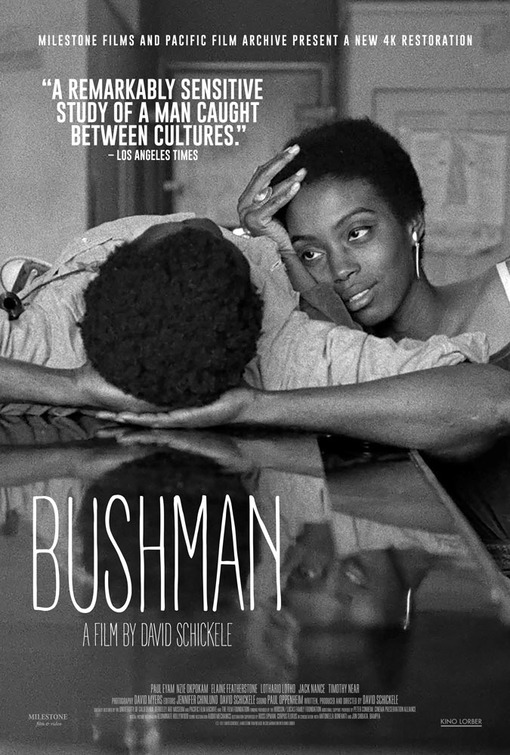
Milestone and Kino Lorber are releasing a Blu-ray of a new restoration of Bushman (1971) on 21 May 2024, a film that was not exactly overlooked when it first screened – it was praised by critics – but it never found a distributor. Directed by David Schickele, a Peace Corps veteran who had previously helmed a documentary about his service in Nigeria, the film visualizes the fate of a Nigerian Exchange Student/Lecturer. The restored Bushman, is attracting a lot of deserved media attention. Not only is the film now available on Kanopy, but it was the subject of an NPR story a few days ago; rare for an old film. The film is indeed timely, Bushman’s star, a Nigerian language instructor at San Francisco State, Paul Eyam Nzie Okpokam, was deported while the film was in production, the victim of an overtly racist police force, hell-bent on finding a scapegoat for their own shortcomings during the infamous 1968 student demonstrations at SFS. Flash forward to this Spring’s student actions against genocide in Gaza and the police response  – the first nationwide college upheavals in fifty years – and the continuing mistreatment of persons of color at our borders and the film is more than topical.

(1971)
(2024)

Due to the arrest of its subject, before eventual deportation, Bushman could not be completed until 1971, its falsely accused star only visible in the film’s final section in surreptitiously taken photographs at his farewell. Not surprising that it took Schickele more than two years to salvage his project. The film opened at various film festivals, including winning the Gold Hugo for Best First Feature at the Chicago Film Festival, then screening at the San Francisco, Filmex Los Angeles, Dallas, Atlanta, Washington AFI, London, Venice, and Adelaide Film Festivals. It also received glowing reviews from the likes of Albert Johnson, Roger Ebert, and Roger Greenspun, all of them agreeing on the film’s ability to communicate racial injustice through experimental film forms rather than ideological polemics.

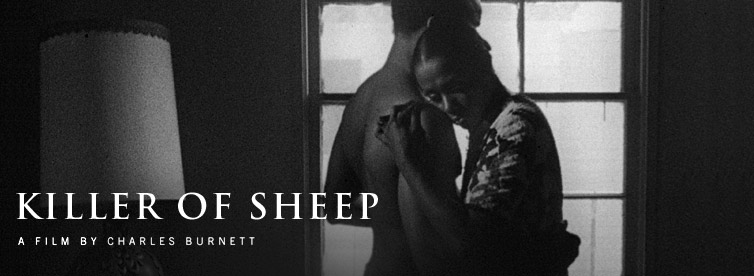
However, before I go on, I want to mention the restoration, financed by the Film Foundation and the Pacific Film Archives in the Berkeley Art Museum. The film’s lush black & white cinematography sparkles in Ross Lippmann’s digital restoration, made from the original 35 mm negatives, housed at BAMPFA. Lippmann also oversaw UCLA’s restoration of Charles Burnett’s Killer of Sheep (1977), another 1970s independent Black film that exposed the everyday racism of American society but did not find a distributor until 2006 when Milestone released the restoration. Thanks to Amy Heller and Dennis Doros at Milestone Films, the availability of independent African-American cinema in that period has expanded significantly, including numerous L.A. Rebellion titles, as well as East Coast examples, like Kathleen Collins’ Losing Ground (1982/2026).

Bushman (1971/2024) with Elaine Featherstone
Bushman (1971/2024) with Ann Scofield
Bushman (1971/2024) with Paul Eyam Nzie Okpokam

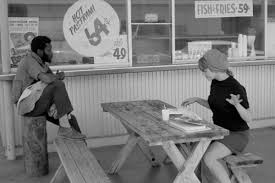
Bushman opens with a text: “1968: Martin Luther King, Robert Kennedy, and Bobby Hutton are among the recent dead. In Nigeria, the Civil War is entering its second year with no end in sight.” This dual focus on the USA and Nigeria is maintained through the rest of the film, first via a first-person narration (on camera and off) of the hero’s life in Nigeria, before coming to San Francisco, and through images that cut back and forth between documentary shots of Nigeria, and the fictional Gabriel, meeting up with friends and girlfriends, trying to find a job, dabbling in black power politics, but essentially maintaining the same distance he had to his Catholic education. He is constantly subjected to subtle often unconscious forms of racism, from the guy who gives him a ride on his motorcycle and obsesses over bare-breasted African women, to the white women for whom he is a charity case and exotic trophy. Later, Gabriel looks for a job, but misunderstands a personal ad and ends up in the flat of a gay man hoping to have sex.  Interestingly, Schickele juxtaposes Gabriel/Paul’s self-aware narration with his passive and virtually silent interactions with his mostly alien environment. The director intercuts images of the streets of Oakland with images of Nigeria, whereby at times it’s hard to identify which is which. 

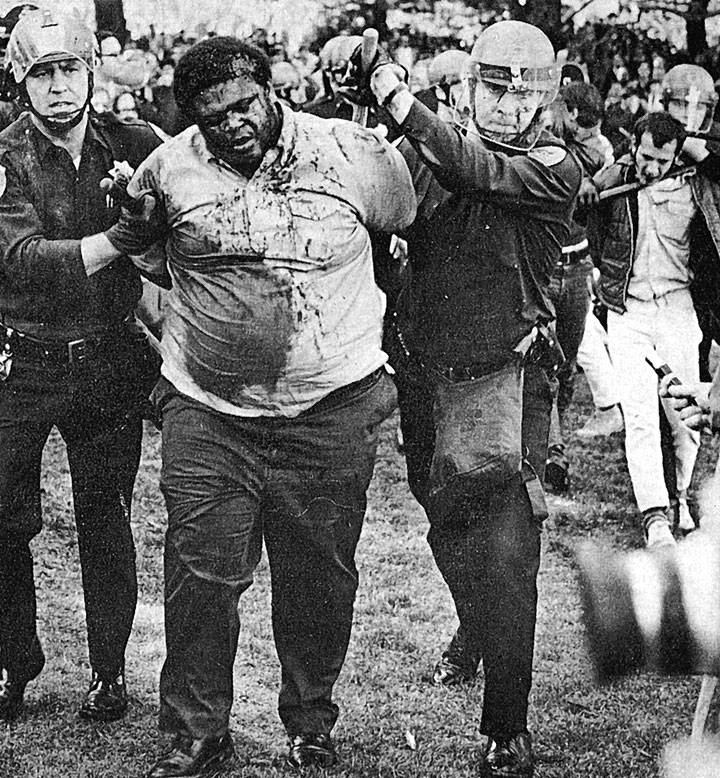
Don McAllister bleeding, SF-State-1968, photo Terry-Schmitt.  

The fragmentation of the film’s first hour is heightened in its last 15 minutes when overt American racism destroys Gabriel/Paul’s life in the wake of student demonstrations on campus. The San Francisco State student strikes from November 1968 to March 1969, involved a wide coalition of progressive California advocacy groups, representing Black, Asian, Latino, and Pacific Islander interests, demonstrating for ethnic studies and more inclusionary university politics. Schickele filmed the college’s student demonstrations and violent police brutality, which he incorporates into the film, before having various witnesses report that Paul Okpokam was literally framed, after being forced to accompany two plainclothes detectives into a men’s room where they try to give him a bomb, subsequently branding him a terrorist, and sending him to San Quentin. Back in Nigeria, Paul Okpokam became a published playwright, theater director, and teacher.

David Schickele

Through its experimental form and elliptical narrative, Bushman forces the viewer to not only actively piece together the fate of Gabriel/Paul and its consequences, but also confront the racism that is still endemic to American society then and now.

Bushman (1971/2024) On camera interview

346: G.W. Pabst redux

Arrchival Spaces 346

G.W. Pabst rewritten: Daniel Kehlmann’s novel, Lichtspiel

Uploaded 3 May 2024

G.W. Pabst at the camera

Film historians consider G.W. Pabst one of the three most accomplished German film directors of the first half of the 20th century. One of my first grad student papers concerned G.W. Pabst’s Three Penny Opera (1931), written for George Bluestone’s seminar at B.U. later published in Jump Cut. Years later, I participated in a 1986 conference in Vienna, celebrating Pabst’s 100th birthday, resulting in an article on A Modern Hero (1934), published in Eric Rentschler’s subsequent anthology. The Films of G.W. Pabst rehabilitated Pabst’s career, which had suffered immensely because of his decision to return to Nazi Germany after exile in France and Hollywood to make films for Goebbel’s Propaganda Ministry. Another decade passed before I guided the first complete restoration of Pabst’s masterpiece, The Joyless Street (1925) at the Munich Filmmuseum, which had previously only been available in heavily censored versions. So, I was excited to read Daniel Kehlmann’s new biographical novel about Georg Wilhelm Pabst, Lichtspiel. Published late last year in Germany, the novel, while generally well-reviewed, has been at the center of controversy, for its misrepresentations of Pabst’s history.

Rick Rentschler, Heide Schuepmann, Karsten Witte, Thomas Elsaesser, Janet Bergstrom. JC Horak, Anne Friedberg, surrounded by Austrian colleagues
November 1986 Symposium, Vienna

In fact, the novel – treated by most literary critics as a semi-factual biography – has little in common with Pabst’s actual life, other than dropping a few famous names, like Fritz Lang, Louise Brooks, Fred Zinnemann, Henny Porten, Werner Krauss, and further Pabst film titles, including his three Nazi films, The Comedians (1941), Paracelsus (1943), and The Molander Case (unfinished). To enumerate the constant historical inaccuracies, e.g. the Metropolis premiere (3/1927) is placed two weeks after The White Hell of Piz Palü (11/1930), seems as silly as correcting a Hollywood biopic. Veracity to Pabst’s life is not a criterion. Kehlmann’s goal lies elsewhere, namely to present Pabst’s trajectory as a metaphor for the history of German cinema from its artistic heights in Weimar to its fatal compromises under Nazism to its utter mediocrity in the early Federal Republic, before rising again with New German Cinema. It is a master narrative that though potent has been largely reconceptualized by the last two generations of film historians, who understand German cinema as conflicts between art and genre, politics, and the avoidance of reality.

Pabst on the set of A Modern Hero (1934) with Barthelmess and Jean Miur
Marjorie Rambeau, Richard Barthelmess in A Modern Hero

Lichtspiel translates as light play, but also as cinema or film, which is a key to Kehlmann’s narrative method, juxtaposing spatially and temporally fragmented scenes with rapid changes in perspective, moving from semi-realism to surrealism, to slapstick satire. Kehlmann traffics less in psychologically developed characters than in stereotypes and outright caricatures, e.g. the Hollywood chapters are reduced to a studio hack named Jake repeatedly telling Pabst over the latter’s objections what a wonderful film A Modern Hero will be, while Pabst obsessively pushes for a film about a world war breaking out on an ocean liner. In point of fact, the war script was written for Paramount after Pabst left Warners before Hero failed at the box office because it was exactly the film Pabst wanted to make: dark, psychologically perverse, anti-capitalist, nowhere near the Horatio Alger myth Warner Bros. ordered.

Pabst’s Schloss Fuenfturm, Austria
Paracelsius (1943)

Once Pabst returns to Austria, ostensibly to say goodbye to his mother, Kehlmann’s narrative turns darker, a horror show of Swiftian proportions. There is the Nazi janitor in Pabst’s castle “Three Towers” who literally banishes the Pabst family to the basement, Pabst’s son, Jakob, becomes an ardent Hitler Youth whose violent bullying marks him for Nazi leadership, Trude Pabst’s forced attendance at Henny Porten’s literary circle which discusses the worst Nazi trash as uplifting literature, a sinister and threatening encounter in the palatial office of Goebbels, and an arrogant, self-centered, utterly talentless Leni Riefenstahl directing herself in Tiefland, while making use of Sinti and Roma as extras, hauled from a local KZ then shipping them to their deaths. While Pabst attempts to maintain his dignity throughout, convincing himself that his films are aesthetically credible, thus outwitting Goebbels’ UFA, Kehlmann eventually gives us a film auteur completely broken by his experience of exile, his compromises under German fascism, and his regrets about family choices, rendering him virtually catatonic by the end of the novel. In reality, Pabst directed 10 films in the post-war era, none achieving the status of his Weimar era films, but several of more than passing interest, including The Last Ten Days (1955), the most successful German film about Hitler to date, later remade as the Oscar-winning Downfall (2004).  

Der Prozess (1947) with Ernst Deutsch
The Last Ten Days (1955) with Albin Skoda

The novel’s central chapters focus on the production of Der Fall Molander, which was shot at the Barandov Studios in Prague literally weeks before the Soviets liberated the city in May 1945, and about which virtually nothing is known, giving Kelhlmann free rein to fantasize. Pabst becomes manically obsessed with finishing the film, as the Russians draw ever closer, convinced this is his greatest masterpiece. When German troops acting as extras are ordered to the front, Pabst agrees to bring in (Jewish) inmates from the nearby Terezin KZ (unnamed) to complete the film. He escapes to Vienna on the last train, print in hand, but loses the reels, causing his subsequent psychosis. This is of course pure fiction, but the accusation that Pabst was – like Riefenstahl – directly complicit in the Holocaust, is a very serious accusation, probably libelous in an American court, and grossly unfair to the actual filmmaker. It raises the question regarding the degree to which the life of a historical personage, especially one whose relatives are still with us, can be fictionalized. They have protested vigorously in the media.

While the novel is clearly fiction and Kelhlmann steps lightly around the issue of the KZ inmates, leaving doubt as to whether the events actually transpired or were hallucinations, many readers will probably still read the novel as a biography. As my colleague Robert Fischer-Ettel tells me, G.W. Pabst and his son, Michael, compiled an actual autobiography covering the years to 1931 that has remained unpublished. It should see the light of day, if only in digital form.

Trude and G.W. Pabst in Holland, 1949

While Molander was considered lost for decades, the unfinished film may survive in the nitrate holdings of the Czech National Film Archives. If it does, the time may have come to attempt a reconstruction or Werkausgabe.  

The Joyless Street (1925), directed by G.W. Pabst

345: Adieu, Monsieur Haffmann

Archival Spaces 345

Adieu, Monsieur Haffmann (2021)

Uploaded 19 April 2024

Adieu, Monsieur Haffmann jewelry shop with new signage

On 14 April, Hilary Helstein and the Los Angeles Jewish Film Festival hosted a screening of Farewell, Mr. Haffmann (2011) at the Laemmle Royal in Santa Monica Blvd. It is a film about the Holocaust, more specifically about the French participation in the genocide of European Jewry, produced by French film companies, which may remind audiences of films, like Lacombe, Lucien (1974), The Last Metro (1980) or  Au revoir les enfants  (1987). However, the film directed by Fred Cavayé offers a different take, one that explores the moral complexity of the Shoah as developed through character by its brilliant cast. Based on a play by Jean-Philippe Daguerre, Cavayé and scriptwriter Sarah Kaminsky substantially altered the original conception of the film’s perpetrator. Dr. Michael Berenbaum, a distinguished Holocaust scholar and professor at the American Jewish University, fielded the Q & A after the screening, and illuminated some historical context for the film. Having won numerous audience awards at film festivals, the film is now playing nationally.

Adieu, Monsieur Haffmann opens with a close-up of a pair of legs walking on cobblestone, the metal brace on the left leg giving the clackity-clack of his gate a particular sound, and indeed the identification of the sound of footsteps on the pavement or on staircases will become a major plot element. In September 1941, more than a year after the Nazi occupation of France, a Parisian Jewish jeweler, fearful of the coming deportations, gives his shop to his employee, who has agreed to return it after the war.  Such a process of “aryanizing” a business, though seemingly a good idea when Mr. Haffmann suggests it to his assistant Mr. Mercier, was in fact standard operating procedure for the Germans to confiscate and appropriate German-Jewish wealth:  First you named an “Aryan” caretaker, then you forced the original owners to sell the business at a fraction of its value, whether the huge Wertheim Department stores in Berlin, or the giant Ullstein publishing house or a mom-and-pop store, as is the case here. While Haffmann’s family escapes to Southern France, he is trapped in the shop and becomes a virtual prisoner in the basement, forced to produce jewelry for his former assistant, while Mercier and his wife Blanche are living the kind of bourgeois existence upstairs they had only been able to dream about. He not only actively collaborates with the Germans, refitting jewels confiscated from Jewish citizens and earning a fortune, he ultimately denounces his former employer to the police.

Gilles Lellouche, Daniel Autheuil in Farewell, Mr. Haffmannn

When Mercier and his wife go to see a fertility doctor in the film’s second scene, a secondary plot, involving impotence is introduced. Mercier who is seemingly unable to conceive, wants Haffmann to impregnate his wife so he can sport a son, but the Jeweler refuses after a first unsuccessful attempt. Blanche eventually becomes pregnant when Mercier rapes her in a drunken stupor. That he becomes fertile through violence ironically symbolizes his path to Fascism and betrayal.

Obsessed with keeping his family safe and blinded by his sudden wealth, he loses his moral compass, unlike Haffmann who retains the moral high ground as a victim, as well as through his considerate treatment of Blanche. However, though corrupted, Mercier remains a somewhat sympathetic if pitiful character, thanks to nuanced performance by Gilles Lellouche, playing next to Daniel Autheuil’s equally human Haffmann. When Mercier is arrested outside his shop because he has been mistaken for a Jew, his wife, who has watched him descend into crass opportunism and amorality, hides behind the curtain, rather than support her husband, possibly revenge for the rape possibly a radical act of falling out of love, now that she is carrying his child.   

Sara Giraudeau as Blanche in Adieu, Monsieru Haffmann

The film ends on a supposedly positive note when Haffmann reaches so-called unoccupied France, euphemistically called “free France,” and is reunited with his family. Here, the French penchant for obfuscating French national culpability in the Holocaust again comes to the fore. For decades after the war, the French upheld the myth of la resistance, blaming it all on the German occupation. Yet, under the Vichy government Jews were rounded up and placed in notorious concentration camps, like Gurs and Le Milles, just as in Paris under German occupation, while it is the French Police, which was wholly responsible for the identification and deportation of foreign-born and French Jews in France. In the film, the Nazis only appear as clients of the jewelry shop and frequenters of nightclubs, while invisible hands paint Stars of David on Jewish shops. According to Dr. Berenbaum, 75% of French Jews survived, while 73,500 Jews, mostly foreigners, perished in the death camps. It therefore remains an open question at film’s end, whether the Haffmann family survived and was able to return to its Parisian shop, though we know Mercier is deported to the death camps. Just deserts? Maybe too much irony. It is the only moment, the film falls out of a terrible reality.   

Daniel Autheuil, Nikolai Kinski as Commandant Jünger in Adieu, Monsieur Haffmann

344: Anti-Semitic Film History

Archival Spaces 344

Nazi Film History: Film “Kunst” Film Kohn Film Korruption

Uploaded 5 April 1924

Die Stadt ohne Juden (1924, H.K. Breslauer), based on the novel by Hugo Bettauer

Like most of my fellow film historians, I had never actually read the 1937 Nazi tract disguised as film history, Carl Neumann, Curt Belling, and Hans-Walther Betz’s Film-“Kunst”, Film Kohn, Film-Korruption. Ein Streifzug durch vier Film-Jahrzehnte, although I had mentioned its existence when discussing anti-Semitic policies against German film émigrés. Reading it recently, though, I realized it revealed the dangers we are facing as democrats in America today, because it cloaks hate in political ideology, much like Trump and the MAGA Republicans. The book is not merely a view of film history through the lens of Fascist ideologues, as in the case of the French L’Histoire du Cinéma by Maurice Bardéche and Robert Brasillach, rather Film “Kunst” is viciously and violently anti-Semitic. Finding a copy was not easy, and involved an inter-library loan from an institution on the other side of the country, although I suspect there are more copies available in Germany. It was obviously never republished, other than a 1943 revised edition, printed in gothic German script.

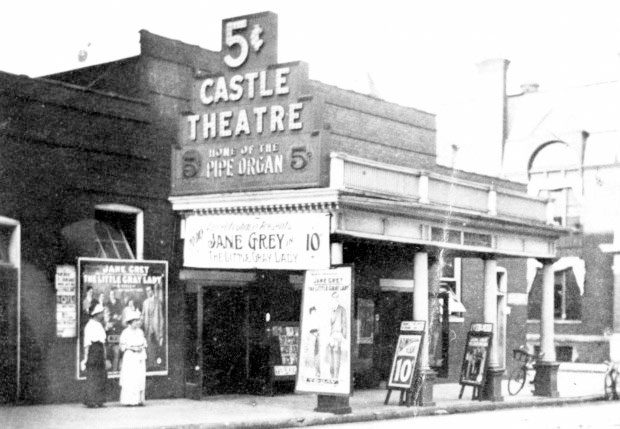
The introduction begins by laying out the book’s goals and parameters as if it were serious, academic work. The authors write they are presenting a cavalcade of four decades of (German) film history, instead of a complete history, while also considering “the political, cultural, civilizational, social, and economic” conditions of film production and reception. That sounds quite reasonable, except by the end of the third paragraph, the authors can no longer contain themselves and claim that their work is also polemical because it removes the veil from Jewish Film Power and Industry, which had until 1933 also controlled the narrative of film history. They then continue their exposé in coded and pseudo-academic language, eventually confessing that their history of German film is also experiential, taking the reader through four decades of battle for a German film free of Jewish influence. The book’s last chapter concludes with what purports to be a brief history of National Socialist cinema but turns out to be an autobiography of Carl Neumann and his father Adolf Neumann, a pioneering cinema owner who opened his first theater in Berlin in 1906, both Kleinbürger filled with white nationalist vitriol.

Berlin, ca. 1910

Film Kohn begins not as film history, but as a fiction, „Der Mann mit der Zigarre.”  Right after the introduction, “The Man with the Cigar” describes not a real, historical Jewish film producer, but the Jew an sich, a construct of all the most vicious and violent anti-Semitic stereotypes of film producers ever printed. The cigar as the most prominent visual identifier, connoting unwholesome sexual images, class resentments, and economic envy, is backed up a few pages later with visual evidence in six photographs. Chaplin, of course, was not Jewish. 

Film “Kunst Film Kohn Film Korruption

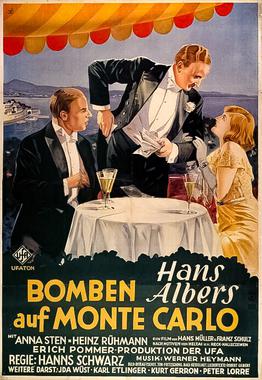
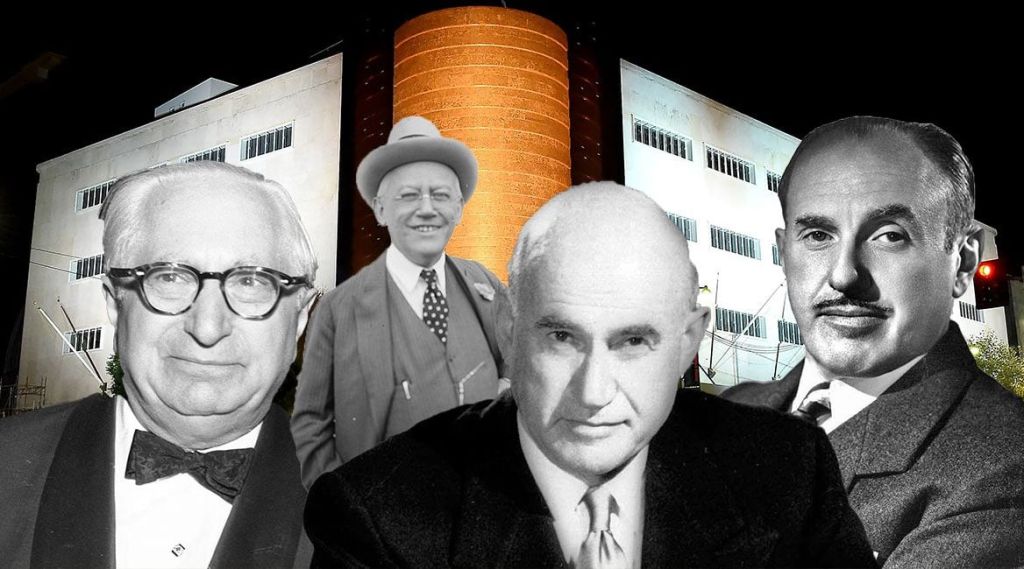
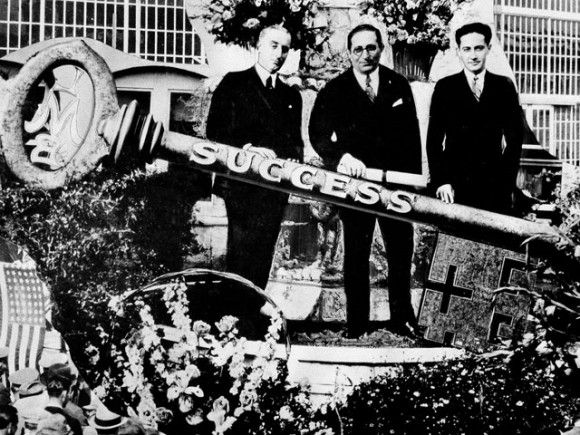
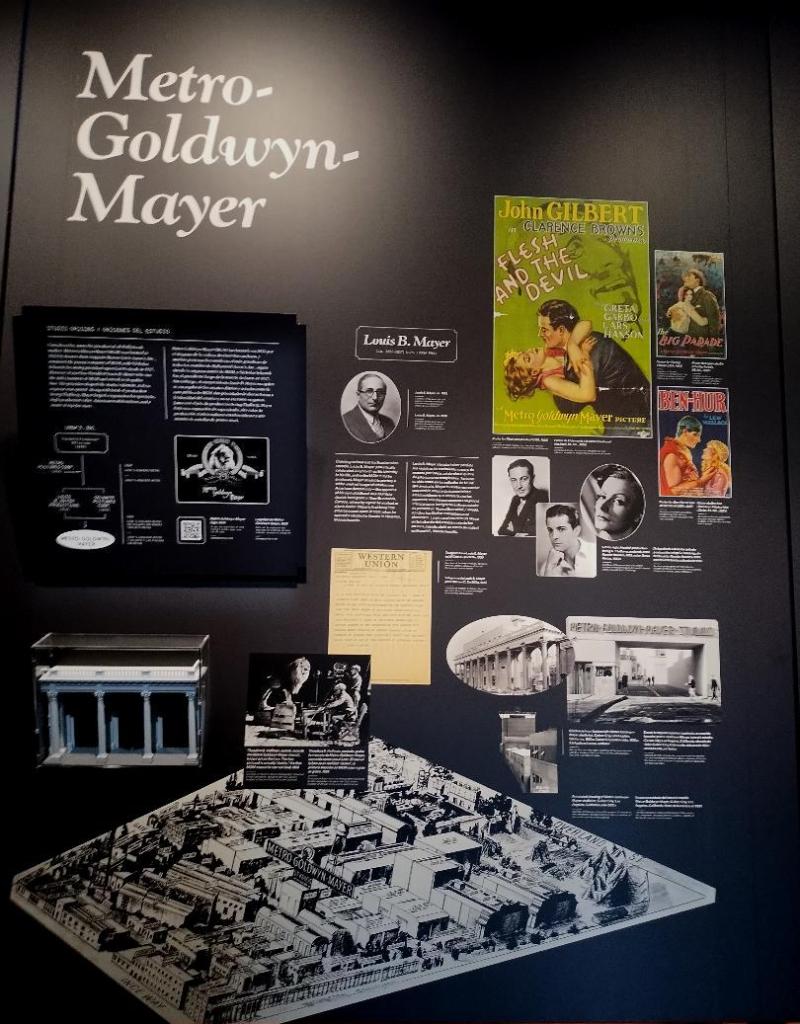
Chapter 2, “How it Started”, rarely mentions names, preferring to traffic in generalizations of technical and economic developments in the medium. But there are a few real names, although their biographies are almost totally fictitious, like Louis B. Mayer and Richard Oswald. Later they mention Constantin David, E.A. Dupont, Leo Mittler, G.W. Pabst, Erich Schönfelder, and Hanns Schwarz as “Ufa-Juden.” The authors are constantly confronted with their own contradictions, their narrative one of the film industry’s incredible growth and influence over daily life, dominated by you know who while making repeated attempts to prove that “they” had nothing to do with the cinema’s accomplishments. Each page is filled with hate, the authors soon enumerating film titles and their makers to prove Jewish dominance, some of which are actual, others completely fictitious, e.g. when they mention a 1930 film production of Jew Süβ, starring Fritz Kortner and directed by Conrad Wiene, which simply never existed.

Dr. Paul Joseph Goebbels at Nuremberg, 1934

There is no sense in repeating or quoting the non-stop anti-Semitic slurs, falsehoods, and historical misrepresentations, other than to note that the authors not only vilify the film industry but also the free press in the following chapters: “This is what they looked Like,” and “This was how they kept house.” The tone, much like that of Maga Republicans is one of continual grievance, of being treated unfairly, of a thousand cuts, while harping exclusively on the creation of a threatening enemy from within. However, the final chapter on “The Battle for German Film” does reveal an aspect of National Socialist film policy I have not seen formulated in quite the same way elsewhere, concerning the desire to restructure the German film industry after Hitler’s victory over German democracy. Apparently published in the Spring of 1932, the guidelines formulated most probably by Joseph Goebbels cover production, distribution, reception and censorship.

While the film production section made the usual Nazi demands regarding the removal of Jewish influence, it also called for lowered production costs, subsidies for “German” films, and the creation of one film guild to replace numerous industry trade organizations. The film distribution section reveals the Nazi Party’s anti-capitalist base, arguing for an end to blind and block booking, while licensing and film rentals were to be based on the size and strength of individual theaters, and permitting of new cinemas according to population density. In the technology section, the demand is for the elimination of equipment licenses and the lowering of prices for replacement parts. The film press and censorship were likewise to be controlled at the national level by “volkisch” elements.

All these measures were to privilege small-time, independent theater owners, like Carl Neumann, himself but the result after January 1933 was a gradual nationalization of all aspects of the industry, steered by the master propagandist, Goebbels.

Premiere of Triumph of the Will at the UFA Palast am Zoo, Berlin