Archival Spaces 395
White Russians in Hollywood
Uploaded 20 March 2026
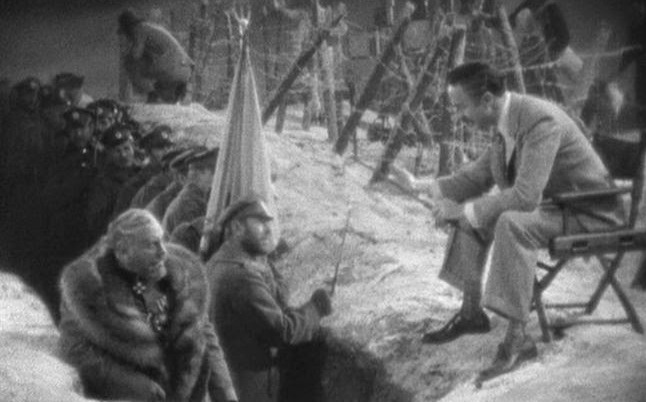
A still photograph from Joseph von Sternberg’s The Last Command (1928) perfectly captures the mixture of reality and fantasy, of historical truth and aesthetic expression that is so much a part of Hollywood cinema and its White Russian colony: Standing in a World War I trench, Emil Jannings in costume as a Tsarist general looks intensely off screen, his sable drawn, the movie extra’s degradation already marking his face, his actions frozen in his own fantasy. He is seen almost incidentally at the bottom Left side of the image, while somewhat incongruously, the greater part of the image shows “Russian” soldiers standing relaxed on the set below a barbed-wire cordon, as William Powell, playing the movie director and former victim of the general, chats with them from his director’s chair above. It is the ironic pathos of defeat and degradation which captures our imagination in this story of royal blood in exile in Hollywood, of fabulous wealth and power lost, of a fall from grace to the ordinariness of everyday life: Grand Duke Sergius Alexander of the Imperial Russian Army forced to work as a Hollywood extra in films about the very Revolution to which he had fallen victim. Almost a true story.
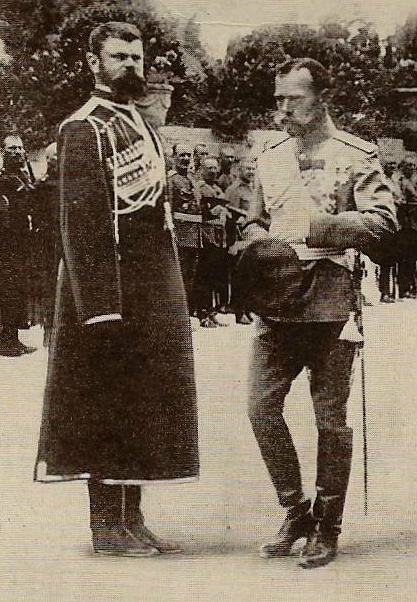
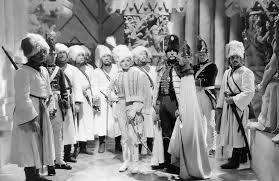
After the Russian Revolution and the anti-Communist Palmer Raids in America, Hollywood fell in love with Russia before the Revolution, paying homage to the autocratic regime of the Romanovs, the same way it adored the ante-Bellum, racist South. Russian movies were in, and Russian exiles were happy to oblige. One of the minor characters in The Last Command is played by Sam Savitsky, formerly General Viacheslav Savitsky, above in uniform with Czar Nicholas II. Exiled to the Hollywood backlot, the ex-officer continued to play “bit parts” for over twenty years in films, like The Scarlet Empress (1932), Song of Russia (1944), and Northwest Outpost (1947). Sternberg himself reports that “I had fortified my image of the Russian Revolution by including in my cast of extra players an assortment of Russian ex-Admirals and generals, a dozen Cossacks, and two former members of the Duma…and an expert on borscht by the name of Kobyliansky.” Nicholas Kobyliansky, who received a screen credit on The Last Command as a technical advisor, was also hired in the same capacity for Lubitsch’s The Patriot (1928). Through intermediaries, he hired almost 600 Russians from Boyle Heights, an L.A. suburb, where the exiles congregated, only to nearly cause a riot when only half that many were needed for the film. Several White Army generals supplied local color when a Russian landscape was required: Major General Alexander Ikonnikoff, Gen. Theodore Lodijenski, Maj. Gen. Michael N. Pleschnikov, Maj. Gen. Bogomoletz, Lieutenants George Blagoi and Gene Walski were seen in films such as The Eagle (1925), Into Her Kingdom (1926), Midnight Sun (1926), The Cossacks (1928), or Rasputin and the Empress (1932).
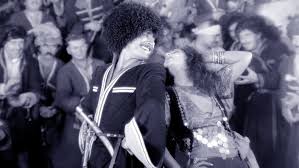
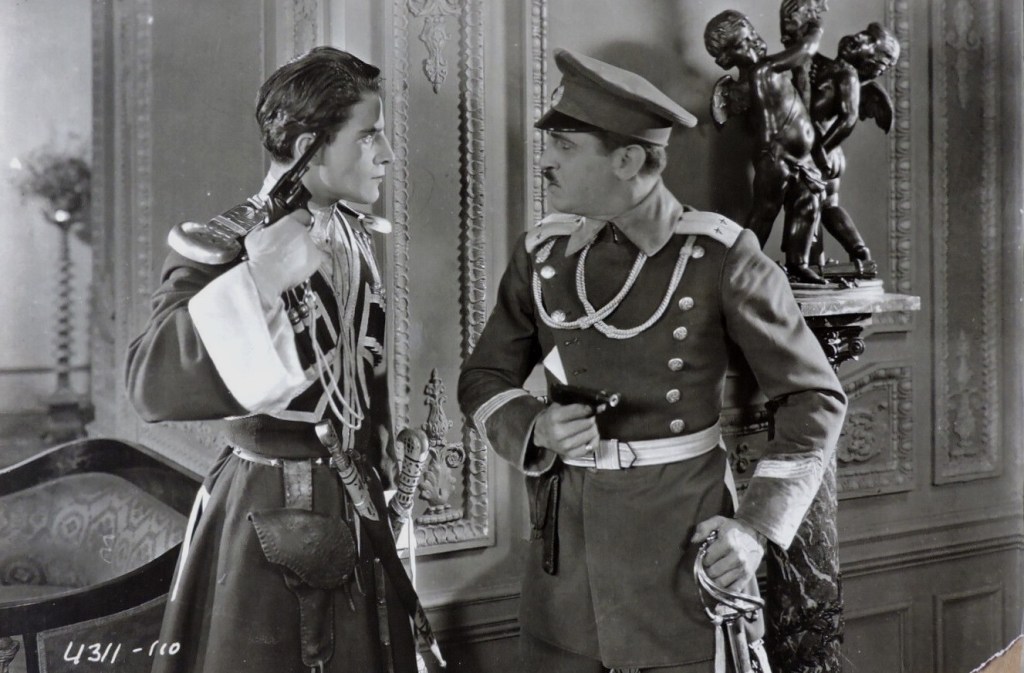
Another true story: Like the tragic hero Duke Sergius in The Last Command, Valentina Zimina escaped from Russia via Vladivostok to become a promising young actress in such films as La Boheme (1928), Woman on the Trail (1927), and Scarlet Lady (1928). Having survived the notorious “Battalion of Death,” an anti-Bolshevik woman’s brigade in which she fought as a teenager, brutal Russian winters, and a Siberian prison, Zimina died of the flu at the age of 29 in her own luxurious bed in Hollywood.
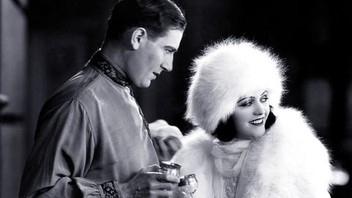
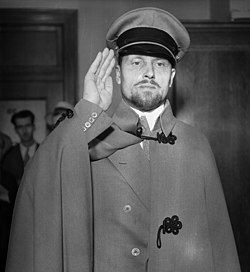
In contrast to the Austro-German-Jewish refugees who arrived en masse after 1933, the White Russian exile community remained relatively small and at the periphery of film studio life. Several thousand souls, who held on to their language and customs, and their past in a city where history is forgotten immediately, where your own value is measured no further back than your last film. They formed their own club, the Russian-American Art Club, on Harold Way in Los Angeles. Local anecdotes invariably revolved around the Russian émigrés’ boundless capacity for self-pity. Since the movie tsars often came from Jewish villages in the Pale, where they had been subjected to Cossack pogroms, they had few sympathies for the White Russians, who often never rose higher than the proverbial movie extra. Various Russian Cossack troupes toured the country, presenting dances and horsemanship at circuses and dinner clubs. Indeed, Russian exiles populated the ranks of restaranteurs and workers in Los Angeles’ burgeoning service industry: chauffeurs, masseurs, confidence men. The sometime actor, “Prince Michael Romanoff,” known to actually be a Lithuanian Jew, told stories about old Russia “at your table,” at one of Hollywood’s most fashionable restaurants on North Rodeo Drive. The Mdivani royal family married to maintain their lifestyles, Prince Serge marrying Pola Negri, Prince David wedding Mae Murray. Many created fictitious biographies of Imperial Russian origin, and only a handful had ever worked in the pre-revolutionary Russian film industry.
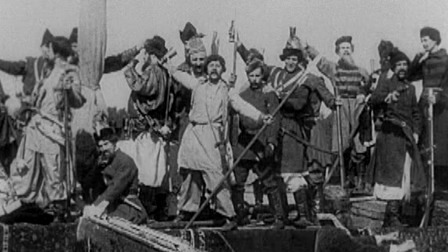
Few of the most famous personalities from the pre-revolutionary period failed to make any impression in Hollywood. The greatest, Yevgeni Bauer, died in 1917, before the Revolution. Alexander Drankov, the pioneering Russian producer of Stenka Razin (1908), Crime and Punishment (1913), and He Who Gets Slapped (1916), went to Hollywood, but, like so many others, could only find work as a movie extra, according to a report by Victor Tourjannsky who visited him in 1928. He later opened a cafe in Santa Monica and lived out his days as a photographer in San Francisco.
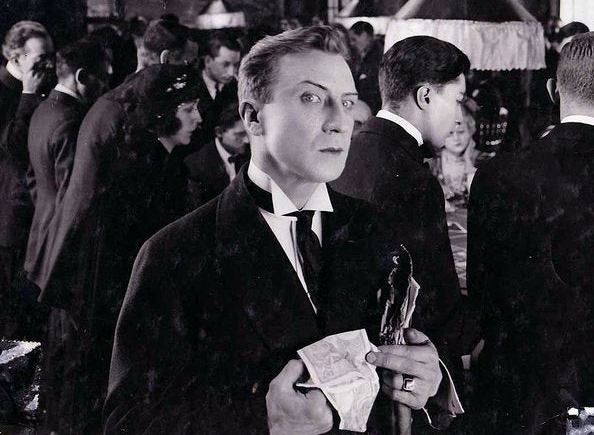
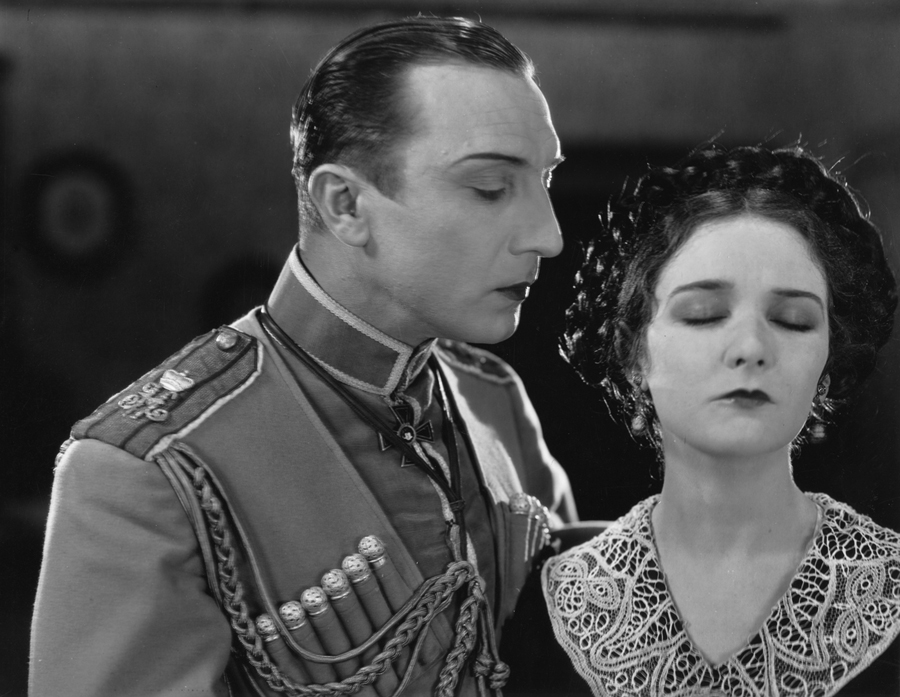
The greatest actor of Russian cinema before 1918, Ivan Mosjoukine, worked steadily in France for the White Russian-owned Albatross Film Co., Paris, in such films as Le braiser ardent (1923) and Feu Mathias Pascal (1924), but was also briefly lured to Hollywood by Universal in 1926. He made one film, Surrender (1927), based on an old play “Lea Lyon,” playing a Cossack prince who falls in love with a Jewish girl in the Shtetl after raping her. Variety gave it only a lukewarm review, and the film failed to ignite the box office. Mosjoukine stayed on at Universal, even subjecting himself to a nose job and a name change to Moskine, ordered by Universal’s producers (who couldn’t pronounce his name), but when no more film offers came, he fled back to Paris. According to Mosjoukine, he was not willing to blindly obey the “cinema kings” and play in any script given to him, no matter how bad.
 Archival Spaces