Archival Spaces 391
Monograph: People On Sunday
Uploaded 23 January 2026
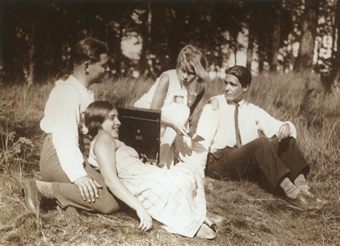
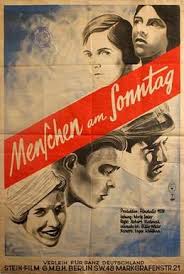
For years, I have been teaching a German film history course. One of the films I have consistently screened is Robert Siodmak’s Menschen am Sonntag/People on Sunday (1929), not only because it is my favorite film of the late Weimar Republic, but also because it is a film that undergraduate students immediately connect with. The story of four youngsters in their twenties, spending a leisurely Sunday on Lake Wannsee, while another sleeps the day away, offers students an immediate point of identification, as does the film’s striking modernity, both in terms of content and style. Students are shocked that the generation of their great-grandparents “hooked up” for casual pre-marital sex, a scene presented without the moral condemnation that would have characterized similar scenes in Hollywood films, even thirty years later. Shot in real locations, rather than on studio sets, its improvised script, its documentary realism, its roving camera, its haphazard editing, mark People on Sunday as a precursor to both the French New Wave and low-budget American independent cinema of the past thirty years. Charlotte Ritter, a Berlin girl, like the three female protagonists, watches the film in the hit TV series, Berlin Babylon(2017-22).
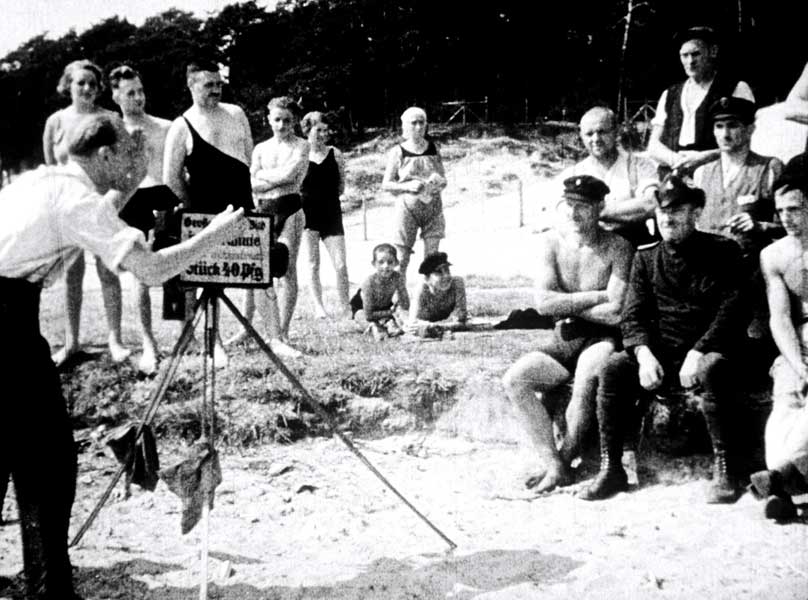
Of course, calling it a Robert Siodmak film is a bit of a misnomer. The film was shot on weekends over months by a collective of young Jewish filmmakers trying to break into the industry, including Moriz Seeler (producer), Robert (director)and Kurt Siodmak (extra), Edgar G. Ulmer (director, uncredited), Billy Wilder (ghostwriter), Rochus Gliese (director, uncredited), Fred Zinnemann (camera assistant), and Eugen Schüfftan (camera), only Schüfftan and Gliese veterans. Almost all of the principals were forced to emigrate after Hitler’s rise to power in 1933, their subsequent major Hollywood careers contributing to the film’s legendary status. The exceptions: Moriz Seeler goes into hiding in Berlin, is arrested and shipped to Riga, where he is murdered by Nazi troops in August 1942; Gliese, the art director, survived the war, protected by Gustav Gründgens, during the Third Reich, both gay men in extreme danger. Heike Klapdor reveals the last two fates in her German-language monograph, Robert Siodmoak, Edgar G. Ulmer: Menschen am Sonntag (Munich, 2025).
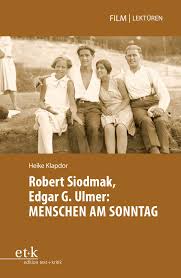
In less than100-pages, Klapdor discusses the convoluted production history of People on Sunday, contextualizes the film within German film production in a moment of the world economic crisis, and then subsequently critically reads the film in nine short chapters. Her guiding metaphor for the film is Kairos, a propitious moment for action, “when historical time is in a state of crisis and chronological time deviates from its linear and predictable course… allowing for liberation, if a subjective capacity for action perceives the objective crisis” (p. 18). Kairos applies to both the film team and to the film’s characters.
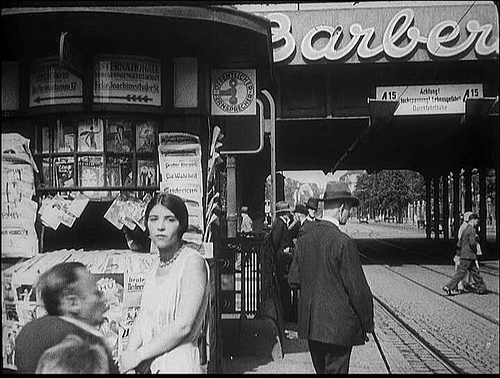

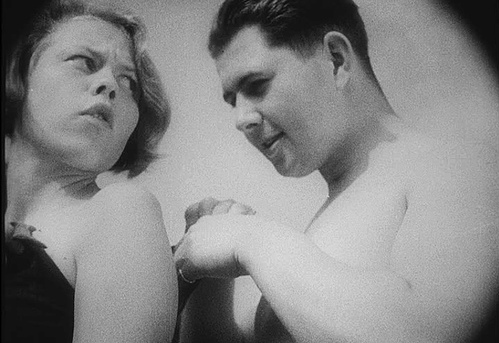
Central to her analysis are the twenty-something protagonists, typical lower-middle-class, white-collar employees, the kind Siegrfried Kracauer analyzed in his The Salaried Masses (1930). She goes on to discuss the urban environment of Berlin, the film’s aesthetic strategy between documentary reality and fiction, the leisure time activities of Berliners, whether in the cinema or out in fresh air, eroticism and sexual relations, montages of photographic portraits, and its status as avant-garde film. Menschen am Sonntag is less a city film, e.g. Berlin, die Sinfonie einer Großstadt (1927), than “the face of urban lifestyle.”These young women have no qualms about getting picked up when a man strikes their fancy, while young men chase after sex, but are just as happy going to a football match. The five protagonists are amateurs, not actors, young people playing themselves in their hometown environments.
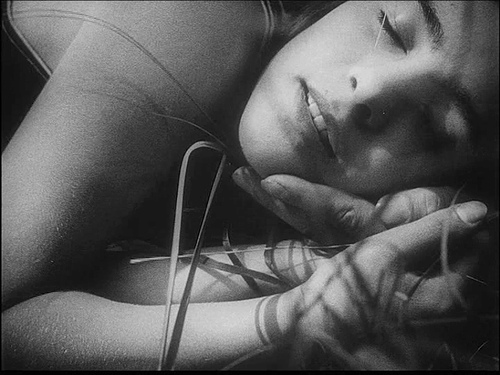
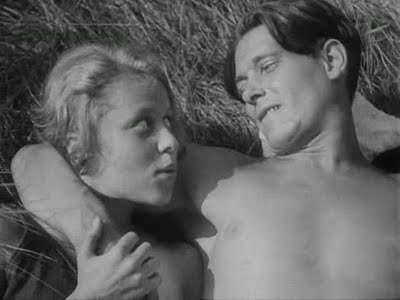
Klapdor interprets the famous scene of seduction in the woods, during which the camera coyly pans up to the tree tops and then down to a pile of garbage, as a complex amalgamation of female resistance and desire, male pursuit and conquest, heaven and hell, love and death. The couple’s hook-up references a similar scene in Alfred Döblin’s best-selling Weimar novel, Berlin Alexanderplatz, that ends in the murder of the girl, and Mozart’s opera, Don Giovanni. Sonntag’s seducer, an itinerant wine salesman called Wolf. Klapdor’s conclusion: This film, so full of youthful exuberance, so playful in its narrative and aesthetic means, evidences a moment of real optimism, before Berlin and the nation plunged into the abyss of German Fascism: “Menschen am Sonntag is not a gloomy film, but rather a bright, preceptive film.”
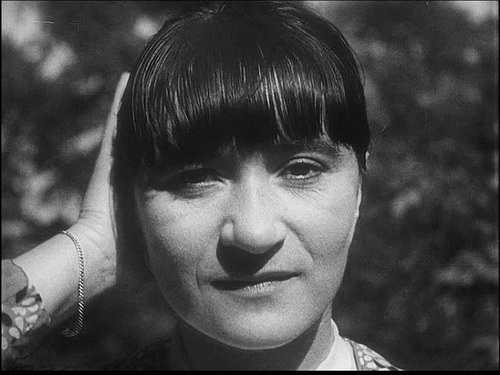
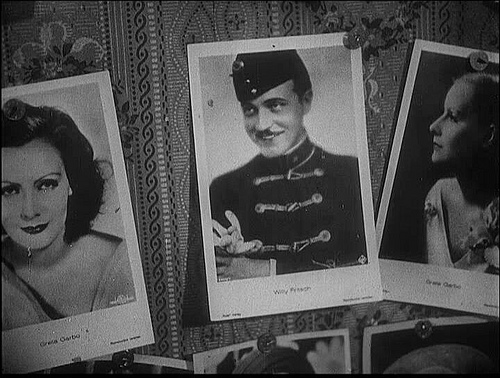
Nowhere in the film is that playfulness more evident than in the interpolated photographic portraits of Berliners, taken by a beach photographer, at leisure, in motion, enjoying life; Siodmak interpolates photos of colleagues in the film business, including Valeska Gert(Joyless Street), Hans Heinrich von Twardowski (Cabinet of Dr. Caligari), Edith Meinhard (Diary of a Lost Girl), Margo Lion (Three Penny Opera) und Moriz Seeler. Is it an inside joke, or are these celebrities ultimately only ordinary Berliners? In a similar vein of self-deprecation, an early scene shows the chauffeur and his live-in girlfriend tear up star photos of each other’s favorite movie idols. Like the film, Klapdor’s little book allows us to enjoy the paradoxes, without demanding final answers.
 Archival Spaces