Archival Spaces 376:
Martina Weisz Named Director, Steven Spielberg Film Archive
Uploaded 27 June 2025

I first made contact in 1982 with the Steven Spielberg Film Archive in Jerusalem, when I was researching films for my exhibition, “Helmar Lerski: Photographs and Films,” at the Folkwang Museum, Essen, then in Tel Aviv, Munich, Frankfurt, and San Francisco. Back then, it was called the Abraham F. Rad Contemporary Jewish Archives in the Hebrew University of Jerusalem. Lerski worked as a filmmaker in Palestine from 1932 – 1948, so I asked director Marilyn Koolik about surviving films. I eventually visited the Rad in March of 1983, when I travelled to Israel for the first time to open the Lerski show; I was conducting research on Zionist film propaganda in the 1930s, which expanded my Lerski work to include numerous German-Jewish filmmakers who had emigrated afer 1933 to what was a referred to as Erez Israel. I returned to the Archive in June 1997 for a courtesy visit to their new facilities, as a guest of the Goethe Institute in Jerusalem. I presented a series of lectures in Israel, and again in 2009 when I was on the documentary jury of the Jerusalem Film Festival.
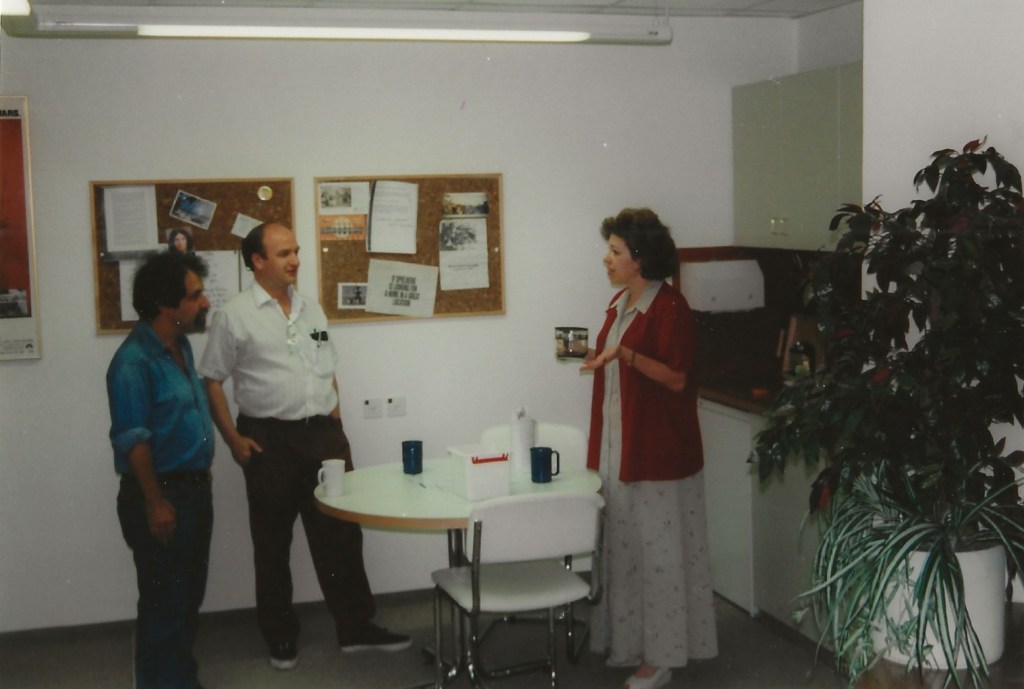

It was Prof. Moshe Davis at Hebrew University who had founded the Abraham F. Rad Film Archive within the Institute of Contemporary Jewry in the late 1960s with Dr. Geoffry Wigoder its first director; its major donor was an Iranian-Jewish businessman, Abraham F. Rad. In 1973, the World Zionist Organization (WZO), which represented Palestinian Jewry before statehood, donated its film collections to the Archive, which included newsreel and documentary footage going back to Ya’acov Ben-Dov, who had shot British General Allenby entering Jerusalem in 1917, and released the first Jewish film in the country, Judea Liberated (1918). As early as 1927, Nathan Akselrod founded a Jewish newsreel, which morphed into a sound film newsreel in 1935. As a result of German-Jewish emigration to Palestine after Hitler’s rise in 1933, Zionist film propaganda financed by the WZO professionalized, leading to numerous productions, like Land of Promise (1936, Juda Leman) and Lerski’s Avodah (1935). After its founding, the Archive continued to acquire documentary footage of Israel and Jewish communities in the diaspora and is now a major supplier of stock footage. The Archive also has a YouTube channel, where much footage from pre-Statehood, the Holocaust, Israel, and Hebrew University can be viewed free of charge. Its Documentation Center contains print materials and still photographs relating to Jewish, Israeli, and Yiddish film.


In 1987, the Archive was renamed the Steven Spielberg Film Archive, after a major donation by the filmmaker. In 1996, the Spielberg Film Archive moved to a specifically designed facility in the Hebrew University’s Faculty of Humanities, since 2000 called the Jack Valenti Pavilion. It is jointly administered by the Avraham Harman Institute of Contemporary Jewry and the World Zionist Organization. Ms. Koolik retired in 2004, after which Stewart (Hillel) Tryster, who had been on staff since 1988, succeeded her, only to resign after a year and move to Berlin. He was succeeded by Deborah Steinmetz, who retired from the Archive in 2023 after 28 years as a member of the staff.

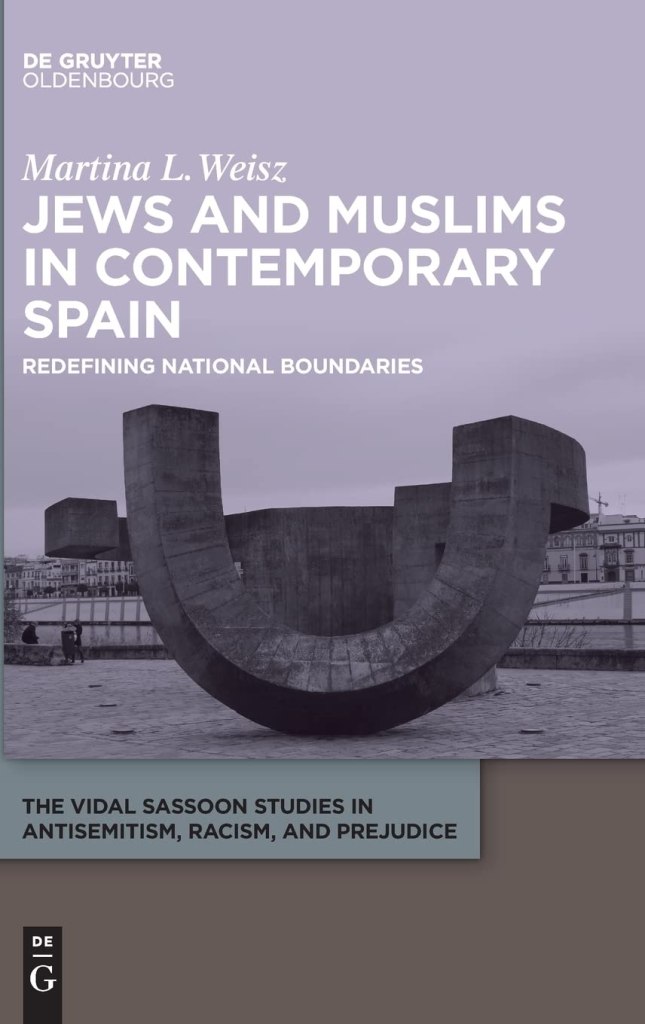
On 1 May 2025, Dr. Martina Weisz became the new director of the Steven Spielberg Film Archive. Martina was born in San Salvador de Jujuy, in the northwest corner of Argentina, in the shadow of the Andes Mountains. Her father, a Maoist, was “disappeared” by the Argentinean Junta, so she spent five years in exile in Paris with her mother, where she attended primary school, before returning to Argentina after the restoration of democracy in the mid-1980s. Weisz studied political science and international relations at the Universidad Nacional in Rosario, northwest of Buenos Aires, from 1992 to 1998, receiving an M.A.. She received a second M.A. in International Relations from the Hebrew University of Jerusalem (2005), where she also completed her Ph.D. in 2013. Her dissertation was published in 2019 as Jews and Muslims in Contemporary Spain: Redefining National Borders by De Gruyter Oldenbourg. Beginning in 2009, Weisz worked as a research coordinator at the Vidal Sassoon International Center for the Study of Anti-Semitism, transitioning to a research fellow in 2017. For almost a year in 2017-18, Weisz also worked as a research expert for the European Union’s Fundamental Rights Agency in Vienna.
In a recent interview, I asked her about her hopes and goals for the future. She said that her main focus was on expanding access to the collections through digitization. She was working to that end with the Israel Film Archive, and that networking across academic disciplines to further the digital humanities was also a goal. Finally, she felt it was important to give the public at large access to the Spielberg collections through its website, given that such documentary material about the State of Israel furthered identity politics. Cooperation with other film archives was also important because of the Spielberg’s limited budget and minuscule staff. Good luck, Martina!

 Archival Spaces