Archival Spaces 369:
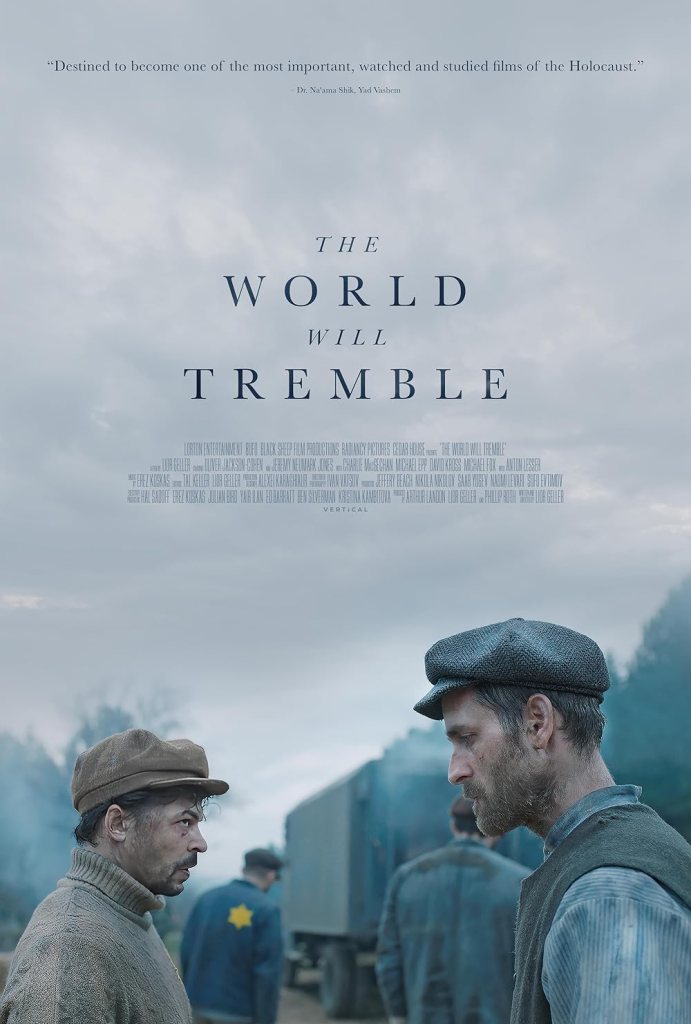
The World Will Tremble (2024)
Uploaded 21 March 2025
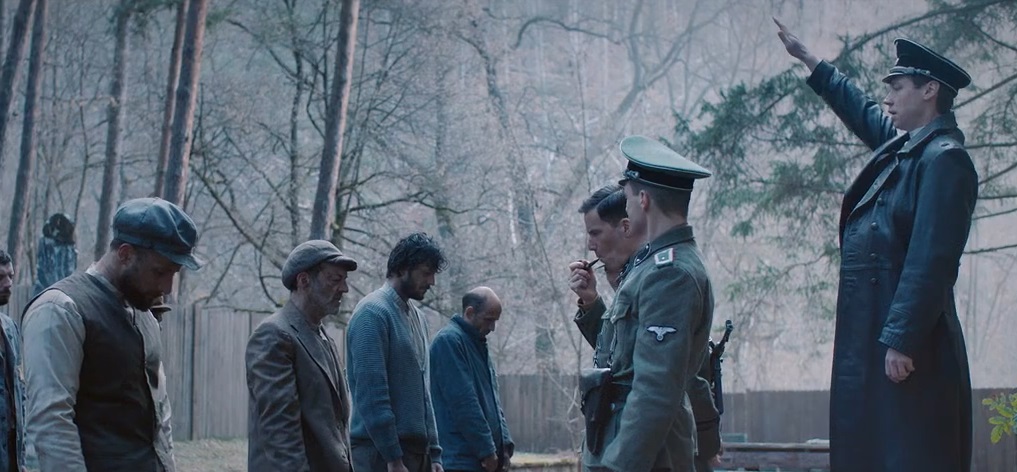
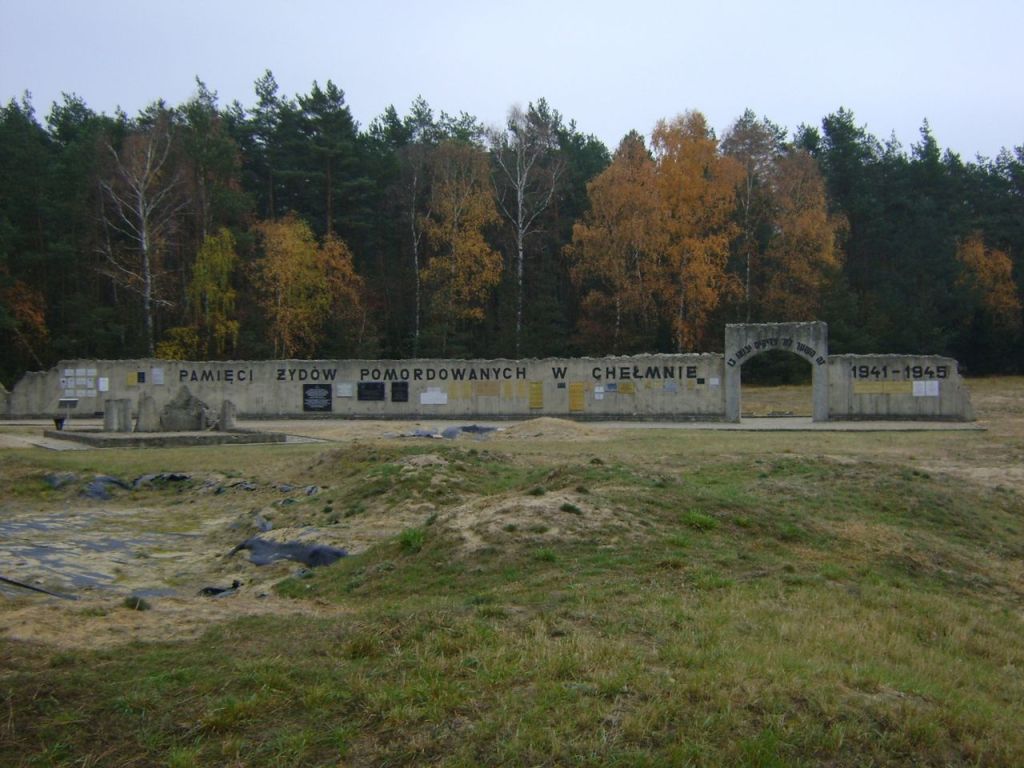
A Los Angeles Jewish Film Festival screening of The World Will Tremble (2025) preceded its L.A. run this week at the Laemmle Theatres in Beverly Hills and Encino. The title is a quote from a village Rabbi in Rzuchow, Poland who has just heard the testimony of two prisoners, escapees from the Nazi death center at Chełmno (Kulmhof) in early January 1942, where Jewish populations from the surrounding villages are being systematically gassed in mobile vans. The title bears a degree of irony because we now know that while the BBC and the New York Times reported on the mass killings as early as June and July 1942, few wished to hear of it. It is known, for example, that U.S. State Department officials actively blocked reports about the mass murder of Jews from reaching the United States. The British Foreign Office, known to be filled with anti-Semites, was no better: when Polish diplomat and eye-witness Jan Karski met with Foreign Minister Anthony Eden, his report fell on deaf ears.
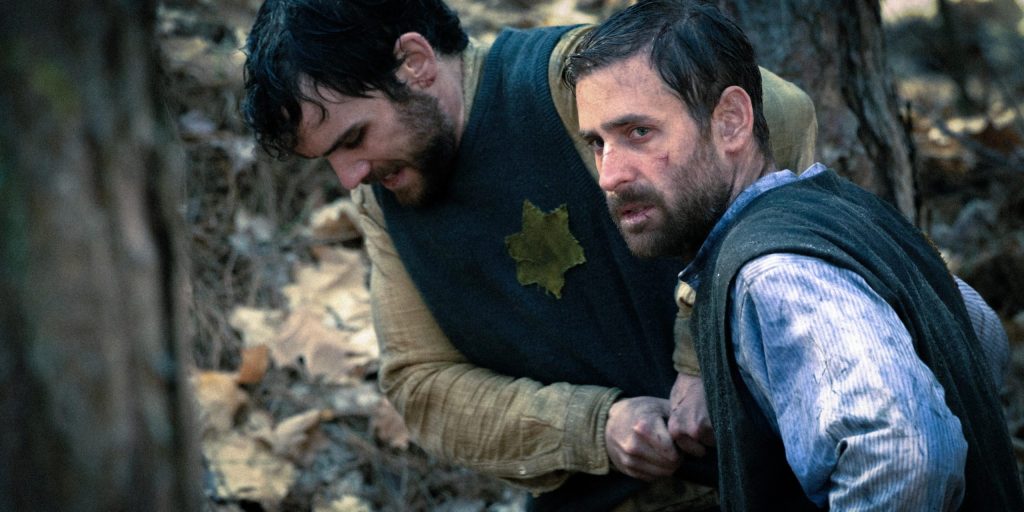

Directed by Israeli-American, Lior Geller, The World Will Tremble, opens with a group of Jewish prisoners digging a large pit under the watchful eyes of armed Nazi guards. Three are chosen to go back to the camp – actually an abandoned manorial estate – where they are told to sort clothing and thereby witness the murder of Jewish villagers. Transported by truck, the arrivals, men, women, and children, are told they will be sent to Leipzig to work, but first need to write a letter home and be de-loused. Leaving their clothes and suitcases behind, they are herded into a truck, whose exhaust is connected to the van’s enclosed interior. The victims are killed by carbon monoxide poison before the gas vans reach the field where the dead are buried in mass graves by the prisoners who had dug the pits. Miraculously, two of the men assigned to the work detail manage to escape, helped by a Polish farm woman who gives them railroad uniforms, and a stolen motorcycle. They make it to the home of a village rabbi (Anton Lesser), where they report what they have seen. That account eventually made its way through the Polish Underground to London, where it is reported on the BBC on 26 June 1942, the earliest evidence of the Shoah to reach the Allies.

Divided essentially into two halves, Geller’s film visualizes for the first time, this earliest phase of the Shoah, before the Nazis perfected an industrialized form of death in Auschwitz, only months later. We hear the Camp Commandant Herbert Lange (David Kross) saying Berlin wants more “productivity,” 700 dead a day, are far too few. In reality, no less than 152,000 humans were eventually killed in Chełmno. We also see the unbelievable cruelty of the Nazi guards, whose target practice consists of forcing inmates who hold glass milk bottles over their heads, which are then shattered by bullets, or who have the inmates dance to the tune of flying bullets. When a young Jewish woman who has been serving as Lange’s sexual relief is accidentally killed, the Commandant screams at the guard to get him another. But while we see the faces of inmates carrying bodies, the corpses in the van and mass graves remain discreetly out of camera range, thus avoiding exploiting the memory of the dead.
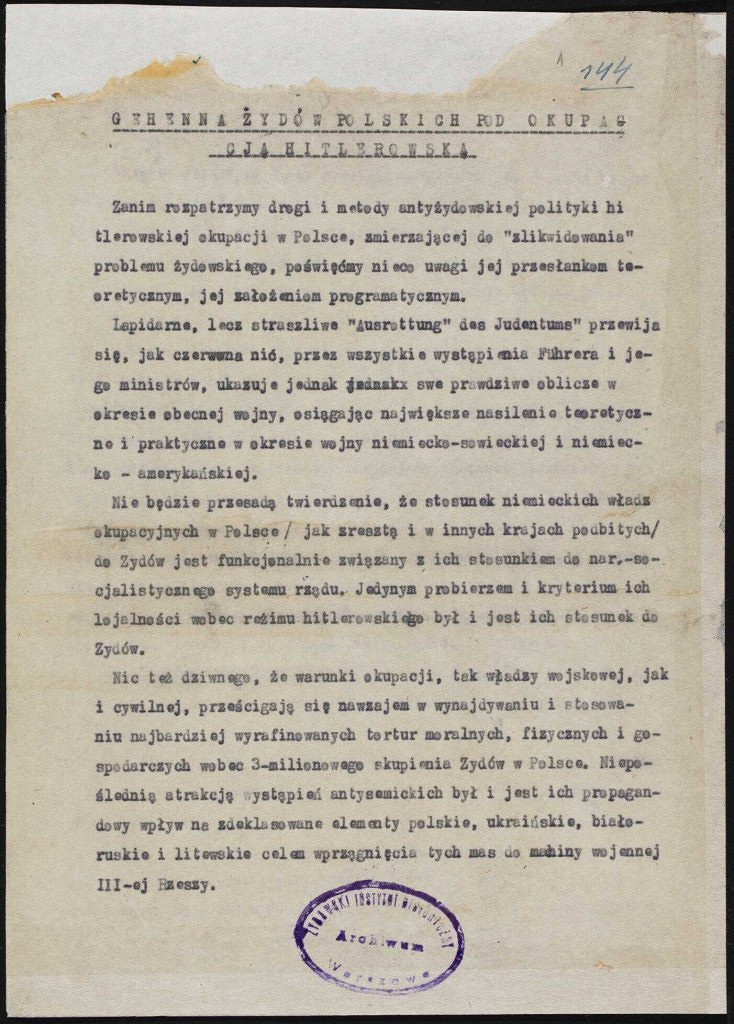
Although accurate in spirit, The World Will Tremble does condense some of the admittedly confusing historical facts. One of the film’s escapees, Mordechaï Podchlebnik (Jeremy Neumark Jones), did escape from Chełmno, later testifying at trials in Poland (1945), at the Eichmann trial in Jerusalem (1961), and appearing in Claude Lanzmann’s Shoah (1984), but he was not one of the authors of the first report. During the Winter of 1942, five prisoners escaped: Mordechaï Podchlebnik, Milnak Meyer, Abraham Tauber, Abram Roj, and Szlama Ber Winer (alias Yakov Grojanowski). Grojanowski (Oliver Jackson-Cohen) fled Chełmno to the Warsaw Ghetto, where his “Grojanowski Report” to the Ghetto’s Oneg Shabbat resistance group formed the basis for the BBC broadcast and later media reports. The New York Times wrote on July 2nd: “In the early Winter the Germans were methodically proceeding to exterminate all Jews. They sent special gas chambers on wheels… In the village of Chełmo near Kolo ninety persons at a time were put into the gas chambers.”(p. 6) According to other published sources, two further Chełmno survivors, Yitzhak Justman, and Yerachmiel Yisrael Widawski, deposited their testimonies at the Piotrków Trybunalski Ghetto in March 1942 with Rabbi Moshe Chaim Lau and later spoke with Rabbi Chanoch Gad Justman in the the Częstochowa Ghetto. Widawski’s description of finding his fiancé among the corpses forms one of the most heart-wrenching scenes in the film.

I first read about the Chełmo gas wagons when I was a graduate student, writing a seminar paper about Holocaust news in the German exile newspaper, Freies Deutschland/Alemania Libre, published during World War II in Mexico City by exiled German Communists. Not surprisingly, the horror of Auschwitz, Maidanek, and Sobibor has overshadowed the crimes committed in Chełmno. Thanks to Lior Gelller, we now have a film about this often under-reported site of the Shoah, and its handful of survivors.
 Archival Spaces
I don’t envy the film critic who has to sit through a film about the inner workings of a Nazi death camp.
LikeLike
I don’t envy the film critic who has to sit through a film about the inner workings of a Nazi death camp.
LikeLike