Archival Spaces 361
Accidental Archivism: Shaping Cinema’s Futures with Remnants of the Past
Uploaded 29 November 2024

As anyone knows, who has been following the fortunes of AMIA (Association of Moving Images), film preservation before the 1980s was the purview of major, mostly state-funded, national film archives, which felt responsible mainly for fiction feature films. Since then, countless smaller often privately financed moving image archives have sprung up, which are more concerned with previously neglected genres, like industrial and amateur films, TV news programming medical films, etc. making them accessible through digitization. Recently, Stefanie Schulte Strathaus and Vinzenz Hediger published AccidentalArchivism: Shaping Cinema’s Futures With Remnants of the Past (Meson Press, 2023), which presents not only the preservation efforts of many smaller international archives, but also of individual filmmakers, critics, and historians, especially in the so-called Third World. Most of the projects introduced here originated in and around the Berliner Arsenal-Institut für Film und Videokunst, which since 1963, has gathered together an impressive collection of experimental, documentary, and art films, many the only surviving copies, usually in connection with its long-standing film programming (including its annual “Film Forum” at the Berlinale).

The title, Accidental Archivism refers not only to the preservation and accessibility of historic film material, but also to the accidental discovery and recovery of such films/videos, and their preservation in political and social contexts, where the major national archives have apparently failed. Sonia Campanini writes, e.g. in her essay: “Such fortuitous discoveries are often followed by a moment when the accidental encounter unfolds in incidental care, a point in which a single person, collective group, or institution decides to take in charge that object, to claim responsibility over that document, to deal with the memory inscribed in its material“ (p. 74). With no less than 45 contributors, the monograph is less a critical or historical analysis, than a contemporary survey, plaidoyer, and manifesto of a new generation of media archivists.


Several theses about film/video archiving history can be culled from the collected essays. Some authors accuse European archives of „the global North“ of practicing a form of neocolonialism because they have collected films from Africa, South America, and Asia, but prevent or severely curtail through legal restrictions their circulation in the countries of origin (p. 399). This thesis is at the very least debatable, given for example the work of Martin Scorsese’s Film Foundation which for years has restored important films from the Third World and made them digitally accessible through commercial partners. Furthermore, the Berlin Arsenal and this publication also counter that assertion.

Another thesis can be formulated as follows: Since the established film archives employ aesthetic criteria in their selection process, they neglect unfinished films, outtakes, uncut or unidentified material which Vincent Hediger calls „scrap films“(p. 49). Just how important such material can be for the identity and history of repressed communities is illustrated in numerous essays, whether in Nigeria, in the queer communities of Turkey, in the women’s collectives of Indonesia, or the film estates of documentary filmmakers, like Harun Farocki. Such material can serve as raw material for other films.
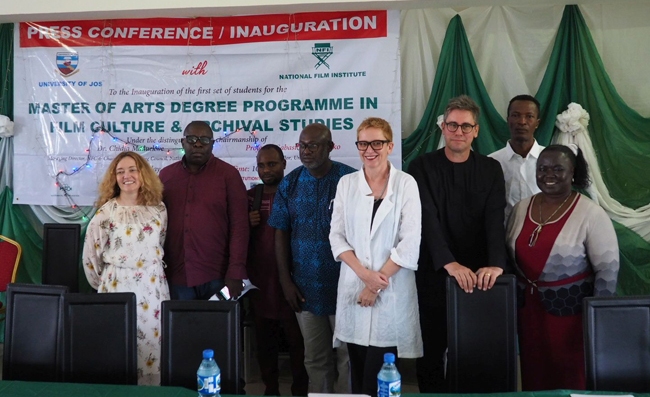
Especially film archives in Africa and Asia suffer from inadequate funding, infrastructure, and expertise, to properly store and digitize their patrimony while humid climates also do their part to decompose collections. In such cases, accidental archivists sometimes move in, e.g. in Nigeria, where with the help of the Arsenal a film archiving training course was established. In some countries, where the original film producers are politically under attack, even forced to emigrate, films disappear completely and are only reconstructed years later.

What unifies all of the contributors in the volume is an activist archival politic, which sees the work of archivists not only as a passive or reactive collecting of moving image media, but also considers film preservation, film programming, and historical criticism as inseparable activities. Thus, curators become archivists, and film archivists become historians so that the visual record is not only preserved but also points to the future.
Accidental Archivism is therefore highly recommended reading for media archivists, curators, and film historians alike, while bibliographies at the end of every chapter encourage further reading.
 Archival Spaces