Archival Spaces 359
Giornate del cinema muto/online
Uploaded 1 November 2024
This year’s Giornate del cinema muto again offered a small selection of ten feature films from the festival, as well as selected shorts, mostly little or never seen films from countries as diverse as France, Uzbekistan, Cuba, Germany, Mexico, and the USA. The films were available online for 48 hours through the MyMovies/It portal and presented for fans of silent film, a rare opportunity to see works that will probably never make it to your neighborhood theatre or even anywhere else online.
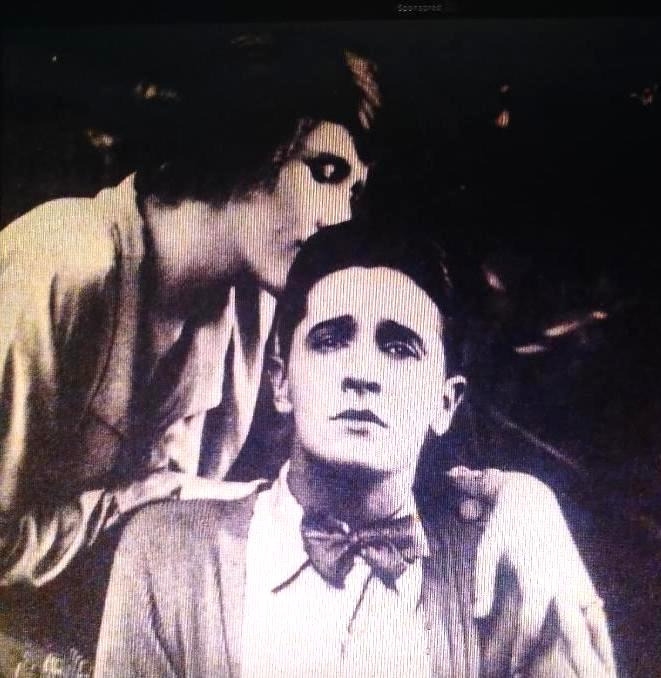

The online program opened with L’appel du sang/Call of the Blood (1919), a French film by Louis Mercanton, but included in the festival as part of the Sicily program of travelogues. The film debut of British actor Ivor Novello, the work features incredible vistas of early 20th century Taormina, as well as documents of many local dances, costumes, and customs. Based on a 1906 novel by Robert Hitchens, the film concerns a wealthy English woman, Hermione Lester (Phyllis Nielson-Terry), who travels from her home in Rome to Sicily on holiday with her younger lover, Maurice (Novello), while maintaining an intense epistolary relationship with Emile Artois. Maurice becomes infatuated with a Sicilian peasant girl, Maddalena, while Hermione travels to North Africa, where her friend Artois has fallen gravely ill. After he seduces the girl, Maurice is murdered by the girl’s father, who then accidentally kills his own daughter. At graveside, Hermione realizes the truth. A wild melodrama for sure, but beautifully photographed with magnificent multi-color tints and tones and views of an Italy long gone.
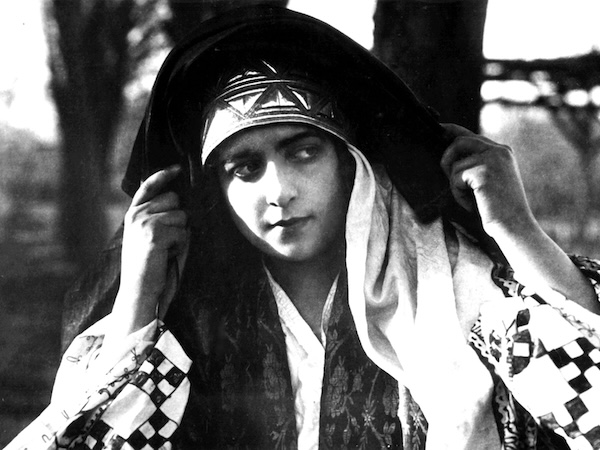

The first of two films from the Soviet Republic of Uzbekistan, Minaret Smerti/The Minaret of Death (1924, Vyacheslav Viskovsky) is nothing like the revolutionary films of the period, but rather a romantic adventure epic. Loosely based on a 15th-century Bukharan legend, a young woman, Dzhemal, and her foster sister are abducted by robbers when their caravan is attacked; they manage to escape and are eventually accompanied to their father’s house by Sadyk, a young nobleman. However, they are then captured by the Emir of Bukhara who offers Dzhemal as a prize in a competition which Sadyk wins, but she is then kidnapped by the Emir’s son who kills his father, leading to a revolution. There’s lots of fighting around the ancient walls of Bukhara, and many harem scenes with scantily dressed maidens, and exquisite costumes, but the Soviet authorities were apparently not happy with the film.
One wonders if the Soviets were any happier with the second Uzbeki film, Moxov Qiz/The Leper (1928). Directed by Oleg Frelikh, and based on a French novel, Kamir. Roman d’une femme arabe, the film is extremely sophisticated in its narrative and montage: Taking place in Czarist-controlled Turkestan, a beautiful young woman marries a wealthy merchant who beats her regularly, leading her to fall prey to a seduction by a decadent Russian officer. When her husband finds out, he sues her father in a Muslim Sharia court, leading to her abandonment. She is beaten to death on a country road after mistakenly entering a leper colony. The film implies that once a Muslim woman is divorced she is good as a leper. No revolutionary optimism here, although the film does attack the extreme patriarchy and misogyny of Uzbek/Muslim culture, e.g. when the father cruelly takes a young wife because the mother of his daughter is too old, or when it shows corrupt Czarist judges taking bribes. Frelikh likely fell prey to Stalin’s anti-Semitic and anti-ethnic cultural policy, since his last directed film was a Uzbeck production in 1931.

Based on the famous novel by Federico Gamboa, Santa (1932) was Mexico’s first sound film, but there was an earlier version from 1918, directed by Luis Peredo. It is the age-old story of Santa, a young girl, seduced and abandoned, forced to move to Mexico City to become a prostitute, where she slowly sinks into the morass, despite the love of a blind pianist. The starring actress would become a pioneering journalist and founder of Mexico’s first film archive. While the sound version with Lupita Tovar is much more cinematically polished, the silent version retains the novel’s modernist focus on cityscapes but suffers from intertitles that overlong quotations from the novel.
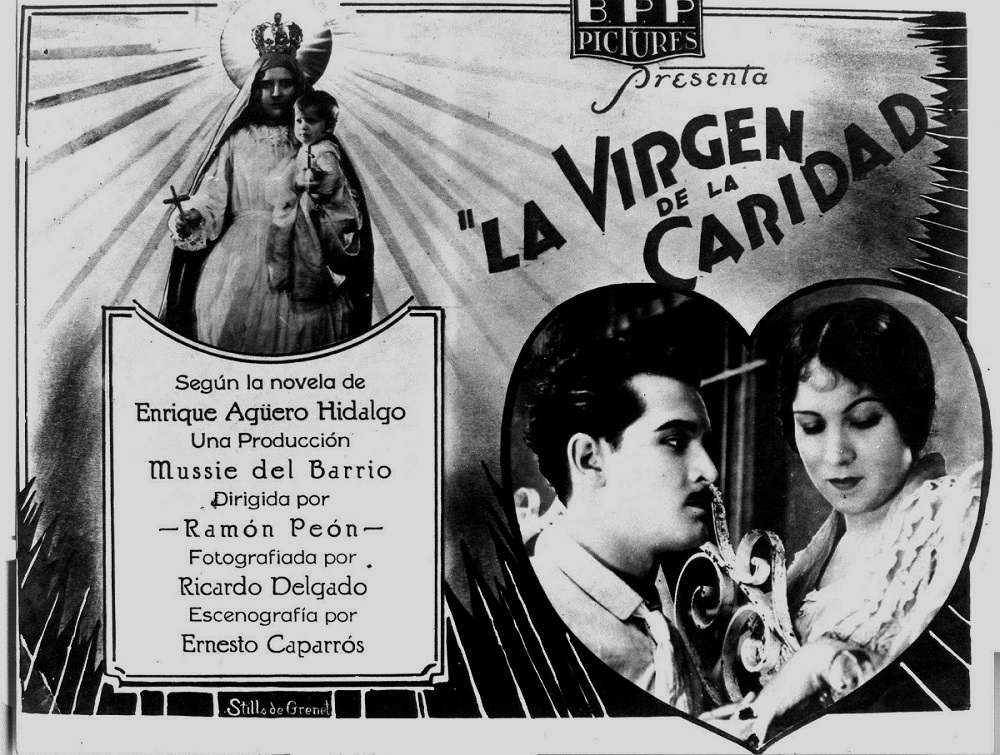

The last Cuban film to be shot without sound, La Virgen de la caridad (1930, Ramón Peón) is a socially critical melodrama. Yeyo, a young peasant is in love with Trina, the daughter of a local landowner, but her father objects to her marrying below her station; a more “suitable” middle-class husband turns out to be a swindler who attempts to dispossess Yeyo from his farm. Happily, the “Virgin of Charity” intervenes, falling off the wall to reveal the original deed that proves the grift. A Griffithian chase on horseback brings the film to its climax. Highly praised at the time of release, the film’s leftist politics are manifested in a critical view of the plight of Cuban peasants – its hero the son of a dead revolutionary – and a distrust of the bourgeoisie, yet it is also infused with a belief in the power of prayer.
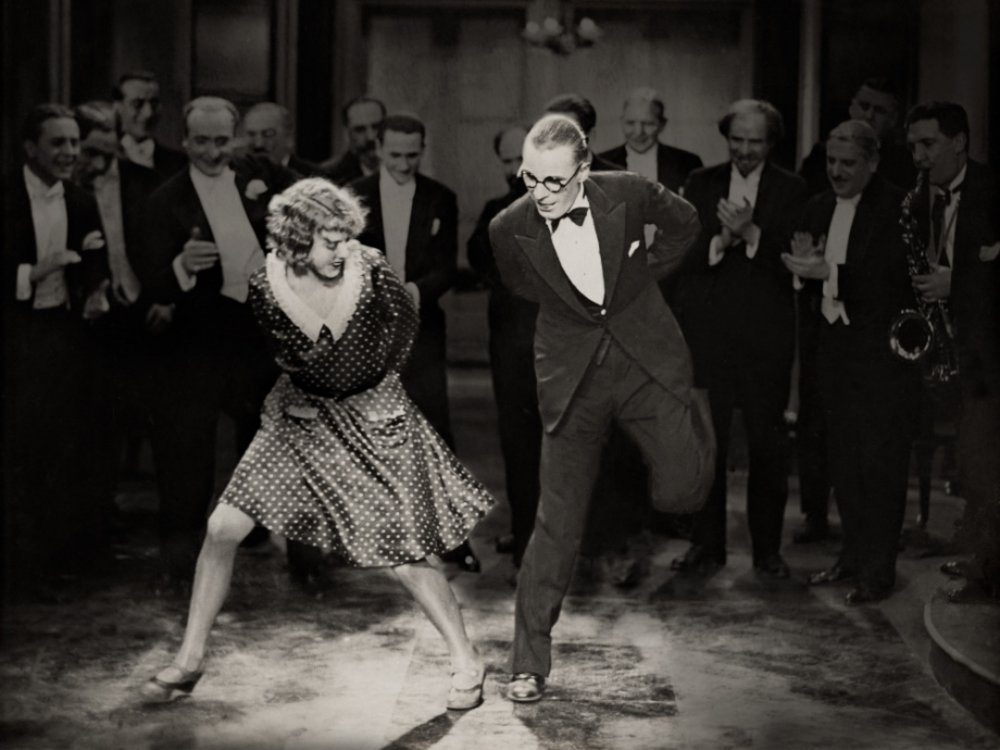

Starring Czech actress Anny Ondra, and directed in Berlin by boyfriend Carl Lamač, Saxophon-Susi (1928) is the kind of fluff Hollywood usually excelled in. She plays a baroness who would rather be a vaudeville dancer, so she trades places with her girlfriend who is being sent to the “Triller School” in London. The internationally famous Tiller-Girls, also prominent in many German films, practiced the kind of syncopated chorus line that became a staple of Flo Ziegfeld and later the Rockettes. On the boat train to London Anny meets a young British Lord who thinks she is a chorus girl, falls in love, and you can figure out the rest. There is a moment of unconscious racism when Anny and another dancer do an “ape dance” recognizable to contemporary audiences as a conscious parody of Josephine Baker’s 1920s dance routines.


Song. Die Liebes eines armen Menschenkindes/ Show Life (1928) was the first of five films German director Richard Eichberg would make with Anna May Wong, and one of her most successful, making her a European star. Jack Houben, a former vaudeville knife-thrower saves Song from a rape and she becomes his partner, caretaker, and want-to-be-lover but he is still in love with his old partner, Gloria, while the impresario Prager pines after Song. A well-financed UFA-B.I.P. co-production, the melodrama is situated between the squalor of a port city’s slums and low-life cafés, and the upper-class milieu of classical ballet and fancy nightclubs, each of the characters trapped in a different erotic obsession. However, as an Asian woman of color, Wong is doomed to play the Madame Butterfly role, sacrificing herself repeatedly for the white man she loves.
While I loved seeing these films online, I hope to be in Pordenone next year, given that the on-site program is much richer.

 Archival Spaces
Hugely enjoyable, thank you for posting
LikeLike