Archival Spaces 342
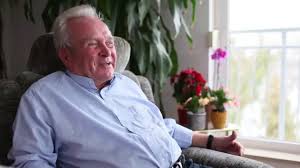
Wolfgang Klaue (1935-2024)
Uploaded 8 March 2024

Wolfgang Klaue, the former director of the Stattliches Filmarchiv der DDR (SFA) and, after German reunification, the founding director of the DEFA Stiftung, died on 16 February. He was a giant in the field of film preservation, winning a UNESCO Silver Medal in 1988, founding the FIAF Summer School, was President of the International Association of Film Archives from 1979 to 1984, and was a member of FIAF’s Executive Committee from 1969 to 1991. No one did more for good relations between film archives on both sides of the Cold War ideological divide between Soviet bloc countries and the capitalist West than Wolfgang Klaue.


I first met Wolfgang at the FIAF Brighton Conference in June 1978, which he attended with his predecessor as head of the film archives of the German Democratic Republic, Herbert Volkmann; I was a graduate student in Germany at the time and eager for film contacts in both East and West. I met him again in 1981, when I was invited to attend the Leipzig Documentary Film Festival for the first time, and then saw him several more times in Leipzig in the following years. He and his assistant, Manfred Lichtenstein really helped me out of a major jam, when I arrived in Leipzig without a visa for the GDR, because the East German border guards at Checkpoint Charlie had given me a visa for East Berlin only, despite my showing them my official invitation to Leipzig for the festival; I could have been arrested for being a spy. I always knew Manfred to be a good colleague, and a real supporter of Wolfgang, so I guess I was surprised when I found out that he was the STASI agent in the Archive, whose job it was to keep tabs on Klaue and others. I didn’t think any less of him, he was doing a job required by a dictatorship. Later, my relationship with Wolfgang became much closer, i.e. he became a real mentor after I became curator of the George Eastman Museum and a regular attendee at FIAF conferences.
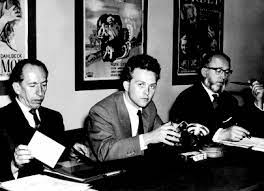

Born on 6 August 1935 in the Iron Mountains (Erzgebirge), near the border between Saxony and Czechoslovakia, Wolfgang Klaue studied philosophy at the Humbolt University in Berlin, hoping to become a theater dramaturge. Completing his studies in 1957, he was hired by the Deutsche Film A.G. (DEFA) as a dramaturge in the Studio for the popular scientific film that same year, but before the year was out, he joined the staff of the State Film Archive, which had been founded only two years earlier in 1955, having completed an internship there while a student.
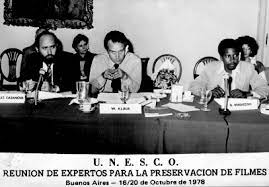
In 1969, Klaue became Director of the Staatliches Filmarchiv. Even though Klaue was of necessity a member of the Socialist Unity Party, and remained politic in deference to his superiors in the East German government, he walked a fine line between compliance and passive resistance. Through his leadership Archive staff was able to travel abroad, communicated continuously with “enemy” colleagues in the West, and had steady access to Western film publications; the Archive was also a haven for many who did not seamlessly fit into the system. Like Volkmann, some came after experiencing political difficulties elsewhere. As one co-worker later admitted to Klaue, she would have emigrated, had she not worked at the film archive. My own experience was that the colleagues at SFA were among the friendliest, most passionate, unbureaucratic, and helpful in any FIAF archive, even though they were subject to all the daily ideological, financial, and material shortcomings of the German Democratic Republic.

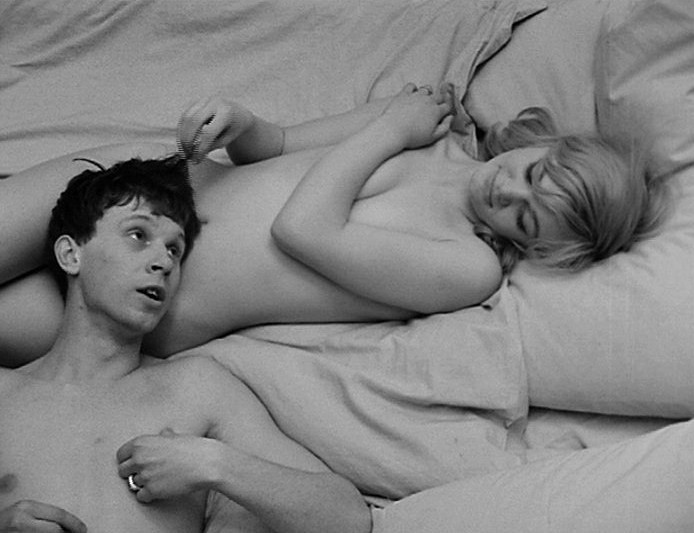
Compliance with ideological directives and passive resistance to some regulations was the strategy. When in December 1965 the government banned a whole year of film production at DEFA, while harshly censuring its filmmakers, Klaue and Volkmann quietly stored the films in secret vaults rather than destroy them, allowing them to be rediscovered after reunification. Films shown at the SFA’s Camera Cinema were not always passed by government censors, as required by law. Indeed, public programming and publications were the most sensitive and under the most ideological scrutiny, with Klaue getting officially reprimanded for screening Milos Foreman’s The Loves of a Blonde (1965). Self-censorship was a fact when writing film history, yet in the 1970s a Leipzig retrospective on the German Workers Film movement tiptoed around the fact that its founder, Willi Münzenberg, could not be mentioned.

At FIAF conferences, I would often seek Wolfgang out to practice my German, but also because he was so forthcoming with ideas and information and I saw his leadership as a model to be emulated. From my vantage point at that time, the SFA was the least dysfunctional of all the German film archives. In April 1988, then, I had the opportunity to work directly with him, when he suggested I train the docents for a huge exhibition on American film in East Berlin, sponsored by the U.S. Information Agency. The exhibition on the ground floor of the Berlin Radio Tower at Alexanderplatz opened with literally several thousands of visitors lined up around the square and subsequently broke all attendance records. During that time, Klaue took me on personal tours of the Film Archive, the Babelsberg UFA studios, and the Konrad Wolf Film School in Babelsberg, where I gave a lecture. It was the first time I spent several weeks in East Berlin without going to West Berlin, and it allowed me to see how different the perspective was behind the wall.

That same year in October, I was able to return the favor when Klaue, Manfred Lichtenstein, and Günter Schulz toured the George Eastman Museum, Niagara Falls, and later were guests at a cocktail party in Chicago, hosted by my mother-in-law for a film history conference at the University of Illinois at Chicago. We also began an unfortunately short-lived exchange program (due to reunification), since Eastman Museum had many unique German titles on nitrate film and I was having trouble getting anyone’s attention in the other German archives. When I moved to the Munich Filmmuseum in 1994, Klaue again became a steady confidant, even though by then he had been relieved of his duties and was working on research projects as a contractee at the Federal German Archives. Happily in 1998, he began setting up the DEFA Foundation to oversee the rights to more than 8,000 films produced in the GDR, and was its founding director from 1999 to 2003. He also helped create the DEFA Film Library at U. Mass Amherst with Barton Byg, which has made many, many rare GDR films accessible to American scholars. I last communicated with him in 2021, when he apologized for not attending a ceremony where I received an honorary award from the German Cinematheque Association, an award he had previously received in 2019. He was truly one of the good guys.
 Archival Spaces
“I could have been arrested for being a spy.” (that certainly would have been an interesting turn of events).
LikeLiked by 1 person
Lieber Chris, vielen Dank für Deinen bewegenden Nachruf auf Wolfgang Klaue. Von seinem Tod habe ich erst durch Dich erfahren – was für eine Schande für die deutsche Zunft. Aber unbedeutender und gleichzeitig eitler als in der BRD geht es kaum. Mit Klaue ist auch ein Teil der Filmgeschichte dahingegangeno. Er hatte, wenn man ihn denn gefragt hätte, viel zu erzählen. Danke, dass Du wenigstens etwas geschrieben hast. Dass Manfred Lichtenstein der Stasi Mensch war, wusste ich auch nicht. Grüsse Werner
LikeLike
Danke, Werner. Ich hoffe es geht dir gut. Gerne wäre ich in diesem Jahr zur Berlinale gekommen, erhielt aber zum ersten Mal seit vielen Jahren keine Einladung. Vielleicht sehen wir uns im nächsten Jahr wieder.
LikeLike