Archival Spaces 341
Most Expensive Industrial Film Ever
Uploaded 23 February 2024
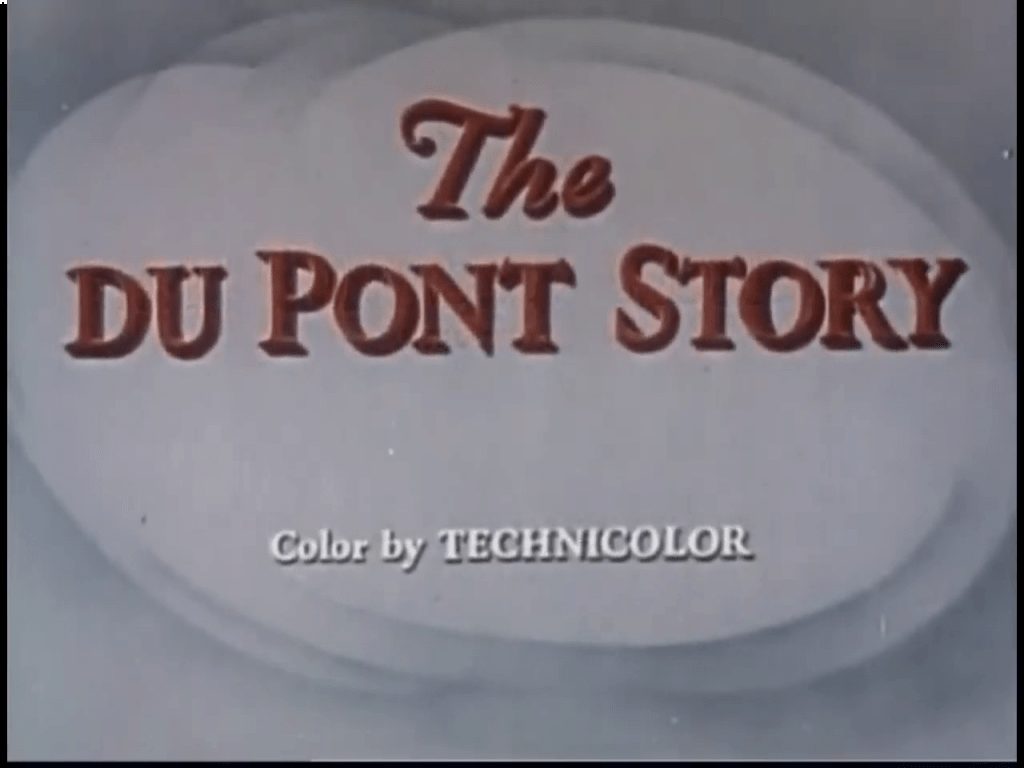
In 1948, the Apex Film Co., a company founded by former MGM executive Jack Chertok to produce educational, industrial, and other sponsored films, was hired by E.I. Du Pont de Nemours to produce a feature-length color industrial on the history of the DuPont Company for its 85,000 employees: The Du Pont Story (1950) was the most expensive sponsored film ever made with an unheard of budget of $250,000 ($3,200,000/2024). Under the working title, “This Work Goes On,” it was based on a non-fiction book by William F. Dutton, Du Pont – 140 Years, published by Scribners in 1942. The film featured more than 225 actors, including Sigrid Gurie, Stanley Ridges, Lyle Talbot, Stacy Keach, Sr., Donald Woods, and Whit Bissell, along with hundreds of extras. It was shot in a Hollywood rental studio on as many as ninety-one sets, which replicated many original sites in Wilmington, Delaware. According to an Apex spokesperson, “It will not play down munitions or anything else, but will be a straight history which will include company faults and mistakes and how they were overcome.” The DuPont Company, on the other hand, hoped the film would instill in younger employees “the same pride in the background and traditions of DuPont as the old-timers have.”
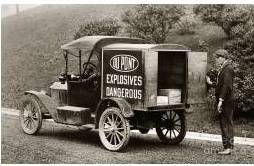
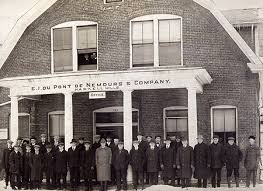
In point of fact, DuPont had learned that public relations through mass media was an essential element of modern business administration, but only shortly after the Depression hit when DuPont started getting extremely bad press because there had been persistent rumors about the company reaping vast profits during World War I by supplying half the world with gun powder and explosives. “The Special Committee on Investigation of the Munitions Industry”, aka Nye Committee, under the chairmanship of Gerald Nye (Republican, N.D.) confirmed rumors of price fixing, war profiteering, and conspiring with the banks to stoke war fever in Senate Hearings, beginning in September 1934. In fact, the production of explosives had increased from 8.4 million lbs. in 1914 to 544 million lbs in April 1917. While Nye, an outright Fascist, and Adolf Hitler sympathizer, hoped to smear the American banking system with antisemitic slurs, the attacks stung DuPont. Added to the negative ledger was the fact that the DuPont family also controlled General Motors which was subject to a major labor strike in 1936 that was settled in favor of the United Auto Workers and had broad public support. To counteract negative public images, DuPont began sponsorship on 10 October 1935 on NBC Radio Network of a weekly radio program, “The Cavalcade of America.” Indeed, the radio show, which presented important moments from American history and always began with the Company’s slogan, “Better Living through Chemistry,” contributed substantially to the largely positive image of DuPont by the end of World War II.

The Du Pont Story (1950) was copyrighted on 15 December 1950 and was shown in Wilmington, DE, and at over 100 DuPont plants and sales offices across the country in Spring 1951. Theatrical screenings soon began, running twice daily over three weeks in Philadelphia‘s WRVA. Not only was admission free, DuPont paid cinema owners for each customer attending. It was listed in the Educational Film Guide (1953), available for free loan on 16mm, and is today available on YouTube.
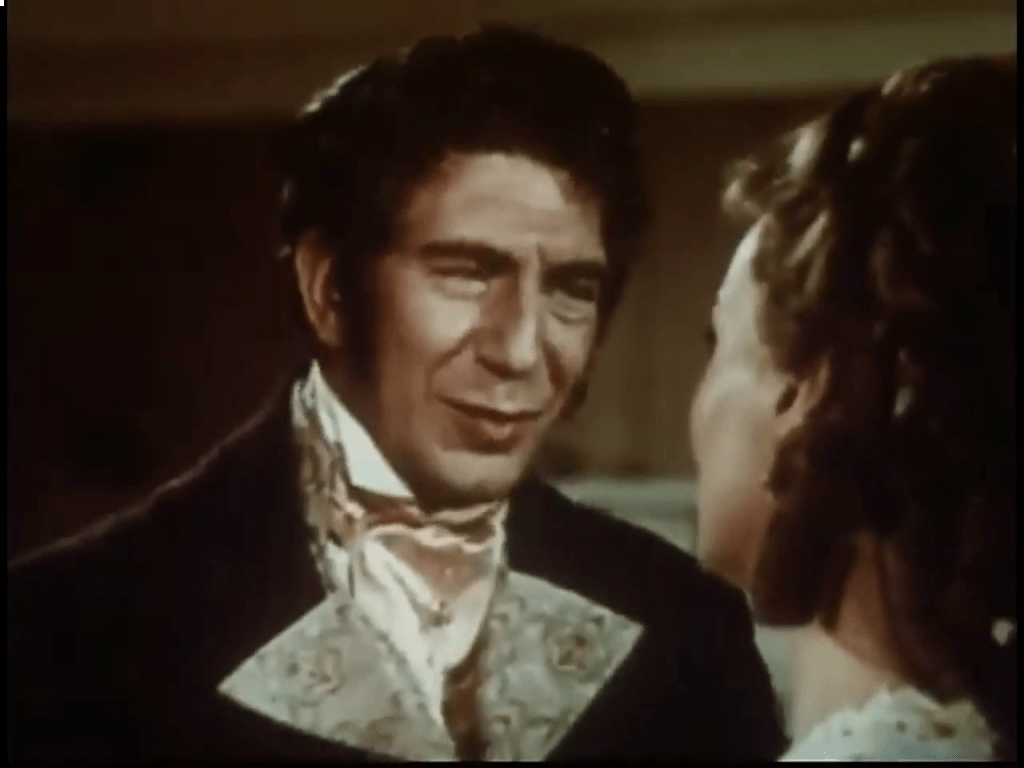
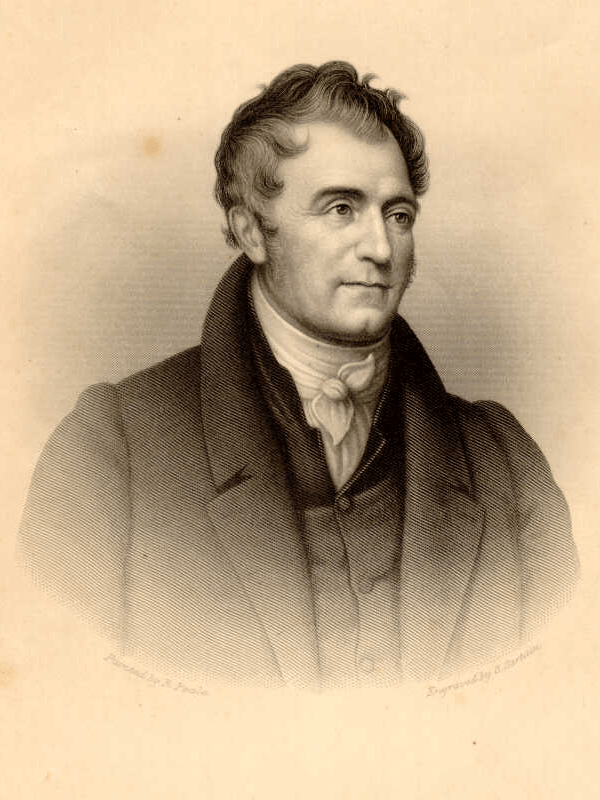
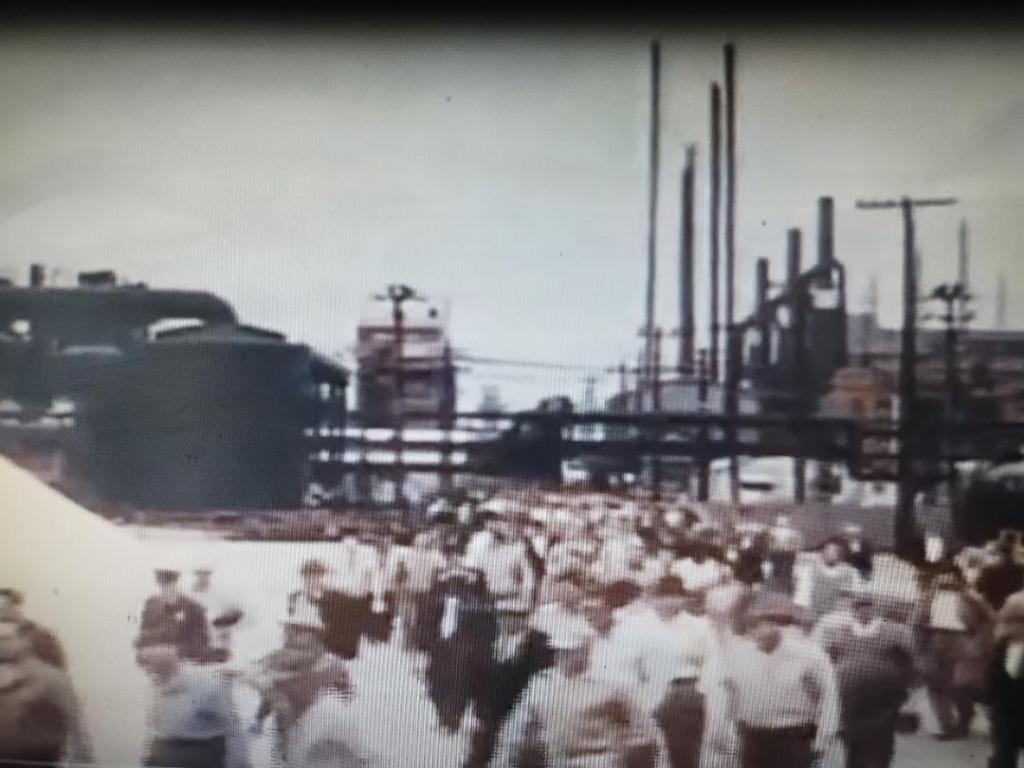
The film opens at a DuPont chemical plant in Waynesboro, VA., where the night shift is leaving and the day shift is going to work, the narrator explaining that the company operates 72 plants in 25 States, producing hundreds of products. The color film then flashes back to the company’s founding in 1803 on the banks of the Brandywine, where the recent French immigrant, Éleuthère Irénée du Pont, who had made gunpowder in France, is convinced that there is a huge market for quality gunpowder in America. The company expanded rapidly, thanks to the lower cost of American powder, now equal to European products, but an explosion in 1818 destroyed 85,000 lbs. of powder, costing forty men their lives. Under the founder’s son, Alfred du Pont, the company expands, then brother Henry du Pont, “the General,” takes over the company, while his nephew, Lamont duPont invents dynamite before blowing himself up.

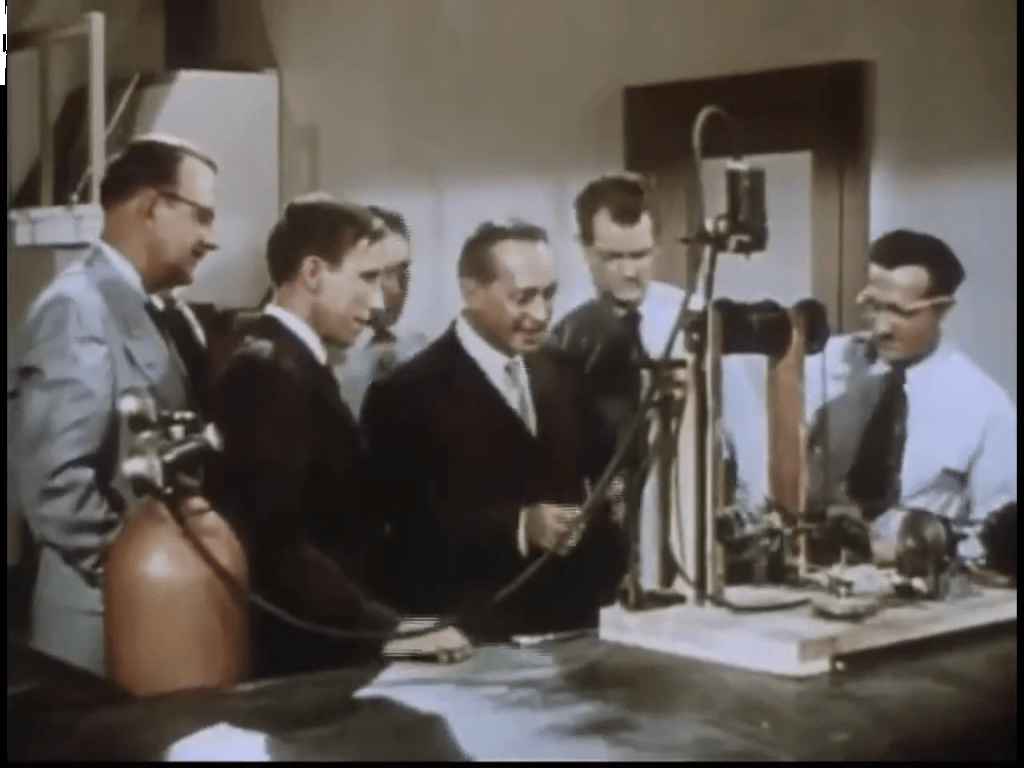
After Henry du Pont’s death, Eugene du Pont modernized the company’s administration before he died in 1902. Coleman du Pont becomes President, Pierre du Pont CFO, and Alfred du Pont head of production. Coleman pushed for expansion into new product lines and in 1903 organized an experimental laboratory to do basic research on new products like solvents, fabrics, plastics, and dyes because the “sound way to success is fulfilling a need.” DuPont also surveys the public about its needs for synthetic fabrics, like cellophane, rayon, and nylon. In 1940, Walter S. Carpenter became the first President who was not a family member, followed in 1948 by Crawford Greenewalt. Both Carpenter and Greenewalt play themselves in the film’s final reel.
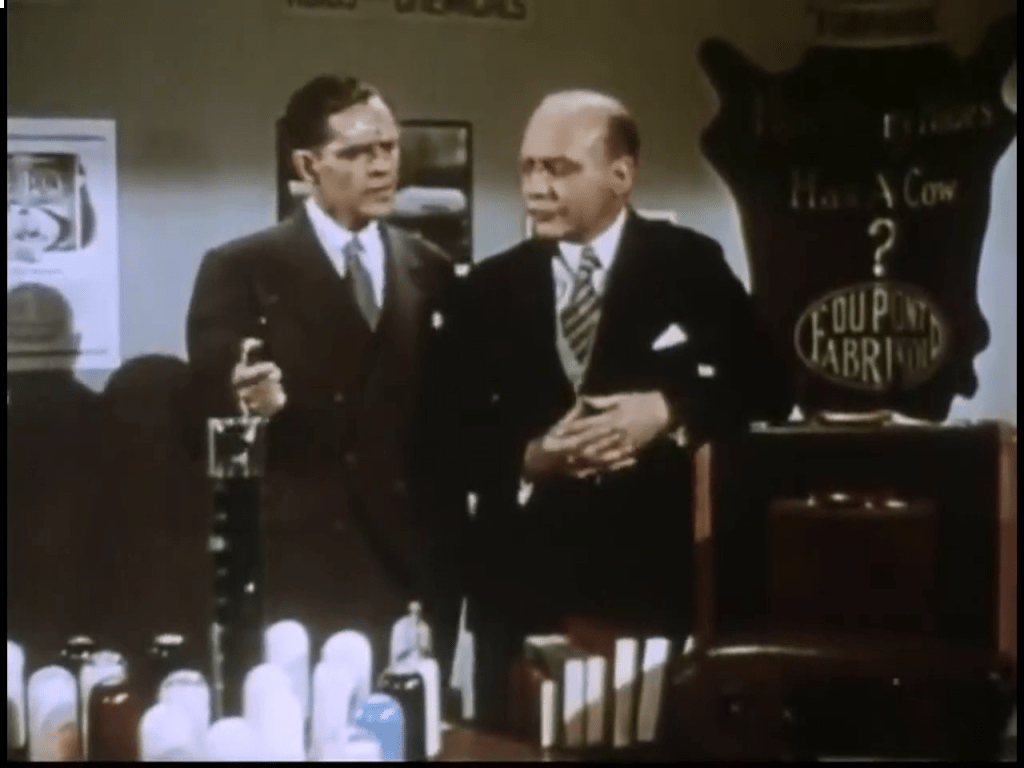

As a sponsored film from the largest chemical company in the United States, The Du Pont Story sought to project the image of a modern capitalist enterprise that took its civic responsibility seriously, creating products that improved the lives of Americans, while offering employment to tens of thousands. Given DuPont’s negative reputation for war profiteering during World War I, the film’s narrative of the 20th century deemphasized the production of explosives in favor of research and development of new products that cater to American consumers. Technological innovations are characterized as altruistic. In 1915, for example, the Company began spending millions on the creation of new dyes, since America was cut off from high-quality European dyes, due to World War I. In the 1920s, they invested millions in creating fast-drying lacquer for automobiles, but the film fails to mention the company’s financial stake in the auto industry. The development of nylon for parachutes and other products is characterized by decades-long research into polymers by Dr. Wallace Carothers, while the company did its patriotic duty to the nation in World War II by supporting American defense, however without mentioning its involvement in the Manhattan Project to create a nuclear bomb.

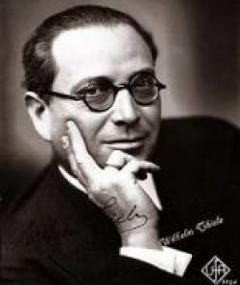
William Thiele, the subject of my new book, directed and contributed to the script. He structures the narrative as a series of dialogues between company leaders of various generations, illustrating significant moments in the company’s history. Despite major gaps in that history, Thiele avoids the pitfall of a boring parade of waxworks by focusing on technological development and the company’s investment in products known to the public, while coaxing pithy performances from his cast of cameos. Soon after, Thiele would direct thirty-six episodes of the TV version of The Cavalcade of America, sponsored by DuPont.
 Archival Spaces
Having lived in Delaware for the 1st 2 decades of my life, the DuPont family and company are familiar to me. The DuPont Company head quartered in Wilmington provides the majority of the well-paying jobs in Northern Delaware. The area of Delaware where there are many DuPont family mansions is referred to as “Chateau Country.” (It’s excellent bike riding country because of the rural feel and reduced traffic). I recall the DuPonts had a mandate that allowed no tall office buildings could be built within sight of their homes. Although their fortune is derived from industrial processes, there are no chemical plants located in Northern Delaware.
News, Clues & Rumors about the DuPont Company: the DuPont Co is fiercely protective of their titanium white pigment formula. A retired DuPont engineer (who probably had a good pension) agreed to provide production details to representatives of a foreign country. He was caught by the FBI. As the FBI agent began to interview the couple trying to obtain this trade secret, the husband warned his wife in Chinese to not reveal anything. Unfortunately for them, the FBI agent was fluent in Chinese.
LikeLike
Great addition, Joe. In particular your comment about about industrial espionage, a story I vague remembered but no longer connected to DuPont. I worked in the mail room at Dupont the Summer before we were roomates at U.D. and my dad was an executive at Atlas Chemical, which brought us to Delaware in the first place. Atlas, like, Hercules Chemical, were split from Dupont after Sherman anti-Trust action against Dupont. I suspect you also saws DARK WATERS, which must have also rang bells for you.
LikeLike