Archival Spaces 333
Adrian Brunel and British Cinema in the 1920s
Uploaded 27 October 2023
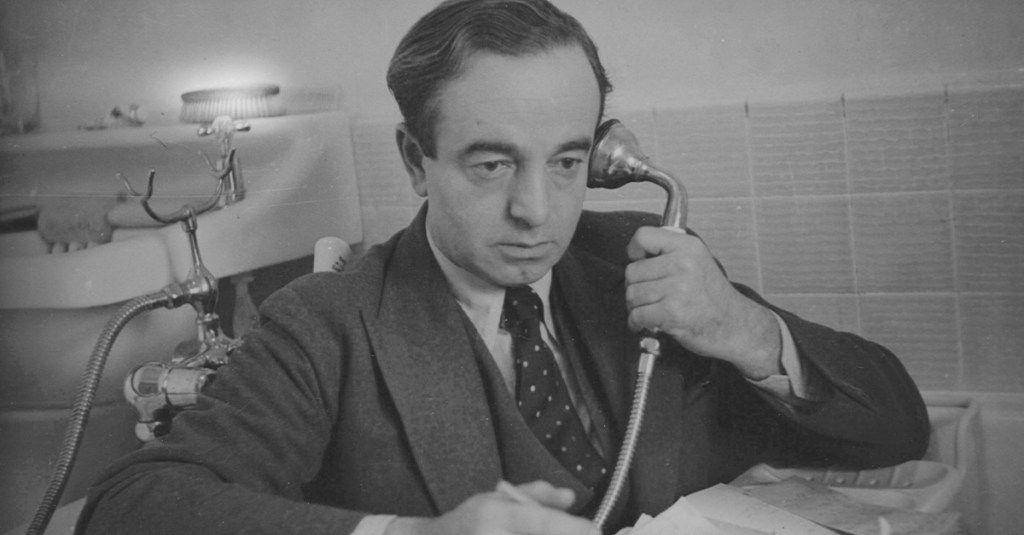
Back in 1978 when I began researching Hans Richter’s film program for a 50th anniversary reconstruction of Film und Foto (1929), a seminal exhibition reprising the avant-garde photography and film of the 1920s, I first came across the name of Adrian Brunel. The official FiFo catalog only listed “three English burlesques by Brunel” in its 11th film program, which included Fernand Léger’s Ballet Mécanique (1924), and E.A. Dupont’s Varieté (1925), so in 1979 we screened A Typical Budget (1924), Cut It Out (1925), and So This is Jollywood (1925), short films which parodied Topical Budget newsreels, government censors, and the British film industry, respectively. The Brunel name only seldom turned up in subsequent years, so my ears pricked up when I met Josephine Botting, Fiction Curator at the British Film Institute, who told me about her book, Adrian Brunel and the British Cinema in the 1920s. The Artist vs. the Moneybags (Edinburgh University Press, 2023), which is based on her PhD. Research in the huge Brunel Estate Collection at the British Film Institute (https://euppublishingblog.com/2023/04/05/adrian-brunel-blog/). Discussing whether the eight Brunel burlesques made between 1923 and 1925, should be considered avant-garde films, Josephine Botting mentions their similarity to both the Leger film and René Clair’s Entr’Acte (1925), as well as the fact that Jacques Ledoux screened another Brunel short, Crossing the Great Sagrada (1923), in an experimental film program in Brussels in 1949. The generic uncertainty regarding the Brunel shorts had very much to do with the state of Britain’s film industry in the 1920s.
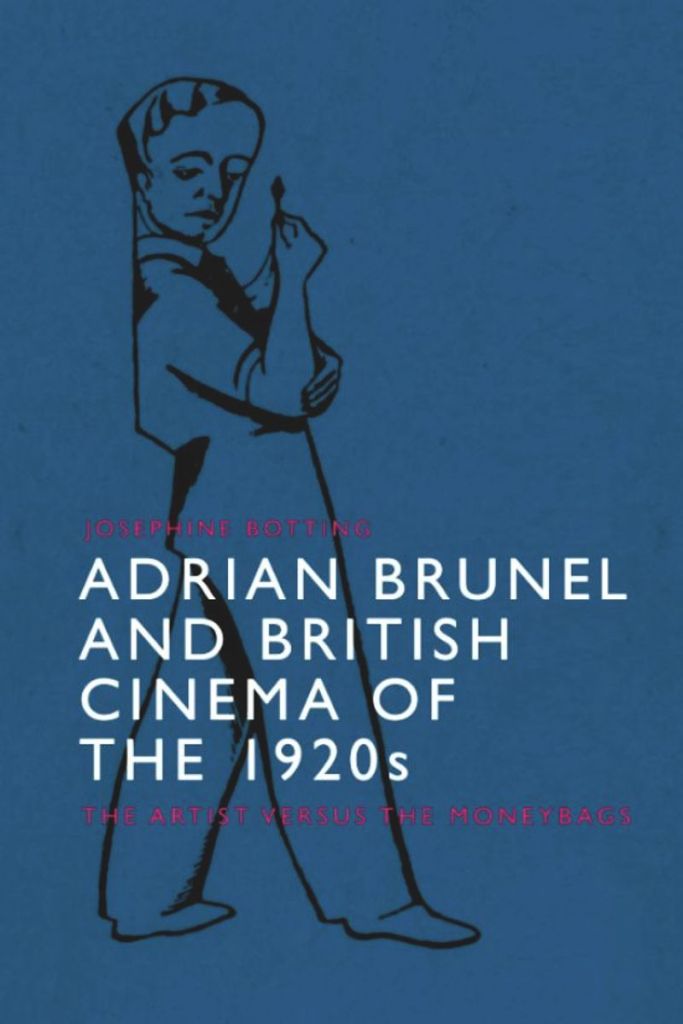
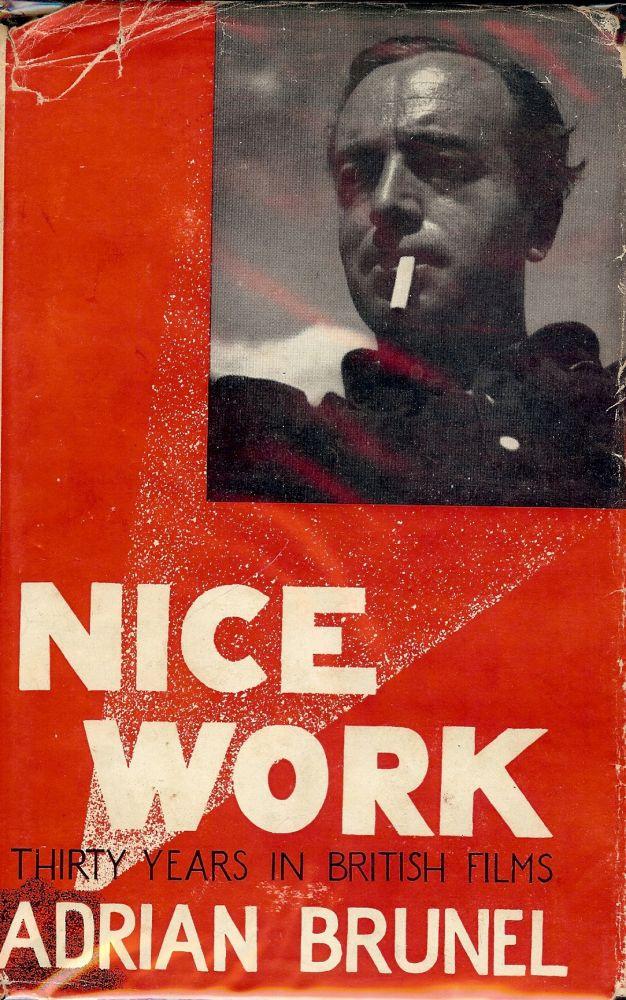
Born in London in 1889, Adrian Brunel entered the film industry in August 1915 as a booker for Moss Empire’s Bioscope, having been excused from war service. A little more than a year later, Brunel formed his first film production company, Mirror Films, with Harry Fowler Mear, releasing the five-reel melodrama, The Cost of the Kiss in February 1917, which however failed to find a distributor. As Botting notes, over-production on the one hand, and lack of quality, on the other, seriously hampered the development of British cinema in the silent era. As a result, generally negative views about British cinema by film historians meant the silent cinema was very much under-researched, except for Alfred Hitchcock, Brunel’s one-time assistant. While Hitchcock soared in subsequent years, Brunel struggled at the fringes. Botting argues, then, that studying Brunel’s seemingly failed career tells us at least as much about the structural weaknesses of the British film industry, as it does about Brunel as an auteur maudit.


The fact was that Brunel’s work, according to his own statements in his autobiography and elsewhere, quoted by Botting, was considered too “high brow” for the low expectations of the commercial film industry. That Brunel was a founding member of the London Film Society which screened art films, also did not endear him to commercial film producers. Referencing the partially commercially successful but hard-to-categorize burlesque films, Botting quotes Brunel’s friend and colleague Ivor Montagu, another talented but marginalized director: “(the burlesques) were responsible for Brunel’s negative reputation within the industry: ‘he was accounted a dangerous intellectual because he specialized in satirical one-reelers . . . it was axiomatic in the trade that audiences would not accept satire and that anyone intelligent enough to be satirical was dangerous’.” (p. 34) Brunel’s up-and-down career is thus marked by industry unwillingness to hire Brunel except for quota quickies and salvaging jobs, while the features he did complete were subverted by unstable industry conditions.
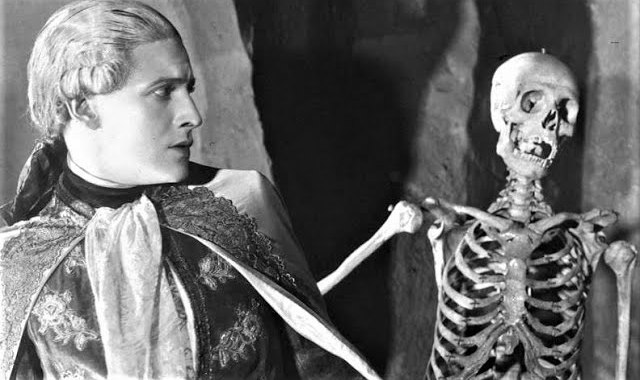
After a brief stint at the Ministry of Information, Brunel joined the British Actors’ Film Company in January 1919, where he wrote three screenplays, including The Auction Mart (1920), which the producer labeled “high brow,” then viciously attacked the distributor for destroying his work, before resigning in March 1920. Almost immediately he joined Minerva Films, a company founded with writer A.A. Milne to produce four short comedies, which the company could not sell, despite good reviews; Botting retrospectively evaluating them as “highly cinematic and containing some original and genuinely amusing devices.” (p. 59). After another stint with Solar Films which also only produced financial messes, Brunel directed The Man Without Desire (1923) for Atlas-Biocraft which was modeled on the paintings of Pietro Longhi, did good business in its initial West End run in February 1924, then quickly sank into obscurity, possibly due to resistance by film renters who objected to the film’s high art pretentiousness; Botting mentions its expressionist lighting (shot in a German Studio) and Venice locations. It’s a “Ripple van Winkle” story of an 18th-century count waking up 200 years later. Botting states the film is one of Brunel’s most impressive achievements.
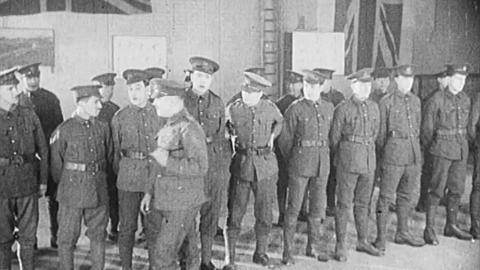
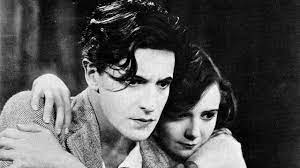
Next, Brunel joined Michael Balcon’s Gainsborough Film, where the director again felt that he was undervalued, plum assignments going to former assistants, like Graham Cutts. In 1926, Brunel was assigned to direct a war film, Blighty (1927) which detailed life on the British home front during World War II. Despite a low budget, Brunel and Montagu managed to craft an art film that garnered good reviews and was a financial success. He next directed The Vortex (1928) from a Noel Coward play, which flopped miserably in April 1928. However, his follow-up, The Constant Nymph (1928), proved to be his most successful film, both commercially and artistically, despite the fact that he was forced to work with novice director, Basil Dean. A 1929 readers poll for Film Weekly named Constant Nymph the most popular film of the previous year, while Blighty made it to 8th place. Despite being considered one of the great directors of British cinema in that moment, Adrian Brunel could subsequently only get work making quota quickies, most of which have not survived.
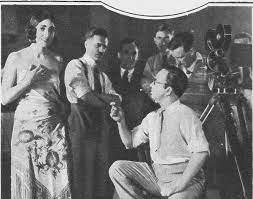

In a final chapter, Botting reviews Brunel’s ever more marginal career in the British sound cinema, until his death in 1958. Botting concludes: “Adrian Brunel’s career, which looked so promising at various points, was ultimately a failure in terms of his own ambitions and aspirations. This was partly attributable to the difficult and unstable conditions that existed within the British film industry, but also to Brunel’s own reluctance to compromise his artistic ideas. This led some in the trade to regard him as a highbrow, and his views on the lack of culture of industry bosses undoubtedly did not endear him to them.” (p. 209) This is a quick, informative, and entertaining read for anyone interested in the British film industry before it stepped on the world stage with the arrival of Alexandre Korda.

 Archival Spaces
Very interesting, Chris. I saw The Constant Nymph a few years ago and thought it was a great film, for Brunel’s visual style but also for the performances of the two leading actors.
LikeLike