Archival Spaces 332
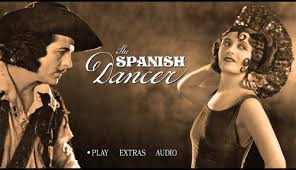
The Spanish Dancer (1923) on Blu-Ray
Uploaded 13 October 2023
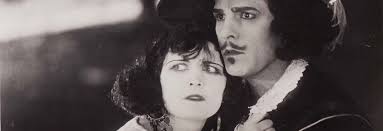
I first saw Herbert Brenon’s The Spanish Dancer (1923) in 1996 at the Giornate del Cinema Muto, when the Festival presented a mini-retrospective, “A Kiss for Herbert Brenon.” I had first discovered la Negri in her German films with Ernst Lubitsch, most of which I watched on a Steenbeck at the Deutsche Kinemathek in Berlin in 1974, the Summer I was researching my master’s thesis on Ernst Lubitsch and the Rise of Ufa. A year later as an intern at Eastman Museum, I fell in love with many of her American films, in particular Forbidden Paradise (reunited with Lubitsch), A Woman of the World (1925), Hotel Imperial (1927), and Barbed Wire (1937). My boss, Jim Card, was also a big fan of Pola’s – he had a thing for dark-haired actresses: Louise Brooks, Eleonore Powell, Sybille Schmitz. – and showed me Willi Forst’s Mazurka (1935), an Austrian production where Negri spoke and sang German. With Lubitsch, but also with American directors, Pola Negri exuded an exotic sensuality, her wild dark hair promising passion without restraint.


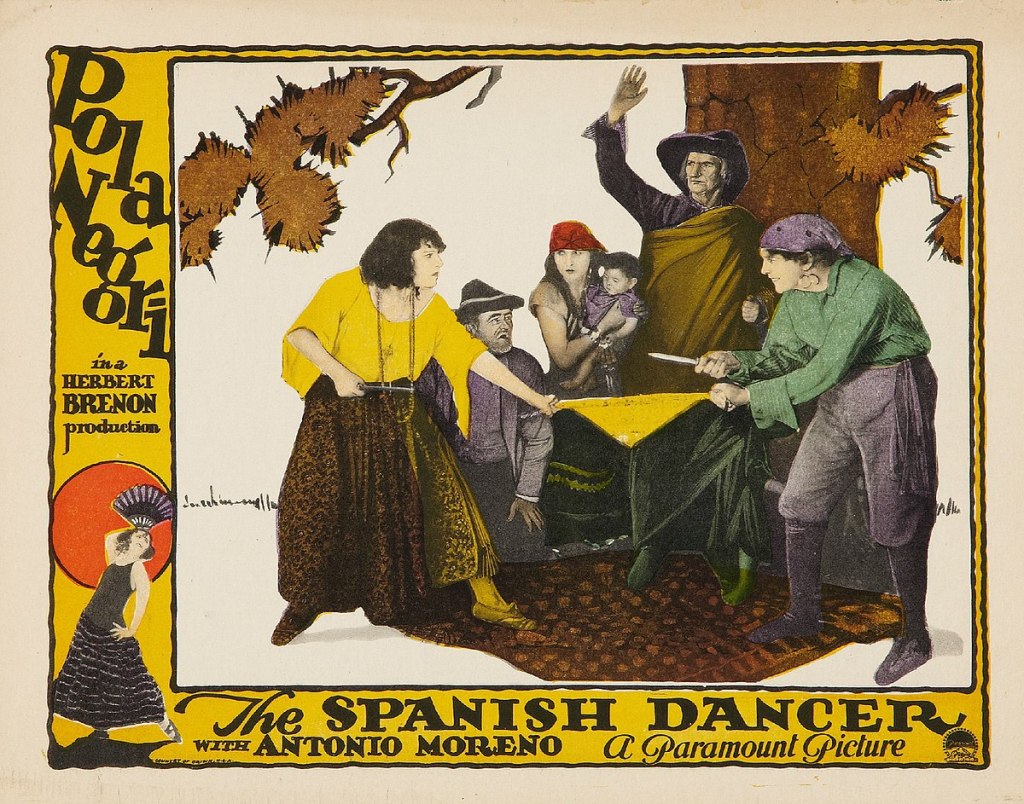
The color print with Dutch titles shown in Pordenone had originated at Amsterdam’s EYE Institute, which had made a copy from the original tinted nitrate print that had been donated to the then-named Nederlands Filmmuseum by a private collector back in 1957. At the time, this was not a lost film; numerous abridged copies of varying lengths had been in circulation through Kodak’s 16mm Kodascope Libraries. But it was also clear that there were still missing scenes, which made it difficult to follow the plot. In 2008, Kevin Brownlow announced he had a 16mm print of The Spanish Dancer, which included scenes that were not in the Amsterdam print. Another 35mm nitrate print with Russian intertitles was then found at the Cinémathèque Royale de Belgique in Brussels but was missing two of its nine reels. But figuring out what went where would have been very difficult, even with a direct comparison of all the surviving versions, at least until in 2009 a shooting script was found at the Margaret Herrick Library of the Academy of Motion Picture Arts & Sciences that listed all the intertitles and the duration of each scene. That paved the way for a new digital restoration by the Eye Institute that premiered at Pordenone in 2012 and is now available on Blu-ray from Milestone Films.

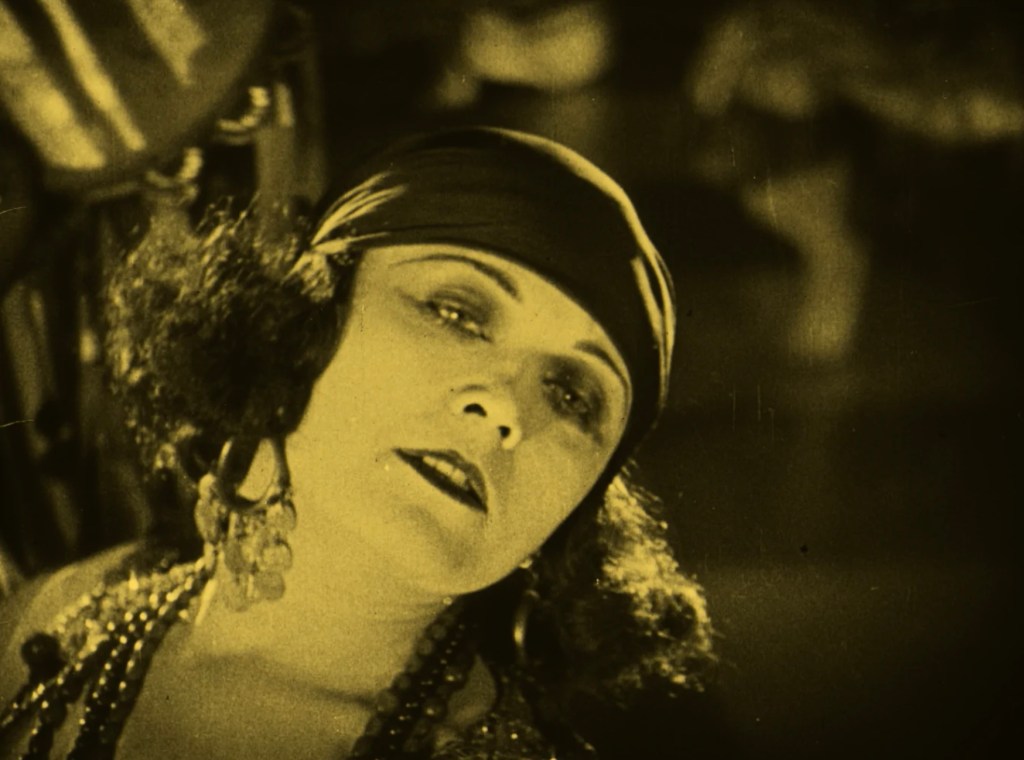
Based on an 1844 play, “Don César de Bazan” by Adolphe d’Ennery and Philippe François Pinel Dumanoir (and a subsequent 1872 opera comique by Jules Massenet), the “Spanish Cavalier” was announced by Paramount in 1922 as a big budget production, starring Rudolph Valentino and Nita Naldi and directed by Fred Niblo. At virtually the same time, United Artists announced that Lubitsch would also adapt the play for his first American film, starring Mary Pickford, Rosita (1923). Lubitsch had brought his script with him from Berlin, “Karneval in Toledo,” written by Hanns Kräly and Nobert Falk for Lubitsch’s star, Pola Negri; they had however had a falling out after their last German film, Die Flamme (1923). When Valentino pulled out of the project in September 1922, Paramount rewrote it for Pola Negri (who had arrived in America a couple months before Lubitsch), then cast Antonio Moreno as Don César de Bazan in February 1923. In May, an English director known for his elaborate costume dramas, Herbert Brenon was hired; a year later he would make Peter Pan (1924). Both Lubitsch’s Rosita and Brenon’s The Spanish Dancer were released within a month of each other in September and October 1923, which according to one source negatively impacted Rosita’s box office potential. Both films are big-budget extravaganzas, but critics have been divided about which version was the better film, even while a comparison of the plots reveals significant differences.
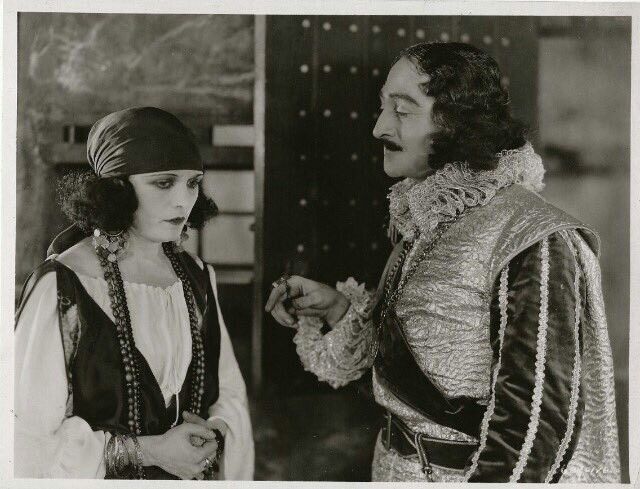
The digital restoration of The Spanish Dancer, now on view on Blu-ray, was supervised by Rob Byrne, Annike Kross, and Elif Rongen-Kaynakçi at Haghefilm. While the script indicated 253 intertitles, the Dutch and Russian language versions only had 172 each. Forty-eight percent of the final restoration came from the Dutch print, while the Soviet print contributed 29% of the new image; all 253 intertitles were recreated from either translations or the shooting script. Kevin Brownlow’s (Photoplay) contributed several crucial sequences from their 16mm print, as well as English titles that could be matched to the screenplay, while Lobster’s 16mm print provided one important sequence of 17 shots not seen elsewhere. The final restoration includes 1170 shots, while the script lists 1228 shots. It is possible that many of these shots were never produced.

Pola Negri plays Maritana, a Roma dancer and fortune teller who falls in love with Don Caesar de Bazan (Moreno), an aristocrat, who is sentenced to death by hanging in the Court of Phillip IV (Wallace Beery) and his wife Isabel (Kathryn William) for dueling on Mardi Gras. Meanwhile, the King has designs on Maritana, with a crooked minister (Adolphe Menjou) conspiring to have Don Caesar marry Maritana shortly before his execution, so the King is free to take as his mistress the newly minted Countess. Of course, this is Hollywood, so all ends well.
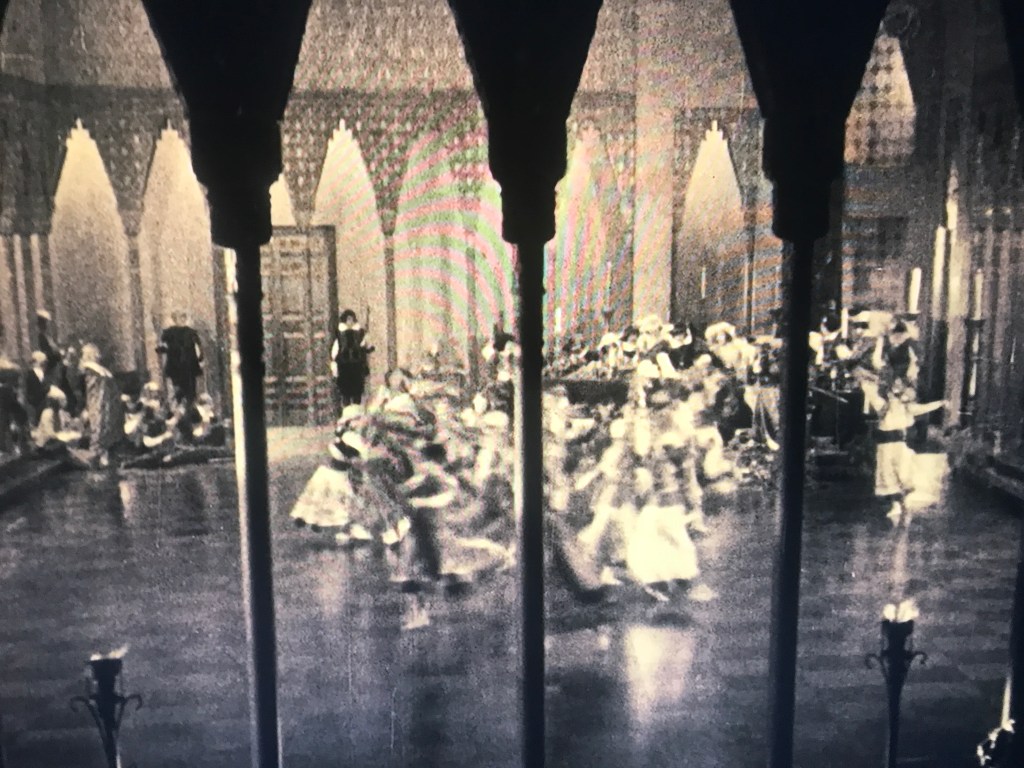

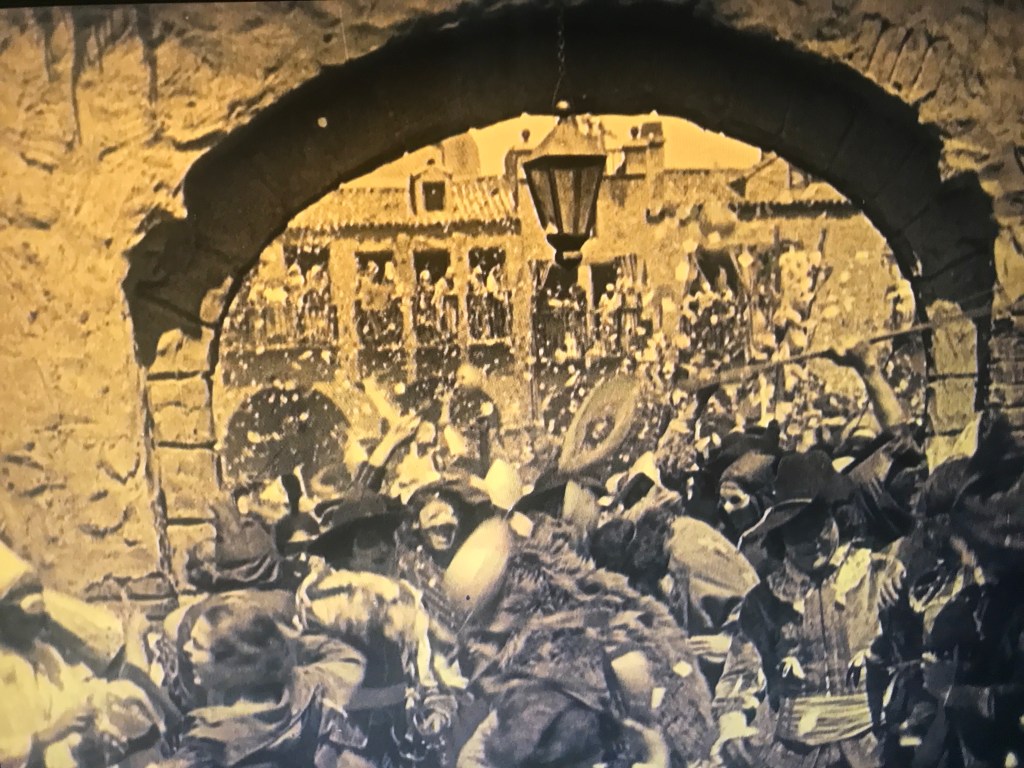
The pleasure of the film lies not so much in the conventional plot as Brenon’s ability to integrate monstrous sets and massive crowds with more intimate proceedings. Brenon loves to frame his crowd scenes with architectural details, for example, cutting between Roma dancers in a huge hall, framed by Gothic arches, and Negri reading the cards for Don Caesar. The Mardi Gras scenes in Madrid’s town square show literally thousands of revelers, dancing, and singing in what appears to be utter chaos, yet Brenon manages to focus viewer attention on Don Caesar saving a young boy from the captain of the guard. And finally, it is Negri’s star presence, visibly playing off her Roma roles in Lubitsch’s Carmen (1918) and The Wildcat (1921) as a passionate, unbridled, sexual being, which sold her to American audiences, making her an undisputed star, second only to Mary Pickford.
 Archival Spaces